 Image 1 of 1
Saint Cyriacus
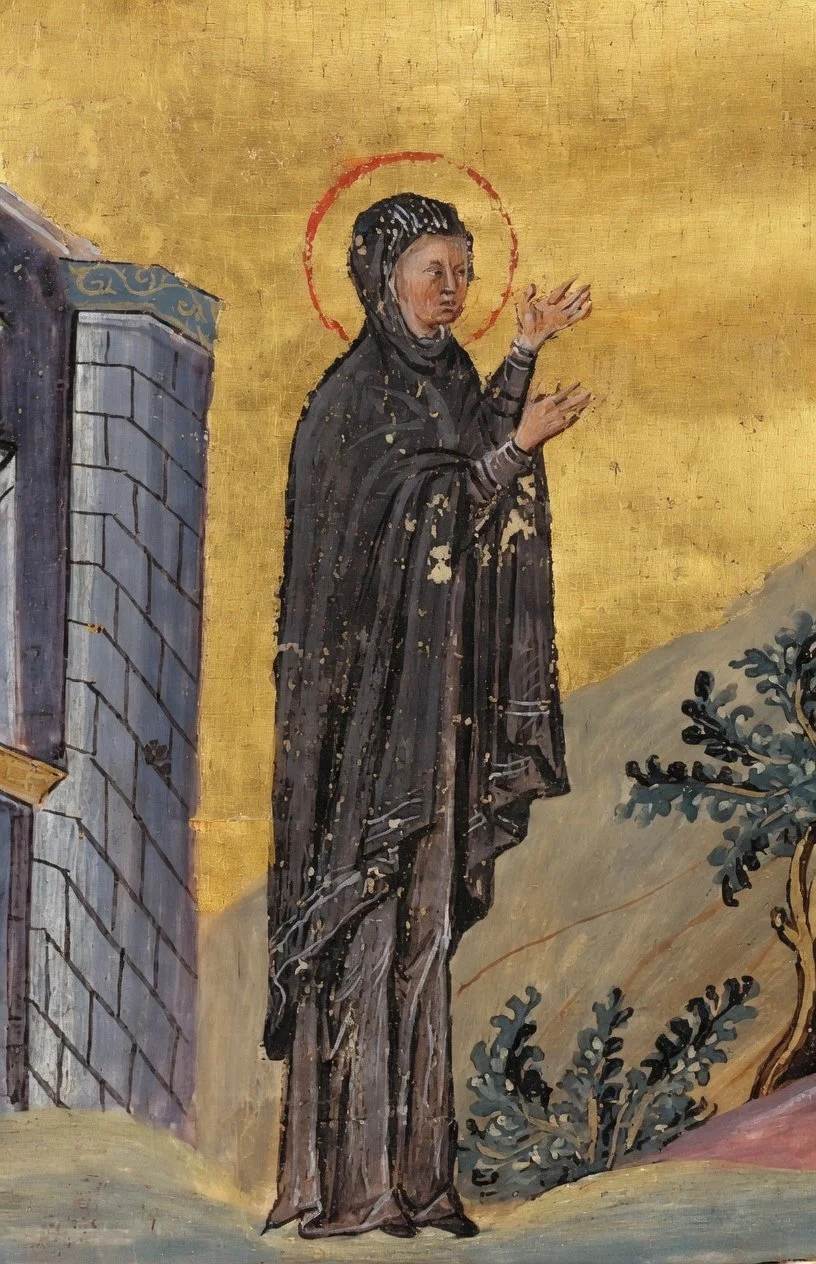
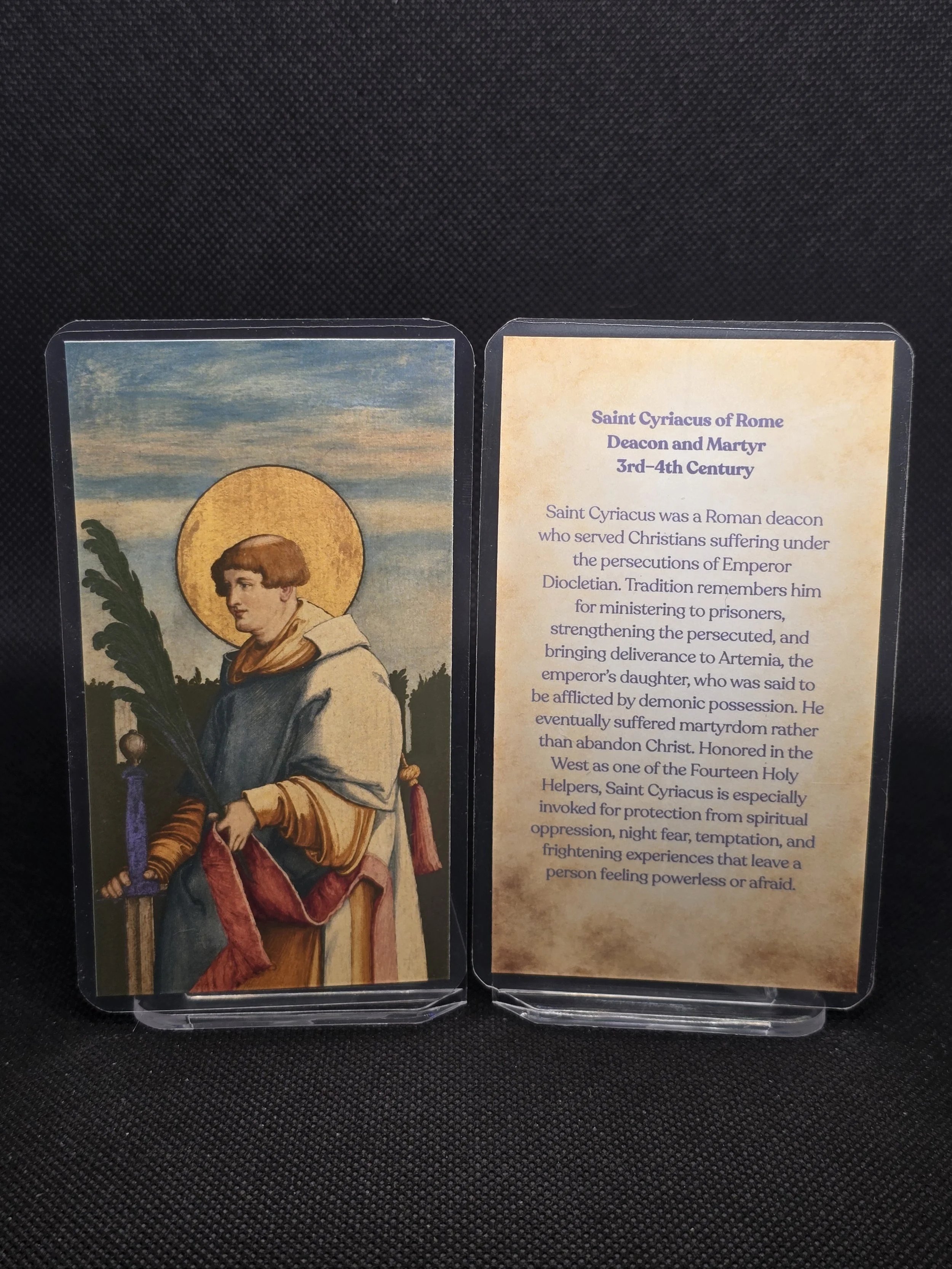
Saint Cyriacus, also known as Saint Cyriac, is a Catholic and Orthodox martyr whose name has long been connected with deliverance, protection, and the terrifying reality of spiritual oppression. In Western Catholic devotion, he is one of the Fourteen Holy Helpers, a group of saints invoked with special confidence in times of suffering, danger, sickness, fear, and affliction. His traditional patronage against diabolical possession and oppressive spiritual attack makes him especially meaningful for those who experience night fear, spiritual dread, and the kind of terror that seems to arrive in the dark with a force beyond ordinary anxiety.
Saint Cyriacus is especially meaningful as the unofficial patron saint of sleep paralysis, night fear, and deliverance from oppression. This does not mean that every frightening nighttime experience is automatically demonic, and it does not replace medical, psychological, or pastoral help when someone is suffering. But for anyone who wakes paralyzed in the dark, unable to move, convinced something malicious is in the room, his patronage offers something specific and ancient: a saint already remembered in Christian devotion as a helper against demonic oppression, fear, and spiritual assault.
According to Christian tradition, Cyriacus was a deacon in Rome during the persecution of Christians under Emperor Diocletian. He served the suffering, ministered to prisoners, and strengthened Christians who were being forced into hard labor and persecution. He was known not merely as a man of prayer, but as a servant of mercy who entered dark places where others were suffering and brought the help of Christ.
One of the most famous traditions connected with Saint Cyriacus tells of his deliverance of Artemia, the daughter of Emperor Diocletian, from demonic possession. In this story, the very emperor who persecuted Christians was forced to recognize the power of Christ working through His servant. Cyriacus was not protected from martyrdom forever, but his witness revealed that the powers of darkness are not equal to the authority of God.
Because of this long tradition, Saint Cyriacus is a powerful intercessor for those suffering from night terrors, sleep paralysis, spiritual oppression, frightening dreams, fear of darkness, demonic fear, anxiety at bedtime, and the sense of being attacked when one is most vulnerable. He is also a saint for families praying over a troubled home, parents praying for children afraid at night, and anyone asking Christ to bring peace, protection, and deliverance into a place filled with fear.
His life teaches that the Christian answer to darkness is not panic, superstition, or despair. The answer is Christ. The saints do not replace Christ; they stand with us before Him, asking for mercy, protection, courage, and freedom. Saint Cyriacus reminds the fearful soul that even when the night feels hostile, the power of Christ is greater than every oppression, every terror, and every enemy seen or unseen.
This prayer card is created for those seeking protection from night fear, sleep paralysis, spiritual oppression, disturbing dreams, fear at bedtime, and oppressive darkness, as well as for those who pray for deliverance, courage, and peace in the name of Christ. Saint Cyriacus reminds the soul that fear is not lord, darkness is not final, and the name of Jesus Christ is stronger than every power that tries to torment the human heart.
Saint Cyriacus’ patronage includes deliverance from oppression, protection against diabolical possession, night fear, sleep paralysis, frightening dreams, fear of darkness, spiritual attack, temptations at the hour of death, protection of the vulnerable, prisoners, persecuted Christians, and those seeking courage in the face of terror.
Each card is handmade in Austin, TX and created to order. We do not keep stock, because every prayer card is treated as a unique devotional offering. They are printed on museum-quality photo paper, not cardstock. Every card is made slowly, during prayer, with intentional reverence for the saint or holy image and for the person who will receive it. Names are lifted before Christ. Intentions are held carefully. Each piece is handled multiple times in prayerful silence, asking God for mercy and asking the saint to intercede for the soul it is being made for. This is not production work. It is devotional craftsmanship shaped with patience, care, and spiritual responsibility, because every soul and every prayer matters.
THE LIFE & STORY
Saint Cyriacus lived during the age of the Roman persecutions, when Christians could be imprisoned, tortured, forced into labor, or killed for refusing to renounce Christ. He is traditionally remembered as a deacon of the Church of Rome, a servant of the poor, the persecuted, and the imprisoned. In both Catholic and Orthodox memory, he belongs to that ancient world of martyrs whose faith was tested not in comfort, but under imperial cruelty.
The traditions surrounding his life describe him as a man of charity and spiritual power. He ministered to Christians who were suffering under persecution, including those forced to labor in brutal conditions. As a deacon, his vocation was service, but Christian service in that time was dangerous. To care for the imprisoned and persecuted was to place oneself near the same suffering, suspicion, and punishment.
Saint Cyriacus is especially remembered in the West as one of the Fourteen Holy Helpers. These saints became beloved during centuries when Christians faced plague, sickness, danger, spiritual fear, and helpless suffering. They were invoked not as distant figures, but as powerful intercessors in very specific afflictions. Cyriacus’ place among them is tied especially to deliverance from diabolical possession, oppression, and temptation.
One of the best-known stories associated with Saint Cyriacus tells of the emperor’s daughter, Artemia, who was afflicted by a demon. According to tradition, Cyriacus was called upon, and through the power of Christ, Artemia was delivered. This story is central to his devotional identity because it shows Christ’s authority over evil working through the prayer and ministry of His saint. The fact that this deliverance was connected to the household of Diocletian, the persecuting emperor, gives the story a striking spiritual reversal: the power persecuting the Church was forced to confront the power of Christ.
Saint Cyriacus eventually suffered martyrdom. Traditions place his death during the persecution of Diocletian, and he is remembered with other martyrs who bore witness to Christ unto death. His witness is not only the story of deliverance from evil, but also of courage under oppression. He fought darkness not by fascination with it, but by fidelity to Christ, service to the afflicted, and willingness to die rather than abandon the faith.
This is why Saint Cyriacus is such a fitting intercessor for those who suffer fear in the night. The person who wakes unable to move, senses a presence, feels terror press upon the body, or fears spiritual attack needs more than a vague reassurance. They need the peace of Christ, the prayers of the Church, and the reminder that Christians have always had saints connected with deliverance from oppression.
Saint Cyriacus does not teach obsession with darkness. He teaches confidence in Christ. His story reminds the faithful to turn fear into prayer, to seek help when suffering is severe or repeated, and to remember that no terror of the night is greater than the mercy and authority of God.
MIRACLES & PATRONAGE
Saint Cyriacus’ most important miracle tradition is his deliverance of Artemia from demonic possession. This story is the foundation for his long association with protection against diabolical possession and spiritual oppression. In the Christian imagination, he stands as a saint whose prayers are especially sought when a person feels harassed, oppressed, tormented, or spiritually threatened.
His connection to sleep paralysis, night fear, and frightening nocturnal experiences is an unofficial devotional application of that older patronage. Sleep paralysis is often described as waking or falling asleep while unable to move or speak, sometimes with intense fear, chest pressure, or a sense that someone or something is present in the room. Because these experiences can be terrifying and can feel malicious or oppressive, many Christians instinctively look for spiritual help alongside ordinary care.
Saint Cyriacus is a fitting saint for this fear because his patronage is not vague. He is not merely a general saint for courage, though he is that as well. He has been specifically invoked against demonic possession and oppression for centuries. For someone who wakes paralyzed and afraid in the dark, his intercession gives the soul a concrete devotional response: call upon Christ, ask Saint Cyriacus to pray, make the sign of the Cross if possible, and refuse despair.
He is also meaningful for night terrors, recurring nightmares, fear of darkness, fear at bedtime, and the oppressive feeling that something unseen is near. These experiences may have medical, psychological, spiritual, or mixed dimensions, and a wise Christian does not have to deny one in order to address the other. Prayer, pastoral help, confession, medical evaluation, sleep support, and practical changes can all belong together.
People ask Saint Cyriacus’ intercession for deliverance from oppression, protection during sleep, freedom from terrifying dreams, peace in the bedroom, courage in the dark, protection of children, release from obsessive fear, and strength against temptation at the hour of death. He is also a powerful saint for the imprisoned, persecuted, and those under oppressive forces beyond their own strength.
His patronage should lead the soul toward Christ, not toward fear. The goal of devotion to Saint Cyriacus is not to become fascinated by demons or to interpret every fear as an attack. The goal is peace, protection, sobriety, and confidence in the Lord. The Christian heart does not need to live in terror, because the saints stand with us in prayer and Christ reigns over all creation.
Saint Cyriacus teaches that darkness must be answered with prayer, oppression with deliverance, fear with the name of Jesus, and vulnerability with trust in God’s mercy.
PRAYERS
A simple invocation may be prayed often: Saint Cyriacus, pray for us.
For sleep paralysis and night fear, one may pray: Saint Cyriacus, holy deacon and martyr of Christ, pray for me when I am afraid in the night. Ask the Lord Jesus to cover me with His mercy, drive away every oppression, calm my body, guard my mind, and bring peace to this room.
For deliverance from oppression, one may pray: Saint Cyriacus, powerful helper against oppression and spiritual fear, intercede for me before Christ. Pray that every darkness, temptation, torment, and malicious influence be driven away by the authority of Jesus Christ, and that my heart may rest in the protection of God.
For a child afraid at night, one may pray: Saint Cyriacus, pray for this child and ask Christ to fill this room with peace. Guard their sleep, quiet their fear, protect their imagination, and surround them with the light and mercy of God.
For frightening dreams, one may pray: Saint Cyriacus, pray for those troubled by nightmares, night terrors, and fearful dreams. Ask the Lord to purify their sleep, heal what is wounded, and give them rest without fear.
For courage in the dark, one may pray: Saint Cyriacus, martyr of Christ, pray that I may not be ruled by fear. Help me remember that Jesus Christ is Lord, that His Cross is my protection, and that no darkness is stronger than His light.
For those suffering repeated episodes, one may pray: Saint Cyriacus, pray for those who suffer recurring sleep paralysis, fear, or oppression in the night. Ask Christ to guide them to the right help, wise counsel, proper care, and lasting peace.
This prayer card is a spiritual aid and devotional reminder. It is not a replacement for medical care, mental health support, pastoral guidance, confession, house blessing, or appropriate professional help. Anyone experiencing frequent sleep paralysis, severe anxiety, recurring hallucinations, trauma symptoms, or serious sleep disturbance should seek qualified medical and pastoral support.
FAQ
Who is Saint Cyriacus?
Saint Cyriacus, also known as Saint Cyriac, is an ancient Christian deacon and martyr remembered in both Catholic and Orthodox tradition. In Western Catholic devotion, he is one of the Fourteen Holy Helpers and is especially invoked against diabolical possession, oppression, and temptation.
Is Saint Cyriacus Catholic or Orthodox?
Saint Cyriacus is honored in both Catholic and Orthodox tradition. In the West, he is especially known as one of the Fourteen Holy Helpers. In Orthodox commemoration, the holy deacon Cyriacus is remembered among the martyrs who suffered under Diocletian.
What is Saint Cyriacus the patron saint of?
Saint Cyriacus is traditionally invoked against diabolical possession, oppression, eye disease, and temptation, especially at the hour of death. Devotionally, he is also a fitting unofficial patron for sleep paralysis, night fear, terrifying dreams, and deliverance from oppressive spiritual fear.
Is Saint Cyriacus officially the patron saint of sleep paralysis?
Saint Cyriacus is best described as the unofficial patron saint of sleep paralysis, night fear, and deliverance from oppression. His official and traditional patronage is connected to deliverance from diabolical possession and oppression, which makes him a natural saint to invoke when nighttime fear feels spiritually threatening.
Why is Saint Cyriacus connected to deliverance from oppression?
One of the major traditions about Saint Cyriacus tells of his deliverance of Artemia, the daughter of Emperor Diocletian, from demonic possession. Because of this, Christians have long invoked him against demonic oppression and possession.
Why is Saint Cyriacus meaningful for sleep paralysis?
Sleep paralysis can involve waking unable to move or speak, intense fear, chest pressure, and the terrifying sense that someone or something is in the room. Because Saint Cyriacus has long been invoked against oppressive spiritual affliction, he is a meaningful intercessor for those who experience this kind of nighttime terror.
Does sleep paralysis always mean demonic attack?
No. Sleep paralysis can have ordinary sleep-related, medical, psychological, or stress-related causes. A Christian can pray during frightening experiences while also seeking medical help, improving sleep habits, talking with a pastor or priest, and getting support when episodes are frequent or severe.
Can I use this prayer card for night terrors or nightmares?
Yes. This prayer card is fitting for prayers against night fear, terrifying dreams, oppressive fear in the dark, and anxiety at bedtime. It can be kept near a bed, prayer corner, or icon wall as a reminder to call on Christ and ask Saint Cyriacus’ intercession.
Is this prayer card good for someone afraid of demonic oppression?
Yes, especially if it is used in a sober Christian way. Saint Cyriacus is a saint connected with deliverance from oppression, but devotion should lead a person toward peace, prayer, confession, pastoral counsel, and trust in Christ rather than obsession with evil.
Should someone seek medical help for sleep paralysis?
If sleep paralysis is frequent, severe, connected with daytime sleepiness, trauma symptoms, panic, hallucinations outside sleep transitions, or major sleep disruption, it is wise to seek medical or mental health support. Prayer and professional help do not have to oppose each other.
Can I give this prayer card to someone who has sleep paralysis?
Yes. This card can be a meaningful gift for someone who experiences sleep paralysis, night fear, or frightening dreams, especially if they are Christian and would be comforted by the intercession of a saint connected with deliverance from oppression.
Can Saint Cyriacus help with fear of the dark?
Yes. Saint Cyriacus can be invoked for courage, peace, and protection for those afraid in the dark. His intercession is especially fitting when fear feels oppressive, irrational, or spiritually disturbing.
What are the Fourteen Holy Helpers?
The Fourteen Holy Helpers are a group of saints especially venerated in Western Catholic devotion as powerful intercessors in sickness, danger, suffering, and particular afflictions. Saint Cyriacus is one of them and is especially associated with deliverance from possession and oppression.
When is Saint Cyriacus’ feast day?
Saint Cyriacus is associated with different commemorations in different traditions. In Western devotion connected with the Fourteen Holy Helpers, he is commonly honored on August 8, while older martyrology traditions also associate him with March 16. Orthodox commemorations may list him among martyrs under Diocletian on other dates.
What is the main message of Saint Cyriacus’ life?
The main message of Saint Cyriacus’ life is that Christ has authority over oppression, fear, and darkness. His witness reminds the faithful that nighttime terror should not lead to despair, because the mercy of God, the power of the Cross, and the prayers of the saints are stronger than every force that torments the soul.
Saint Cyriacus, also known as Saint Cyriac, is a Catholic and Orthodox martyr whose name has long been connected with deliverance, protection, and the terrifying reality of spiritual oppression. In Western Catholic devotion, he is one of the Fourteen Holy Helpers, a group of saints invoked with special confidence in times of suffering, danger, sickness, fear, and affliction. His traditional patronage against diabolical possession and oppressive spiritual attack makes him especially meaningful for those who experience night fear, spiritual dread, and the kind of terror that seems to arrive in the dark with a force beyond ordinary anxiety.
Saint Cyriacus is especially meaningful as the unofficial patron saint of sleep paralysis, night fear, and deliverance from oppression. This does not mean that every frightening nighttime experience is automatically demonic, and it does not replace medical, psychological, or pastoral help when someone is suffering. But for anyone who wakes paralyzed in the dark, unable to move, convinced something malicious is in the room, his patronage offers something specific and ancient: a saint already remembered in Christian devotion as a helper against demonic oppression, fear, and spiritual assault.
According to Christian tradition, Cyriacus was a deacon in Rome during the persecution of Christians under Emperor Diocletian. He served the suffering, ministered to prisoners, and strengthened Christians who were being forced into hard labor and persecution. He was known not merely as a man of prayer, but as a servant of mercy who entered dark places where others were suffering and brought the help of Christ.
One of the most famous traditions connected with Saint Cyriacus tells of his deliverance of Artemia, the daughter of Emperor Diocletian, from demonic possession. In this story, the very emperor who persecuted Christians was forced to recognize the power of Christ working through His servant. Cyriacus was not protected from martyrdom forever, but his witness revealed that the powers of darkness are not equal to the authority of God.
Because of this long tradition, Saint Cyriacus is a powerful intercessor for those suffering from night terrors, sleep paralysis, spiritual oppression, frightening dreams, fear of darkness, demonic fear, anxiety at bedtime, and the sense of being attacked when one is most vulnerable. He is also a saint for families praying over a troubled home, parents praying for children afraid at night, and anyone asking Christ to bring peace, protection, and deliverance into a place filled with fear.
His life teaches that the Christian answer to darkness is not panic, superstition, or despair. The answer is Christ. The saints do not replace Christ; they stand with us before Him, asking for mercy, protection, courage, and freedom. Saint Cyriacus reminds the fearful soul that even when the night feels hostile, the power of Christ is greater than every oppression, every terror, and every enemy seen or unseen.
This prayer card is created for those seeking protection from night fear, sleep paralysis, spiritual oppression, disturbing dreams, fear at bedtime, and oppressive darkness, as well as for those who pray for deliverance, courage, and peace in the name of Christ. Saint Cyriacus reminds the soul that fear is not lord, darkness is not final, and the name of Jesus Christ is stronger than every power that tries to torment the human heart.
Saint Cyriacus’ patronage includes deliverance from oppression, protection against diabolical possession, night fear, sleep paralysis, frightening dreams, fear of darkness, spiritual attack, temptations at the hour of death, protection of the vulnerable, prisoners, persecuted Christians, and those seeking courage in the face of terror.
Each card is handmade in Austin, TX and created to order. We do not keep stock, because every prayer card is treated as a unique devotional offering. They are printed on museum-quality photo paper, not cardstock. Every card is made slowly, during prayer, with intentional reverence for the saint or holy image and for the person who will receive it. Names are lifted before Christ. Intentions are held carefully. Each piece is handled multiple times in prayerful silence, asking God for mercy and asking the saint to intercede for the soul it is being made for. This is not production work. It is devotional craftsmanship shaped with patience, care, and spiritual responsibility, because every soul and every prayer matters.
THE LIFE & STORY
Saint Cyriacus lived during the age of the Roman persecutions, when Christians could be imprisoned, tortured, forced into labor, or killed for refusing to renounce Christ. He is traditionally remembered as a deacon of the Church of Rome, a servant of the poor, the persecuted, and the imprisoned. In both Catholic and Orthodox memory, he belongs to that ancient world of martyrs whose faith was tested not in comfort, but under imperial cruelty.
The traditions surrounding his life describe him as a man of charity and spiritual power. He ministered to Christians who were suffering under persecution, including those forced to labor in brutal conditions. As a deacon, his vocation was service, but Christian service in that time was dangerous. To care for the imprisoned and persecuted was to place oneself near the same suffering, suspicion, and punishment.
Saint Cyriacus is especially remembered in the West as one of the Fourteen Holy Helpers. These saints became beloved during centuries when Christians faced plague, sickness, danger, spiritual fear, and helpless suffering. They were invoked not as distant figures, but as powerful intercessors in very specific afflictions. Cyriacus’ place among them is tied especially to deliverance from diabolical possession, oppression, and temptation.
One of the best-known stories associated with Saint Cyriacus tells of the emperor’s daughter, Artemia, who was afflicted by a demon. According to tradition, Cyriacus was called upon, and through the power of Christ, Artemia was delivered. This story is central to his devotional identity because it shows Christ’s authority over evil working through the prayer and ministry of His saint. The fact that this deliverance was connected to the household of Diocletian, the persecuting emperor, gives the story a striking spiritual reversal: the power persecuting the Church was forced to confront the power of Christ.
Saint Cyriacus eventually suffered martyrdom. Traditions place his death during the persecution of Diocletian, and he is remembered with other martyrs who bore witness to Christ unto death. His witness is not only the story of deliverance from evil, but also of courage under oppression. He fought darkness not by fascination with it, but by fidelity to Christ, service to the afflicted, and willingness to die rather than abandon the faith.
This is why Saint Cyriacus is such a fitting intercessor for those who suffer fear in the night. The person who wakes unable to move, senses a presence, feels terror press upon the body, or fears spiritual attack needs more than a vague reassurance. They need the peace of Christ, the prayers of the Church, and the reminder that Christians have always had saints connected with deliverance from oppression.
Saint Cyriacus does not teach obsession with darkness. He teaches confidence in Christ. His story reminds the faithful to turn fear into prayer, to seek help when suffering is severe or repeated, and to remember that no terror of the night is greater than the mercy and authority of God.
MIRACLES & PATRONAGE
Saint Cyriacus’ most important miracle tradition is his deliverance of Artemia from demonic possession. This story is the foundation for his long association with protection against diabolical possession and spiritual oppression. In the Christian imagination, he stands as a saint whose prayers are especially sought when a person feels harassed, oppressed, tormented, or spiritually threatened.
His connection to sleep paralysis, night fear, and frightening nocturnal experiences is an unofficial devotional application of that older patronage. Sleep paralysis is often described as waking or falling asleep while unable to move or speak, sometimes with intense fear, chest pressure, or a sense that someone or something is present in the room. Because these experiences can be terrifying and can feel malicious or oppressive, many Christians instinctively look for spiritual help alongside ordinary care.
Saint Cyriacus is a fitting saint for this fear because his patronage is not vague. He is not merely a general saint for courage, though he is that as well. He has been specifically invoked against demonic possession and oppression for centuries. For someone who wakes paralyzed and afraid in the dark, his intercession gives the soul a concrete devotional response: call upon Christ, ask Saint Cyriacus to pray, make the sign of the Cross if possible, and refuse despair.
He is also meaningful for night terrors, recurring nightmares, fear of darkness, fear at bedtime, and the oppressive feeling that something unseen is near. These experiences may have medical, psychological, spiritual, or mixed dimensions, and a wise Christian does not have to deny one in order to address the other. Prayer, pastoral help, confession, medical evaluation, sleep support, and practical changes can all belong together.
People ask Saint Cyriacus’ intercession for deliverance from oppression, protection during sleep, freedom from terrifying dreams, peace in the bedroom, courage in the dark, protection of children, release from obsessive fear, and strength against temptation at the hour of death. He is also a powerful saint for the imprisoned, persecuted, and those under oppressive forces beyond their own strength.
His patronage should lead the soul toward Christ, not toward fear. The goal of devotion to Saint Cyriacus is not to become fascinated by demons or to interpret every fear as an attack. The goal is peace, protection, sobriety, and confidence in the Lord. The Christian heart does not need to live in terror, because the saints stand with us in prayer and Christ reigns over all creation.
Saint Cyriacus teaches that darkness must be answered with prayer, oppression with deliverance, fear with the name of Jesus, and vulnerability with trust in God’s mercy.
PRAYERS
A simple invocation may be prayed often: Saint Cyriacus, pray for us.
For sleep paralysis and night fear, one may pray: Saint Cyriacus, holy deacon and martyr of Christ, pray for me when I am afraid in the night. Ask the Lord Jesus to cover me with His mercy, drive away every oppression, calm my body, guard my mind, and bring peace to this room.
For deliverance from oppression, one may pray: Saint Cyriacus, powerful helper against oppression and spiritual fear, intercede for me before Christ. Pray that every darkness, temptation, torment, and malicious influence be driven away by the authority of Jesus Christ, and that my heart may rest in the protection of God.
For a child afraid at night, one may pray: Saint Cyriacus, pray for this child and ask Christ to fill this room with peace. Guard their sleep, quiet their fear, protect their imagination, and surround them with the light and mercy of God.
For frightening dreams, one may pray: Saint Cyriacus, pray for those troubled by nightmares, night terrors, and fearful dreams. Ask the Lord to purify their sleep, heal what is wounded, and give them rest without fear.
For courage in the dark, one may pray: Saint Cyriacus, martyr of Christ, pray that I may not be ruled by fear. Help me remember that Jesus Christ is Lord, that His Cross is my protection, and that no darkness is stronger than His light.
For those suffering repeated episodes, one may pray: Saint Cyriacus, pray for those who suffer recurring sleep paralysis, fear, or oppression in the night. Ask Christ to guide them to the right help, wise counsel, proper care, and lasting peace.
This prayer card is a spiritual aid and devotional reminder. It is not a replacement for medical care, mental health support, pastoral guidance, confession, house blessing, or appropriate professional help. Anyone experiencing frequent sleep paralysis, severe anxiety, recurring hallucinations, trauma symptoms, or serious sleep disturbance should seek qualified medical and pastoral support.
FAQ
Who is Saint Cyriacus?
Saint Cyriacus, also known as Saint Cyriac, is an ancient Christian deacon and martyr remembered in both Catholic and Orthodox tradition. In Western Catholic devotion, he is one of the Fourteen Holy Helpers and is especially invoked against diabolical possession, oppression, and temptation.
Is Saint Cyriacus Catholic or Orthodox?
Saint Cyriacus is honored in both Catholic and Orthodox tradition. In the West, he is especially known as one of the Fourteen Holy Helpers. In Orthodox commemoration, the holy deacon Cyriacus is remembered among the martyrs who suffered under Diocletian.
What is Saint Cyriacus the patron saint of?
Saint Cyriacus is traditionally invoked against diabolical possession, oppression, eye disease, and temptation, especially at the hour of death. Devotionally, he is also a fitting unofficial patron for sleep paralysis, night fear, terrifying dreams, and deliverance from oppressive spiritual fear.
Is Saint Cyriacus officially the patron saint of sleep paralysis?
Saint Cyriacus is best described as the unofficial patron saint of sleep paralysis, night fear, and deliverance from oppression. His official and traditional patronage is connected to deliverance from diabolical possession and oppression, which makes him a natural saint to invoke when nighttime fear feels spiritually threatening.
Why is Saint Cyriacus connected to deliverance from oppression?
One of the major traditions about Saint Cyriacus tells of his deliverance of Artemia, the daughter of Emperor Diocletian, from demonic possession. Because of this, Christians have long invoked him against demonic oppression and possession.
Why is Saint Cyriacus meaningful for sleep paralysis?
Sleep paralysis can involve waking unable to move or speak, intense fear, chest pressure, and the terrifying sense that someone or something is in the room. Because Saint Cyriacus has long been invoked against oppressive spiritual affliction, he is a meaningful intercessor for those who experience this kind of nighttime terror.
Does sleep paralysis always mean demonic attack?
No. Sleep paralysis can have ordinary sleep-related, medical, psychological, or stress-related causes. A Christian can pray during frightening experiences while also seeking medical help, improving sleep habits, talking with a pastor or priest, and getting support when episodes are frequent or severe.
Can I use this prayer card for night terrors or nightmares?
Yes. This prayer card is fitting for prayers against night fear, terrifying dreams, oppressive fear in the dark, and anxiety at bedtime. It can be kept near a bed, prayer corner, or icon wall as a reminder to call on Christ and ask Saint Cyriacus’ intercession.
Is this prayer card good for someone afraid of demonic oppression?
Yes, especially if it is used in a sober Christian way. Saint Cyriacus is a saint connected with deliverance from oppression, but devotion should lead a person toward peace, prayer, confession, pastoral counsel, and trust in Christ rather than obsession with evil.
Should someone seek medical help for sleep paralysis?
If sleep paralysis is frequent, severe, connected with daytime sleepiness, trauma symptoms, panic, hallucinations outside sleep transitions, or major sleep disruption, it is wise to seek medical or mental health support. Prayer and professional help do not have to oppose each other.
Can I give this prayer card to someone who has sleep paralysis?
Yes. This card can be a meaningful gift for someone who experiences sleep paralysis, night fear, or frightening dreams, especially if they are Christian and would be comforted by the intercession of a saint connected with deliverance from oppression.
Can Saint Cyriacus help with fear of the dark?
Yes. Saint Cyriacus can be invoked for courage, peace, and protection for those afraid in the dark. His intercession is especially fitting when fear feels oppressive, irrational, or spiritually disturbing.
What are the Fourteen Holy Helpers?
The Fourteen Holy Helpers are a group of saints especially venerated in Western Catholic devotion as powerful intercessors in sickness, danger, suffering, and particular afflictions. Saint Cyriacus is one of them and is especially associated with deliverance from possession and oppression.
When is Saint Cyriacus’ feast day?
Saint Cyriacus is associated with different commemorations in different traditions. In Western devotion connected with the Fourteen Holy Helpers, he is commonly honored on August 8, while older martyrology traditions also associate him with March 16. Orthodox commemorations may list him among martyrs under Diocletian on other dates.
What is the main message of Saint Cyriacus’ life?
The main message of Saint Cyriacus’ life is that Christ has authority over oppression, fear, and darkness. His witness reminds the faithful that nighttime terror should not lead to despair, because the mercy of God, the power of the Cross, and the prayers of the saints are stronger than every force that torments the soul.