 Image 1 of 1
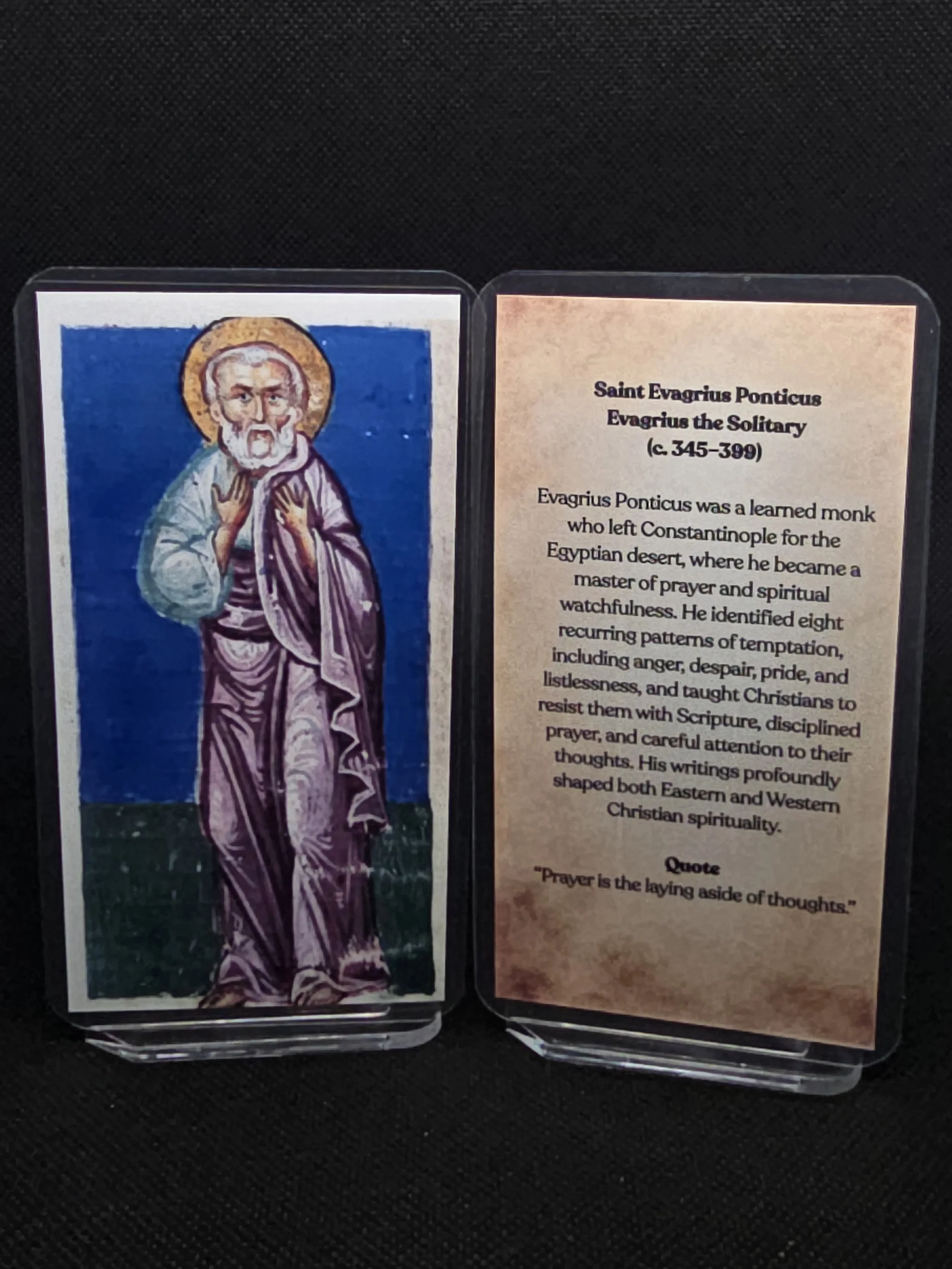
Saint Evagrius Ponticus Prayer Card – Patron for Intrusive Thoughts, Anxiety & Inner Stillness
-
From Brilliant Mind to Desert Silence
Evagrius was born around 345 in Pontus (modern Turkey). Exceptionally intelligent, he studied under the great Cappadocian Fathers and quickly rose in prominence as a theologian and preacher.
But success became dangerous.
He began to recognize pride and temptation growing within him.
Rather than negotiate with it, Evagrius fled.
He left Constantinople and entered the Egyptian desert, placing himself under the guidance of the Desert Fathers, including Macarius the Great. There he embraced a radical life of fasting, solitude, manual labor, and relentless prayer.
He exchanged reputation for repentance.
Learning the Language of the Soul
In the desert, Evagrius began observing his own inner movements with astonishing precision. He noticed how thoughts arose, how emotions followed, and how repeated mental patterns shaped spiritual life.
He identified what he called the logismoi, the destructive thoughts that invade the mind:
gluttony
lust
greed
sadness
anger
acedia (spiritual exhaustion)
vainglory
prideThese later became known as the foundation of the “seven deadly sins.”
But Evagrius went deeper.
He taught that thoughts themselves are not sins. Agreement with them is.
He trained monks to recognize mental assaults early, refuse dialogue with temptation, and return immediately to prayer.
Prayer Beyond Words
Evagrius emphasized pure prayer, prayer stripped of images, fantasies, and emotional manipulation. He taught that the goal of spiritual life is apatheia, not emotional numbness, but freedom from inner turbulence.
He described prayer as standing before God with naked attention.
His writings became foundational for Eastern Christian spirituality, deeply influencing later hesychastic tradition.
He died quietly in the desert around 399.
But his interior map of the soul remains unmatched.
-
Saint Evagrius Ponticus is especially invoked for struggles that happen inside the mind.
Patron Saint Of:
Intrusive thoughts and mental torment
Anxiety and emotional restlessness
Inner stillness and disciplined prayer
People battling obsessive thinking
Souls experiencing spiritual burnout
Those overwhelmed by distraction in prayer
Anyone seeking clarity of mind
Miracles and Ongoing Intercession
While Evagrius is primarily known for spiritual healing rather than physical miracles, countless modern devotees credit his intercession with:
sudden calm during anxiety spirals
freedom from repetitive intrusive thoughts
restored focus during prayer
emotional stability after long agitation
clarity during spiritual confusion
Many report:
mental quiet returning
thoughts losing their grip
peace replacing inner chaos
renewed desire for prayerEvagrius heals at the root.
He teaches souls how to breathe again.
-
Traditional Invocation
O holy Father Evagrius, healer of the mind and guide of inner prayer, intercede for us, that we may gain mastery over wandering thoughts and enter the stillness of Christ.
Personal Prayer
Holy Saint Evagrius Ponticus, physician of anxious minds, pray for me.
Intercede for freedom from intrusive thoughts and relief from anxiety. Teach me to recognize temptation early and return quickly to prayer. Calm my racing mind and restore stillness within my heart.
Help me refuse despair, reject distraction, and persevere in quiet attention before God.
You who mapped the hidden battlefield of the soul, guide me toward clarity, peace, and disciplined prayer.
By your intercession, may my mind be healed and my spirit rest in Christ. Amen.
-
Q: What is Saint Evagrius Ponticus known for?
Saint Evagrius is known for his teachings on intrusive thoughts, anxiety, and the inner life of prayer. He identified the destructive thought patterns that later became known as the seven deadly sins.Q: When is Saint Evagrius Ponticus’ feast day?
Saint Evagrius Ponticus is commemorated on January 11.Q: Which Christian traditions venerate Saint Evagrius Ponticus?
Saint Evagrius is honored within the Eastern Christian monastic tradition, especially among Orthodox spiritual communities shaped by Desert spirituality.Q: Why is Saint Evagrius often shown holding a scroll?
The scroll represents his spiritual writings, which remain foundational for understanding temptation, prayer, and inner stillness.