 Image 1 of 1
Saint Isidore of Seville
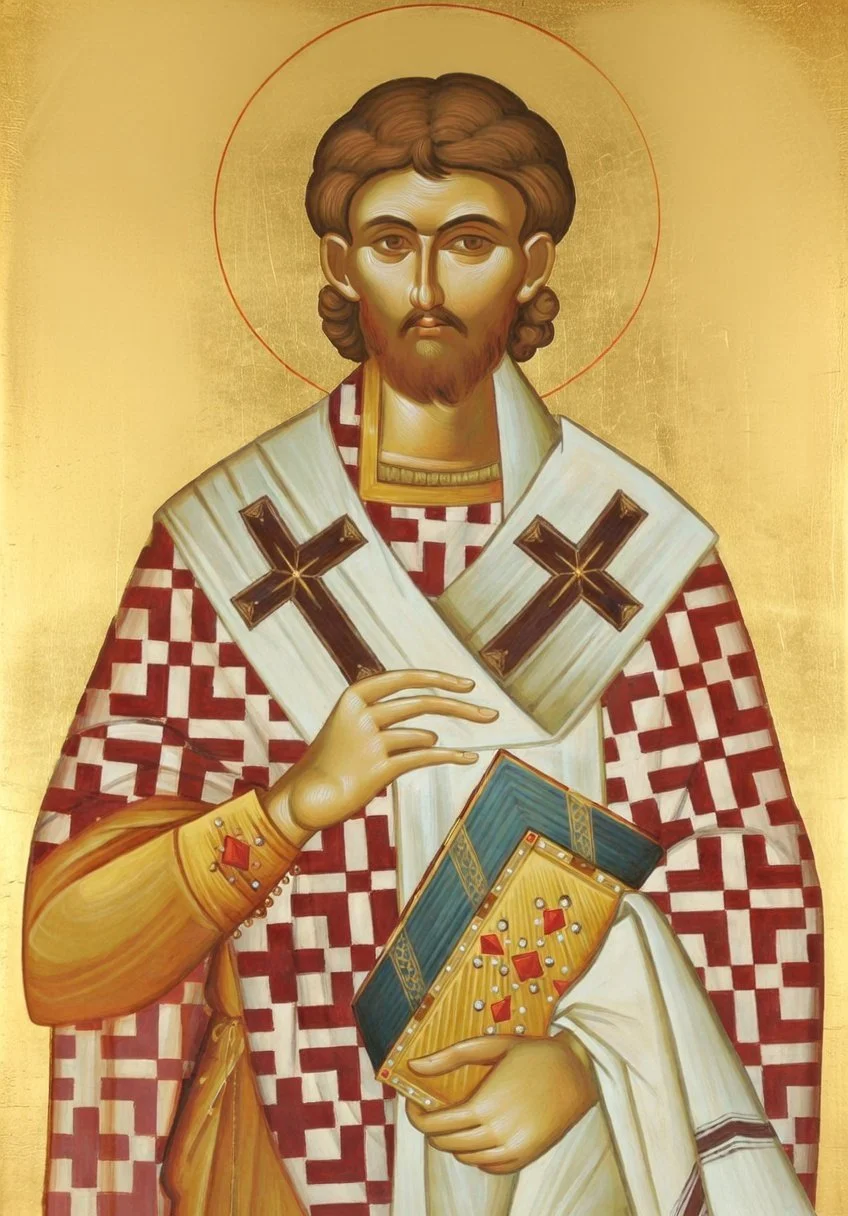
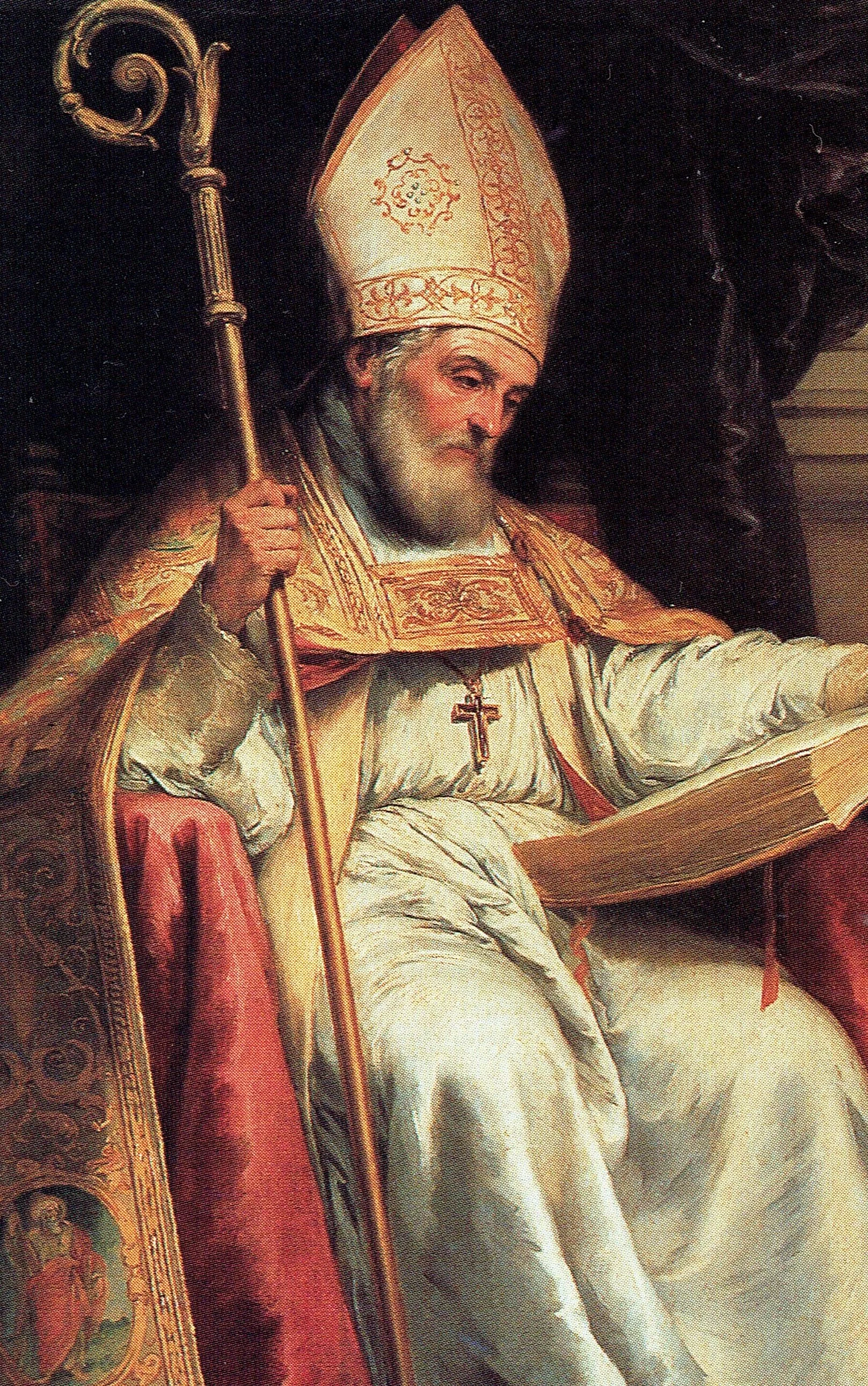
Saint Isidore of Seville is a Catholic saint for everyone who believes knowledge matters, truth must be preserved, and wisdom should not disappear simply because an age is collapsing around it. He was a bishop, scholar, teacher, pastor, and Doctor of the Church whose life’s work helped carry the learning of the ancient world into the Christian Middle Ages.
Saint Isidore is especially meaningful as the unofficial patron saint of bloggers and researchers. He lived during a time when much of the old Roman world was breaking apart, literacy was fragile, libraries were vulnerable, and knowledge could easily be lost. In response, he compiled the Etymologiae, an enormous encyclopedic effort to gather, define, explain, and preserve available human knowledge in one place before it disappeared from memory.
That instinct — that knowledge not written down eventually disappears — is precisely why Saint Isidore has been informally proposed in recent decades as a natural patron of the internet. Long before search engines, archives, blogs, databases, and online libraries, Isidore was doing something deeply familiar to every serious researcher: gathering scattered information, organizing it, preserving it, and handing it forward so others could learn.
For this reason, Saint Isidore speaks powerfully to bloggers, researchers, writers, archivists, students, teachers, librarians, editors, historians, web publishers, content creators, and anyone trying to use knowledge responsibly. He is a saint for those who collect sources, chase footnotes, preserve forgotten stories, write articles, build websites, teach truth, organize information, and feel the responsibility of keeping what matters from being lost.
Born around 560 in Cartagena, Spain, Isidore came from an extraordinary Christian family. His siblings included Saint Leander, Saint Fulgentius, and Saint Florentina. Isidore eventually succeeded his brother Leander as Bishop of Seville, serving the Church in a time of cultural instability, theological confusion, and political change. He worked to strengthen Catholic faith, educate clergy, build schools, serve the poor, and preserve Christian learning.
His most famous work, the Etymologiae, gathered material on grammar, rhetoric, mathematics, medicine, law, theology, Scripture, animals, geography, agriculture, languages, and many other subjects. It was not simply a book of trivia or intellectual vanity. It was an act of preservation. Isidore understood that when knowledge is not gathered and passed on, whole worlds can vanish.
Saint Isidore’s life is deeply relevant for the modern digital age. Bloggers, researchers, and archivists know that truth can be buried under noise, forgotten in broken links, distorted by careless repetition, or lost when no one takes time to preserve it carefully. His story calls writers and researchers to use information with humility, accuracy, charity, and reverence for truth.
This prayer card is created for bloggers, researchers, writers, students, teachers, librarians, archivists, editors, web publishers, content creators, historians, and all who work with knowledge, words, sources, memory, and truth. Saint Isidore reminds the soul that research can be a service, writing can be a form of stewardship, and the preservation of truth can become an offering to God.
Saint Isidore’s patronage includes students, computer users, internet users, teachers, scholars, writers, and those who work with learning. His unofficial patronage especially includes bloggers, researchers, archivists, librarians, historians, editors, web publishers, content creators, and those who gather and preserve knowledge for others.
Each card is handmade in Austin, TX and created to order. We do not keep stock, because every prayer card is treated as a unique devotional offering. They are printed on museum-quality photo paper, not cardstock. Every card is made slowly, during prayer, with intentional reverence for the saint or holy image and for the person who will receive it. Names are lifted before Christ. Intentions are held carefully. Each piece is handled multiple times in prayerful silence, asking God for mercy and asking the saint to intercede for the soul it is being made for. This is not production work. It is devotional craftsmanship shaped with patience, care, and spiritual responsibility, because every soul and every prayer matters.
THE LIFE & STORY
Saint Isidore of Seville was born around 560 in Spain, likely in Cartagena, into a remarkable Catholic family. His brother Saint Leander became Bishop of Seville before him, his brother Saint Fulgentius also became a bishop, and his sister Saint Florentina became a revered nun. Isidore was formed in a household where learning, discipline, faith, and service to the Church were taken seriously.
He eventually succeeded Saint Leander as Bishop of Seville. As bishop, Isidore was not only a pastor of souls but also a teacher of a civilization in transition. Spain in his time was shaped by the aftermath of Rome’s decline, the presence of the Visigoths, theological conflict, and the urgent need to preserve Christian learning. Isidore understood that the Church needed educated clergy, sound doctrine, disciplined teaching, and a stable intellectual foundation.
Because of this, he promoted schools and education, especially for clergy. He believed that ignorance could weaken both the Church and society, and he worked to preserve learning as an act of pastoral responsibility. He was not a scholar hiding from the needs of the people; he was a bishop who saw scholarship as service.
His greatest and most famous work is the Etymologiae, sometimes called the first major Christian encyclopedia. Divided into twenty books, it attempted to gather the knowledge of many fields into one organized work. Isidore wrote about grammar, rhetoric, mathematics, medicine, law, theology, Scripture, language, animals, geography, agriculture, buildings, and many other subjects. The work drew from ancient sources and became one of the most influential textbooks of the Middle Ages.
The importance of the Etymologiae is difficult to overstate. In a period when manuscripts could vanish, libraries could be lost, and learning could be interrupted by violence and instability, Isidore gathered and preserved knowledge so it could be handed on. Some of the ancient learning he recorded might have disappeared entirely if it had not been copied, summarized, and transmitted through works like his.
This is why his connection to bloggers, researchers, and archivists is so natural. Saint Isidore did not merely consume knowledge; he organized it for others. He did not merely admire the past; he preserved it for the future. He understood that learning is fragile and that what is not written, copied, taught, or remembered can be lost.
Saint Isidore died on April 4, 636. He was later proclaimed a Doctor of the Church, a title given to saints whose teaching has special importance for the whole Church. His feast day is April 4. He remains one of the great intellectual saints of Catholic tradition and one of the most fitting heavenly patrons for those who work with knowledge, writing, research, and information.
For the modern world, Saint Isidore stands at the meeting point of ancient scholarship and digital life. His life reminds us that information is not wisdom unless it is ordered toward truth, and knowledge is not holy unless it is used with humility, charity, and reverence for God.
MIRACLES & PATRONAGE
Saint Isidore is not remembered primarily for spectacular miracle stories, but for the miracle of preservation. His life’s work protected knowledge from being scattered, forgotten, or lost. He helped hold together the intellectual memory of a civilization during a time when that memory could have disappeared.
His patronage naturally extends to students, scholars, teachers, computer users, internet users, writers, and those who work with learning. Because of his encyclopedic work, he has also been informally associated with the internet, databases, and digital knowledge. His life makes him especially fitting as an unofficial patron for bloggers, researchers, archivists, librarians, historians, editors, website owners, and content creators.
Saint Isidore’s unofficial patronage of bloggers is especially meaningful because blogging at its best is not merely posting opinions. It is gathering, explaining, preserving, and sharing knowledge. A good blog can help people find what they did not know how to search for, understand what others have forgotten, and preserve thoughts that might otherwise disappear. Saint Isidore reminds bloggers that words have responsibility.
His unofficial patronage of researchers is just as fitting. Research requires patience, humility, accuracy, memory, and discipline. It means checking sources, resisting laziness, avoiding distortion, and caring enough about truth to preserve it carefully. Saint Isidore is a powerful saint for anyone who spends long hours reading, organizing notes, comparing sources, writing citations, studying history, or trying to explain complicated ideas clearly.
He is also meaningful for archivists and librarians because his life was an act of cultural rescue. He lived with the awareness that knowledge can be fragile. Manuscripts can be destroyed, oral memory can fade, institutions can collapse, and whole fields of learning can disappear when no one preserves them. His work tells every archivist and librarian that preservation is not small work. It is service to the future.
People ask Saint Isidore’s intercession before writing articles, researching difficult topics, building websites, studying, organizing archives, teaching, using the internet, publishing online, or trying to communicate truth in a noisy world. He is a saint for those who want their words to serve wisdom rather than vanity, and their research to serve truth rather than pride.
Saint Isidore teaches that knowledge should not be hoarded, distorted, or wasted. It should be ordered toward truth, offered in charity, preserved for others, and placed under the Lordship of Christ.
PRAYERS
A simple invocation may be prayed often: Saint Isidore of Seville, pray for us.
For bloggers and writers, one may pray: Saint Isidore of Seville, faithful teacher and preserver of knowledge, pray for all who write, publish, explain, and share ideas. Ask Christ to guard their words from pride, error, and vanity, and help them use their writing to serve truth, wisdom, and the good of others.
For researchers, one may pray: Saint Isidore, patient scholar and Doctor of the Church, pray for researchers, students, historians, and all who seek knowledge carefully. Help them work with humility, accuracy, discipline, and reverence for truth, so that what they gather may serve God and neighbor.
For archivists and librarians, one may pray: Saint Isidore, who preserved learning for generations, pray for archivists, librarians, teachers, and all who protect memory. Ask the Lord to bless their work of gathering, organizing, preserving, and handing on what should not be lost.
Before using the internet, one may pray: Saint Isidore of Seville, pray that I may use technology with wisdom, purity, patience, charity, and self-control. Help me seek truth, avoid distraction, resist falsehood, and use the tools before me for the glory of God.
For students and teachers, one may pray: Saint Isidore, teacher of the Church, pray for students, teachers, and all who labor in learning. Ask Christ to enlighten minds, strengthen memory, purify motives, and make study an act of love.
For truth in research, one may pray: Saint Isidore, pray for me as I search, read, compare, and write. Help me love truth more than being right, accuracy more than speed, and wisdom more than attention.
FAQ
Who is Saint Isidore of Seville?
Saint Isidore of Seville was a Catholic bishop, scholar, writer, and Doctor of the Church who lived in Spain from around 560 to 636. He served as Bishop of Seville and became one of the most important intellectual figures of the early Middle Ages.
Why is Saint Isidore of Seville important?
Saint Isidore is important because he helped preserve Christian and classical learning during a time of cultural instability. His writings shaped education for centuries, especially his great encyclopedic work, the Etymologiae.
What is the Etymologiae?
The Etymologiae is Saint Isidore’s most famous work, an enormous encyclopedia divided into twenty books. It gathered information on subjects such as grammar, rhetoric, mathematics, medicine, law, theology, Scripture, animals, geography, agriculture, and many other areas of knowledge.
Why is Saint Isidore connected to the internet?
Saint Isidore is connected to the internet because his life’s work involved gathering, organizing, and preserving knowledge in one place. In recent decades, Catholics informally proposed him as a natural patron for the internet because the digital world also gathers and distributes information.
Is Saint Isidore officially the patron saint of bloggers and researchers?
Saint Isidore is best described as the unofficial patron saint of bloggers and researchers. His connection to knowledge, writing, preservation, and the internet makes him a natural intercessor for those who research, write, publish, archive, and share information.
Why is Saint Isidore a good patron for bloggers?
Saint Isidore is a fitting patron for bloggers because he gathered knowledge and made it available for others. Bloggers who write carefully, preserve information, explain complex ideas, and help people find truth can see their work reflected in his mission.
Why is Saint Isidore a good patron for researchers?
Saint Isidore is a strong patron for researchers because research requires many of the virtues seen in his life: patience, accuracy, organization, humility, and love for truth. He reminds researchers that gathering knowledge is a responsibility, not merely a task.
Is Saint Isidore a good saint for archivists and librarians?
Yes. Saint Isidore is deeply meaningful for archivists and librarians because he preserved knowledge during a time when it could easily have been lost. His life honors the work of protecting memory, organizing information, and handing truth on to future generations.
What is Saint Isidore the patron saint of?
Saint Isidore is commonly associated with students, computer users, internet users, scholars, teachers, and those who work with knowledge. Devotionally, he is also a fitting unofficial patron for bloggers, researchers, archivists, librarians, writers, editors, historians, and web publishers.
When is Saint Isidore of Seville’s feast day?
Saint Isidore of Seville’s feast day is April 4, the date of his death in 636.
Is Saint Isidore of Seville a Doctor of the Church?
Yes. Saint Isidore of Seville is a Doctor of the Church, a title given to saints whose teaching is especially valuable for the whole Church.
Was Saint Isidore only a scholar?
No. Saint Isidore was also a bishop and pastor. His scholarship was not detached from Christian service. He cared for the poor, strengthened education, supported the formation of clergy, and used learning to serve the Church.
Can I give this prayer card to a writer, blogger, student, or researcher?
Yes. This prayer card is especially fitting for bloggers, researchers, writers, students, teachers, archivists, librarians, editors, historians, web publishers, and anyone who works with information, truth, memory, or digital communication.
What does Saint Isidore teach us?
Saint Isidore teaches that knowledge is fragile and must be preserved with care. He also teaches that learning should be ordered toward truth, charity, humility, and the service of God and neighbor.
What is the main message of Saint Isidore’s life?
The main message of Saint Isidore’s life is that preserving truth matters. When a culture is confused, collapsing, distracted, or forgetful, the careful work of gathering, writing, teaching, and preserving knowledge can become a holy service.
Saint Isidore of Seville is a Catholic saint for everyone who believes knowledge matters, truth must be preserved, and wisdom should not disappear simply because an age is collapsing around it. He was a bishop, scholar, teacher, pastor, and Doctor of the Church whose life’s work helped carry the learning of the ancient world into the Christian Middle Ages.
Saint Isidore is especially meaningful as the unofficial patron saint of bloggers and researchers. He lived during a time when much of the old Roman world was breaking apart, literacy was fragile, libraries were vulnerable, and knowledge could easily be lost. In response, he compiled the Etymologiae, an enormous encyclopedic effort to gather, define, explain, and preserve available human knowledge in one place before it disappeared from memory.
That instinct — that knowledge not written down eventually disappears — is precisely why Saint Isidore has been informally proposed in recent decades as a natural patron of the internet. Long before search engines, archives, blogs, databases, and online libraries, Isidore was doing something deeply familiar to every serious researcher: gathering scattered information, organizing it, preserving it, and handing it forward so others could learn.
For this reason, Saint Isidore speaks powerfully to bloggers, researchers, writers, archivists, students, teachers, librarians, editors, historians, web publishers, content creators, and anyone trying to use knowledge responsibly. He is a saint for those who collect sources, chase footnotes, preserve forgotten stories, write articles, build websites, teach truth, organize information, and feel the responsibility of keeping what matters from being lost.
Born around 560 in Cartagena, Spain, Isidore came from an extraordinary Christian family. His siblings included Saint Leander, Saint Fulgentius, and Saint Florentina. Isidore eventually succeeded his brother Leander as Bishop of Seville, serving the Church in a time of cultural instability, theological confusion, and political change. He worked to strengthen Catholic faith, educate clergy, build schools, serve the poor, and preserve Christian learning.
His most famous work, the Etymologiae, gathered material on grammar, rhetoric, mathematics, medicine, law, theology, Scripture, animals, geography, agriculture, languages, and many other subjects. It was not simply a book of trivia or intellectual vanity. It was an act of preservation. Isidore understood that when knowledge is not gathered and passed on, whole worlds can vanish.
Saint Isidore’s life is deeply relevant for the modern digital age. Bloggers, researchers, and archivists know that truth can be buried under noise, forgotten in broken links, distorted by careless repetition, or lost when no one takes time to preserve it carefully. His story calls writers and researchers to use information with humility, accuracy, charity, and reverence for truth.
This prayer card is created for bloggers, researchers, writers, students, teachers, librarians, archivists, editors, web publishers, content creators, historians, and all who work with knowledge, words, sources, memory, and truth. Saint Isidore reminds the soul that research can be a service, writing can be a form of stewardship, and the preservation of truth can become an offering to God.
Saint Isidore’s patronage includes students, computer users, internet users, teachers, scholars, writers, and those who work with learning. His unofficial patronage especially includes bloggers, researchers, archivists, librarians, historians, editors, web publishers, content creators, and those who gather and preserve knowledge for others.
Each card is handmade in Austin, TX and created to order. We do not keep stock, because every prayer card is treated as a unique devotional offering. They are printed on museum-quality photo paper, not cardstock. Every card is made slowly, during prayer, with intentional reverence for the saint or holy image and for the person who will receive it. Names are lifted before Christ. Intentions are held carefully. Each piece is handled multiple times in prayerful silence, asking God for mercy and asking the saint to intercede for the soul it is being made for. This is not production work. It is devotional craftsmanship shaped with patience, care, and spiritual responsibility, because every soul and every prayer matters.
THE LIFE & STORY
Saint Isidore of Seville was born around 560 in Spain, likely in Cartagena, into a remarkable Catholic family. His brother Saint Leander became Bishop of Seville before him, his brother Saint Fulgentius also became a bishop, and his sister Saint Florentina became a revered nun. Isidore was formed in a household where learning, discipline, faith, and service to the Church were taken seriously.
He eventually succeeded Saint Leander as Bishop of Seville. As bishop, Isidore was not only a pastor of souls but also a teacher of a civilization in transition. Spain in his time was shaped by the aftermath of Rome’s decline, the presence of the Visigoths, theological conflict, and the urgent need to preserve Christian learning. Isidore understood that the Church needed educated clergy, sound doctrine, disciplined teaching, and a stable intellectual foundation.
Because of this, he promoted schools and education, especially for clergy. He believed that ignorance could weaken both the Church and society, and he worked to preserve learning as an act of pastoral responsibility. He was not a scholar hiding from the needs of the people; he was a bishop who saw scholarship as service.
His greatest and most famous work is the Etymologiae, sometimes called the first major Christian encyclopedia. Divided into twenty books, it attempted to gather the knowledge of many fields into one organized work. Isidore wrote about grammar, rhetoric, mathematics, medicine, law, theology, Scripture, language, animals, geography, agriculture, buildings, and many other subjects. The work drew from ancient sources and became one of the most influential textbooks of the Middle Ages.
The importance of the Etymologiae is difficult to overstate. In a period when manuscripts could vanish, libraries could be lost, and learning could be interrupted by violence and instability, Isidore gathered and preserved knowledge so it could be handed on. Some of the ancient learning he recorded might have disappeared entirely if it had not been copied, summarized, and transmitted through works like his.
This is why his connection to bloggers, researchers, and archivists is so natural. Saint Isidore did not merely consume knowledge; he organized it for others. He did not merely admire the past; he preserved it for the future. He understood that learning is fragile and that what is not written, copied, taught, or remembered can be lost.
Saint Isidore died on April 4, 636. He was later proclaimed a Doctor of the Church, a title given to saints whose teaching has special importance for the whole Church. His feast day is April 4. He remains one of the great intellectual saints of Catholic tradition and one of the most fitting heavenly patrons for those who work with knowledge, writing, research, and information.
For the modern world, Saint Isidore stands at the meeting point of ancient scholarship and digital life. His life reminds us that information is not wisdom unless it is ordered toward truth, and knowledge is not holy unless it is used with humility, charity, and reverence for God.
MIRACLES & PATRONAGE
Saint Isidore is not remembered primarily for spectacular miracle stories, but for the miracle of preservation. His life’s work protected knowledge from being scattered, forgotten, or lost. He helped hold together the intellectual memory of a civilization during a time when that memory could have disappeared.
His patronage naturally extends to students, scholars, teachers, computer users, internet users, writers, and those who work with learning. Because of his encyclopedic work, he has also been informally associated with the internet, databases, and digital knowledge. His life makes him especially fitting as an unofficial patron for bloggers, researchers, archivists, librarians, historians, editors, website owners, and content creators.
Saint Isidore’s unofficial patronage of bloggers is especially meaningful because blogging at its best is not merely posting opinions. It is gathering, explaining, preserving, and sharing knowledge. A good blog can help people find what they did not know how to search for, understand what others have forgotten, and preserve thoughts that might otherwise disappear. Saint Isidore reminds bloggers that words have responsibility.
His unofficial patronage of researchers is just as fitting. Research requires patience, humility, accuracy, memory, and discipline. It means checking sources, resisting laziness, avoiding distortion, and caring enough about truth to preserve it carefully. Saint Isidore is a powerful saint for anyone who spends long hours reading, organizing notes, comparing sources, writing citations, studying history, or trying to explain complicated ideas clearly.
He is also meaningful for archivists and librarians because his life was an act of cultural rescue. He lived with the awareness that knowledge can be fragile. Manuscripts can be destroyed, oral memory can fade, institutions can collapse, and whole fields of learning can disappear when no one preserves them. His work tells every archivist and librarian that preservation is not small work. It is service to the future.
People ask Saint Isidore’s intercession before writing articles, researching difficult topics, building websites, studying, organizing archives, teaching, using the internet, publishing online, or trying to communicate truth in a noisy world. He is a saint for those who want their words to serve wisdom rather than vanity, and their research to serve truth rather than pride.
Saint Isidore teaches that knowledge should not be hoarded, distorted, or wasted. It should be ordered toward truth, offered in charity, preserved for others, and placed under the Lordship of Christ.
PRAYERS
A simple invocation may be prayed often: Saint Isidore of Seville, pray for us.
For bloggers and writers, one may pray: Saint Isidore of Seville, faithful teacher and preserver of knowledge, pray for all who write, publish, explain, and share ideas. Ask Christ to guard their words from pride, error, and vanity, and help them use their writing to serve truth, wisdom, and the good of others.
For researchers, one may pray: Saint Isidore, patient scholar and Doctor of the Church, pray for researchers, students, historians, and all who seek knowledge carefully. Help them work with humility, accuracy, discipline, and reverence for truth, so that what they gather may serve God and neighbor.
For archivists and librarians, one may pray: Saint Isidore, who preserved learning for generations, pray for archivists, librarians, teachers, and all who protect memory. Ask the Lord to bless their work of gathering, organizing, preserving, and handing on what should not be lost.
Before using the internet, one may pray: Saint Isidore of Seville, pray that I may use technology with wisdom, purity, patience, charity, and self-control. Help me seek truth, avoid distraction, resist falsehood, and use the tools before me for the glory of God.
For students and teachers, one may pray: Saint Isidore, teacher of the Church, pray for students, teachers, and all who labor in learning. Ask Christ to enlighten minds, strengthen memory, purify motives, and make study an act of love.
For truth in research, one may pray: Saint Isidore, pray for me as I search, read, compare, and write. Help me love truth more than being right, accuracy more than speed, and wisdom more than attention.
FAQ
Who is Saint Isidore of Seville?
Saint Isidore of Seville was a Catholic bishop, scholar, writer, and Doctor of the Church who lived in Spain from around 560 to 636. He served as Bishop of Seville and became one of the most important intellectual figures of the early Middle Ages.
Why is Saint Isidore of Seville important?
Saint Isidore is important because he helped preserve Christian and classical learning during a time of cultural instability. His writings shaped education for centuries, especially his great encyclopedic work, the Etymologiae.
What is the Etymologiae?
The Etymologiae is Saint Isidore’s most famous work, an enormous encyclopedia divided into twenty books. It gathered information on subjects such as grammar, rhetoric, mathematics, medicine, law, theology, Scripture, animals, geography, agriculture, and many other areas of knowledge.
Why is Saint Isidore connected to the internet?
Saint Isidore is connected to the internet because his life’s work involved gathering, organizing, and preserving knowledge in one place. In recent decades, Catholics informally proposed him as a natural patron for the internet because the digital world also gathers and distributes information.
Is Saint Isidore officially the patron saint of bloggers and researchers?
Saint Isidore is best described as the unofficial patron saint of bloggers and researchers. His connection to knowledge, writing, preservation, and the internet makes him a natural intercessor for those who research, write, publish, archive, and share information.
Why is Saint Isidore a good patron for bloggers?
Saint Isidore is a fitting patron for bloggers because he gathered knowledge and made it available for others. Bloggers who write carefully, preserve information, explain complex ideas, and help people find truth can see their work reflected in his mission.
Why is Saint Isidore a good patron for researchers?
Saint Isidore is a strong patron for researchers because research requires many of the virtues seen in his life: patience, accuracy, organization, humility, and love for truth. He reminds researchers that gathering knowledge is a responsibility, not merely a task.
Is Saint Isidore a good saint for archivists and librarians?
Yes. Saint Isidore is deeply meaningful for archivists and librarians because he preserved knowledge during a time when it could easily have been lost. His life honors the work of protecting memory, organizing information, and handing truth on to future generations.
What is Saint Isidore the patron saint of?
Saint Isidore is commonly associated with students, computer users, internet users, scholars, teachers, and those who work with knowledge. Devotionally, he is also a fitting unofficial patron for bloggers, researchers, archivists, librarians, writers, editors, historians, and web publishers.
When is Saint Isidore of Seville’s feast day?
Saint Isidore of Seville’s feast day is April 4, the date of his death in 636.
Is Saint Isidore of Seville a Doctor of the Church?
Yes. Saint Isidore of Seville is a Doctor of the Church, a title given to saints whose teaching is especially valuable for the whole Church.
Was Saint Isidore only a scholar?
No. Saint Isidore was also a bishop and pastor. His scholarship was not detached from Christian service. He cared for the poor, strengthened education, supported the formation of clergy, and used learning to serve the Church.
Can I give this prayer card to a writer, blogger, student, or researcher?
Yes. This prayer card is especially fitting for bloggers, researchers, writers, students, teachers, archivists, librarians, editors, historians, web publishers, and anyone who works with information, truth, memory, or digital communication.
What does Saint Isidore teach us?
Saint Isidore teaches that knowledge is fragile and must be preserved with care. He also teaches that learning should be ordered toward truth, charity, humility, and the service of God and neighbor.
What is the main message of Saint Isidore’s life?
The main message of Saint Isidore’s life is that preserving truth matters. When a culture is confused, collapsing, distracted, or forgetful, the careful work of gathering, writing, teaching, and preserving knowledge can become a holy service.