Image 1 of 1
Saint John Chrysostom Prayer Card – Patron for Public Speaking, Bold Truth & Spiritual Discipline
-
From Orator to Ascetic
Saint John Chrysostom was born around 349 in Antioch, a major intellectual center of the Roman Empire. He studied under the famous pagan rhetorician Libanius and quickly became one of the most gifted speakers of his generation.
He could have risen to fame in politics or law.
Instead, he chose the desert.
John withdrew into ascetic life, fasting rigorously and memorizing Scripture. He spent years in solitude and near starvation, permanently damaging his health. His time in the wilderness forged in him a relentless commitment to purity and self-discipline.
When he returned to Antioch, he was ordained a priest and began preaching sermons that electrified the city.
The Golden Mouth
John earned the name “Chrysostom,” meaning “Golden-Mouthed,” because of the beauty and force of his preaching. He spoke plainly, directly, and fearlessly.
He condemned greed among the wealthy.
He rebuked corruption within the clergy.
He demanded moral seriousness from Christians.His homilies on the Gospel of Matthew and the letters of Saint Paul remain among the most influential sermons ever written.
He insisted that wealth was given to serve the poor. He criticized luxury and excess. He taught that true Christianity must be visible in daily conduct.
His words were not theoretical.
They were surgical.
Archbishop Under Fire
In 398, John was appointed Archbishop of Constantinople. He immediately began reforming the clergy, reducing extravagance in the episcopal palace, and redirecting funds to hospitals and care for the poor.
This made enemies.
Powerful clergy resented him. The Empress Eudoxia bristled under his criticism of court excess and vanity. Political intrigue mounted. Eventually, John was falsely accused and exiled.
The people rioted in protest.
He was briefly restored.
Then exiled again.
The Road to Martyrdom
John was forced on a grueling march across Armenia in harsh conditions. Ill, exhausted, and deprived of proper care, he collapsed along the journey.
His final recorded words were:
“Glory to God for all things.”
He died in 407.
His body was later returned to Constantinople in triumph, and the Church proclaimed what politics tried to silence: he was a saint.
-
Saint John Chrysostom is especially sought by those facing intellectual, moral, and public pressure.
Patron Saint Of:
Public speaking and preaching with confidence
Courage to speak truth without fear
Discipline and self-control in spiritual life
Teachers and professors
Lawyers and advocates
Writers and theologians
Those confronting injustice
People struggling with moral compromise
Miracles and Intercessions
After his death, numerous miracles were reported at his relics, including physical healings and deliverance from affliction.
Clergy and seminarians often testify to renewed confidence and clarity after praying for his intercession before preaching.
Teachers report unexpected fluency when lecturing under pressure.
Some describe gaining courage to confront corruption or defend the vulnerable in hostile environments.
Others struggling with personal discipline find renewed resolve when invoking his ascetic example.
Saint John’s miracles frequently appear as:
clarity of speech
fearlessness under scrutiny
moral courage
renewed spiritual disciplineHe specializes in strengthening the backbone of the soul.
-
Traditional Troparion (Tone 8)
Grace shining forth from your lips like a beacon has enlightened the universe; it has shone to the world the riches of poverty; it has revealed to us the heights of humility. Teaching us by your words, O Father John Chrysostom, intercede before the Word, Christ our God, to save our souls.
Personal Prayer
Holy Father John Chrysostom, golden-mouthed herald of truth, pray for me.
Intercede that my words may be guided by wisdom and not pride. Grant me courage when I must speak what is difficult, patience when I am misunderstood, and humility when I am praised.
Help me discipline my thoughts, restrain my passions, and live the Gospel with integrity. Strengthen teachers, clergy, and all who proclaim truth in hostile environments.
When fear tempts me to remain silent, ask Christ to steady my voice. When compromise feels easier than faithfulness, obtain for me the grace to endure.
You who suffered exile for righteousness, teach me to glorify God in all things.
Through your prayers, may my speech be pure, my life consistent, and my heart anchored in Christ. Amen.
-
Q: What is Saint John Chrysostom known for?
He is known for his powerful preaching, moral courage, and fearless defense of the poor. He is especially invoked for public speaking, boldness in truth, and spiritual discipline.Q: When is Saint John Chrysostom’s feast day?
Saint John Chrysostom is commemorated on November 13.Q: Which Christian traditions venerate Saint John Chrysostom?
Saint John Chrysostom is venerated within the Eastern Orthodox Church and the Catholic Church, where he is honored as a Doctor of the Church and one of the greatest early Christian preachers.Q: Why is Saint John Chrysostom depicted holding a Gospel book?
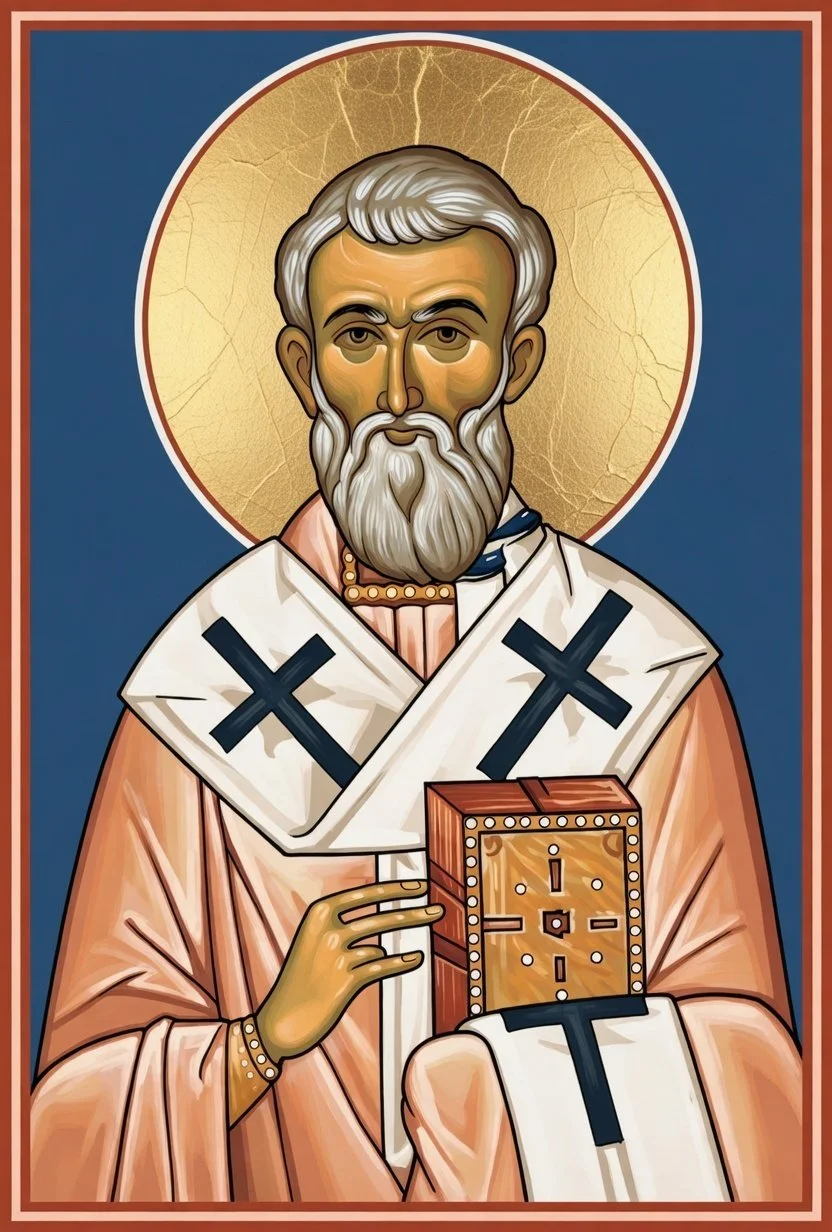
The Gospel book represents his deep scriptural teaching and lifelong devotion to preaching Christ’s words faithfully and without compromise.