 Image 1 of 1
-
From Brilliant Student to Desert Ascetic
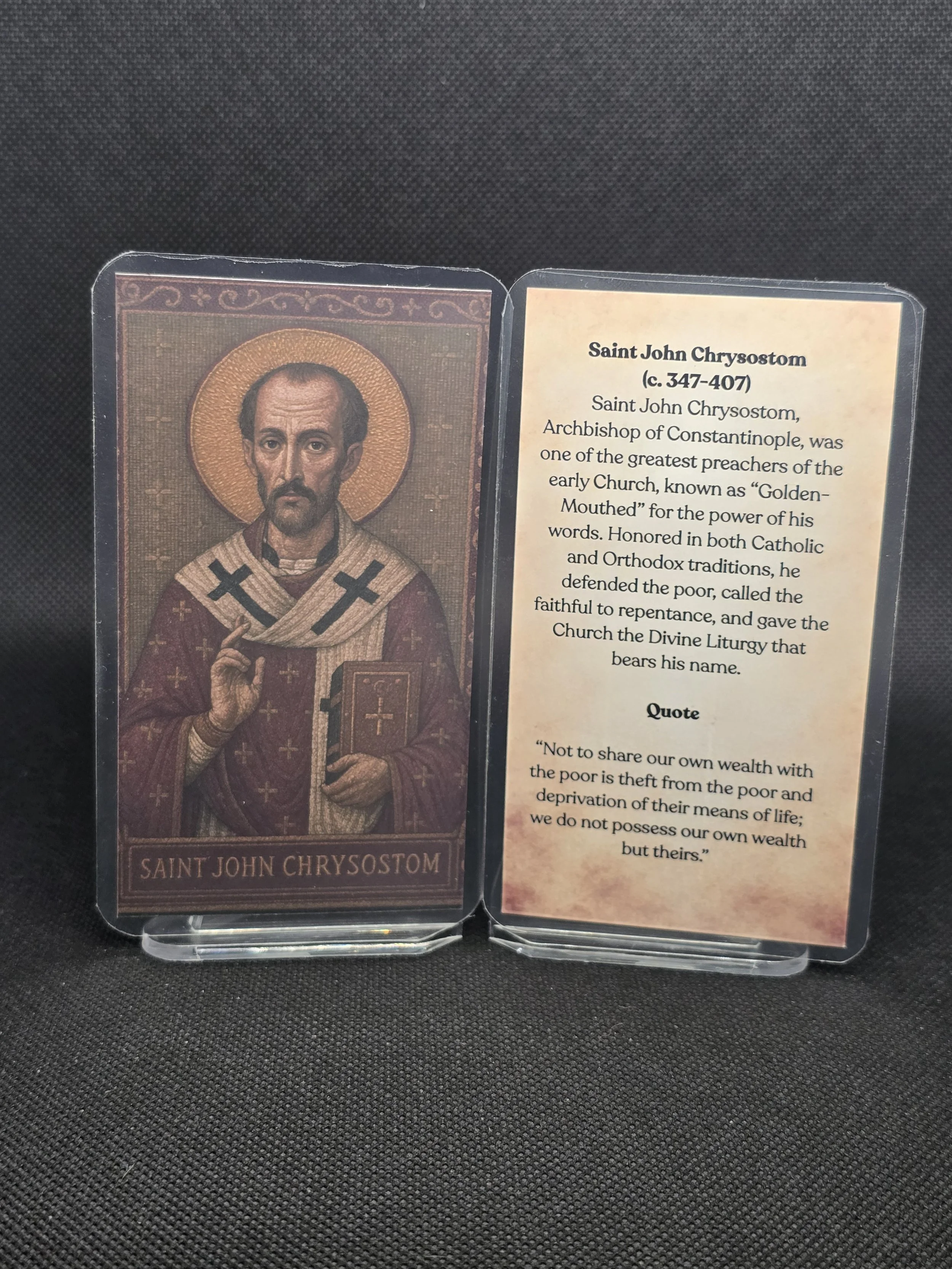
Saint John Chrysostom was born around 349 in Antioch, one of the Roman Empire’s great intellectual centers. He studied rhetoric under the famed teacher Libanius and quickly became known for his extraordinary ability with language.
Yet John sensed something was missing.
He withdrew from society and embraced ascetic life, practicing extreme fasting and long vigils, immersing himself in Scripture. These years permanently weakened his body but strengthened his spirit. He learned silence before speech, restraint before authority, humility before leadership.
This inner formation would define everything that followed.
Shepherd of Souls in Antioch
Ordained a priest, John began preaching in Antioch with remarkable clarity and moral force. His homilies addressed real life:
He confronted greed.
He defended the poor.
He exposed hypocrisy.
He demanded repentance.Crowds filled the churches to hear him. His explanations of the Gospel and the letters of Saint Paul remain foundational texts to this day.
John taught that Christianity is not an idea system. It is a way of life.
Archbishop Who Refused Luxury
In 398, John was unexpectedly appointed Archbishop of Constantinople. Instead of enjoying imperial privilege, he sold expensive furnishings, simplified the episcopal household, and used church funds to care for the sick and displaced.
He also imposed strict discipline on clergy and spoke openly against the vanity of the imperial court.
This made powerful enemies.
False accusations followed.
He was exiled.
Recalled by popular demand.
Then exiled again.
The Road of Obedience
Forced across harsh terrain while gravely ill, John collapsed along the journey. Before dying in 407, he uttered words that summarize his entire spirituality:
“Glory to God for all things.”
His body failed.
His witness did not.
His relics were later returned in honor, and the Church proclaimed him one of her greatest teachers and a Doctor of the Church.
-
Saint John Chrysostom is especially sought by those facing internal and external pressure.
Patron Saint Of:
Public speaking, preaching, and teaching with clarity
Spiritual discipline and self-control
Courage to live truthfully under pressure
Clergy and seminarians
Teachers and professors
Lawyers and advocates
Writers and theologians
Those struggling with moral compromise
Miracles and Ongoing Intercession
After his death, healings were reported at his relics, including relief from physical illness and emotional affliction.
In modern devotion, many testify to:
Calm and confidence before public speaking
Unexpected clarity while preparing sermons or lectures
Renewed resolve to resist destructive habits
Strength to confront injustice or speak uncomfortable truth
Restoration of spiritual discipline after seasons of weakness
His intercession often manifests quietly:
focused minds
steady voices
strengthened wills
renewed moral courageSaint John Chrysostom rebuilds the interior structure of the soul.
-
Traditional Troparion (Tone 8)
Grace shining forth from your lips like a beacon has enlightened the universe; it has shone to the world the riches of poverty; it has revealed to us the heights of humility. Teaching us by your words, O Father John Chrysostom, intercede before the Word, Christ our God, to save our souls.
Personal Prayer
Holy Father John Chrysostom, teacher of repentance and guardian of truth, pray for me.
Intercede that my words may be guided by wisdom and my actions shaped by humility. Strengthen me when discipline feels difficult. Grant me courage when I must speak what is right. Quiet my fears and purify my intentions.
Help me govern my thoughts, restrain my passions, and live the Gospel consistently. Remember teachers, clergy, and all who carry responsibility for guiding others.
You who endured exile for righteousness, teach me perseverance when obedience becomes costly.
Through your prayers, may my speech honor Christ, my life reflect integrity, and my heart remain anchored in God. Amen.
-
Q: What is Saint John Chrysostom known for?
He is known for his powerful preaching, deep moral clarity, and reform of church life. He is especially invoked for public speaking, inner discipline, and courage to live the Gospel.Q: When is Saint John Chrysostom’s feast day?
Saint John Chrysostom is commemorated on November 13.Q: Which Christian traditions venerate Saint John Chrysostom?
Saint John Chrysostom is venerated in both the Eastern Orthodox Church and the Catholic Church, honored as a Doctor of the Church.Q: Why is Saint John Chrysostom associated with the Divine Liturgy?
The principal Eucharistic service of the Byzantine tradition bears his name, reflecting his theological clarity and enduring influence on Christian worship.