 Image 1 of 2
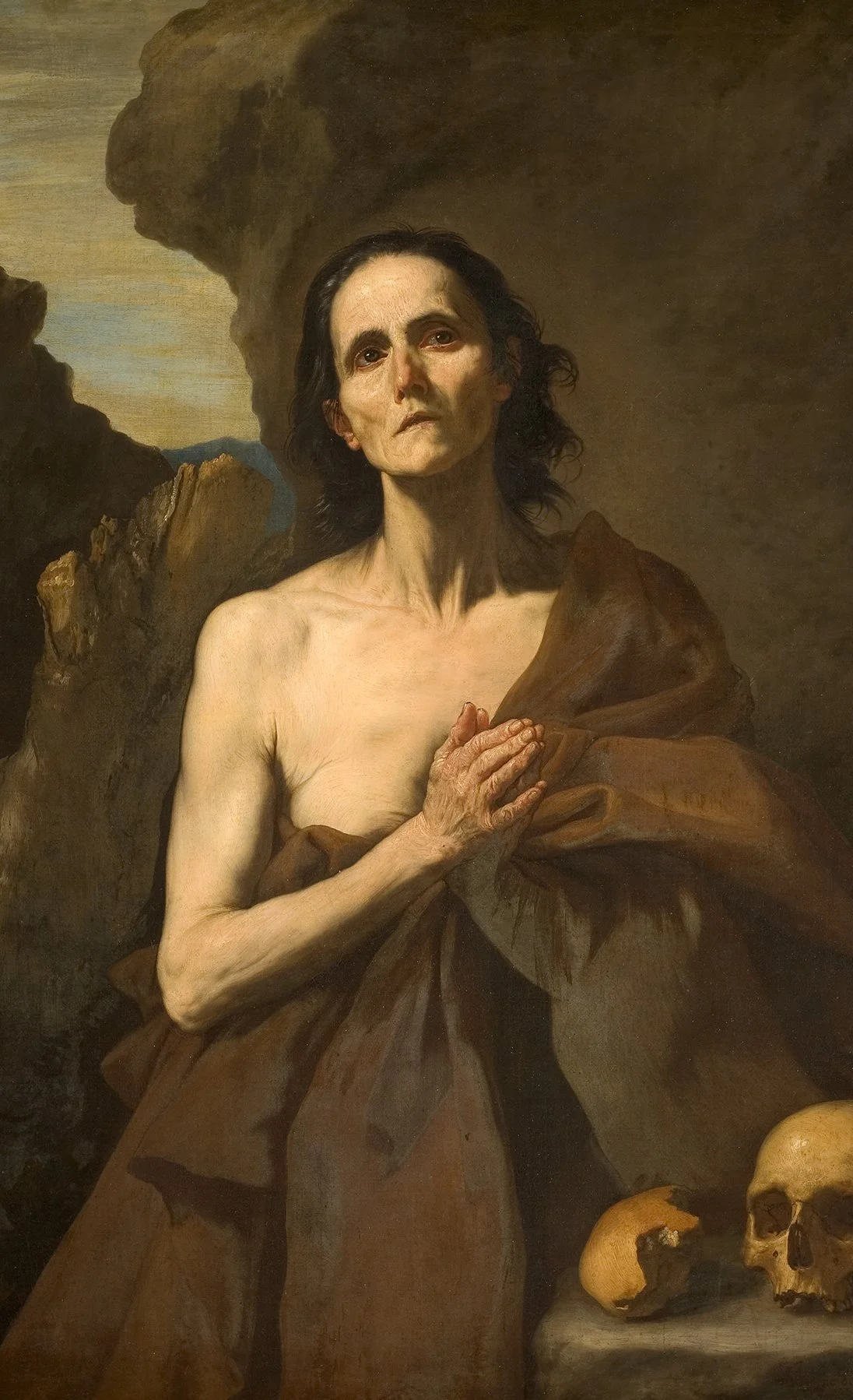 Image 2 of 2
-
Seventeen Years of Disorder
Mary was born in Egypt in the 5th century. At age twelve, she ran away to Alexandria, where she immersed herself in a life of promiscuity and moral chaos. She did not sell herself for survival. She pursued sin freely and compulsively.
Her life became a cycle of indulgence and emptiness.
For seventeen years she lived in this state.
The Church Door That Would Not Open
One day, Mary joined a group of pilgrims traveling to Jerusalem. Not out of devotion, but curiosity and pleasure. When she attempted to enter the Church of the Holy Sepulchre on the Feast of the Exaltation of the Holy Cross, she found herself unable to step inside.
She tried repeatedly.
Each time, something invisible blocked her.
Watching others pass freely while she remained stopped, she realized the barrier was not physical. It was spiritual.
Overcome with conviction, she turned toward an icon of the Mother of God and cried out for mercy. She promised to renounce her former life if only she could enter and venerate the Cross.
Immediately, the way opened.
She entered.
She wept.
She left everything behind.
Forty-Seven Years in the Desert
Mary crossed the Jordan River and entered the wilderness.
For nearly five decades she lived alone in the desert, without shelter, enduring hunger, heat, cold, and spiritual temptation. For many years she battled intense memories and cravings from her former life. She described violent interior struggle.
But she did not turn back.
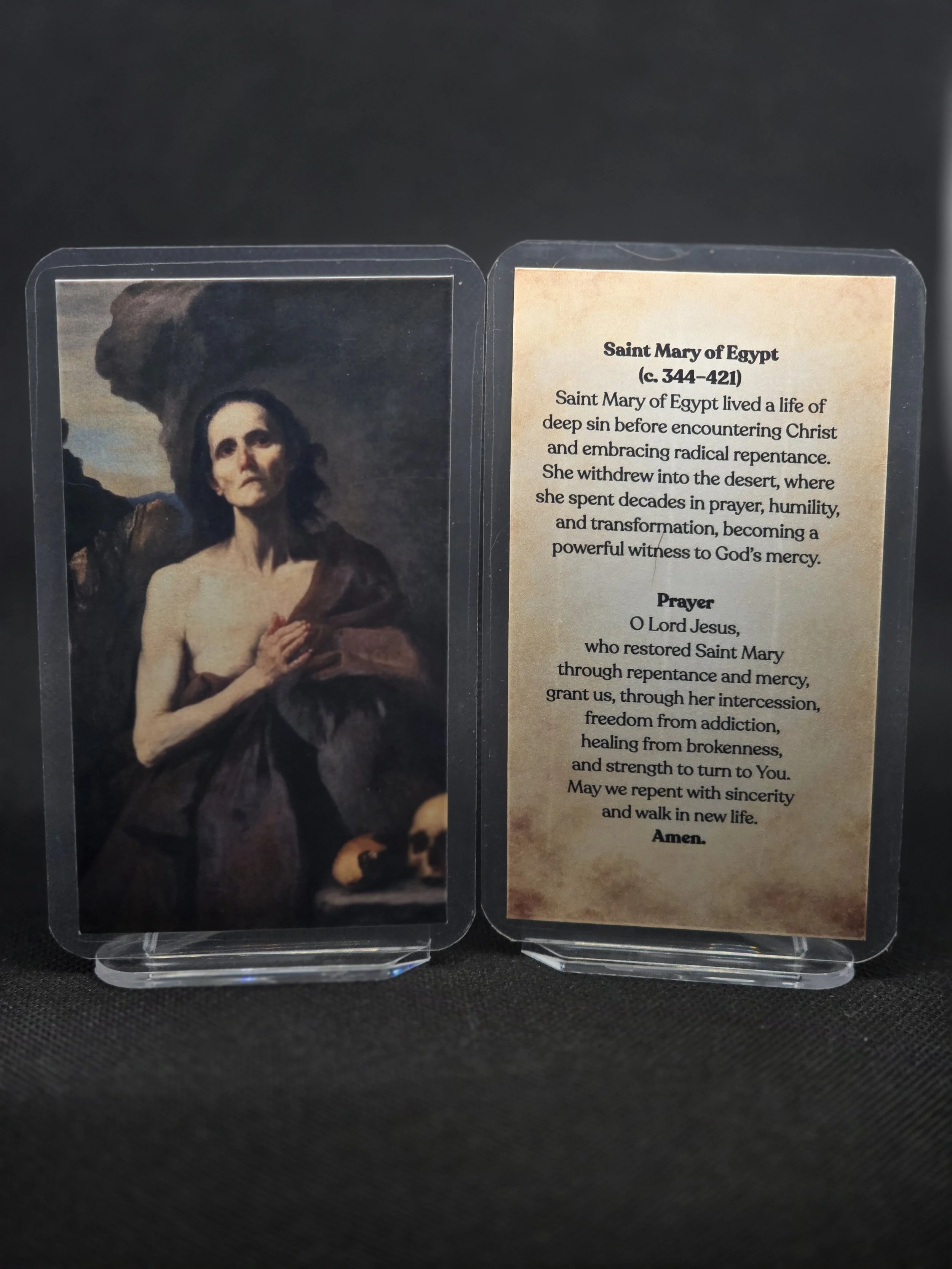
Gradually, grace replaced torment. Her body became thin and weathered. Her hair whitened. Her skin darkened from the sun. She memorized Scripture through the liturgy she once heard and spent her days in prayer.
The Monk Who Found Her
Near the end of her life, a monk named Zosimas encountered her in the desert. She walked across the Jordan River as if on dry land. She knew Scripture by heart though she had never read it.
She asked him to bring her Holy Communion the following year. He returned to find her body lying peacefully in the sand.
She had died alone.
But not forgotten.
-
Saint Mary of Egypt is one of the Church’s most powerful intercessors for deep moral and spiritual healing.
Patron Saint Of:
Freedom from addiction
Healing from sexual brokenness
Radical repentance after years of sin
Those trapped in compulsive behaviors
People battling shame and despair
Souls returning to confession after long absence
Anyone who believes they are beyond forgiveness
Miracles and Ongoing Intercession
While most recorded miracles focus on spiritual transformation rather than physical healing, countless testimonies report:
release from destructive addictions
freedom from pornography and sexual compulsions
sudden conviction leading to life-changing repentance
restoration of chastity
peace replacing crippling shame
renewed desire for prayer and confession
Her greatest miracle is interior resurrection.
Mary’s story continues to convert hearts centuries later. Many credit her intercession with dramatic life reversals, especially for those who feel too stained for mercy.
She proves that the desert can become holy ground.
-
Troparion (Orthodox)
Through you, O Mother, was preserved what is according to the image;
for you took up the Cross and followed Christ.
By so doing, you taught us to disregard the flesh, for it passes away,
but to care instead for the soul, since it is immortal.
Therefore, O Venerable Mary, your spirit rejoices with the angels.Personal Prayer
Holy Mother Mary of Egypt, blazing witness of repentance, pray for me.
Intercede for freedom from addiction and healing from sexual brokenness. Deliver me from compulsions that enslave me and from shame that silences me. Obtain courage to confess, strength to persevere, and humility to begin again.
You who crossed from darkness into radiant holiness, show me that no sin is stronger than God’s mercy.
Lead me into my own desert, where grace can heal what I have wounded.
By your prayers, may I rise again. Amen.
-
Q: What is Saint Mary of Egypt known for?
Saint Mary of Egypt is known for radical repentance after a life of sexual sin and addiction. She is a powerful intercessor for those seeking freedom from addiction and deep moral healing.Q: When is Saint Mary of Egypt’s feast day?
She is commemorated on April 1 and also on the Fifth Sunday of Great Lent in the Orthodox tradition.Q: Which Christian traditions venerate Saint Mary of Egypt?
Saint Mary of Egypt is venerated in the Eastern Orthodox Church, Eastern Catholic Churches, and the wider Catholic tradition.Q: Why is Saint Mary of Egypt depicted emaciated in icons?
Her thin, weathered appearance reflects her forty-seven years of ascetic life in the desert, symbolizing repentance, purification, and total surrender to God.