 Image 1 of 1
-
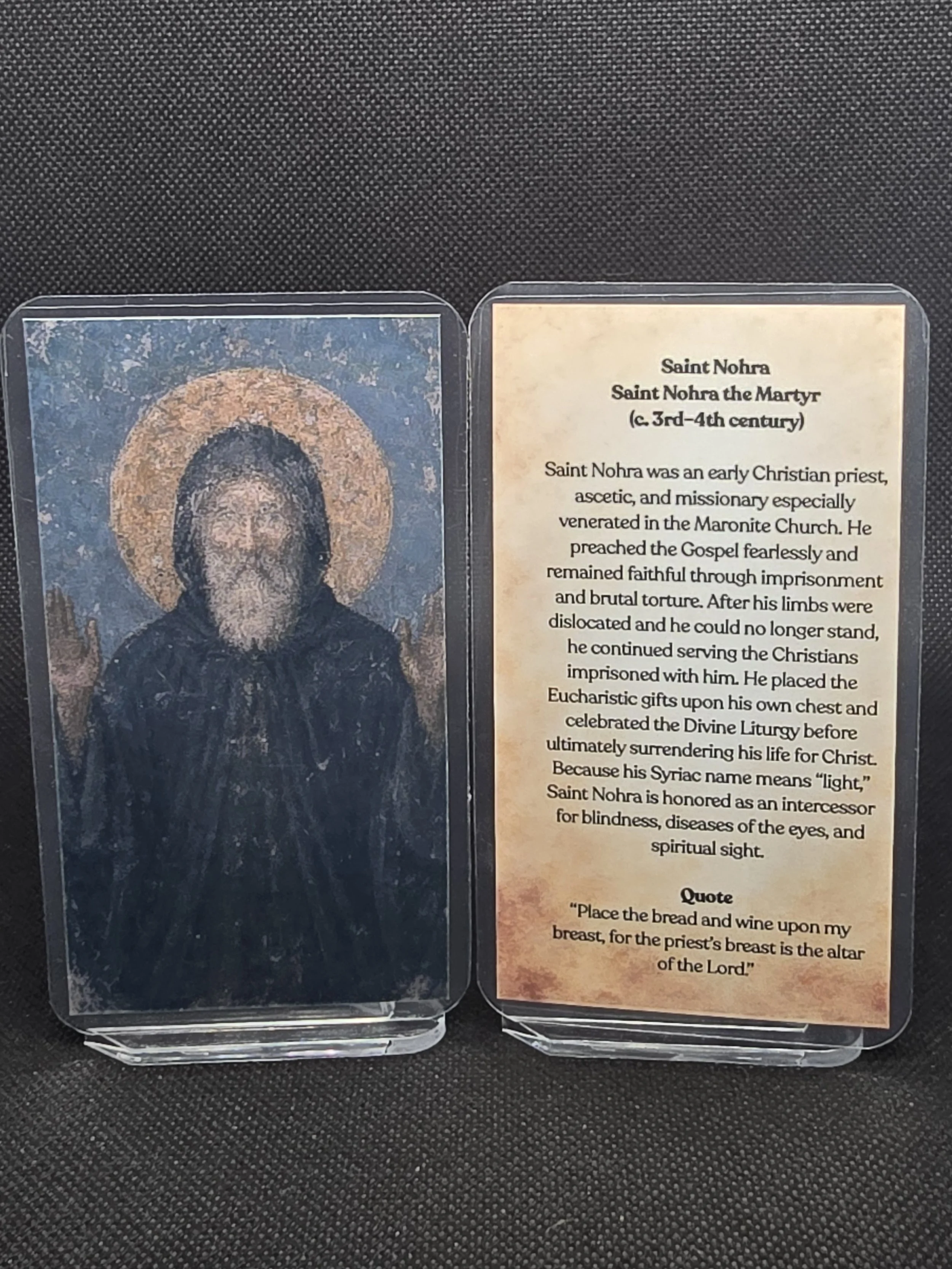
Saint Nohra lived sometime during the early centuries of Christianity, retreating into the mountainous regions of Lebanon to live as a hermit devoted entirely to God. While historical records are sparse, Eastern Christian tradition preserves the memory of a man marked by both severe illness and deep contemplative prayer.
From the beginning, his path was one of weakness rather than strength.
He suffered physically for many years, carrying chronic ailments that limited his mobility and endurance. Instead of resisting this condition, Nohra allowed it to become part of his spiritual offering. His days were shaped by prayer, fasting, and silence, and his nights were often spent in vigil.
His isolation was not sterile.
It was inhabited by Christ.
Gradually, word spread about the holy hermit who prayed with compassion for the sick. Villagers began traveling into the hills seeking his blessing. Some arrived desperate for healing. Others came burdened by grief or exhaustion. Nohra welcomed them quietly, offering prayer without spectacle and counsel without judgment.
Many reported physical healing after his intercession. Others left with renewed courage to carry their illnesses with peace. His presence itself became medicine.
Nohra never sought reputation. He never organized a following. He simply remained faithful in hiddenness until the end of his life, teaching by example that suffering does not disqualify holiness. It deepens it.
His memory was preserved through oral tradition and local devotion, especially among Maronite Christians who continue to honor him as a companion to the sick and forgotten.
-
Saint Nohra is remembered as a powerful intercessor for those enduring prolonged physical suffering and spiritual fatigue.
He is especially beloved by people who must live faithfully inside bodies that hurt.
Patron Saint Of:
Healing from chronic illness
Autoimmune and long-term disease
Perseverance during prolonged suffering
Trusting God when prayers feel unanswered
Spiritual endurance in weakness
Physical pain that does not quickly resolve
Quiet faith during isolation
Miracles and Ongoing Intercession
During his life, many testified to healing through Saint Nohra’s prayers, especially among those suffering persistent ailments. After his death, devotion continued among Maronite communities, with countless stories of pain easing, hope returning, and strength rising in moments of despair.
Some experience physical relief after years of discomfort. Others describe emotional peace entering where frustration once lived. Many speak of learning how to remain faithful even when healing unfolds slowly.
His miracles arrive quietly.
They come as strength inside fragile bodies.
They come as peace beneath ongoing pain.
They come as Christ walking beside those who wait.Saint Nohra teaches that endurance itself can become prayer.
-
Prayers & Traditional Devotion
Traditional Prayer
Holy Saint Nohra, faithful servant of Christ and comforter of the sick, pray for us. Intercede for our healing, strengthen us in weakness, and teach us to trust God in every trial. Amen.
Personal Prayer
Saint Nohra, gentle hermit and companion of the suffering, pray for me.
You lived with illness and did not lose faith. You carried weakness and did not grow bitter. You trusted Christ when relief did not come quickly.
I bring you my pain.
If my body feels worn, grant strength.
If healing feels delayed, restore hope.
If fatigue weighs on my spirit, renew courage.Teach me how to wait without despair. Teach me how to pray when energy is gone. Teach me how to trust God even when answers feel far away.
Stand beside those living with chronic illness.
Stand beside anyone exhausted by long suffering.
Stand beside all who feel forgotten inside their pain.Saint Nohra, you walked holiness through weakness.
By your intercession, may Christ comfort my body, steady my heart, and teach me how to remain faithful through every season of waiting.
Amen.
-
Q: What is Saint Nohra known for?
He is known as a Maronite hermit saint associated with healing the sick and teaching perseverance through chronic illness and prolonged suffering.Q: When is Saint Nohra’s feast day?
He is traditionally commemorated on July 20 in the Maronite calendar.Q: Which Christian traditions venerate Saint Nohra?
He is honored primarily within the Maronite Catholic Church and Eastern Christian tradition.Q: Why do people pray to Saint Nohra for illness or endurance?
Because he personally lived with long-term sickness while remaining deeply faithful. Many seek his intercession when facing chronic pain, delayed healing, or spiritual exhaustion caused by ongoing suffering.