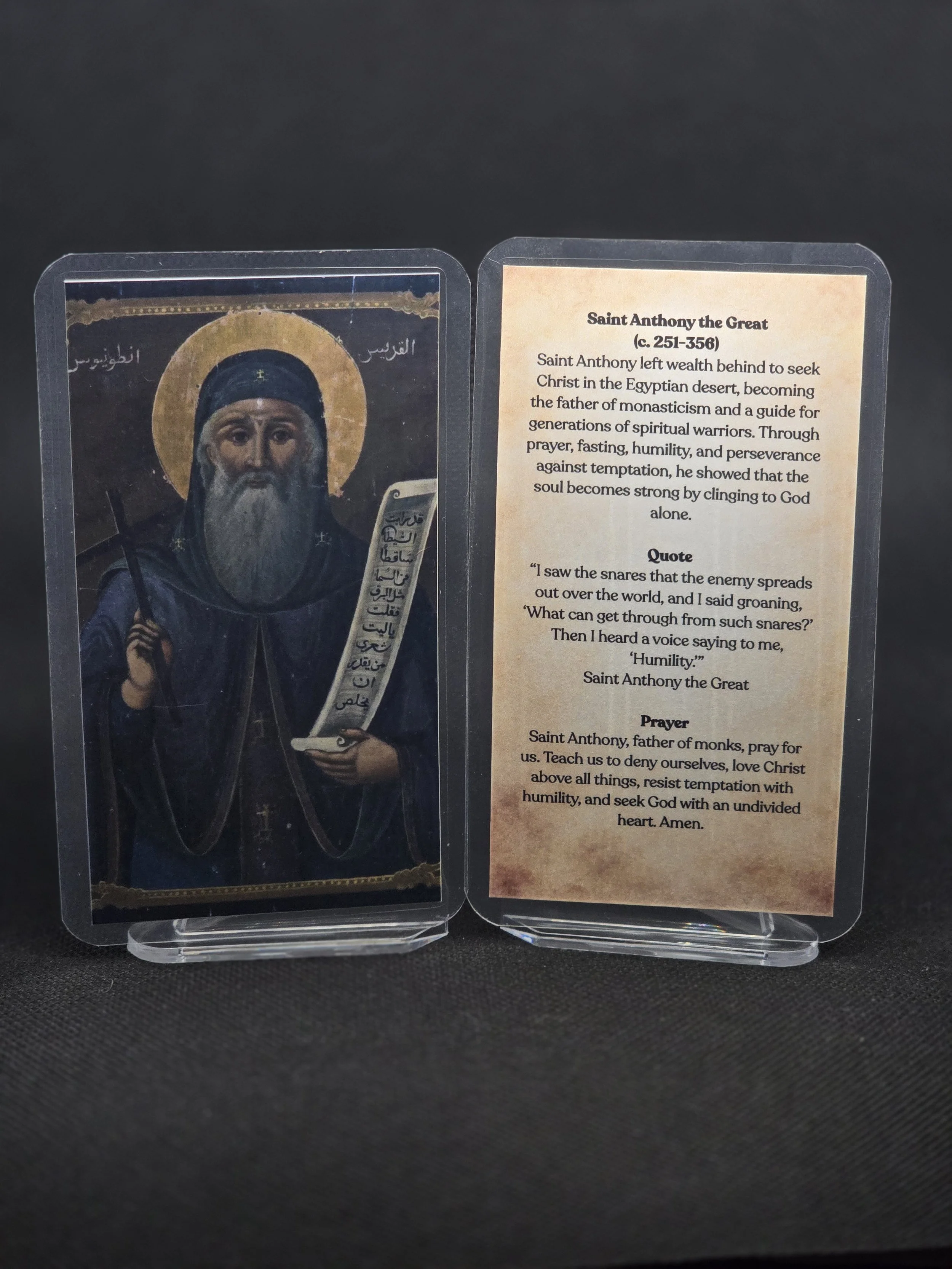
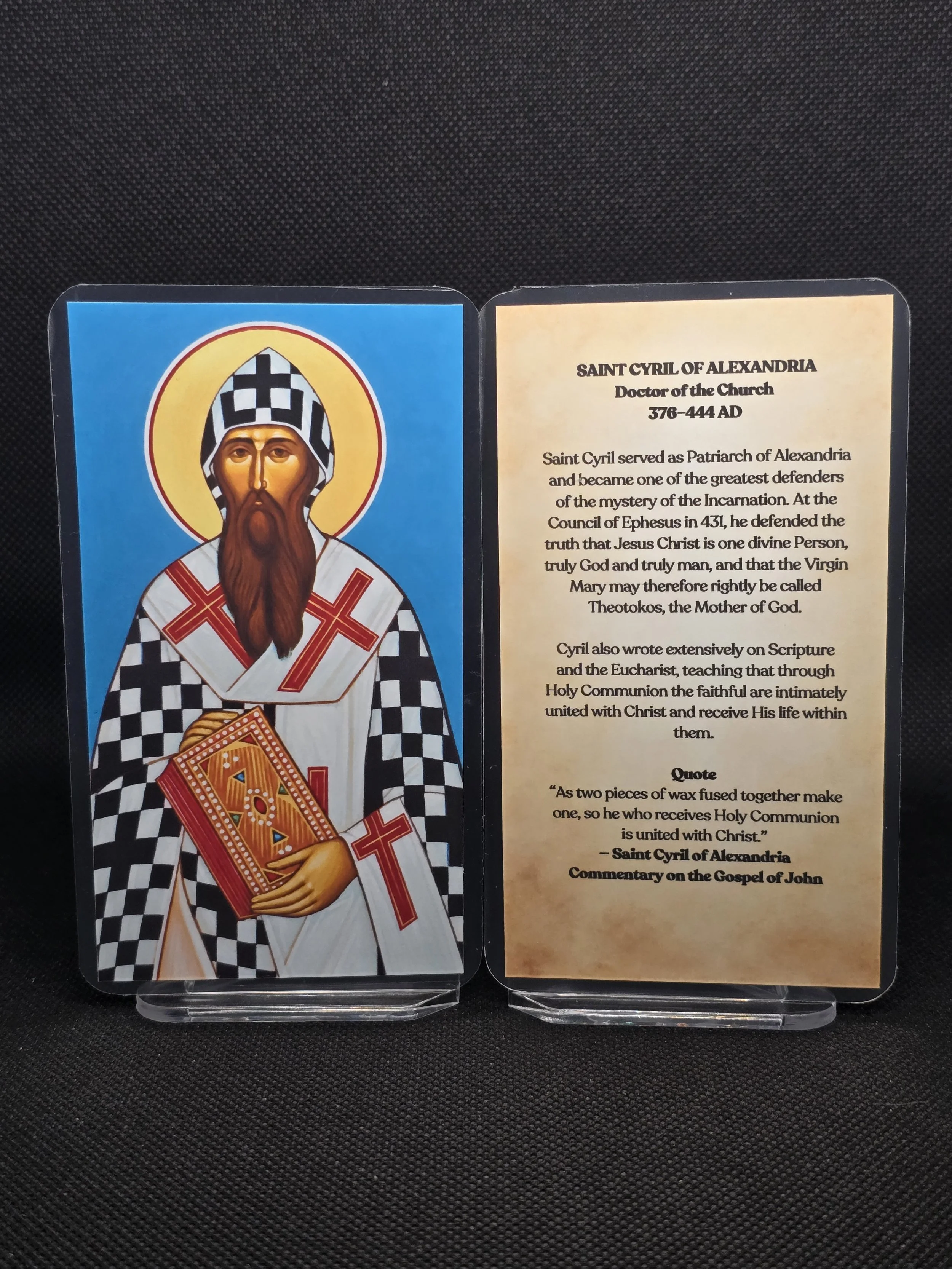
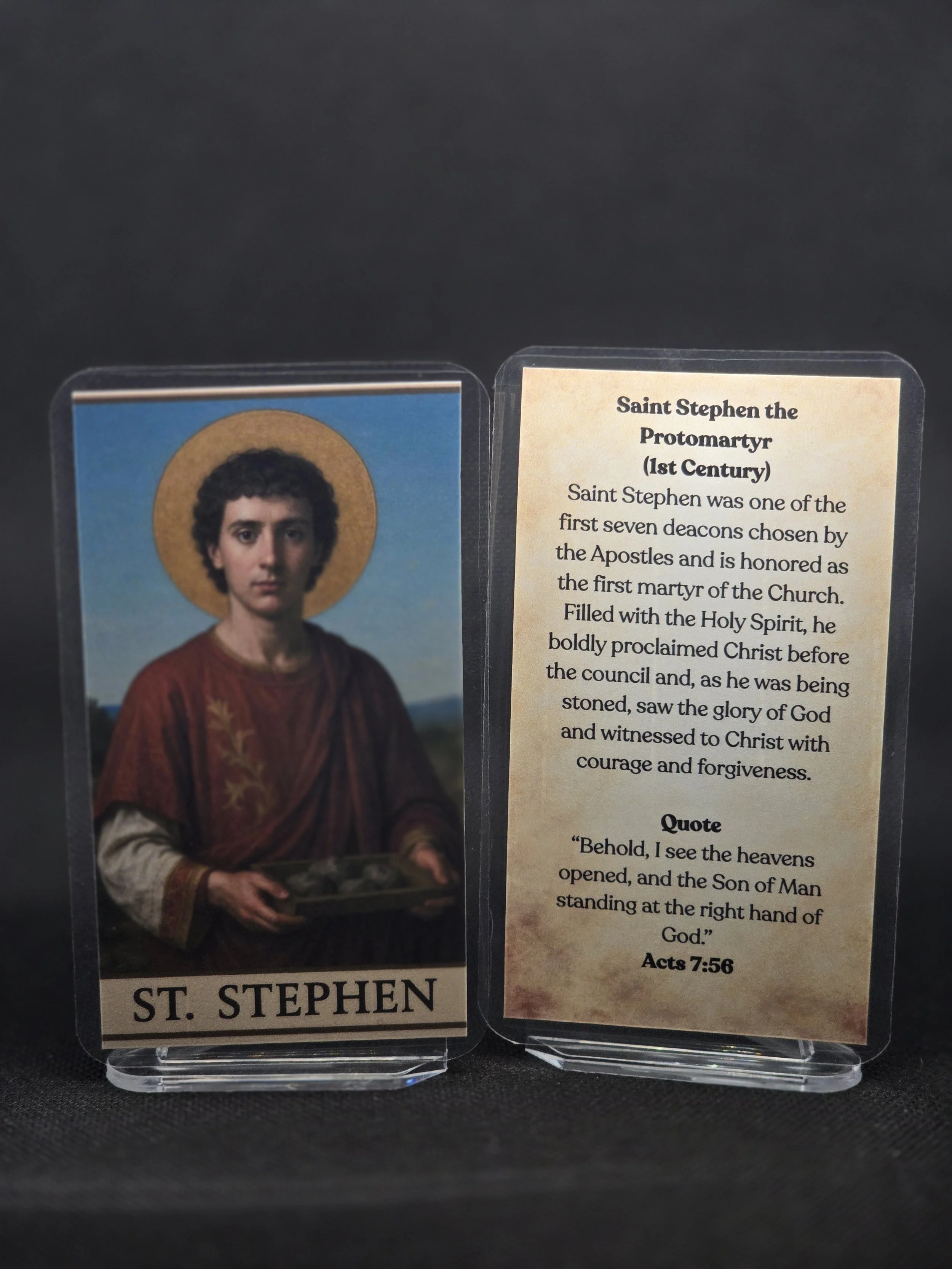
 Image 1 of 2
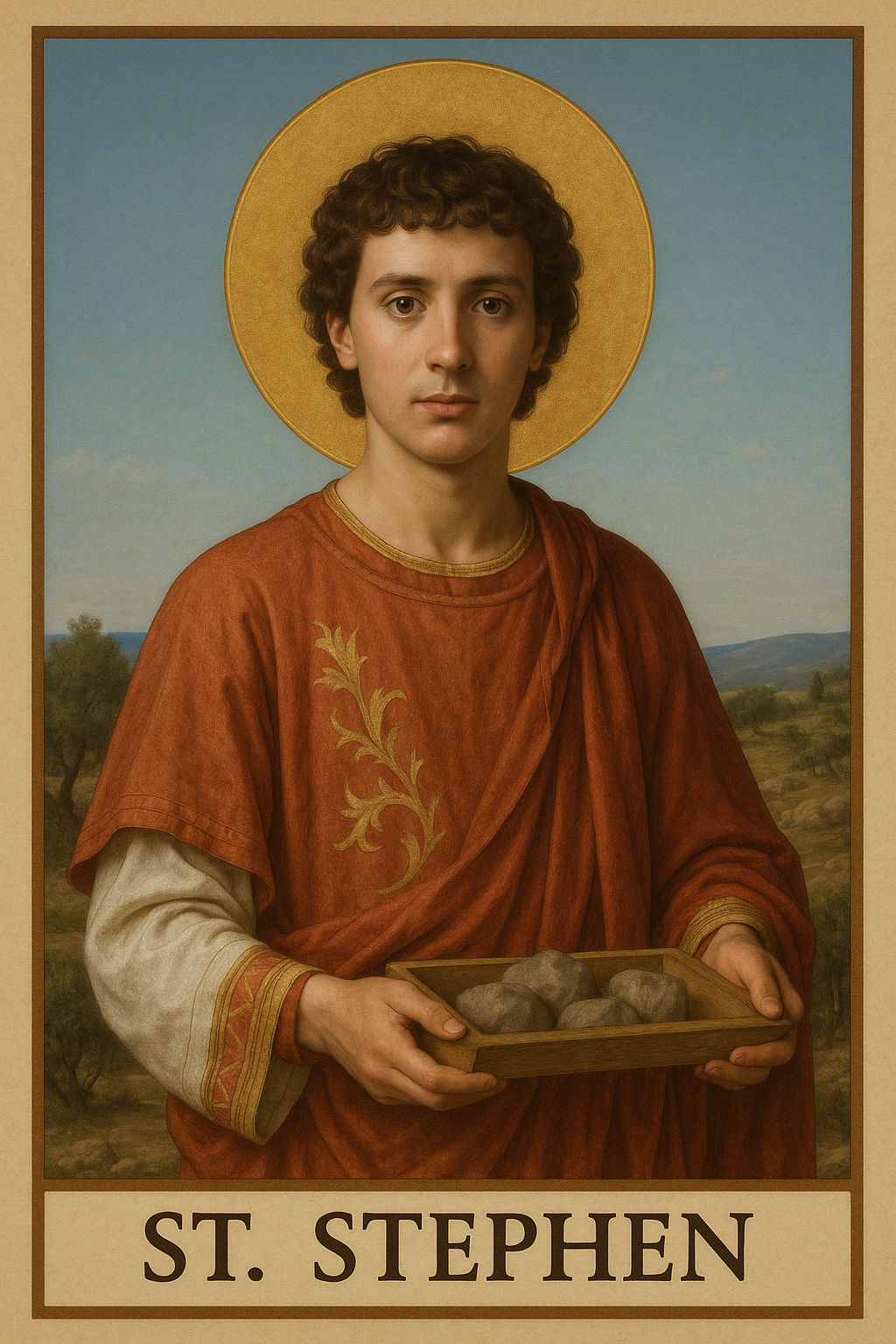 Image 2 of 2
Saint Stephen the Protomartyr Prayer Card – Patron for Courage Under Persecution, Forgiveness After Betrayal & Strength to Speak Truth
-
Saint Stephen lived in Jerusalem during the earliest days of Christianity. He was one of seven deacons appointed by the Apostles to serve widows, care for the poor, and help administer the growing Church. But Stephen’s calling extended beyond logistics.
He preached.
He healed.
He radiated Christ.
Scripture describes him as “full of grace and power,” performing signs and wonders among the people. His wisdom silenced opponents, and his bold proclamation of Jesus as Lord stirred deep anger among religious leaders.
They accused him falsely.
They dragged him before the Sanhedrin.
Stephen responded not with fear, but with sacred memory. He recounted Israel’s history, showing how God had always sent prophets who were rejected, and how Jesus was the fulfillment of every promise.
His words cut deeply.
Looking upward, Stephen proclaimed that he saw Christ standing at the right hand of God.
That vision sealed his fate.
He was dragged outside the city and stoned. As rocks struck his body, Stephen prayed aloud, asking Jesus to receive his spirit. Then he did something that still shakes the soul.
He forgave.
He prayed for his killers.
Among those witnessing his death was Saul, who would later become the Apostle Paul.
Stephen’s martyrdom planted the seed of future conversion.
He did not die in vain.
He died bearing fruit.
-
Saint Stephen is remembered as the prototype of Christian courage and forgiveness.
He is especially beloved by those enduring opposition for their faith.
Patron Saint Of:
Courage under persecution
Forgiveness after betrayal
Speaking truth in hostile environments
Christians rejected by family
Faithfulness under pressure
Deacons and those serving the poor
Remaining peaceful during injustice
Miracles and Ongoing Intercession
From the earliest centuries, believers have invoked Saint Stephen when facing false accusations, public hostility, or spiritual attack. Many testify to sudden peace in moments of confrontation, courage to speak when silence felt safer, and strength to forgive after deep emotional wounds.
Some experience reconciliation in divided families.
Others describe clarity when navigating workplace hostility.
Many find supernatural calm when standing alone.His miracles arrive quietly.
They come as courage rising in the chest.
They come as bitterness dissolving into mercy.
They come as Christ becoming visible in suffering.Saint Stephen teaches that martyrdom begins long before death.
It begins with fidelity.
-
Traditional Prayer
Holy Protomartyr Stephen, faithful witness of Christ, pray for us. Intercede for our courage in persecution, teach us forgiveness in suffering, and help us remain steadfast in faith. Amen.
Personal Prayer
Holy Saint Stephen, first martyr and gentle forgiver, pray for me.
You spoke truth when it cost everything.
You loved when hatred surrounded you.
You forgave while stones were still falling.I bring you my wounds.
If rejection hurts, comfort me.
If fear silences me, give courage.
If betrayal weighs on my heart, teach me mercy.Help me stand firm without becoming hard.
Help me forgive without denying pain.
Help me follow Christ even when I feel alone.Stand beside those rejected for their faith.
Stand beside believers facing hostility.
Stand beside anyone afraid to speak truth.Saint Stephen, you entrusted your life to Christ.
By your intercession, may Christ strengthen my spirit, heal my heart, and teach me how to love bravely in every trial.
Amen.
-
Q: What is Saint Stephen the Protomartyr known for?
He is known as the first Christian martyr, a deacon filled with grace who forgave his executioners while being stoned to death for proclaiming Christ.Q: When is Saint Stephen’s feast day?
He is commemorated on December 27 in the Eastern Christian calendar and December 26 in the Western calendar.Q: Which Christian traditions venerate Saint Stephen?
He is honored in Eastern Orthodoxy, Eastern Catholic Churches, and Roman Catholic devotion.Q: Why do people pray to Saint Stephen for courage or forgiveness?
Because he personally endured rejection and violent death while forgiving his attackers. Many seek his intercession when facing persecution, betrayal, or fear of standing publicly for Christ.