 Image 1 of 2
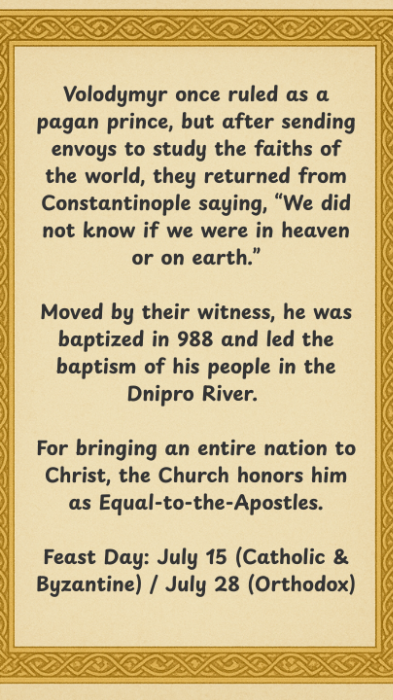 Image 2 of 2
-
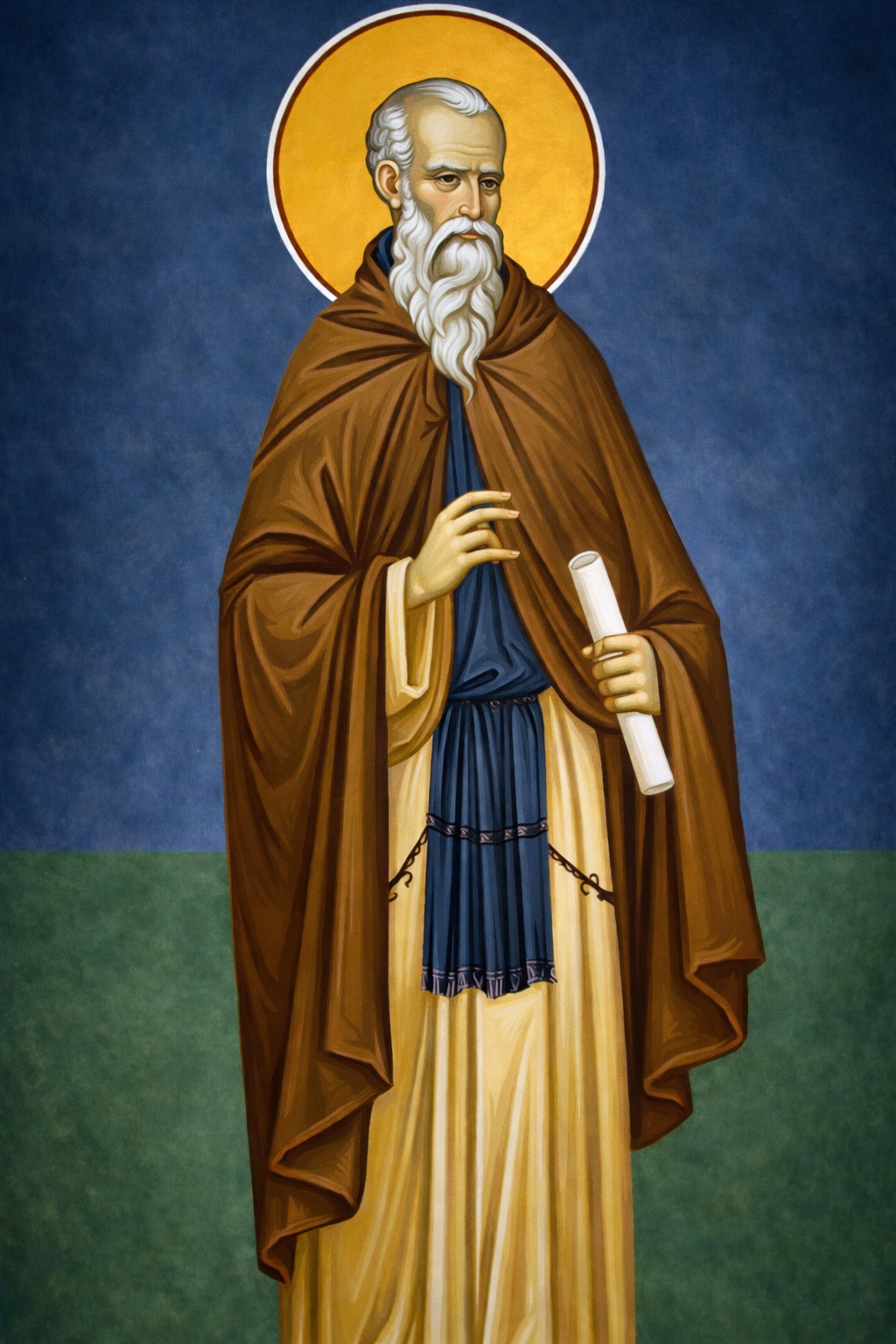
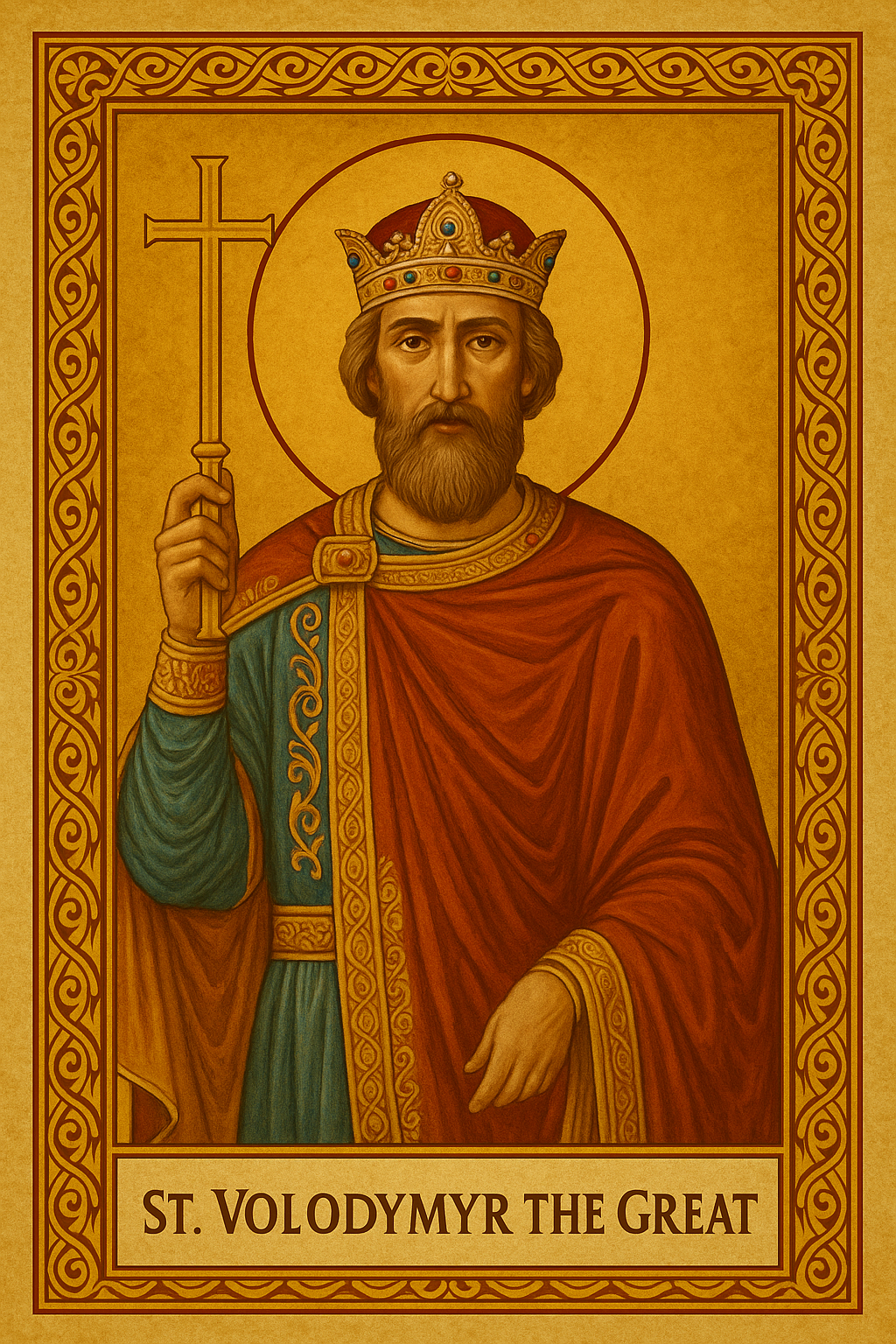
Saint Volodymyr was born around 958 and became ruler of Kyiv in a time of fierce tribal conflict and pagan worship. His early years were marked by consolidation of power through violence. He defeated rivals, expanded territory, and solidified his rule through fear and force.
He built pagan temples.
He enforced pagan rites.
He lived in moral excess.
Yet beneath the ambition was restlessness.
Volodymyr began searching for something greater. He sent envoys to study various religions, including Islam, Judaism, and Western Christianity. When his representatives attended the Divine Liturgy in Constantinople, they were overwhelmed by its beauty and proclaimed that they no longer knew whether they were in heaven or on earth.
Volodymyr listened.
He traveled to receive baptism and embraced Christianity fully. Upon returning to Kyiv, he ordered the destruction of pagan idols and invited his people to be baptized in the Dnieper River.
The transformation was immediate and visible.
He dismissed concubines.
He practiced mercy.
He gave generously to the poor.
He established churches and promoted Christian education.
The ruler once known for brutality became known for charity.
He died in 1015, remembered not for the violence of his youth, but for the courage of his repentance. His life stands as proof that holiness can rise from the most unlikely soil.
-
Saint Volodymyr the Great is remembered as a powerful intercessor for conversion, repentance, and transformation at both personal and national levels.
He is especially beloved by those longing for change after a dark past.
Patron Saint Of:
Radical life transformation
Breaking generational sin
Conversion after moral failure
Leaders seeking righteousness
National spiritual renewal
Baptism and Christian awakening
Courage to publicly repent
Miracles and Ongoing Intercession
Believers who pray through Saint Volodymyr often describe renewed conviction to change destructive habits, courage to confess past sins, and clarity when making life-altering decisions.
Some experience freedom from addictive patterns.
Others find strength to reconcile broken families.
Many testify to spiritual awakening after years of indifference.His miracles arrive decisively.
They come as chains breaking.
They come as repentance deepening.
They come as courage replacing shame.Saint Volodymyr teaches that no past is beyond Christ’s reach.
-
Traditional Prayer
Holy Equal-to-the-Apostles Volodymyr, enlightener of Rus’, pray for us. Intercede for our conversion, strengthen our repentance, and guide us toward faithful obedience to Christ. Amen.
Personal Prayer
Holy Saint Volodymyr, prince who chose Christ over pride, pray for me.
You turned from violence to mercy.
You left behind indulgence for holiness.
You chose baptism when power could have satisfied you.I bring you my past.
If shame binds me, free me.
If sin feels generational, break it.
If repentance feels frightening, strengthen me.Teach me courage to change.
Teach me humility to confess.
Teach me faith that believes transformation is possible.Stand beside leaders tempted by power.
Stand beside families trapped in destructive cycles.
Stand beside anyone longing for a new beginning.Holy Volodymyr, you proved that grace rewrites history.
By your intercession, may Christ renew my heart, cleanse my past, and lead me into a life transformed by His mercy.
Amen.
-
Q: What is Saint Volodymyr the Great known for?
He is known as the ruler who converted to Christianity and led the baptism of Kyivan Rus’, transforming an entire nation’s spiritual identity.Q: When is Saint Volodymyr the Great’s feast day?
He is commemorated on July 15 in the Eastern calendar and July 28 in the Western calendar.Q: Which Christian traditions venerate Saint Volodymyr the Great?
He is honored primarily in Eastern Orthodoxy and respected in Eastern Catholic tradition as a foundational Christian ruler.Q: Why do people pray to Saint Volodymyr for transformation or breaking generational sin?
Because he personally moved from a violent, pagan life into profound Christian repentance and leadership. Many seek his intercession when longing for deep change after moral failure or years of spiritual darkness.