Top 10 Coolest Orthodox Saints
Top 10 Coolest
Orthodox Saints
Wild Stories. Real Holiness. And Where to Start.
This is not a tier list of holiness. "Coolest" here means most memorable lives of faith — people whose stories of courage, conversion, repentance, and love are so extraordinary that they have stopped people cold for centuries. Every single one of them is still praying for us.
✦ Free Resource for Couples ✦
Access Free Eastern Christian Marriage ResourcesWhat "Coolest" Means Here — and What It Doesn't
Orthodox saints are not ranked by holiness. The Church doesn't produce tier lists, and neither do we. "Coolest" in this context means most unforgettable — saints whose lives were so vivid, so extreme, so deeply human, and so radically transformed by God that their stories have been told and retold for centuries for a reason.
Some were warriors who died for the faith. Some were sinners whose repentance was more stunning than their sin. Some were elders whose counsel feels like spiritual oxygen to this day. Some were Holy Fools who confronted empires in the name of Christ. What they all share is this: they did not negotiate with God. They went all the way — and God met them there.
The 10 Saints — Jump to Any
4th Century
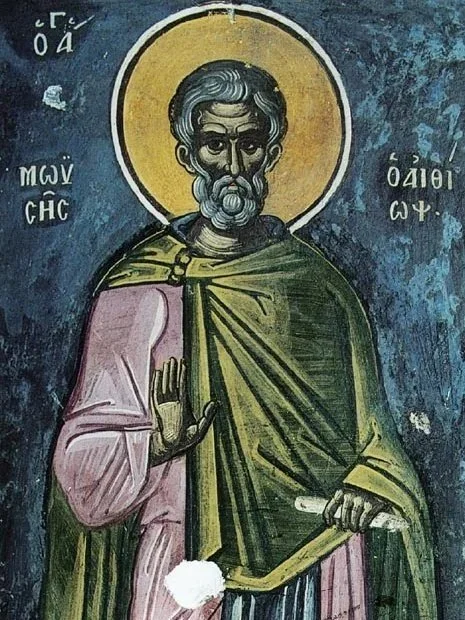
Saint Moses the Ethiopian
(Moses the Black)
"A feared violent bandit becomes a monk whose mercy converted other criminals — then he chose peace even when death was coming."
Moses lived in Egypt in the fourth century, known first for crime, strength, and terror — so much so that he led a band of robbers. His story is "cool" in the deepest sense because it is not a self-improvement arc. It is a total reversal. After years of violence, he repented, left his gang, and demanded to be received by a desert monastery.
The vivid scene that makes him unforgettable: four robbers from his old life attacked his cell. Instead of killing them, Moses tied them up, threw them over his shoulder, carried them to the monastery, and asked the elders what to do. The elders ordered the robbers released. The criminals — stunned by mercy from their former ringleader — repented and became monks.
Near the end of his life, Moses warned his monks that brigands would come. He blessed most to flee, but he remained. He was killed around the year 400 along with several others, linking his earlier violence to Christ's words about those who live by the sword.
1929 – 1995
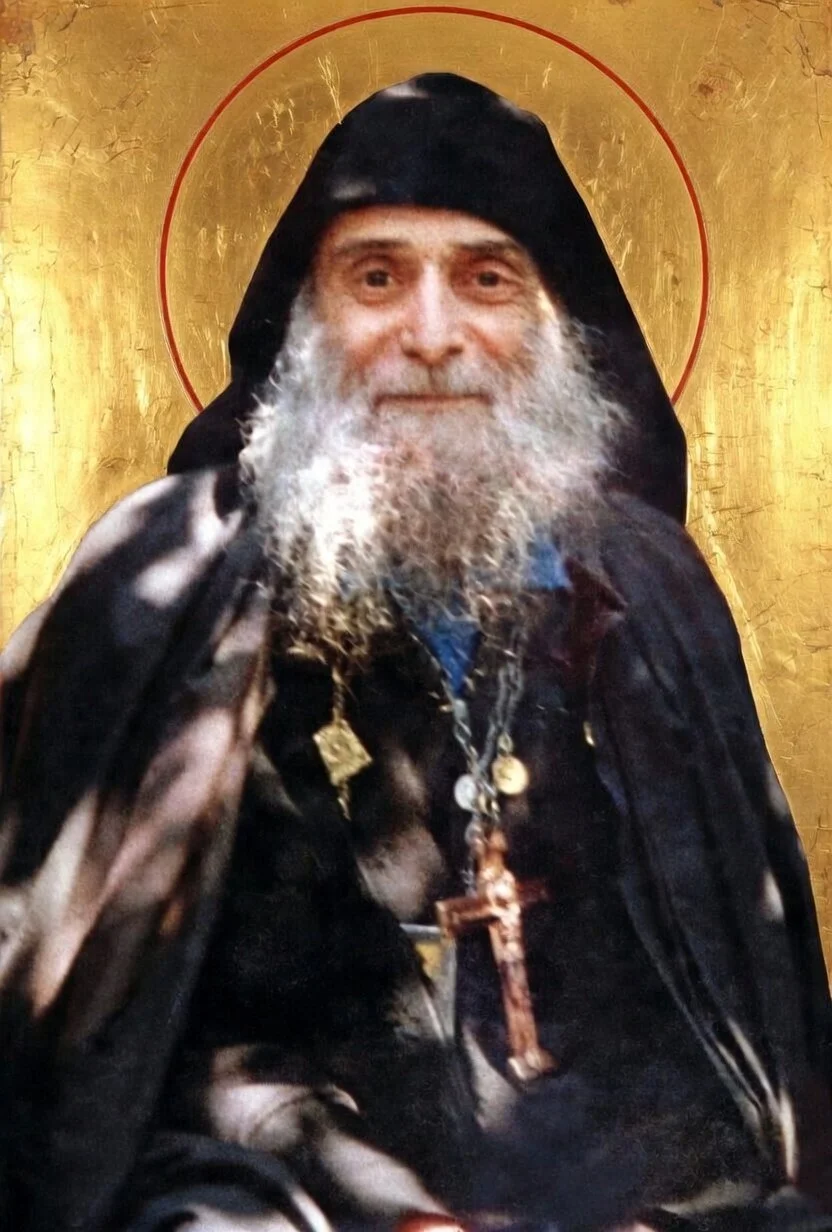
Saint Gabriel of Georgia
"A modern monk who confronted Soviet idolatry in public, endured brutal persecution, and became beloved worldwide for fearless love."
Saint Gabriel Urgebadze was a Georgian monk born in 1929 who grew into faith under atheist Communist rule, persisting in prayer and Scripture even when it marked him as "abnormal" in Soviet society. In Orthodox tradition, a "Fool for Christ" is someone who deliberately accepts misunderstanding and mockery — sometimes acting in ways that appear irrational — to expose pride and point people toward the Kingdom of God. Gabriel embraced this calling completely.
On May 1, 1965, during a major Communist parade in Tbilisi, he climbed to the roof of a building overlooking the march, set fire to an enormous portrait of Lenin, and began shouting Christian slogans to the crowd below. A mob beat him severely. He was then sent to psychiatric imprisonment — the Soviet method for silencing religious dissenters — and tortured. He survived it all. He later said he was not afraid, because he knew exactly what he was doing and why.
He spent the rest of his life in a small monastery cell receiving visitors, praying, and living in radical poverty. He was known for prophecy, radical forgiveness, and ferocious love for God. Canonized by the Georgian Orthodox Church on December 20, 2012 — just 17 years after his death.


c. 303 AD
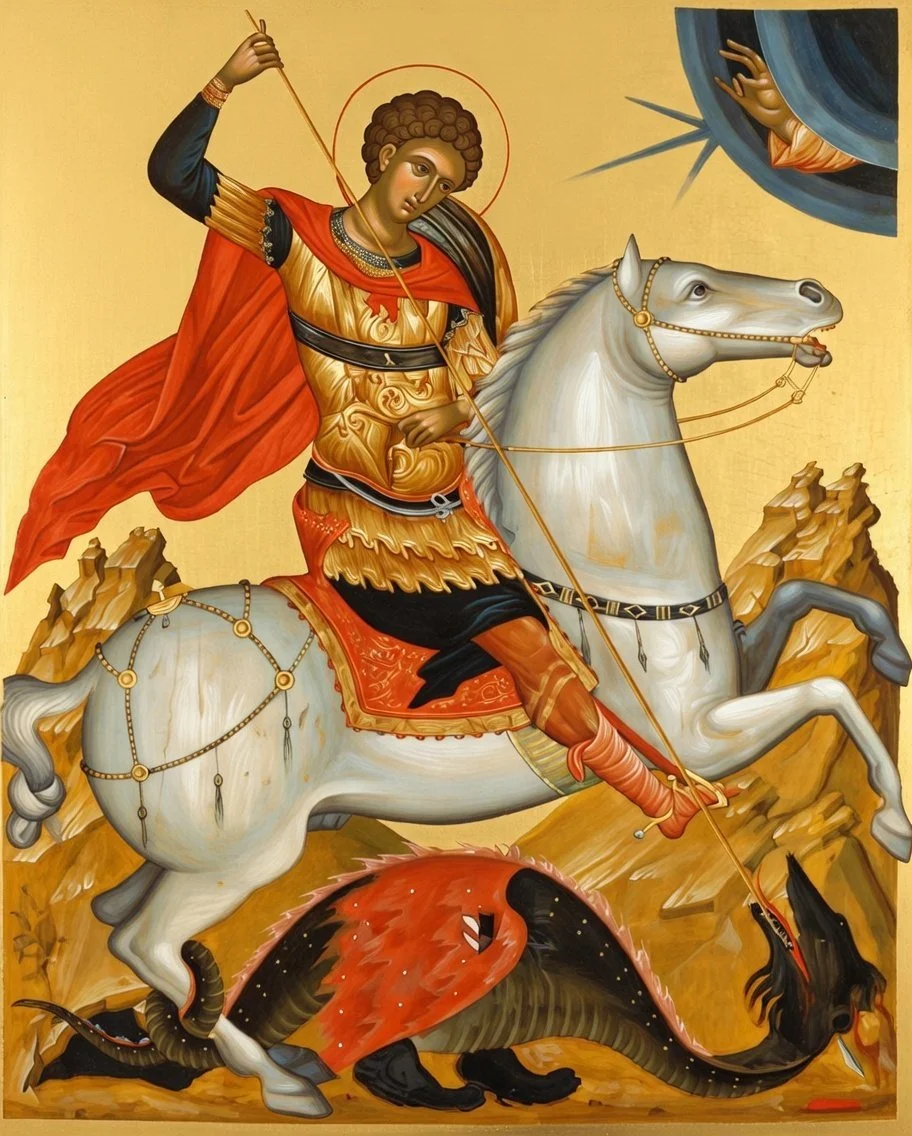
Saint George the Trophy-Bearer
"The classic warrior-martyr — his 'coolness' is ultimately courage under persecution, not fantasy aesthetics."
Saint George is commemorated as a Great Martyr in Orthodox tradition — a Roman soldier who confessed Christ and was executed around 303 AD under the Emperor Diocletian. His story's popularity makes him a major figure in Christian imagination, appearing on the flags of England, Georgia, and several other nations. In the Eastern Church he is called "the Great Martyr and Trophy-Bearer George."
The dragon narrative is one of the most famed miracle stories in Orthodox iconography: a serpent terrorized a region near Beirut, George arrives, makes the sign of the Cross, wounds the beast, has it led away like a dog, and then calls the people to faith. Whether read as miracle narrative, symbol, or layered tradition, the story communicates something real: the power of Christ over the powers of evil, publicly demonstrated at personal cost.
What history preserves most firmly is his martyrdom. He refused to recant his faith under imperial pressure and was tortured and beheaded. His courage was so extraordinary it sparked the conversions of many witnesses — including, according to tradition, the Empress Alexandra herself.
5th Century
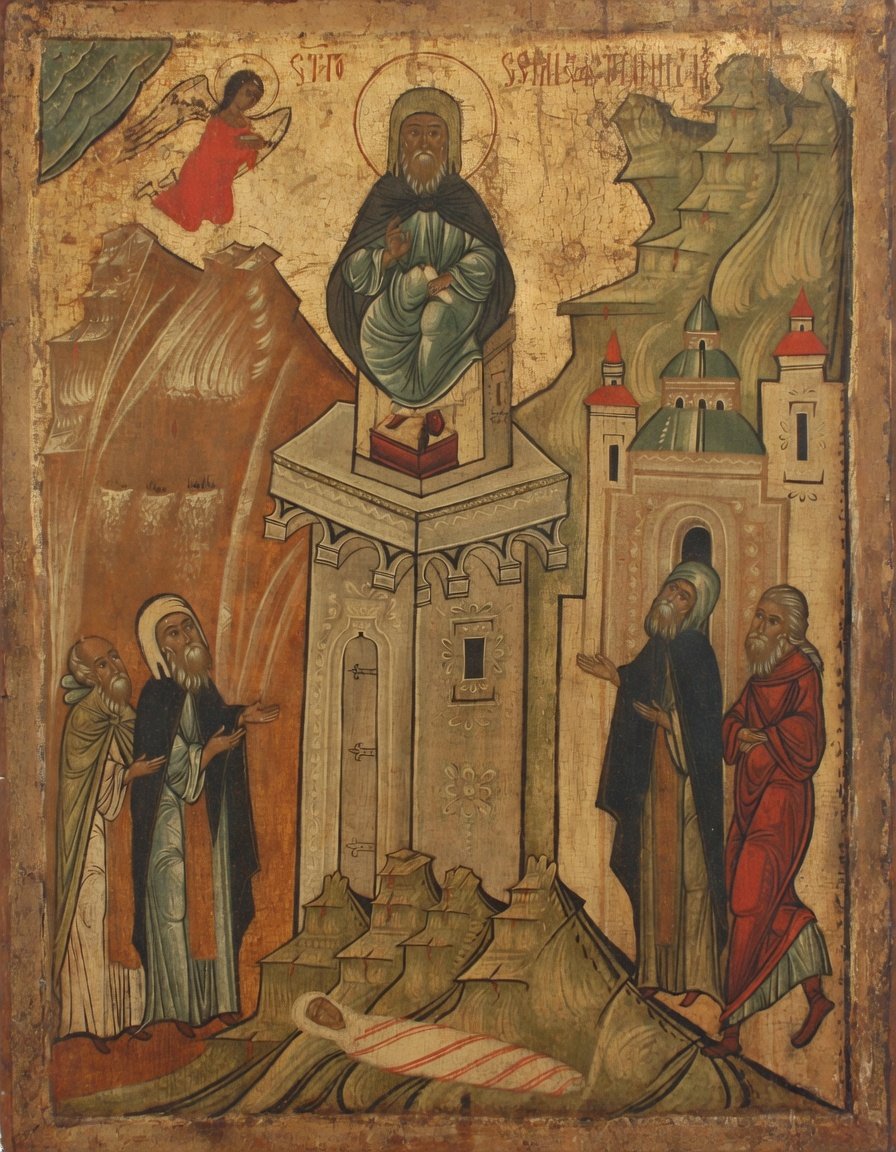
Saint Simeon Stylites
"A saint who lived on a pillar for decades — so extreme that people traveled from everywhere just to ask him for counsel."
Simeon is remembered as the first "stylite" — an ascetic who embraced a radically visible form of desert monasticism by living atop a pillar near Aleppo in what is now Syria. People sought him out because of his holiness and reputation for miracle-working, and he adopted the pillar life partly to escape the crowds and devote himself to prayer. His pillar grew over the years, reaching approximately 50 feet in height, and he lived on it for several decades.
The story that makes his life intelligible to modern readers is the obedience test. Desert elders feared the pillar-life might be prideful and sent messengers ordering him to come down. He immediately prepared to obey — and they told him to remain, recognizing humility rather than self-display. That is the pivot that reframes everything: the point is not spectacle. It is a life ordered so fully around prayer that it reshaped other people's faith from a distance.
Thousands of pilgrims gathered at the base of his column — not for a show, but because holiness has a gravitational pull. He counseled emperors and shepherds alike, never leaving his post, writing letters, and praying without ceasing.
c. 251 – 356 AD
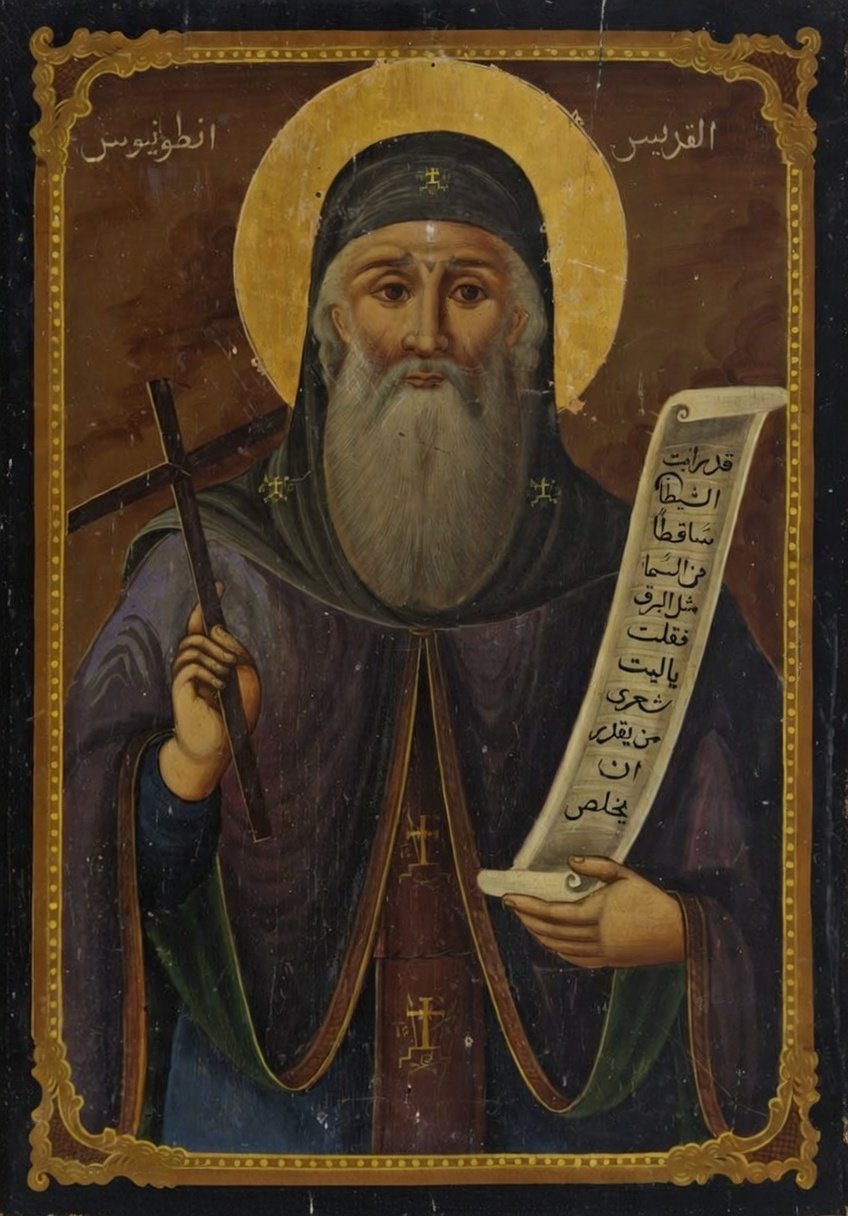
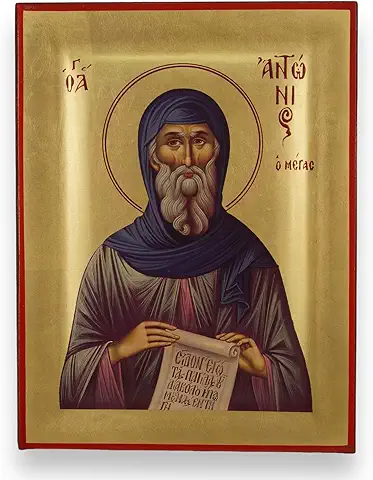
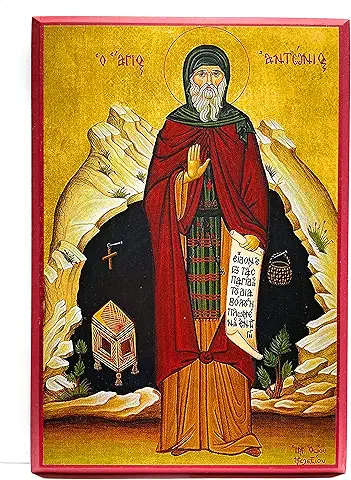
Saint Anthony the Great
"He went into the desert alone for twenty years — and came back transformed. Emperors and theologians traveled to find him."
Around 270 AD, a young Egyptian man named Anthony heard the Gospel passage "Go, sell what you have, and give to the poor" and took it literally. He gave away his entire inheritance, entrusted his younger sister to a community of consecrated women, and walked into the desert. What followed was not peaceful meditation. It was decades of spiritual warfare — terrifying, visible confrontations with demonic forces, overwhelming temptations, crushing loneliness, and long seasons where God seemed completely absent.
He refused to retreat. He learned to confront every thought with prayer. He learned to endure darkness without fleeing. He learned that spiritual peace is not emotional comfort, but trust in God when comfort disappears. When he finally emerged from the desert after twenty years, witnesses said his face shone. He was over a hundred years old. He never learned to read. He spoke no Greek. Yet the Emperor Constantine, the theologian Athanasius, and the greatest minds of his age traveled to the Egyptian desert specifically to seek his counsel.
Saint Anthony the Great is the Father of Christian Monasticism. Every monastery in the world — Eastern and Western — traces its spiritual lineage back to him. He is invoked especially for mental health struggles, anxiety, intrusive thoughts, spiritual attacks, and the deep need for inner peace in a noisy world.

5th – 6th Century
Saint Mary of Egypt
"A woman barred from entering church by an unseen force becomes one of the Church's most vivid icons of conversion."
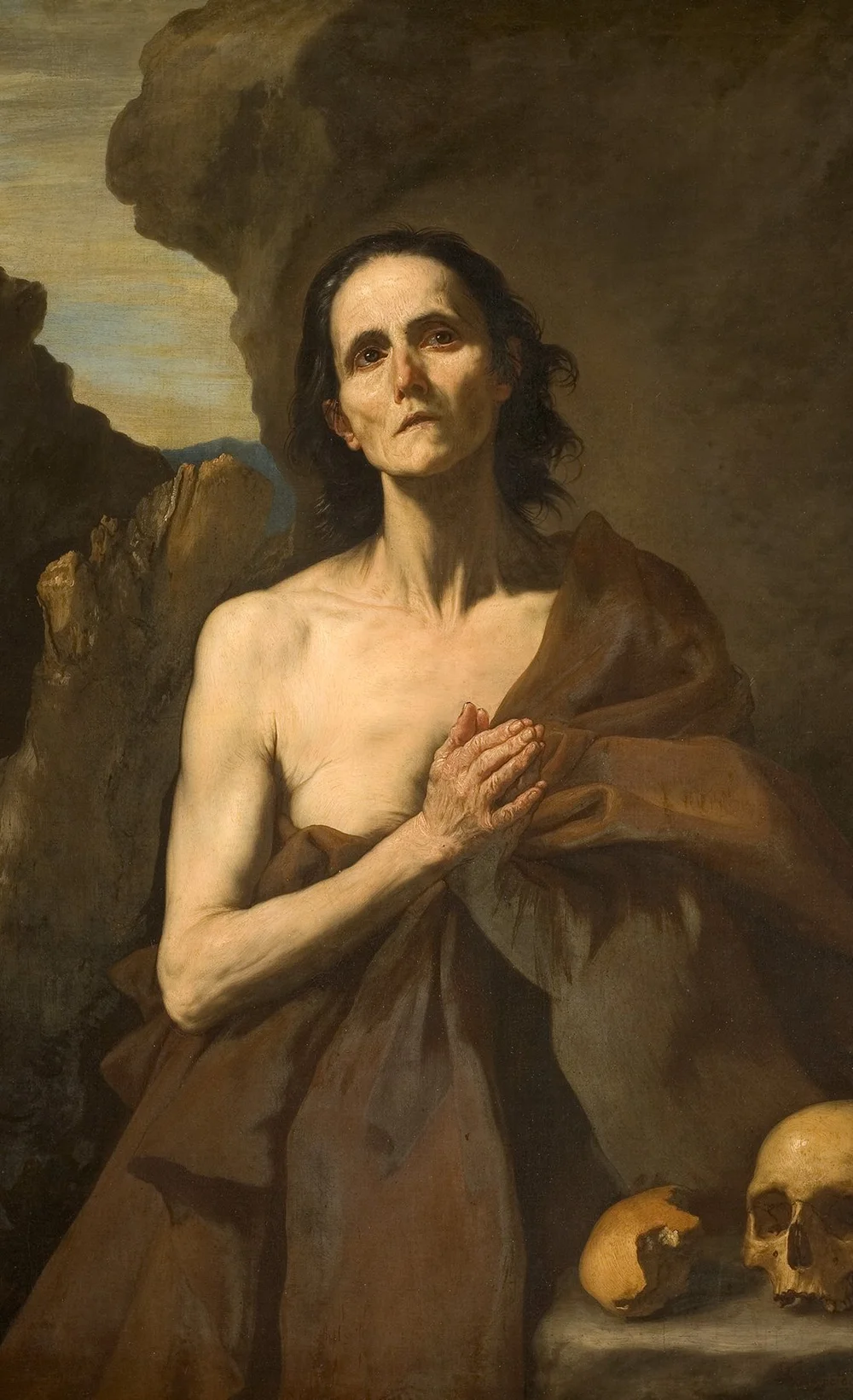
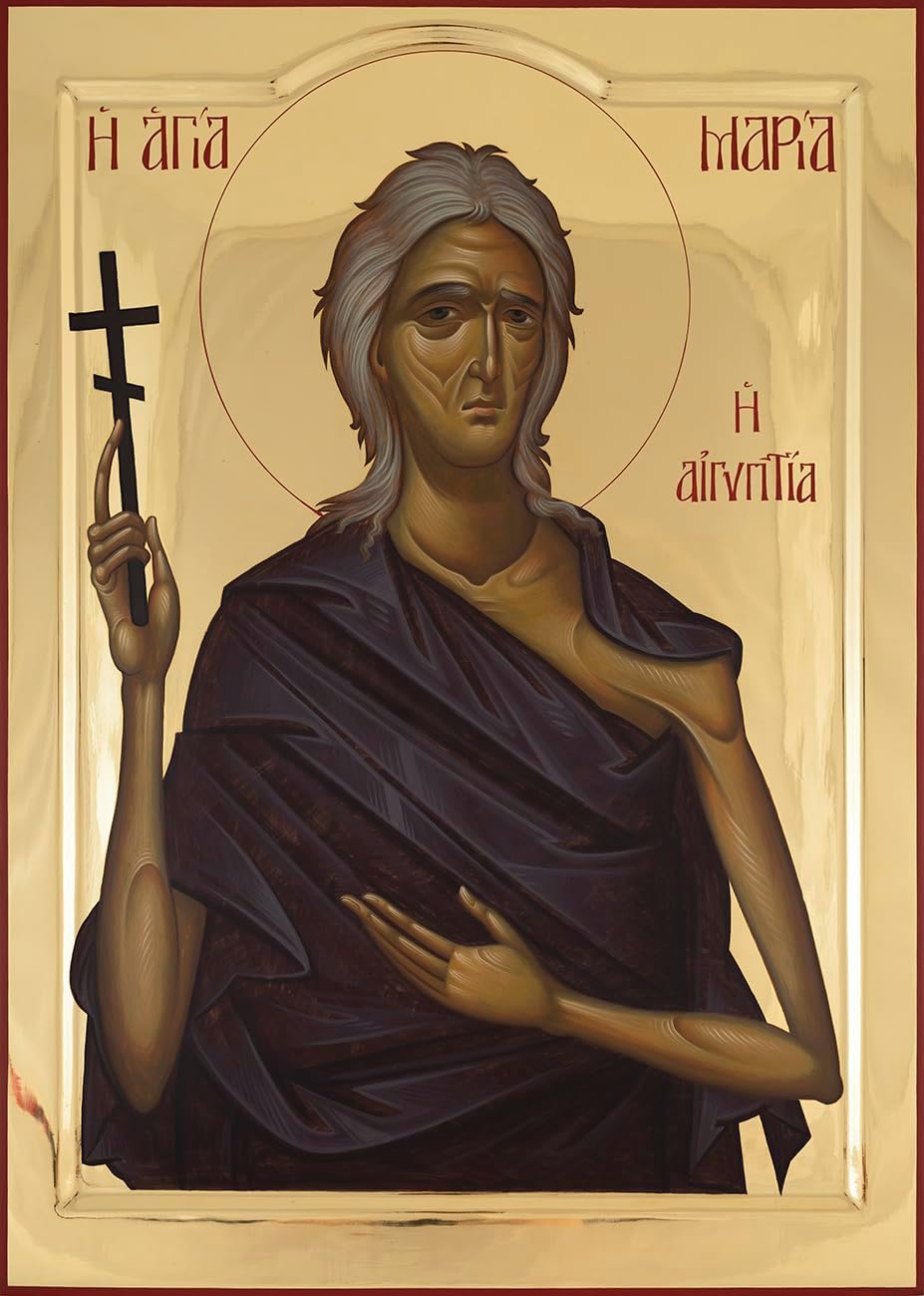
This life is one of the most powerful repentance narratives in all of Orthodoxy, read aloud each year during Great Lent. Mary left her parents young and lived for years in sexual immorality. Then she traveled with pilgrims to Jerusalem for the Feast of the Exaltation of the Cross — not out of piety, but out of boredom and curiosity.
The church threshold moment is unforgettable. When Mary tries to enter the church with the crowd, she finds herself repeatedly prevented — as though some force held her back. Only she cannot enter. She realizes her sin is not merely "mistakes," but a bondage that blocks communion. She turns to an icon of the Theotokos, makes a vow of change — and then, suddenly, she is able to enter and venerate the Cross.
A voice directs her to cross the Jordan River, where she goes into the desert for decades of repentance and struggle. The tradition describes her desert life as marked by supernatural gifts — she was seen in prayer elevated from the ground — and when the monk Zosimas finally found her near death, she asked him to bring Holy Communion. He returned to find her body laid peacefully, with words traced in the sand asking him to bury her there.

1924 – 1994
Saint Paisios of Mount Athos
"A modern elder whose holiness didn't belong to 'the past' — people sought him in droves because his counsel felt like spiritual oxygen."
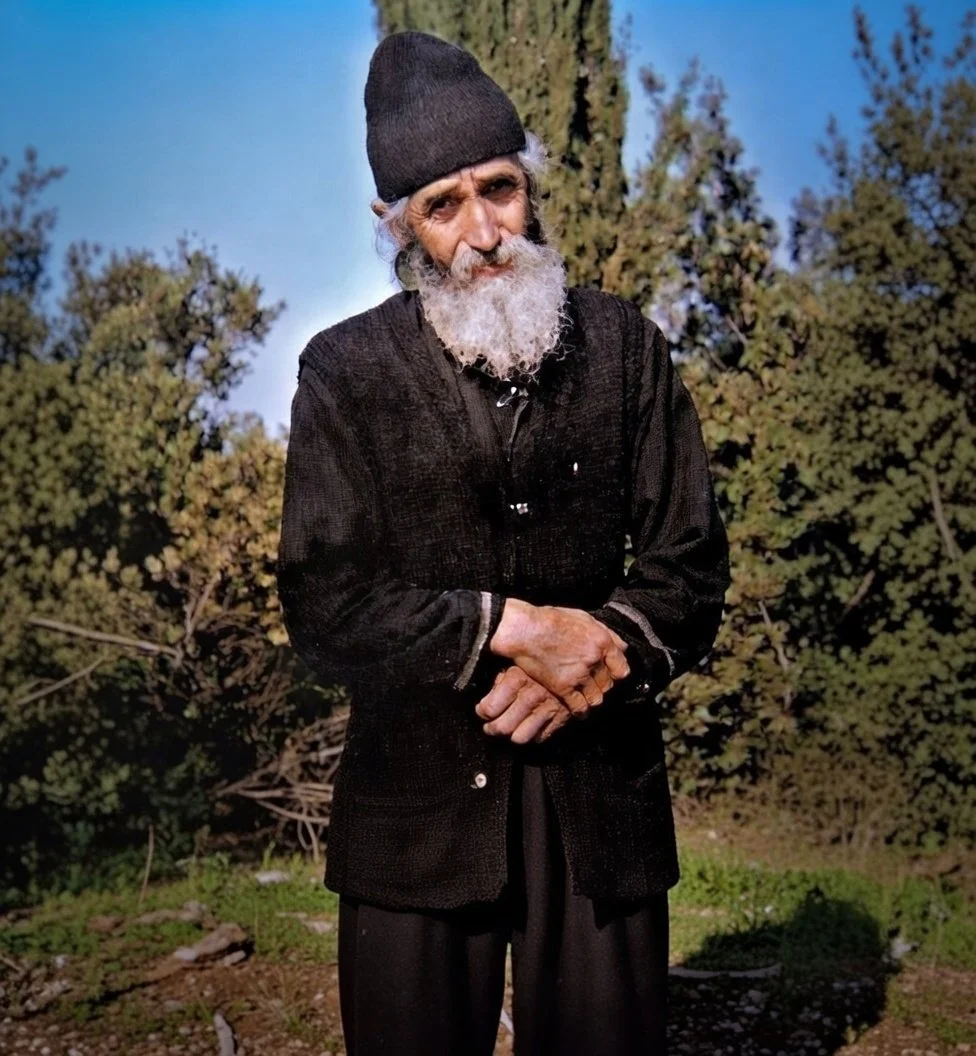
Saint Paisios (1924–1994) is one of the most beloved saints of the 20th century, canonized on January 13, 2015, and commemorated on July 12. People alive today met him, talked to him, and were healed in his presence. He was a Greek monk who spent most of his monastic life on Mount Athos, one of the most remote monastic communities in the world.
People who visited him report that he knew things about their lives he couldn't possibly have known — private sins, secret fears, questions they hadn't spoken aloud. He reportedly healed the sick, saw visions of the future, and radiated a warmth people described as physically tangible. And he had a remarkable sense of humor — once telling a man who came to confess infidelity: "Good, now she knows how it feels" — before guiding him toward repentance with great love.
A memorable, human-scale scene from his life at Sinai: he loved local children and wanted to give them cookies. He shortened his prayer rule temporarily and worked more at making wooden crosses to earn money for the cookies — and discovered he received "even more grace" through love. Sanctity here looks not like mystical fireworks, but like sacrificial love practiced in ordinary decisions.
1846 – 1920
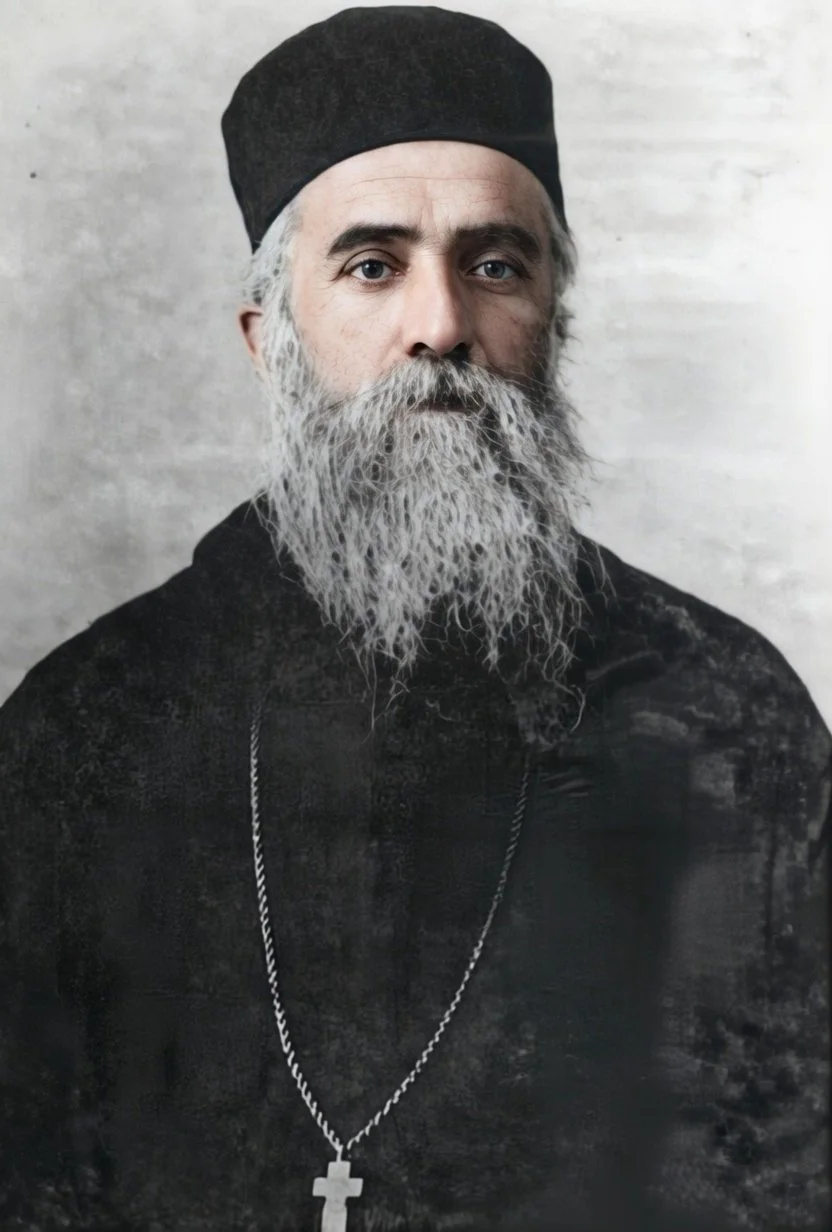
Saint Nektarios of Aegina
"A bishop slandered and pushed aside, who answered injustice with humility — and became one of the most loved modern Orthodox wonderworkers."
Nektarios was born Anastasios Kephalas in 1846. A vivid early story: at age 14 he asked passage on a boat to Constantinople. The captain initially dismissed him, but when the captain tried to start the engines, nothing worked until the boy was brought aboard — treated in hagiographic tradition as a providential sign.
Later, as a bishop in Egypt, he was abruptly removed from his position based on false accusations, possibly orchestrated by jealous rivals. He was sent back to Greece disgraced, spent years in poverty running a small theological school on the island of Aegina. He never defended himself publicly. He never retaliated. He prayed, served, and loved the people around him with a quiet intensity that those who knew him found overwhelming.
When he died in 1920, patients in the beds around him at the Athens hospital reported immediate relief from their own ailments. The shirt removed from his body was placed on a paralyzed patient — whose condition began to lift. The Patriarchate of Constantinople proclaimed him a saint in 1961. He is now the most widely invoked Orthodox saint for cancer and serious illness.

Often placed near the sick and used during daily prayers for healing and endurance.
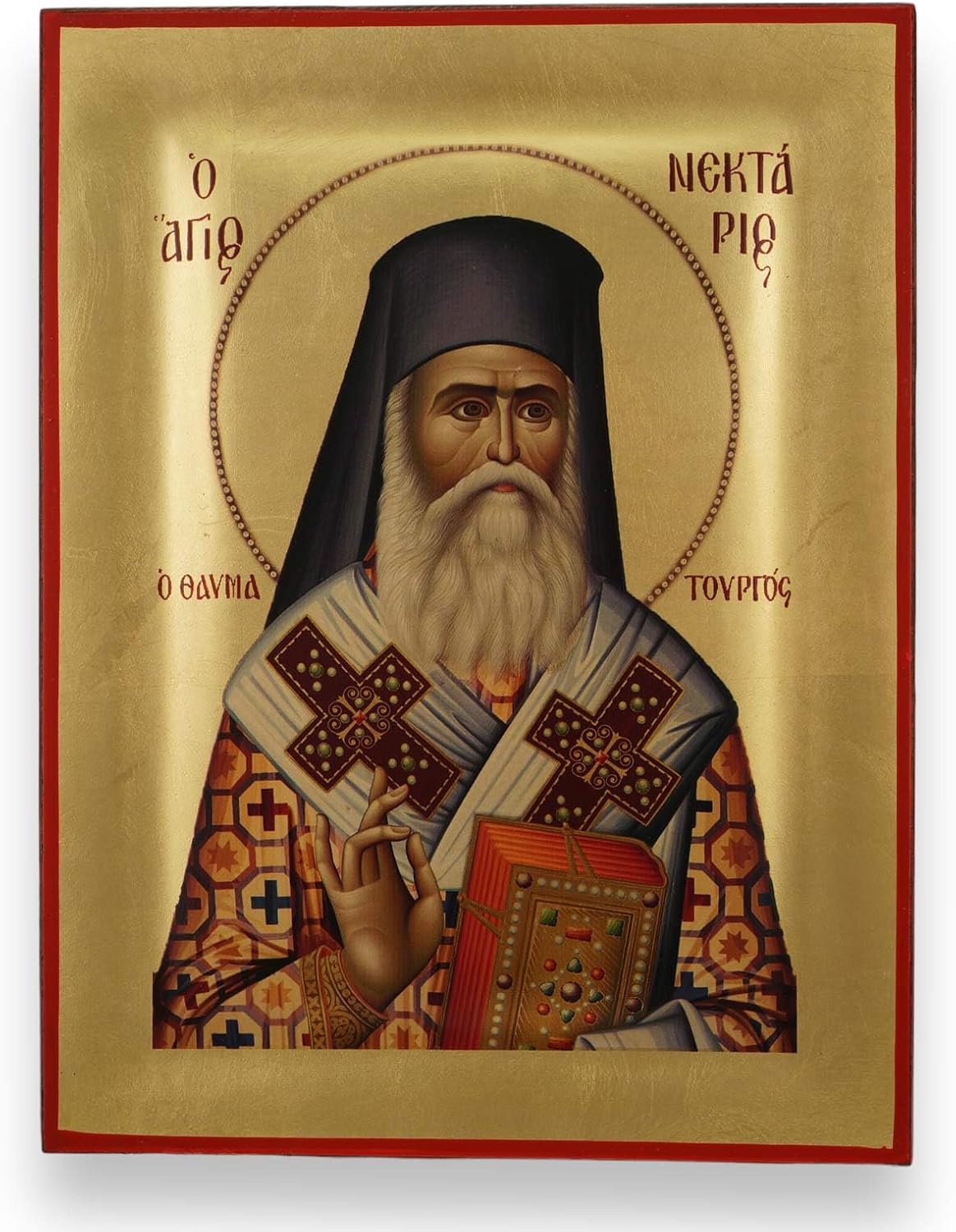
Created in the traditional Orthodox manner — chosen for sustained intercession during illness.
For daily use, bedside prayer, and carrying during medical treatments.
c. 890 – 969
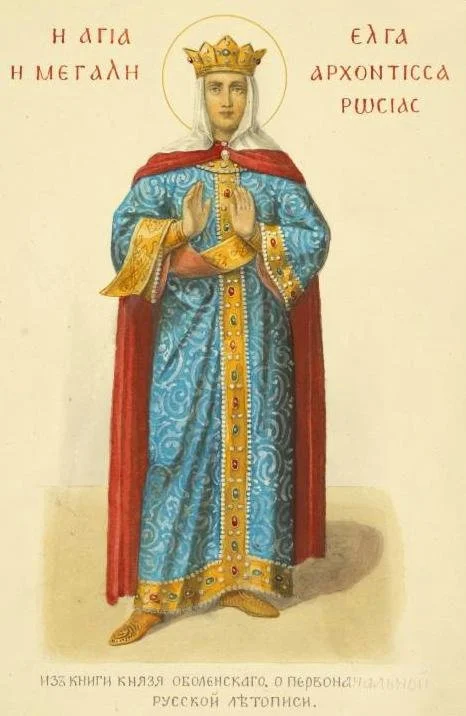
Saint Olga of Kiev
"A ruler whose early story is fierce and almost cinematic — yet who became 'Equal-to-the-Apostles' for opening the door to Christianity in her world."
Olga was the wife of the Kievan prince Igor and became a central figure in the transition period when Christianity and paganism contended in Kievan Rus. Her story has two distinct acts, and that contrast is exactly why it endures. The Primary Chronicle preserves a fierce revenge saga after Igor's brutal murder — calculated retaliation against the Drevlian tribe, described in vivid and cinematic detail.
It is important to present these episodes with historical framing: Olga is not held up as a model for vengeance, but as a woman of her world — and the magnitude of her later transformation is precisely what makes her "Equal-to-the-Apostles." During diplomatic travels to Constantinople, Olga encountered Christianity and was baptized there, taking the name Helen. She returned to Kyiv transformed, quietly introducing Christian practices, building churches, supporting clergy, and beginning to reshape the moral foundation of her realm.
Her greatest sorrow was that her own son refused baptism. Yet she did not abandon hope. She prayed relentlessly, trusting God with what she could not control. That prayer bore fruit in the next generation: her grandson Vladimir later converted and baptized the entire nation — fulfilling Olga's vision decades after her death.
4th Century
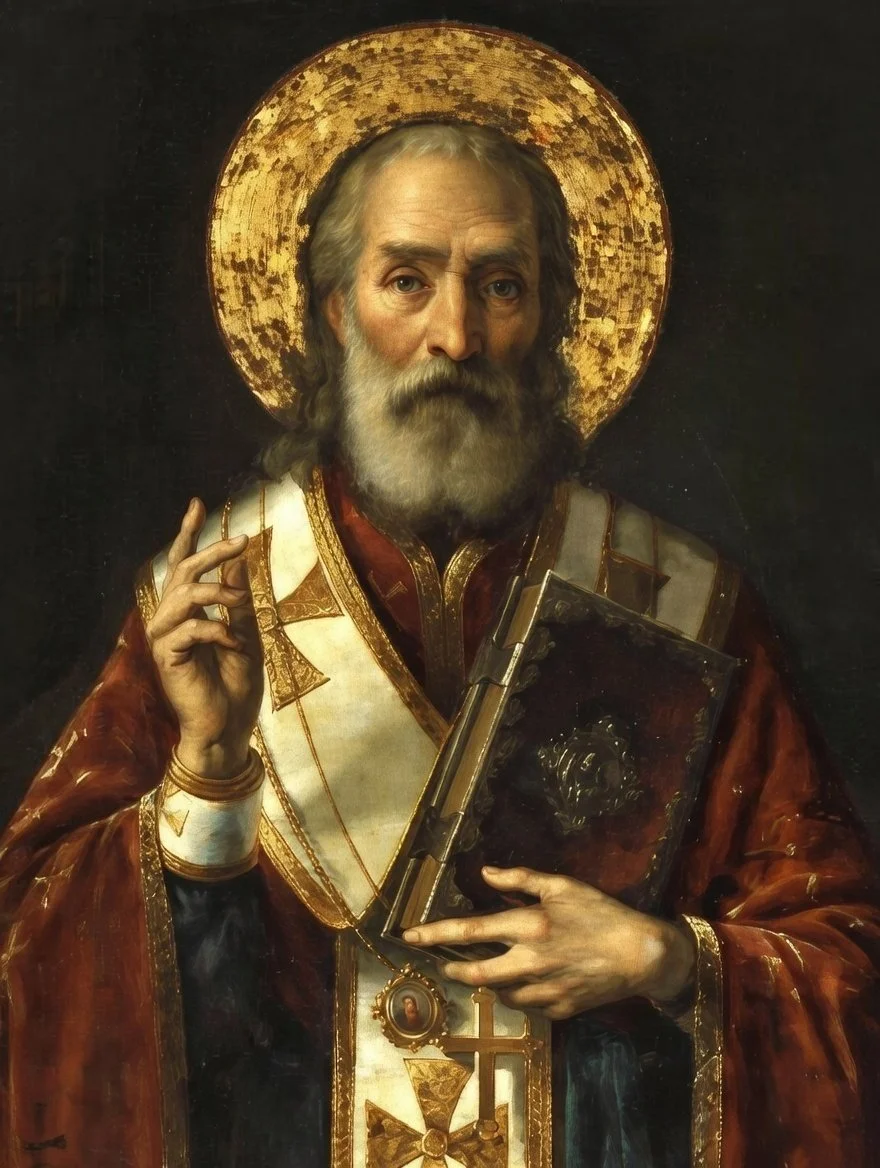
Saint Nicholas of Myra
"The saint behind the world's most enduring generosity stories — yet also a deeply Orthodox model of pastoral courage and miracle-working charity."
Nicholas is remembered as the Archbishop of Myra in Lycia, famed in Orthodox tradition as a wonderworker and "speedy helper." Orthodox sources attribute numerous miracles to him — deliverance from famine, saving those in danger at sea — and his relics were translated to Bari, Italy in 1087, where they remain a site of pilgrimage to this day.
The most vivid "coolest saint" story is the dowry rescue. A poor father had three daughters facing disaster because he lacked dowries — without them, the girls faced slavery or trafficking. Nicholas secretly threw bags of gold through the window on three nights, providing each daughter a dowry so she could marry and live freely. He refused any credit. This is the origin of the Christmas stocking tradition, and it anchors everything: holiness that solves real problems quietly, anonymously, without seeking recognition.
And yes — at the Council of Nicaea in 325 AD, Nicholas was so outraged by the heretic Arius that he reportedly walked up and slapped him across the face. The story has been preserved in Eastern iconography for seventeen centuries. The jolly man in a red suit has a rather more complicated history than most people realize.


Frequently Asked Questions About Orthodox Saints
What does Orthodoxy mean by "saints" and why do Orthodox Christians ask for their prayers?
In Orthodox Christianity, saints are people who have been transformed by God's grace and are now alive in Him after death. Asking for their prayers is not worship — it is asking a friend who is closer to God than you are to intercede on your behalf. God is glorified in His saints, and the saints are not passive figures in heaven but active intercessors who remain in communion with the living Church.
What is a "Fool for Christ" in Orthodox Christianity?
A Fool for Christ is someone who deliberately accepts misunderstanding, mockery, and social rejection — sometimes behaving in ways that appear irrational — to expose pride and point people toward the Kingdom of God. It is a vocation of radical humility and truth-telling. Saint Gabriel of Georgia is one of the most vivid modern examples.
Are Orthodox saints "ranked" by holiness?
No. A "Top 10" list is a reading guide, not a spiritual scoreboard. Orthodox Christians honor saints as witnesses of Christ — not competitors. Every saint on this list is equally glorified in God. The ranking here is purely for reader navigation and is based on how their stories tend to capture people's attention and spark curiosity about the faith.
Are stories like Saint George and the dragon meant literally?
Orthodox tradition presents miracle narratives with reverence, while honest engagement with hagiography acknowledges that lives of saints often combine historical core with later legendary development. The dragon narrative is deeply embedded in Eastern iconography and carries genuine theological meaning — the power of Christ over evil, publicly demonstrated. Whether you read it as historical miracle, symbol, or layered tradition, the spiritual truth it communicates is real and worth taking seriously.
Which Orthodox saints are best for beginners to learn first?
The ten on this list are an excellent starting point precisely because their stories are vivid and accessible. Saint Moses the Black is extraordinary for anyone who has ever wondered if their past disqualifies them. Saint Paisios is ideal for anyone navigating modern anxiety and spiritual confusion. Saint Nektarios speaks to anyone who has suffered injustice. Saint Nicholas is universally known — but most people have never heard the real story. Begin wherever the story pulls you.
What These Saints Have in Common
Across ten centuries, ten countries, and ten wildly different stories, one thread runs through every saint on this list: they did not negotiate with God. They went all the way — into the desert, onto the pillar, into the arena, across the Jordan River, onto the roof of a Soviet parade building — and they found that God met them there.
The saints are not inspiring figures from the distant past. They are intercessors — alive in God right now, praying for you. Asking them for help is simply asking a friend who is closer to God than you are to put in a good word.
Browse All Prayer Cards💍 Free Eastern Christian Marriage Resources
Prayers, reflections, and saint intercessions for couples — completely free, assembled for Eastern Christian families.
Access Free ResourcesAs an Amazon Associate, The Eastern Church earns from qualifying purchases.