Blessed Dom Shtjefen Kurti: Albanian Priest, Prisoner and Martyr of 1971
The Albanian priest who kept his ministry alive under communist rule and was shot in 1971, beatified in 2016.
At a Glance
- Born
- December 24, 1898, Ferizaj (Kosovo) per the Albanian Church; Prizren is also given
- Died
- October 20, 1971, by firing squad at Gurrez (Vatican date)
- Titles
- Blessed, priest and martyr
- Feast
- November 5, with Blessed Vincenc Prennushi and Companions
- Veneration
- Latin Catholic Church; beatified November 5, 2016; not canonized
- Patronage
- None formally designated
Who Was Blessed Shtjefen Kurti?
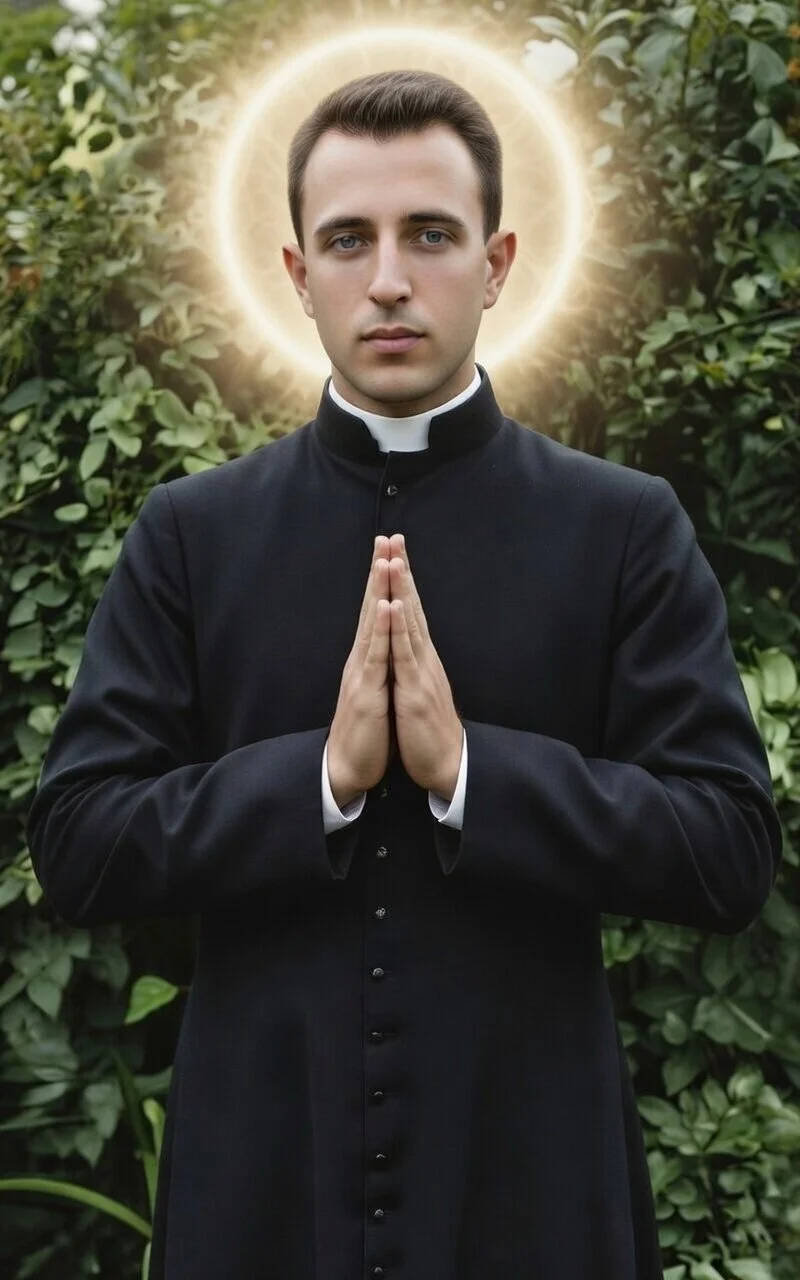
Blessed Shtjefen Kurti, written Shtjefën Kurti in Albanian and often called Dom Kurti, was a Catholic priest who served in Kosovo and Albania. After many years in prison under the communist regime, he returned to his ministry, was arrested a second time in 1970, and was shot in 1971. The Church honors him as one of thirty-eight Albanian martyrs beatified in Shkoder on November 5, 2016.
He is best known for one act. Popular accounts say that he was put to death for secretly baptizing a child at a time when religion was forbidden. The Vatican Radio account of 2016 supports that the baptism was part of his story, but the court papers charged him with sabotage and agitation against the state. This article keeps both facts in view.
He is a Blessed, not a canonized saint, and a priest of the Latin Catholic Church. His memory is kept with his companions on November 5. His life is the life of a village priest who would not stop being a priest when the state ordered it, and that plain fidelity is what the Church honors.
A Priest of the Albanian Lands
The Albanian Catholic Church gives his birth as December 24, 1898, in Ferizaj, in present-day Kosovo. The historian Lush Culaj gives the same day but names Prizren as the place, and other writers give December 25. The original civil or baptismal record has not been checked here, so the date and place remain uncertain.
Accounts name his parents as Jak and Katrine Kurti. His early life began under Ottoman rule and passed through the wars that changed the Balkans. He studied at the seminary in Shkoder, then in Austria, including the Canisianum in Innsbruck, and then in Rome at the college of the Propagation of the Faith.
The Albanian Church says he was ordained in Rome on May 13, 1921, while some secondary writers give 1924. Until the ordination register is consulted, 1921 should be taken as the date given by the local Church and not as a confirmed record. There is no conversion in his story. He was a Catholic formed for the priesthood from the start.
Exile, Memorandum and Return
His first posts were in Kosovo, where he served in places such as Ferizaj and Novoselë, and some accounts add Skopje. In January 1930 he crossed into Albania with two other priests, Luigj Gashi and Gjon Bisaku. Lush Culaj links this departure to trouble they faced for their part in the Albanian question in the Kingdom of Yugoslavia.
On May 5, 1930, a memorandum about the position of Albanians in Yugoslavia was sent to the secretary general of the League of Nations. The three priests took part in it, and an Albanian research institute confirms his role. It was an unusual act for parish priests, and it shows that he thought a priest's care included defending a threatened people.
The second turning point was the communist seizure of power in Albania. Kurti, by then serving there, was arrested in 1946, and after his release he went back to his ministry. When the government banned public religion in 1967, he kept on celebrating the sacraments, which put him and the families who asked for them in danger.
A Pastor Under Pressure
Kurti was a diocesan priest and a pastor, not the founder of an order. The Albanian Church lists his posts in Albania as including Zhejë, Gurrëz and Tirana, and he became tied to the Catholic parish in the capital before his first arrest. His work was the daily work of baptizing, hearing confessions and caring for his people.
The historian Lush Culaj also reports that he helped protect Jews in the Second World War by receiving them into the Catholic community. This is an important claim, but the sources do not say how many people were helped or whether each case was a true conversion or a protective measure. It is left here as a claim that needs archival proof.
His main written record is the 1930 memorandum, together with the statements he gave to investigators. No set of sermons, spiritual writings or original prayers has been verified. His witness is therefore found in what he did, in a long imprisonment, and in the way he went back to the altar when it was dangerous.
Prison, Ban and Second Arrest
Albania under Enver Hoxha saw the independent Church as a threat. The Vatican describes a long campaign of arrests, torture, staged trials and executions against clergy, religious and laypeople. Kurti was arrested in Tirana on October 27, 1946, although another account gives October 28. In April 1947 a court sentenced him to twenty years for alleged hostile acts, including supposed foreign contacts that history does not prove.
He spent much of his term in the prison of Burrel. The date of his release is uncertain, with one institute giving 1966 and another source giving 1963. After the state closed the churches in 1967, he went on with his ministry in secret. The Albanian Church gives June 11, 1970, as the date of his second arrest at Gurrëz, and investigation records support that date.
The accusations in 1970 and 1971 were sabotage and agitation or propaganda against the state. A Supreme Court decision of September 8, 1971, is reported to have confirmed the death sentence. The popular claim that he was tried only for baptizing a child is therefore incomplete. The baptism belongs to the religious background of the case, while the state used political charges to condemn him.
Execution and Beatification
The Vatican gives October 20, 1971, as the day of his death, and the Albanian Church gives the same date and names Gurrëz as the place of execution. Some local memorials give September 29, which is a discrepancy that scholars note. He was shot by a firing squad. News of his death reached the outside world only slowly.
His grave is not known. The Albanian institute that studies the crimes of communism reports that his remains have not been found, so no bodily relic can be identified. A monument, an image or a personal object should not be called a relic of his body without Church documentation.
On November 5, 2016, he was beatified at Shkoder with thirty-seven companions under the title Blessed Vincenc Prennushi and Companions. Cardinal Angelo Amato presided for Pope Francis. The Vatican lists him as a priest of the Archdiocese of Tirana-Durrës. He has not been canonized, and his proper title is Blessed.
Devotion and Memory
Devotion to Dom Kurti is the shared memorial of the Albanian martyrs on November 5. The popular story that one secret baptism cost him his life is a documented tradition with qualifications. The act itself has support from Church accounts, but no source names the child, fixes the date, or settles whose family the child belonged to.
Some later accounts give words that he is said to have spoken before his death about his duty as a priest. No traceable primary source for them was found, so they are not quoted here. In 2019 a newspaper reported letters of regret from a former prosecutor and a judge involved in his case, which show how the case has been seen since, though they do not replace court records.
No miracle attributed to him has been verified, and none is needed for a martyr's beatification. In 2022 Catholics in Virginia held a presentation on the Albanian martyrs that included veneration of relics of members of the group, but there is no evidence that these were his. His devotion is quiet and rests on his witness.
What the Sources Say
The key Church sources are the list of Albanian martyrs of the Dicastery for the Causes of Saints and the biography on the website of the Catholic Church in Albania. The fullest scholarly work is a monograph by Nikollë Loka and Nikolin Kurti, published by Albania's Institute for the Study of Communist Crimes and Consequences, which draws on state, interior ministry and Vatican archives.
Lush Culaj wrote about his national advocacy and the 1930 memorandum, and a historical site published copies of his investigation papers from 1970. These records are valuable but should be checked against the originals before they are quoted word for word. Press reports based on court files give details of the final judgment.
The firm facts are his priesthood, his work in Kosovo and Albania, his imprisonment, his second arrest in 1970, his death in 1971 and his place among the beatified martyrs. The open questions are the birth records, the ordination date, the release date, the details of the baptism, the exact execution date, and the source of the words attributed to him.
Places to Remember Him
Shkoder, where the beatification took place, is the heart of the memory of the Albanian martyrs, and its cathedral holds the memorial each November. Tirana, where he served and was arrested, and Gurrëz, where he was arrested again and put to death, are the places that mark his last years.
His birth in Kosovo ties him to the Albanian Catholics there as well, and both Ferizaj and Prizren claim a share of his memory. Burrel, the prison, was the site of much of his long suffering, and visitors to it can recall the many clergy held there.
Those who cannot travel can mark the memorial on November 5 with the other martyrs of Albania. A fitting prayer is for priests who serve in places where the Church is not free, and for the families who risk much to ask for the sacraments.
undefined
undefined
Kurti and the Wider Christian East
Kurti was a Latin Catholic priest. No evidence shows that he belonged to an Eastern Catholic Church or followed a Byzantine rite, and no Byzantine Catholic feast of his own was found. No Orthodox Church has glorified him, and none should be said to have done so.
His story still belongs to a shared history. The Albanian communist state tried to stamp out religion in every confession, and Orthodox and Muslim believers suffered as well. A priest who goes on giving the sacraments after the state forbids them has many counterparts among Orthodox and Eastern Catholic clergy in Eastern Europe.
For Eastern Catholic readers his beatification matters because of their communion with Rome. For Orthodox readers his witness can be a point of respect for a fellow Christian who suffered, without any claim of formal recognition. Together they remember that the faithful in many Churches paid for their loyalty to Christ.
Frequently Asked Questions
Ask His Prayers
Blessed Shtjefen Kurti reminds us that the sacraments are a gift worth risking everything to give. We ask his prayers for priests who serve under pressure, for the people of Albania and Kosovo, and for all who suffer for the faith. May his steady courage teach us to remain faithful to Christ when it is hard and when no one is watching.
View Prayer Card