Blessed Mark Cuni: Albanian Seminarian and Martyr of Shkoder, Executed in 1946 under Communist Rule
The young theology student of Shkoder who was shot in 1946 and beatified with 37 other Albanian martyrs in 2016.
At a Glance
- Born
- September 30, 1919, Rranxe, near Shkoder, Albania
- Died
- March 4, 1946, by firing squad at Shkoder, aged 26
- Titles
- Blessed, seminarian and martyr (not an ordained priest)
- Feast
- November 5, with Blessed Vincenc Prennushi and Companions
- Veneration
- Latin Catholic Church; beatified November 5, 2016; not canonized
- Patronage
- None formally designated
- Who Was Blessed Mark Cuni?
- A Boy from Rranxe
- A Vocation Formed in Shkoder
- Writer, Student and Young Organizer
- Arrest, Trial and Sentence
- The Firing Squad and the Beatification
- Devotion and Remembrance
- What the Records Show
- Places to Remember Him
- Cuni and the Wider Christian East
- Frequently Asked Questions
Who Was Blessed Mark Cuni?
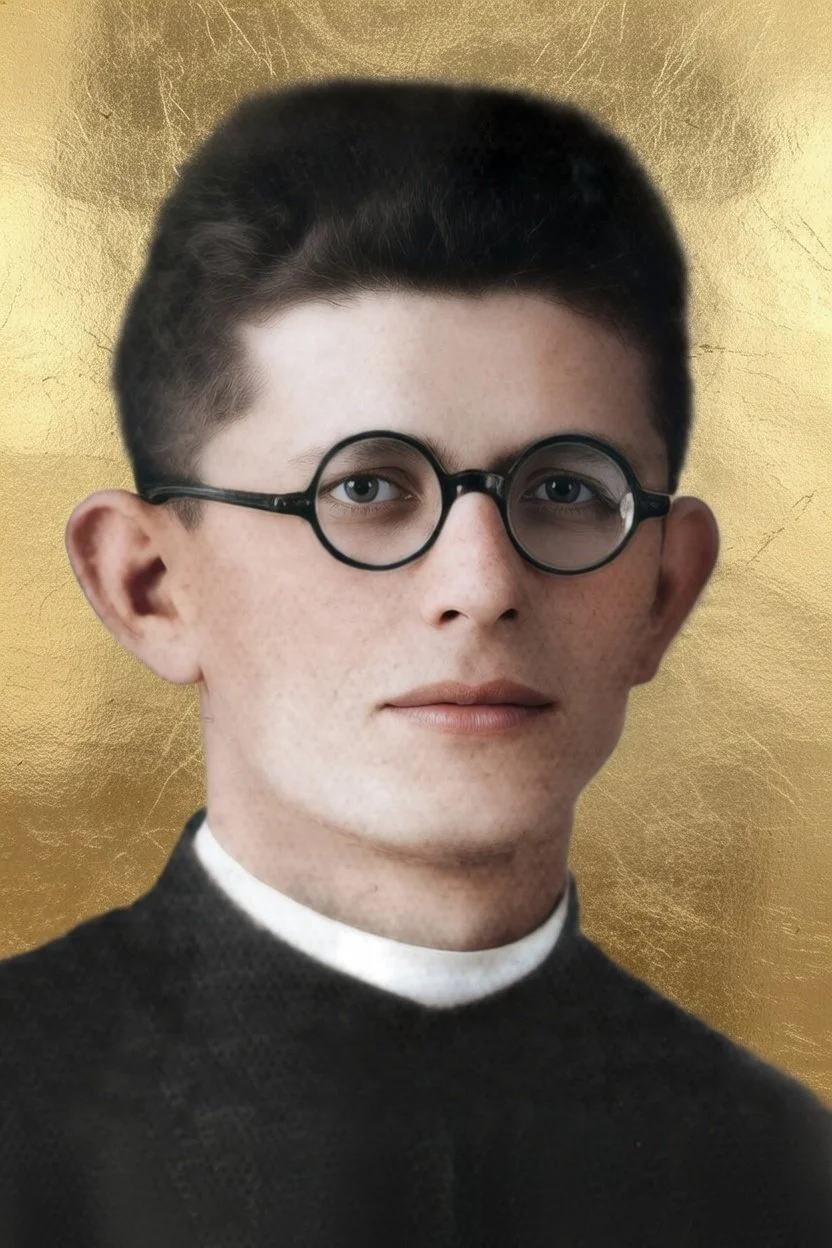
Blessed Mark Cuni, written Mark Çuni in Albanian, was a young seminarian of Shkoder in northern Albania who was executed by firing squad on March 4, 1946, at the age of twenty-six. He died in the first years of the communist regime of Enver Hoxha, when the Catholic Church in Albania, and especially its schools and seminary, were being broken up.
He is one of the thirty-eight Albanian martyrs beatified in the cathedral square of Shkoder on November 5, 2016, in the group known as Blessed Vincenc Prennushi and Companions. The Church keeps their common memorial on that day. Mark Cuni is not a canonized saint, and he is a Blessed of the Latin Catholic Church.
One correction should be made at once. He is sometimes called Dom Mark Cuni, as if he were a priest, but the Vatican lists him as a seminarian, and no record of his ordination has been established. He died before he could be ordained. That unfinished vocation, together with a death that he faced with forgiveness, is the heart of his witness.
A Boy from Rranxe
Mark Cuni was born on September 30, 1919, in Rranxe, in the area of Bushat near Shkoder. A historical account by Pjeter Pepa, published through Vatican Radio, names his parents as Ndoc Frano and Dile Lisna and says that he was baptized on the day of his birth. The original baptismal record was not examined for this article, so the detail is reported as the account gives it.
He went to primary school in his village and then studied in Shkoder, the old center of Albanian Catholic learning, where the Jesuits and Franciscans had long kept schools and a literary tradition. According to an Albanian biographical encyclopedia, he began studies at the Pontifical Seminary of Shkoder at about the age of eighteen.
Little else is known about his family. The names of his brothers and sisters, the work of his parents and the family's means are not reliably recorded, and no childhood diary has been found. It is better to say so than to invent a story of his early years.
A Vocation Formed in Shkoder
There is no conversion in his story. Mark Cuni was a Catholic from infancy, and his vocation grew inside the seminary. He completed classical studies and was in his third year of theology when he was arrested, according to Pjeter Pepa. He did not finish his training for the priesthood.
The turning point of his short life came when love of his country and fear for its future led him to take part in the opposition to the new communist government. He is linked in the sources with a secret group called Bashkimi Shqiptar, the Albanian Union, and Vatican Radio's historical account calls him one of its organizers.
It would be wrong to treat his seminary vocation and his political activity as the same thing. Opposition to a dictatorship is not by itself martyrdom for the faith. Yet the Church recognized him as a martyr because his death came in a persecution that aimed to crush the Catholic Church, and because he faced it in a Christian spirit. Both sides of the picture belong to an honest account.
Writer, Student and Young Organizer
Cuni's work was that of a student, not a pastor. Pepa's account says he took part in producing Aurora Consurgens, the magazine of the Shkoder seminary, helped as an editor, and did typing and duplicating. He is also credited with translations, including work on Dante, and a short composition whose title is given as Stolia e Ligjeratës.
An Albanian encyclopedia also links him with a Catholic weekly, Kumbona e se Djelës, where he is said to have published poems, articles and translations. He is said to have acted in a seminary play on a theme from the Spanish Civil War. The dates and surviving copies of these works still need to be checked in archives, so they are reported with care.
In the political group, the accounts describe the circulation of pamphlets, talk of elections and freedom of speech, and resistance to a one-party state. He is not known to have founded a parish, a religious house or any charity, and there is no reliable record that he ever celebrated Mass, since he was not ordained.
Arrest, Trial and Sentence
After the Second World War, Albania fell under the rule of Enver Hoxha. The new government turned against institutions it could not control, and the Catholic Church, with its foreign ties and its schools, was among the first targets. The Vatican's account of the Albanian martyrs speaks of bishops, priests, religious, seminarians and laypeople who were arrested, tried in public and put to death.
Mark Cuni was arrested on December 7, 1945, according to Pepa and the Albanian encyclopedia. The Jesuit fathers Giovanni Fausti and Daniel Dajani were taken on December 31, and the authorities accused the seminary's leaders of supporting the movement. The trial opened in Shkoder on January 31, 1946, and was held in a cinema hall, with charges of subversion and ties to fascism and terror.
According to Pepa, Cuni admitted his part in the political opposition but denied joining any plot to kill, and denied that the two Jesuits had organized the movement. Albanian reports say that the prosecution produced no solid proof against the clergy. The date of sentencing is uncertain, because sources give February 22, February 26 and February 28. The safest statement is that he was sentenced to death in February 1946. It would also be wrong to call him a terrorist, as the regime did, on the evidence available.
The Firing Squad and the Beatification
On March 4, 1946, Mark Cuni was shot near the Rrmaj cemetery in Shkoder. With him died the Jesuits Giovanni Fausti and Daniel Dajani, the Franciscan Gjon Shllaku, and the laymen Gjelosh Lulashi and Qerim Sadiku. The Vatican's Dicastery for the Causes of Saints names these six together, and Vatican News recalled them in its anniversary report of March 4, 2026.
A historical account reproduces a record of the last words of the condemned. Words attributed to Cuni speak of forgiveness for his judges and for those who would shoot him, and they include a concern about a small personal debt and a farewell in the name of Christ the King and of Albania. Because the original record was not examined and a family memory gives the debt differently, this article does not quote the words but notes that forgiveness is part of what is remembered.
No identified grave, exhumation or authenticated relic of Mark Cuni is known, and the site of his execution should not be confused with proof of where his remains lie. Pope Francis authorized the beatification, and Cardinal Angelo Amato presided at Shkoder on November 5, 2016, for the group of thirty-eight. Beatification permits public veneration within the limits the Church sets, and it is not canonization.
Devotion and Remembrance
The devotion to Mark Cuni is mainly the common memorial of the Albanian martyrs on November 5. The anniversary of his death, March 4, is marked in Albania with prayers and historical remembrance, though it is not a separate universal feast. The Albanian Church holds up the martyrs as witnesses to steadfast faith under persecution.
The tradition of his forgiveness has become a main part of how he is remembered. Its basis is stronger than a mere legend because it rests on a reproduced execution record, but the original document has not been authenticated for this article, so it is best described as an attributed statement. No other miracle or legend is claimed here.
No miracle attributed to him alone has been verified in the sources reviewed. This does not weaken his beatification, because the Church can beatify a martyr on the recognition of martyrdom alone. Devotion to him as a patron of persecuted seminarians, of religious freedom or of forgiveness is natural, but it is not an official patronage.
What the Records Show
The most reliable source on his recognition is the Dicastery for the Causes of Saints and its list of the Albanian martyrs. The fullest narrative is the history by Pjeter Pepa published through Vatican Radio in 2016, and the Archdiocese of Shkoder-Pult keeps a register of the martyrs of communism.
Other studies, including Pepa's book Dosja e diktaturës and the work of Luigi Rosa on the seminary, help to tell the story of the persecution. Some Albanian essays praise Cuni in broad political terms, and these should be read with care. A museum report from March 2025 also confuses one later execution with those of March 4, so it is not the best source for the full list.
What is firmly established is his identity, his birth in 1919, his death in 1946, and his place among the beatified martyrs. What remains unsettled is the exact date of sentencing, the authenticity of the last words, the full record of his writings, and the place of his remains. A good account marks these limits plainly.
Places to Remember Him
Shkoder is the city of his study, his trial and his death, and the cathedral there was the site of the beatification. The Pontifical Seminary where he studied was closed by the regime, and the memory of its students is kept in the archdiocese.
His birthplace, Rranxe near Bushat, lies a short distance outside the city. The execution took place near the Rrmaj cemetery, and many Albanian Catholics go there to pray on March 4 each year. His name is also recalled in the annual memorial of all the thirty-eight martyrs.
Those who cannot travel can keep the memorial on November 5, with Blessed Vincenc Prennushi and his companions, and can remember the six who were shot on March 4. Prayer for those who are persecuted for the faith today is a fitting way to honor him.
undefined
undefined
Cuni and the Wider Christian East
Mark Cuni belonged to the Latin Catholic Church, and no evidence shows that he ever belonged to an Eastern Catholic Church or followed a Byzantine liturgy. His commemoration is a Latin one, and no Eastern Catholic feast of his own was found.
No Orthodox glorification, feast or troparion for him has been verified, and it would be wrong to claim one. His story is nonetheless part of the same great history of Christians who suffered under twentieth century communist governments, a history that Catholics and Orthodox share in many lands of Eastern Europe.
For Eastern Catholic and Orthodox readers, he can be studied as a fellow witness whose life shows the same pattern seen in many places: the closing of schools, the trial of the clergy, and the courage of the young. His forgiveness of his judges is the kind of witness that all Christians honor in the martyrs of every Church.
Frequently Asked Questions
Ask His Prayers
Blessed Mark Cuni reminds us that a short life can bear a great witness. We ask his prayers for young people preparing for the priesthood, for those who suffer for their beliefs, and for the people of Albania. May his forgiveness teach us to answer hatred with mercy, and may his memory keep us faithful to Christ in every age.
View Prayer Card