Blessed Eugene Bossilkov: Passionist Bishop of Nicopolis and Martyr of Communist Bulgaria
The Bulgarian bishop who refused to separate his flock from Rome and was shot in a Sofia prison
At a Glance
- Born
- November 16, 1900, in Belene, Bulgaria, on the Danube
- Died
- November 11, 1952, shot at Sofia Central Prison
- Titles
- Blessed, Bishop of Nicopolis, Passionist, martyr
- Feast
- November 11 in Vatican records; November 13 in the Passionist calendar (check your local calendar)
- Veneration
- Beatified March 15, 1998 by John Paul II; not canonized
- Patronage
- Linked with persecuted Christians and religious freedom; no formal decree verified
Who Was Blessed Eugene Bossilkov?
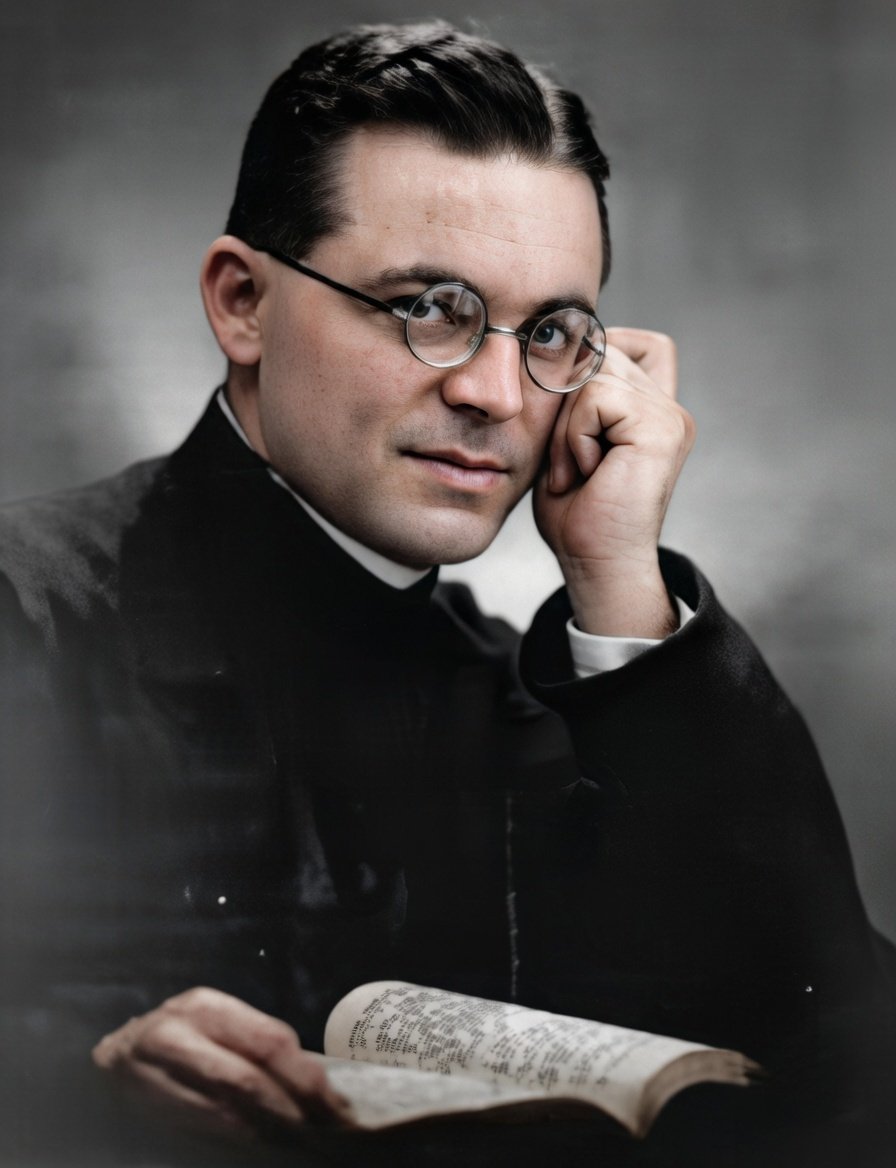
Blessed Eugene Bossilkov was a Passionist priest who became the Latin Catholic Bishop of Nicopolis in Bulgaria. He was born in 1900 and killed by a firing squad in 1952, during the Communist persecution of the Catholic Church in his country. The Church honors him as a martyr who would not abandon his people or separate them from the Pope.
He was beatified, which means declared Blessed, by Pope John Paul II on March 15, 1998. He has not been canonized. For a martyr, no separate miracle was needed for beatification. In this article, the word Blessed is used with care, and facts that rest only on Passionist tradition are marked as TRADITION or UNCERTAIN.
Because this website serves Eastern readers, one point should be clear at the start. Bossilkov was a bishop of the Latin rite, and he was not an Eastern Catholic. His life matters to Eastern Christians because of his studies, his friendships with Orthodox clergy and his suffering in a mostly Orthodox land.
A Boy from Belene on the Danube
Vincent Bossilkov was born on November 16, 1900, in Belene, a Danube town in Bulgaria. His family belonged to the small Latin rite Catholic minority in a country that is mostly Eastern Orthodox. Passionist sources describe his family as farmers and name his mother as Beatrice. They say little about his father or his brothers and sisters.
He went to a Passionist school at Oresh. The Vatican says he was about eleven, while other Passionist lives say thirteen or fourteen. UNCERTAIN: the exact age is not settled. What is clear is that his schooling began among the Passionists, the order founded by Saint Paul of the Cross to keep alive the memory of Christ's Passion.
TRADITION: a Passionist bulletin says that as a child he nearly drowned in the Danube, and that his mother promised to give him to God if he lived. No independent record confirms this, and it was never examined as a miracle. It is told here as a family and community memory.
Becoming a Passionist
He was raised Catholic, so there is no conversion story. His vocation grew in the Passionist schools. He studied in Belgium and the Netherlands, and the New Catholic Encyclopedia says he received the Passionist habit at Ere in Belgium in 1919 and took the name Eugene.
He made his first profession on April 29, 1920, and was ordained a priest on July 25, 1926. He then studied in Rome at the Pontifical Oriental Institute. His doctoral work dealt with the union of the Bulgarians with Rome in the early thirteenth century. UNCERTAIN: sources give 1931 or 1932 for the degree.
Back in Bulgaria, he served under Bishop Damian Theelen and became pastor of Saint Joseph's parish in Bardarski Gheran. After Bishop Theelen died in 1946 he was named administrator of the diocese, and in 1947 he became Bishop of Nicopolis. His peaceful pastoral life then turned into a time of danger.
A Priest Among His People
At Bardarski Gheran he built up catechism classes and worship, and he arranged programs for young people, for couples preparing for marriage, and for the sick and elderly. The Passionists say he started cultural centers where people could read, watch films and relax. He believed that a parish should care for the whole person.
He was known as friendly and easy to approach. He played football with the young and had friends among professionals and thinkers. He wrote for a Catholic paper called Istina, the Truth, and gave public talks on Bulgarian religious history. No full edition of his writings was found, though a part of his letters has been preserved.
The Passionists also say he helped save Jewish lives during the German period in Bulgaria. UNCERTAIN: the sources do not tell how many people were helped or by what means, so the claim should be credited to the Passionists and not expanded. They also describe his respectful cooperation with Orthodox clergy, which fits his studies and his gentle manner.
Communism and the Church
The Communists took power in Bulgaria in September 1944. They watched, pressed and imprisoned the clergy, and Catholics were an easy target because of their ties to Rome and to foreign religious orders. The New Catholic Encyclopedia says Bossilkov was already known to the secret police before the war ended.
As bishop, he refused the plan to form a national Catholic church cut off from the Holy See. In 1948 he visited Rome and met Pope Pius XII. TRADITION: the Passionists say that the Pope warned him he might die as a martyr, but the exact words were not checked against a Vatican record. He still went home. In a letter that John Paul II later quoted, he said he hoped to have courage to suffer and to stay faithful to Christ, the Pope and the Church.
In December 1948 the apostolic delegate was expelled and many religious houses were closed. Bossilkov was arrested on July 16, 1952, and charged with spying and plotting against the state. The trial in the fall of 1952 was part of a campaign against Catholics, and Church records say the accused were mistreated. Bulgaria's Supreme Court later overturned the verdict and recognized his innocence in 1999.
The Prison in Sofia
The Vatican says Bossilkov was killed by a firing squad on November 11, 1952, at Sofia Central Prison, after a false trial. His body was buried in a common grave, and his family never received it. The place of the grave is still unknown in the sources checked.
Relics: the New Catholic Encyclopedia says that his bloodstained shirt and his pectoral cross were later given to his family. UNCERTAIN: where those objects are now, and whether the public can see them, should be checked with the Passionists.
A process for beatification was opened in 1985, but the Bulgarian government blocked it. After the fall of Communism, it resumed. On March 15, 1998, John Paul II beatified him, with two other Blesseds, in Rome. One online reference gives the year wrongly as 1988, but the Vatican record is clear that it was 1998.
Memories and Stories
The public memory of Bossilkov focuses on his martyrdom, his faithfulness under pressure and his love for his flock. The Passionists also stress his devotion to the Passion of Christ, to the Virgin Mary and to long daily prayer, which they say was the root of his courage.
TRADITION: the childhood rescue from the Danube and Pius XII's warning are told in Passionist accounts. They give a sense of how the community understood his life, as one that was given to God from the beginning and ended in witness. They are not independently documented.
No miracle through his prayer has been verified in the sources consulted. The Church's beatification as a martyr did not need one, so the lack of a proven miracle says nothing against his holiness. A second recognized miracle would normally be needed for canonization.
Letters, Homilies and Records
The best starting point is the homily of John Paul II at the beatification on March 15, 1998, and the biography page of the Dicastery for the Causes of Saints. The Passionist Sacramentary of 2020 and the Passionist International Bulletin give a life from his own order.
The New Catholic Encyclopedia has a useful article with trial dates and a bibliography. The Positio super Martyrio of 1993 would hold the testimony and documents, but its full text was not available. Pierluigi di Eugenio wrote a biography in Italian called Beato Eugenio Bossilkov: Morire per la fede.
Scholars note that some points still need records, such as his school years, his university degree, the source of his letters, his help to Jews, his full trial record and his last words. A careful reader should treat reports of his torture and last words as claims to check against the Positio before repeating them as fact.
Remembering Him Today
There is no known grave to visit. The places that carry his memory are his birthplace Belene, the parish of Bardarski Gheran and the city of Sofia, where he was killed. The diocese of Nicopolis in Bulgaria and the Passionist community keep his memory alive.
The Vatican lists his commemoration on November 11, the day of his death, while the Passionists keep an optional memorial on November 13. Neither date is a universal feast for the whole Church, so readers should ask their parish or community which they use.
A good way to remember him is to pray for Christians who are still persecuted and for those who live under governments that limit religious freedom. Writing a letter for a prisoner of conscience is also a fitting act. His own letters spoke of courage, and the best honor is to share that courage.
Lord Jesus Christ, You gave Blessed Eugene the courage to stay with his flock and to stay faithful to You even unto death. Through his prayers, strengthen all who suffer for the faith, comfort the families of prisoners, and bring peace to every land. Amen.
This is a short original prayer written for this article. It is not an official text of any Church.
Bossilkov and the Eastern Churches
Bossilkov was a Latin rite bishop of the Passionists. He did not belong to a Byzantine, Coptic, Syriac or other Eastern Catholic Church, and no Orthodox liturgical feast for him has been verified. His importance to Eastern readers is historical, ecumenical and spiritual, and it should not be described as a formal shared canonization.
His studies at the Pontifical Oriental Institute focused on the history of the Bulgarian Church and its dealings with Rome. This shows a real interest in the Christian East. John Paul II also pointed to his ecumenical concern, which is meaningful in a country where most Christians are Orthodox.
For Eastern Catholics, his life shows the cost of staying in communion with Rome under a hostile state. For Orthodox readers, it shows a Catholic bishop who respected Orthodox clergy and suffered in the same land, alongside many others in the twentieth century who were persecuted for Christ, whatever Church they belonged to.
Frequently Asked Questions
Ask His Prayers
Catholics ask Blessed Eugene Bossilkov to pray for persecuted Christians and for steadfast bishops and priests. A prayer card of Blessed Eugene is a reminder to pray for those who suffer for their faith.
View Prayer Card