Blessed Fran Mirakaj: Albanian Husband, Father and Lay Martyr, Executed in 1946
The married layman and father of three daughters who was shot in 1946 and beatified in 2016.
At a Glance
- Born
- August 13, 1916, Iballe, Puke (some lists give 1917)
- Died
- September 1946, Tirana; exact day unknown
- Titles
- Blessed, layman and martyr
- Feast
- November 5, with Blessed Vincenc Prennushi and Companions
- Veneration
- Latin Catholic Church; beatified November 5, 2016; not canonized
- Patronage
- None formally designated
Who Was Blessed Fran Mirakaj?
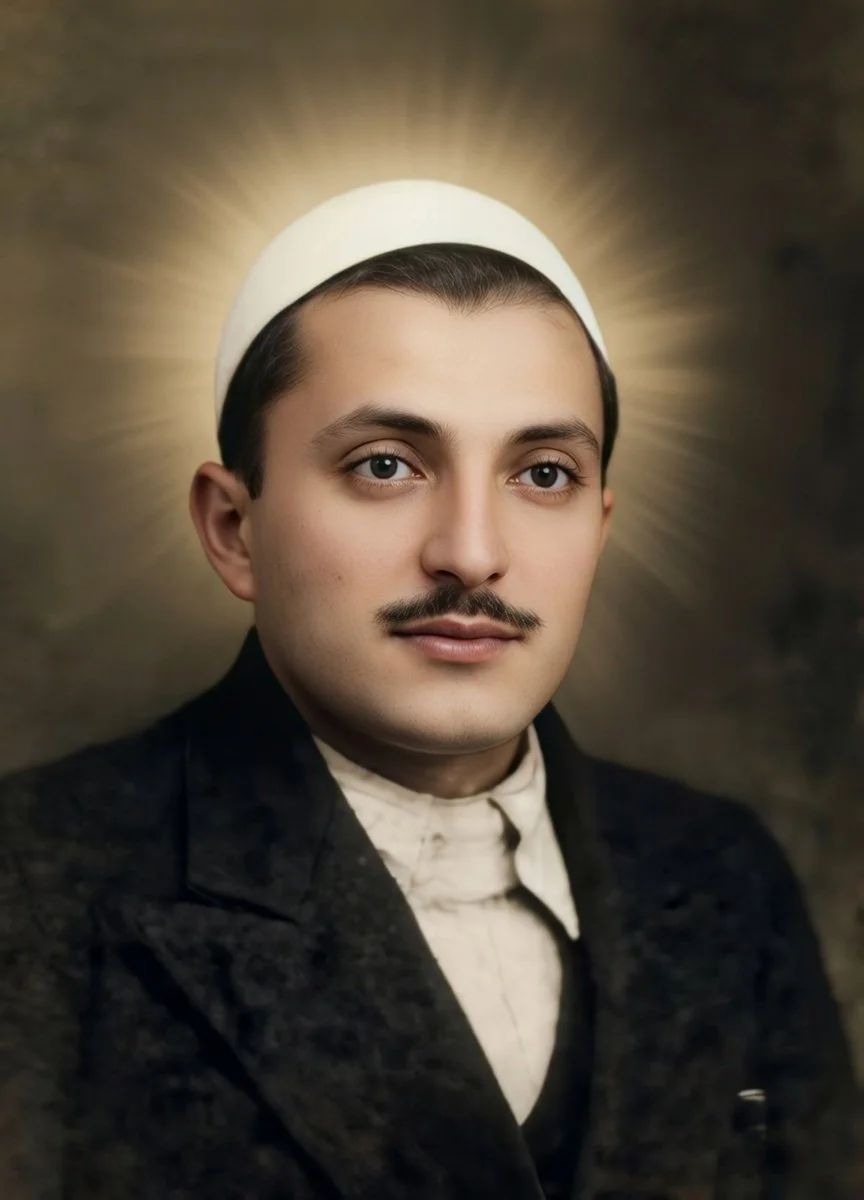
Blessed Fran Mirakaj, also written Frano Mirakaj, was an Albanian Catholic layman. He was a husband and a father, and he worked with livestock and in trade in the mountain district of Puke. He was tried in 1946 with a group accused of working against the new communist government, sentenced to death, and shot later that year.
The Church counts him among the thirty-eight Albanian martyrs beatified in Shkoder on November 5, 2016. Most of that group were priests and religious. He is one of the few laypeople, and that is what sets his story apart. It is the story of a family man who was killed for his faith, not of a cleric.
He is a Blessed, not a canonized saint. Some lists group him with the Franciscan martyrs, but the Vatican list and the archdiocese of Shkoder-Pult identify him as a layman and a father of a family. He was not a Franciscan friar. This article marks what is documented and what is uncertain.
A Family Man from Iballe
Albanian sources, including the Vatican Radio biographies and an encyclopedia of communist victims, give his birth as August 13, 1916, in Iballe in the Puke region. Some international lists give 1917. The Albanian date is more detailed, but the original record has not been checked, so the year is held with care.
He lived from livestock keeping and trade, the work of many mountain families. The Vatican describes him as a father of a family, and an Albanian commemoration says he left a wife and three daughters. Their names, their birth years and how they lived afterward have not been established in the sources examined.
Nothing reliable has been found about his parents, his schooling or his marriage. It would be wrong to invent a pious childhood for him. What the sources support is plain: a married Catholic, a worker, a father, living in a region where the faith was part of everyday life.
An Ordinary Faith Under Pressure
There is no conversion in his story. He was a Catholic by upbringing and remained one. After the Second World War, communist rule took hold in Albania, and the Church, with its link to Rome, was seen as a danger by the new state. For a layman the question was whether he would keep his faith when it brought risk.
An Albanian pastoral study by Father Pal Tunaj describes him as affectionate, cheerful, peaceful, serious and strong. It draws on the biographical work on the martyrs' cause. The same study says he wanted to share with others both his commitment to the Church and his love for his country. These are descriptions by later writers, not his own words.
His turning point came when the security service, the Sigurimi, took notice of him. Vatican Radio's Albanian biography says he had relatives and cousins abroad, which drew suspicion. The date of his arrest and any formal membership in a resistance group are not established in the material examined.
Lay Discipleship
He held no church office and founded no institution. The sources do not show that he wrote sermons, letters or devotional works, and no writings by him have been found. That absence does not prove he wrote nothing, only that nothing is known.
His witness was lay discipleship. Father Tunaj argues that the lay martyrs of Albania showed their faith in daily life, in the sacraments, in family and in service to others. Mirakaj stands in that group as a man whose steadiness is remembered more than any achievement.
The best-known account of his character comes from prison. A fellow prisoner is reported to have recalled being tortured and then put in Mirakaj's cell, shivering with cold. Mirakaj is said to have given him his coat and to have said that his own fate did not matter because he expected to die without denying Christ. This is a recollection attributed to a witness, and the original deposition has not been examined, so it is given here in substance only.
The Trial in the Rozafa Cinema
The Vatican describes a campaign of arrests, public trials and false charges against clergy and laypeople. An entry in the Albanian encyclopedia ties Mirakaj to a major trial of people accused of belonging to a group called Bashkimi Shqiptar, the Albanian Union. It says thirty-nine defendants were tried from January 31 to February 22, 1946, in the Rozafa cinema in Shkoder, before an audience chosen from communists and party members.
According to that entry, the Shkoder court sentenced Mirakaj and six others to death by firing squad on February 22, 1946. An Albanian commemoration gives July 3, 1946, as the date a higher decision confirmed the sentence. Vatican Radio names Frederik Nosi as the judge and Nevzat Haznedari as the prosecutor in Tirana.
Franciscan accounts say the arrest of the seminarian Mark Cuni and others, including Mirakaj, was used to justify moving against prominent priests. How far Mirakaj took part in any opposition is not established. He should not be described as an armed rebel, nor as a man with no political ties. The Church honors him as a martyr, which does not settle every political question of the trial.
Execution and Beatification
The Vatican and Vatican Radio place his death in September 1946, and another Albanian account says an execution was carried out in secret between August and September. No exact day is verified. He was thirty if his birth year is 1916. The Vatican lists him among those shot, not among those who died of torture or illness.
His burial place is unknown, and there is no record that his remains were found. In 2022 an Albanian-American commemoration in Virginia displayed relics linked to the Albanian martyrs, but the report does not say one belonged to him, so none can be named as his.
The beatification took place in Shkoder on November 5, 2016, with Cardinal Angelo Amato presiding for Pope Francis. He belongs to the group named after Blessed Vincenc Prennushi and Companions, whose memorial is November 5. Some lists place him on September 1, but the Church's stated memorial is the shared one. He has not been canonized.
Devotion and Memory
Devotion to him is part of the veneration of the Albanian martyrs. In November 2022 Albanian Catholics in northern Virginia held a commemoration with talks about his life and others in the group, using material from the beatification investigation. This shows that his memory reaches the Albanian diaspora.
No miracle has been verified for him, and none was needed for his beatification as a martyr. There is no record of an incorrupt body, a vision or a healing. No legend about him that can be traced was found, and stories told of other Albanian martyrs should not be given to him.
The story of the coat is best called testimony and not legend. It is told as the memory of a fellow prisoner and has a reference to earlier martyr literature. It fits his reputation for warmth, but its exact wording and the witness's identity still need checking.
What the Sources Say
The official sources are the Vatican list of Albanian martyrs and the register of the archdiocese of Shkoder-Pult. Vatican Radio's Albanian biographies give his birth, work, relatives abroad and the court proceedings. The Franciscan order has a history of the trials, and Father Pal Tunaj's study supplies the character account.
The Albanian encyclopedia entry reproduces the account of the Rozafa trial and cites Azem Qazimi's research. A 2021 Albanian commemoration gives the July 3 confirmation and the family details. A report on the 2022 Virginia event gives some process dates from a secondary source. Each should be checked against the originals.
What is firm is that he was a married Catholic layman, was condemned at a political trial in 1946, was shot in 1946 and was beatified in 2016. What is open is the birth year, the arrest date, his role in any resistance, the execution day, the burial place and the witness behind the coat story. The trial records and the diocesan investigation could settle much of this.
Places to Remember Him
Iballe in the Puke district is his birthplace and the heart of his family story. Shkoder holds the memory of the trial, since the Rozafa cinema was the courtroom, and its cathedral is where the beatification took place.
Tirana is named as the place of his death. His grave is not known, so there is no tomb to visit. Families who want to remember him can do so in their own homes.
The memorial of November 5 can be kept with the other Albanian martyrs. A fitting prayer is for fathers and husbands, for families that suffer for their faith, and for believers held in prison.
undefined
undefined
Mirakaj and the Wider Christian East
Mirakaj was a Latin Catholic. No evidence shows that he belonged to an Eastern Catholic or Orthodox tradition, and no Orthodox church has glorified him or given him a feast. He should not be called an Orthodox saint, and no Byzantine Catholic office for him was found.
His story still speaks across the churches. Eastern Christian history remembers lay martyrs as well as bishops and monks, such as soldiers, families and workers who suffered for the faith. The group in which he was beatified also includes Blessed Josif Papamihali, a Byzantine Catholic priest.
For Orthodox readers, the persecution of believers under atheist rule, the trials and the quiet charity of prisoners are familiar. This is a fair comparison and not a claim of shared veneration. His example shows that holiness can be found in a working father as well as in a cleric.
Frequently Asked Questions
Ask His Prayers
Blessed Fran Mirakaj reminds us that holiness can be lived in a family and at ordinary work. We ask his prayers for fathers and husbands, for families that are torn apart for the faith, and for the people of Albania. May his quiet kindness teach us to stay faithful in the places where we live and work.
View Prayer Card