Saint Eleutherius of Illyria: Bishop and Hieromartyr, Known in Albania as Shen Lefteri
The young bishop of Illyria, venerated in the East and West, whose cult is ancient and whose life story is mostly legend.
At a Glance
- Born
- Rome, by tradition; date unknown
- Died
- Under Emperor Hadrian by tradition (117 to 138); year and place uncertain
- Titles
- Bishop, martyr, hieromartyr
- Feast
- December 15 (Orthodox); April 18 (older Western calendars)
- Veneration
- Orthodox Church, older Catholic martyrologies, Albania; no formal canonization date
- Patronage
- Traditionally invoked in danger and, in some Greek devotion, in childbirth
Who Was Saint Eleutherius?
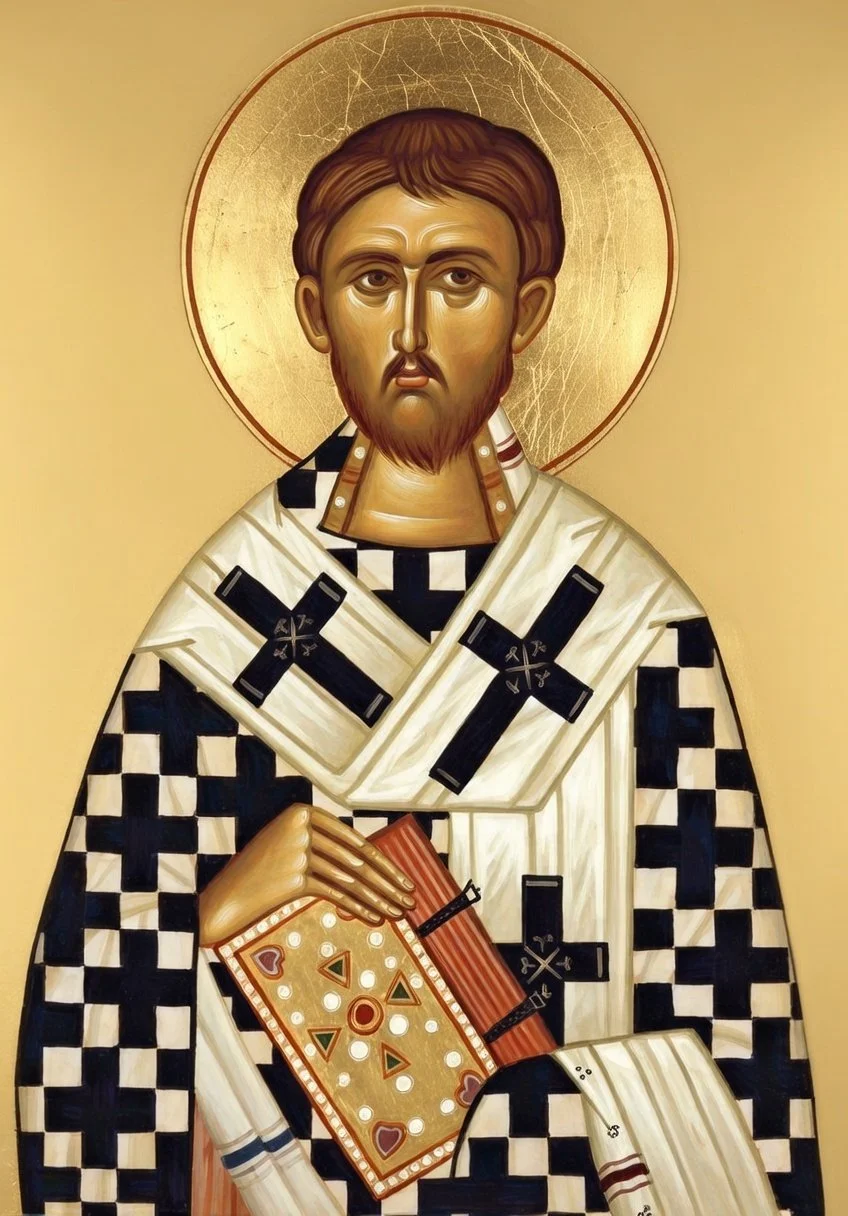
Saint Eleutherius, whose name in Greek, Eleutherios, is linked to the word for freedom, is honored as a young bishop of Illyria who was martyred under the Emperor Hadrian. In Albania he is called Shen Lefteri. The Orthodox Church keeps his feast as that of a hieromartyr, together with his mother Anthia, also called Evanthia, and with Caribus the eparch.
His cult is old and wide. Greek books of saints, an old Western martyrology and Italian churches all keep his memory. Scholars agree that the cult is ancient. They do not agree that the story told about him is history, since the accounts that describe his life were written long after the events.
He should not be confused with Pope Saint Eleutherius, who led the Church in Rome in the later second century. This article keeps the ancient cult and the legendary life apart and says plainly which is which.
A Roman Boyhood by Tradition
The Greek martyrdom account makes him a Roman, the son of a well-born family. In some versions his father, named Eugenius and called a consul, died while he was young. His mother Anthia, also named Anzia or Evanthia, raised him as a Christian. Neither his birth nor the names of his parents can be checked outside these accounts.
Some Orthodox retellings say that Anthia heard the apostle Paul preach and was baptized by him. This is tradition. No independent evidence supports it, and it is hard to square with the time of Hadrian.
The legend then has Anthia entrust her son to Anicetus, bishop of Rome, for training. This creates a clear problem. Anicetus led the Roman Church in the middle of the second century, long after Hadrian's death in 138, so he cannot have taught a bishop martyred in about 126, the date given in some Greek accounts. Some versions name Anencletus instead, which may be an attempt to solve the problem. The childhood story is tradition and not record.
A Bishop at Twenty by Tradition
There is no conversion in the story, since he is raised a Christian. The turning point is his rise in the Church. One Greek Orthodox account says he was ordained deacon at fifteen, priest at eighteen and bishop at twenty, while another gives seventeen for his priesthood. The numbers vary, and none can be verified.
Greek sources send him to Illyricum, a large Roman region along the eastern Adriatic. Some traditions name his city as ancient Aulon, which is modern Vlore in Albania, and the Albanian Orthodox Church honors him as Eleutherius of Vlore and Illyria. That link is not shown by documents from his own time.
The Latin version of his martyrdom places him elsewhere, as bishop of Aeca in Apulia in Italy, which is linked with modern Troia. These two settings cannot both be right as stated, and which one, if either, preserves a real memory is not known. His connection with Albania rests on the Greek tradition and on later local devotion.
Preacher and Teacher
The Orthodox tradition remembers him as a gifted young preacher whose teaching brought many pagans to Christ. The Orthodox Church in America says his bold preaching brought him into conflict with the Roman authorities. This is the core of the legend, and it is told in the style of a saint's life.
No church, monastery, mission or foundation can be tied to him. No dated deeds survive. The historical record gives no list of parishes or journeys. Anything more precise than that he was a bishop and a preacher belongs to later storytellers.
He left no writings. What exists are the stories about him. Greek texts of his passion, catalogued under the numbers BHG 568 to 571b, include early accounts, a praise-speech and a later rewriting. They show how the cult grew but are not his own words. The Albanian Orthodox Church also revived his local commemoration in Vlore around 2010 and 2011.
Arrest and Torment by Tradition
In the legend, Emperor Hadrian orders an officer named Felix to arrest Eleutherius and bring him to Rome. In some versions Felix is moved by the bishop's preaching and becomes a Christian. Other versions name an official called Caribus, Coremonus or a similar name who also accepts the faith after seeing his courage. These are tradition.
The accounts describe terrible tortures, including fire, boiling liquids, imprisonment and wild beasts, and say he survived them by God's help. The old Roman Martyrology keeps these scenes. They are not Roman court records and should be read as devotional storytelling.
The scholar Filippo Caraffa calls the Greek and Latin acts heavily legendary and dates the Greek ones after the fifth century. He lists three difficulties: the clash with Pope Anicetus, the split between Illyria and Aeca, and a later wrong link with Messina. The Bollandists explain the Messina reading as a mistake for Aeca in Apulia. Caraffa also notes a possible link with an early Roman martyr called Liberalis, which he says cannot be proved.
Martyrdom and Relics
Most Greek accounts place his death in Rome under Hadrian, with a date around 126 in some Orthodox sources. He is killed by soldiers after his torments, and his mother Anthia is put to death when she goes to her son's body. The year, the place and the order of events cannot be checked.
The Latin passion says the bodies of Eleutherius and Anthia were carried to Aeca in Italy. Later traditions place relics at Troia and at Rieti, and a church publication from the Archdiocese of Salerno also discusses relic traditions. Caraffa records a long Italian cult. No unbroken record proves that any present relic is his.
There is no canonization date, because his cult is older than formal papal canonization. The evidence for it includes Greek books of saints, the Martyrology of Jerome and the Marble Calendar of Naples. His veneration is better documented than his biography. The Orthodox feast is December 15, and the older Western feast is April 18.
Devotion and Legend
The wonders in the legend are marked here as tradition. They include his survival of torture, the conversion of the men sent to arrest him and the shared martyrdom of mother and son. The Greek Church honors the two together, and the story presents family faithfulness as part of the witness.
The name Eleutherios, from the Greek for free, has led Byzantine believers to ask his help in danger and distress. Some Greek devotion calls on him in pregnancy and childbirth. This is a local custom and not a formal patronage.
The hymns for his feast ask him to pray for those who honor his memory. The Orthodox Church in America publishes a troparion in tone 5, and the Greek Orthodox Archdiocese of America publishes a different English apolytikion in tone 4. The texts are not quoted here. In Albania, his yearly memory in Vlore shows that the devotion is alive.
What the Sources Say
The main critical study is Filippo Caraffa's entry on Eleutherius and Anthia, reproduced on Santi e Beati. The Bollandists discuss the conflicting seats in the Acta Sanctorum, and the Pinakes catalogue lists the Greek manuscript texts. Robert Elsie's study of the Christian saints of Albania places Shen Lefteri among the early figures tied to the region.
Orthodox sources include the Orthodox Church in America, the Greek Orthodox Archdiocese of America and of Canada, the Romanian Orthodox Church and a 2025 statement of the Albanian Orthodox Church. The Vatican chronology of Pope Anicetus exposes the timing problem. The historical Roman Martyrology preserves the Western April 18 entry.
What is firm is that a martyr named Eleutherius was honored very early and widely. What is open is almost everything else: his birth, his parents, his see, the year and place of death, and the authenticity of the relics. A careful account is that he is an early bishop and martyr, traditionally linked with Illyria and Vlore, known mainly through later legend.
Places to Remember Him
Vlore, the ancient Aulon on the Albanian coast, is the center of his memory in Albania, where the Orthodox community keeps his feast on December 15. His commemoration there was revived in recent years.
In Italy, Troia and Rieti are linked with his relics and with the Latin tradition of Aeca, and the Salerno area keeps devotion to him and his mother. Rome is the setting of the Greek martyrdom story, though no site there can be tied to him with certainty.
Those who cannot travel can keep his feast by reading the lives of the early martyrs and praying for bishops and for young people in the Church. A fitting prayer is for the freedom of believers everywhere.
undefined
undefined
Eleutherius in East and West
He belongs to the saints honored before the break between East and West. The Byzantine Church keeps him as a hieromartyr on December 15, and the Greek, Romanian, Serbian and Albanian Orthodox traditions remember him. The Albanian Orthodox Church honors him as Eleutherius of Vlore and Illyria.
Catholics have honored him too. The old Roman Martyrology had an April 18 entry, Italian dioceses preserve his cult, and Eastern Catholics who use the Byzantine calendar have access to the Orthodox feast, though how each Eastern Catholic Church keeps it was not checked. He is therefore a shared saint.
It would be wrong to say he founded the Church of Albania or a specific Albanian diocese, since nothing supports that. His real importance is as a very old witness that bishops and martyrs of the early Church are common to East and West.
Frequently Asked Questions
Ask His Prayers
Saint Eleutherius reminds us that the Church honored its martyrs long before anyone wrote careful biographies. We ask his prayers for bishops and young people, for mothers and their children, and for the people of Vlore and Albania. May his name, which speaks of freedom, teach us to trust Christ when we are afraid.
View Prayer Card