Blessed Maria Tuci: Albanian Teacher, Catechist and Virgin Martyr of 1950
A young schoolteacher from Mirdita who taught the catechism in secret and died in 1950 after imprisonment under the communist regime.
At a Glance
- Born
- March 12, 1928, Nderfushaz, Mirdita
- Died
- October 24, 1950, Shkoder, aged 22 (one older Vatican Radio text gives a September date)
- Titles
- Blessed, virgin and martyr
- Feast
- October 24 (individual); November 5 (Albanian martyrs)
- Veneration
- Catholic Church; beatified November 5, 2016 at Shkoder
- Patronage
- No formal patronage established
- A Young Teacher of the Faith
- Nderfushaz and the Stigmatine School
- A Vocation Narrowed by Persecution
- Teaching, Catechism and Quiet Resistance
- Arrest and Interrogation
- Death and Burial
- Memory, Testimony and Devotion
- How the Church Recognized Her
- Beatification at Shkoder
- Why She Matters to Eastern Christians
- Frequently Asked Questions
A Young Teacher of the Faith
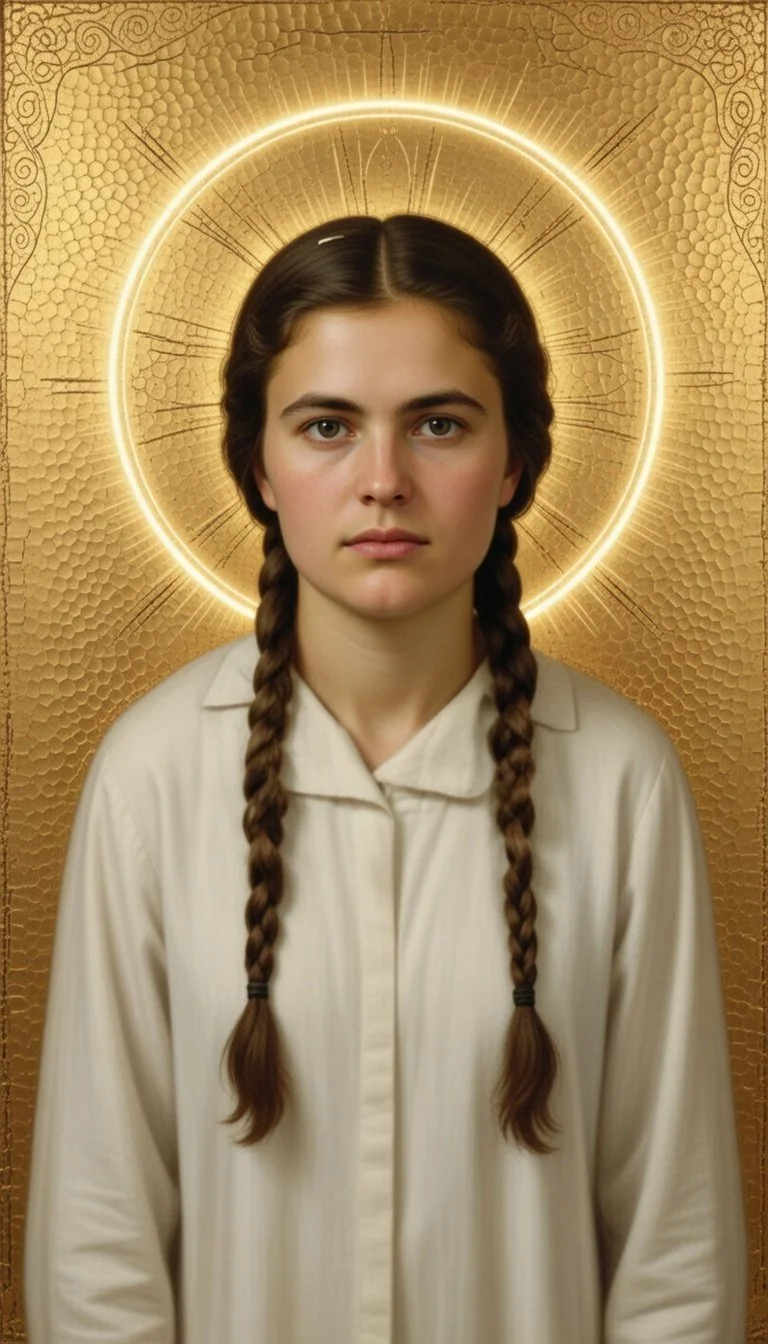
Blessed Maria Tuci was a young Albanian woman from the mountains of Mirdita who taught schoolchildren and, in secret, the catechism. She died in Shkoder on October 24, 1950, at the age of twenty-two, after months in prison under the communist regime of Enver Hoxha. She was the only woman among the thirty-eight Albanian martyrs beatified together on November 5, 2016.
She is often called a nun, but the sources describe her as an aspirant or postulant to the Poor Daughters of the Sacred Stigmata, the Stigmatine Sisters, and not as a professed religious. She had asked to enter the community and was preparing for that life when the persecution closed the way. Calling her a professed sister would go beyond the evidence.
Much of what we know of her comes from a biography by Emilia Flocchini published by Santi e Beati, from the Archdiocese of Cologne's overview of the Albanian martyrs and from Franciscan and Albanian sources. Where these disagree, or where later witnesses have shaped the story, this article says so and marks the point as uncertain or as tradition.
Nderfushaz and the Stigmatine School
Maria was born on March 12, 1928 in Nderfushaz, a village in the Mirdita region near Rreshen in northern Albania. Her parents are given as Nikoll Mark Tuci and Dila Fusha. The date and place are supported by the Archdiocese of Cologne and by Flocchini's research. Mirdita was one of the great Catholic strongholds of Albania, a mountain land that had kept its faith through centuries of Ottoman rule.
Little else is documented about her childhood. We do not have reliable information about her siblings, her baptism or her first Communion, and stories of early visions or miracles should not be added without evidence. Later accounts describe her as intelligent, courageous and serious about her faith, but those descriptions were written after her death.
For her secondary schooling she went to Shkoder, to a school run by the Stigmatine Sisters. The congregation was founded in Florence by Anna Lapini, and Flocchini dates its arrival in Albania to 1879. Their schools joined ordinary teaching with Catholic formation and service, and it was there that Maria's wish to give her life to God took shape.
A Vocation Narrowed by Persecution
There was no conversion in Maria's life, because she was raised in the faith. Her story is the deepening of a Christian upbringing into a vocation. During her years with the Stigmatine Sisters she asked to be received into their community and is described in Catholic sources as an aspirant or postulant. That meant she was preparing for religious life but had not made vows.
After the communists took power in 1944, religious communities came under pressure, foreign missionaries were expelled or forced out, and schools run by the Church were restricted. The Stigmatine community was disrupted. Maria did not give up her intention, and she turned to the work that remained open to her, which was teaching.
According to Flocchini, in 1946 Bishop-Abbot Frano Gjini of Mirdita sent Maria and a companion, Davida Markagjoni, to teach elementary pupils in Gozan and Sang in the Mirdita region. The two women taught the usual subjects and also the catechism, which was becoming dangerous. Her vocation was therefore lived out as teaching and prayer, in the middle of a persecution that was about to reach her.
Teaching, Catechism and Quiet Resistance
Maria's real work was elementary teaching and catechesis. In villages where religious instruction was being forced out, she and Davida taught the children their prayers and doctrine in secret while carrying out their duties as state teachers. The Archdiocese of Cologne adds a detail that shows her practical kindness, that she sometimes bought school supplies for children whose families could not pay for them.
Flocchini also reports that Maria walked six or seven kilometers to attend Mass at Geziq. That figure comes from a biography and has not been checked against any record of the time. It fits what is known of life in the mountains, where reaching a church could take hours on foot.
She is said to have taken part with other Catholic young people and seminarians in handing out leaflets that protested the communist-controlled elections. That suggests resistance went beyond private prayer, but it does not show membership in any armed group. She is not known to have founded a school or a congregation, and no diary or collection of her letters has been authenticated. Her witness lies in what she did and what she endured.
Arrest and Interrogation
The communist regime was carrying out a harsh campaign against religion across Albania, with schools closed, church property taken and clergy imprisoned. In Mirdita the pressure grew after August 7, 1949, when Bardhok Biba, a local communist official, was killed. The authorities answered with mass arrests. Catholic biographies describe Maria as one of those detained, and some give the number arrested as about 300, a figure that needs checking against police and court records.
The date of her arrest is UNCERTAIN. Franciscan accounts and the Archdiocese of Cologne give August 10, 1949, while Flocchini's discussion of documents kept in the Shkoder curia points to August 11. The careful wording is that she was arrested on August 10 or 11, 1949. She was taken to prison in Shkoder.
The accounts say that her interrogators tried to force her to name the killer of Biba and that she refused. They also say that a security officer made improper demands of her, which she rejected, and that harsher treatment followed. Several memorial accounts describe severe beatings and cruel punishment. The details differ and cannot be confirmed from a forensic record, so they are treated here as witness testimony. A fellow prisoner, Olimbi Baruti, is cited as remembering Maria's courage and prayer and her willingness to share clothing and supplies with other women, including Muslim women. That testimony is valuable, but the original interview has not been examined.
Death and Burial
Her injuries and the conditions of her imprisonment led to hospitalization in Shkoder. Flocchini records that on August 22, 1950, sisters and companions who visited her found her so damaged that they could hardly recognize her. Reports say she thanked God that she was dying free. That statement reaches us through later testimony, and no authenticated record of her exact words was found, so we do not quote it.
Maria died on October 24, 1950, in Shkoder. The date is UNCERTAIN only in the sense that some Vatican Radio texts mention September 24, although one of them also states October 24, 1950 in its biography. The stronger record favors October 24. The precise medical cause of death is not fully documented in accessible sources, but infection and deterioration after torture are reported.
She was first buried in the Catholic cemetery of Shkoder. After the fall of communism her remains were recovered and later placed in the church of the Stigmatine Sisters in Shkoder, according to Flocchini and a Franciscan historical account. Reports from the United States speak of the veneration of a relic, but the documents that authenticate such relics were not examined for this article.
Memory, Testimony and Devotion
No miracle has been verified through her intercession, and none was required, because the Church recognizes martyrs without the usual miracle for beatification. Devotion to her rests on her witness. The Albanian bishops' conference has reported that the Stigmatine Sisters mark the anniversary of her death with Mass in their church in Shkoder, and Albanian media have reported a procession and Mass in her memory.
TRADITION: Maria is remembered as a young woman who gave thanks to God even as her body failed. The story is moving and consistent with the witness the Church has recognized, but its wording is not documented, and it should be read as a memory handed down. The Archdiocese of Cologne also attributes to a letter of hers a short statement about torture being unable to destroy anything beyond the body. The letter itself has not been located, so we do not present that line as an authenticated quotation.
Some devotional writers compare her to Saint Agnes, the young Roman virgin martyr, because of her age and her resistance to coercion. This is a comparison made by writers and not a title given by the Church. No apparition, incorrupt body or healing has been authenticated in her case, and her courage needs no embellishment.
How the Church Recognized Her
On April 26, 2016, Pope Francis authorized the decree recognizing the martyrdom of Archbishop Vincenc Prennushi and thirty-seven companions, and the Holy See Press Office announced it the next day. Maria's cause was part of this shared investigation. The Dicastery for the Causes of Saints and Vatican News are the official references for the group.
Biographical study rests mainly on Emilia Flocchini's entry, which is the most detailed available account and covers family, teaching, arrest and burial. Other useful sources include the Archdiocese of Cologne's overview, a Franciscan journal's summary of Albanian martyrs, and Albanian memorial sources that draw on witness accounts. Works such as Pjeter Pepa's history of the Catholic clergy under communism and Leonardo Di Pinto's study of the Prennushi group provide further background.
The matters that still need archival work include the exact arrest date, the text of her alleged letter, the full witness statements about her interrogators and the medical record of her death. A responsible biography keeps the formal recognition of martyrdom, the historical evidence and the later testimony separate, and it lets her courage speak without exaggeration.
Beatification at Shkoder
Maria was beatified on November 5, 2016, in Shkoder, with thirty-seven companions. Cardinal Angelo Amato presided on behalf of Pope Francis. She was the only woman in the group. Her individual memorial is October 24, while November 5 is the shared observance for the Albanian martyrs. She has not been canonized.
The place most connected with her memory is the church of the Stigmatine Sisters in Shkoder, where her remains are reported to rest. Pilgrims who visit Shkoder can also see the cathedral of Saint Stephen, from which a commemorative procession to the Stigmatine church has been held in recent years.
In 2014 Pope Francis spoke in Tirana of the suffering of Catholics, Orthodox Christians and Muslims under the communist regime. Maria's story belongs to that wider history, and prayer at her tomb can be offered for all who suffered.
undefined
undefined
Why She Matters to Eastern Christians
Maria belonged to the Latin Catholic tradition of Albania. She was not an Eastern Catholic or Orthodox religious, and no Orthodox glorification, Byzantine service or troparion for her has been verified. This article does not call her an Orthodox saint or assign her an Eastern feast day.
Still, her story concerns Eastern Christians. Albania's communist regime persecuted Catholics, Orthodox and Muslims, and its aim was to end religious life altogether. Orthodox readers will recognize in her story the themes of steadfast confession and prayer under persecution that mark their own martyrs.
She is also a patron of the young, in the sense of devotion and not official title. Teachers, catechists and young women facing pressure can find in her a companion, and Christians of every tradition can ask her to pray for those who suffer for their faith today.
Frequently Asked Questions
Ask Her Prayers
Blessed Maria Tuci shows that great courage can be found in a young teacher doing ordinary work. Ask her to pray for children, for catechists, and for Christians who suffer for their faith.
View Prayer Card