Saint Jovan Vladimir: Prince and Martyr of Duklja, Known in Albania as Shen Gjon Vladimiri
The Christian prince of Duklja, killed by treachery in 1016 and honored by Orthodox, Catholic and local Muslim neighbors across the western Balkans.
At a Glance
- Born
- Unknown; tenth century, probably in Duklja
- Died
- May 22, 1016 (some sources say 1015), at Prespa
- Titles
- Prince of Duklja, martyr, wonderworker
- Feast
- May 22 (Orthodox; June 4 on the civil calendar for those using the Julian calendar)
- Veneration
- Orthodox Church; shared local devotion; no formal canonization date found
- Patronage
- Traditionally Duklja, Montenegro and the Elbasan region
A Prince Between Empires
Saint Jovan Vladimir, also called Saint John Vladimir, was a Christian prince of Duklja, a principality on the southern Adriatic that covered parts of what are now Montenegro and northern Albania. He was killed in 1016 during a power struggle in the Bulgarian ruling family, and the Church remembers him as a martyr. Albanians call him Shen Gjon Vladimiri, Serbs and Montenegrins call him Jovan Vladimir, and he is honored in all these lands.
His age was one of war between the Byzantine Empire and the Bulgarian Empire of Tsar Samuel. Small princes such as Vladimir survived by making careful alliances, and his marriage to Samuel's daughter tied him to the Bulgarian court. That tie both protected him and, in the end, endangered him.
Most of what we know comes from the Chronicle of the Priest of Duklja, a medieval work that is partly legend, and from Byzantine histories such as that of John Skylitzes for the political background. The Orthodox Church in America also keeps his feast. Where the sources disagree, or where a story is clearly devotional, this article says so.
Duklja and Its Ruler
The birth, parents and childhood of Vladimir are uncertain. He lived in the late tenth century in Duklja, a name that comes from the ancient town of Doclea, which Byzantine writers called Dioclea. Later centuries used the name Zeta. It is risky to apply modern borders to his lifetime, because the country he ruled did not match any present nation.
Genealogies that come from the Chronicle should be credited to that source and not treated as independently confirmed. The later saint's life describes him as devout, merciful and concerned for his people. These words show how Christians remembered him, but they are not an eyewitness description.
The best-known person in his family story is his wife Theodora Kosara, usually called Kosara, a daughter of Samuel of Bulgaria, who reigned from 997 to 1014. According to the tradition, she helped to free him, stayed loyal to him in his last crisis and arranged his burial. Her name is bound up with his cult.
Captivity and Marriage
There is no evidence that Vladimir converted from another faith. His life presents him as a Christian ruler from the start, so his calling is best described as Christian princely rule and not as conversion or monastic life. The turning points of his story are political.
The first came when Samuel's forces pushed into Duklja around the end of the tenth century and Vladimir was captured and held in Bulgaria. According to the Chronicle of the Priest of Duklja, Kosara met him in prison and was moved by his piety, and she persuaded her father to let them marry, after which Vladimir ruled Duklja as Samuel's subordinate.
TRADITION: the romantic details of the story, such as the words of their meeting and her sudden love for him, belong to the medieval narrative. The marriage itself is plausible, but its personal setting cannot be confirmed. A second turning point followed Samuel's defeat by the Byzantines and his death in 1014, when a bitter succession struggle began and Vladimir, as the late tsar's son-in-law, became vulnerable.
A Christian Ruler
Vladimir's chief task was to govern Duklja. He was not a missionary, monk or bishop, and his holiness comes from the way he used princely power and the way he met a violent end. The Orthodox Church in America describes him as a ruler who kept the Christian faith in his lands, though this is a church portrait and not proof of a specific reform.
His reign fell in a time when Christian culture was spreading from the Bulgarian sphere around Ohrid into the western Balkans. Some later traditions link him with churches in Krajina and near Mount Rumija, but no foundation inscription from his time shows that he built a particular surviving church, so those foundations are UNCERTAIN.
He should not be credited with the famous monastery near Elbasan in Albania. Its documented medieval rebuilding was carried out by the Albanian prince Karl Thopia in 1380 to 1382, centuries after Vladimir lived. No authentic letter, sermon or other writing by Vladimir survives, and speeches given to him in later lives belong to hagiography.
Treachery at the Bulgarian Court
Vladimir lived in the years when Samuel's empire contested Byzantine power across the Balkans, and Duklja lay at its western edge. Samuel died in 1014, and Ivan Vladislav later seized the Bulgarian throne after the killing of Samuel's son Gavril Radomir. As Samuel's son-in-law, Vladimir was a danger to the new ruler, and he became a target.
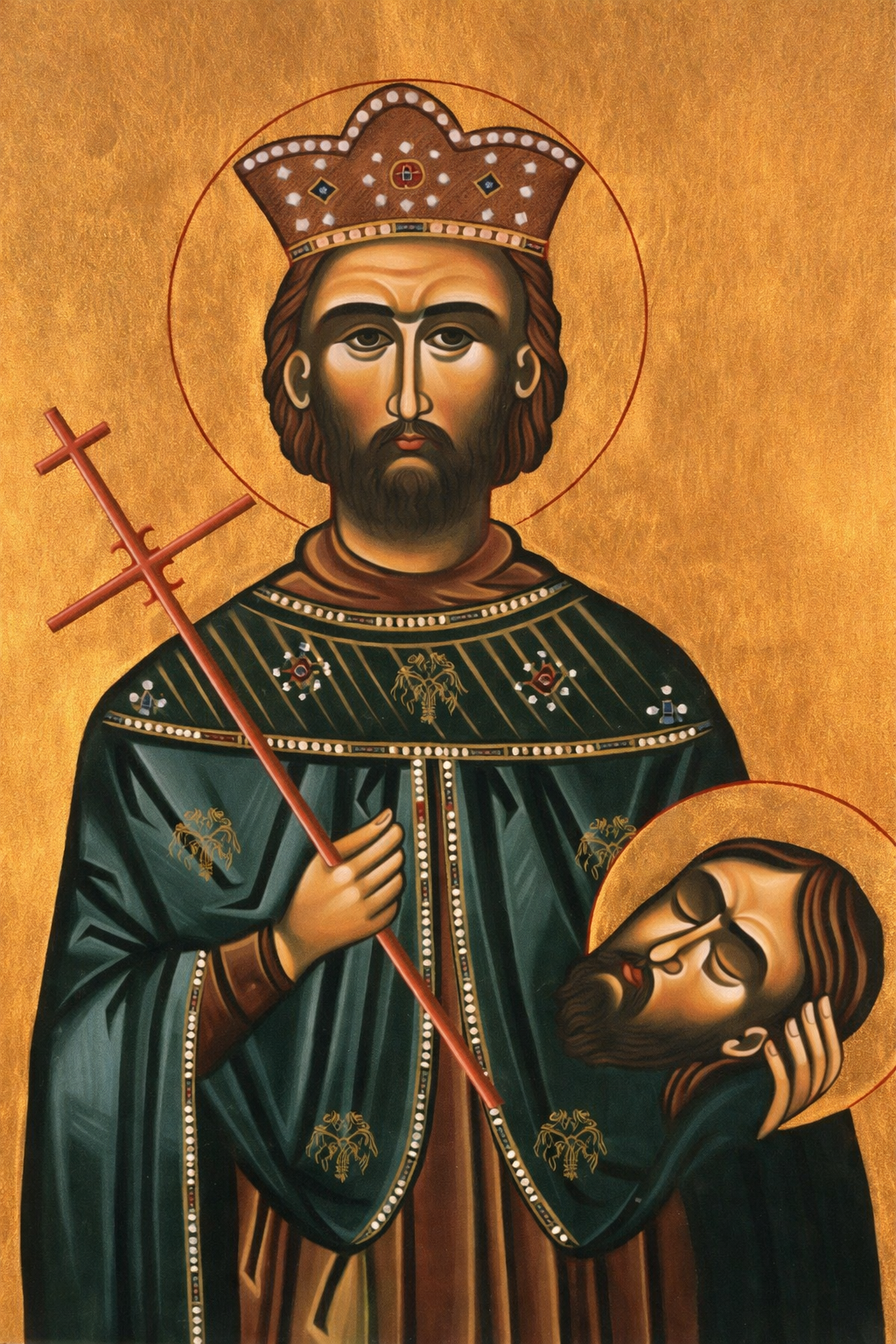
According to the accounts, Vladimir was summoned to the Bulgarian court with promises of safety. He went and was killed at Prespa. TRADITION: the Chronicle says that Ivan Vladislav sent a golden cross as a pledge of safety, and Vladimir asked for a wooden cross instead because Christ suffered on wood. The scene became central to his images, but its exact words cannot be verified.
His memory has also been claimed by different peoples. Serbian historians count him an early Serbian saint, while Montenegrin and Albanian traditions stress his ties to their lands. Historically, he ruled before modern nations existed, so his cult is best seen as a shared medieval Christian inheritance, as a scholarly study of his cult in modern Montenegro points out.
Death, Burial and Relics
Vladimir was killed in 1016, traditionally on May 22, near a church at Prespa, by order of Ivan Vladislav. The Orthodox Church in America gives the year as 1015, but most modern scholarship prefers 1016. The Chronicle says that he was beheaded, and the image of a saint carrying his own head is part of his iconography.
The Chronicle says his widow Kosara obtained his remains and took them to the church of Saint Mary at Krajina. TRADITION: she later became a nun and lived near his tomb, but the details of her later life cannot be reconstructed. The tomb became the center of a local cult of a martyr.
The historian Konstantinos Giakoumis traces a translation of the relics from Duklja to Durres about 1215, linked with the army of Michael I of Epirus, and then to the monastery near Elbasan, which Karl Thopia rebuilt about 1381. An Albanian Orthodox parish report says relics were kept through the communist period and mentions a silver reliquary in Tirana's National Historical Museum. The present location of every relic is UNCERTAIN and no current inventory was found.
Wonders, the Cross and the Pilgrimage
TRADITION: medieval accounts say that miracles occurred at his remains after his death and that these led his widow and people to honor him as a martyr. They cannot be independently confirmed. The Albanian parish report describes pilgrims at the Elbasan monastery taking away pieces of cotton laid in the saint's reliquary, a devotional custom linked with prayers for health and not a medically verified cure.
A wooden cross connected with Vladimir is carried in procession up Mount Rumija near Bar in Montenegro. Scholars link the cross with the Androvic family and describe a pilgrimage in which Orthodox Christians, Catholics and local Muslims all took part. Whether this is the cross of the story told in the Chronicle remains unproven.
The pilgrimage has not been free of conflict. A 2024 study by Massimo Mammarella explains how the building of a metal church on Mount Rumija in 2005 caused religious and political disagreement. Even so, the shared devotion shows that reverence for Vladimir once crossed lines that were later drawn more sharply.
What Historians Say
The basic narrative source is chapter 36 of the Chronicle of the Priest of Duklja, whose date and composition are debated, and which may rest on an older lost life of the saint. John Skylitzes gives the Byzantine view of Samuel's empire and its fall. Neither is an eyewitness account of Vladimir's death.
Modern scholars have studied his cult from several sides. Konstantinos Giakoumis traces the relics and pilgrimage over the long term, Boris Stojkovski looks at his reception in Catholic writing, E. H. Saggau examines the making and forgetting of the cult in Montenegro, Elio Hobdari studies the monastery's architecture, and Massimo Mammarella the Rumija pilgrimage.
The main cautions are his birth and genealogy, the exact words in the Chronicle, the later life of Kosara, the miracles at his relics and the authenticity of the wooden cross. No authentic words of his survive, so quotations attributed to him should always be traced to their medieval source.
Elbasan, Rumija and His Feast
The Monastery of Saint John Vladimir near Elbasan in Albania is the main center of his cult there. Its medieval rebuilding by Karl Thopia is documented by inscriptions in Greek, Latin and Slavonic, which also show its importance. The Albanian tourism agency describes the church as an important heritage site.
In Montenegro, the procession of the cross to Mount Rumija above Bar is the other great focus of devotion. His principal Orthodox feast is May 22, which falls on June 4 on the civil calendar for communities using the Julian calendar, and the Albanian Orthodox observance around Elbasan keeps the June date.
There is no confirmed feast for him in the universal Roman calendar. The Jesuit author Ivan Martynov included him in a work on the Greek and Slavic Church year, and Boris Stojkovski explains that this literary reception is not a formal beatification or canonization.
undefined
undefined
Why He Matters to Eastern Christians
Vladimir lived and died before the break of 1054 between Rome and Constantinople, though tensions already existed. Orthodox Christians honor him as a martyr and a model of princely holiness, and the Orthodox Church in America publishes a troparion for him, which we do not quote here.
For Eastern Catholics and Latin Catholics his importance is historical, as part of the shared Christian heritage of the Adriatic. Catholic writers have told his life, and Catholics have taken part in the Rumija pilgrimage, but no source shows that he appears on every Eastern Catholic calendar or that Rome has canonized him.
He also reminds us of how holiness can be shared across communities. People of different faiths and nations have honored him, and he stands for faithfulness under betrayal. That shared memory should not be taken to mean that all churches recognize him in the same way.
Frequently Asked Questions
Ask His Prayers
Saint Jovan Vladimir shows trust in the Cross when promises fail. Ask him to pray for rulers, for the peoples of the Balkans and for peace between neighbors who honor him.
View Prayer Card