Catholic BooksDoctors of the ChurchSpiritual ClassicsCarmelite MysticsModern SaintsLent Reading
Reading List • Doctors of the Church • Spiritual Classics • Available on Amazon
Books by Roman Catholic Saints: Every Saint's Book Worth Reading, Ranked by Influence
44 books by 35 canonized saints, from the Church Fathers and medieval doctors to the saints of our own time. Each entry tells you who the saint was, what the book covers, and why it matters.
As an Amazon Associate we earn from qualifying purchases. The links below are affiliate links, and they cost you nothing extra.
The saints of the Roman Catholic Church lived holy lives, and many of them wrote, teaching generations of Christians how to pray, think and love. This guide gathers the books by canonized saints that you can find on Amazon today, ordered by how widely they have shaped Catholic life, from Augustine and Aquinas to the little way of Therese of Lisieux and the writings of the saints who lived in our own time.
The list includes Doctors of the Church such as Augustine, Aquinas, Teresa of Avila and John of the Cross, as well as founders, popes, martyrs and mystics. Where a book is a collection gathered by disciples, or a selection from letters the saint never meant to publish, we say so plainly. We chose a readable English edition of each title, preferring those from Catholic publishers and respected translators.
354 to 430 • Bishop of Hippo and Doctor of the Church
Augustine was born in North Africa, taught rhetoric, and spent his youth chasing success and pleasure before his conversion in Milan in 386. He became bishop of Hippo, preached constantly, and wrote more than any other Church Father. His thought shaped Western theology more than any other writer outside Scripture, and every later Catholic theologian has had to reckon with him.
Book 1 of 44
Confessions
The first great spiritual autobiography addresses God directly. Augustine recounts his restless youth, his years with the Manichees, the prayers of his mother Monica and his conversion, and he asks what time, memory and the human heart are. It holds the famous line that our hearts are restless until they rest in God. This Oxford World's Classics edition is a readable modern translation.
Written after the sack of Rome in 410, this long work answers the charge that Christianity had weakened the empire. Augustine describes two cities, one built on love of self and one on love of God, and sets out the Christian view of history, politics, evil and the end of the world. This Penguin Classics edition is the standard paperback for general readers.
1225 to 1274 • Dominican friar and Doctor of the Church
Thomas Aquinas was born into a noble Italian family and joined the Dominicans against his family's wishes. He taught at Paris and in Italy and wrote with a clarity that few have matched. He is called the Angelic Doctor, and the Church has long held his work up as the model of how faith and reason belong together. He left his greatest work unfinished after a mystical experience at Mass late in 1273.
Book 3 of 44
Aquinas's Shorter Summa
A concise presentation of his teaching on God, Christ, hope and charity, drawn from the Compendium of Theology he wrote for a friend. It is the best entry point for a reader who wants Aquinas himself without the weight of the full Summa, and it moves in plain steps from the creed to the Christian life.
The Summa Theologiae is the largest and most influential work of Catholic theology, taking up God, creation, the moral life, Christ and the sacraments in a series of ordered questions and answers. This five volume paperback set carries the classic English translation of the Fathers of the English Dominican Province. Most readers dip into it by topic rather than reading straight through.
1873 to 1897 • Carmelite nun and Doctor of the Church
Therese Martin entered the Carmel of Lisieux in France at fifteen and died of tuberculosis at twenty four, known to few outside her convent. After her death her autobiography spread across the world and she was canonized in 1925. She taught the little way of spiritual childhood, which trusts God in the smallest acts of ordinary life. In 1997 she was named a Doctor of the Church.
Book 5 of 44
Story of a Soul
Her autobiography combines three manuscripts written at the request of her superiors. It tells of her childhood, her vocation and the little way, and it speaks in a simple voice about God's mercy and about offering small things with great love. This edition from ICS Publications is the critical text that Carmelite scholars prepared, and it has become one of the most widely read spiritual books of the modern age.
1515 to 1582 • Carmelite reformer and Doctor of the Church
Teresa was a Spanish Carmelite who spent twenty years in a lax convent before a deeper conversion to prayer. She reformed her order, founded convents across Spain despite constant opposition, and wrote about prayer with frankness, humor and rigorous honesty. In 1970 she became the first woman named a Doctor of the Church, together with Catherine of Siena.
Book 6 of 44
The Interior Castle (Study Edition)
Her mature masterpiece describes the soul as a castle with seven dwelling places, with God at the center. It maps the journey of prayer from beginning efforts to union with God. This study edition from ICS Publications adds helpful notes and a guide for readers who work through it slowly.
Written for her nuns, this is her most practical teaching on prayer, with a long commentary on the Our Father. It treats friendship, detachment and humility with a warmth that makes it a gentler first book than the Interior Castle. The ICS study edition includes the notes and a reading guide.
The Life of Teresa of Jesus tells her own story, from a girl's flight from home to her visions and her fight to reform Carmel. It shows prayer lived through illness, doubt and conflict, and it is among the most vivid autobiographies of the sixteenth century. This TAN edition presents her own account in clear English.
1542 to 1591 • Carmelite friar, poet and Doctor of the Church
John joined the Carmelites and worked with Teresa of Avila to reform the order for men. His reform angered his own brothers, who imprisoned him in a tiny cell in Toledo for nine months. There he wrote some of the finest poems in the Spanish language. He later wrote prose commentaries on them, which became the great texts of Catholic mystical theology. He was named a Doctor of the Church in 1926.
Book 9 of 44
Dark Night of the Soul
His treatise on the purification of the soul explains why God leads those who love Him through periods of dryness and darkness. It is often misread as a book about depression, but it speaks of a spiritual purification that draws the soul toward union. This TAN Classics edition offers the text in a readable form.
The companion volume to the Dark Night sets out how to detach from all that is not God in order to reach Him. It is demanding and systematic, and it is the foundation of his thought on faith, hope and love as the means of union. Most readers take it up after the Dark Night.
1567 to 1622 • Bishop of Geneva and Doctor of the Church
Francis was a French speaking nobleman from Savoy who gave up a legal career to become a priest and later bishop of Geneva. He won back many Protestants by patient preaching and gentle writing, and he taught that holiness is possible in every state of life, not only in the cloister. He was named a Doctor of the Church in 1877.
Book 11 of 44
Introduction to the Devout Life
Written as letters of direction to a lay woman, this book became one of the best selling works of Catholic spirituality. Francis teaches prayer, the sacraments, the virtues and how to deal with temptation, with a lightness and practicality aimed at people with families and jobs. This TAN edition keeps the classic translation.
Ignatius was a Basque soldier whose leg was shattered at the siege of Pamplona. During his long recovery he read the lives of the saints and began to change. He studied in Paris, gathered a small band of companions and founded the Jesuits, who became teachers, missionaries and scholars across the world.
Book 12 of 44
The Spiritual Exercises of St. Ignatius
A month long program of meditations on sin, the life of Christ and the Resurrection, written as a manual for the person who guides a retreat. It teaches how to discern the movements of the heart and make good decisions, and it has shaped Catholic retreats for nearly five hundred years. It is meant to be prayed rather than simply read. This TAN edition is the classic English text.
1905 to 1938 • Polish sister and apostle of Divine Mercy
Helena Kowalska entered the Congregation of the Sisters of Our Lady of Mercy in Poland and lived an ordinary hidden life in convents. Her spiritual director asked her to keep a diary of the visions she reported, in which Christ asked for the image of the Divine Mercy and the Chaplet. John Paul II canonized her in 2000, and the Church now celebrates Divine Mercy Sunday.
Book 13 of 44
Diary of Saint Maria Faustina Kowalska: Divine Mercy in My Soul
Her notebooks record her prayer, her sufferings and the messages about mercy she believed she received from Christ. The text is the source of the Divine Mercy devotion, which has spread worldwide. It is a long and personal book, best read slowly. This is the Marian Press edition.
1673 to 1716 • French priest and preacher of Marian devotion
Louis Marie Grignion was a French priest who spent his life preaching parish missions in western France, often among the poorest. He founded the Company of Mary and the Daughters of Wisdom. His writings lay hidden in a chest until they were found in 1842 and then went on to influence many saints, including John Paul II.
Book 14 of 44
True Devotion to Mary
His best known work explains total consecration to Jesus through Mary and gives a method for making it. It combines solid theology with a rousing style, and it has led many readers to Marian devotion. This TAN Classics edition includes the preparation for the consecration.
A short, warm book that explains how to pray the Rosary well. It gives examples of conversions and graces tied to the prayer and it suggests how to meditate on each decade. It is often the first book that a Catholic reads on the Rosary. This is the TAN edition.
Benedict left Rome in his youth and lived as a hermit near Subiaco before gathering monks into communities, and he later founded Monte Cassino. He wrote the Rule for his monks, who live by prayer and work. The Rule shaped monastic life across Europe and gave Western civilization a model of ordered community life. He is a patron of Europe.
Book 16 of 44
RB 1980: The Rule of St. Benedict in English
The Rule is a short guide to common life in seventy three chapters, covering obedience, humility, the daily round of prayer, work and hospitality. It remains the foundation for Benedictine and Cistercian life and has been read by laypeople who want order in their own homes. This edition from Liturgical Press is the standard English text, with a helpful introduction.
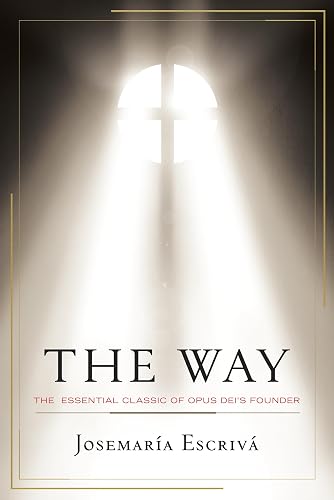
1902 to 1975 • Spanish priest and founder of Opus Dei
Josemaria Escriva was ordained in Spain in 1925 and founded Opus Dei in 1928 to teach that ordinary work and family life can be a path to holiness. The movement grew across the world. John Paul II canonized him in 2002, and many Catholic laypeople know him through his short books of spiritual points.
Book 17 of 44
The Way
A collection of nearly one thousand short maxims on prayer, work, friendship and apostolic zeal, first published in Spanish in 1939. It has sold millions of copies and gives a book to open anywhere and read a line at a time. This edition carries the translation from Doubleday.
One volume combining three collections of spiritual points: The Way, Furrow and The Forge. The later two were published after the first and developed its themes into longer reflections on the interior life, charity and the sanctification of work. It is good value for readers who want the whole set.
1801 to 1890 • Anglican priest, Catholic convert and cardinal
Newman was an Oxford scholar and Anglican priest who led the Oxford Movement before entering the Catholic Church in 1845. He later became a cardinal and a leading Catholic thinker in England. Pope Francis canonized him in 2019. His writings on conscience, doctrine and education remain widely read.
Book 19 of 44
Apologia Pro Vita Sua
His spiritual autobiography was written in 1864 to answer an attack on his honesty, and it traces his religious development step by step toward the Catholic Church. It is a classic of English prose and a clear account of how a thoughtful man came to Rome. This Penguin Classics edition includes helpful notes by Ian Ker.
1696 to 1787 • Bishop, founder of the Redemptorists and Doctor of the Church
Alphonsus was a young Neapolitan lawyer who left the law for the priesthood after losing an important case. He founded the Redemptorists to preach to the abandoned poor, and he later served as bishop of Sant'Agata dei Goti. He wrote more than a hundred works in simple Italian for ordinary readers and is a patron of moral theologians. He became a Doctor of the Church in 1871.
Book 20 of 44
Visits to the Blessed Sacrament and the Blessed Virgin Mary
Short devotions for each day, written to encourage visits to the Eucharist and to Mary. It was one of the most widely printed Catholic prayer books of the nineteenth century, and the style is warm and simple. This TAN edition contains the full set.
A brief treatise on accepting every event in life as coming from God's hand. It offers a practical way to find peace amid trials, loss and disappointment and it is frequently quoted by spiritual directors. This edition is a compact paperback.
Karol Wojtyla was a Polish priest, philosopher and archbishop of Krakow before his election as pope in 1978. He led the Church for more than twenty six years, traveled the world and wrote on the dignity of the human person, family and work. He was canonized in 2014. His philosophical work and his teaching on the body continue to influence Catholic thought.
Book 22 of 44
Man and Woman He Created Them: A Theology of the Body
The text of the Wednesday audiences he gave between 1979 and 1984, in the definitive translation by Michael Waldstein. It presents a biblical vision of the human person, marriage and the meaning of the body, and it is long and demanding. It is the foundation of what many now call the theology of the body.
A philosophical study of love, marriage and sexual ethics he wrote in 1960 as Karol Wojtyla, before he became pope. It argues that the person must never be treated merely as a means, and it grounds the Church's teaching in an analysis of love. It is a dense book and a strong choice for readers who like philosophy.
1910 to 1997 • Founder of the Missionaries of Charity
Agnes Gonxha Bojaxhiu was born in Skopje and joined the Sisters of Loreto before founding the Missionaries of Charity in Calcutta in 1950. She served the dying and the poorest of the poor and became one of the best known figures of the twentieth century. She was canonized in 2016.
Book 24 of 44
Mother Teresa: Come Be My Light
Edited by Brian Kolodiejchuk, this book gathers her private letters to confessors and superiors, which she never meant to be published. They reveal the long interior darkness she carried for decades together with her fidelity to her work. It is not a book she wrote for the public, and it presents her inner life with great honesty.
1347 to 1380 • Dominican tertiary and Doctor of the Church
Catherine was the youngest of a large family in Siena and entered the Dominican Third Order as a laywoman. She nursed the sick, wrote hundreds of letters to popes and rulers, and helped persuade Pope Gregory XI to return from Avignon to Rome. She is a patron of Italy and Europe and was named a Doctor of the Church in 1970.
Book 25 of 44
The Dialogue
Her great work records a conversation between the soul and God the Father on providence, discernment, the Church and the way of perfection. She dictated it to secretaries in ecstasy, according to her disciples. It is a central text of Catholic mysticism. This is the Classics of Western Spirituality edition from Paulist Press, translated by Suzanne Noffke.
Francis was a merchant's son from Assisi who gave up wealth in his twenties to follow Christ in poverty. He gathered brothers, preached to the people and received the stigmata near the end of his life. The Franciscan Order he founded is among the largest in the Church. He is a patron of ecology and of Italy.
Book 26 of 44
The Complete Francis of Assisi: His Life, The Complete Writings, and The Little Flowers
A single volume that gathers his own writings, including the Canticle of the Creatures and the Rule, with a life of the saint and the Little Flowers, a collection of stories about him and his companions written after his death. Only part of the book is by Francis himself. It is the easiest way to read him as a whole.
1221 to 1274 • Franciscan minister general and Doctor of the Church
Bonaventure studied and taught at Paris and later led the Franciscan Order as minister general. He wrote a life of Francis, philosophical and theological works and mystical treatises, and he was called the Seraphic Doctor. He became a bishop and cardinal and died during the Council of Lyons.
Book 27 of 44
The Journey of the Mind to God
A short mystical treatise, written in 1259 after a retreat at La Verna, that guides the reader in seven stages from the created world to union with God. It blends philosophy and devotion in a few pages. This Hackett edition has a clear translation and helpful notes.
c. 1033 to 1109 • Archbishop of Canterbury and Doctor of the Church
Anselm was born in Aosta in Italy, became a monk at Bec in Normandy and later served as archbishop of Canterbury, where he defended the Church against the king. He is often called the father of scholasticism for his careful method of reasoning about the faith, and he was named a Doctor of the Church in 1720.
Book 28 of 44
Proslogion
In this short work he prays for understanding and offers an argument for the existence of God based on the idea of a being than which nothing greater can be conceived. It has been debated by philosophers for nine hundred years. This Hackett edition adds the replies of Gaunilo and Anselm's response.
Gregory came from a Roman senatorial family, became prefect of the city and then a monk before being chosen pope in 590. He organized the Church's charity, sent missionaries to England and shaped the liturgy and chant of the West. He is the first monk to become pope and is called a Doctor of the Church.
Book 29 of 44
The Book of Pastoral Rule
Written soon after he became pope as a guide for bishops and pastors, it describes how a shepherd should live and how to counsel different people. It was copied across medieval Europe and has been read by clergy for centuries. This is the St Vladimir's Seminary Press edition in the Popular Patristics Series.
c. 673 to 735 • Benedictine monk and Doctor of the Church
Bede spent nearly his whole life at the monastery of Jarrow in northern England, where he taught, wrote and prayed. He wrote commentaries on Scripture and the first history of the English church and people. He was named a Doctor of the Church in 1899, and he is the only native of England to hold that title.
Book 30 of 44
Ecclesiastical History of the English People
Completed in 731, it tells how Christianity came to England, including Augustine of Canterbury, Saint Aidan and the conversion of the kingdoms. It is the main source for early English history and remains very readable. This Penguin Classics edition has a good translation and notes.
1478 to 1535 • Lawyer, Lord Chancellor of England and martyr
Thomas More was a lawyer, scholar and statesman who served as Lord Chancellor under Henry VIII. He refused to accept the king as head of the Church in England and was beheaded in 1535. He is the patron of lawyers and statesmen and was canonized in 1935. He wrote Utopia and many devotional works.
Book 31 of 44
A Dialogue of Comfort Against Tribulation
He wrote it in the Tower of London in 1534 while awaiting trial, as a conversation between two Hungarians about facing persecution. It is a calm and witty book about how to bear suffering and fear. This Dover edition is an affordable paperback.
1090 to 1153 • Cistercian abbot and Doctor of the Church
Bernard entered the new Cistercian monastery of Citeaux and was soon sent to found Clairvaux, which he led for nearly forty years. He preached, advised popes and kings and wrote on love, humility and the Song of Songs. He is called the Mellifluous Doctor and became a Doctor of the Church in 1830.
Book 32 of 44
On Loving God
A short treatise that asks why and how God should be loved and describes four degrees of love, from love of self to loving oneself only for God's sake. It is among the clearest medieval statements on the spiritual life. This is volume 13 of the Cistercian Fathers series.
1891 to 1942 • Jewish philosopher, Carmelite nun and martyr
Edith Stein was a German Jewish philosopher who studied under Edmund Husserl. She came to faith after reading the life of Teresa of Avila, was baptized in 1922 and entered the Carmelites in 1933. She was arrested by the Nazis in the Netherlands and killed at Auschwitz in 1942. She was canonized in 1998.
Book 33 of 44
The Science of the Cross
Her last and unfinished work, written in 1942 for the four hundredth anniversary of John of the Cross, presents his thought through the lens of her own philosophy. It treats the cross as a path of knowledge. It is a profound book. It appears in the Collected Works series from ICS Publications.
1098 to 1179 • Benedictine abbess, visionary and Doctor of the Church
Hildegard was offered to a monastery as a child, became abbess and wrote on theology, music, medicine and natural science. She recorded her visions in the Scivias, composed liturgical music and preached publicly, which was rare for a woman of her time. Pope Benedict XVI named her a Doctor of the Church in 2012.
Book 34 of 44
Scivias
Her first great visionary work records twenty six visions of creation, redemption and the Church, each with her own explanation. It is illustrated in the original manuscript. It is rich in imagery and strange to modern readers. This edition is in the Classics of Western Spirituality series.
1256 to c. 1302 • Benedictine nun and mystic of Helfta
Gertrude entered the monastery of Helfta in Germany as a child and became a learned nun and one of the great mystics of the Middle Ages. She is known for her devotion to the Sacred Heart of Jesus. She is one of very few women to be called the Great.
Book 35 of 44
St. Gertrude the Great: Herald of Divine Love
Her revelations record her visions and prayer. Only part of the book, mainly the second book, came from her own hand. The rest was written by her sisters from her teaching and their memories of her. It is nevertheless the main source for her spirituality and a gentle, Christ centered book. This is the TAN edition.
Angela was a married woman of Foligno in Italy who, after the death of her husband and children, gave away her property and joined the Franciscan Third Order. She dictated her spiritual experiences to a friar and became known as the Mistress of Theologians. Pope Francis extended her cult to the whole Church in 2013.
Book 36 of 44
Angela of Foligno: Complete Works
It contains the Memorial, which she dictated to a friar scribe, and her instructions to her disciples. It tells of her conversion and of her ardent visions of the Crucified. The writing is fiery and vivid and has influenced Franciscan mysticism. This is the Classics of Western Spirituality edition.
Elizabeth Catez entered the Carmel of Dijon at twenty one and died of Addison's disease at twenty six. She wrote on the indwelling of the Trinity in the soul, and her short life and prayer have influenced many readers. She was canonized in 2016.
Book 37 of 44
The Complete Works of Elizabeth of the Trinity, Vol. 1
The first volume of the ICS edition includes her major spiritual writings, including the Last Retreat and the prayer O My God, Trinity. It is a short and luminous account of life with God in the center of the soul. It is a rich introduction to her thought.
1542 to 1621 • Jesuit cardinal and Doctor of the Church
Robert Bellarmine was a Jesuit theologian and cardinal who defended Catholic teaching in an age of controversy and also wrote catechisms. He was canonized in 1930 and named a Doctor of the Church in 1931.
Book 38 of 44
The Art of Dying Well
Written in the last year of his life, it teaches how to prepare for death by living well, through the sacraments, the virtues and trust in God. It is a sober, clear and consoling book. It is available in this modern paperback edition.
Giuseppe Sarto grew up in a poor family in northern Italy and became a parish priest, bishop and patriarch of Venice before being elected pope in 1903. He encouraged frequent Communion, lowered the age of first Communion and promoted catechesis. He was canonized in 1954.
Book 39 of 44
Catechism of Saint Pius X
A short question and answer catechism of the Catholic faith issued in the early twentieth century. It covers the creed, the commandments, the sacraments and prayer in plain terms. It is useful for anyone who wants a simple review of doctrine. This is the Aeterna Press edition.
Francesco Forgione joined the Capuchins and was ordained in 1910. He lived in San Giovanni Rotondo in Italy, where he heard confessions for many hours each day and bore the wounds of Christ for fifty years. He founded a hospital, the House for the Relief of Suffering, and was canonized in 2002.
Book 40 of 44
Secrets of a Soul: Padre Pio's Letters to His Spiritual Directors
These are letters he wrote to his spiritual directors in the early years of his priesthood. They show his interior struggles, his sufferings and his experiences in prayer. This edition was prepared with scholarly notes and offers a first hand look at his spiritual life.
1815 to 1888 • Italian priest and educator of youth
John Bosco was born into a poor farming family in Piedmont. He became a priest in Turin and devoted himself to boys who were homeless or in trouble, founding the Salesians and teaching a gentle method of education based on reason, religion and kindness. He was canonized in 1934.
Book 41 of 44
Forty Dreams of St. John Bosco
This collection gathers dreams that he related to his boys and to the Salesians. They were taken from the Biographical Memoirs written by his disciples and are not a book he wrote himself. They concern the spiritual lives of the young and the future of his work. This is the TAN edition.
John Vianney struggled with his studies but was ordained and sent to the small village of Ars in France. There he spent decades hearing confessions for many hours a day, and people traveled from all over France to see him. He was canonized in 1925 and is the patron of parish priests.
Book 42 of 44
Thoughts of the Cure of Ars
A small collection of sayings and short instructions taken from his sermons and catechism lessons. He wrote little himself, and this book gathers his spoken teaching on prayer, the Eucharist, sin and the love of God. It is a compilation rather than a work he wrote. This is the TAN edition.
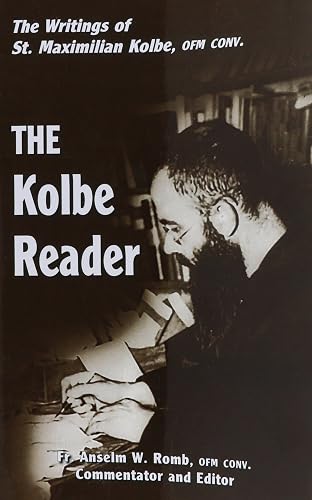
Maximilian Kolbe was a Conventual Franciscan who founded the Militia of the Immaculata and a large publishing house in Poland. He was arrested by the Nazis and sent to Auschwitz, where in 1941 he offered his life in place of another prisoner and died in a starvation cell. He was canonized in 1982.
Book 43 of 44
The Kolbe Reader: The Writings of St. Maximilian M. Kolbe
A selection of his articles, letters and conferences on the Immaculata, the apostolate and the spiritual life. It shows the mind of a priest who combined mission work, publishing and devotion to Mary. This edition offers the most accessible selection in English.
1858 to 1916 • Hermit and missionary in the Sahara
Charles de Foucauld was a French army officer who lived a worldly youth before returning to the faith in 1886. He became a Trappist, then a hermit in the Sahara among the Tuareg, and he was killed in 1916 at Tamanrasset. He was canonized in 2022. His hidden life inspired many religious communities.
Book 44 of 44
Charles de Foucauld: Writings
A selection from his spiritual writings, letters and meditations, in the Modern Spiritual Masters series. It follows the call to imitate the hidden life of Nazareth and to live among the poor in simple charity. It is a short and accessible introduction to his thought.
Books by Roman Catholic Saints: Questions and Answers
What are the best books by Catholic saints for beginners?
Start with Story of a Soul by Saint Therese of Lisieux, Introduction to the Devout Life by Saint Francis de Sales and the Confessions of Saint Augustine. For prayer, add The Way of Perfection by Saint Teresa of Avila.
What is the most famous book written by a Catholic saint?
The Confessions of Saint Augustine is usually named the most influential, and Story of a Soul by Saint Therese of Lisieux is among the most widely read spiritual autobiographies of the modern age.
Are all of these books written by the saints themselves?
Most are. A few are compilations of their sayings or letters gathered by others, such as Thoughts of the Cure of Ars, Forty Dreams of St. John Bosco, the Herald of Divine Love and the Little Flowers of Saint Francis. We note this in each entry.
Which book by a Catholic saint is best for prayer?
The Interior Castle and The Way of Perfection by Saint Teresa of Avila, The Spiritual Exercises of Saint Ignatius, and Introduction to the Devout Life are the usual recommendations.
Which books are best for Lent?
Many readers choose the Confessions of Saint Augustine, The Dark Night of the Soul, Visits to the Blessed Sacrament and The Art of Dying Well. Saint Thomas More's Dialogue of Comfort Against Tribulation also suits the season.
Are there modern Catholic saints with books in English?
Yes. Saint Faustina, Saint John Paul II, Saint Teresa of Calcutta, Saint Josemaria Escriva, Saint Edith Stein, Saint John Henry Newman, Saint Padre Pio and Saint Charles de Foucauld all have English books on Amazon.
Do you earn money if I buy through these links?
Yes. As an Amazon Associate we earn from qualifying purchases at no extra cost to you. That income helps support the work of this site.
These books have fed generations of Christians. Choose one, read a few pages each day, and let the saint teach you. Every link above goes to Amazon, and each purchase helps support this ministry.
As an Amazon Associate we earn from qualifying purchases.
The work here is about bringing little-known saints to light, so their holiness can stand as an example for the whole world. If you'd like to support this mission, please consider purchasing a prayer card. This site was never just about the cards themselves — they're the way I help fund the research and documentation of saints both known and forgotten.
If buying a card to support the work isn't possible for you right now, could I ask you for something else instead? A prayer. I love our Heavenly Father, and I would only ask that you pray I might love Him more.
Lord Jesus Christ, Son of God, please have mercy on me, a horrible sinner.