How Byzantine Catholic Children Learn the Faith: Catechesis Without a First Communion Class
Catechetical Sunday, September 20, 2026 • Byzantine Catholic Archeparchy of Pittsburgh
How Byzantine Catholic Children Learn the Faith: Catechesis Without a First Communion Class
A Byzantine Catholic child receives Communion before they can walk. That single fact changes almost everything about how the Church teaches them what they already, sacramentally, belong to.
Byzantine Catholic Catechesis — At a Glance
- 2026 Catechetical Sunday
- September 20, 2026
- 2026 Theme
- “Eyes Fixed on Christ” (Isaiah 61:1–2)
- Sui Iuris Church
- Ruthenian Greek Catholic Church • Byzantine Rite
- Key Difference from Latin Practice
- Baptism, Chrismation & Communion given together, usually in infancy
- Core Teaching Tools
- The Divine Liturgy, the liturgical year, icons, chant
- Major U.S. Center
- Byzantine Catholic Archeparchy of Pittsburgh
- Resource Publisher
- Byzantine Seminary Press & the Metropolitan Cantor Institute
- Living Curriculum
- The lives of 20th-century martyr-bishops
Catechetical Sunday 2026
Each September, eparchies across the Byzantine Catholic Church, including the Byzantine Catholic Archeparchy of Pittsburgh, mark Catechetical Sunday, a day set aside to open the new catechetical year and to formally recognize the parents, godparents, and catechists who carry the actual weight of handing the faith to the next generation. In 2026, that observance fell on September 20, under the theme “Eyes Fixed on Christ,” drawn from Isaiah 61:1–2 and tied to the opening Gospel reading of the Byzantine liturgical year, which begins each September 1 with Christ's own reading from that same passage in the synagogue at Nazareth.
It is a fitting theme for a Church whose approach to religious education looks, in one crucial respect, almost nothing like the Latin Catholic classroom most Americans picture when they hear the word catechism.

Part II
The Sacrament Comes Before the Classroom
In the Latin Catholic Church, a child is typically baptized as an infant, prepared for years, and then receives First Communion around age seven or eight, with Confirmation following later still, often in the teenage years. Byzantine Catholic practice, following the ancient pattern of the wider Eastern Christian world, does not stagger the sacraments of initiation that way. A Byzantine Catholic infant normally receives Baptism, Chrismation, which is the Eastern equivalent of Confirmation, and their first Holy Communion in a single celebration, often within weeks of birth.
That single structural fact reshapes what catechesis is for. There is no First Communion class to prepare for, because by the time a child is old enough to sit in a classroom, they have already been receiving the Eucharist for years, at every Divine Liturgy their family attends. Byzantine Catholic religious education is not primarily about qualifying a child for a sacrament still to come. It is about helping a child who already, sacramentally, belongs fully to the Church begin to understand what they have already received.
Part III
The Divine Liturgy as the First Classroom
Byzantine Catholic formation leans heavily on something a classroom alone cannot supply: the repeated experience of the Divine Liturgy itself. The same hymns, the same structure, the same icons surrounding the worshiper week after week, feast after feast, function as a form of teaching long before a child can read a catechism text. Children absorb the shape of the liturgical year, the rotation of fasts and feasts, the visual theology carried in the iconostasis, simply by being present, the same way any child absorbs their native language before they can diagram a sentence.
Formal catechesis builds on that foundation rather than starting from zero. A catechist working with Byzantine Catholic children is less often introducing an entirely new concept and more often naming and deepening something the child has already been living inside the church building itself.
Part IV
What Byzantine Catholic Children Actually Learn
Curriculum resources produced for Byzantine Catholic parishes, including materials from the Byzantine Seminary Press and chant instruction from the Metropolitan Cantor Institute, center on a consistent set of themes: the meaning and flow of the liturgical year, the stories and Sunday Gospel readings tied to each season, the parables of Jesus, and age-appropriate introductions to the Divine Liturgy's structure and prayers. Coloring books and illustrated prayer books, such as multi-volume children's prayer collections used across several eparchies, give younger children a concrete, visual entry point before they are ready for more formal instruction.
Chant instruction deserves particular mention, since singing the liturgy is not an optional enrichment activity in Byzantine Catholic practice but close to the ordinary mode of prayer itself. Children who grow up singing responses at Divine Liturgy are absorbing theology through melody long before anyone sits them down to explain what the words mean.
Part V
Teaching Through the Martyrs
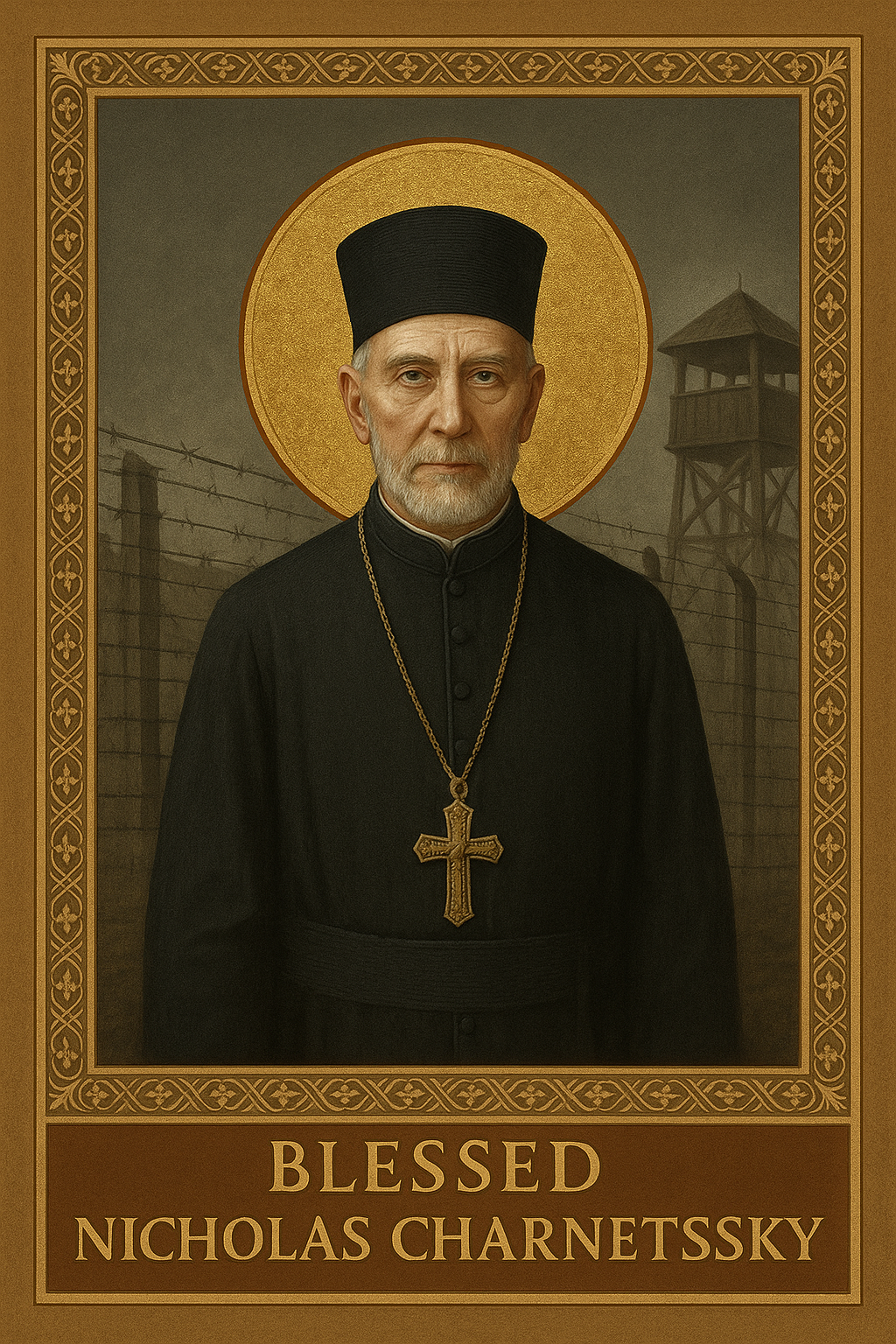
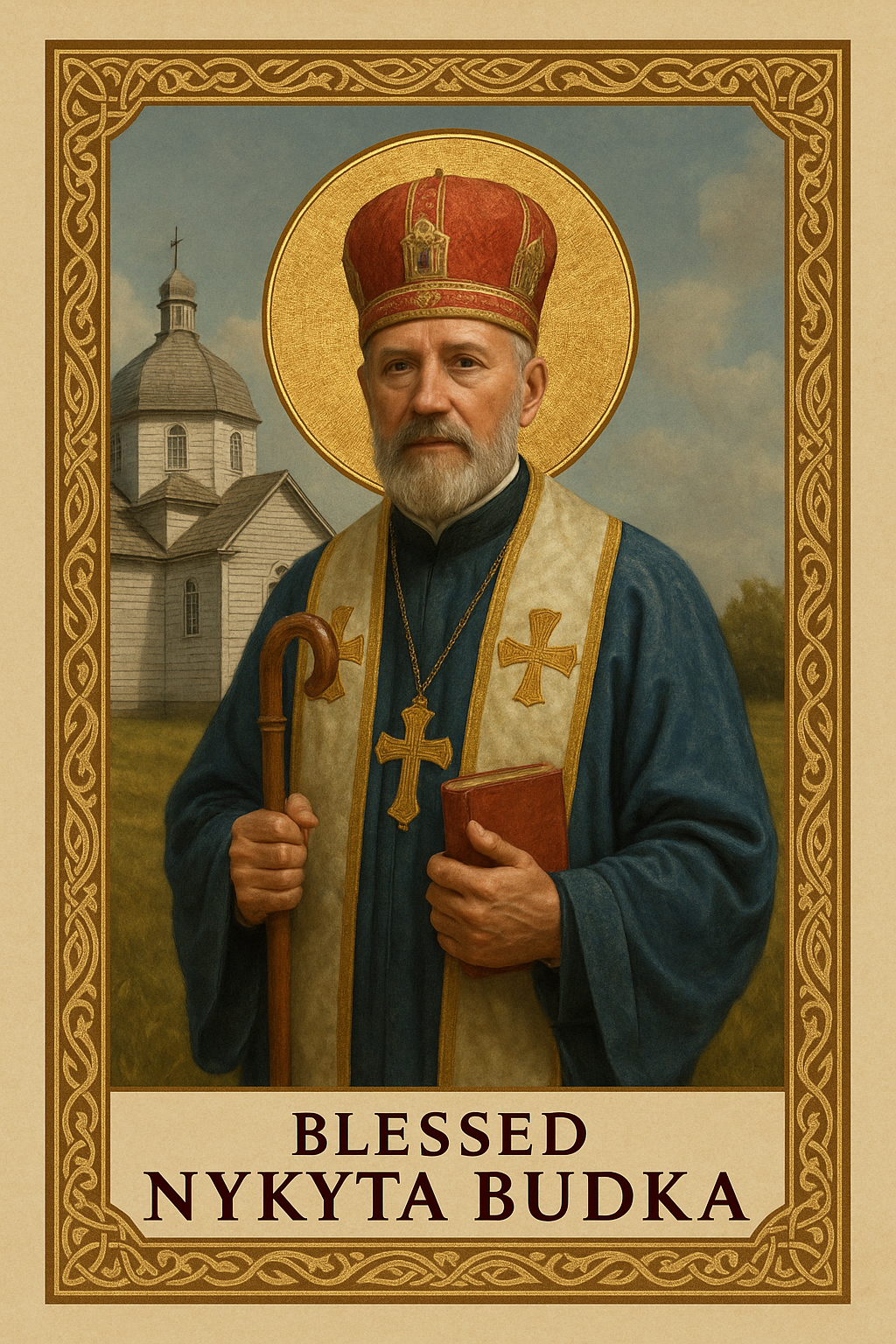
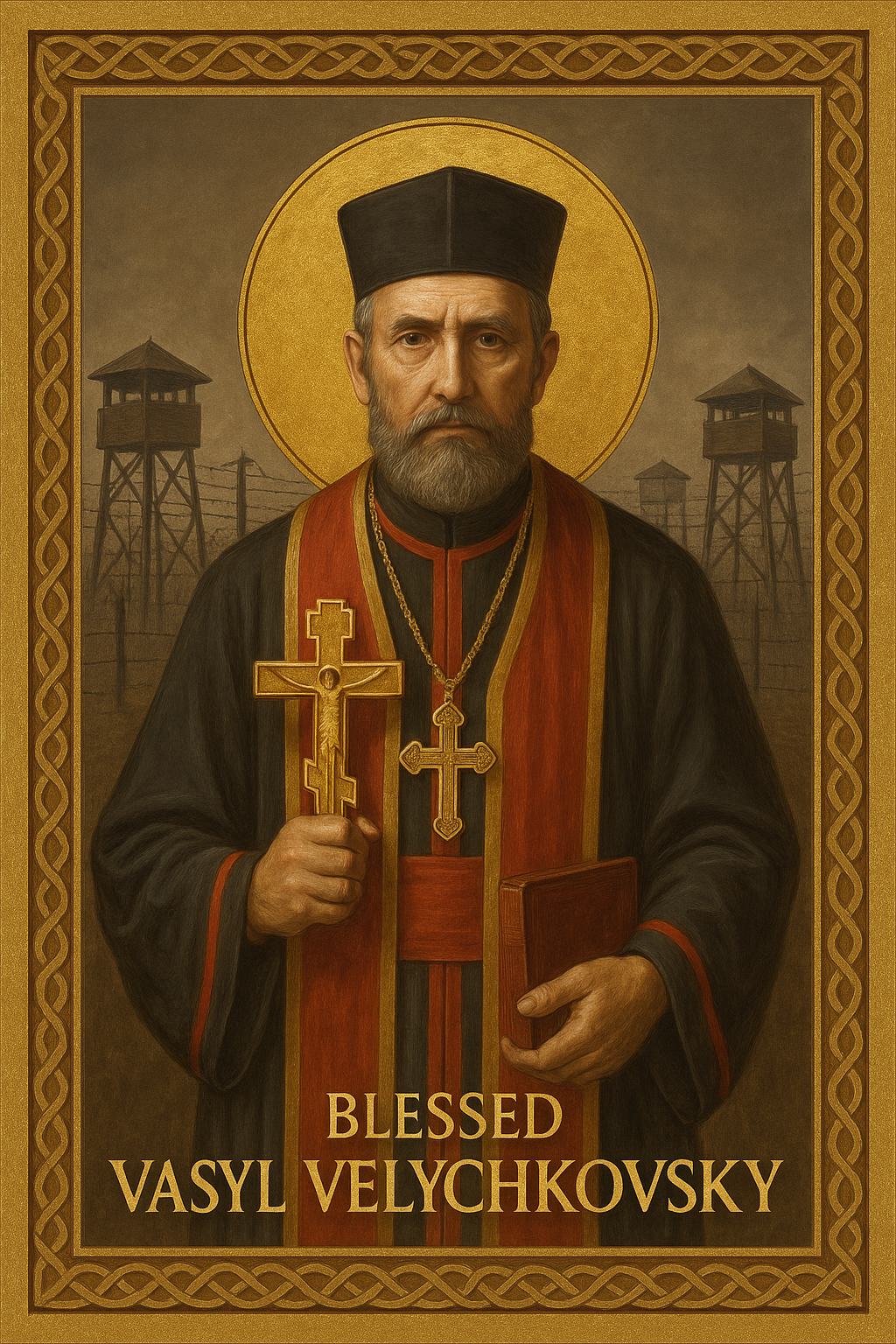
Perhaps the most distinctive feature of Byzantine and Ruthenian Greek Catholic catechesis is how recent its heroic examples are. Under Soviet and other Communist regimes across Eastern Europe in the twentieth century, entire Byzantine Catholic Churches were forcibly liquidated, their bishops imprisoned, exiled, or killed for refusing to renounce union with Rome and submit to state-controlled Orthodoxy. Figures like Blessed Theodore Romzha, Blessed Nicholas Charnetsky, and Blessed Nykyta Budka are not distant saints from an unreachable past; several of their persecutors, and in some cases the survivors who knew them, lived well into living memory.
Teaching children these stories does something a purely doctrinal lesson cannot: it makes the cost of the faith concrete and recent, carried by people whose photographs, in some cases, still exist. For a Church whose catechesis already assumes children are already sacramentally inside the community rather than preparing to join it, the martyrs answer the next natural question a formed child eventually asks: what is this faith actually worth?
FAQ
Frequently Asked Questions
A Faith Received Before It Is Explained
Byzantine Catholic catechesis starts from an unusual premise: the child is already, sacramentally, fully home. Everything that follows, the liturgy absorbed by repetition, the chant learned by singing it, the martyrs' stories told plainly, is simply helping that child understand the size of what they were given before they could ask for it.
Shop Ruthenian Byzantine Catholic Prayer Cards →