Dark Night of the Soul: A Mystic's Guide to Spiritual Dryness
The Dark Night of the Soul:
A Christian Mystic's Guide to Spiritual Dryness & Contemplative Prayer
When God feels absent, the mystics have always known: the silence is not empty — it is sacred.
Have you ever gone through a season where prayer felt hollow, Scripture seemed flat on the page, and God — once so near — felt impossibly distant? You're not alone. In fact, some of the greatest saints in Christian history have walked through exactly this kind of spiritual darkness. There's even a name for it: the dark night of the soul.
Far from being a sign of spiritual failure, this experience is at the very heart of Christian mysticism — a rich, ancient tradition of encountering God not just in mountaintop moments, but in the valleys, the silences, and the ordinary rhythms of daily life. And the mystics left us a treasure map for surviving — and even growing through — it.
This article draws from the book The Way of Modern Christian Mysticism: Practical Prayer and Contemplative Practices for Union with God, which weaves together the wisdom of the Desert Fathers, Orthodox hesychasm, Catholic contemplative prayer, and practical tools for modern believers to experience God more deeply — not someday, but right now, in the middle of everyday life.
The Way of Modern Christian Mysticism
Practical Prayer and Contemplative Practices for Union with God — a complete guide to Lectio Divina, the Jesus Prayer, contemplative prayer, the dark night of the soul, and finding God in everyday life.
What Is the Dark Night of the Soul?
The phrase comes from a 16th-century Spanish priest and mystic, St. John of the Cross, who wrote a poem — and later an entire spiritual treatise — describing a season of profound interior darkness. He called it la noche oscura del alma: the dark night of the soul.
"If a man wishes to be sure of the road he treads on, he must close his eyes and walk in the dark."
— St. John of the CrossBut what does the dark night of the soul actually mean, and how do you know if you're in one? According to John of the Cross — and echoed throughout The Way of Modern Christian Mysticism — the dark night is a period when God deliberately withdraws the felt sense of His presence. Prayer becomes dry. Consolations disappear. Scripture that once lit up the heart now seems like words on a page. Faith itself may feel shaky.
Here is the crucial insight: this is not punishment. It is purification. Just as a mother weans a child off milk to mature their diet, God sometimes withdraws spiritual sweetness to mature our faith. He is not absent — He is working at a deeper level, purging the soul of attachments and teaching us to love Him for who He is, rather than for the feelings He gives.
The book of Job shows us a blameless man enduring extreme suffering while unable to sense God, yet clinging to trust: "Though He slay me, yet will I hope in Him" (Job 13:15). The Psalms are full of laments from people in their own dark nights. Even the beloved Mother Teresa of Calcutta reportedly lived for decades in spiritual desolation, continuing to pour out love while feeling nothing in return. These examples don't make the dark night easier — but they do make it less isolating.
The Dark Night vs. Depression: An Important Distinction
One of the most pastorally important points in The Way of Modern Christian Mysticism is the need to discern the difference between a spiritual dark night and clinical depression. They can look similar on the surface — fatigue, withdrawal, loss of joy — but they are distinct. Depression is a psychological and physiological condition that deserves proper care, including therapy, rest, and sometimes medication. The dark night is a spiritual experience initiated by God for growth.
Importantly, they can also overlap. Elijah, after a great spiritual triumph, collapsed in despair and exhaustion. God's remedy included sleep, food, and rest — physical care — before the still small voice came (1 Kings 19:4–8). There is no shame in seeking human support during spiritual seasons. It is not un-spiritual to go to a counselor, rest your body, or ask for help.
You're clinging to God even while feeling nothing
The dark night doesn't cause you to abandon faith — you keep showing up, even when it feels empty.
The dryness isn't caused by unrepentant sin
Spiritual darkness brought on by habitual sin is a different experience — confession and repentance bring relief. The dark night doesn't lift that way.
You feel a deep longing for God even in His apparent absence
You miss God. The desire itself is evidence of His work in you — a dead soul doesn't ache for the divine.
The spiritual practices you relied on feel suddenly ineffective
St. John of the Cross taught that this is a sign the soul is being drawn from discursive prayer toward a deeper, quieter communion.
What Is Christian Mysticism? (And Is It For You?)
The word "mysticism" can sound intimidating — or even suspicious — to modern ears. But Christian mysticism is not about occult practices, visions, or esoteric experiences reserved for a spiritual elite. At its core, Christian mysticism is simply a loving, experiential knowledge of God. It is friendship with the divine. It is what happens when faith moves from the head to the heart.
As the early 20th-century writer Evelyn Underhill famously said: "Mysticism is the art of union with Reality." In Christian terms, that Reality is God Himself. The mystic doesn't just know about God — the mystic seeks to know God directly, personally, and transformingly.
The Apostle Paul expressed this mystical longing when he prayed for believers "to know the love of Christ that surpasses knowledge" (Ephesians 3:19). Knowing something that surpasses knowledge — that's the beautiful paradox at the heart of Christian mysticism. And it's not reserved for monks in monasteries. It's for parents in kitchens, teachers in classrooms, nurses in hospitals, and business owners navigating Monday mornings.
"You have made us for Yourself, O Lord, and our heart is restless until it rests in You."
— St. Augustine of HippoThat restlessness you feel — the yearning for something more than religious routine — is actually an invitation from God. The Way of Modern Christian Mysticism is built on the conviction that the mystical path is not reserved for a hidden few, but is a gift available in the daily, ordinary life God has given each of us.
Think of Brother Lawrence, a 17th-century Carmelite monk who worked in a monastery kitchen. He was not a scholar or bishop — he was a cook who peeled potatoes and washed dishes. Yet in those ordinary tasks he discovered an extraordinary presence of God. "The time of business does not differ with me from the time of prayer," he wrote. God can be found in the humblest of tasks. That is Christian mysticism for everyday life.
Tools for Your Contemplative Journey
Handcrafted prayer ropes in the Eastern Christian tradition — used for the Jesus Prayer and the cultivation of inner stillness.



3 Ancient Contemplative Practices to Navigate the Dark Night
The mystics didn't just describe the dark night — they left us practical tools to survive it, and eventually to flourish in a far deeper communion with God. The Way of Modern Christian Mysticism presents these ancient practices in a fresh, accessible way for modern believers. Here are three that are especially powerful during seasons of spiritual dryness.
1. Contemplative Prayer and the Jesus Prayer
Most of us learn to pray by talking: we thank God, we intercede, we pour out our hearts in words. These prayers are beautiful and necessary. But contemplative prayer goes beyond words — it is prayer as a state of being, a resting in God's presence rather than speaking to Him.
Think of the disciple John at the Last Supper, described as leaning on Jesus' chest (John 13:23). He wasn't asking for anything — he was simply close to Him, listening to His heartbeat. Contemplative prayer is something like that: leaning into God, heart-to-heart, in trust and love.
One of the most beloved forms of contemplative prayer in Eastern Christianity is the Jesus Prayer:
Many pray the Jesus Prayer in rhythm with the breath — inhaling on "Lord Jesus Christ, Son of God" and exhaling on "have mercy on me, a sinner." Repeating this slowly, over time, it sinks from the lips into the heart. The goal is not repetition for its own sake, but to gently occupy the mind with a Christ-centered phrase so that the heart can commune with God beyond words. Over time, this ancient prayer can become as natural as breathing.
A prayer rope (like those featured above) was traditionally used by Eastern Christian monks to count their repetitions of the Jesus Prayer — a simple, physical anchor that kept the body and spirit aligned in prayer.
✦ Try It: The 5-Minute Breath Prayer
- Find a quiet spot and sit comfortably with your eyes closed.
- Take a slow, deep breath in. As you inhale, silently say: "Lord Jesus Christ, Son of God."
- As you exhale, say: "Have mercy on me."
- When thoughts arise — and they will — simply acknowledge them and gently return to the prayer.
- Continue for 5 minutes. Over days and weeks, extend the time as it feels natural.
2. Lectio Divina: Sacred Reading of Scripture
The practice of Lectio Divina — Latin for "sacred reading" — is one of the oldest and most powerful tools in the Christian contemplative tradition. Dating back to the early monastics, it transforms the way we approach Scripture: not as a text to analyze, but as the living Word of God speaking personally to us, right now.
Unlike academic Bible study (which is valuable in its own right), Lectio Divina is about savoring Scripture the way you would slowly taste a fine meal rather than rushing through it. The practice involves four movements:
✦ How to Practice Lectio Divina
- Lectio (Read): Choose a short passage of Scripture (5–8 verses). Read it slowly, aloud if possible. Let your eyes move over each word with unhurried attention. Notice which word or phrase seems to shimmer or catch your attention — don't analyze it yet, just notice it.
- Meditatio (Meditate): Read the passage again. Sit with the word or phrase that stood out. Roll it around in your mind. Let it interact with your life, your worries, your current season. What is it saying to you, specifically?
- Oratio (Pray): Respond to God in whatever arises in your heart — gratitude, confession, a question, a simple "yes." This is not a formal prayer; it's a conversation. Let Scripture become the language of your prayer.
- Contemplatio (Contemplate): Rest. Set aside both words and effort, and simply rest in God's presence. This is the goal — not analysis, not performance, but quiet union. Stay here as long as feels right.
During a dark night of the soul, Lectio Divina can be especially powerful because it moves you out of your head and into the heart. You are not trying to figure out theology — you are sitting with God in His Word, trusting that He is present even when He is not felt. This is faith in its most mature form.
The Way of Modern Christian Mysticism devotes an entire chapter to Lectio Divina, including guided session formats and tips for practicing it in groups, with a spouse, or alone in 10-minute windows during a busy day.
3. Silence and Solitude: The Furnace of Transformation
The Desert Fathers and Mothers of the 4th and 5th centuries fled to the wilderness to seek God in silence. Their departure was not escapism — it was battle strategy. In the silence, they encountered both God and themselves with unflinching clarity.
One desert father, Abba Moses, gave this famous counsel to a young monk: "Go, sit in your cell, and your cell will teach you everything." In other words, when we stop running from ourselves and sit still in God's presence, we begin to learn things no sermon could tell us.
"Be still, and know that I am God."
— Psalm 46:10Jesus Himself modeled this. The Gospels tell us He "often withdrew to lonely places and prayed" (Luke 5:16). In the midst of His busy ministry — teaching, healing, surrounded by crowds — He made it a habit to seek solitude. If the Son of God needed quiet time with His Father, how much more do we?
Your solitary place doesn't need to be a desert. It might be 10 minutes in a parked car during a lunch break, a chair by a window before the house wakes up, or a quiet corner of a nearby church. These small moments of solitude are like open windows for God's presence to breathe into a sealed, busy life.
During a dark night especially, silence teaches us to stop demanding that God perform for our feelings. We learn to rest in His love by faith rather than by sensation — and this, paradoxically, is often where the deepest transformation happens.
Go Deeper on Every One of These Practices
The Way of Modern Christian Mysticism includes full chapters on silence & solitude, the Jesus Prayer, Lectio Divina, navigating the dark night, and 10 more contemplative practices — all with practical exercises, reflection questions, and guided journaling pages.
What to Do When You're in a Dark Night of the Soul
The Way of Modern Christian Mysticism doesn't just diagnose spiritual dryness — it provides a real pathway through it. Here is what the tradition teaches:
Hold on to Truth When Feelings Fail
Like a sailor navigating by a hidden sun using a compass, we rely on the compass of Scripture and past experiences of God when our feelings go dark. God's character and His promises haven't changed — even when our perception of them has. Memorize anchoring verses and return to them like landmarks in a fog:
Keep Practicing — Even When It Feels Hollow
The great mystics consistently counseled perseverance in spiritual practices even during dryness. Think of it as staying by a friend's bedside even when they're unresponsive. It is an act of love and fidelity. The dark night is not a reason to abandon prayer — it is precisely when faithful, faithful practice becomes most heroic and most transformative.
This does not mean white-knuckling your way through elaborate spiritual exercises. Sometimes the dark night calls for simpler forms: a single word of prayer, a verse repeated like the Jesus Prayer, simply showing up before God in silence without any agenda at all.
Find a Simon of Cyrene
Jesus, in Gethsemane, asked His closest friends to stay awake with Him during His anguish (Matthew 26:36–38). While some aspects of the dark night are between the soul and God alone, we are not meant to endure it in isolation. A wise spiritual friend, confessor, or counselor can carry your faith for a while — praying for you when you cannot pray for yourself. Even saying aloud to someone, "I feel like God is far right now," can relieve a burden that isolation has made unbearable.
Remember: Dawn Will Come
Dark nights are not forever. As Psalm 30:5 declares, "Weeping may stay for the night, but rejoicing comes in the morning." Often, when the dawn breaks after a dark night, believers discover they have grown in ways they couldn't have grown any other way: faith less dependent on feelings, compassion deepened through suffering, humility before God more genuine. The stars — God's truths — appear brightest in the darkest nights.
"When I go forward, He is not there… But He knows the way that I take; when He has tested me, I will come forth as gold."
— Job 23:8–10Bringing Mysticism Into Your Marriage and Family Life
Did you know that The Way of Modern Christian Mysticism devotes an entire chapter to how married couples and families can cultivate contemplative practices together — transforming everyday family life into a form of shared worship? Marriage, when lived with intention, is itself a mystical path toward God. If you're looking to deepen your spiritual life as a couple, we've put together a free collection of marriage resources for you.
Access Free Marriage Resources →How Christian Mysticism Transforms the Whole of Everyday Life
One of the most radical and liberating claims of The Way of Modern Christian Mysticism is this: the mystical life is not an escape from ordinary life — it is the transformation of it. The commute, the dishes, the difficult colleague, the crying child, the boring meeting — all of it becomes sacred ground when we learn to meet God in it.
The book covers contemplative living across every dimension of life: family and marriage, the workplace, encounters with nature, service to others, mindfulness in daily routines, and even how to face suffering and death with mystical eyes. It also includes an extraordinary chapter of historic prayers from the saints and mystics — prayers that have been handed down for centuries as doorways into deeper communion with God.
What the mystics understood — and what this book makes accessible to modern readers — is that holiness is not found above ordinary life, but within it. St. Teresa of Ávila's famous saying captures it perfectly: "Know that even when you are in the kitchen, Our Lord moves among the pots and pans."
The goal is not to add a layer of spiritual activity onto an already busy schedule. The goal is to bring the eyes of faith to everything that is already happening — to see the ordinary as charged with divine presence, and to respond to life with the attentiveness, stillness, and love of a soul that knows it is not alone.
Deepen Your Prayer Life with These Sacred Items
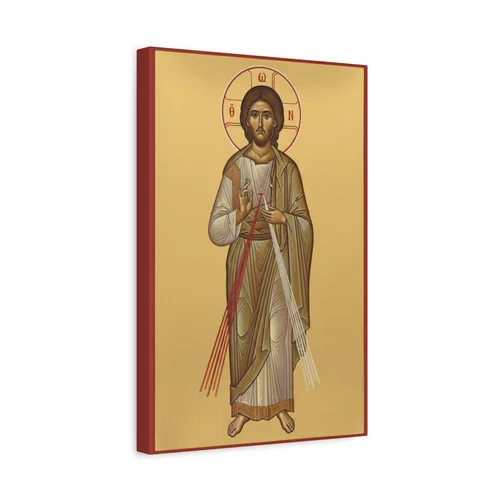
Icons, apparel, and devotional gifts from The Eastern Church — beautiful companions for the contemplative journey.


Your Dark Night Is Not the End of the Story
The mystics have known for centuries what modern psychology is only beginning to rediscover: that seasons of darkness, dryness, and apparent spiritual absence can be some of the most formative and transforming experiences of a human life. They are not signs of failure — they are evidence that God is taking your faith seriously enough to purify it.
The ancient tradition of Christian mysticism — contemplative prayer, Lectio Divina, the Jesus Prayer, silence and solitude, sacred attention to daily life — gives us an extraordinary set of tools to navigate these seasons with grace, and to emerge from them with a faith that is no longer dependent on feelings but rooted in trust.
If you are in a dark night right now, hear the words of Julian of Norwich, the great 14th-century mystic whose own life was marked by suffering and vision: "All shall be well, and all shall be well, and all manner of thing shall be well." She did not know how this would be so — but she trusted the One who does.
And if you want a guide for this journey — one that combines the wisdom of the Desert Fathers, the Orthodox hesychasts, the Catholic mystics, and the great Protestant contemplatives into a practical, readable roadmap for modern life — The Way of Modern Christian Mysticism was written for exactly that purpose.
Begin (or Deepen) Your Contemplative Journey
The Way of Modern Christian Mysticism is the complete guide to encountering God not just in church or in quiet moments, but in the full fabric of your everyday life — including the dark nights.
"The mystical path is not distant. It begins now — right where you are."