Choosing the Right Bible for Eastern Catholics and Eastern Orthodox Readers
Complete Buyer’s Guide & Canon Comparison
Eastern Catholic and Orthodox Bibles: Every Translation Explained, Every Canon Compared, and Which One Is Right for You
From the Septuagint that Jesus and the apostles read to the 81-book Ethiopian Orthodox canon that includes the Book of Enoch — the most complete guide to Eastern Christian Scripture available in English, with every major Bible reviewed and placed where it will actually serve your prayer and study
Walk into a bookstore and ask for a Bible, and you will be handed something with 66 books. Walk into an Eastern Orthodox monastery and ask the same question, and the answer will be a different book — or more precisely, a different library. The Eastern Christian Bible contains more Scripture than the Protestant Bible, and in several significant cases it contains Scripture that differs in wording from what most Western Christians have read their entire lives. This is not a modern controversy or a recent discovery. It is the original situation of the Christian church, and understanding it is essential for anyone who takes Eastern Christianity seriously.
This article is the most complete guide to Eastern Christian Bibles available in English for a general audience. It explains the theological reasons behind the differences, compares the canons of every major Christian tradition in a single table, reviews every significant English Bible used by Eastern Catholics and Eastern Orthodox Christians, and gives practical guidance for which Bible to buy based on your specific tradition, purpose, and level of study. The Ethiopian Orthodox canon and the Book of Enoch — two topics that generate enormous search traffic and almost universally shallow coverage — are treated here with the depth they deserve.
The Septuagint: Why Eastern Christians Use a Different Old Testament
The single most important thing to understand about Eastern Christian Scripture is the Septuagint — and the single most important thing to understand about the Septuagint is that it is not a translation problem. It is a question about which Scripture the Church was given.
The Septuagint (abbreviated LXX, from the Latin for “seventy,” referring to the tradition that it was translated by seventy-two Jewish scholars in Alexandria in the 3rd and 2nd centuries BC) is the Greek translation of the Hebrew Scriptures. It was the Bible of the Greek-speaking Jewish diaspora and, critically, the Bible of the first Christians. When New Testament authors quote the Old Testament — and they do so hundreds of times — they are almost always quoting the Septuagint, not the Hebrew text. When Paul writes in Romans 3:13 that “their throat is an open tomb,” he is quoting Psalm 5:9 from the Septuagint. When Matthew applies Isaiah 7:14 to the Virgin Birth with the word “virgin,” he is following the Septuagint's Greek parthenos, not the Hebrew almah (which means “young woman” without necessarily implying virginity). These are not minor textual footnotes; they are the Scripture that formed the New Testament's theological framework.
The Masoretic text — the Hebrew text that underlies most modern English Old Testaments — was finalized by Jewish scholars (the Masoretes) between the 6th and 10th centuries AD. It is in many places identical to the Septuagint's source texts and in others significantly different. The Dead Sea Scrolls, discovered in 1947, have shown that both textual traditions are ancient and that in several cases the Septuagint preserves an older Hebrew text than the Masoretic tradition. The Eastern Orthodox Church has never accepted the Masoretic text as its canonical base precisely because the Church received its Old Testament through the Septuagint, not through a rabbinic textual tradition finalized after the Christian era.
This is not obscurantism or liturgical conservatism. It is a coherent theological position: the Church received the Old Testament from the Apostles, who received it in Greek, and the Greek text is therefore the text of the Church's Scripture. For Eastern Orthodox and many Eastern Catholic Christians, using a Septuagint-based Bible is not a preference; it is fidelity to the tradition.
Psalm numbering: The Septuagint numbers the Psalms differently from the Hebrew Bible. Most Eastern liturgical citations use the Septuagint numbering (so Psalm 22 in the Hebrew Bible is Psalm 21 in the LXX). This explains why Psalm numbers often seem off by one in Orthodox liturgical texts.
Additional books: The Septuagint includes books not in the Masoretic canon: Tobit, Judith, 1 and 2 Maccabees, Wisdom of Solomon, Sirach, Baruch, and additions to Daniel and Esther. Orthodox canons also include 1 Esdras, 3 Maccabees, and the Prayer of Manasseh from the LXX tradition.
Textual variants: In several passages the Septuagint and Masoretic texts differ in wording that has theological significance. The most-discussed example is Genesis 6:3, where the Septuagint reads “120 years” and the Masoretic reads the same, but other passages differ more substantially.
The Psalter: Psalm 151, a brief psalm attributed to David after his battle with Goliath, appears in the Septuagint and in Orthodox Psalters but is absent from the Masoretic text and from most Western Bibles.
Full Canon Comparison: Every Major Christian Tradition
The table below compares the Old Testament canons of every major Christian tradition. The New Testament is identical across all traditions (27 books) and is not included. Books marked Yes are canonical in that tradition; books marked No are not canonical (though some traditions regard them as worthy of reading).
| Book | Protestant (66) | Roman Catholic (73) | Eastern Orthodox (~76) | Ethiopian Orthodox (81) |
|---|---|---|---|---|
| The 39 Old Testament books shared by all | Yes | Yes | Yes | Yes |
| Tobit | No | Yes | Yes | Yes |
| Judith | No | Yes | Yes | Yes |
| 1 Maccabees | No | Yes | Yes | Yes |
| 2 Maccabees | No | Yes | Yes | Yes |
| Wisdom of Solomon | No | Yes | Yes | Yes |
| Sirach (Ecclesiasticus) | No | Yes | Yes | Yes |
| Baruch (incl. Letter of Jeremiah) | No | Yes | Yes | Yes |
| Additions to Daniel & Esther | No | Yes | Yes | Yes |
| 1 Esdras (3 Esdras) | No | No | Yes | Yes |
| 3 Maccabees | No | No | Yes | Yes |
| 4 Maccabees | No | No | Appendix | Yes |
| Prayer of Manasseh | No | No | Yes | Yes |
| Psalm 151 | No | No | Yes | Yes |
| Book of Enoch (1 Enoch) | No | No | No | Yes |
| Book of Jubilees | No | No | No | Yes |
| Books of Meqabyan (1–3) | No | No | No | Yes |
| Shepherd of Hermas, Rest of Words of Baruch, etc. | No | No | No | Yes |
A note on the Orthodox column: the exact canonical status of some books varies slightly between the Greek Orthodox, Russian Orthodox, Serbian Orthodox, and other Orthodox churches. The books listed as “Yes” for Eastern Orthodox represent those included in the 1642 Confession of Dositheus and generally recognized across the tradition. The Ethiopian Orthodox canon of 81 books is the most expansive Christian canon in existence and has never been formally harmonized with any other tradition's canon.
The Orthodox Study Bible: The Most Accessible Entry Point for Eastern Christianity
The Orthodox Study Bible is the first and most widely used English study Bible specifically designed for Eastern Christian readers. Published in 2008 by Thomas Nelson and developed by Orthodox scholars, it represents the most serious attempt to give English-speaking Orthodox and Eastern Catholic Christians a Bible that reflects their own theological and liturgical tradition. It is the Bible you will most commonly find in Orthodox parishes, Orthodox bookstores, and on the shelves of people new to Eastern Christianity who want a single volume that explains what they are reading through an Eastern Christian lens.
Unlike virtually every other popular English Bible, the Orthodox Study Bible translates its Old Testament from the Septuagint rather than the Hebrew Masoretic text. This means the Old Testament you read in this Bible is the Old Testament the apostles read, the Old Testament the New Testament authors quoted, and the Old Testament that has been chanted in Eastern liturgy for two thousand years. The study notes draw on patristic commentary — the writings of the Church Fathers — to show how the early Church read and understood each passage. This is not a modern commentary; it is, as much as any English edition can be, the Bible of the ancient Church made accessible to contemporary readers.
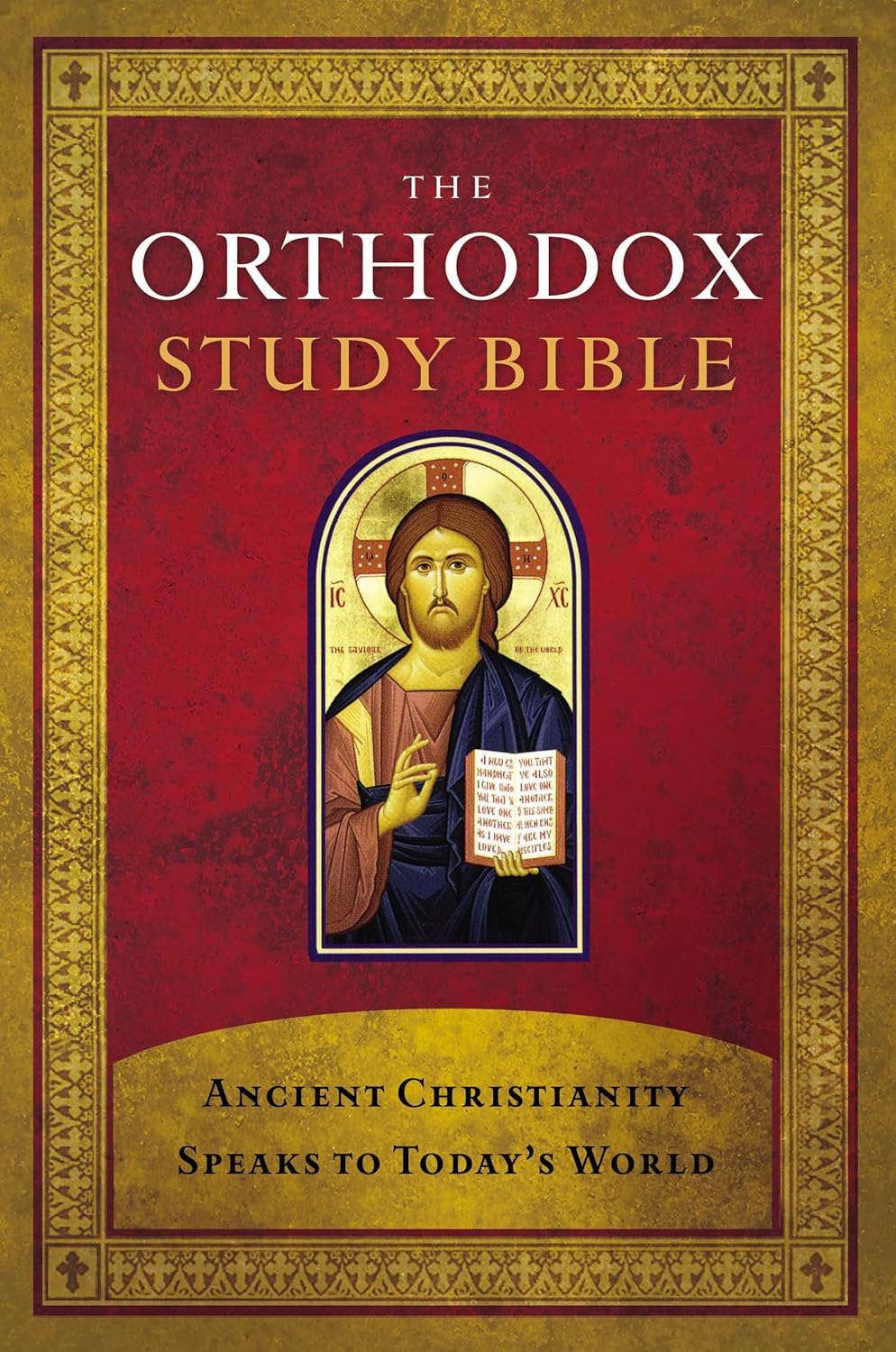
Best for: Anyone entering the Eastern Orthodox tradition, Eastern Catholics who want to read Scripture through an Eastern lens, Protestant inquirers exploring Orthodoxy, and anyone who wants a single-volume Bible with patristic commentary and liturgical helps. This is the default first Bible for serious engagement with Eastern Christianity in English.
The Septuagint with Apocrypha: Greek and English — The Scholar’s Essential
If the Orthodox Study Bible is the pastoral introduction to Septuagint-based Scripture, the Brenton Septuagint is the scholar's companion. Lancelot Charles Lee Brenton published his parallel Greek-English edition in 1851, and it remains the most widely used English reference edition of the complete Greek Old Testament. For anyone who wants to read the Septuagint itself — not just a modern translation of it — this is the standard edition.
The Greek text and English translation appear on facing pages, making it an invaluable tool for comparing the Septuagint's wording with the translations used in modern Bibles and for understanding exactly where and why the Eastern canon diverges. Anyone who has noticed that Psalm numbers in Orthodox liturgy seem consistently off by one from their English Bible has encountered the Septuagint numbering difference; this is the book that explains why and lets you follow the original text that the liturgy is quoting.

Best for: Serious students comparing the LXX and Masoretic texts. Anyone researching why the Psalm numbers in Orthodox liturgy differ from a Protestant Bible. A reference Bible that makes every other Eastern Bible more comprehensible. Not recommended as a first Bible or primary devotional text.
The Eastern/Greek Orthodox Bible (EOB): The Most Liturgically Faithful New Testament in English
The Eastern/Greek Orthodox Bible is an ongoing translation project whose New Testament is currently available in English. Unlike the Orthodox Study Bible, which uses the NKJV for its New Testament, the EOB translates directly from the Patriarchal Greek text — the specific Greek New Testament text authorized for use in the Greek Orthodox Church. For Orthodox Christians who want a New Testament that reflects their actual liturgical tradition at the text level, this is currently the best available option in English. The EOB New Testament is accompanied by extensive footnotes explaining textual variants, differences between the Patriarchal text and other manuscript traditions, and theological commentary drawn from Orthodox sources.

Best for: Orthodox readers who want the most liturgically faithful English New Testament. Advanced students comparing the Patriarchal text with critical editions. Anyone who has noticed Orthodox liturgical New Testament texts differing from their English Bible and wants to understand why. Not a first Bible; best as a companion volume for serious readers.
The Ignatius Bible (RSV-2CE): The Best Bible for Eastern Catholics Who Want Traditional Language
The Revised Standard Version Second Catholic Edition is the most widely recommended Bible for Eastern Catholics, and for good reason. It balances the three things Eastern Catholics need in an English Bible: the full Catholic canon including all deuterocanonical books, dignified traditional language that does not sound like a corporate memo, and sufficient scholarly credibility to be cited in the Catechism of the Catholic Church and used in serious theological study. It is not a Septuagint-based Old Testament — like most Catholic Bibles, it works from the Hebrew Masoretic text — but it is the most theologically careful English Bible in the Catholic tradition and the one most recommended by Orthodox readers who want a Catholic edition.
The RSV-2CE is a revision of the original RSV (1946–1952), updated in the Second Catholic Edition primarily to correct passages where the original RSV's translation choices had been criticized on theological grounds. The most significant correction is Isaiah 7:14, where the RSV had translated almah as “young woman” rather than “virgin” — the Second Catholic Edition restores “virgin,” aligning with the Septuagint and the Church's traditional Christological reading of the passage.

Best for: Eastern Catholics as a primary English Bible. Roman Catholics who want serious, dignified language. Anyone studying Catholic theology who needs the Bible cited in the Catechism. A strong companion volume to the Orthodox Study Bible for readers who want both the Masoretic and Septuagint traditions represented on their shelf.
The NRSV Catholic Edition: The Ecumenical Standard
The New Revised Standard Version Catholic Edition is the most ecumenically produced Bible on this list: its translation team included Catholic, Orthodox, and Protestant scholars, and it is approved for liturgical use in the United States and Canada. It is the Bible most commonly used in academic settings — seminaries, theology departments, and serious biblical studies programs — precisely because its translation methodology (formal equivalence with some attention to readability) and its ecumenical credibility make it acceptable across traditions. For Eastern Catholics in academic or ecumenical contexts, it is frequently the required text.

Best for: Eastern Catholics in academic settings. Anyone in seminary or formal theology study. Readers who prioritize ecumenical credibility and academic acceptance over traditional language. A functional Bible for liturgical use where the RSV-2CE is not available.
The NABRE: The Standard for American Catholic Liturgy
The New American Bible Revised Edition is the Bible used in Catholic Mass in the United States. If you have attended a Roman Catholic or Eastern Catholic liturgy in America, you have heard the NABRE. Its extensive study notes — produced by American Catholic scholars and updated in the 2011 revision — reflect modern archaeological and linguistic scholarship and are among the most detailed available in any Catholic edition. For Eastern Catholics in American parishes who want the Bible that matches what they hear at Mass, this is the practical choice.

Best for: American Catholics who want their personal Bible to match their liturgical experience. Anyone wanting detailed study notes from modern scholarship. Eastern Catholics in American parishes who participate in the Roman Catholic lectionary cycle.
The Douay-Rheims Bible: The Historical Standard of English Catholic Scripture
The Douay-Rheims Bible is the oldest English Catholic Bible in continuous use. The Old Testament was published at Douai in 1609–1610; the New Testament at Rheims in 1582. It was translated from the Latin Vulgate — Saint Jerome's 4th-century Latin translation that served as the Church's official Scripture for over a millennium. For three centuries it was the only English Bible used by Catholics, and its language shaped English Catholic devotion so profoundly that phrases from it appear in prayers, hymns, and spiritual writing that predates the 20th century. Anyone who reads the great English Catholic mystics and theologians — Newman, Chesterton, the Recusant poets — is reading writers formed by the Douay-Rheims.
The Baronius Press edition is the most beautiful physical edition currently available: genuine leather binding, gilded pages, colored maps, and illustrations. It is the choice of those for whom a Bible is not only a text but a sacred object, and its physical quality matches the weight of the tradition it carries.

Best for: Catholics who want the historical English Catholic Scripture. Anyone reading pre-20th-century Catholic theology, spirituality, or literature who wants to read the same translation the authors used. Those who want a beautiful physical Bible as a devotional object. Traditionalist Catholics who prefer the older translation style.
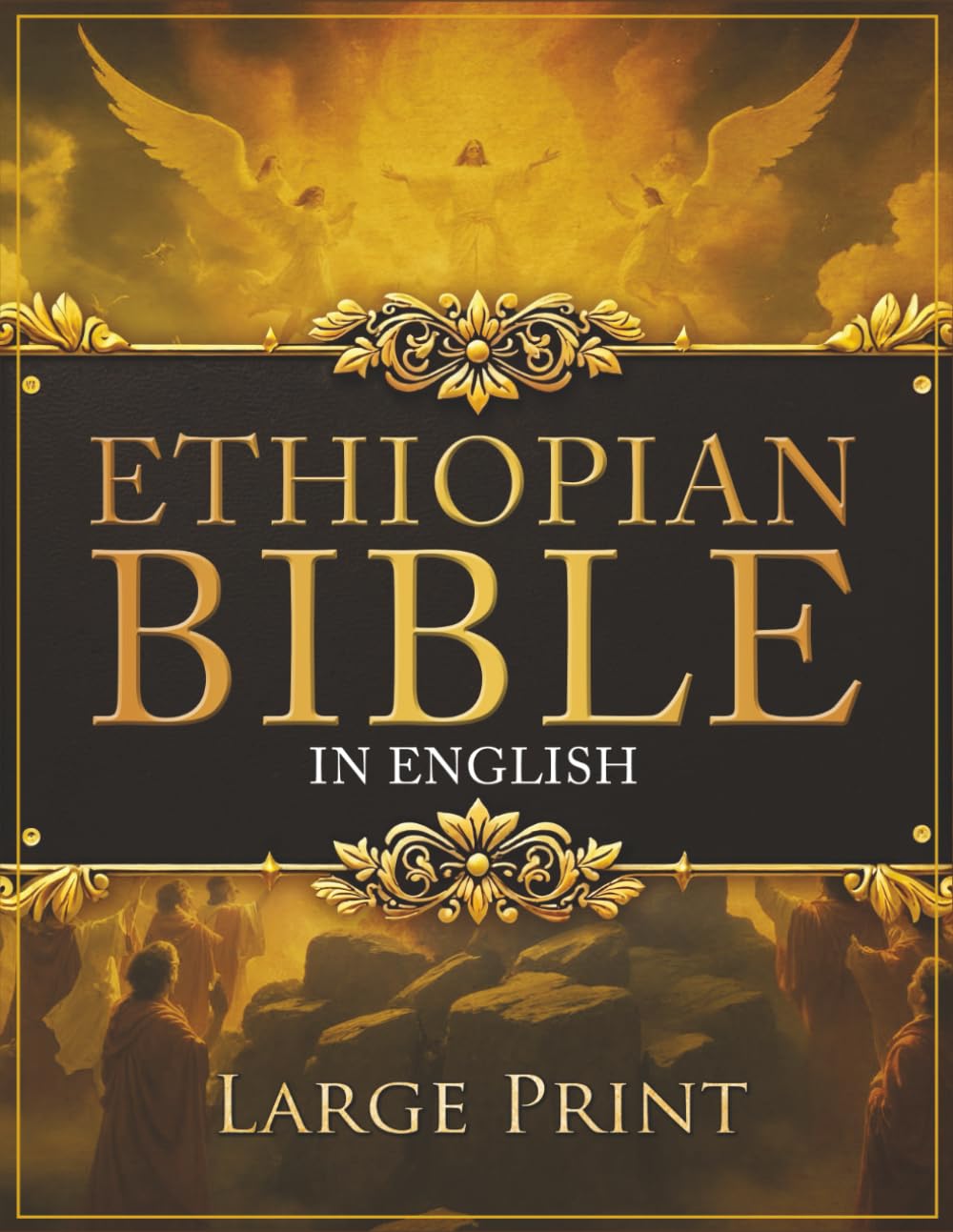
The Ethiopian Orthodox Bible and the Book of Enoch: The Most Expansive Christian Canon in the World
The Ethiopian Orthodox Tewahedo Church possesses the largest Biblical canon of any Christian tradition in the world: 81 books, compared to the 73 of Roman Catholicism, the approximately 76 of Eastern Orthodoxy, and the 66 of Protestantism. Understanding why requires understanding one of the most remarkable stories in Christian history — the story of how a church in the highlands of Africa preserved texts that the rest of the Christian world gradually set aside, and why those texts continue to matter.
The Ethiopian Orthodox Church traces its origins to the 4th century, when Saint Frumentius of Tyre brought Christianity to the Aksumite Empire. It belongs to the Oriental Orthodox family (alongside the Coptic, Syriac, and Armenian churches) and separated from the rest of Chalcedonian Christianity after the Council of Chalcedon in 451 AD, which it rejected on Christological grounds. Because Ethiopia's Christianity developed in relative isolation from the theological controversies and canonical decisions that shaped Western and Byzantine Christianity, it preserved a textual tradition that includes books the rest of the Church gradually marginalized: the Book of Enoch, the Book of Jubilees, and the three Books of Meqabyan, among others.
The Book of Enoch: Why It Matters
The Book of Enoch (1 Enoch) is one of the most significant texts outside the mainstream Biblical canon. It is attributed to Enoch, the seventh patriarch from Adam, who according to Genesis 5:24 “walked with God, and he was not, for God took him.” The text as we have it today was composed over several centuries, with the oldest sections (the Book of the Watchers) dating to approximately the 3rd century BC. It describes the fall of the Watchers (the “sons of God” of Genesis 6), the vision of heaven and the cosmic order, and extended apocalyptic visions of judgment and the coming of the Son of Man.
The importance of 1 Enoch for understanding early Christianity is difficult to overstate. The New Testament quotes it directly: Jude 14–15 cites 1 Enoch 1:9 explicitly, calling Enoch a prophet. The Book of Revelation's imagery draws heavily on Enochic apocalyptic traditions. The phrase “Son of Man” as a divine title, which Jesus uses extensively in the Gospels, has its most developed pre-Christian theological context in the Similitudes of Enoch (1 Enoch 37–71). Understanding why Jesus's audience understood “Son of Man” as a claim to divine authority requires knowing what Enoch said about the Son of Man — which most Western Christians have never read because the Book of Enoch is not in their Bible.
The book was known and read widely in early Christianity. Fragments of 1 Enoch were found among the Dead Sea Scrolls, indicating its importance in 2nd-Temple Judaism. Early Church Fathers including Tertullian, Origen, and Clement of Alexandria quoted it and regarded it as scriptural. It was gradually excluded from the Western and Byzantine canons — partly because of concerns about the theological implications of its angelology, partly because its Hebrew and Aramaic originals had been lost (they were rediscovered only in the 20th century through the Dead Sea Scrolls). But the Ethiopian Church never set it aside. They preserved the complete text through the Ge’ez language, and it is through Ethiopian manuscripts that the complete text of 1 Enoch became available to modern scholars in the 18th century when the Scottish explorer James Bruce brought three copies to Europe.
The three Ethiopian Bible products below represent the best English options for readers who want to explore this tradition: the complete Ethiopian Orthodox canon, a Bible that includes Enoch and Jubilees alongside the standard canon, and a standalone edition of 1 Enoch for those who want to read the prophetic text that shaped the New Testament's understanding of the Son of Man and the coming judgment.


Which Bible Should You Buy? A Practical Guide by Reader Type
The honest answer is that most serious Eastern Christian readers eventually own more than one Bible. The canon question, the translation question, and the study note question pull in different directions, and no single volume perfectly serves every purpose. But if you are buying your first Eastern-tradition Bible, or recommending one to someone else, here is the clearest possible guidance:
You are new to Eastern Orthodoxy or seriously exploring it: The Orthodox Study Bible. It is the only single volume that gives you the Septuagint Old Testament, patristic commentary, the full Orthodox canon, and liturgical helps. Start here.
You are Eastern Catholic and want your primary devotional Bible: The Ignatius Bible (RSV-2CE). The most theologically careful Catholic English Bible, with traditional language suitable for prayer and study. If you want to understand the Septuagint tradition your liturgy comes from, add the Orthodox Study Bible as a companion.
You want to read the actual Greek Septuagint: The Brenton Septuagint with Apocrypha. Parallel Greek and English on facing pages. Not a devotional Bible — a reference Bible that makes everything else more comprehensible.
You want the most liturgically faithful New Testament in English: The Eastern/Greek Orthodox Bible (EOB) New Testament. Translated from the Patriarchal Greek, with extensive footnotes. Use it alongside the Orthodox Study Bible's Septuagint Old Testament.
You are in American Catholic seminary or academic study: The NRSV Catholic Edition. Ecumenical credibility, approved for liturgy, the version required in most American Catholic academic programs.
You want the Bible that matches American Catholic Mass readings: The NABRE. The translation used in the US Catholic lectionary.
You want the historical English Catholic Bible as a devotional object: The Douay-Rheims Baronius Press edition. The language that formed English Catholic spirituality, in a physical edition worthy of its tradition.
You want to explore the Ethiopian Orthodox canon or read the Book of Enoch: Start with the standalone Book of Enoch to understand the text that shaped the New Testament's Son of Man theology. Then the Bible with Enoch and Jubilees if you want those texts alongside the standard canon. Then the Complete Ethiopian Bible when you are ready for the full 81-book tradition.
Frequently Asked Questions
The Right Bible Is the One You Will Actually Read
The canon question, the translation question, and the Septuagint question are real and they matter. But the best Bible for you is ultimately the one that draws you into Scripture rather than sitting unread on a shelf. Start with the Orthodox Study Bible if you are entering Eastern Christianity. Start with the Ignatius Bible if you are an Eastern Catholic wanting a devotional translation. Start with the Book of Enoch if you want to understand the text that shaped the New Testament and was preserved by the oldest continuous Christian tradition in Africa. Then keep reading. The Eastern Christian tradition has been reading Scripture for two thousand years and has never run out of things to discover in it.
Browse Eastern Prayer Cards →Free Eastern Christian Marriage Books →