What is the Orthodox Prayer Rope?
From Desert Silence to the Prayer of the Heart
For many people encountering Eastern Christianity for the first time, the prayer rope feels mysterious. It does not resemble the rosary most Western Christians are familiar with, and it is rarely explained in modern catechesis. Yet for centuries, the prayer rope has quietly shaped the interior life of monks, hermits, and lay people seeking stillness before God.
Today, prayer ropes are most commonly associated with Orthodox Christianity. However, they are not exclusively Orthodox. Eastern Catholics have always known, used, and preserved this practice as well, especially within Byzantine and Syriac traditions. The prayer rope belongs not to one modern jurisdiction, but to the shared ascetical inheritance of the Christian East.
To understand the prayer rope, one must begin not with objects, but with silence.
The Desert Fathers and the Birth of Repetitive Prayer
The origins of the prayer rope trace back to the Desert Fathers and Mothers of the third and fourth centuries. These early Christian ascetics withdrew into the deserts of Egypt, Syria, and Palestine seeking undistracted communion with God.
Their lives were marked by:
solitude
fasting
manual labor
constant prayer
But constant prayer raised a practical problem. How could one pray continuously without books, literacy, or complex structures? How could prayer become as regular as breathing?
The answer was repetition.
Short prayers, often drawn directly from Scripture, were repeated throughout the day. Over time, one invocation became central:
“Lord Jesus Christ, Son of God, have mercy on me.”
This prayer was not chosen at random. It united confession of faith, humility, repentance, and direct address to Christ Himself. The Desert Fathers discovered that repeating this prayer with attention gradually quieted the mind and softened the heart.

Why Counting Became Necessary
As prayer became repetitive, counting became necessary. Not to measure achievement, but to maintain attention and rhythm.
Early ascetics used:
pebbles
knotted cords
notched sticks
These were simple aids, not devotional objects in themselves. The purpose was to prevent distraction and wandering thoughts, especially during long periods of solitude.
From these humble beginnings, the prayer rope slowly took shape.
The Development of the Knotted Rope
By the early medieval period, knotted cords specifically designed for prayer began to appear throughout the Christian East. These cords evolved into what we now recognize as the prayer rope.
Each knot was not merely a stopper. It was carefully tied in a complex pattern, often said to form small crosses within the knot itself. This practice was not decorative. It was theological.
The knot symbolized:
the Cross
perseverance
the binding of wandering thoughts
As the prayer rope developed, its use became closely associated with hesychasm, the spiritual tradition focused on inner stillness and the prayer of the heart.
Hesychasm and the Centrality of the Prayer Rope
Hesychasm, derived from the Greek word hesychia (stillness), emphasizes the quieting of the mind so that prayer can descend into the heart. The Jesus Prayer is the central practice of this tradition.
Within hesychastic spirituality, the prayer rope serves a specific function:
it frees the mind from counting
it anchors the body in prayer
it allows repetition without mental strain
The prayer rope is not meant to draw attention to itself. In fact, traditionally it is made as plain as possible. Black wool is common, symbolizing humility and repentance. Ornamentation is minimal or absent.
This simplicity reflects the theology behind it. Prayer is not about stimulation, but about attention.
Mount Athos and the Preservation of the Tradition
No place is more closely associated with the prayer rope than Mount Athos.
For over a thousand years, Mount Athos has been a living center of Orthodox monasticism and hesychastic prayer. Monks there pray the Jesus Prayer continually, often for hours each day. In this environment, the prayer rope is not symbolic. It is functional.
Traditionally, prayer ropes made on Mount Athos are:
handmade by monks or hermits
tied slowly, one knot at a time
accompanied by the Jesus Prayer as each knot is formed
The making of the rope itself becomes an act of prayer. The rope is not “blessed” in a mechanical sense; it is formed within a life already consecrated to prayer.
This is why many people, Orthodox and Eastern Catholic alike, seek prayer ropes from Mount Athos. Not for authenticity as a brand, but for continuity with a living tradition.

Why Prayer Ropes Are Seen as “Mostly Orthodox”
In the modern world, prayer ropes are most visibly associated with Orthodoxy for several reasons:
Orthodox catechesis preserved hesychasm more openly
In many Orthodox cultures, the Jesus Prayer and prayer rope remained part of popular devotion, not only monastic life.Eastern Catholic traditions were often Latinized
In some regions, Eastern Catholic devotional life was reshaped under Western influence, and practices like the prayer rope were de-emphasized or replaced.Orthodox visual culture highlighted ascetic symbols
Icons, photographs, and spiritual writings frequently depict elders with prayer ropes, reinforcing the association.
However, this visibility does not mean exclusivity.
The Prayer Rope in Eastern Catholic Life
Eastern Catholics have always shared the same ascetical roots as their Orthodox counterparts. Byzantine Catholics, Ukrainian Catholics, Melkites, and others have historically used the prayer rope alongside the Jesus Prayer.
Even in Syriac traditions, where terminology and emphasis differ, repetitive prayer and physical aids to prayer have always existed. The underlying principle is the same: the body assists the soul in prayer.
In recent decades, many Eastern Catholic communities have experienced a renewed return to their authentic traditions. As part of this renewal, the prayer rope has naturally re-emerged.
Today, it is not uncommon for Eastern Catholic priests to encourage:
the Jesus Prayer
the use of a prayer rope
hesychastic stillness adapted to lay life
This is not imitation of Orthodoxy. It is reclamation.
What the Prayer Rope Is Not
Understanding the history of the prayer rope also requires dispelling misconceptions.
The prayer rope is not:
a talisman
a charm
a substitute for repentance
a guarantee of holiness
It does not “work” automatically. It does not produce spiritual results on its own. Like fasting, posture, or silence, it is a discipline, not a shortcut.
The Fathers consistently warned against focusing on quantity, technique, or experience. The rope exists to serve humility and attention, nothing more.
How Lay People Historically Used Prayer Ropes
While prayer ropes are often associated with monks, lay people have always used them as well.
Historically, lay Christians used prayer ropes:
during manual labor
while walking
in moments of anxiety or temptation
as a way to sanctify ordinary time
The rope allowed prayer to accompany daily life without interruption. In this sense, it was an early form of what modern Christians might call “praying throughout the day.”
This usage remains relevant today.
Why the Tradition Endures
The prayer rope has survived centuries of cultural change, persecution, and modernization because it addresses something fundamental in the human soul.
The mind wanders.
The heart longs for God.
Silence is difficult.
The prayer rope offers a simple, embodied way to return again and again to the presence of Christ.
Its endurance is not due to novelty, but to truth.
A Shared Inheritance of the Christian East
The prayer rope does not belong to Orthodoxy alone. It belongs to the entire Christian East, including Eastern Catholics who seek to live their faith fully and authentically.
When Eastern Catholics embrace the prayer rope today, they are not borrowing. They are remembering.
They are stepping back into a tradition older than modern divisions, rooted in desert silence, shaped by centuries of prayer, and still quietly forming hearts today.
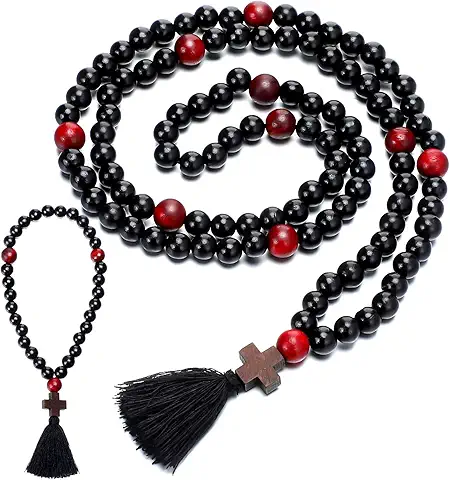
The history of the prayer rope is not the history of an object. It is the history of a way of life that values stillness over noise, humility over performance, and presence over productivity.
Whether Orthodox or Eastern Catholic, those who take up the prayer rope do so for the same reason the Desert Fathers did:
to learn how to stand before God with attention and sincerity.
In that sense, the prayer rope continues to do what it has always done.
It teaches the heart how to pray.