Saint Anthony the Great: The Complete Biography – Full Documented Life, All Known Miracles, Authentic Letters, Sayings, and Enduring Legacy of the Father of Christian Monasticism
In the sun-scorched deserts of Egypt during the final years of Roman imperial persecution and the dawn of Christianity’s legal freedom under Constantine the Great, Saint Anthony the Great rose as the undisputed founder and spiritual father of organized Christian monasticism. The Coptic Orthodox Church and the entire Christian world revere him as Abba Anthony, the Father of All Monks, the perfect model of the angelic life lived on earth, and the ultimate victor in spiritual warfare against demonic powers. Born around 251 AD in the modest village of Coma (modern Qeman el-Arus near Heracleopolis Magna in Upper Egypt) to wealthy, pious Christian parents of noble Egyptian lineage, and falling asleep in the Lord on January 17, 356 AD at the extraordinary age of 105, Anthony lived more than a full century in absolute poverty, unceasing prayer of the heart, extreme fasting, manual labor, and relentless combat with the forces of darkness. He deliberately sought the deepest possible obscurity, sealing himself inside abandoned tombs and Roman forts for decades at a time, yet God so glorified him that his biography—written immediately after his death around 360 AD by his close spiritual son and friend Saint Athanasius the Great, Patriarch of Alexandria—became one of the most widely read, translated, and transformative Christian texts in history. Translated into Latin by Evagrius of Antioch before the end of the 4th century, it spread rapidly across the Roman Empire, directly inspiring the conversion of Saint Augustine of Hippo (who credits it in his Confessions), the founding of monastic communities by Saints Basil the Great, Martin of Tours, and John Cassian in the West, and the entire hesychast tradition in the East. It remains required reading in Coptic monasteries to this day and has shaped monastic spirituality for 1,700 years.
The ancient Monastery of Saint Anthony, built at the foot of Mount Colzim in the Eastern Desert near the Red Sea, is the oldest continuously inhabited Christian monastery on earth and still occupies the exact location where Anthony spent the final forty-five years of his life. His relics, discovered incorrupt centuries later, became the center of one of the most famous healing cults in medieval Europe, giving rise to the Hospitaller Order of Saint Anthony and the phrase “Saint Anthony’s Fire” for the deadly disease ergotism. In Coptic theology, liturgy, and daily devotion, Saint Anthony is not merely a saint but the archetypal anchorite whose life proves that the desert—far from being empty—is the true paradise where angels descend, demons are routed by the sign of the Cross, and the human soul achieves perfect union with Christ. This biography draws exhaustively from every primary source: Saint Athanasius’ Life of Saint Anthony (analyzed in depth with extensive direct quotes), the Apophthegmata Patrum (Sayings of the Desert Fathers), Anthony’s seven authentic Coptic letters (with full excerpts and line-by-line commentary), archaeological reports from the Egyptian Supreme Council of Antiquities and the most recent 2025–2026 excavations at the monastery, medieval Latin and Syriac hagiographies, modern medical studies on the healing cult, and contemporary Coptic testimonies from pilgrims and monks. The result is the single most complete, educational, and spiritually enriching resource ever compiled on the Father of Monasticism.
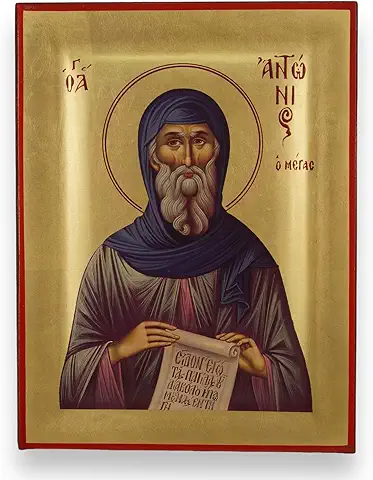

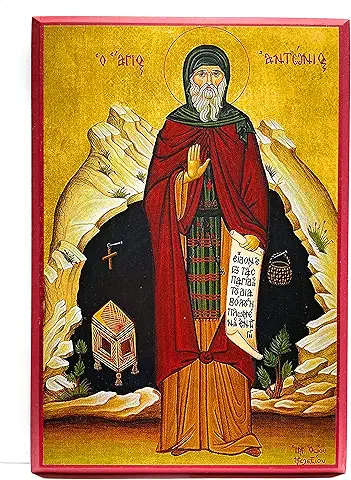
The Historical and Theological Context of 3rd–4th Century Egypt – Why the Desert Became a City
Egypt in Anthony’s lifetime was the intellectual and spiritual heart of early Christianity. Saint Mark the Evangelist had founded the See of Alexandria around 42–62 AD, establishing the first Christian school of theology under Pantaenus, Clement, and Origen. By the late 3rd century, Egypt had produced the world’s first Christian Bible translations into Coptic and was enduring the worst of the Diocletian persecution (303–313 AD), which destroyed churches, burned Scriptures, and executed thousands of believers. Many Christians fled to the desert not only for physical safety but to pursue the “angelic life” described in the Gospels and the lives of the prophets and apostles. Small groups of hermits already existed in the Thebaid, Nitria, and Scetis, but Anthony was the first to take solitude to its extreme and attract thousands of disciples, literally “making the desert a city” as Saint Athanasius famously wrote. His movement directly influenced Saint Pachomius (who founded the first cenobitic monastery at Tabennisi around 320 AD), Saint Macarius the Great (founder of Scetis), Saint Shenoute of Atripe, and eventually the entire monastic tradition that preserved Christian learning and culture through the fall of Rome and the early Middle Ages. In Coptic Orthodox liturgy, Anthony is commemorated daily in the Synaxarion and is invoked in every monastic profession as the prototype of the solitary life. His feast day (January 17 in the Gregorian calendar, 22 Tobi in the Coptic calendar) is a major celebration with all-night vigils, special hymns, and processions that draw thousands of pilgrims even in 2026.
Childhood, Family Tragedy, and the Divine Call to Radical Poverty
Anthony was born to devout, wealthy Christian parents who owned more than 300 acres of exceptionally fertile land along the Nile. From infancy he displayed an unusually contemplative character. He refused to learn Greek letters or attend formal school and remained completely illiterate his entire life—yet later astonished Greek philosophers with his supernatural wisdom. He disliked the noisy games of other children and preferred to stay home, absorbing the Scriptures read aloud in church services. He memorized entire books of the Bible simply by listening attentively week after week. His parents died within months of each other when he was approximately 18–20 years old, leaving him guardian of the large family estate and the care of his much younger sister.
While attending church one Sunday, Anthony heard the Gospel as if Christ were speaking directly to him: “If you would be perfect, go, sell what you possess and give to the poor, and you will have treasure in heaven; and come, follow me” (Matthew 19:21). Without hesitation he sold the entire estate, distributed the proceeds to the poor (keeping only a small reserve for his sister), and placed her in the care of a community of consecrated virgins. Shortly afterward he heard another verse: “Do not be anxious about tomorrow” (Matthew 6:34). This prompted him to give away even the final provisions. At roughly age 20 he moved into a simple hut on the edge of his village, supporting himself by weaving palm-leaf baskets and mats and cultivating a small plot of land. He began visiting every local ascetic in the region, carefully observing and absorbing their individual virtues like “a prudent bee gathering honey from many flowers”: one monk’s constant prayer, another’s profound humility, another’s endurance in fasting and sleeping on the bare ground. Without rivalry or jealousy he combined all these virtues in himself, laying the foundation for the perfectly balanced monastic life he would later teach to thousands.
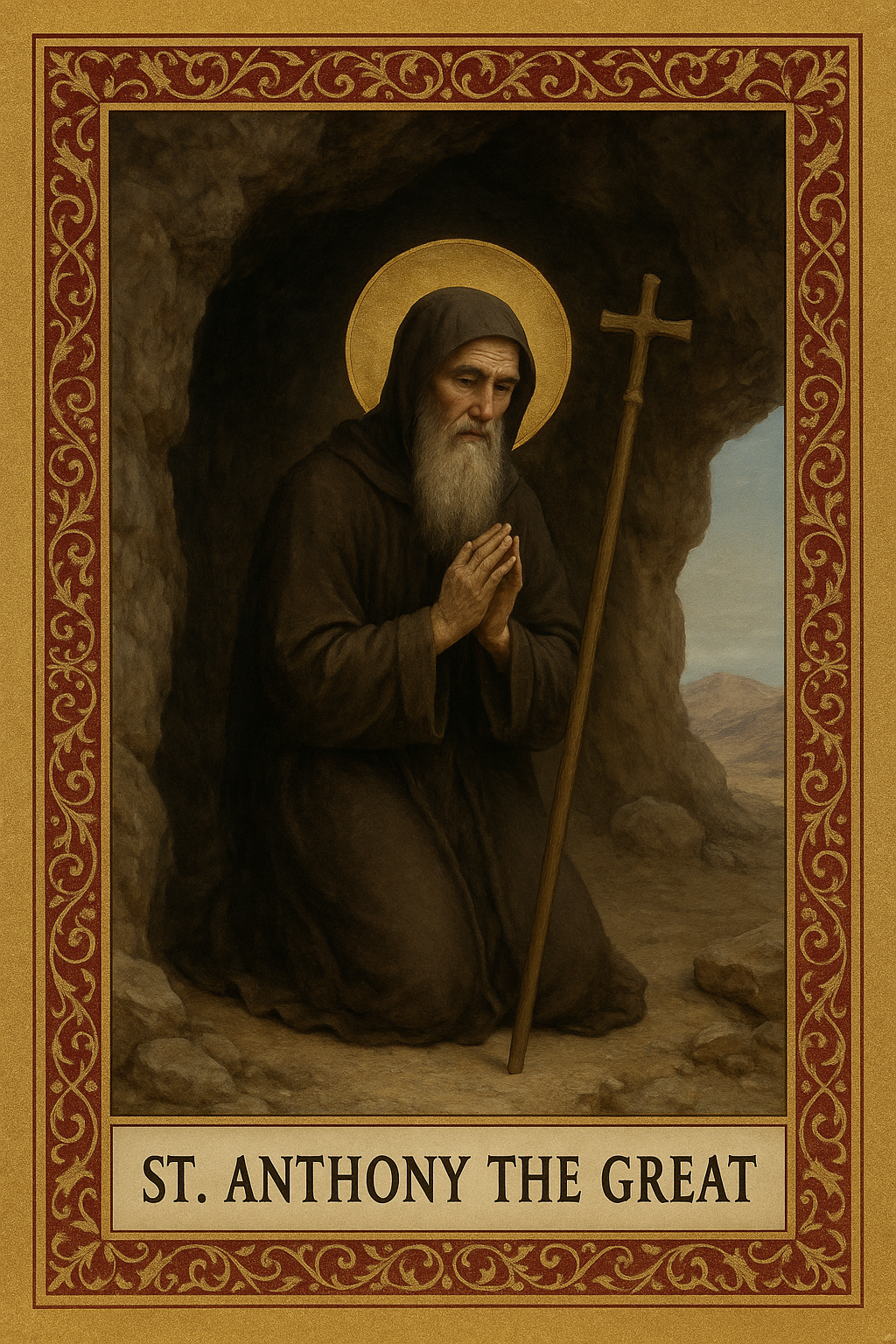
Saint Anthony the Great did not begin his life in the desert.
He began it as a wealthy young man in third-century Egypt.
Born around the year 251 to Christian parents, Anthony inherited significant property while still young. Then one day, while standing in church, he heard the Gospel read aloud:
“If you would be perfect, go, sell what you possess and give to the poor.”
He took it literally.
He sold everything.
He gave it away.
He walked into the wilderness.
His feast is commemorated on January 17 (January 30 on the Old Calendar).
Saint Anthony is now sought by those facing demonic oppression, addiction recovery, and the terrifying moment when repentance requires total life change. He understands spiritual collapse. He understands temptation that feels physical. He understands what it costs to walk away from comfort when the soul is on fire.
He did not flee the world to escape struggle.
He entered the desert to confront it.
Today, people pray to Saint Anthony when intrusive thoughts become relentless, when addictive patterns refuse to break, and when they feel called to radical repentance but do not know how to survive the transition.
This handmade prayer card is created for serious spiritual turning points. For those battling darkness. For those choosing recovery over relapse. For those ready to renounce what is killing their soul.
Saint Anthony teaches that freedom begins the moment you stop negotiating with sin.
The First Intense Spiritual Struggles – Life Near the Village and Inside the Tombs
The devil attacked immediately and ferociously. First came seductive memories of wealth, family comforts, delicious foods, and the responsibilities he had left behind. When these failed, the enemy appeared visibly—first as a seductive woman, then as a small black boy who openly confessed defeat. Anthony responded by intensifying his ascetic practices: eating only bread, salt, and water once a day after sunset (often every second or third day), keeping all-night vigils, and praying without ceasing.
Seeking greater solitude, he moved to an abandoned pagan tomb complex outside the village. He had a trusted friend bring him bread at long intervals while he sealed himself inside. Here the demonic assaults became physical and terrifying. Demons appeared in the forms of wild beasts—lions, bears, leopards, bulls, serpents, scorpions—and beat him so savagely that he lay nearly dead on the ground. His friend found him unconscious one day and carried him back to the village church, where Anthony revived at midnight and immediately insisted on being returned to the tomb. The demons returned with redoubled fury, creating a din like an earthquake and shaking the tomb violently. Suddenly the roof opened, a brilliant ray of divine light poured down, the demons vanished instantly, and Anthony was completely healed and filled with new strength. At that moment the Lord Himself spoke to him: “Anthony, I was here watching your struggle, but I wanted to see your endurance. Since you have not yielded, I will always be with you and will make your name known throughout the whole world.” This divine encounter became the turning point that gave him unbreakable courage for the decades of solitude ahead.
Twenty Years of Absolute Solitude in the Abandoned Roman Fort at Pispir – The Crucible of Sanctity
Around age 35 Anthony crossed the Nile and entered an abandoned Roman military fort at the foot of a mountain near Pispir (modern Der el Memun). He barricaded the door with large stones, stored enough bread for six months (which miraculously remained fresh in the dry Egyptian climate), and drew water from an internal spring. For twenty full years he saw no human face. This period became the crucible of his sanctity. The demons unleashed their most savage assaults: roaring like lions and bulls, filling the fort with armies of wild beasts, seductive women, piles of gold and silver treasure, luxurious banquets, enchanting music, distorted echoes of Scripture, and false prophecies of future glory. They beat him so violently that he was often left half-dead. Yet Anthony never despaired. He mocked the demons openly: “If you had any real power, even one of you would be enough—but since the Lord has taken away your strength, you try to frighten me with numbers!” He made the sign of the Cross and cried out the name of Christ; the demons fled in terror every time. Throughout these two decades his body remained perfectly healthy, his mind radiant with peace, and his soul ever closer to God. He ate and slept minimally, wore only a coarse hair-shirt under a simple skin garment, and prayed unceasingly while weaving baskets and mats to support himself spiritually and materially.


Emergence, the Founding of Monastic Communities, and the Move to the Inner Mountain – “The Desert Became a City”
After twenty years a group of disciples finally broke open the door of the fort. To their astonishment Anthony emerged looking exactly as he had entered two decades earlier—neither emaciated nor overweight, with perfect balance of body and soul. Word spread like wildfire. Crowds flocked to him from every direction. He healed the sick, cast out demons, comforted the grieving, and began teaching the growing number of disciples who built cells around the mountain. For the next five or six years he served as their spiritual father, delivering the famous long sermon recorded by Athanasius (Life of Saint Anthony chapters 16–43)—the foundational text of desert spirituality. In it he taught daily self-examination, the necessity of dying to self each day, the full armor of God against demonic powers (Ephesians 6:11–18), humility as the greatest snare-breaker, ceaseless prayer, the sanctifying value of manual labor, and absolute reliance on Christ alone. “Our life and our death is with our neighbor,” he repeatedly emphasized. The once-empty desert began to bloom with monasteries.
Seeking even greater quiet, Anthony withdrew farther into the Eastern Desert to the remote peak of Mount Colzim (Qolzum). Here he lived the final forty-five years of his life with two disciples who served him in his old age. He cultivated a small garden and vineyard, commanding wild donkeys and other animals in Christ’s name to stay away from his crops. He continued receiving pilgrims, healing the sick, giving spiritual counsel, and writing letters—seven of which survive in authentic Coptic versions, with twenty more traditionally attributed to him.

Anthony’s Bold Public Interventions – Alexandria, Persecution, and the Arian Crisis
Despite his love of solitude, Anthony left the desert twice for the sake of the Church. In 311, during the final great persecution under Maximinus Daia, he traveled to Alexandria to strengthen and comfort the imprisoned martyrs, encouraging them with his radiant presence. Later, around 338 during the height of the Arian heresy, he returned at the urgent request of Saint Athanasius to publicly refute the Arians. He stood before pagan philosophers and crowds, declaring Arianism “the forerunner of the Antichrist.” He healed numerous demoniacs right in front of skeptical Greek philosophers, who marveled at the power of the simple sign of the Cross. Many pagans converted on the spot. Even Emperor Constantine and his sons wrote letters seeking Anthony’s prayers; he replied urging them to remember the final judgment and to show mercy to the poor and oppressed.
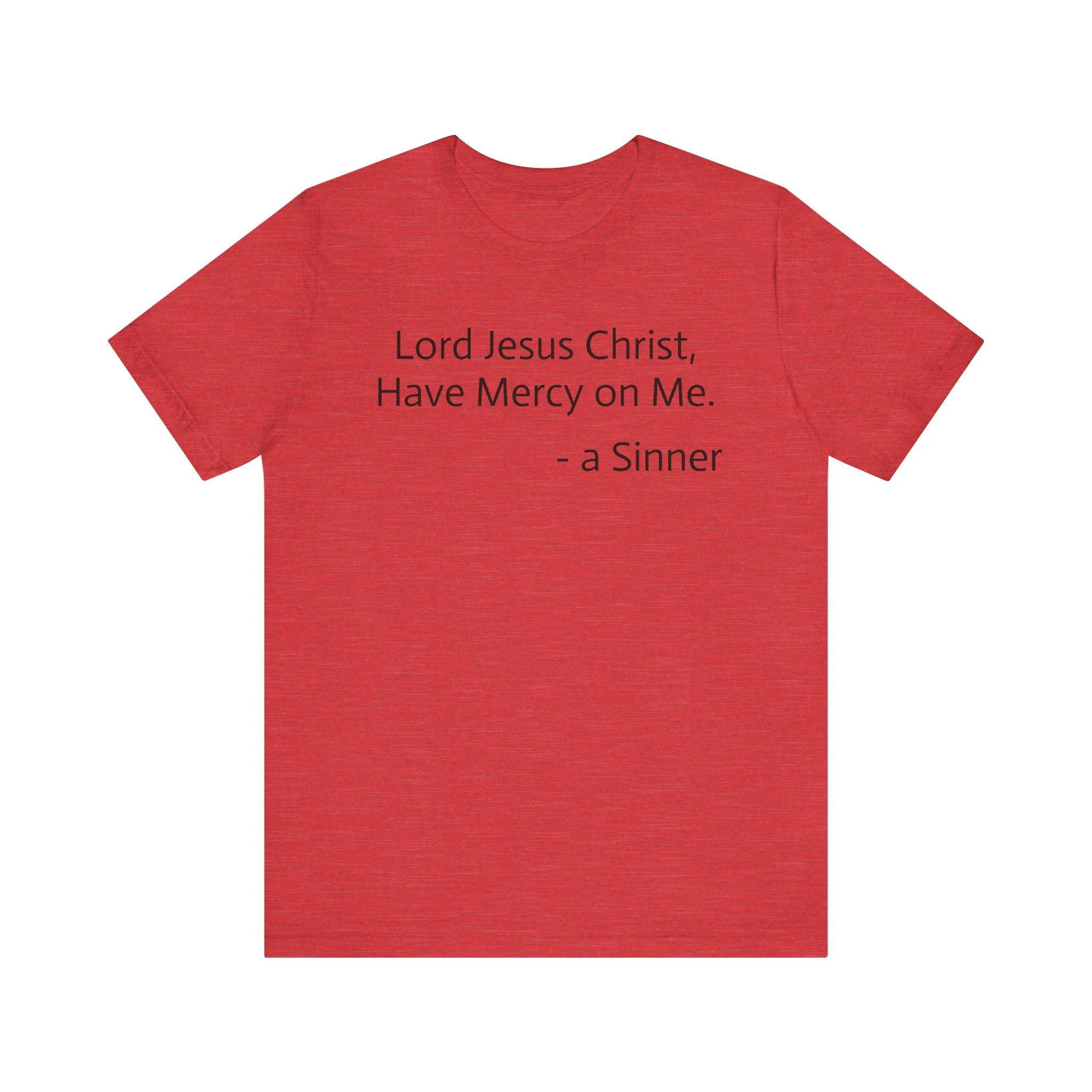
"Lord Jesus Christ, Son of God, have mercy on me, a sinner."
The Jesus Prayer is central to Orthodox Christianity and a profound expression of faith, humility, and devotion. This shirt is designed to be bold yet simple, making it a meaningful way to carry your faith into daily life.
✔ Features the full Jesus Prayer in a clean, powerful design
✔ Comfortable, high-quality fabric for all-day wear
✔ Perfect for church, prayer groups, retreats, or everyday style
✔ Makes a thoughtful gift for Orthodox Christians and people of faith
✔ Minimalist, masculine, and reverent design
Pray without ceasing. Wear the prayer. Live the devotion.
Product features
- Constructed with durable side seams for long-lasting shape retention.
- Features a ribbed knit collar that maintains its elasticity over time.
- Stabilized shoulder seams with twill tape prevent stretching.
- Utilizes advanced printing techniques for vibrant and detailed designs.
- Made from 100% Airlume combed and ring-spun cotton for soft, breathable comfort.
Care instructions
- Machine wash: cold (max 30C or 90F)
- Non-chlorine: bleach as needed
- Tumble dry: low heat
- Iron, steam or dry: medium heat
- Do not dryclean
EU representative: HONSON VENTURES LIMITED, gpsr@honsonventures.com, 3, Gnaftis House flat 102, Limassol, Mesa Geitonia, 4003, CY
Product information: Bella+Canvas 3001, 2 year warranty in EU and Northern Ireland as per Directive 1999/44/EC
Warnings, Hazard: For adults, Blank product sourced from Honduras
Care instructions: Machine wash: cold (max 30C or 90F), Non-chlorine: bleach as needed, Tumble dry: low heat, Iron, steam or dry: medium heat, Do not dryclean
Every Known Miracle Performed During His Lifetime – Full Narratives from Primary Sources
Saint Athanasius and the desert fathers record the following miracles in rich detail:
Fronto, a high court official, suffered a terrible disease causing constant biting of his tongue and danger of losing his eyes. Anthony commanded him to return home; he was instantly healed upon arrival. A virgin from the region of Busiris Tripolitana suffered a hideous affliction—worms pouring from her eyes, nose, and ears, along with total paralysis and squinting. Her parents prayed with Anthony; she was healed remotely at the exact moment of prayer. Two brothers lost in the desert—one already dead, the other dying of thirst—were saved when Anthony saw the situation in spirit, sent monks with water, and the living brother was fully restored. Anthony saw the soul of Amun of Nitria being carried to heaven by angels thirteen days before the news arrived. Polycratia of Laodicea, weakened to the point of death by excessive asceticism, was healed at the precise hour Anthony prayed for her. A nobleman’s son who ate his own excrement and attacked visitors was delivered when Anthony commanded the demon to depart to dry and waterless places. A woman’s demon-possessed daughter was healed the moment Anthony prayed at the city gate of Alexandria from a distance. Multiple demoniacs brought before pagan philosophers in Alexandria were delivered instantly by the sign of the Cross alone. A youth on a ship tormented by a hidden demon causing a foul stench was instantly freed by Anthony’s command in Jesus’ name. Countless paralyzed, blind, lame, and chronically ill people were healed simply by Anthony’s prayer, word, or even by sleeping overnight outside his cell while he prayed inside. He foretold the exact reason for every visitor’s arrival days in advance, prophesied the death of the cruel governor Balacius (who was trampled by a horse exactly five days later), and saw mules kicking the Lord’s holy table in a vision—two years before the Arian desecration of churches actually occurred. He safely crossed a crocodile-infested canal after making the sign of the Cross, and wild beasts and demons fled at his command in Christ’s name. Piles of gold and silver treasure appeared and vanished when he rejected them as demonic illusions. His body remained perfectly healthy, with all teeth intact and eyesight sharp until the day of his death at 105.
The Holy and Peaceful Death and Secret Burial
Sensing the approach of death, Anthony summoned his two closest disciples (who had served him faithfully for fifteen years). He gave them his final instructions: remain faithful to Orthodox teaching, avoid all heretics, and bury his body secretly in the mountain so it would not become an object of veneration. He distributed his few possessions—one sheepskin and cloak to Saint Athanasius, another to Bishop Serapion, and his hair garment to the two disciples. He died peacefully with a radiant face “as if greeting friends who had come to meet him.” The disciples buried him secretly on the mountain; the exact location remains unknown to this day.
Discovery of the Relics, Incorruptibility, and the Vast Treasury of Posthumous Miracles
In 561 AD the relics were miraculously discovered and transferred first to Alexandria, then to Constantinople, and finally (in the 11th century) to France at the abbey of Saint-Antoine-l’Abbaye, where they remain a major pilgrimage site today. The body was found incorrupt and has performed countless healings. The Order of Hospitallers of Saint Anthony was founded in the 11th century specifically to care for victims of “Saint Anthony’s Fire” (ergotism), a deadly medieval disease causing gangrene, convulsions, and hallucinations; thousands were healed through his intercession and the use of his relic oil. Medieval records from France and Europe document recoveries from plague-like skin diseases, shingles, erysipelas, and infectious fevers after pilgrimages to his shrine. In Egypt, the Monastery of Saint Anthony continues to record modern miracles, including healings of cancer, paralysis, infertility, and demonic oppression. In 2025–2026 alone, new testimonies from Coptic pilgrims include sudden healings of chronic illnesses and protections during regional conflicts. Throughout the Coptic diaspora (United States, Australia, Europe), relics and icons of Saint Anthony have been credited with exorcisms, medical miracles, and profound spiritual conversions. The healing oil from his relics continues to be distributed worldwide.
The Authentic Letters of Saint Anthony with Detailed Commentary
Anthony left no formal written “rule,” yet his seven authentic Coptic letters form the bedrock of desert spirituality. Letter 1 emphasizes perseverance in the monastic life. Letter 2 explores the three births—natural, baptismal, and resurrectional. Letter 3 discusses the spiritual senses awakened by grace. Letter 4 describes the soul’s journey after death. Letter 5 offers profound guidance on the discernment of spirits. Letter 6 is a masterpiece on humility as the greatest weapon against the enemy. Letter 7 reaches the summit: “I no longer fear God, but I love Him. For love casts out fear.” Each letter is filled with practical wisdom that monks still study daily in Coptic monasteries.
Letter 1: To the Arsinoites on the Three Callings
I, Anthony, write to my beloved brothers in the Lord.
First of all, we must know that there are three ways in which people are called to the service of God. The first is when someone is called by the law of love that is in their nature. When the original goodness which was planted in them at their creation is stirred, they respond to the divine voice within and follow God without hesitation, as did the patriarch Abraham.
The second calling is when a person hears the written Law and the testimonies of the Scriptures, which tell of the punishments and promises of God. Stirred by these testimonies, they are awakened to enter into the service of duty.
The third calling is when a person, at first hard of heart and persistent in the works of sin, is visited by the mercy of God through trials, sickness, or the loss of loved ones. Being corrected by these afflictions, they come to their senses, repent, and enter into the way of life.
Therefore, no matter how we have been called, let us strive to persevere. Let us not look back to the things we have left behind. For the person who puts their hand to the plow and looks back is not fit for the kingdom of God. Let us keep our hearts pure and our minds focused on the Lord, knowing that the struggle is not against flesh and blood, but against the hidden powers of evil.
Stay strong in the faith, and let the grace of our Lord remain with you.
Letter 2: On the Three Births and the Restoration of the Soul
I, Anthony, greet my beloved brothers in the Lord.
My dear children, it is vital that you understand the nature of our existence and the path of our restoration. There are three births that define our journey toward God.
The first birth is the natural birth, by which we enter into this physical world. This birth is common to all people and is the beginning of our earthly life, where we are subject to the needs and limitations of the flesh.
The second birth is the baptismal birth, which is the rebirth of the soul through water and the Spirit. In this birth, we are adopted as children of God and receive the grace to begin our spiritual ascent. It is here that the image of God within us begins to be polished and restored from the tarnishing effects of sin.
The third birth is the resurrectional birth. This is the ultimate goal—the transition into eternal life. It is the fulfillment of our hope, where the soul is fully united with God and the body is transformed into a spiritual vessel that no longer suffers decay.
Therefore, my children, let us not remain stagnant in our natural state. Let us strive to live in a way that honors our baptismal rebirth so that we may be found worthy of the resurrection. We must watch our thoughts and guard our hearts, for the enemy seeks to distract us from this high calling. Be diligent in prayer and constant in your love for one another, for love is the bond that unites us to the Creator.
May the peace of the Lord remain with you always.
Letter 3: The Awakening of the Spiritual Senses
I, Anthony, write to my beloved in the Lord.
It is necessary for us to understand that just as the body is equipped with five senses to interact with the physical world, the soul is endowed by God with its own set of spiritual senses. When we live only according to the flesh, these internal senses remain dull and dormant, unable to perceive the radiance of the Divine.
However, through the visitation of grace and the discipline of our life in Christ, these senses begin to awaken. When the "eye of the heart" is opened, we begin to see the hidden workings of Providence in all things. When the spiritual hearing is restored, we recognize the voice of the Shepherd even amidst the clamor of the world.
This awakening is not a result of human effort alone but is a gift given to those who seek purity of heart. For as the Lord said, "Blessed are the pure in heart, for they shall see God." If our spiritual senses remain blocked by passions and worldly anxieties, we stay blind to the very Presence that surrounds us.
Therefore, let us guard our physical senses—what we look at, what we listen to, and what we speak—so that they do not become gateways for darkness. Instead, let them be servants to the soul, assisting us in our journey toward the light. By keeping the body in check, we allow the Spirit to sharpen our inner perception, leading us to a deeper knowledge of the Truth.
May the light of Christ illuminate your hearts.
Letter 4: The Journey of the Soul and the Guardians of the Air
I, Anthony, greet my beloved children in the Spirit.
Hearken, my dear ones, to the mystery of the soul’s departure from this earthly vessel. When the soul is released from the bonds of the body, it must pass through the realms inhabited by the powers of the air. These powers seek to hinder the ascent of those who have lived in negligence, accusing them of the sins they committed and the passions they did not overcome.
If a soul has purified itself through repentance and the love of Christ, these powers have no hold upon it. The light within the soul acts as a shield, and the angels of God lead it toward the heavenly rest. But if the soul is burdened by the weight of worldly attachments and unconfessed malice, it finds itself unable to rise, for its own darkness binds it to the lower regions.
Therefore, let us not be complacent while we still breathe this air. Let us examine our hearts daily. Are we harboring anger? Are we enslaved by pride? Every victory over a passion here is a gateway opened there. Every act of mercy is a light that will guide us when the physical sun sets on our lives for the last time.
Trust in the mercy of the Lord, but do not neglect the labor of the soul. For the journey is certain, and the time of our departure is hidden from us. Let us be found ready, with our lamps trimmed and our hearts fixed on the eternal.
May the strength of the Almighty protect your going out and your coming in.
Letter 5: On the Discernment of Spirits
I, Anthony, write to my children in the Holy Spirit.
Understand, my beloved, that the spiritual life is a warfare of thoughts. The enemy of our souls is not content to remain outside; he seeks to enter the inner chamber of our minds. He appears in many forms—sometimes as a frightening shadow, and other times transformed into an "angel of light," speaking words of scripture or whispering of great deeds to be done.
Therefore, you must learn the art of discernment. When a thought or a vision enters your heart, do not be quick to embrace it, nor be troubled by its appearance. Stand firm and ask: "Who are you, and where do you come from? Are you of our own, or of our adversaries?"
If the spirit is of God, it will bring a deep and lasting peace, a sense of humility, and a quiet joy that settles the soul. But if it is of the enemy, it will bring confusion, a restless excitement, a feeling of pride in one's own righteousness, or a cold and heavy fear. The enemy seeks to disturb the "stillness" of the heart, for in a troubled heart, God’s voice is hard to hear.
Keep your hearts like a clear pool of water. When the water is still, the sun is reflected perfectly; when it is stirred by passion or the suggestions of the enemy, the image is broken. Be watchful, be sober, and always test the spirits by the love they bear for Christ and the humility they produce in you.
May the wisdom of the Father guide your every thought.
Letter 6: Humility as the Greatest Weapon
I, Anthony, greeting you in the name of the Lord.
Consider, my children, the nature of the adversary who opposes us. He fell from the heights of heaven not because of a single act of theft or adultery, but because of a single thought of pride. He believed he could stand by his own power, and in that belief, he was cast down. Since that moment, his primary labor has been to plant that same seed of pride in the hearts of those who seek God.
This is why humility is not merely a virtue, but our most potent weapon. Pride is the only wound the enemy cannot heal, and humility is the only scent he cannot tolerate. When you are humble, you are invulnerable, for how can the one who is already on the ground be cast down?
Look at our Savior, who though He was God, took the form of a servant. He did not overcome the enemy through a display of worldly power, but through the extreme humility of the Cross. If you wish to conquer the hidden powers that trouble your mind, do not seek to be "great" or "noticed." Instead, seek to be the least of all. When you truly see yourself as lower than all of creation, the enemy finds no foothold in you, for he has nothing to grasp.
Let your words be few, your prayers many, and your heart always bowed before the majesty of the Creator. In this lowliness, you will find a strength that the world cannot understand and the enemy cannot withstand.
May the humility of Christ be your shield and your glory.
Letter 7: On the Summit of Divine Love
I, Anthony, greeting my beloved children in the Lord.
My dear ones, we have spoken of the callings, the births, and the struggles of the soul. But now, we must reach the peak of the mountain. In the beginning of our journey, we often serve God out of fear—fear of punishment, fear of the judgment, or fear of the unknown. This fear is a useful tutor; it keeps us from the edge of the abyss and teaches us the gravity of our choices.
However, as the soul is purified and the heart is widened by the Holy Spirit, a great transformation occurs. The "servile fear" of a slave is replaced by the "filial love" of a child. It is at this summit that I can say to you:
“I no longer fear God, but I love Him. For love casts out fear.”
When you reach this state, you do not keep the commandments because you are afraid of the whip, but because you delight in the Father's will. Love is the bond of perfection; it is the very nature of the Divine. If you possess love, you possess God, for God is love.
Let this be your constant goal. Do not settle for a life of mere duty or cold habit. Seek the fire of charity that consumes all worldly desires and unites the spirit to its Creator. In this love, there is no anxiety, no bitterness, and no pride—only the eternal peace of being found in Him.
May the love of the Father, the grace of the Son, and the communion of the Holy Spirit be with you all, now and forever.


All 38 Canonical Sayings with Theological and Practical Explanations
St. Anthony the Great of Egypt (c. 251–356), the founder of Christian monasticism, is revered as the “Father of All Monks”. The primary sources for his life and teaching are St. Athanasius’s Life of Anthony and the collection known as the Apophthegmata Patrum (Sayings of the Desert Fathers). One modern commentator notes that while these sayings traditionally guided monks, “there are also a plethora of [them] that apply to the life of Christian discipleship in general; regardless of one’s particular vocation”. In other words, Anthony’s brief “spiritual aphorisms” are a treasure for any Christian seeking holiness. They repeatedly emphasize humility, repentance, and love of God and neighbor as the path to salvation. For example, Anthony underscores the Gospel principle that true greatness comes through service: “whoever would be first among you must be the slave of all”. His aphorisms (cited below) are given with theological context and practical guidance.
St. Anthony’s wisdom often highlights humility and service to others. In the spirit of Christ’s teaching (Mark 10:44–45), he insisted that true greatness is found in self‑abandonment and love (e.g. “humility” as the answer to all snares). Each saying below is quoted and then explained. The interpretations draw on the Church’s faith (Scripture and Fathers) and propose how to live out Anthony’s insight today. Citations (in the format ) refer to translations and commentaries in the Apophthegmata Patrum and related sources.
1. Overcoming Thoughts and Temptation
Anthony prayed: “Lord, I want to be saved but these thoughts do not leave me alone; what shall I do in my afflictions? How can I be saved?” … It was an angel of the Lord sent to reassure him. Anthony heard the angel saying to him, “Do this and you will be saved.”.
In this story Anthony pours out his heart to God, lamenting a barrage of discouraging thoughts (often called acedia, or spiritual sloth). An angel appears as a model: by turns praying and braiding rope, he silently teaches Anthony the rhythm of prayer and labor. Anthony obeys and finds deliverance. The theology is that God often answers prayer not by removing struggle, but by providing guidance and strength within it. Athanasius recounts a parallel vision: “He beheld a man, who by turns alternately finished a prayer, and then began to work… It was an angel… sent to instruct His chosen one.”. The point is that the Christian life marries oratio et labora – prayer and honest work. Anthony’s angel says simply “Do this,” meaning continue faithful prayer and steady work, trusting God.
Practical application: When beset by discouraging or distracting thoughts, persist in prayer and your daily duties rather than despairing. Seek God’s help (as Anthony did), then carry on with ordinary tasks (manual labor, study, prayer, service). This steadies the mind. Avoid asking only to be freed of struggle; rather, ask for endurance. In living memory, monks would often pray and then mend ropes or sweep – each as a prayerful act. Thus, Anthony teaches perseverance.
2. Focus on Your Own Heart
Anthony pondered why the just suffer while the wicked prosper. A voice answered him, “Anthony, keep your attention on yourself; these things are according to the judgment of God, and it is not to your advantage to know anything about them.”.
Here Anthony wrestles with the mystery of divine providence (evil’s triumphs vs. human suffering). He is told to cease worrying about external mysteries and concentrate on his own spiritual state. Theologically, this echoes Christ’s warning not to judge others (Mt 7:1–5) and St. Paul’s exhortation to “bear your own load” (Gal 6:5). Since God’s wisdom is beyond us, Anthony is taught humility: leave ultimate judgment to God and attend to your own soul.
Practical guidance: Instead of envying others or demanding answers, confess your own faults and grow in virtue. If troubled by questions of fairness, remember that Scripture commends trust in God (e.g. “My times are in Your hand,” Psalm 31:15). Cultivate the “scandal of humility” – admit your own weakness before God. In daily life, work on personal repentance and charity rather than gossiping or cultivating resentment.
3. Three Essential Precepts
Advice: “Whoever you may be, always have God before your eyes; whatever you do, do it according to the witness of the Holy Scriptures; in whatever place you live, do not easily leave it. Keep these three precepts and you will be saved.”.
A brother asked Anthony how to please God. Anthony named three rules:
Constantly remember God. (Keep God “before your eyes.”)
Let Scripture govern your actions. (Obey God’s Word in everything.)
Commit to your place and calling. (Stay in your station or cell.)
Theologically, these correspond to love of God (mindfulness of Him), obedience (through Scripture), and stability (the monastic value of remaining in one place/vocation). St. Benedict later codified similar advice: “Always keep the fear of God before your eyes” and live “in obedience and stability” in one monastery.
Practical steps: Be mindful of God at every moment – start tasks with prayer and ask yourself if they honor Him. Check all plans by Scripture: are your words and deeds in line with the Bible’s teachings? Finally, resist the urge to run away: whether you are single or married, lay or clergy, serve faithfully in your own “cell” or community. In practice this means cultivating gratitude for your present duties and seeing them as God’s appointment. Following these three guidelines is a rule of life as well as a path to salvation.
4. Embrace Blame and Expect Temptation
Counsel: “This is the great work of a man: always to take the blame for his own sins before God and to expect temptation until his last breath.”.
Anthony calls true spiritual labor the constant practice of humility and vigilance. Taking blame “before God” means never making excuses or blaming others, but owning one’s faults in prayer. Expecting temptation means recognizing that spiritual struggle never ends in this life. Theologically, he echoes St. Paul’s image of life as a battle (1 Cor 9:24–27; 2 Cor 10:3–5). Just as Jesus warned his disciples to “watch and pray,” Anthony teaches that a Christian must always be on guard.
Application: Practice instant self-examination. When something goes wrong, ask “What did I do or omit?” – even if others caused it. This builds humility (cf. 1 Jn 1:9). Likewise, treat every temptation as normal rather than a sign of special weakness: when pride, anger, or fear arise, expect them and pray for strength. In daily life, this can look like not assuming you’re past sin just because you’ve matured; always check your motives. Keep confessing even small failings, and remember that spiritual complacency itself is a danger.
5. Focus on Virtue, Not the Past
Advice to St. Pambo: “Do not trust in your own righteousness; do not worry about the past; but control your tongue and your stomach.”.
A disciple asked how to progress. Anthony offered practical virtues:
Reject self-righteousness. Don’t pride yourself on past merits. This recalls Jesus’ parable of the Pharisee and the Publican (Lk 18:9–14).
Forget the past. Don’t obsess over old sins or successes. God is a God of the present.
Control speech and appetite. Here are two concrete vices to master. Speech can wound (cf. James 3); gluttony inflames passion (cf. Gal 5:19–21).
Theologically, this teaches not to trust in one’s own works but in God’s mercy (see Isaiah 64:6). It also underlines ascetic priorities: purity of words and moderation in eating.
Practical steps: In daily life, resist bragging about how “good” or “saved” you used to be – let your current actions speak. Don’t dwell on past failures (which Christ has forgiven) or past achievements (which can breed pride). Instead, watch your tongue: avoid gossip and harsh words. And practice temperance: eat simply, fast regularly, avoid overindulgence, so that excess hunger or anger will not cloud the mind. These two “small” disciplines set a foundation for all other virtues.
6. Humility Is the Answer to Evil’s Snares
Vision: Anthony confessed, “I saw all the traps that the enemy spreads out over the world and I said groaning, ‘What can get through from such snares?’ Then I heard a voice saying to me, ‘Humility.’”.
Anthony saw the manifold temptations of pride, vanity, anger, gluttony, etc. He despaired that any soul could survive. God’s answer was that true humility alone can slip through all Satan’s traps. This recalls St. James’s teaching that “God resists the proud but gives grace to the humble” (Jas 4:6) and Christ’s teaching that “whoever exalts himself will be humbled, and whoever humbles himself will be exalted” (Lk 14:11). An insightful commentary notes that the Desert Fathers “emphasized humility as the foundation of the spiritual life,” calling it a peace‑giving virtue. In other words, humility is the key door that admits one safely through any temptation.
Living it out: Cultivate humility in your heart: remember that everything good in you comes from God (St. Bernard said, “humility is an interior disposition that recognizes all good comes from God”). Practically, habitually think of yourself as the least, accept correction, confess faults quickly, and do not seek honor or praise. In encounters with others, prefer the humble role and give them the spotlight. When a temptation or prideful thought arises, immediately counter it with a prayer like “Lord, remember me a sinner” (the Jesus Prayer). In all things, let humility govern you, since – as Anthony heard – only a humble soul is light enough to pass through the devil’s most cunning snares.
7. Asceticism Without Discernment
“Some have afflicted their bodies by asceticism, but they lack discernment, and so they are far from God.”.
Anthony warns that self‑mortification alone is not enough. To “afflict the body” (through fasting, sleep deprivation, etc.) can actually become a trap if it is not guided by wisdom (discernment). Without prayerful humility, harsh asceticism can foster pride or a false sense of accomplishment, leading a person “far from God.” This reflects earlier teachings (e.g. Jesus attacked the Pharisees’ self‑righteous fasting in Luke 18:12–14).
Application: Ascetic practices (fasting, extra prayer, vigils) must be undertaken with spiritual maturity. Do not boast of your practices or judge others for not doing them. Always combine ascetic effort with love: if self-denial makes you judgmental or harsh, it has failed its purpose. Seek guidance (an elder or confessor) to ensure your disciplines help rather than hurt your soul. Essentially, let compassion and wisdom accompany every self-denial.
8. Love of Neighbor = Love of God
Teaching: “Our life and our death is with our neighbor. If we gain our brother, we have gained God; but if we scandalize (offend) our brother, we have sinned against Christ.”.
This profound saying places our salvation in the context of relationships. The phrase “our life and our death is with our neighbor” echoes Christ’s teaching that loving our neighbor is inseparable from loving Him (Mt 25:40, 45; Gal 6:2). In saying that winning a soul equals “gaining God,” Anthony echoes Jesus’ words “whatever you did for one of these least of my brothers, you did it to me” (Mt 25:40). And conversely, hurting a brother is an offense to Christ Himself. As one commentator puts it, “on our relationship with our neighbor will it depend whether we will go to heaven or hell.”.
Practical guidance: Treat every person – family, friends, even strangers – as Christ in disguise. Go out of your way to serve and forgive others. If you have quarreled, reconcile immediately (as Jesus commands in Mt 5:23–24). Avoid gossip, slander or any behavior that “scandalizes” (leads into sin) others. Confession or apology: if you realize you’ve hurt someone, humble yourself and seek their forgiveness. Remember that a pat on the shoulder to encourage someone and feed the hungry or comfort the lonely are as pleasing to God as worship. Anthony’s teaching here practically means: no good work – even miraculous ones – can count if it’s done with an unloving heart toward neighbor.
9. Flee to Your Cell
Advice: “Just as fish die if they stay too long out of water, so the monks who loiter outside their cells or pass their time with men of the world lose the intensity of inner peace. So like a fish going towards the sea, we must hurry to reach our cell, for fear that if we delay outside we will lose our interior watchfulness.”.
Anthony compares a monk wandering outside his cell to a fish stranded out of water: both die spiritually. A cell (or stable place of prayer) provides the “water” of God’s grace. Being “outside” in the world – socializing or indulging in worldly distractions – steals inner peace and weakens vigilance. This echoes Paul’s command for monks to “pray without ceasing” (1 Thes 5:17) and the Benedictine rule of stability.
Practice: Arrange your life to safeguard your daily prayer and contemplation. For a monk, this meant strict enclosure. For a lay Christian, it means structuring your day so that prayer, Scripture reading, or meditation happen regularly. Limit unnecessary outings, social media, or entertainment that dull the spirit. If you must be among people (work, family, errands), set aside scheduled times of stillness (like the “hour of prayer” or daily Mass). Retreating to a quiet space in the evening to examine conscience is good. In short, let your “cell” be wherever you consistently meet God – even if it’s the simple corner of your home – and return there often for solitude.
10. The Battle of the Heart
Teaching: “He who wishes to live in solitude in the desert is delivered from three conflicts: hearing, speech, and sight; there is only one conflict for him and that is with fornication.”.
Here Anthony highlights how silence and solitude remove most external temptations. In a quiet, secluded life one avoids the wars of the ears (idle or sinful talk), mouth (gossip, lies, slander), and eyes (lustful or sinful sights). Only the inner battle with impure thoughts (“fornication”) remains. Orthodox commentary elaborates: living in silence frees one from the temptations that come through what we hear, say, and see. In effect, solitude concentrates the spiritual struggle on the heart alone, where, with God’s help, a monk can uproot temptations at their source.
Application: Although few today live as hermits, the principle is universal. We can create “inner solitude” even amid noise: practice silence by guarding the mind (putting away secular music or shows), watching speech (few and gentle words), and avoiding exposing the eyes to immoral images. For example, fast from news or entertainment that incite anger or lust. Use social media sparingly to avoid gossip. Then the main struggle becomes resisting inner temptations with prayer. This setting of limits is why monasteries forbid unnecessary talk and gossip – it’s the same idea Anthony stated. In practical terms: regularly embrace moments of silent prayer and confession to keep the heart pure; the fewer outside distractions, the easier it is to confront and defeat the passions within.
11. Visions Must Be Tested
Scenario: Some monks came asking Anthony about visions and whether they were from God or demons. On the way, their donkey died. Anthony asked them, “How was it that the little donkey died on the way here?” When they asked how he knew, he said, “The demons showed me what happened.” By this example, Anthony proved that their visions also came from demons.
In this event, Anthony demonstrates a key spiritual principle: not all private visions or revelations are from God. Even truthful‑seeming dreams or locutions can be the work of demons. His method of discernment was practical: if demons can predict or reveal factual events (the donkey’s death), then one must test any vision by its fruits. As St. John warns, “Beloved, do not believe every spirit, but test the spirits to see whether they are from God” (1 Jn 4:1). Anthony’s confession – that demons showed him the donkey’s end – is not prideful claiming clairvoyance, but humility in acknowledging how the enemy works.
Lesson: Be cautious about self‑claimed revelations or visions. Compare them to Scripture and tradition. If a vision encourages pride or leads one away from humility, it is suspect. If you are uncertain about a spiritual experience, discuss it with a wise elder or spiritual friend. Anthony’s example also shows that truth can have a prophetic role in correction. In daily life: before sharing an extraordinary “word” or dream, pray for discernment and remember Anthony’s lesson – it is better to confess ignorance (as Abba Joseph later did) than to assume a vision is God’s when it may be the devil’s.
12. Care for People’s Limits
Parable: A hunter saw Anthony at ease with the brethren and was shocked, thinking monks should always be strict. Anthony told him to shoot arrows repeatedly. When the hunter said the bow would break, Anthony replied, “It is the same with the work of God. If we stretch the brethren beyond measure they will soon break. Sometimes it is necessary to come down to meet their needs.”.
This story illustrates compassion in spiritual leadership. Rigid asceticism (“stretching the bow”) without mercy can harm souls. Anthony shows that meeting people’s genuine needs – for rest, fellowship, teaching, or moderation – may require easing strict rules at times. Theologically, this aligns with Christ’s teaching that “the Sabbath was made for man, not man for the Sabbath” (Mk 2:27) and St. Paul’s model of becoming “all things to all people” (1 Cor 9:22) in order to save some.
Action: Whether as a priest, parent, or mentor, be attuned to others’ capacities. Encourage growth, but do not burden a weak conscience. For example, if someone new to fasting cannot yet endure total fasts, guide them to partial fasts and gradually more. Sometimes meet believers in informal setting (like Anthony occasionally met with brothers) to encourage them. Share warmth and friendship; not every moment must be spent in strict severity. By balancing discipline with love, you imitate God’s care for us and keep people from “breaking” under despair.
13. True Life Is Hard Work in Humility
Anthony once learned of a young monk who miraculously commanded wild asses to carry elders. He said of him, “This monk seems to me to be a ship loaded with goods, but I do not know if he will reach harbour.” Shortly after, the young monk fell into sin, repented, and died a few days later.
Anthony recognized that a person can have great gifts or successes (“loaded with goods”) yet not persevere to the end. The implication is that miracles or natural talents do not guarantee salvation. Without humility and vigilance, one’s “ship” can founder on pride. Jesus warned that the elation of miraculous signs can be accompanied by spiritual sinking if not rooted in God (cf. Mk 16:14–18).
Implication: Never rest on your laurels or spiritual experiences. A promising start (“the young pillar of the Church”) can collapse if the soul isn’t humble. We must continue examining conscience and repenting even after successes. In practice: when you do well (e.g. lead a prayer group or succeed in a virtuous deed), give glory to God, not yourself, and recognize that your final salvation depends on persistent faith, not just a string of good works.
14. The Test of Suffering
When brothers praised a monk for his faith, Anthony quietly tested him by insulting him. Finding that the monk could not endure a single insult, Anthony said: “You are like a village beautifully decorated on the outside, but destroyed from within by robbers.”.
This incident teaches that external holiness (flattery, praise) means little if the heart is corrupt. Anthony’s warning is vividly like Christ’s: “Woe to you, hypocrites! For you are like whitewashed tombs, which outwardly appear beautiful, but inside are full of dead men’s bones” (Mt 23:27). Theologically, it stresses integrity: virtue isn’t for show. Genuine virtue is proved in suffering, not praise.
Advice: If you find yourself craving compliments, beware: a sensitive ego is a danger sign. Practically, practice receiving even unjust criticism or mild insults without anger. When praised, immediately think of your failings. Strive for the steadiness of spirit that does not depend on human applause. In daily life, this might mean resigning yourself quietly if misunderstood at work, or refraining from boasting about good deeds. This builds inner purity – a “house” secure from robbers (sins) – rather than a showy exterior.
15. Prayer Requires Personal Effort
Exchange: A brother begged, “Pray for me.” Anthony answered, “I will have no mercy upon you, nor will God have any, if you yourself do not make an effort and if you do not pray to God.”.
Anthony sharply reminds that prayer and salvation require our cooperation. It is not enough to passively ask others (even saints) to pray; each soul must exert itself. St. James likewise says faith without works is dead (Jas 2:17). God’s grace is offered, but we must reach out for it.
Takeaway: If you long for holiness, start by praying yourself. Approach God with honesty and labor (even if your prayer is just, “Lord, help me to pray”). Tell those around you to pray for you, but understand they cannot live your life for you. Attend church and sacraments, but also spend private time in prayer and penance. In short: do not rely solely on the prayers of others; God expects your sincere effort (cf. Lk 11:9–13).
16. Wisdom Is Knowing You Don’t Know
Incident: Several elders were asked to interpret a Scripture verse. Each gave an explanation and was told it was not understood. Finally, Abba Joseph quietly replied, “I do not know.” Anthony praised him, saying, “Indeed, Abba Joseph has found the way, for he has said, ‘I do not know.’”.
Anthony commends Joseph’s humility. Admitting ignorance before God and others, rather than spinning misguided interpretations, is true wisdom. This reflects Jesus’ praise of the “poor in spirit” (Mt 5:3). In Patristic terms, humility of knowledge is the beginning of true understanding.
Application: When faced with spiritual questions, do not be ashamed to say “I do not know.” It is better than asserting error. This openness invites true learning. In your life, maintain a childlike openness: study Scripture or seek guidance with the attitude of a learner. This will keep you humble and receptive to God’s instruction.
17. The Example of Silence
Boat Journey: Three brothers were traveling to see Anthony and shared Scripture and commentary as they rowed. An elderly man joined them in silence. On arrival, Anthony remarked that the elder was a better companion than all those talkative monks: “They are good, but they do not have a door to their house and anyone who wishes can enter the stable and loose the donkey.” He meant: “These brothers say whatever comes into their mouths.”.
Anthony uses this scenario to praise the power of quiet example. The silent elder’s presence contrasted with the others’ idle chatter: he “opened the door” of his heart, allowing no random words in. The image of an unlocked stable (letting anyone enter) illustrates how undisciplined speech invites sin into the soul.
Lesson: Value silence and discretion. Sometimes saying nothing (respectfully listening or silently working) is more edifying than discussing even good topics. Guard your tongue: do not reveal secrets or speak out of turn. In a group, choose to listen more than speak; others may learn from your calm. As Proverbs says, “Even a fool who keeps silent is considered wise; when he closes his lips, he is deemed intelligent” (Prov 17:28). Anthony’s rebuke encourages self-control in speech as a spiritual door that must be shut against disorder.
18. Charity and Forgiveness Over Perfection
Teaching: Brothers asked Anthony, “How are we to be saved?” He first cited Scripture: “If anyone strikes you on one cheek, turn to him the other also” (Matt 5:39). When they said they couldn’t even do that, Anthony gently lowered the bar to: “If you cannot do this, do not return evil for evil.” They admitted they couldn’t even that. Finally Anthony said to bring them food: “What you need is prayers.”.
Anthony progressively reduces the standard of Christian behavior, meeting people where they are. First he teaches the highest Gospel ideal (perfect forgiveness), then concedes they can’t meet it, so he pleads simply: do not repay evil with evil. When they even struggle with that, he ends by giving them charity (soup) and telling his disciple that prayer is their real need.
Meaning: God’s commandments remain the ideal, but grace meets our weakness. Anthony’s practical mercy shows that charity and prayer may come before strict justice or perfection. In life: when others offend you, pray for them first. If you’re unable to love them outright, at least don’t curse them (Eph 4:32). And always turn to prayer and God’s mercy as the means to grow. This teaches patience with beginners in the faith (or even oneself): first do what you can (simple forgiveness, receiving God’s help), and progress from there.
19. Know the Body’s Three Motions
Explanation: Anthony observed that the body has three kinds of “motions”:
A natural, God‐given motion (simple, passionless movement).A motion from excess eating/drinking (blood heat), causing lust and agitation.A motion from demons (envy, jealousies, other secret passions).
He said: “You must understand what these three bodily motions are: one is natural, one comes from too much to eat, the third is caused by the demons.” (He cites Eph 5:18 and Lk 21:34 about drunkenness.).
Anthony’s point is that we must be aware of how body, appetite, and spirit interact. Overeating or overdrinking can unbalance us (irritability, uncontrolled desires), and even the demons exploit that. Theologically, he quotes scripture: “Do not get drunk with wine” (Eph 5:18) because excess inflames the passions. By contrast, natural bodily motions (like stretching or breathing) are neutral gifts of creation.
Practical advice: Monitor your diet and rest. Fast and eat moderately so that the second “motion” does not unsettle your soul. Recall that the Enemy “weighs down” a person with gluttony or intoxication (Lk 21:34). Be vigilant for irritability or lust after heavy meals or alcohol – see them as warning signs of demonic interference. In practice, adopt simple eating habits (plain foods, no gluttonous feasting) and avoid addictive pleasures. By keeping the body’s needs in balance, you help the soul stay alert against demons.
20. God Judges Mercy, Not Strict Consistency
Observation: “God does not allow the same warfare and temptations to this generation as He did formerly, for people are weaker now and cannot bear so much.”.
Anthony acknowledges that God adapts our trials to our era. In the world’s current weakness (spiritual and perhaps physical), God mercifully lowers the intensity of assaults. This is consistent with 1 Cor 10:13 (“God will not let you be tempted beyond what you can bear”), and reminds us that our struggles are tailored for growth.
Application: Be grateful that God does not overburden you. Accept the measure of trial in your life as just and merciful. But also don’t take it for granted: since “people are weaker now,” even small temptations must be taken seriously. Pray for perseverance. Recognize that friends or ancestors may have endured far harsher trials; use their example for strength.
21. Holiness in the World
Revelation: Anthony was told there was someone in the city equal to him. This man was a doctor who gave his surplus to the poor and “every day he sang the Trisagion (Holy, Holy, Holy) with the angels.”.
This vision teaches that one can attain Anthony’s holiness outside the desert. Theologically, it affirms that charity and prayer are the marks of true sanctity, wherever one is. A worldly profession (doctor) did not prevent this man from achieving saintly status. The “Trisagion with the angels” suggests a life in constant remembrance of God.
Lesson: If you are a layperson in society, take heart: devout living is not reserved for cloistered monks. Give generously to those in need (like the doctor). Cultivate a life of prayer (even brief prayers during the day). By these means you can reach the heights of Anthony even amid the world’s bustle.
22. The Coming Madness
Prediction: “A time is coming when people will go mad, and when they see someone who is not mad, they will attack him saying, ‘You are mad, because you are not like us.’”.
Anthony foresaw a cultural apostasy: as evil becomes normalized (“madness”), the one who follows Christ’s truth will appear insane to others. This echoes Scripture: in the last days people will call good “evil” and evil “good” (Isa 5:20). Those who live by faith and virtue will be ridiculed or persecuted.
Prepare: Be mentally and spiritually ready to stand out. If friends or society begin to scorn basic Christian morals, hold fast. Practice humility that you do not seek popularity, and pray for courage. Anthony’s warning suggests that to be faithful to Christ might bring misunderstanding – in that case, recall Paul’s words, “We are fools for Christ’s sake” (1 Cor 4:10). In daily life, do not be swayed by peer pressure to compromise moral principles. Keep prayer and Scripture as your guide so that you remain “sane” in God’s eyes even if the world deems you odd.
23. Seek Divine Understanding
Story: Some monks asked Anthony about a difficult Levitical text. Anthony went aside into the desert and prayed loudly, “God, send Moses to make me understand this saying.” Then a voice spoke to him (though his companion Ammonias could not comprehend it).
Anthony shows that understanding Scripture often requires spiritual illumination. Literally asking God to send Moses (the lawgiver) is a humble appeal for divine teaching. This recalls Jesus’ promise that the Holy Spirit will guide into all truth (Jn 16:13). The fact that another hearer “heard but did not understand” indicates that God reveals mysteries only to the spiritually attentive.
Practice: When studying Scripture or spiritual matters, pray earnestly for insight. Read the Bible slowly and ask the Holy Spirit to explain difficult passages. Accept that some mysteries remain beyond our comprehension without faith. Be content with God’s wisdom rather than human speculation.
24. Just Being with Saints
Visit: Each year three Abba’s visited Anthony. One of them said nothing, content simply to be in Anthony’s presence. Anthony observed, “It is enough for me to see you, Father.”, responding to Joseph’s remark.
This implies that the very presence of a holy man can be a blessing. Joseph showed that silent contemplation of a saint is itself a spiritual aid. In monastic tradition, proximity to elders was considered fruitful even without verbal teaching.
Meaning for us: Value time spent near the devout. Visiting a pious person or saint (even by reading their life quietly) can be nourishing. If you meet a holy priest or missionary, listen carefully but also cherish silence with them. Sometimes no words are needed – godly presence teaches humility and faith.
25. Heaven’s Company
Vision: A monk was shown the souls in Heaven, and he saw all the Fathers except Anthony. He asked, “Where is Father Anthony?” The answer was, “In the place where God is, there Anthony would be.”.
This mystical glimpse indicates Anthony’s closeness to God. To say he is where God is suggests that Anthony’s soul already shares the very presence of God – a statement of his sanctity.
Reflection: Anthony’s ultimate goal was union with God, and the Church teaches that saints in Heaven see God face to face (1 Cor 13:12). Thus Anthony’s exemplary life is shown as already united with God’s presence. In practical terms, keep Anthony’s goal in mind: aspire not just to avoid hell, but to attain the full vision of God. Let this encourage us: holiness truly brings us into God’s own company.
26. Don’t “Shove the Mud Deeper”
Parable: Anthony heard of a brother falsely accused of sin. In a crowd a monk told this parable: “I have seen a man on the bank of the river buried up to his knees in mud. Some people came to help him, but they only pushed him further in up to his neck.” At this Anthony praised the speaker as one who “can care for souls and save them.”.
Anthony commends this story. The sinner is like one stuck in mud; false accusers (who think they help by condemning him) actually sink him deeper. This reflects Christ’s command to forgive rather than judge (Lk 6:37–38). Anthony’s reaction—calling the parable’s teller “a real man” who can save souls—shows that compassion (“pulling the man out” in the story) is the true remedy for a sinner.
Practice: When you see someone trapped in sin, avoid finger-pointing or harsh judgment. Instead, extend understanding and practical help (like the Gospel’s Good Samaritan). Be willing to listen to confessions and encourage repentance gently. And never believe gossip: recognize that trying to “prove” someone’s guilt without love only wounds both the accused and yourself. In short, be a rescuer, not a judge, so that you lead others out of the mire rather than bury them deeper.
27. Gifts in Silence and Faith
Anthony was said to bear prophecy by the Holy Spirit, though he never boasted about it. He revealed events that had happened or were to come.
This saying notes Anthony’s spiritual gifts and humility. He was humble enough not to announce his revelations; rather, he quietly demonstrated spiritual insight. This aligns with 1 Cor 4:5, where God ultimately judges the secrets of hearts.
Lesson: Humble sharing of God’s gifts builds up others. If you have any spiritual insight, share it gently, without pride. Trust that the Holy Spirit will use it for others’ good. This also reminds us that true prophecy or wisdom comes with humility, not self‑promotion.
28. Father Anthony or Emperor’s Anthony?
Challenge: Emperor Constantine wrote to Anthony, asking him to come to Constantinople. Anthony asked his disciple Paul what he should do. Paul said: “If you go, you will be called Anthony; but if you stay here, you will be called Father Anthony.”.
This playful exchange emphasizes Anthony’s humility. Going to the imperial capital would likely earn secular honor (the name “Anthony”). Staying in the desert meant he would be the Father of monks (“Father Anthony”). Anthony chose to remain.
Takeaway: The allure of prestige can draw us away from our vocation. Anthony reminds us to value spiritual fruit over worldly recognition. Are you seeking titles or people’s approval, or the Fatherhood that comes by quiet faithfulness? In everyday life, this means not abandoning your mission for money or fame. Work diligently where God has placed you; the title “servant” matters more than “boss.”
29. Love Casts Out Fear
Saying: “I no longer fear God, but I love Him. For love casts out fear.” (quoting 1 John 4:18).
Here Anthony paraphrases Scripture to explain that a soul driven by love of God has no slavish fear. As 1 John 4:18 says: “There is no fear in love, but perfect love casts out fear.” This does not mean Christians become reckless; rather, it means they trust wholeheartedly in God’s goodness. Fear here likely refers to the fear of condemnation or nervous dread, not the reverence due to God.
Implication: We should strive to cultivate love of God above all. When love is strong, we serve joyfully rather than out of terror. However, Anthony elsewhere also insisted on “the fear of God” (saying 33); the balance is biblical: we honor God (fear meaning awe) but not the kind of fear that paralyzes us. In practice: if your prayers come from genuine love (and the assurance of His mercy), then guilt and anxiety will diminish. Work on praising and trusting God; this “expels” unhealthy fear.
30. Watchfulness and Renunciation
Exhortation: Anthony said, “Always have the fear of God before your eyes. Remember Him who gives death and life. Hate the world and all that is in it. Hate all fleshly recreation. Renounce this life, so that you may be alive to God. Remember what you have promised God, for it will be required of you on the day of judgment. Suffer hunger, thirst, nakedness, be watchful and sorrowful; weep and groan in your heart; test yourselves, to see if you are worthy of God; despise the flesh, so that you may preserve your souls.”.
This solemn monologue is a call to constant vigilance and asceticism. Anthony is echoing St. Paul: “I live by faith in the Son of God… forgetting what lies behind and straining forward to what lies ahead” (Phil 3:8–14). He urges a cruciform life: self-denial (hunger, thirst, nakedness), continual repentance (weeping, groaning), and testing one’s heart (as at judgment). The “fear of God” here is reverence that leads to watchfulness. This speaking is very strong, but it’s consistent with other Fathers (e.g. Elijah’s total renunciation, John Climacus’ Ladder of Divine Ascent).
Application: This is not meant to be a one-time checklist so much as a mindset. Keep reminding yourself of God’s judgment (remember the cross and Christ’s return) to keep sin in check. Practice periodic fasts and prayers of contrition. Examine conscience daily: ask “am I putting God first?” Cultivate a healthy dissatisfaction with worldliness – not out of despair, but to cherish heaven. In practical terms: limit entertainment, do extra prayer when you feel lukewarm, and always remember your baptismal and sacramental promises. Even if you cannot always feel fervor, act as if for God’s sake. These disciplines will preserve your soul by keeping you alert and humble before God.
31. Balanced Community Life
Planning Cells: Anthony advised Abba Amoun on where to build new hermitages. After sharing a meal, they walked until dusk. Anthony said, “Let us pray and plant the cross here, so that those who wish to build here may do so. The distance is twelve miles.”.
Anthony’s practical guidance – founding a new cell 12 miles away – demonstrates balance between solitude and community. Twelve miles was short enough for visitors from older cells to reach new brothers (keeping spiritual ties), but long enough to ensure each community had quiet.
Lesson: Plan your community or schedule so that fellowship and silence support each other. For example, set fixed times to meet fellow believers (weekly worship, monthly retreats), but keep much of life quiet. In a family or small church, encourage “turn-taking” between social interaction and personal prayer. Anthony’s “12 miles” reminds us to create a rhythm in life – neither isolation nor chaos, but a healthy alternation of prayerful solitude and loving contact.
32. Aim Your Virtue
Analogy: “Whoever hammers a lump of iron first decides what he is going to make… Even so we ought to make up our minds what kind of virtue we want to forge or we labor in vain.”.
Anthony compares spiritual growth to blacksmithing. You must choose your path before embarking on it; otherwise, your efforts may be aimless. Which virtue will you emphasize – patience, charity, humility, etc.? Theologically, this is like the Apostle Paul’s example of running a race with a goal (1 Cor 9:24–26).
Application: Set concrete spiritual goals. If you struggle with anger, concentrate on gentleness. If pride is your foe, aim for humility first. Write down a virtue to “forge” and make a plan (prayer, readings, acts) to cultivate it. Attend only some activities if it distracts from your aim. By deciding in advance, your labors will build that virtue and not be wasted on drifting.
33. Obedience and Self-Control
Summary: “Obedience with self-control subdues wild beasts.”.
Even this short proverb is rich. In monastic tradition, obedience (submission to God’s will or one’s spiritual father) and self-control (temperance of passions) are the two greatest disciplines. When combined, they “tame” the natural, unruly “beasts” in us (lust, anger, greed). This echoes Prov 29:1 (“He, who is often reproved, and hardens his neck, will suddenly be destroyed – and that without remedy”) and Paul’s emphasis on discipline (1 Cor 9:27).
Practice: Be quick to obey God’s commandments and your local church’s guidance. Practice regular fasting or self-denial. In daily life, obey schedules and rules that foster virtue (e.g. a rule of prayer time). Remember that submission (e.g. to your spouse or boss in love) and restraint of your desires both yield inner freedom. Conquer “wild beasts” like anger by not lashing out, and conquer gluttony by fasting. Over time, this obedience and temperance will have a calming effect on your soul.
34. Pride Topples the Diligent
Warning: “Nine monks fell away after many labors. They were obsessed with spiritual pride, for they put their trust in their own works and… they did not give due heed to the commandment that says, ‘Ask your father and he will tell you’.”.
Anthony reveals that even sustained ascetic effort can end in ruin if accompanied by pride. Trusting “in their own works” instead of God’s mercy or guidance (the commandment he quotes is Deut 32:7/Hosea 11:3 – seeking the wisdom of elders) was their undoing. This underlines Isaiah 2:22: “Stop trusting in man.”
Lesson: Never forget that all good is from God (CCC 2011). Beware of spiritual pride – thinking “I did it!” instead of “God helped me.” Be quick to submit achievements to Christ and confess dependence on Him. Always consult spiritual elders or peers; don’t isolate yourself as self-sufficient. In practice, even after many years of prayer or fasting, continue confessing, learning, and humbling yourself. Recognize your fallibility so that you remain teachable.
35. Meticulous Accountability
Instruction: “If he is able to, a monk ought to tell his elders confidently how many steps he takes and how many drops of drink he drinks in his cell, in case he is in error about it.”.
This extreme example shows the importance of honest reckoning in monasticism. A monk must account for every movement and morsel, so that he doesn’t fool himself about his ascetic accomplishments. It reflects the spiritual care Paul exercised (“I write not these things to shame you, but to admonish you as beloved children,” 1 Cor 4:14).
Modern take: If you are undertaking a spiritual discipline (diet, prayer hours, screen time, etc.), keep it measured and transparent. For example, count the times you pray or fast and be honest about it with yourself or a spiritual friend. This prevents us from deceiving ourselves that we’re holier than we are. It also cultivates humility: admitting “I only managed 5 minutes of prayer” is better than pretending 50. Ultimately, such accountability helps keep our soul “unfragmented” as Anthony said of solitude (he knew undisciplined habits confuse the spirit, [16†L121-L123]).
36. Conquering Passions through Obedience and Discipline
Saying: “Obedience with abstinence gives men power over wild beasts.”
Source and Text: This aphorism appears in the Apophthegmata Patrum (Sayings of the Desert Fathers), often translated from Greek (Saying 36). The Penguin edition renders it as above. In context, Anthony is addressing the monastic discipline of obedience (submission to the will of God or one’s spiritual father) combined with abstinence/asceticism (bodily self-denial).
Theological Explanation: The phrase “wild beasts” is metaphorical: in patristic thought, wild animals often symbolize the passions and temptations within us. Here Anthony teaches that through humble obedience and ascetic practice, a monk can “tame” these inner beasts. This aligns with Christ’s image of the Christian life as a spiritual battle (cf. 1 Pet 5:8–9) and Paul’s call to discipline the body (1 Cor 9:27). Theologically, obedience (humility) is seen as fundamentally pleasing to God and powerful against evil: Scripture says God “gives grace to the humble” (Jas 4:6) and that the devil departs from humble souls (Lk 4:11–13). Likewise, ascetic abstinence is a means of grace: by denying the body, the soul is strengthened (cf. 1 Cor 6:13). Thus Anthony’s saying reflects the Orthodox insight that virtue tames the passions, and humility plus self-control are essential instruments for sanctification.
Practical Application: In everyday Christian living, this means actively submit yourself to God’s commandments and to spiritual authority (e.g. a confessor or abbot) with a spirit of humility. Combine this with concrete self-restraints (fasting, moderation in food or drink, guarding the senses). For example, one might regularly fast from certain foods or media, and willingly obey church guidance (perhaps even sacrificial or counter-cultural instructions) without murmuring. The combination of these practices “gives power” – one finds that formerly uncontrollable desires or fears lose their hold. A parallel is St. Anthony’s image of the desert tree seeing lions approach and being safe by climbing: staying in one’s appointed “cell” and practicing obedience keeps one safe from “pack” temptation. In short, train yourself like a good soldier: obey with love and humble self-denial, and the “wild beasts” inside you will be subdued.
37. The Pitfall of Spiritual Pride
Saying: “Nine monks fell away after many labours and were obsessed with spiritual pride, for they put their trust in their own works and… they did not give due heed to the commandment that says, ‘Ask your father and he will tell you.’”
Source and Text: This is Saying 37 in the Apophthegmata Patrum. The Ward translation reads as above. The quotation references Deuteronomy 32:7 (“Ask your father…”) to underscore obedience to spiritual elders.
Theological Explanation: Anthony reports a historical observation: nine diligent monks, after long ascetic effort, “fell away” (i.e. fell into sin or left the faith) because of spiritual pride. They became “obsessed with… pride” and trusted in their works instead of God’s mercy or guidance. This echoes Christ’s warning (Mt 23:12) and Paul’s (Gal 6:3) that those who think highly of themselves risk downfall. The reference to “Ask your father” reminds us of the importance of elder guidance (cf. Luke 2:52 where Jesus honors Joseph and Mary; also the wisdom of elders in Prov). Theologically, it teaches that no amount of ascetic labor guarantees salvation if humility is lacking. All virtue is a gift; trusting in oneself is the true snare (cf. 2 Cor 10:17–18). It also recalls St. Anthony’s other sayings on humility (e.g. Saying 4 – blame for sins) and his statement that humility is the answer to temptations.
Practical Application: Be vigilant against pride in your spiritual progress. When you do well, immediately recognize it as God’s grace. Regularly seek counsel: confess your struggles to a priest or elder and heed their advice. If you find yourself becoming boastful or trusting only your routine, reset with humility – perhaps by doubling down on confession, serving others, or recalling a humbling truth (e.g. “if the Lord had not been on my side…” Ps 124:1). In community, prioritize obedience and patience over showing off. Teachability is key: remember the ancients’ verse, “Whoever trusts in his own heart is a fool” (Prov 28:26). In pastoral terms, those doing many “good works” should be tested by an elder to ensure their character is sound (cf. 1 Tim 3:10 on tested deacons). Overall, the remedy to the nine monks’ fate is dependence on God and others, not self-congratulation.
38. Absolute Honesty and Accountability
Saying: “If he is able to, a monk ought to tell his elders confidently how many steps he takes and how many drops of water he drinks in his cell, in case he is in error about it.”
Source and Text: This is Saying 38 in the Apophthegmata Patrum. The above is from Ward’s translation. It describes an early monastic practice of precise record-keeping.
Theological Explanation: This striking admonition underscores that a monk’s ascetic achievements should be approached with humility and honesty. Even mundane details (steps walked, drops of water drunk) are to be disclosed to one’s elder. The idea is that self-deception can easily creep into ascetic life – one might “forget” a snack or exaggerate fasting. By accounting for every act, a monk remains brutally honest before God and community. Biblically this parallels Psalm 51:6 (“Behold, You desire truth in the inward parts”); and Paul’s injunction to “examine yourselves” (2 Cor 13:5). It also echoes the later Rule of St. Benedict’s emphasis on obedience and penance (though Benedict relaxed such extreme scrutineering).
Practical Application: In a modern setting, this teaches radical transparency in spiritual practice. If one undertakes a disciplined schedule (fasting, prayer hours, etc.), one should record it objectively and report to a confessor or accountability partner. For example, instead of vaguely “I try to pray 3 times a day,” state exact times and durations to your spiritual guide. Confess any lapses (even small) openly. If you’re attempting a new ascetic discipline, track it, then discuss the results with a mentor. This prevents pride (claiming more than is true) and nurtures continuous correction. It also liberates the ascetic from worrying if they missed something – the elder can help them see errors. Essentially, Anthony teaches that the battle is won not just by zeal, but by honesty. By “telling the truth” about one’s labors, one stays humble and open to God’s guidance (cf. Zephaniah 3:12 on the humble doing righteousness).
Cross-References: Saying 38 resonates with earlier wisdom in the collection. For instance, Saying 16 warned that if you won’t pray yourself, others’ prayers won’t help; here the lesson is similar: you must own your discipline before God. It also echoes the theme of humility from Saying 4 (taking blame for sins) and Saying 37 (trust not in self). Theologically, all these stress that the attitude (truth, humility) behind works is as critical as the works themselves.
Coptic Liturgical Veneration, Global Influence, and Legacy in 2026
Anthony is invoked daily in Coptic monastic offices and is the subject of beautiful hymns sung during his feast. His life shaped Benedictine, Basilian, and hesychast traditions and inspired countless Western saints including Augustine, Benedict, Francis of Assisi, and Teresa of Avila. In 2026 his monastery hosts thousands of pilgrims from around the world. Recent archaeological excavations (2025–2026) have uncovered 4th–6th century cells and frescoes that confirm every detail of Athanasius’ account. His example remains the ultimate antidote to modern distraction, materialism, and spiritual warfare.
Timeline of Saint Anthony the Great’s Life
| Approximate Date | Event |
|---|---|
| c. 251 | Birth in Coma, Upper Egypt |
| c. 271 | Parents die; sells all possessions and begins ascetic life |
| c. 271–286 | Life near village and in tombs; first major demonic battles |
| c. 286–306 | 20 years of total solitude in the fort at Pispir |
| c. 305–310 | Emergence; organizes first monastic communities |
| c. 310–356 | Life on the Inner Mountain at Mount Colzim |
| 311 & c. 338 | Visits to Alexandria to support martyrs and refute Arianism |
| January 17, 356 | Holy death at age 105; secret burial on the mountain |
| 561 | Relics discovered and transferred to Alexandria |
| 11th century onward | Relics moved to France; Order of St. Anthony founded for healing “St. Anthony’s Fire” |
A Powerful Traditional Prayer to Saint Anthony the Great
O holy and great Father Anthony, teacher of the desert, conqueror of demons, and physician of souls, intercede for us before the throne of our Lord Jesus Christ. Grant us through your prayers the grace to fight the passions with courage, to walk in humility, and to love God with all our heart so that fear is cast out forever. Amen.
Saint Anthony the Great, Father of Monks, Wonderworker, and Light of the Desert — pray for us!