The nineteenth century witnessed a remarkable resurgence of mystical phenomena within the Catholic Church, yet few figures embody the intersection of Eastern spirituality and Western monasticism as profoundly as Saint Mariam Baouardy. Known in the Discalced Carmelite Order as Sister Mary of Jesus Crucified, her life was an extraordinary odyssey of suffering, supernatural intervention, and radical humility. Born into the Melkite Greek Catholic Church in Palestine, her trajectory from an illiterate domestic servant to a stigmatized foundress of monasteries represents a unique chapter in hagiographical history. This report provides an exhaustive theological and biographical analysis of her life, her writings, and the vast corpus of miracles attributed to her intercession.
The Melkite Heritage and the Prophetic Origins in Galilee
The spiritual identity of Saint Mariam Baouardy is inseparable from her roots in the Melkite Greek Catholic Church, a community that traces its lineage to the Archeparchy of Antioch, where the followers of Jesus were first called Christians. Her family originated from Damascus, Syria, but lived in the hill country of Upper Galilee, where persecution had forced them to take refuge. Her father, Giries (George) Baouardy, was a man of modest means who manufactured gunpowder—the name "Baouardi" itself refers to a man of "baroud" or powder. The original stone vessel he used to mix his materials still exists as a historical curiosity in the region today. Her mother was Mariam Chahine, from the village of Tarshiha.
The birth of Mariam was preceded by a period of acute domestic sorrow. The couple had endured the loss of twelve successive sons, all of whom perished in infancy. In a state of pious desperation, they undertook a 170-kilometer pilgrimage on foot to Bethlehem to petition the Blessed Virgin Mary at the Grotto of the Nativity for a daughter. They vowed that if their prayers were answered, they would name the child Mariam and offer a quantity of wax equal to her weight for the service of God when she reached three years of age. On January 5, 1846, the eve of the Epiphany, their petition was granted with the birth of a daughter in the village of Ibillin.
Ten days later, following the Eastern rite, she was baptized by immersion and confirmed in the local Melkite church of St. George. The ceremony was performed by the parish priest, Rev. Joseph Kudad, in a baptismal tub placed atop an overturned column capital, which remains in the church today.
| Event | Date | Location | Theological Significance |
|---|---|---|---|
| Birth of Mariam Baouardy | January 5, 1846 | Ibillin, Galilee | Answering of a pilgrimage vow at the Grotto of the Nativity. |
| Baptism and Confirmation | January 15, 1846 | Ibillin | Full initiation into the Melkite Greek Catholic Church. |
| Birth of Brother Boulos | c. 1848 | Ibillin | The final expansion of the immediate family unit. |
| Death of Parents | 1848-1849 | Ibillin | Orphanhood; entrustment of Mariam to St. Joseph. |
| Relocation to Egypt | 1854 | Alexandria | Exposure to the wider Mediterranean Christian diaspora. |


The Crucible of Orphanhood and the Call to Consecration
The domestic peace of the Baouardy family was short-lived. Before Mariam was three years old, both her parents died from an infectious illness within days of each other. On his deathbed, Giries Baouardy looked at an icon of Saint Joseph and commended his daughter to the saint's paternal care, declaring the Virgin Mary to be her mother.
Following the tragedy, the siblings were separated; Mariam was adopted by a wealthy paternal uncle in Ibillin, while her brother Boulos was taken by a maternal aunt to Tarshiha. They would never meet again in this life. Her early life in Ibillin was marked by several "fioretti" (little spiritual stories) that indicated her future charism:
The Bird Incident: While playing in her uncle's orchard, she attempted to "clean" some birds by giving them a bath, causing them to drown. As she grieved, she heard a clear internal voice state: "Everything finishes in this way, but if you will give me your heart, I will be yours forever".
The Poisoned Fish: In a vivid dream, Mariam saw a merchant selling a poisoned fish to her uncle. She wept and insisted she be allowed to take the first bite herself to sacrifice her life for the family, demonstrating an early "victim soul" disposition.
The Snake Encounter: Finding a snake in the house, she picked it up without fear, only releasing it when a servant's scream startled her. This event was seen as a precursor to her lifelong spiritual battle against the "ancient serpent" .
Archaeological Findings: Recent excavations at the site of her childhood home have revealed a Roman building dating to the 1st century AD beneath the foundations, including wine-making basins, providing a deep historical context to her Galilean roots.


The Alexandrian Martyrdom and the Miraculous Grotto
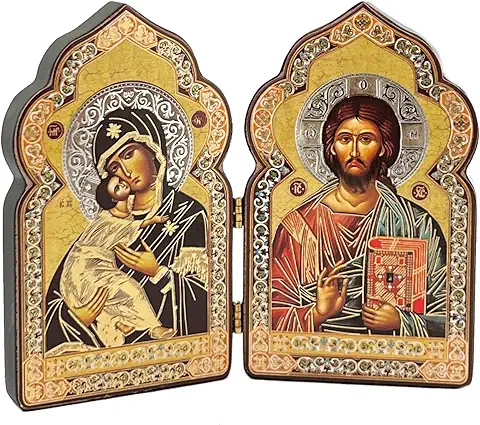
The family moved to Alexandria, Egypt, in 1854. At age thirteen, her uncle arranged a marriage for her with his wife’s brother from Cairo. Resisting with absolute resolve, Mariam spent the night before the wedding in prayer before an icon of the Blessed Virgin Mary, eventually cutting off her long braids and placing them on her wedding clothes to signify her refusal to marry. Her uncle’s reaction was one of fury; she was beaten and relegated to the status of a common domestic servant within the household.
In 1858, attempting to contact her brother Boulos in Nazareth, she sought the assistance of a Muslim servant. On September 8, 1858—the Feast of the Nativity of Mary—the servant attempted to persuade her to convert to Islam as a solution to her problems. Mariam’s refusal was categorical, shouting: "Muslim, no, never! I am a daughter of the Catholic Church, and I hope... to persevere until death in my religion". In a rage, the servant slashed her throat with a scimitar and dumped her body in a dark alley.
Mariam later recounted having a vision of heaven and the brilliance of the Most Holy Trinity before waking up in a grotto, where she was cared for by a "nun dressed in blue" who stitched her wound and nursed her for four weeks. The "nun" prophesied her entire religious path: she would go to France, join a religious order, and eventually die in Bethlehem. Mariam remained convinced her nurse was the Blessed Virgin Mary.
| Clinical Observation | Detail | Medical Implication |
|---|---|---|
| Wound Dimensions | 10 cm (length) x 1 cm (width) | Massive trauma to the cervical region. |
| Tracheal Damage | Missing cartilaginous rings of the tracheal artery | Natural survival considered impossible by attending physicians. |
| Lasting Effects | Permanent hoarseness and raspy voice | Biological evidence of the severity of the initial injury. |
| Scar Manifestation | Visible cross-neck scar for life | A "living relic" of the miraculous intervention. |
The Wayfaring Servant and the Discernment of Vocation
Following her recovery, Mariam left her uncle’s house forever, supporting herself as a domestic servant for various families in Alexandria, Jerusalem, Beirut, and Jaffa. Her life during this period was characterized by a deliberate pursuit of poverty; she frequently changed employers when she felt they were treating her "too well," viewing service as a means of imitating Christ.
In Jerusalem, at the age of fifteen, she made a private vow of perpetual virginity at the Church of the Holy Sepulchre. Her mystical life continued to manifest through unusual trials. In Beirut, she experienced a period of total blindness that lasted forty days, only to have her sight restored as suddenly as it was lost. Shortly thereafter, she survived a severe fall that left her for dead, once again recovering through what appeared to be supernatural intervention.
In 1863, she moved to Marseille, France, where she worked as a cook for a Syrian family. It was here that her formal entrance into religious life began. She initially joined the Sisters of Compassion but was forced to leave due to ill health. In May 1865, she was accepted as a postulant by the Sisters of Saint Joseph of the Apparition. However, her mystical graces—including the first public manifestation of the stigmata on March 29, 1867—disconcerted the community. The sisters, unable to reconcile her extraordinary ecstasies with their active charism, eventually voted against her admission to the novitiate.
Her mystical life continued through extraordinary trials:
Total Blindness: In Beirut, she suffered forty days of total blindness, which ended instantly when she prayed to the Virgin Mary; "something fell from her eyes" and her sight was restored.
The Marseille Fall: While hanging clothes on a terrace in Marseille, she suffered a fall so severe that bones were crushed and doctors gave no hope; she was cured instantly after a vision of the Blessed Virgin.
False Imprisonment: She was once wrongly accused of theft and imprisoned, but maintained profound peace throughout the ordeal.
Guardian St. Joseph: In Marseille, she reported being followed by a man holding a child's hand who said: "I know that you want to enter the convent and I will follow you until you are in the convent." She identified him as St. Joseph.
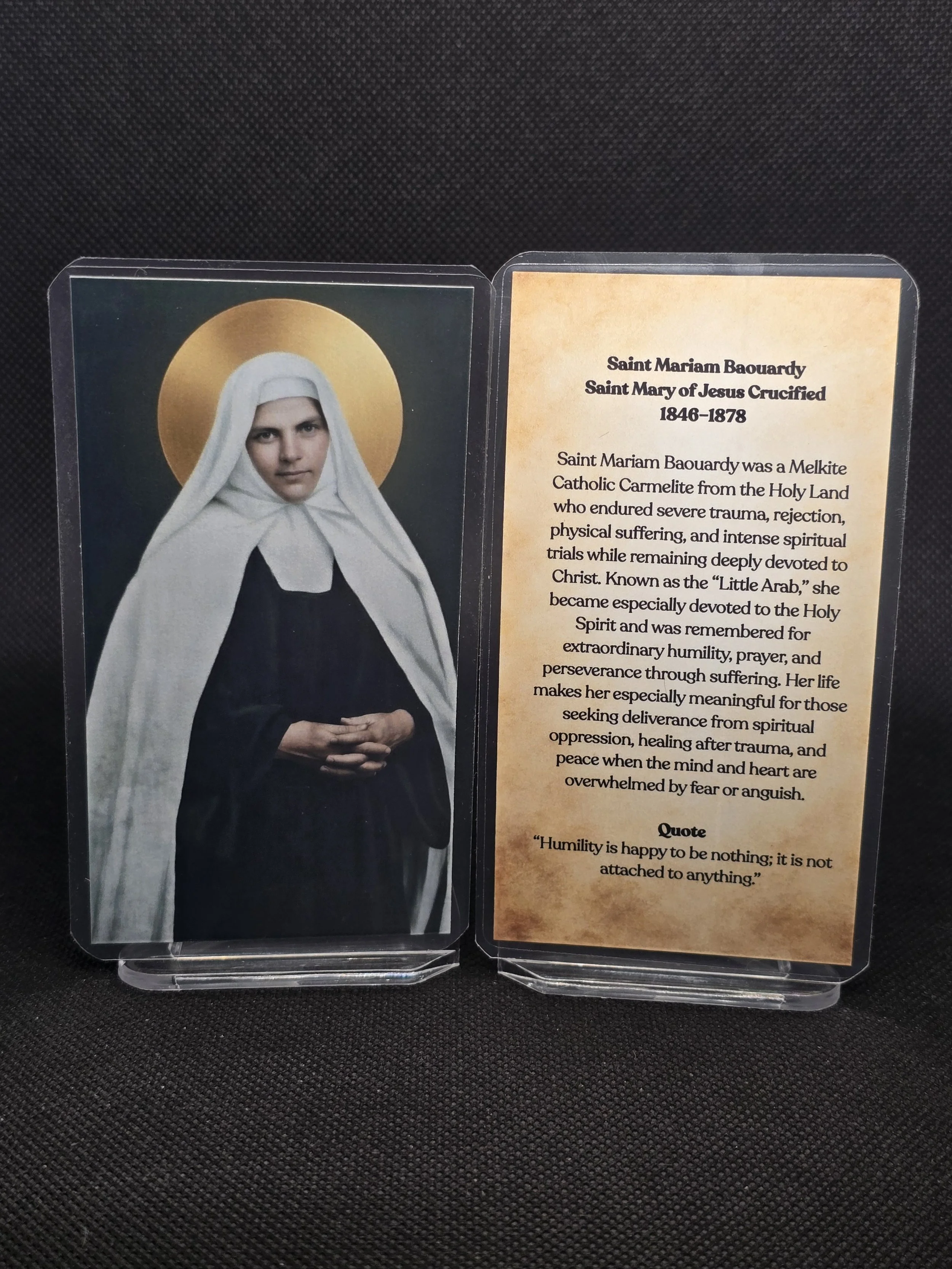
Saint Mariam Baouardy, known in religion as Saint Mary of Jesus Crucified, lived a life that feels almost too intense to be true. Born in 1846 in Abellin, Galilee, into a Melkite Greek Catholic family, she endured violence, abandonment, spiritual trial, mystical ecstasy, and deep union with Christ.
She died in 1878 at only thirty-two years old.
Her feast day is celebrated on August 26 in the Roman calendar and within the Carmelite family. She is venerated across the Catholic Church and remembered especially within the Melkite Greek Catholic tradition from which she came.
Mariam’s childhood was marked by grief. Orphaned at a young age, she was placed in difficult family circumstances. As a teenager, she suffered a violent attack that nearly took her life after refusing to deny her Christian faith. She survived against all expectation.
Her life after that moment was never ordinary.
People pray to Saint Mariam today when spiritual oppression feels suffocating, when trauma lingers in the body, and when emotional anguish will not lift. She understands darkness. She experienced mystical trials, including periods of intense spiritual warfare. Yet she also experienced profound union with Christ and overwhelming divine consolation.
If you are struggling with anxiety, spiritual heaviness, intrusive fear, or past trauma that feels unresolved, Saint Mariam knows that interior battlefield.
Her life teaches that holiness does not erase wounds.
It transforms them.
This prayer card is created as a spiritual heirloom. It is meant to accompany seasons of spiritual struggle and healing, reminding the soul that God’s mercy reaches even the deepest wounds.
Each card is handmade in Austin, TX and created to order. We do not keep stock, because every prayer card is treated as a unique devotional offering. They are printed on museum-quality photo paper, not cardstock. Every card is made slowly, during prayer, with intentional reverence for the saint or holy image and for the person who will receive it. Names are lifted before Christ. Intentions are held carefully. Each piece is handled multiple times in prayerful silence, asking God for mercy and asking the saint to intercede for the soul it is being made for. This is not production work. It is devotional craftsmanship shaped with patience, care, and spiritual responsibility, because every soul and every prayer matters.
The Carmel of Pau and the "Little Nothing" Identity
Mariam’s path led her to the Discalced Carmelite monastery in Pau, Southwest France, on June 14, 1867, accompanied by her former novice mistress, Mother Veronica. She was received as a lay sister, taking the religious name Mary of Jesus Crucified. This choice reflected her desire for manual labor and service, as well as her struggle with literacy, which made the recitation of the Divine Office difficult.
In Pau, her mystical life reached its zenith. She frequently fell into ecstasies during her work in the kitchen or laundry, and witnesses reported seeing her face radiate light. She was observed levitating, often being found at the tops of trees on branches that could not naturally support a human weight. Despite these gifts, she maintained a radical humility, referring to herself as the "Little Nothing" (un rien). This self-understanding was not a form of self-deprecation but a theological recognition of the soul's total dependence on the Creator.
The Mission to Mangalore and Spiritual Warfare
In 1870, Mariam was selected as part of the founding group for a new Carmel in Mangalore, India—the first Carmelite monastery on the subcontinent. The journey was perilous; three of the six sisters died at sea. On November 21, 1871, Mariam made her solemn profession in Mangalore. However, her time in India was marred by severe spiritual trials and misunderstanding.
She underwent a forty-day period of demonic possession, which she accepted as a "victim soul" for the purification of the Church. During this siege, her body was tormented by various spirits, though she remained internally focused on God. This was followed by a four-day "possession" by a good angel, during which she exhibited extraordinary light and wisdom. Despite these signs, the Apostolic Vicar, Bishop Marie-Ephrem Garrelon, came to believe her experiences were the result of psychological instability or diabolical deception, eventually ordering her return to Pau in 1872.
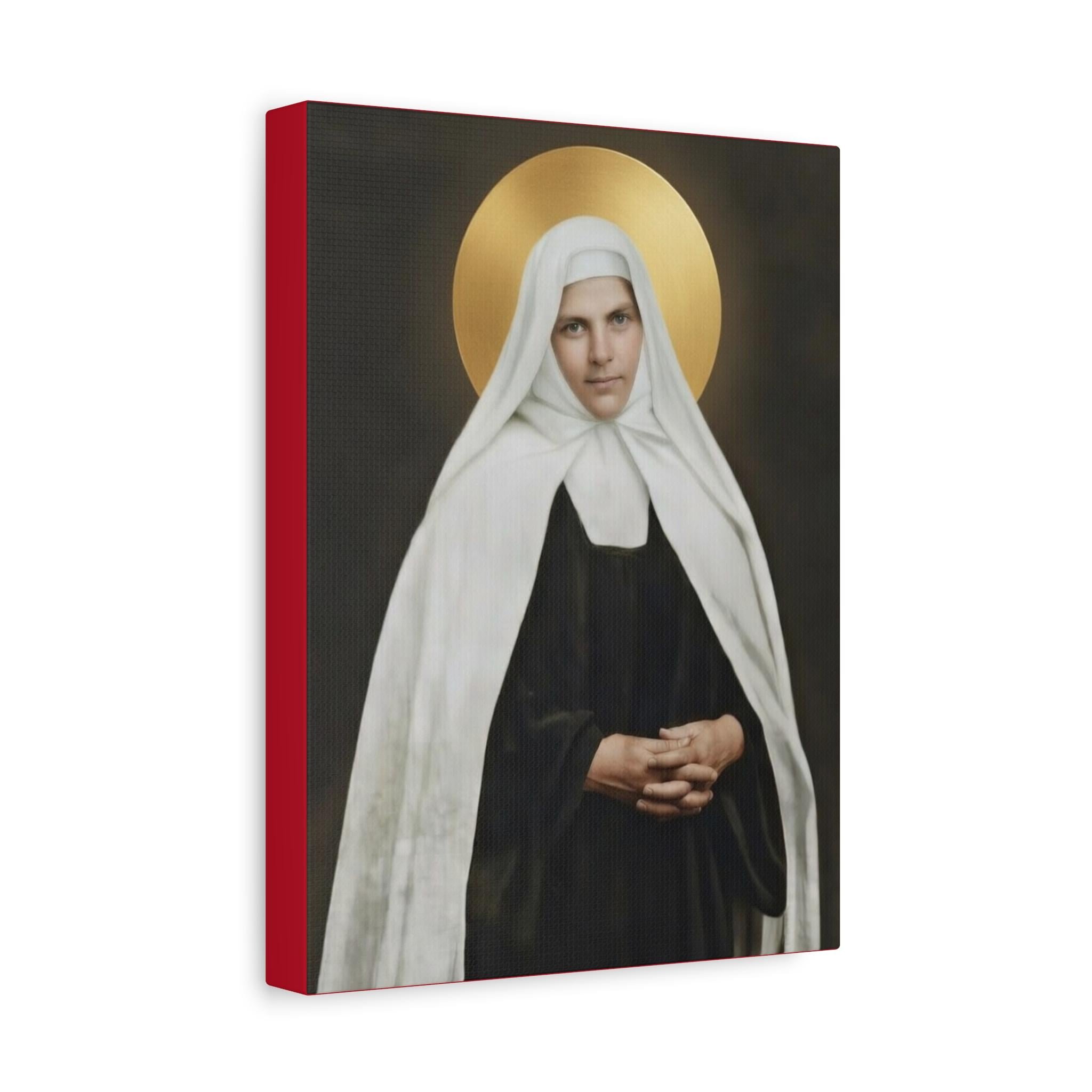
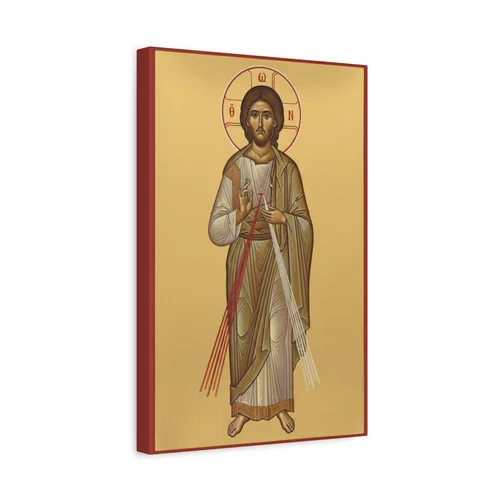
Honor the powerful witness of Saint Mariam Baouardy, a Melkite Greek Catholic, known as Mary of Jesus Crucified and lovingly called “The Little Arab.”
Born in the Holy Land in 1846, she became a Carmelite nun and one of the great mystics of the modern Church. Despite poverty, persecution, and suffering, her life radiated humility, obedience, and deep union with Christ.
She received mystical experiences and bore the stigmata, becoming a living sign of participation in Christ’s Passion.
This traditional sacred image brings the holiness of the Holy Land and the depth of Carmelite spirituality into your home.
Who Was Saint Mariam Baouardy?
Saint Mariam was born in present-day Israel to a Palestinian Christian family. Orphaned at a young age, she endured severe hardships before entering religious life.
Her mystical gifts included:
• Ecstasies
• Visions
• The stigmata
• Profound humility and obedience
She helped found the Carmelite monastery in Bethlehem and died at only 32 years old.
She is venerated especially by:
• Carmelite communities
• Arab Catholics
• Holy Land Christians
• Devotees of mystical spirituality
Canonized in 2015, she stands as a bridge between East and West.
Perfect For
• Carmelite homes
• Holy Land pilgrims
• Arab Christian families
• Catholic mysticism readers
• Confirmation gifts
• RCIA gifts
• Prayer corner decor
• Those devoted to the Passion of Christ
This stretched matte canvas brings a quiet, reverent presence to any room. The softened matte surface reduces glare and reveals delicate tones—perfect for contemplative spaces. The image’s warm halo and muted palette invite slow looking, adding a subtle devotional touch to a bedroom, chapel corner, or library shelf. Lightweight but substantial, the 1.25" profile gives the piece depth on the wall while the wrapped edges and optional colored sides create a finished, gallery-ready appearance. It hangs securely and sits steady against the wall, offering a calm focal point that anchors a serene interior.
Product features
- Matte, non-glare finish on a 1.25" stretched canvas profile
- Printed with UL-certified Greenguard Gold latex inks for vivid, safe color
- Stretched over FSC-certified radiata pine frame from renewable forests
- Soft rubber backing dots and included back-hanging hardware for stable display
- Available in horizontal, vertical, and square orientations with multiple size options
Care instructions
- If the canvas does gather any dust, you may wipe it off gently with a clean, damp cloth.
EU representative: HONSON VENTURES LIMITED, gpsr@honsonventures.com, 3, Gnaftis House flat 102, Limassol, Mesa Geitonia, 4003, CY
Product information: Generic brand, 2 year warranty in EU and Northern Ireland as per Directive 1999/44/EC
Care instructions: If the canvas does gather any dust, you may wipe it off gently with a clean, damp cloth.
The Foundation of Bethlehem and the Tower of David
Upon her return to France, Mariam began to advocate for the establishment of a Carmel in Bethlehem, a project she believed was divinely ordained. Supported by the wealth of a young aristocrat, Berthe Dartigaux, the foundation was approved in 1875. Mariam traveled to Palestine as the only Arabic-speaking member of the community, serving as the intermediary between the nuns and the construction workers.
She personally selected the site on "David’s Hill," identifying it through a vision of pigeons settling on the land. The monastery was uniquely designed in a circular fashion to symbolize the "Tower of David" and the "Ivory Tower" of the Virgin Mary. The community moved into the new monastery on November 21, 1876. During this time, Mariam also played a pivotal role in identifying the historical site of Emmaus Nicopolis through a private revelation.
| Foundation | Year | Role of Mariam | Outcome |
|---|---|---|---|
| Carmel of Pau | 1867 | Postulant/Lay Sister | Entrance into the Carmelite Order. |
| Carmel of Mangalore | 1870 | Co-foundress | First Indian Carmel; Mariam’s solemn profession. |
| Carmel of Bethlehem | 1875 | Architect/Superintendent | First Carmel in Palestine; circular "Tower" design. |
| Carmel of Nazareth | 1910 (Planned 1878) | Visionary/Planner | Foundation completed posthumously according to her vision. |
The Final Sacrifice and Death
In August 1878, while overseeing the ongoing construction in Bethlehem, Mariam suffered a severe fall while carrying water for the workmen. She fractured her left arm, and the wound rapidly became gangrenous. The infection spread to her respiratory system, leading to a agonizing death by suffocation.
Saint Mariam Baouardy died on August 26, 1878, at the age of 32—completing her 33rd year, the same age as Jesus at his crucifixion. Her final words were "My Jesus, mercy". She was buried in the Bethlehem Carmel, where her tomb remains a significant site of pilgrimage for Christians of all rites.
The Compendium of Writings and Spiritual Maxims
Although Mariam was illiterate and never authored a formal treatise, her spiritual legacy is preserved through the meticulous records of her superiors and sisters. Her most significant contribution is her profound devotion to the Holy Spirit, which she believed was neglected even in the seminaries of her time.
The Prayer to the Holy Spirit
Her most famous writing is a short prayer composed during an ecstasy, which remains a staple of contemporary Catholic piety:
"Holy Spirit, inspire me. Love of God, consume me. To the right path lead me. Mary my mother, look down upon me. With Jesus, bless me. From all evil, all illusion, all danger, preserve me".
"The Little Nothing" Philosophy
Her self-identification as the "Little Nothing" is explored through several documented sayings:
"A humble soul is happy being nothing, she is not attached to anything, and she is never tired of nothing. She is glad, happy, always happy, satisfied in everything... Blessed are those who are small!".
"God is hidden in the soul like seed in the apple".
"Where there is charity, there also is God. If you think to do good for your brother, God will think of you".
"Wake up the Universe"
During her ecstasies, she often improvised poems of remarkable lyrical quality. In one such instance, she cried out:
"Everyone is sleeping. And God so full of bounty, so great, so praiseworthy, is forgotten. No one thinks of Him. See, the whole nature praises him, the heavens, the stars, the trees, the grass, all things praise him; and man who knows his kindness, who should praise Him, he sleeps. Let us go, let us go and wake the universe".

The Ledger of Miracles: Lifetime and Posthumous
The life of Saint Mariam Baouardy was saturated with the supernatural. The Catholic Church’s verification process for her canonization required proof of both heroic virtue and specific, scientifically inexplicable miracles.
Miracles During Her Lifetime
Survival of Decapitation: The anatomical impossibility of surviving a 10 cm throat slash that damaged several tracheal rings without medical intervention.
The Stigmata: Regular manifestation of the five wounds of Christ, appearing every Wednesday evening through Friday morning, often accompanied by the "crown of thorns" bleeding around her head.
Levitation: Numerous witnessed accounts of her rising into the air, particularly at the Carmel of Pau and Mangalore.
Knowledge of Hearts: The ability to perceive the interior states and hidden sins of those who approached her.
The Geranium Sign: In 1875, as a sign of the Bethlehem foundation, she planted a dry geranium leaf in a pot, which instantly took root and grew into a vibrant plant.
Posthumous Miracles and Canonization Path
Mariam’s cause was formally opened on May 18, 1927. She was declared Venerable in 1981 and beatified by Pope John Paul II on November 13, 1983.
Beatification Miracle (1983): The instantaneous healing of a young man suffering from a severe circulatory disorder that had been diagnosed as terminal by contemporary medical standards.
Canonization Miracle (2014): On December 6, 2014, the Vatican recognized a final miracle attributed to her intercession, involving a medically inexplicable healing that allowed her cause to proceed to the final stage of sainthood.
Saint Mariam Baouardy was canonized on May 17, 2015, by Pope Francis in Saint Peter’s Square. She is the second Melkite to be formally canonized, and her life is celebrated as a bridge between the East and the West, between Islam and Christianity, and between the human and the divine.
World Directory of First-Class Relics
The following locations house known first-class relics (remains of her body or blood) of Saint Mariam Baouardy.
| Location | Relic Type | Link to Official Site |
|---|---|---|
| Carmel of the Child Jesus, Bethlehem | Body (Tomb) | Latin Patriarchate of Jerusalem |
| St Elias Melkite Catholic Church, Guildford, Australia | Hair | Melkite Catholic Eparchy of Australia |
| St John the Beloved Melkite Catholic Church, Sydney, Australia | Blood | Melkite Catholic Eparchy of Australia |
| St Michael's Cathedral, Sydney, Australia | Bone | Melkite Catholic Eparchy of Australia |
| Pilgrim Center of Hope, San Antonio, Texas, USA | Blood (from stigmata) | Pilgrim Center of Hope |
| St John Cantius Parish, Chicago, Illinois, USA | Bone (Relic Chapel) | St. John Cantius Church |
| Maria Stein Shrine of the Holy Relics, Ohio, USA | Bone/Hair | Maria Stein Shrine |
The Patroness of Peace
Saint Mariam Baouardy, the "Little Arab," remains one of the most compelling mystics of the modern era. Her life—from the orchard of Ibillin to the cloister of Bethlehem—demonstrates a theology of radical abandonment to the Holy Spirit. As the "Patroness of Peace" for the Holy Land, she continues to inspire the Melkite Catholic community and the universal Church to seek the "Little Nothing" within themselves so that God might be everything. Her story is not merely a record of historical anomalies but a living testimony to the transfiguration of suffering through the power of Divine Love.