Orthodox Saints • Optina Hermitage • Russia • 1788 to 1860
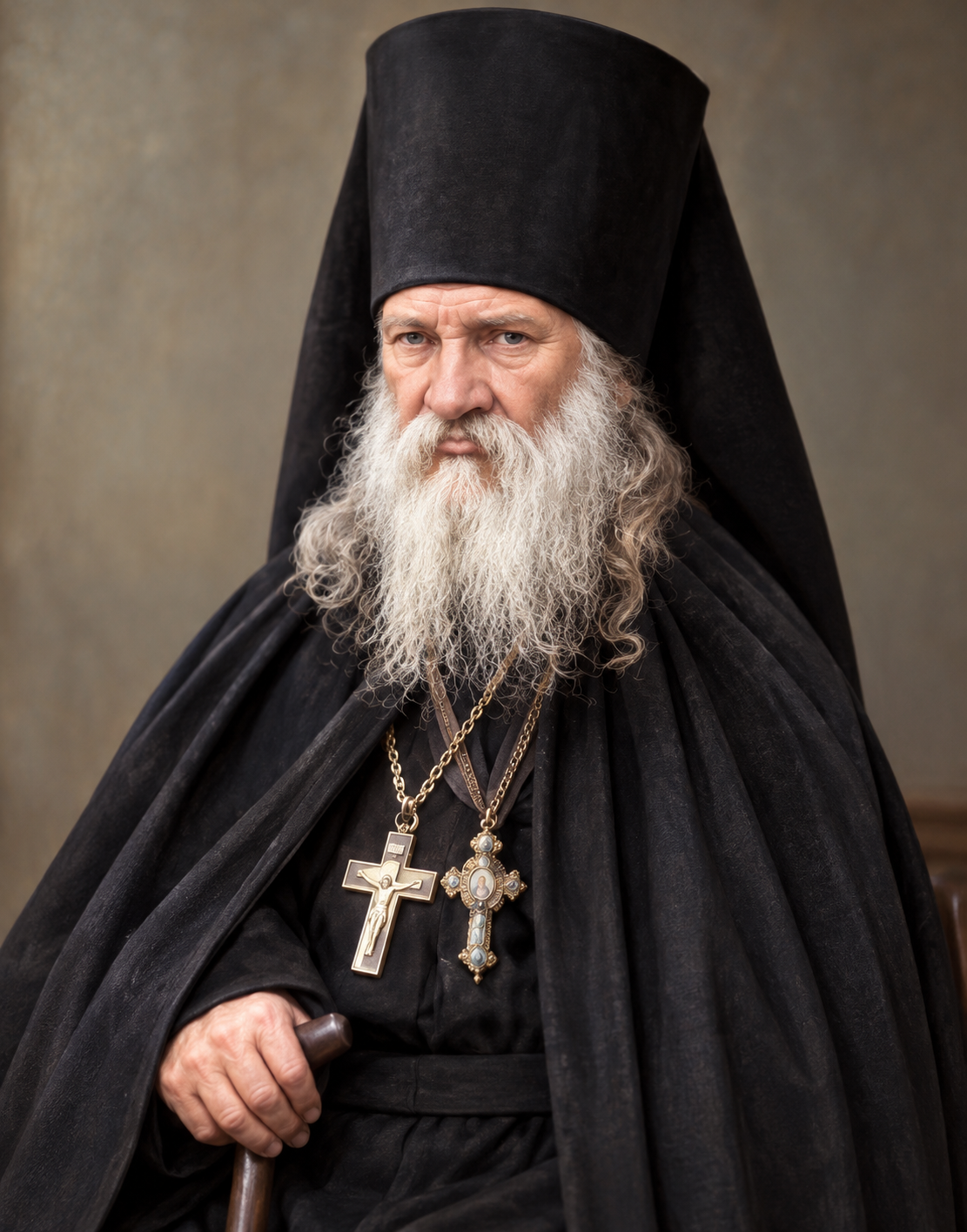
Saint Macarius of Optina and Nikolai Gogol: The Writer Who Went to the Elder in 1850
In 1847 Nikolai Gogol published a book of religious reflections that was attacked by critics across Russia. Three years later, still troubled, he made his way to the Optina Hermitage and met the elder who had read the book more critically than most.
Macarius and Gogol at a Glance
- Macarius
- Born 1788; entered Optina Hermitage in 1834; died September 7, 1860 (Old Style)
- Role
- Elder (starets) of Optina and spiritual guide to monks and laypeople
- Gogol
- Nikolai Gogol, author of Dead Souls and The Government Inspector (1809 to 1852)
- The book
- Selected Passages from Correspondence with Friends (1847)
- The visit
- June 1850, Optina Hermitage
- Letters
- Gogol wrote to Optina on June 20, 1850, and again in 1852, asking for prayers
- Gogol died
- February 21, 1852 (Old Style), in Moscow
An Elder in the Forest Hermitage
Optina Hermitage stands in a forest near the town of Kozelsk, south of Moscow, and its reputation in nineteenth-century Russia rests on a single institution: the elders. An elder, or starets, was a monk of long experience who received anyone who came to him, monks, peasants, noblemen and writers, and gave them advice about faith and life. At Optina the line of elders began with Leo in the 1820s and continued through Macarius, Ambrose, and others into the twentieth century.
Macarius was born in 1788 and entered Optina in 1834, according to the sources I consulted. He was a disciple of Elder Leo, from whom he took on the work of spiritual direction. He was a man of reserve and discipline, with a taste for the writings of the Fathers, and under his guidance Optina became a center for translating patristic texts. The monks and their lay friends rendered earlier Slavonic versions of Greek ascetic writers into a more accessible Russian. The works included those of Isaac the Syrian, Macarius the Great and John of the Ladder.
Much of this publishing work took place with the help of Ivan Kireyevsky, a literary critic and a founder of the Slavophile movement, who came to Optina as a penitent and stayed in its orbit. Kireyevsky is reported to have been Macarius’s spiritual child, and his later work on what he called the integrity of the spirit reflects the elder’s influence. Optina thus became a quiet bridge between the Orthodox monastery and the educated Russian world, which is why a restless writer like Gogol would one day find his way to its gate.
Part II
The Book That Did Not Land
By the 1840s, Nikolai Gogol was already one of the great writers in Russia. Dead Souls and The Government Inspector had made him famous, and the second volume of Dead Souls was meant to show a redemption of the characters in the first. But Gogol had come to see his own writing as a moral and religious task, and he became increasingly anxious, ascetic and withdrawn. He lived mostly abroad, in Italy and Germany.
In 1847 he published Selected Passages from Correspondence with Friends, a collection of letters and essays that mixed religious advice with views on the Russian state, the Church and the landowners. Many readers were shocked. Admirers had expected a satirist, and they got a moralist who addressed them as though from a pulpit. The best-known response was a furious open letter from the critic Vissarion Belinsky, who had championed Gogol’s earlier work. Gogol was deeply wounded. The controversy stayed with him for the remaining years of his life.
The failure pushed him in a particular direction: toward spiritual counsel. He wrote to priests and monks, and traveled to the Holy Land in 1848. By 1850 he was back in Russia, in the circle of friends, among them Ivan Kireyevsky and his family at the Dolbino estate near Optina. It was from Dolbino that he traveled to the monastery.
Part III
What Macarius Said About the Book
Before Gogol ever came to Optina, Macarius had read Selected Passages. According to the history of Optina by Archimandrite Ioann Konchevich, he wrote a critique of the book and placed it inside the copy in the monastery library. The critique is undated in the source I consulted, but its content is striking. Macarius said that the religious views in the book were not clearly defined and mixed light with darkness. His advice, characteristically, was to study the Holy Fathers instead.
It is worth pausing on how unusual this was. Much of educated Russia was attacking the book as arrogant or hypocritical, mostly for reasons that had to do with politics. Macarius did something different. He read it as a spiritual director would read a letter from a troubled person, noticing what was sound, what was confused, and where the writer had mistaken his own opinions for revealed truth. He did not argue about censorship or serfdom. He asked where the person stood before God.
The same history says that Gogol’s own ideas about a writer’s responsibility before God were shaped “not without” conversations with Macarius, though it gives no dates or details of those conversations. That is as much as can be said with confidence.
Part IV
June 1850: Gogol Goes to Optina
Gogol visited Optina in June 1850. The sources agree on the month and on his strongly favorable impression. They differ on some details. One source I read says plainly that he made the trip from Dolbino, Kireyevsky’s estate, and another describes his visit without saying explicitly that he met Macarius himself. Many biographies say that he did, and Macarius was the senior elder at Optina in 1850, so it is a reasonable reading. I treat the meeting as the standard account while noting that the sources I could check do not spell out the conversation.
We know what Gogol thought of the place. Writing to his friend and patron Count Alexander Petrovich Tolstoy, he said Optina was a place he would long remember. He said that he thought even Mount Athos could not be better, that grace seemed to be visibly present, that the monks seemed to converse with heaven, and that the fragrance of the place could be felt miles away. He urged the count to visit, and also recommended two other monasteries, one at Maly Yaroslavets and the abbot of Sarov.
For a man who had been ridiculed for preaching, this was a different experience. At Optina no one asked him to explain his book. The monks, the guests and the elders went about their work, and a visitor was welcomed as one more pilgrim. Gogol, who was habitually anxious in company, seems to have felt at ease there. That, rather than any particular conversation, may be the real record of the visit.
Part V
For the Sake of Christ, Pray for Me
On June 20, 1850, Gogol wrote to the Optina brothers from Dolbino. His letter contains a sentence that became famous in Russian religious writing: for the sake of Christ, pray for me. The letter was addressed to Hieromonk Filaret, an Optina elder, and a scholar who studied it recently says that the addressee was for a long time unknown or mistaken for someone else. It is a small reminder that even a well-documented moment in Russian literature can contain open questions.
In 1852 he wrote again, asking the monks of Optina, among them Filaret and the abbot Moisei, to pray for him. He was in the last year of his life and was in poor health, sleepless, fasting severely and in great distress about the second volume of Dead Souls.
The letters tell us what Gogol wanted from Optina, which was not literary approval. He wanted the prayers of the monks. A writer who had spent decades commanding the attention of readers was now asking, in the plainest terms, to be remembered by men who had no interest in his fame.
Part VI
Gogol’s Death and the Elder’s Legacy
Gogol returned to Moscow and lived in the house of Count Tolstoy. In February 1852 he burned the manuscript of the second volume of Dead Souls, a gesture later seen as the sign of a spiritual crisis. He died on February 21, 1852, in the Old Style calendar, which is March 4 in the modern calendar. He was forty-two. His death produced as many theories as his life, from religious despair to illness, and none of them can be proved.
Macarius outlived him by eight years. He died in Optina on September 7, 1860, in the Old Style calendar, and his memory is observed on September 7, or September 20 in the modern calendar. The Russian Church has since numbered him among its saints. I did not confirm the exact year of his glorification in the sources available to me, so I do not give it here.
The Optina tradition did not end with him. Elder Ambrose, who followed Macarius, became the best known of the elders, and Fyodor Dostoevsky visited him in 1878 after the death of his young son Alexei. Many readers believe that this visit helped shape the figure of Zosima in The Brothers Karamazov. Leo Tolstoy also went to Optina and spoke with Ambrose, and in 1910 he set out for the monastery in the last days of his life but fell ill and died at the small railway station of Astapovo.
The story of Gogol and Macarius is a small one, set against that background. A great writer with a bruised reputation went to a forest monastery and asked for prayers. He met a spiritual director who had read his book with honesty and who did not pretend to be impressed. That plain honesty is why the elders mattered, and why people have kept going to Optina.
Part VII
Timeline
- 1788: Macarius born
- 1834: Macarius enters Optina Hermitage
- 1847: Gogol publishes Selected Passages from Correspondence with Friends
- 1850: Gogol visits Optina in June; writes to the monastery on June 20
- 1852: Gogol writes again to Optina; burns Dead Souls volume two; dies February 21 (Old Style)
- 1860: Macarius dies September 7 (Old Style)
- 1878: Dostoevsky visits Optina and Elder Ambrose
- 1910: Tolstoy sets out for Optina and dies at Astapovo
Counsel That Tells the Truth
Gogol went to Optina after a public failure and met an elder who had read his book honestly. If you are looking for plain, wise guidance, the Saint Macarius of Optina prayer card is a fitting companion.
View the Saint Macarius Prayer Card →Frequently Asked Questions
