Saint Mark Ji Tianxiang: Chinese Physician, Father and Martyr of the Boxer Rebellion, Patron of Those Struggling with Addiction
A Chinese Catholic layman who lived with opium dependence for decades and died for Christ in 1900
At a Glance
- Born
- About 1834 in Zhili, now Hebei, China; exact place and date UNCERTAIN
- Died
- July 7, 1900 in the Roman Martyrology; some sources give July 8 or 9; UNCERTAIN
- Titles
- Martyr, layman, physician, husband and father
- Feast
- July 7 in the Roman Martyrology; July 9 for Augustine Zhao Rong and Companions
- Veneration
- Beatified 1955 (UNCERTAIN in some sources); canonized October 1, 2000 by John Paul II
- Patronage
- Popular patron of people struggling with opioid and drug addiction, and of their families
- Who Was Saint Mark Ji Tianxiang?
- A Physician in Northern China
- Illness, Opium and Thirty Years Without Communion
- A Layman in the Village Church
- The Boxer Rebellion and the Weight of a Weak Man
- Death in July 1900
- What Later Accounts Add
- Historical Questions and Sources
- Devotion Among People in Recovery
- Why Mark Matters to Eastern Christians
- Frequently Asked Questions
Who Was Saint Mark Ji Tianxiang?
Saint Mark Ji Tianxiang was a Chinese Catholic layman who lived in the Qing empire in the province then called Zhili, part of modern Hebei. He worked as a traditional Chinese physician, raised a family and belonged to a Catholic community that had been rooted in northern China for generations. He is one of the 120 Martyr Saints of China canonized in the year 2000.
What makes his story unusual is that the Church has never hidden his weakness. The Roman Martyrology records that he was an opium addict who was excluded from the Eucharist for about thirty years, and that when he was brought to judgment he still confessed Christ. The Church honors him as a martyr, not as a man without struggle.
Many details of his life are thinly documented. His birth year of about 1834, the date of his death and the identity of his confessor all rest on later summaries. This article separates what the Church records state clearly from what later devotional writers have added, and it marks the difference with the words UNCERTAIN and TRADITION.
A Physician in Northern China
Accounts place Mark's birth in 1834, traditionally in the village of Yanzhuangtou near Jizhou in Zhili Province. No birth or baptismal record has been published, so the year and village are best treated as the traditional report, and the exact details are UNCERTAIN. He grew up in a Christian household, which means his faith came to him from his family and not from a dramatic adult conversion.
He became a practitioner of traditional Chinese medicine. The account used by Paul Hattaway in China's Book of Martyrs, which draws on a Chinese bishops' publication about the newly canonized martyrs, says he treated rich and poor alike and gave free care to those who could not pay. Nothing reliable survives about his training, his teachers or his income.
Mark was married and a father. His son Peter Yu Guangren, his daughters in law and several grandchildren are named in the martyr accounts, along with other relatives. The number of relatives killed with him differs between sources, so the exact family list is UNCERTAIN. What is clear is that he lived inside a household and village where the Catholic faith was shared by many.
Illness, Opium and Thirty Years Without Communion
Mark's central trial began with illness. According to Hattaway, he suffered from a severe stomach complaint at about the age of forty, which would be around the 1870s, and he began to take opium for relief. In nineteenth century China opium was widely used as medicine and was also deeply tied to addiction, so his path was common for his time. The diagnosis and the amounts he used are not known.
He became dependent and could not stop. The Roman Martyrology states that for thirty years he was deprived of the Eucharistic banquet because of his opium use. Later Catholic writers explain that his confessor judged his repeated falls to mean he lacked a firm purpose of amendment, and so would not absolve him. The words of those confessions are not recorded, so that explanation is a later account.
Mark did not walk away. Devotional biographies say he continued to pray and to come to church, though how often he attended is UNCERTAIN. Today people understand addiction as a medical and spiritual struggle in which relapse does not prove insincerity. The Church does not retell his story to excuse sin but to show that grace can work in a person who keeps returning to Christ, even without relief.
A Layman in the Village Church
Mark never held church office. He was not a priest, catechist by appointment or founder of any institution that can be proven. Some popular biographies call him a village leader, but whether he held any formal position is UNCERTAIN. His recorded work is the daily labor of a physician and the care of his family.
That ordinary life is part of why he matters. He shows that Chinese Christianity in the nineteenth century was not only a foreign mission run by European priests. Mark was Chinese, trained in a Chinese medical tradition and part of a Catholic village that had its own history, customs and families who passed on the faith.
No letters, diaries or medical writings by Mark are known to survive. No hymn or prayer attributed to him has been authenticated. His witness comes to us through the Roman Martyrology, the canonization records and a small number of Chinese Catholic compilations, which is why careful readers are right to treat any long quoted speeches with caution.
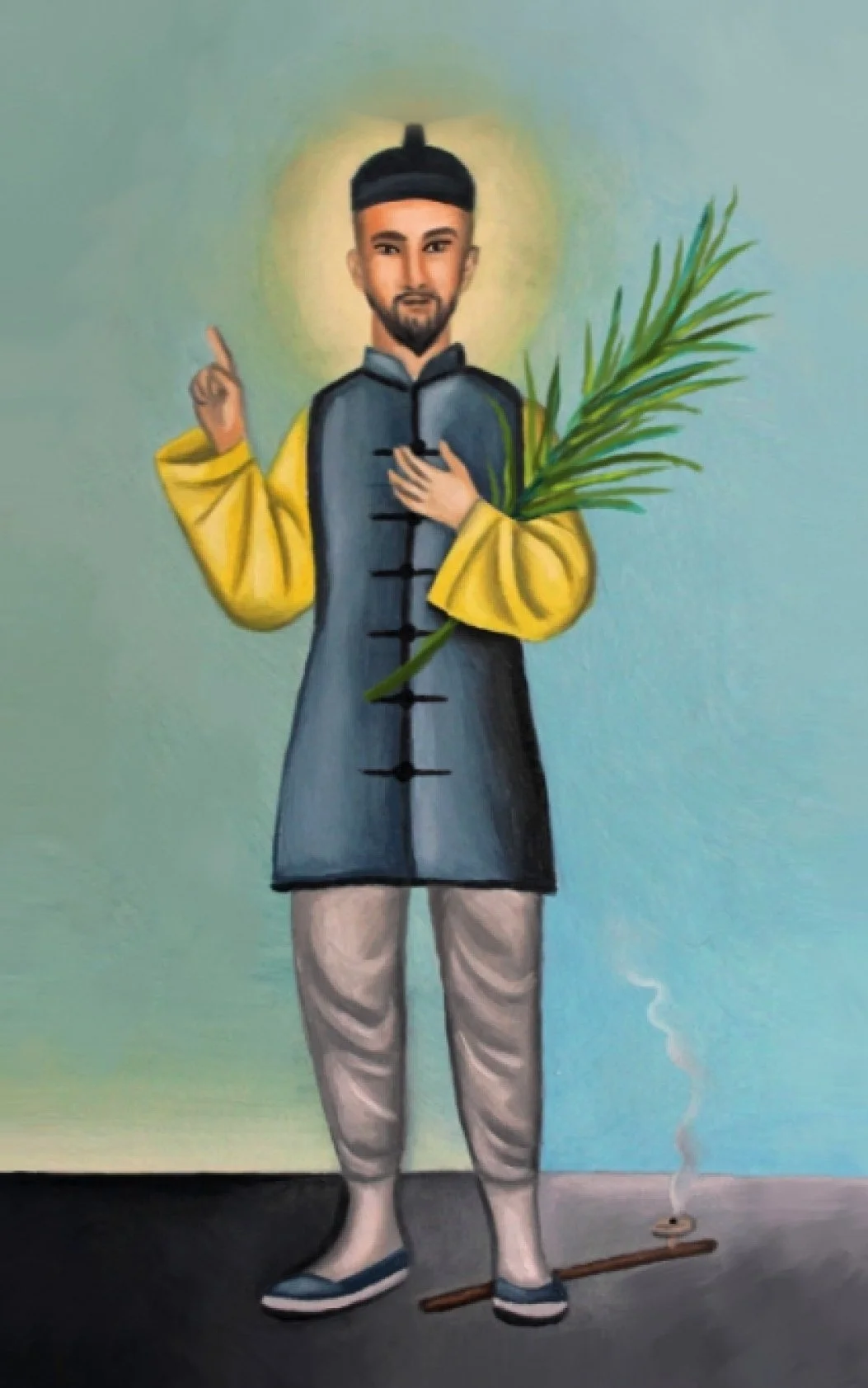
The Boxer Rebellion and the Weight of a Weak Man
The Boxer movement arose in northern China in the late 1890s amid famine, flood, social unrest and resentment of foreign influence. Missionaries and Chinese Christians were seen by many as allied with foreign powers. By 1900 the violence reached Zhili, and thousands of Chinese Catholics and Protestants were killed, often because neighbors named them as Christians.
Mark faced two burdens at once. One was the lifelong struggle with opium and the shame of being kept from Communion. The other was the sudden threat of death for belonging to a faith he had never been allowed to receive fully. Whether he regained access to the sacraments shortly before his death is disputed in later summaries and cannot be settled from the sources found, so it is UNCERTAIN.
John Paul II was careful about this history in 2000. In his address after the canonization he said that honoring the martyrs was not an approval of the political actions of foreign governments in China. The Church was recognizing the fidelity of men, women and children who refused to renounce Christ, not defending any empire or its policies.
Death in July 1900
The Roman Martyrology commemorates Mark on July 7 and says that when he was summoned to judgment he confessed Christ. Hattaway's account says local authorities sought him out, that he hid in a friend's house and was betrayed, and that he was taken with his family. That account gives the date July 8, which conflicts with the Martyrology, so the exact day is UNCERTAIN.
The accounts describe the killing of Mark and many of his relatives, including children. The youngest named child is a three year old grandson, Yu Zhao. Later biographies say Mark died by beheading near Jizhou. The place name and the method are common in the later literature, but they are not fully traced to a primary record, so readers should treat them as the traditional report.
No authenticated relics or tomb are documented in the sources reviewed, and no shrine with a verified body is known. His beatification in 1955 under Pius XII is the date given in most accounts, though a few sources differ and that point is UNCERTAIN. His canonization on October 1, 2000, in Saint Peter's Square among Augustine Zhao Rong and 119 companions is firmly recorded.
What Later Accounts Add
TRADITION: Several modern retellings say that Mark asked to be killed last so that he could encourage his family as each one was taken. The detail fits the character of a father who had spent his life caring for others, but the sources that carry it cannot be traced to an eyewitness, so it is a tradition and not a documented fact.
TRADITION: A well known retelling says that a frightened grandson asked where they were being taken, and that Mark answered that they were going home, meaning heaven. The exchange is popular in Catholic writing today, but the exact words are UNCERTAIN, and they should not be quoted as his authenticated speech.
TRADITION: Some accounts also say he prayed the Litany of the Blessed Virgin as he went to his death. No transcript exists. No specific posthumous miracle through his intercession has been documented in the sources reviewed, and the Church canonized him as a martyr, not on the strength of any healing story.
Historical Questions and Sources
The strongest source is the Roman Martyrology, which names his opium use and his exclusion from Communion, and confesses his death for Christ. The canonization documents of October 1, 2000 confirm his place among the 120 martyrs. These are official Church records and they carry the main claims of this article.
Detailed family, date and place information comes largely from a Chinese bishops' publication on the newly canonized martyrs, reproduced in Paul Hattaway's compilation, and from later Catholic journalism and recovery ministries. The original Chinese volume was not examined for this article. Historians of China also supply useful background on opium and its medical treatment from 1830 to 1910, though that research does not describe Mark himself.
Open questions remain. The death date, the beatification date in some summaries, the family list, the identity of his confessor and his sacramental status at death all deserve checking against the original Chinese records. A careful biography keeps these as open questions and avoids inventing the conversations that no document preserves.
Devotion Among People in Recovery
Mark's memorial is kept on July 7 in the Roman Martyrology. The Latin Church celebrates the memorial of Augustine Zhao Rong and Companions on July 9. There is no major shrine tied to a verified tomb, so devotion to him is mostly personal, found in parishes, families and recovery groups.
In recent years Catholic recovery ministries in the United States and elsewhere have asked for his prayers on behalf of people struggling with opioids and other addictions. This role as a patron of those in recovery is a popular devotion. No papal decree has declared him the official patron of addiction, and the title should be described as a devotional custom.
People who turn to him often ask for perseverance on bad days, for families worn down by relapse and for pastors to meet addicted people with patience. His life does not promise a quick cure. It shows a man who kept coming to the Lord for decades with an unfinished struggle, and who at the end did not deny him.
Lord Jesus Christ, You did not turn away Your servant Mark in his weakness, and You gave him courage to confess You at the end. Through his prayers, strengthen all who struggle with addiction, comfort their families, and teach us never to stop returning to You. Saint Mark Ji Tianxiang, pray for us. Amen.
This is a short original prayer written for this article. It is not an official liturgical text. The Latin Church celebrates the memorial of Augustine Zhao Rong and Companions on July 9, and the official collect can be found through the United States Conference of Catholic Bishops.
Why Mark Matters to Eastern Christians
Mark was a Latin Catholic layman in a mission field served by the Latin Church. No source we found connects him to an Eastern Catholic Church, and he is not recognized in the Orthodox calendar, so there is no Byzantine feast, troparion or kontakion for him. The Church does not claim an Eastern link here, and neither should this article.
Even so, Eastern readers may recognize themes from their own tradition: repentance that is never finished, the weight of the passions, and the courage of martyrs who confess Christ under threat of death. These are points of comparison, not historical claims, and Mark did not practice the Jesus Prayer or know hesychasm.
Eastern Catholics are in communion with the Church that canonized him and may honor him as a saint of the whole Church. For Orthodox readers, his story is a witness to Christians in China during the Boxer persecution. It is a respectful example of how the Catholic Church speaks about weakness and martyrdom together.
Frequently Asked Questions
Ask His Prayers
Many people who face addiction, and families who stand beside them, have asked Saint Mark Ji Tianxiang for his prayers. If you would like a prayer card of Saint Mark, remembered as a patron of those struggling with addiction, you can find one below. His story reminds us that God stays near people who keep coming back to Him.
View Prayer Card