Saint Matrona of Moscow: Born Without Eyes, She Saw What No One Else Could
Saint Matrona of Moscow: Born Without Eyes, She Saw What No One Else Could
A peasant girl born blind in a village near the Kulikovo Field, paralyzed by her mid-thirties, who spent seventy years receiving up to forty visitors a day in secret through the worst years of Soviet anti-religious persecution. Today, thousands line up daily at her Moscow shrine.
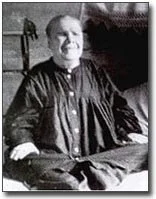
Saint Matrona of Moscow at a Glance
- Also Known As
- Matrona Dmitrievna Nikonova; Matronushka; Blessed Matrona the Blind
- Born
- 1881 (some sources 1885), Sebino, Tula Province, Russia
- Died
- May 2, 1952, Moscow, Soviet Union
- Venerated In
- The Russian Orthodox Church
- Canonized
- Locally, Moscow Diocese, May 2, 1999, under Patriarch Alexy II; for the whole Russian Orthodox Church, October 2004
- Feast Days
- May 2 (repose); March 8 (uncovering of relics); November 22 (name day); with the Synaxis of Moscow Saints and Synaxis of Tula Saints
- Title
- Blessed; Righteous Eldress; Wonderworker
- Known For
- Lifelong blindness paired with spiritual insight; clairvoyance; healing; endurance through Soviet persecution
- Notable Encounter
- Reportedly blessed as a child by Saint John of Kronstadt, who is said to have called her his successor
- Relics
- Pokrovsky Stavropegic Convent, Taganka district, Moscow
- I. Born Without Eyes Near the Kulikovo Field
- II. A Child Who Saw What Others Missed
- III. Saint John of Kronstadt and "the Eighth Pillar of Russia"
- IV. Losing the Use of Her Legs
- V. Moving to Moscow as the Persecution Intensified
- VI. A Hidden Ministry: Up to Forty Visitors a Day
- VII. The Second World War and the Willow Branches
- VIII. The Stalin Legend: What Can and Cannot Be Confirmed
- IX. Death and Burial, 1952
- X. Uncovering the Relics, 1998
- XI. Canonization, 1999 and 2004
- XII. Miracles Recorded at Her Grave and Shrine
- XIII. Her Companions: Connections to Other Saints
- XIV. On the Contested Biography of Zinaida Zhdanova
- XV. Her Shrine, With a Link
- XVI. Legacy: The Talisman of Moscow
- Prayer for the Intercession of Saint Matrona of Moscow
- Frequently Asked Questions
Born Without Eyes Near the Kulikovo Field
Matrona Dmitrievna Nikonova was born into a poor peasant family in the village of Sebino, in the Epifan district of Tula Province, roughly twenty kilometers from the historic Kulikovo Field. Most sources place her birth in 1881, though some give 1885, and readers researching her life should know this small discrepancy exists in the record rather than treat either date as beyond question. Her parents, Dmitri and Natalia, already had three other children, and by their own account they were poor enough, and daunted enough by the prospect of raising a child born entirely without eyes, that they briefly considered giving the infant up to a nearby orphanage run by the Golitsyn family.
According to the tradition surrounding her earliest days, Natalia had a dream in which she saw a small white bird, blind, that came to rest on her chest, and she took this as a sign not to give up her daughter after all. The family kept Matrona, and she was raised alongside her siblings in the ordinary poverty of a late-nineteenth-century Russian peasant household, marked from the very beginning by the physical condition that would define, and in the eyes of the faithful, paradoxically illuminate, the whole of her long life.
Part II
A Child Who Saw What Others Missed
Despite her blindness, or according to devotional tradition because of the compensating spiritual gift it came bundled with, Matrona was drawn to the family's icons from early childhood, reportedly taking them down to hold and examine with her hands even though she could not see them. By around age eight, those close to her began describing a striking pattern: the child seemed able to perceive things ordinary sight could not, including, according to accounts recorded well after the fact, people's hidden sins, their unspoken thoughts, and events yet to come.
Word of this reputation spread through Sebino and the surrounding villages, and the Nikonov household began to receive a steady stream of visitors, the sick and the troubled, hoping the blind child could help them. People traveled from increasingly distant villages, first on foot and then, as her reputation grew, from other districts and provinces entirely, arriving on foot, by cart, and in wagons, asking for her prayers.
Part III
Saint John of Kronstadt and "the Eighth Pillar of Russia"
Among the most striking episodes recorded from Matrona's youth is her encounter with Father John of Kronstadt, already renowned throughout Russia in his own lifetime as a wonderworking priest and later himself canonized a saint. During a service at Saint Andrew's Cathedral, tradition holds that Father John recognized something in the young Matrona that set her apart even among the crowd gathered around him, and is said to have called her his successor and the eighth pillar of Russia, a title of considerable spiritual weight for a living saint of Father John's stature to bestow on an unknown blind peasant girl. As with several other episodes from Matrona's earlier life, this account rests on devotional tradition passed down through those who knew her rather than on independent contemporary documentation, and this article presents it accordingly.
Part IV
Losing the Use of Her Legs
At some point in her mid-thirties, the precise circumstances not fully documented in the surviving accounts, Matrona lost the use of her legs entirely, becoming permanently unable to walk. From this point forward, already blind from birth, she lived the remainder of her seventy-one years confined largely to a bed or a small space where she sat, never again able to move independently, a second profound physical limitation layered onto the first that she had carried since infancy.
Part V
Moving to Moscow as the Persecution Intensified
Around 1925, with help from friends and relatives already established in the city, Matrona relocated to Moscow, arriving in the Soviet capital at a moment when the Communist regime's campaign against organized religion was accelerating sharply, with churches being closed, clergy arrested, and religious practice driven increasingly underground. Matrona lacked the official residency permit Soviet law required for living in Moscow, and the crowds that gathered wherever she stayed drew unwanted attention from neighbors and, at times, the authorities. As a result, she was forced to move repeatedly from one apartment to another across the following decades, never able to settle permanently in any single home, relying on a network of sympathetic friends and fellow believers willing to shelter her despite the very real risk this posed under a regime openly hostile to exactly the kind of religious devotion she represented.
A Hidden Ministry: Up to Forty Visitors a Day
For roughly three decades in Moscow, Matrona maintained what amounted to a continuous, largely hidden ministry, receiving as many as forty visitors on an ordinary day, people arriving with illnesses, family troubles, spiritual confusion, and practical decisions they felt unable to make alone. She did not preach sermons or position herself as a public teacher in any formal sense; her method, consistently described across the accounts of those who knew her, was personal, direct, and practical: she listened, she prayed, and she offered guidance, frequently displaying what witnesses described as an uncanny, specific knowledge of details about a visitor's life she had no ordinary way of knowing.
Part VII
The Second World War and the Willow Branches
During the Second World War, as German forces advanced deep into Soviet territory, Matrona is remembered as having asked everyone who visited her to bring willow branches, which she would break into uniform lengths, strip of bark, and pray over for extended periods, a practice her visitors did not fully understand at the time but that reportedly left her hands covered in sores from the repeated labor. She told those who asked that the Germans would not enter the city of Tula, a prediction that held. Throughout the war, families desperate for news of missing loved ones came to her repeatedly, and she is remembered as answering some plainly, telling them to wait because the person was alive, and telling others, just as plainly, that they should arrange a funeral service and commemoration, because the person had died.
Part VIII
The Stalin Legend: What Can and Cannot Be Confirmed
No account of Matrona's life would be complete, or honest, without addressing directly the most famous story attached to her name: that in 1941, as German forces approached Moscow and Stalin reportedly considered fleeing the capital, he secretly visited Matrona, who advised him to remain in the city and predicted Soviet victory, counsel some versions of the story credit with contributing to his decision to reopen churches during the war. This story circulates extremely widely today, appearing in books, sermons, and even, controversially, in some modern icons depicting Matrona alongside a kneeling or humbled figure identified as Stalin.
Fact-checking investigations into this specific claim have consistently found no primary historical documentation confirming any such meeting actually took place, and the episode should be understood as a popular legend that developed and spread after her death rather than as an established historical fact. This article presents it as exactly that: a widely told story, worth knowing because of how deeply it has shaped Matrona's modern public image, but not a verified event.
Some Orthodox commentators have themselves objected to the Stalin legend and to the iconography it has produced, on the grounds that it risks distorting the historical record and blending sincere devotion with unverified political folklore. This article shares that concern for accuracy. Readers encountering the Stalin story elsewhere should understand it as unconfirmed popular tradition, not documented history.
Part IX
Death and Burial, 1952
According to tradition preserved by those close to her, Matrona was made aware of the approaching time of her own death three days in advance and used that time to put her affairs in order. She died on May 2, 1952, in Moscow, at around seventy or seventy-one years of age depending on which birth year is accepted, and was buried at Danilovskoye Cemetery in the city, a resting place chosen, according to tradition, specifically so that she would be able to hear the church services conducted nearby, since the cemetery adjoined an active parish.
Part X
Uncovering the Relics, 1998
Devotion to Matrona did not fade after her death; if anything, it grew steadily across the following decades, even through the remaining years of Soviet religious suppression, as pilgrims continued visiting her grave at Danilovskoye Cemetery to ask her intercession. Following the collapse of the Soviet Union and the broader revival of Church life in Russia during the 1990s, Patriarch Alexy II blessed a formal investigation of her case. On March 8, 1998, during the Week of the Triumph of Orthodoxy, her relics were formally uncovered from the Danilovskoye Cemetery grave. On April 30, 1998, they were solemnly transferred to the Pokrovsky Stavropegic Convent, the Convent of the Intercession, in Moscow's Taganka district, at the specific request of the nuns who had long cared for her original grave, and enshrined there in the Church of the Holy Fathers of the Seven Ecumenical Councils.
Part XI
Canonization, 1999 and 2004
On May 2, 1999, exactly forty-seven years after her death, Matrona was formally glorified as a saint for local veneration within the Moscow Diocese, in a ceremony presided over by Patriarch Alexy II. Five years later, in October 2004, her veneration was extended by decision of the Bishops' Council to the entire Russian Orthodox Church, making her one of the most recently canonized saints to achieve that full, church-wide recognition, and one of a comparatively small number of twentieth-century Russian saints canonized specifically for personal ascetic and charismatic holiness rather than for martyrdom under the Soviet regime, though her life was itself lived entirely under the shadow of that same persecution.
Part XII
Miracles Recorded at Her Grave and Shrine
Beyond the wartime prophecies and the reported healings that marked her own lifetime, a substantial and continuously growing body of miracle testimony has been attributed to Matrona's intercession both at her original cemetery grave between 1952 and 1998, and at her shrine in the Pokrovsky Convent since. The nuns of the convent maintain records of these testimonies as they are reported by pilgrims, a practice explicitly acknowledged and affirmed by the wider hierarchy of the Russian Orthodox Church, including, in recent years, statements from Patriarch Kirill. As with the broader body of devotional literature surrounding Matrona, individual miracle accounts vary considerably in the level of independent documentation available, and this article presents the general, well-attested pattern of ongoing pilgrimage and testimony honestly, without vouching for the specific details of any single unverified account.
Part XIII
Her Companions: Connections to Other Saints
Matrona's life connects, directly and by wider spiritual kinship, to several other figures venerated as saints:
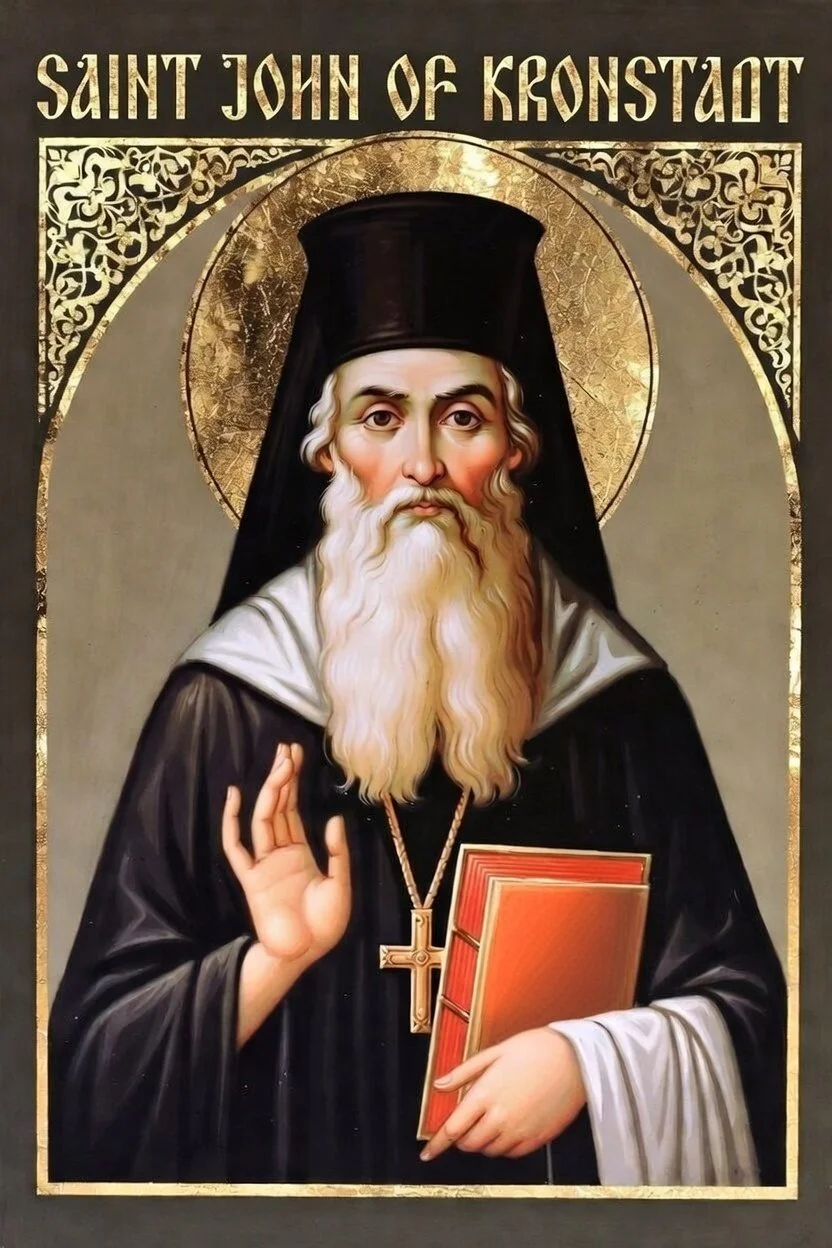
Saint John of Kronstadt
The renowned wonderworking priest who, according to tradition, blessed Matrona as a child and reportedly named her his successor and the eighth pillar of Russia, a spiritual link between one of the last great charismatic pastors of Imperial Russia and one of the most beloved holy figures of the Soviet and post-Soviet era.
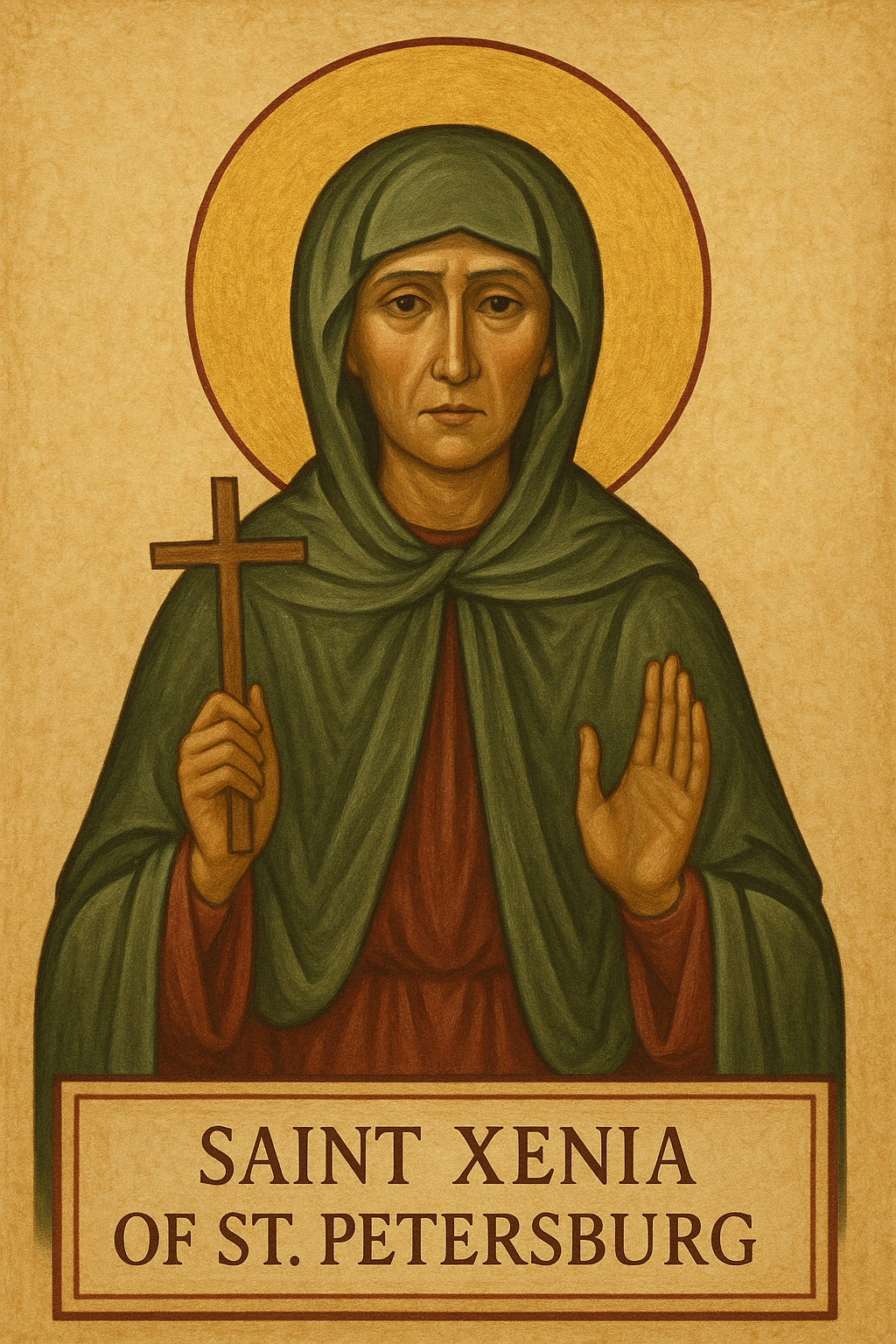
Saint Xenia of Saint Petersburg
An eighteenth-century holy fool whose popular devotion in Saint Petersburg closely parallels Matrona's own devotion in Moscow; commentators have specifically compared the two women's roles as, in effect, the spiritual patronesses of their respective cities, each drawing continuous crowds of pilgrims to a single, specific shrine.
The New Martyrs and Confessors of Russia
The vast company of Russian Orthodox clergy, monastics, and laypeople who were executed or imprisoned under the Soviet regime during the same decades Matrona lived through in hiding; while she was not herself martyred, her entire adult life was shaped by the same anti-religious persecution that produced this larger body of twentieth-century Russian saints, and she is honored within the same broader wave of renewed veneration for Soviet-era Orthodox witness that followed the fall of Communism.
Part XIV
On the Contested Biography of Zinaida Zhdanova
Matrona, illiterate and without any tradition of personal writing, left behind no letters, sermons, or other texts of her own. The primary written source for much of her biography is instead a 1993 memoir, Tales of the Life of Matrona the Blessed, compiled from the recollections of Zinaida Zhdanova, a woman who lived with and cared for Matrona in her final years and who died in her nineties in 2007. This memoir, published by a Moscow monastery, played a significant role in reintroducing Matrona to wide public attention following the end of Soviet religious suppression.
Readers researching Matrona's life should know honestly that this source has itself become a point of some controversy: the Church later withdrew the book from circulation, reportedly because certain elements of Zhdanova's account did not conform to the image of Matrona the Church wished to project, with some critics specifically raising concerns about passages suggesting practices with folk or occult overtones. This article notes the existence of this controversy rather than treating Zhdanova's memoir as an uncontested primary source, while acknowledging it remains the fullest firsthand account of Matrona's later life available.
Part XV
Her Shrine, With a Link
One site stands as the center of Matrona's veneration today:
Pokrovsky Stavropegic Convent, Taganka District, Moscow
Reestablished as an active women's monastery in 1994 under the blessing of Patriarch Alexy II, the convent has held Matrona's relics since 1998 and now receives daily lines of pilgrims that frequently stretch to two or three hours' wait, swelling to several times that on weekends and feast days, making it one of the most visited single religious sites in contemporary Russia. pokrov-monastir.ru
Part XVI
Legacy: The Talisman of Moscow
Matrona of Moscow's legacy rests on an unusual combination of extremity and ordinariness: extreme physical suffering, blind from birth and paralyzed from her thirties onward, paired with an entirely ordinary, unglamorous life spent quietly receiving one troubled visitor after another in borrowed rooms across a city actively hostile to everything she represented. She built no monastery, wrote no theological treatise, and held no ecclesiastical office. What she left instead was seven decades of patient, hidden presence, sustained through the worst years of organized religious persecution in Russian history, and a devotion that has, since her 1998 relics translation, made her shrine one of the busiest pilgrimage destinations in the entire Orthodox world.
She has become, in the words of more than one observer, something like the spiritual talisman of modern Moscow, much as Xenia of Saint Petersburg became for that city two centuries earlier, a comparison this article offers not to diminish either woman's genuine sanctity but to note how consistently Russian popular devotion has gravitated toward exactly this kind of hidden, patient, physically afflicted holiness across very different centuries.
Holy Trinity, Father, Son, and Holy Spirit, to You be glory, honor, and blessing, for having given to Your holy Church Saint Matrona of Moscow, blessed eldress, as a model of patient endurance through suffering and quiet fidelity through decades of persecution.
We ask You humbly: just as You gave her spiritual sight despite blindness from birth, and strength to serve others despite her own great suffering, be pleased to grant us, through her intercession, healing in body and soul, patience through hardship, and the grace we now ask with confidence.
Through Christ our Lord. Amen.
An original English-language devotional prayer composed for use with the Saint Matrona of Moscow prayer card, drawing on the traditional themes of her veneration in the Russian Orthodox Church.
More From Our Store, In Honor of Russia's Modern Saints

FAQ
Frequently Asked Questions About Saint Matrona of Moscow
She Never Once Saw a Human Face, and Thousands Still Line Up to See Her.
Saint Matrona of Moscow was born without eyes, lost the use of her legs before middle age, and spent nearly three decades receiving strangers in borrowed Moscow rooms during a period when the simple act of praying with them could have gotten her arrested. She built nothing, published nothing, and held no title beyond the affectionate one ordinary Russians gave her: Matronushka. What she left instead was seven decades of quiet, dangerous, unbroken presence, and a shrine that now draws more daily pilgrims than most cathedrals in the world will see in a month.
Ask her intercession. Say her prayer. Remember a woman who could not see the people who came to her, and who somehow understood them better than they understood themselves.
Get the Saint Matrona of Moscow Prayer Card →