Saint Mesrob Mashtots: Creator of the Armenian Alphabet, Holy Translator and Teacher of the Armenian Church
The monk and royal secretary who gave the Armenian people their own letters so that they could read the Word of God
At a Glance
- Born
- Hatsekats in Taron, historic Armenia; about 345 to 361, year UNCERTAIN
- Died
- Traditionally February 17, 440; some scholars say about 439
- Titles
- Holy Translator, vardapet (teacher), creator of the Armenian alphabet
- Feast
- With Saint Sahak and the Holy Translators, on movable days in the Armenian calendar; some Western lists give February 17
- Veneration
- Armenian Apostolic and Armenian Catholic; early ecclesial veneration, no formal canonization date
- Patronage
- Not formally assigned; linked with education, literacy, translation and the Armenian language
- Who Was Saint Mesrob Mashtots?
- From Taron to the Royal Court
- Leaving the Court for the Desert
- Letters, Scripture and Schools
- Politics, Rivals and Rival Stories
- The Last Years and Oshakan
- Visions, Crosses and Memory
- Letters, Hymns and Scholars
- Following Mashtots Today
- Mashtots Among the Eastern Churches
- Frequently Asked Questions
Who Was Saint Mesrob Mashtots?
Saint Mesrob Mashtots was an Armenian monk, missionary and scholar of the late fourth and early fifth centuries. He is best remembered for creating the Armenian alphabet, a gift that changed how his people prayed, learned and remembered. His name is also spelled Mesrop, Mesrob and Mashdots. His life shows how one person's patient work can shape the memory of a whole nation for many centuries.
Our best early source is the Life of Mashtots by Koriun, a disciple who knew him. Later writers such as Lazar of Parpi and Movses Khorenatsi add details, and some of those details are legend. Modern scholars use all three and compare them with care.
He did not work alone. His closest partner was Catholicos Sahak, and the work was supported by royal patrons and many students. This article distinguishes what the sources support from what is tradition, and marks uncertain points as UNCERTAIN.
From Taron to the Royal Court
Mashtots was born in the village of Hatsekats in Taron, a highland district of historic Armenia, near modern Mus in Turkey. The year is UNCERTAIN. Different references suggest anywhere between about 345 and 361, and no birth record survives.
Reference works name his father as Vardan, a man of modest standing, and say that he studied Greek letters. Little else is known about his mother or any brothers and sisters. Koriun tells us only the outline of his youth, and the details of his childhood remain unknown.
As a young man he served in the royal chancellery, where he gained skill in writing, law and administration. Koriun also hints at some military training. This career put him in daily contact with Greek, Persian and Syriac letters, and with the fact that Armenian had no script of its own.
Leaving the Court for the Desert
Mashtots was not a convert from paganism. He was already Christian when he left court service and chose a life of prayer and poverty. Koriun says he gave up worldly honor to live as an ascetic among monks, and he later became a missionary.
A turning point came when he preached in the district of Goghtn, in the region of Nakhchivan, where many people had not yet fully embraced the faith. Koriun reports success, but he also shows how hard it was to teach people from Scriptures that they could not read in their own language.
That frustration led him to Catholicos Sahak, also called Isaac the Great. With the blessing of Sahak and the support of King Vramshapuh, he set out to find or build a script for Armenian. The task became the work of his life.
Letters, Scripture and Schools
The alphabet is traditionally dated to about 405, and modern scholars allow a range from about 404 to 406. Koriun says Mashtots first tried an earlier set of letters linked to a bishop named Daniel, found that it did not suit Armenian speech, and then traveled to centers of learning such as Edessa and Samosata.
The finished script had thirty-six letters, and two more were added in the Middle Ages. Koriun names a Greek calligrapher, Rufinus, as a helper in shaping the letters. UNCERTAIN: scholars still debate the exact steps and the exact share of each helper.
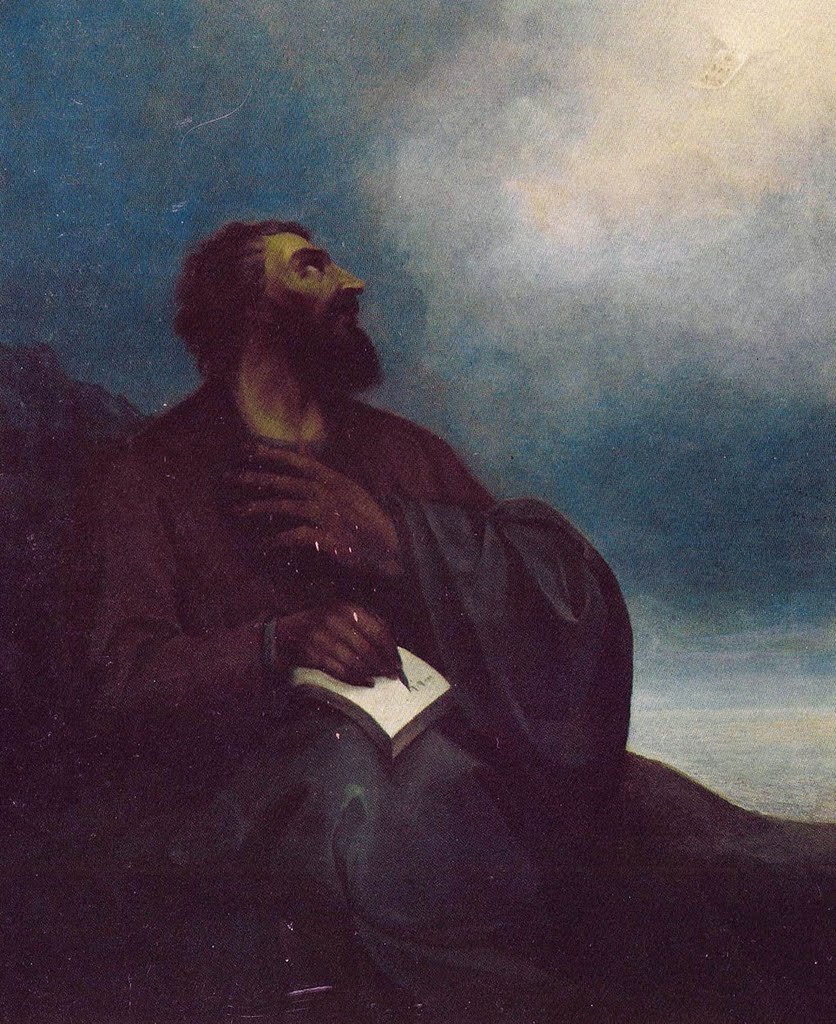
With the alphabet came translation and teaching. Mashtots and Sahak led a circle of students who translated the Bible and other Christian works, first drawing on Syriac texts and later revising from Greek. Koriun says the first verse written was from Proverbs, a fitting start to a school of wisdom. Mashtots also founded schools in many regions. These students carried the new letters into churches and monasteries, and within a generation Armenian books were being copied and read in many places.
Politics, Rivals and Rival Stories
Mashtots worked in a divided country. In 387 Armenia was split between Rome and Persia, and in 428 the Persian part lost its king. A written language let the Church keep its teaching and memory alive even when political unity was gone.
His mission was not always welcome. Koriun speaks of his opposition to pagan worship and to a group he calls Borborites. Readers should remember that this is the language of a disciple writing in praise, and that independent evidence about those groups is thin. He suffered hardship and travel but he was not a martyr.
There is also a quiet scholarly argument over who deserves credit for the alphabet. Koriun puts Mashtots at the center. Lazar of Parpi gives more weight to Sahak and to the earlier letters of Daniel. Later stories add visions. These differences show that each author wrote for his own purpose.
The Last Years and Oshakan
Mashtots died after a long life of teaching and travel. The traditional date is February 17, 440, which appears in some Western reference lists. A modern encyclopedia article suggests about 439. UNCERTAIN: the exact year should not be treated as settled.
He was buried at Oshakan, in Armenia. Koriun records the burial and the building of a chapel over his tomb. A church of Saint Mesrop stands at Oshakan today and is a place of pilgrimage, where the Armenian Church holds services in his honor.
No formal canonization date is known. His holiness was recognized in the old Armenian way, through the memory and prayer of the Church, and Koriun already writes of him with the language of sanctity. It would be wrong to give him a modern style canonization date.
Visions, Crosses and Memory
TRADITION: Movses Khorenatsi tells that Mashtots saw the letters in a vision, with a hand writing them on stone. This beautiful story is not found in the same form in Koriun, and the date and authorship of Movses are themselves debated, so it cannot be treated as history.
TRADITION: Koriun describes a sign of a cross seen over the place where Mashtots died, as a witness to his holiness. It is an early report of devotion, and it does not come with outside confirmation. We share it as a story the Church has loved.
Armenians also remember the saint every year with the Holy Translators. No catalogue of documented healings at his tomb could be verified, so none are listed here. His miracle, the Church would say, is the written word that still carries the faith.
Letters, Hymns and Scholars
Mashtots left no long surviving book under his own name. Reference works mention homilies and letters, but none can be identified with certainty. His real monument is the alphabet and the classical Armenian literature that grew from it. That absence of a personal book only makes the legacy clearer, because the whole shelf of early Armenian writing stands as his work.
Armenian tradition attributes some penitential hymns, such as Ankanim araji Qo, to him. UNCERTAIN: the attribution is old, but there is no proof that he composed every hymn that carries his name. The hymn is best treated as a treasure of the Church linked with his memory.
Modern scholarship includes Koriun's Life in several English translations, studies by Pifer and Maksoudian, and work on how the script was shaped. Armenians say that Mashtots also helped with Georgian and Caucasian Albanian scripts, but that claim is disputed and UNCERTAIN.
Following Mashtots Today
The chief place of pilgrimage is the church of Saint Mesrop Mashtots at Oshakan, near the Armenian capital region, built near his tomb. Armenian Church sources describe prayer services and festivals there, including celebrations on the feast of the Holy Translators.
In Armenia the memory of Mashtots is also kept in schools, libraries and the great Matenadaran manuscript collection in Yerevan, which bears his name. Many Armenians in the diaspora keep the Holy Translators feast in October with hymns and school celebrations.
A modern pilgrim need not travel far. A parent can teach a child the first letters of a language, a student can open a book of Scripture in his own tongue, and a reader can pray that words may serve God. These are all small ways of following Saint Mesrob.
Lord Jesus Christ, You are the Word of the Father, and You gave Your Church teachers who made Your Gospel speak in every language. Through the prayers of Saint Mesrob, bless all who read, translate and teach, and help us to receive Your word with open hearts. Amen.
This is a short original prayer written for this article. It is not an official text of any Church.
Mashtots Among the Eastern Churches
Mashtots lived before the later divisions among Christians. The Armenian Apostolic Church, which holds him dear, belongs to the Oriental Orthodox family, not the Eastern Orthodox communion of Constantinople. Armenian Catholic Christians also honor him as part of a shared Armenian heritage.
Saint John Paul II named the alphabet of Mashtots and Sahak as a tool of evangelization in his 2001 letter marking the anniversary of the baptism of Armenia. This is a clear Catholic recognition of his work, even though he has no separate entry in every Western calendar.
For Eastern Orthodox readers his life is a model of mission through translation, like other saints who gave peoples a written tongue. UNCERTAIN: there is no universal feast for him across Byzantine Orthodox churches, so this comparison is a teaching lesson and not a calendar claim.
Frequently Asked Questions
Ask His Prayers
Armenian Christians ask Saint Mesrob Mashtots to pray for students, teachers and translators, and for all who long to read the Word of God in their own language. A prayer card of Saint Mesrob is a gentle reminder of the gift of letters.
View Prayer Card