Saint Movses Khorenatsi: Father of Armenian History, Holy Translator and Hymnographer of the Armenian Church
The scholar remembered as the father of Armenian history, and a long debate about when he lived
At a Glance
- Born
- Traditionally early fifth century in Armenia; birth year and place UNCERTAIN
- Died
- Traditionally later fifth century; date UNCERTAIN
- Titles
- Father of Armenian History, Holy Translator, historian and hymnographer
- Feast
- Feast of the Holy Translators in the Armenian Church, a movable Saturday in October
- Veneration
- Ancient Armenian veneration; no canonization date known
- Patronage
- No formal patronage verified; linked with Armenian historians, writers and scholars
- Who Was Saint Movses Khorenatsi?
- Birth, Teachers and Studies
- A Scholar in the Church Without a Conversion Story
- The History of the Armenians and the Hymns
- When Did He Live? The Great Debate
- Death and the Question of Relics
- What Tradition Says
- Sources and Open Questions
- The Feast of the Holy Translators
- Why He Matters to Eastern Christians
- Frequently Asked Questions
Who Was Saint Movses Khorenatsi?
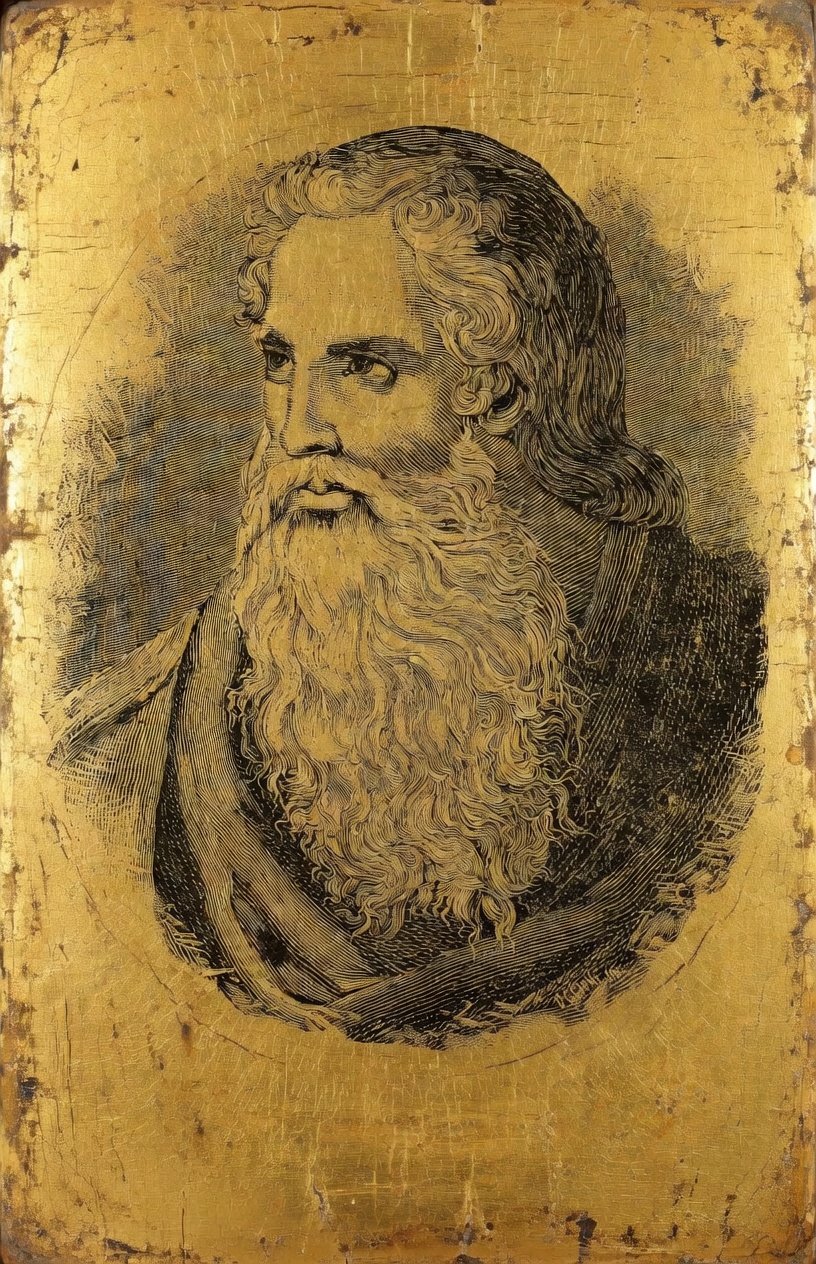
Movses Khorenatsi, known in the West as Moses of Chorene, is the name attached to the oldest and most influential history of the Armenian people. The Armenian Church honors him as a saint among the Holy Translators, the group of teachers and writers who built Armenian Christian literature after the creation of the Armenian alphabet. Armenians call him Patmahayr, the Father of History.
His story is unusual because the work that makes him famous is the main source for his own life. The History of the Armenians describes its author as a pupil of Mesrop Mashtots who studied in Alexandria, Constantinople and even Rome. Modern research has asked whether the text really comes from the fifth century, so the biography is more uncertain than most.
This article follows the tradition the Church honors and also explains the scholarly debate. Where the sources disagree, we mark the claim as UNCERTAIN, and where it rests on later memory we mark it TRADITION. Readers should see both the saint of Armenian devotion and the author in the manuscripts.
Birth, Teachers and Studies
Tradition places Movses in the early fifth century, in Khoren, a place in historic Armenia. No birth record exists, and neither the year nor the village can be confirmed, so both are UNCERTAIN. Nothing reliable survives about his parents, brothers or sisters, or the work of his family.
According to the History, he studied with Saint Mesrop Mashtots, who invented the Armenian alphabet around 405 or 406, and with the Catholicos Sahak Partev. The Armenian Church sees these teachers as the founders of its written theology. Movses is remembered as a member of the next generation that carried their project into history, poetry and teaching.
The same text says the author traveled to centers of Greek learning. It names Alexandria and Constantinople and says that a storm drove him to Rome. These claims appear in Book III of the History. No independent record confirms the journeys, so they should be read as the author's own account and not as proven biography. They do explain the wide Greek influence in the work.
A Scholar in the Church Without a Conversion Story
There is no account of Movses turning from paganism or another religion to Christianity. He appears as a Christian who grew up in a Church that already existed in Armenia, which had accepted the faith about a century earlier. His calling was intellectual and literary, not that of a missionary.
The turning point in the traditional account is his place among the pupils of Mashtots and Sahak. The alphabet allowed Scripture to be translated into Armenian and encouraged new writing. The Armenian Church treats this as the central event of its early cultural history, and Movses belongs to the generation that built on it.
A second turning point is the writing of the History itself. The text says it was begun at the request of a prince of the Bagratuni family. The date and the circumstances of that request depend on the History's own words, so they are UNCERTAIN. The Bagratuni dedication has become one of the main clues used in the dating debate.
The History of the Armenians and the Hymns
The History has three books. The first tells the legendary origins of the Armenians, including Hayk, the ancestor of the nation. The second covers kings and the conversion of Armenia under King Tiridates and Saint Gregory the Illuminator. The third deals with the later Arsacid kings, the end of the Arsacid monarchy in 428 and the death of Mesrop Mashtots in 440.
The work mixes biblical genealogy, Greek historical writing, royal traditions and old oral poetry. It preserves a fragment of an ancient hymn about the birth of the god Vahagn, which scholars treasure as evidence of pre Christian Armenian religion. It is not a modern chronicle, and its genealogies and chronology need to be checked against other evidence.
Armenian tradition also credits Movses with sacred songs called sharakans. A study by Henrik Bakhchinian in 2011 discusses about 300 hymns attributed to him, linked to feasts such as the Nativity and Pentecost and to the Mother of God. Whether he wrote all of them is UNCERTAIN. Other works, such as the Geography, are also linked to his name, but most specialists doubt this. No monastery or school is securely his foundation.
When Did He Live? The Great Debate
The biggest controversy is the date of the History. Armenian tradition says it was written by a fifth century disciple of Mashtots. Many Western scholars, including Nina Garsoian in the Encyclopaedia Iranica, argue that it was composed much later, possibly in the eighth or early ninth century. Robert Hewson also argued for a late date.
Their reasons include terms that seem to belong to the administrative changes of Justinian in 536, use of sources that may be later than the supposed author, and a strong favor toward the Bagratuni family, who rose to power centuries after the fifth century. The author is not clearly attested until much later. Some call the author of the existing text Pseudo Moses of Chorene.
Other Armenian scholars still defend the traditional date. A 2024 study by Gevorg and Arshak Madoyan, published in the Armenian journal Etchmiadzin, argues that the apparent late details come from later copying or additions. The evidence has not produced agreement, so the date is UNCERTAIN. The scholarly label does not accuse a saint of fraud. It is a question about a text.
Death and the Question of Relics
Nothing is securely known about how or when Movses died. Tradition places his death in the later fifth century, but no independent record of a final illness, funeral or burial survives. The date is UNCERTAIN. No story of a martyr's death attaches to him, and he is remembered as a scholar and not as a martyr.
No authenticated relics or tomb have been identified in the sources we reviewed. Any claim about a burial place would need more evidence than we found. A responsible account therefore says plainly that his body, his grave and his last years are unknown.
His sainthood comes from long veneration in the Armenian Church, especially as one of the Holy Translators, and not from a modern decree. We found no canonization date. This is normal for saints honored in ancient times, and we do not invent one.
What Tradition Says
TRADITION: Movses is called the disciple of Mashtots and Sahak, and the Armenian Church affirms this link in its description of the Holy Translators. The details of the relationship are disputed, because the evidence for them is mostly the History itself.
TRADITION: His journeys to Alexandria, Constantinople and Rome, and the storm that took him to Rome, appear in the author's own narrative. They cannot be checked against outside records. They are treasured in Armenian memory because they show a scholar who brought Greek learning home to serve the Church.
TRADITION: He is called the Father of Armenian History and the great hymnographer. We found no specific miracle attributed to his life or his intercession that could be verified, so there is no miracle account. His witness is his work, not a healing or a wonder.
Sources and Open Questions
The main primary text is the History of the Armenians, available in English in Robert Thomson's translation with notes, published by Harvard University Press. The standard Armenian edition was published in Tiflis in 1913. Nina Garsoian's article in the Encyclopaedia Iranica is the best accessible critical summary of his life, sources, and the dating debate.
For his hymns, Henrik Bakhchinian's study in the Haigazian Armenological Review is a key source. For the Church's view, the Armenian Church Eastern Diocese and the Armenian Diocese in Georgia describe the Feast of the Holy Translators. These church sources explain why the saint is honored and say little about his private life.
The open questions are large. When did the author live, did he really study with Mashtots, did he travel, which hymns are his and where is he buried? A careful article honors the saint of the Church tradition and keeps the historical author as an open question, without presenting every story as proven.
The Feast of the Holy Translators
Movses is remembered in the Armenian Church on the Feast of the Holy Translators, which falls on a movable Saturday in October. The feast honors Mesrop Mashtots, Sahak Partev and others such as Yeghishe, David the Invincible, Gregory of Narek and Nerses the Gracious. The Divine Liturgy of the feast remembers them together as teachers of the nation.
The Armenian word for translator, tarkmanich, means more than someone who turns text from one language into another. It includes the teacher, the interpreter of Scripture, the rhetorician and the writer of history. This helps explain why a historian can be honored with the translators. Scholarship is seen as a service to the Church.
Because he has no verified tomb or shrine, there is no major pilgrimage to his grave. Devotion appears in Armenian schools, libraries and parish celebrations of the feast. It is most often a quiet remembrance by students and scholars, who ask his prayers for honest work and love of the past.
Lord Jesus Christ, You gave the Armenian people teachers to turn Your Word into their own language and to keep their memory. Through the prayers of Saint Movses, grant honesty to all who write and teach, love for the history of Your Church, and gratitude for those who handed on the faith. Amen.
This is a short original prayer written for this article. It is not an official liturgical text. We could not verify an English prayer or hymn addressed to him, and readers who want the Armenian hymns of the Holy Translators can consult the Armenian Church sharakan hymn book.
Why He Matters to Eastern Christians
Movses belongs first to the Armenian Apostolic Church, which is part of the Oriental Orthodox family and not of the Eastern Orthodox Churches of the Byzantine tradition. The two groups should not be confused. We include him here because Armenian Christianity is part of the wider Eastern Christian world that this site serves.
For Armenian Catholics, who share the Armenian liturgical and literary heritage, his work belongs to a common inheritance. We did not find a separate Armenian Catholic feast for him, and we found no commemoration in the General Roman Calendar. We therefore do not claim a formal Catholic canonization.
For Byzantine Orthodox and Eastern Catholic readers, his importance is historical and spiritual. His work shows how a Christian nation under pressure from Rome and Persia kept its memory through writing and liturgy. His example teaches that study can be a form of prayer and a service to the Church.
Frequently Asked Questions
Ask His Prayers
Students, teachers and writers have long asked the Holy Translators for help in their work. If you would like a prayer card of Saint Movses Khorenatsi, the Father of Armenian History, you can find one below. His story reminds us that remembering the past faithfully is also a way to serve the Church.
View Prayer Card