Saint Parasceva of Diveyevo: Pasha of Sarov, Fool for Christ and Elder of Diveyevo
A former serf who became a wandering ascetic, a holy fool and a spiritual guide of the Diveyevo sisters, and who died in 1915.
At a Glance
- Born
- Traditionally 1795; a parish record may point to May 5, 1801 (uncertain), Nikolskoye, Tambov region
- Died
- October 5, 1915 (September 22 Old Style), Diveyevo
- Titles
- Blessed Parasceva, Pasha of Sarov, fool for Christ, elder
- Feast
- September 22 (Julian), which falls on October 5 in the civil calendar
- Veneration
- Russian Orthodox Church; glorified in 2004; no Catholic canonization found
- Patronage
- No formal patronage established
- Pasha of Sarov
- A Serf Girl in Tambov
- Kyiv and the Call to the Holy Fool
- Elder of the Diveyevo Sisters
- Violence, Mockery and a Changing Russia
- Death in 1915 and the Recovery of Her Relics
- Prophecies and Stories Told of Her
- Sources and Cautions
- Visiting Diveyevo
- Why She Matters to Eastern Christians
- Frequently Asked Questions
Pasha of Sarov
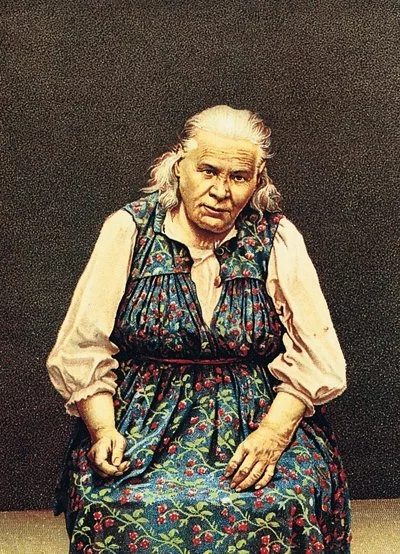
Saint Parasceva of Diveyevo, called Pasha of Sarov, was a Russian Orthodox holy fool and spiritual elder who lived in the Seraphim-Diveyevo Convent in the Nizhny Novgorod region. She died on September 22, 1915, in the Julian calendar, which is October 5 in the civil calendar. Her name appears as Parasceva, Paraskeva, Paraskevi and by the familiar form Pasha.
A common mistake should be cleared up at the start. Her secular name was Irina Ivanovna. She is not the same person as Blessed Pelagia Ivanovna Serebrennikova, an earlier holy fool of Diveyevo who died in 1884. The two women were linked as predecessor and successor, and both are honored among the saints of Diveyevo, but they have separate lives and feast days.
Parasceva left no known writings. What the Church remembers is a life of prayer, hard labor, poverty and plain counsel, together with her visits with the faithful. The main sources are the Orthodox Encyclopedia, the chronicle of Archimandrite Seraphim Chichagov, early biographies and the Diveyevo monastery's own life of the saint.
A Serf Girl in Tambov
She was born Irina, the daughter of serf peasants Ivan and Daria, in the village of Nikolskoye in the Tambov region. Traditional biographies give 1795 as her birth year. A parish record from May 5, 1801, for a girl named Irina born to Ivan Pavlov and Daria is thought by scholars to be probably hers, but the match is not certain. The birth date is therefore UNCERTAIN.
The traditional life says that she was married at about seventeen to a peasant named Feodor, that the marriage was peaceful and that they had no children. The couple later passed into the household of a landowner named Karl Schmidt. Feodor died of tuberculosis, and Irina remained as a widow, working as a cook and household manager. She is said to have refused a second marriage.
Her world was shaped by serfdom, in which owners controlled the work and movement of dependent peasants. Early biographers describe her as quiet, hardworking and prayerful. Such descriptions come from religious biographies and not from independent records, so they show how she was remembered more than how she appeared to her neighbors.
Kyiv and the Call to the Holy Fool
Her story contains no conversion from another faith. She was already Orthodox, and her turning point was a deepening of devotion. According to the traditional life, she was accused of stealing household linen and was beaten during the investigation, though the linen was later found. The details come from hagiography. UNCERTAIN: no police or court record has been identified to confirm the account.
After this, she left the household without permission and went on pilgrimage to Kyiv, was found and returned, and later went again. The biographies present these journeys as her contact with the monastic tradition of the Kyiv Caves. TRADITION: she received a secret monastic tonsure there and took the name Parasceva. The Orthodox Encyclopedia presents this as tradition, and we found no surviving register or certificate.
She then took up wandering and a life of voluntary hardship. Accounts describe her living outdoors, enduring hunger and cold and accepting mockery. A long period of seclusion in the forests near Sarov is said to have lasted about thirty years, in huts or dug shelters. UNCERTAIN: the thirty years is a traditional round figure and not a reconstructed chronology.
Elder of the Diveyevo Sisters
By 1877 she was visiting Diveyevo and meeting Blessed Pelagia Serebrennikova, the convent's holy fool. The Orthodox Encyclopedia places her permanent residence there in 1883, shortly before Pelagia died on January 30, 1884 in the Julian calendar. After that, Parasceva became one of the best known elders of the community.
Sisters and pilgrims came to her for prayer and advice. She knitted stockings, spun wool, tended a garden and kept her cell tidy, and she urged others to take part in the church services. Archimandrite Seraphim Chichagov, who knew her, reported that she connected her handwork with the Jesus Prayer, so that manual labor became a setting for continuous prayer. She also encouraged prayer at night.
She often used dolls and symbolic gestures when she spoke to visitors, and they treated these as messages about the future. She founded no monastery and wrote no treatise. A study by Father Georgy Pavlovich published in the Journal of the Moscow Patriarchate in 2015 used letters from her cell attendant, a novice named Pelagia, kept at the Russian Saint Panteleimon Monastery on Mount Athos. The letters date from 1913 to 1916 and give detail about her last years, though they were written by the attendant and not by Parasceva herself.
Violence, Mockery and a Changing Russia
She lived through the end of serfdom in 1861, the growth of pilgrimage in Russia and the final decades of the monarchy. Her own life included repeated violence. The first beating is placed in the theft investigation. The Orthodox Encyclopedia dates an attack by robbers to 1879 and says that she suffered headaches afterward.
Her vocation carried a social cost. A fool for Christ chooses to accept humiliation and the appearance of eccentricity for the sake of humility. From the outside, this behavior cannot be told apart from illness with certainty, and the surviving sources mostly record the views of admirers and not of doctors. We therefore describe her foolishness as her community understood it, without making a medical claim.
The war that began in 1914 brought increased prayer for Russia, the emperor and the army, and letters from her household show concern for those affected. She died before the revolutions of 1917. Statements that she personally saw the persecution of Diveyevo under the Bolsheviks are mistaken, since those events fell to her successors and the convent after her death.
Death in 1915 and the Recovery of Her Relics
According to the Orthodox Encyclopedia, her health failed seriously on September 14, 1915 in the Julian calendar. She received anointing and Holy Communion and died on September 22, which corresponds to October 5. Her funeral was held on September 25 under Bishop Joachim Levitsky of Nizhny Novgorod and Arzamas, and she was buried beside Blessed Pelagia near the altar of the Trinity Cathedral.
TRADITION: the monastery preserves a report that one of the sisters saw her soul rise to heaven at the moment of her death. This is a devotional account of a private experience and cannot be verified. The grave was desecrated in the Soviet period and was restored after the revival of the community around 1990.
Her relics were uncovered on September 20, 2004, and are now venerated in the Kazan Cathedral of the Seraphim-Diveyevo Monastery. According to the Orthodox Encyclopedia they were moved to new oak reliquaries on December 29, 2018. Her former cell was returned to the monastery in 2004 and serves as a memorial museum with clothing, photographs and examples of her handiwork.
Prophecies and Stories Told of Her
Many stories speak of foresight, spiritual insight and healing. Her meeting with the imperial family is better documented than most. On July 20, 1903 in the Julian calendar, Tsar Nicholas II, Empress Alexandra Feodorovna and other members of the family visited her during the celebrations for the glorification of Saint Seraphim of Sarov. The Orthodox Encyclopedia says the visit appears in the tsar's diary.
TRADITION: during these days she is said to have used a doll to show that the empress would bear a son, and Alexei was born in 1904. The birth is historical, but the connection to her depends on later testimony. TRADITION: she is also credited with warnings of political disaster and of the sufferings of the imperial family. Some of these recollections were recorded after the events, so the date and source of each one must be weighed.
TRADITION: another story says she answered a visitor's unspoken question about moving near Diveyevo with remarks about gathering mushrooms and knitting stockings, which the monastery reads as an invitation to a life of prostrations and the Jesus Prayer. The sources we reviewed do not document a particular healing with a medical record, so we do not call any recovery a verified miracle.
Sources and Cautions
The strongest scholarly source is the entry on Parasceva in volume 54 of the Orthodox Encyclopedia by Priest Georgy Pavlovich, which cites parish records and archives and is careful about uncertainty. His 2015 article on the Athos letters adds firsthand material from her last years.
Early sources include the Chronicle of the Seraphim-Diveyevo Monastery by Archimandrite Seraphim Chichagov, in its second edition of 1903, and a biography titled Pasha of Sarov published in Odessa in 1909 and again in 1912. We did not examine full editions, and the devotional biographies should be read as testimony and not as independent proof.
One disagreement is worth noting. The Orthodox Encyclopedia dates her local glorification to July 31, 2004, while the English page of the monastery gives July 21. Both agree on October 6, 2004 for the extension of veneration to the whole Russian Church. We mark the local date as UNCERTAIN until the original decree is checked.
Visiting Diveyevo
Pilgrims visit the Kazan Cathedral at Diveyevo to venerate her relics and those of Pelagia and Maria, the other blessed women of the convent. A side chapel is dedicated to the three, and the monastery keeps her cell as a museum.
Her own feast is September 22 in the Julian calendar, which currently falls on October 5. The Church also keeps a joint commemoration of the blessed women of Diveyevo on August 26 and a synaxis of the saints of Diveyevo on June 14. A collective kontakion for the three women is published by the monastery, though we found no separate hymn for Parasceva alone, so we do not quote any hymn here.
Readers who cannot travel can learn about her through the chronicle and the monastery's life, pray the Jesus Prayer as she did while at manual work and ask her to pray for those who feel unnoticed or poor.
undefined
undefined
Why She Matters to Eastern Christians
For Russian Orthodox Christians she is a direct and documented saint, formally glorified in 2004. She belongs to a long line of Russian holy fools, elders and ascetics, and she shows how the desert tradition of prayer lived on inside a busy convent.
For Eastern Catholics and Latin Catholics, her life can be studied as part of the shared Byzantine tradition of asceticism, prayer and spiritual fatherhood and motherhood. We found no Catholic canonization, beatification or Eastern Catholic calendar entry for her, so her Orthodox glorification should not be confused with Catholic recognition.
Her story also reminds readers that humility often goes unseen. Her gift was less in public action than in patient prayer, honest labor and a clear word to those who came to her.
Frequently Asked Questions
Ask Her Prayers
Saint Parasceva shows that holiness can live in poverty, patient work and hidden prayer. Ask her to pray for the poor, for the sisters of Diveyevo and for all who feel forgotten.
View Prayer Card