Saint Sahak Partiev: Catholicos of Armenia, Holy Translator and Father of Armenian Christian Literature
The fifth century head of the Armenian Church who worked with Saint Mesrob Mashtots to give the Armenians their Scripture, schools and written language.
At a Glance
- Born
- Mid fourth century, about 338 to 354 (UNCERTAIN)
- Died
- Traditionally 439, at Blur in the district of Bagrewand (UNCERTAIN in exact date)
- Titles
- Saint; Catholicos of All Armenians; Holy Translator; also called Isaac the Great
- Feast
- Armenian Apostolic commemorations of Sahak, and the joint feast of Saints Sahak and Mesrob; dates move each year
- Veneration
- Ancient Armenian veneration; honored by the Armenian Catholic and Armenian Apostolic Churches; no dated canonization found
- Patronage
- No official patronage; linked devotionally to translators, Scripture and learning
- Who Was Saint Sahak Partiev?
- A Family of Catholicoi
- Becoming Catholicos
- The Alphabet, the Bible and the Schools
- Deposition and Doctrinal Controversy
- Death and Burial
- Healings, Visions and Traditions
- Hymns and Writings
- The Holy Translators in Worship
- Saint Sahak and the Eastern Churches
- Frequently Asked Questions
Who Was Saint Sahak Partiev?
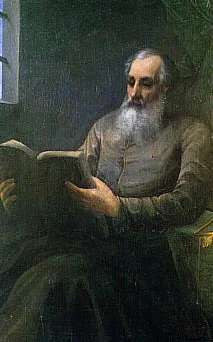
Saint Sahak Partiev, also written Sahak Partev or Sahag Bartev and known in Latin as Isaac the Great, was Catholicos of the Armenian Church in the late fourth and early fifth centuries. He is remembered above all for his partnership with Saint Mesrob Mashtots, which gave Armenian Christians their own alphabet, their own Bible and a lasting literary tradition.
He is a well attested figure. The most valuable early witness is the Life of Mashtots by Koriun, a disciple of Mesrob, and the History of Ghazar Parpetsi adds detail about his troubles, death and burial. At the same time, scholars warn about later additions to these texts, and several points about his birth, his hymns and his relics are uncertain.
This article keeps to what the early writers say, marks TRADITION where a story comes from later memory, and marks UNCERTAIN where scholars disagree. It also tries to be clear about one point that readers often miss: the Armenian Apostolic Church belongs to the Oriental Orthodox family, which is separate from the Eastern Orthodox communion, and his veneration should not be described as the same thing as Byzantine Orthodox recognition.
A Family of Catholicoi
Sahak belonged to one of the leading Christian families of Armenia. His father was Saint Nerses the Great, himself a Catholicos, and the family traced its descent from Saint Gregory the Illuminator, the evangelizer of the Armenian kingdom. An early genealogy in the Passion of Saint Shushanik runs from Gregory through Vrtanes, Husik, Atanagen and Nerses to Sahak.
His birth date is not known. The Catholic Encyclopedia gives 338, and Armenian church material gives 354. Neither can be called certain, and the safest statement is that he was born in the middle decades of the fourth century (UNCERTAIN).
An older Catholic biography says that he studied at Constantinople, especially languages and literature. That is plausible for a man of his rank, but the schools, teachers and years are not documented (UNCERTAIN). He was married before he held high church office, and his wife is not named in the sources. His daughter Sahakanush married Hamazasp Mamikonian, and her son was Vardan Mamikonian, the famous Armenian leader. Through that line Sahak stands in the ancestry of later heroes of Armenian Christianity.
Becoming Catholicos
There is no sign that Sahak was converted from another religion. He was born into a Christian family of church leaders, so any talk of conversion in his life can only mean personal commitment. According to the published history of the Armenian Apostolic Church, he became Catholicos in 387.
That was a dangerous time. Armenia had been divided between the Roman and Persian empires, and church life was caught between the two powers. Language, jurisdiction and the loyalty of the nobles all became political questions as well as religious ones.
His great turning point was his work with Mesrob Mashtots. Koriun, a pupil of Mesrob, describes the two leaders working together. Sahak gave church authority, learning and support, and Mesrob was the main inventor of the alphabet. It is wrong to say that Sahak alone invented the alphabet, and it is equally wrong to say that Mesrob alone translated the Bible.
The Alphabet, the Bible and the Schools
The Armenian alphabet is traditionally dated to about 405 or 406. Before that, Armenian Christians relied on Greek and Syriac in worship and teaching, which was hard in a divided land. King Vramshapuh supported the work, Mesrob created the letters, and Sahak lent the weight of the Church to the project.
Translating Scripture was Sahak's most lasting task. According to Koriun, the first work was done from texts at hand, and later Sahak revised it with Eznik of Kolb, using better Greek copies brought by students who had studied abroad. This shows a work done in stages and not in one moment. Scholars such as Albert Musheghyan argue that an earlier shorter version came before the fuller translation of the 420s, but that reconstruction is not universally accepted (UNCERTAIN).
Sahak and Mesrob also organized teaching and translation at Vagharshapat, and their pupils worked in Armenian, Syriac and Greek settings. Eznik of Kolb and Koriun belonged to this first generation. The movement translated Scripture, church fathers and church law, and its aim was pastoral: to help clergy and people understand the faith in their own language.
Deposition and Doctrinal Controversy
Sahak served as royal power in Armenia was fading. Under King Artashes IV some nobles grew angry with the king and sought help from Persia, and Sahak refused to be drawn into their effort. In 428 the monarchy in the Persian controlled part of Armenia was ended, Sahak lost his authority, and rival church appointments followed.
The order of his removal and partial return is told differently in different histories. Vahan Kurkjian describes a removal in 428 and a return in 432, while the older Catholic Encyclopedia gives other dates, so the chronology should not be forced into a single certain line (UNCERTAIN). Ghazar Parpetsi shows that many clergy and ordinary believers kept treating him as their rightful spiritual leader.
Doctrinal debates also reached Armenia. The Council of Ephesus condemned Nestorius in 431, and Armenian leaders then faced questions about the writings of Theodore of Mopsuestia. Later accounts link Sahak with letters to Proclus of Constantinople and a council at Artashat in 435, but the dating and attribution of these items are complicated. Sahak did not attend Ephesus, and no source places him there.
Death and Burial
Ghazar Parpetsi gives the fullest account of his death. He says that Sahak died in peace at Blur in the district of Bagrewand in 439, on the thirtieth day of the Armenian month Nawasard, in the reign of the Persian king Yazdegerd II. Some modern writers turn this into September 7, but the conversion should be checked against the old Armenian calendar before it is stated as exact (UNCERTAIN).
Ghazar adds that his body was carried to Ashtishat in Taron, an early Armenian center of Christian life, where a shrine and church were built and a community of monks was linked to the place. These details show an early local cult and not only a later legend.
The present location, condition and authenticity of any relics are UNCERTAIN. It would also be a mistake to identify the tomb of Mesrob at Oshakan as the burial place of Sahak. Ghazar says that Mesrob died about six months after Sahak, and that his body was taken to Oshakan.
Healings, Visions and Traditions
Ghazar Parpetsi reports that pilgrims at the shrine of Sahak were healed of illnesses. This is early written testimony, but it gives no individual case histories that a historian could check, so it belongs under TRADITION and not under proven events.
A long vision about the future of Armenia is attributed to Sahak in the text of Ghazar. Robert Bedrosian, the translator of that history, identifies the vision as a later addition. It should therefore not be quoted as a prophecy of Sahak himself. It shows instead how later Armenians remembered him as a spiritual authority (TRADITION, with doubtful authenticity).
Armenian church tradition also says that the first words translated were from the Book of Proverbs, chapter one, verse two. The tradition is old and meaningful, but it is not a preserved manuscript record of the first exercise in translation (TRADITION).
Hymns and Writings
Armenian tradition links Sahak with the beginnings of sacred hymnography, especially the sharakans. Henrik Bakhchinyan attributes Holy Week compositions to Sahak and Lenten penitential hymns to Mesrob. Even so, the authorship of any single early hymn is UNCERTAIN, and Vahan Kurkjian warns that some hymns attributed to the two men may come from a later period.
Sahak is also tied to church letters, doctrinal statements, translations and liturgical pieces. A complete and critically proven list of what he wrote himself cannot be made, because some documents survive only in later collections and because the work of Sahak cannot always be separated from that of his circle.
The sources for the whole subject are early but must be read with care. Koriun is close to the events. Ghazar Parpetsi and Movses Khorenatsi give more detail, but their dates and aims need separate study, and the date and authorship of the work of Movses are debated.
The Holy Translators in Worship
The Armenian Apostolic Church keeps more than one commemoration of Sahak. There is a day for Sahak himself, a joint feast of Saints Sahak and Mesrob, and a wider feast of the Holy Translators. These feasts move from year to year in the Armenian calendar, so readers should check a current church calendar for exact dates.
The Armenian Church uses the title of Holy Translator for those who gave the people Scripture, theology and learning in their own language. In worship, Sahak and Mesrob are remembered together because their work cannot be separated.
The burial place at Ashtishat in Taron is the main historical site tied to Sahak, but its present condition is not well documented here. Pilgrims today more often honor him in the liturgy and in Armenian church schools than at a known tomb.
Lord God, You gave Your servant Sahak a heart for Your word and a wish that Your people hear it in their own tongue. Through his prayers, open my mind to Scripture, bless all who teach and translate, and keep Your Church faithful in times of trial. Grant that I may love Your word and live by it. Amen.
This is a short original devotional prayer, not an official liturgical text, and it was not written by Saint Sahak.
Saint Sahak and the Eastern Churches
For Armenian Catholics the link is direct, since their Church keeps the Armenian liturgical and spiritual tradition that Sahak helped shape. In his apostolic letter of February 17, 2001, for the anniversary of the baptism of the Armenian people, Pope John Paul II spoke of the Armenian alphabet as the work of Saint Mesrob with the holy Catholicos Sahak. That shows Catholic respect for his holiness, though it does not prove a separate Roman canonization or a universal Roman feast.
For Eastern Orthodox readers, Sahak lived before the Armenian and Byzantine Churches settled into separate communions, in a time of close exchange among Armenian, Syriac and Greek Christians. Yet no official and widely kept Eastern Orthodox feast for him was found, and his Armenian Apostolic veneration should not be called Byzantine Orthodox recognition.
His real gift to every tradition is the example of a church leader who made Scripture and teaching available in the language of the people. Readers who love translation, schools and sacred learning can ask his prayers with confidence.
Frequently Asked Questions
Ask His Prayers
Saint Sahak led a people to hear the Gospel in their own language. If you wish to ask his prayers for the study of Scripture, for teachers and translators, or for the unity of Christians, you may keep his prayer card in your home.
View Prayer Card