Traditional Orthodox Prayers for Daily Life
A Guide to Eastern Christian Prayer, Rhythm, and Stillness
Traditional Orthodox Prayers for Daily Life
Prayer in the Orthodox tradition does not promise immediate answers. It promises presence. Over time, that presence reshapes the soul.
For many people exploring Eastern Christianity, prayer is the place where everything finally begins to make sense. The liturgy may feel unfamiliar. The theology may feel dense. The fasting disciplines may feel demanding. But prayer, especially Orthodox prayer, often feels immediately grounding. It is simple without being shallow, repetitive without being empty, and reverent without being distant.
Traditional Orthodox prayers are not written to entertain or inspire emotion. They are written to form the heart over time. They assume that prayer is not something mastered quickly, but something learned through consistency, humility, and patience. This is why Orthodox prayer often feels quiet, restrained, and deliberate. It is designed to reshape the inner life slowly.
This article is written for those who want to understand Orthodox prayer not just as words on a page, but as a way of living before God. It will explain how prayer functions in Orthodox daily life, present several of the most widely used traditional prayers, and offer guidance on how they are prayed and why they matter. It will also show how simple tools, such as prayer cards, help anchor these prayers in daily routines.
How Orthodox Christianity Understands Prayer
In Orthodox Christianity, prayer is not primarily about self-expression. It is about attention. To pray is to stand consciously before God, whether in silence or with words. The goal of prayer is not to produce feeling or insight. The goal is communion.
Orthodox prayer assumes that the human heart is fragmented. Thoughts scatter. Desires compete. Anxiety intrudes. Prayer does not attempt to fix these problems immediately. Instead, it trains the heart to return to God again and again without self-condemnation.
This is why repetition plays such a central role. Repetition is not meant to dull the mind. It is meant to quiet it. Over time, repeated prayer reshapes instinct. The words begin to pray themselves within the heart.
Orthodox prayer is also deeply embodied. Standing, bowing, crossing oneself, lighting a candle, and praying before icons are not secondary aids. They are part of how prayer involves the whole person. This embodied wisdom goes back to the Desert Fathers and Mothers, who first articulated the theology of prayer as attention to God.
The Daily Rhythm of Orthodox Prayer
Traditional Orthodox prayer is structured around daily rhythm rather than occasional intensity. Morning and evening prayers form the backbone of daily prayer life. These are not meant to be long or elaborate for most laypeople. They are meant to be faithful.
Many Orthodox Christians pray a small set of prayers each morning and evening, gradually adding or subtracting according to season and capacity. The emphasis is not on quantity. It is on regularity.
Short prayers repeated daily shape the soul more deeply than long prayers prayed rarely.
Prayer cards play a practical role here. A prayer card placed in a prayer corner, beside an icon, or on a desk provides a visual anchor. It removes friction. Prayer becomes easier to begin when the words are already present and visible. For a structured approach to building this rhythm, see our beginner’s guide to the Orthodox prayer rule.
The Jesus Prayer
Among all Orthodox prayers, none is more widely used or more deeply formative
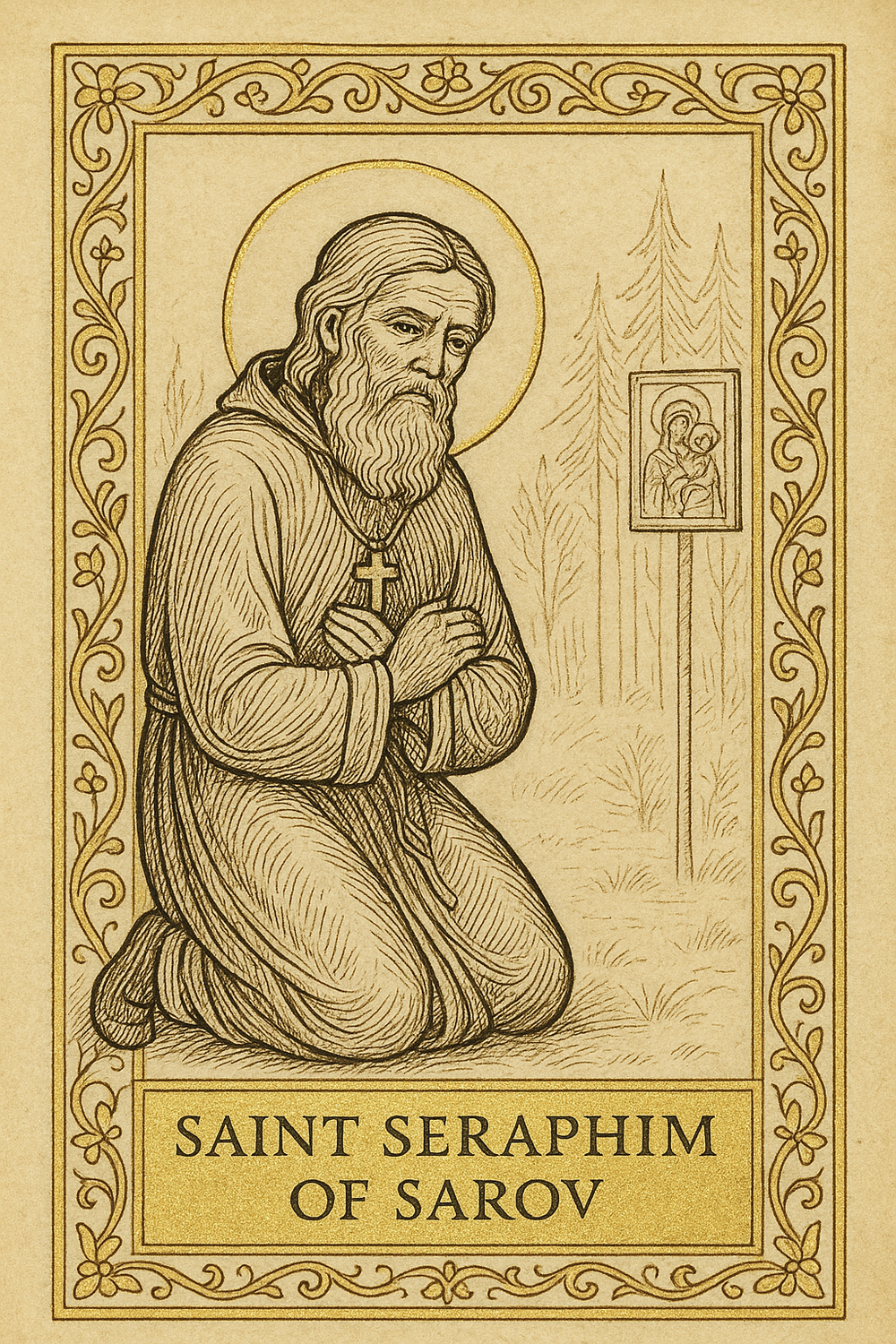
This prayer is deceptively simple. It contains the entire Gospel. It confesses Christ as Lord and Son of God. It acknowledges human brokenness without despair. It asks for mercy rather than justification.
In Orthodox spirituality, the Jesus Prayer is not merely a sentence. It is a way of life. It is often prayed repeatedly, sometimes quietly with the breath, sometimes aloud, sometimes silently in the heart.
The purpose of the Jesus Prayer is not to analyze sin or generate emotion. It is to keep the heart oriented toward God throughout the day. Over time, the prayer becomes a steady presence, returning the mind to humility and trust whenever it wanders.
Many Orthodox Christians pray the Jesus Prayer during moments of stress, temptation, fatigue, or distraction. It is especially common during manual labor, walking, or moments of waiting. The full spiritual tradition behind this prayer — the hesychast tradition — is one of the most profound bodies of interior wisdom in the history of Christianity. The practice of using a prayer rope to count repetitions of the Jesus Prayer is one of the most beloved expressions of this tradition.
A prayer card featuring the Jesus Prayer can be placed where it is easily seen and quietly repeated throughout the day.

The Trisagion Prayers
Most Orthodox prayer rules begin with a short sequence known as the Trisagion Prayers. These prayers prepare the heart to stand before God.
This hymn, repeated three times, is ancient and central to Orthodox worship. It directs attention away from the self and toward the holiness of God. It is followed by the Lord’s Prayer, grounding prayer in Christ’s own words.
The Trisagion Prayers teach an important principle: prayer begins with God, not with personal concerns. By starting daily prayer this way, the faithful learn to reorder priorities quietly.
These prayers are often prayed in the morning and evening as a threshold. Even when time is short, praying the Trisagion slowly can sanctify the moment. Prayer cards containing the Trisagion Prayers are commonly used in Orthodox prayer corners.
Morning Prayers
Offering the Day to God
Traditional Orthodox morning prayers are designed to orient the entire day toward God. They acknowledge dependence, ask for protection, and offer gratitude before activity begins.
A common theme in Orthodox morning prayer is sobriety. The prayers do not assume success or ease. They ask for vigilance, restraint, and mercy.
A traditional morning prayer often includes language such as:
These prayers reflect the Orthodox understanding that the day is not controlled by the individual. It is received.
Morning prayers are ideally prayed before checking messages, news, or work obligations. Even a short prayer prayed attentively sets the tone for the day. Prayer cards with morning prayers are especially helpful for those building consistency.
Evening Prayers
Examination Without Anxiety
Orthodox evening prayers help the faithful return the day to God. They include gratitude, repentance, and entrusting oneself to God’s care during sleep.
Unlike some Western examinations of conscience, Orthodox evening prayers tend to avoid self-analysis that leads to anxiety. Repentance is present, but it is gentle and honest rather than scrupulous.
A traditional evening prayer may include language such as:
This prayer assumes failure without despair. It trusts mercy without minimizing responsibility.
Evening prayer is especially important during seasons of stress or discouragement. It allows the day to be laid down rather than carried into rest. Prayer cards with evening prayers are often placed near bedsides or prayer corners.
The Prayer to the Guardian Angel
Orthodox Christianity places strong emphasis on the presence of the guardian angel. This belief is not treated sentimentally. It is treated practically.
A traditional prayer to the guardian angel asks for guidance, protection, and correction. It assumes that the Christian life is lived under watchful care, not in isolation.
Praying to the guardian angel cultivates awareness. It reminds the faithful that their actions matter and that help is present even when unseen.
This prayer is often included in evening prayers or prayed before travel or difficult decisions. Prayer cards dedicated to the guardian angel are commonly used for children and adults alike.
Akathist Hymns
Akathist hymns are among the richest forms of Orthodox prayer. They are extended hymns of praise addressed to Christ, the Theotokos, or a saint. Unlike shorter prayers, Akathists are usually prayed standing and without haste.
Akathists are not rushed. They are not meant for daily obligation. They are meant for deeper prayer, often during specific seasons or needs.
The Akathist to the Theotokos is especially beloved, praising her role in salvation history and her continual intercession.
Akathists are often prayed weekly or during particular struggles. They are especially meaningful during feast days or preparatory seasons. For the deeper theological tradition behind this kind of prayer, see our guide to the best books on hesychasm and the Jesus Prayer.
Prayer cards referencing Akathists can serve as reminders to return to these hymns regularly.
Saints’ Prayers in Daily Orthodox Life
Orthodox Christians do not pray to saints as distant figures. They pray with them as living members of the Church.
Prayers to saints are typically short, direct, and humble. They ask for intercession rather than solutions. Saints are approached as companions who understand struggle and faithfulness.
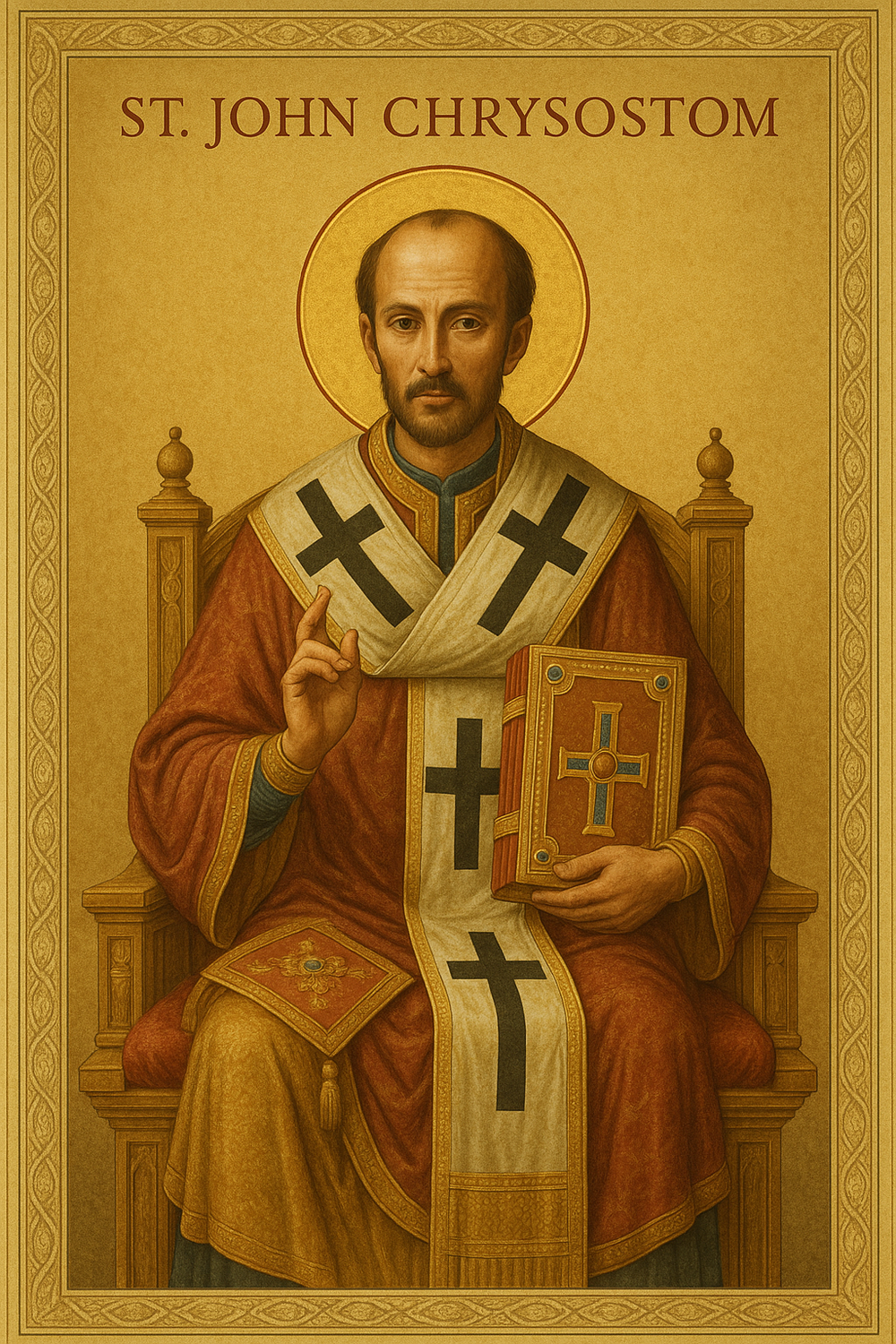
Saints commonly prayed to daily include Saint Nicholas, Saint Basil the Great, Saint John Chrysostom, and the Theotokos.
Using prayer cards for saints allows their presence to remain visible throughout the day. This quiet visibility reinforces the sense of communion. Prayer cards for Orthodox saints used in daily devotion are available at our prayer card directory.

Building a Simple Orthodox Prayer Rule
Orthodox spirituality does not encourage rigid self-designed prayer systems. It encourages simplicity and faithfulness.
A basic daily rule might include:
Morning prayer
The Jesus Prayer repeated during the day
Evening prayer
This is enough to form the heart over time. Additional prayers can be added gradually, without pressure. For practical guidance on building this rule, see our beginner’s Orthodox prayer rule.
Prayer cards are especially helpful here. They remove the need to remember or search for prayers. They make prayer physically present.
Prayer and Icons
Learning to Stand Before God
In Orthodox Christianity, prayer is rarely separated from icons. This is not because icons are required for prayer to be valid, but because icons teach the soul how to pray. They shape posture, attention, and expectation.
An icon is not meant to stimulate imagination or emotional response. It is meant to anchor the person praying in reality. When standing before an icon of Christ, the Theotokos, or a saint, the Orthodox Christian is reminded that prayer is not a conversation with an idea. It is an encounter with a living presence.
This changes the nature of prayer profoundly. Words become secondary to attention. Silence becomes meaningful rather than empty. The icon gently resists distraction. It does not invite analysis. It invites stillness.
For this reason, many Orthodox Christians establish a prayer corner in the home. This is not meant to replicate the church, but to extend its logic into daily life. A small space with one or two icons, a candle, and a prayer card becomes a place where the heart learns familiarity with prayer.
Prayer cards function naturally within this space. They provide the words when words are needed, without dominating the encounter. Over time, the card may be used less as the prayer becomes internalized, but its presence continues to call the heart back to prayer.
The Philokalia — the great anthology of Orthodox spiritual writing — is filled with teachings about how the inner life is shaped by the practice of standing before God in prayer. Icons and prayer cards support this practice in daily life.
Prayer Throughout the Day
Orthodox prayer is not limited to set times alone. While morning and evening prayers form the foundation, short prayers repeated throughout the day are equally important. This reflects the Orthodox conviction that the Christian life is not divided into sacred and secular compartments. All of life is capable of being sanctified.
Short invocations such as the Jesus Prayer, a brief prayer to the Theotokos, or a simple “Lord, have mercy” are commonly used during work, travel, waiting, or moments of stress. These prayers are not interruptions to daily life. They are reminders that God is present within it.
This approach to prayer is intentionally modest. The Orthodox tradition does not encourage constant emotional engagement or prolonged interior dialogue during daily tasks. Instead, it encourages gentle remembrance. Prayer becomes like breathing. It does not demand attention. It sustains it.
Prayer cards placed in practical locations, on a desk, near a workbench, in a wallet, or beside a bed, help cultivate this rhythm. They serve as quiet prompts rather than obligations.
Seasonal Prayer in the Orthodox Calendar
Orthodox prayer life is deeply shaped by the liturgical calendar. Prayers change with the seasons, not to create novelty, but to align the heart with the Church’s movement through sacred time.
During Great Lent, prayers become more penitential and restrained. The Prayer of Saint Ephrem, with its emphasis on humility, repentance, and restraint, is central. This prayer is not primarily about self-criticism. It is about clarity. It asks God to reveal hidden habits of pride and distraction so they can be healed.
During Paschal season, prayers shift dramatically. Penitential language gives way to joy and proclamation. The Resurrection is not treated as a past event, but as a present reality. Prayer becomes celebratory without losing reverence.
Feast days bring their own hymns and prayers, often focused on a particular saint or mystery. These prayers are not meant to replace daily prayer rules, but to enrich them.
Prayer cards associated with specific seasons or feast days help the faithful enter these rhythms without needing extensive books or resources. The lessons of the Philokalia are especially relevant to understanding how seasonal prayer shapes the soul differently across the liturgical year.
Common Mistakes When Beginning Orthodox Prayer
Those new to Orthodox prayer often begin with sincere enthusiasm, but enthusiasm alone can lead to misunderstanding. One common mistake is attempting to pray too much, too quickly. Long prayer rules, multiple Akathists, and excessive repetition can overwhelm rather than form.
Orthodox spirituality emphasizes guidance and restraint. Prayer should stretch the heart gently, not exhaust it. A small, consistent rule is far more valuable than an ambitious one that cannot be sustained.
Another mistake is seeking emotional feedback from prayer. Orthodox prayer does not promise comfort or inspiration in every moment. Dryness is not failure. Silence is not absence. The tradition teaches faithfulness rather than sensation.
A third mistake is treating prayer as a private self-improvement project. Orthodox prayer is ecclesial. It belongs to the Church. Even when prayed alone, it is never isolated. Saints, angels, and the whole communion of the Church are present.
Prayer cards, when used properly, support simplicity rather than excess. They encourage steadiness rather than experimentation.
Teaching Children to Pray Orthodox Prayers
Orthodox prayer is especially well-suited for children because it is embodied, repetitive, and visual. Short prayers, icons, and simple routines allow children to participate naturally without pressure.
Children are often taught the Jesus Prayer early, not as a discipline, but as a gentle habit. They learn to associate prayer with calm, reverence, and safety rather than performance.
Prayer cards are particularly effective for children. The physical presence of a card makes prayer tangible. It gives children something to hold, look at, and return to.
Over time, prayer becomes familiar rather than forced. This familiarity often carries into adulthood quietly and faithfully.
The Role of the Saints in Daily Prayer
Orthodox Christians do not approach saints as specialists or problem-solvers. Saints are approached as companions who have lived faithfully and now intercede from within the life of God.
Daily prayers to saints are usually short and simple. They ask for intercession, guidance, or protection. The language is humble and direct.
Saint Nicholas is often prayed to for practical needs and protection. Saint Basil the Great for wisdom and discipline. Saint John Chrysostom for clarity and courage. The Theotokos for mercy, protection, and maternal intercession.
Using prayer cards for saints allows their presence to remain visible throughout the day. This visibility reinforces the Orthodox understanding that the Church is not limited to the present moment or physical space.
Prayer as Stability, Not Achievement
Perhaps the most important thing to understand about Orthodox prayer is that it is not measured by progress in the modern sense. There is no ladder of achievement. There are no levels to unlock.
Prayer is measured by fidelity. Returning again and again, even distracted, even tired, even discouraged, is itself prayer.
Orthodox spirituality assumes that God works quietly and invisibly. The fruit of prayer is often noticed only in hindsight. Increased patience, softened judgment, deeper humility, and steadier hope appear gradually.
This is why Orthodox prayer resists constant novelty. Stability creates space for transformation.
Prayer as a Way of Living Before God
Traditional Orthodox prayers are not formulas to be mastered. They are companions to be lived with. Their power lies not in eloquence, but in truth. They teach the heart how to stand before God without pretense.
In a culture that values speed, productivity, and constant stimulation, Orthodox prayer offers something profoundly countercultural. It offers stillness. It offers repetition. It offers humility.
Prayer in the Orthodox tradition does not promise immediate answers. It promises presence. Over time, that presence reshapes the soul.
For those beginning this path, simplicity is the key. A few prayers prayed faithfully will bear more fruit than many prayers prayed anxiously. Prayer cards, icons, and quiet routines support this faithfulness by making prayer present in ordinary life.
Orthodox prayer is not an escape from the world. It is a way of learning to live within it attentively, humbly, and in communion with God.
Go Deeper in Orthodox Prayer
Articles and resources to accompany your prayer life as it grows.
Orthodox Prayer Rule for Beginners
How to build a sustainable daily prayer rule that grows with you rather than overwhelming you.
Read the guide →The Jesus Prayer
A complete guide to the heart of Orthodox prayer — its history, theology, and practice in daily life.
Read the guide →Orthodox Prayer Ropes for Beginners
How to choose a prayer rope for the Jesus Prayer, including ropes made by monks and nuns of Mount Athos.
Read the guide →Orthodoxy and Hesychasm
The spiritual tradition behind the Jesus Prayer — stillness, watchfulness, and the prayer of the heart.
Read the guide →What Is the Philokalia?
The great anthology of Orthodox spiritual writing on prayer, attention, and the transformation of the inner life.
Read the guide →The Desert Fathers on Prayer
The earliest Christian teachers of interior prayer — their sayings, practices, and wisdom for daily life.
Read the guide →Begin Where You Are
A few prayers prayed faithfully will bear more fruit than many prayers prayed anxiously. Prayer cards, icons, and quiet routines support this faithfulness by making prayer present in ordinary life.
Browse All Eastern Prayer Cards → Free Eastern Christian Marriage Books →