Blessed Theodore Romzha: Bishop of Mukachevo and Martyr of Soviet Persecution
A young Byzantine Catholic bishop of the Carpathians who refused to place his flock under Moscow, and who died in 1947 after a staged crash and a hospital poisoning.
At a Glance
- Born
- April 14, 1911, in Velykyi Bychkiv, then in Austria-Hungary
- Died
- October 31 or November 1, 1947, in Mukachevo, aged 36
- Office
- Bishop and Apostolic Administrator of the Eparchy of Mukachevo, 1944 to 1947
- Recognition
- Beatified June 27, 2001, in Lviv. Not canonized.
- Feast
- October 31 in the Ruthenian Byzantine Catholic calendar. The Vatican lists November 1.
- Relics
- Holy Cross Cathedral, Uzhhorod, returned June 2003
- Who Was Blessed Theodore Romzha?
- A Boy from Velykyi Bychkiv
- Rome, the Russicum and Ordination
- Bishop in the Shadow of the Soviet Army
- The Campaign Against the Church of Mukachevo
- The Attack of October 27, 1947
- Burial, Relics and Beatification
- Devotion and Tradition
- A Shepherd Who Did Not Leave
- Romzha in the Eastern Churches
- Frequently Asked Questions
Who Was Blessed Theodore Romzha?
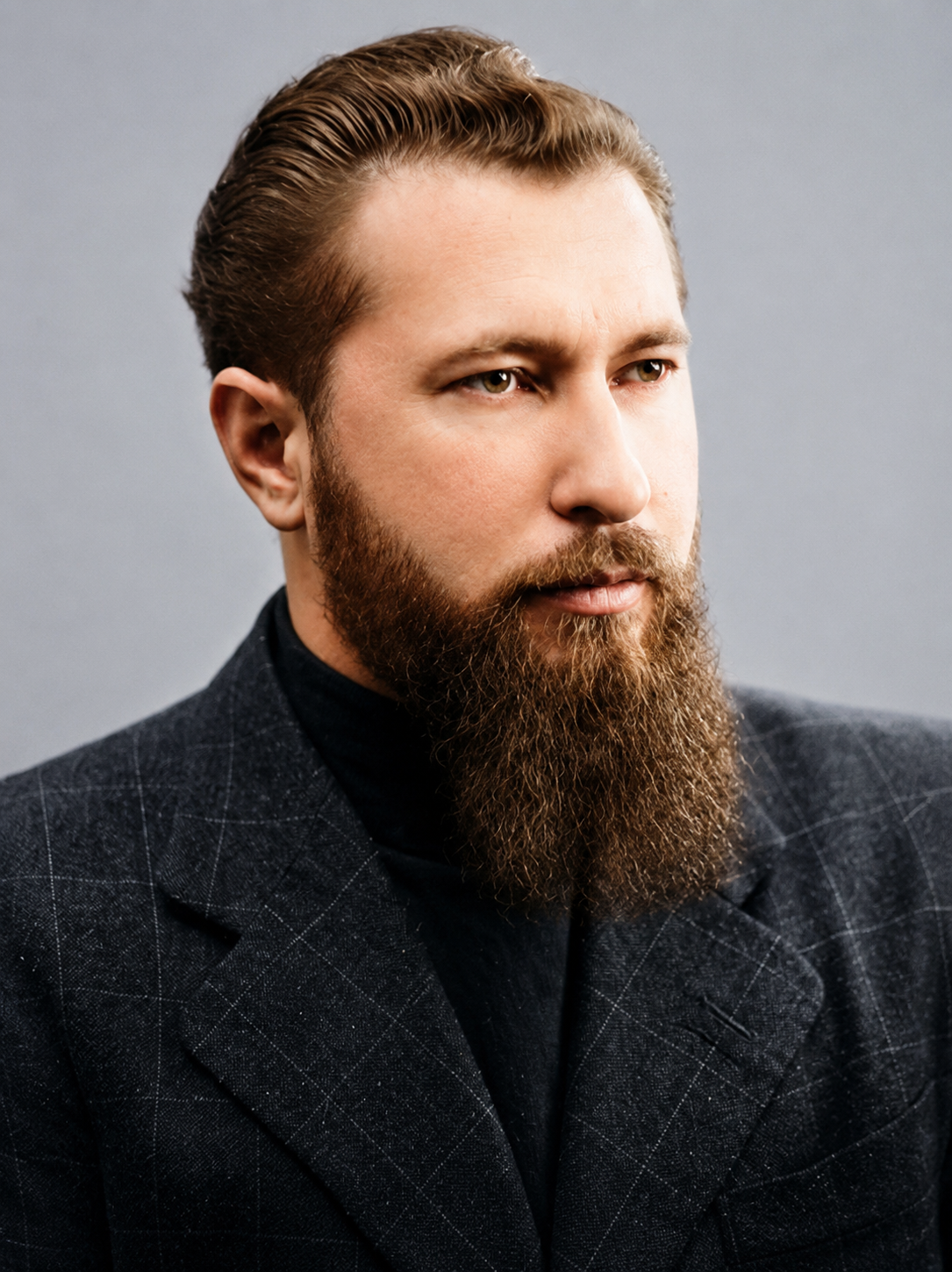
Theodore Romzha was a Greek Catholic bishop in the Carpathian mountains, a region that is now the Zakarpattia province of western Ukraine. He was ordained a bishop in 1944, at about thirty-three years old, only weeks before the Soviet army arrived. For the next three years he led the Eparchy of Mukachevo while the state tried to cut it off from Rome and fold it into the Russian Orthodox Church. He died in 1947 at the age of thirty-six.
The Church honors him as a martyr. Pope John Paul II beatified him in Lviv on June 27, 2001. He is Blessed, and he has not been canonized, so this article uses that title throughout. Eastern Catholics also call him a hieromartyr, a bishop who died for the faith.
His life is well documented in outline: his studies in Rome, his work as a seminary teacher, his years as bishop, the attack of October 27, 1947, and his death in hospital days later. Some details, especially how he was killed, are told differently in different sources. This article marks legends as TRADITION and unsettled facts as UNCERTAIN.
A Boy from Velykyi Bychkiv
He was born on April 14, 1911, in Velykyi Bychkiv, a mountain village that then belonged to the Kingdom of Hungary within Austria-Hungary. Church biographies, including those published by the Eparchy of Phoenix and the Mindszenty Foundation, describe a modest Greek Catholic family. His father worked for the railway, the family kept a small farm, and he is described as one of several children, with a source calling him the ninth. Those family details come from church biographies, so treat the birth order as approximate.
His baptismal name was George, and he is known in sources as Teodor Romza, Teodor Romzha and Theodore. He grew up speaking Ruthenian and Hungarian, and later learned other languages. The region around him was a patchwork of Rusyns, Hungarians, Romanians, Jews and Germans, and his later ministry had to serve people of several tongues.
In his lifetime the same village passed under three governments. Born under the Habsburgs, he lived under Czechoslovakia, then Hungary, and finally the Soviet Union. Each change affected the schools, languages and legal position of the Greek Catholic Church. He attended secondary school in Khust and finished in 1930, and his teachers and parish priests encouraged his wish to become a priest.
Rome, the Russicum and Ordination
There is no evidence that he ever changed from one Christian confession to another. He was a Greek Catholic from birth, and his story is one of vocation. In 1930 he went to Rome to study at the Pontifical Gregorian University. He first lived at the German-Hungarian College, and on September 7, 1934, he transferred to the Pontifical Russian College, known as the Russicum, which trained priests of the Byzantine tradition for service in Slavic lands.
He was ordained a priest in Rome at Christmas of 1936 by Bishop Alexander Evreinov, at Saint Mary Major according to church biographies. Some sources give December 24 and others December 25, so the exact day is UNCERTAIN.
He then returned to the Carpathians. After military service in Czechoslovakia he served in the mountain parishes of Berezovo and Nyzhnia Bystra, where poverty and distance made pastoral work hard. In the autumn of 1939 Bishop Alexander Stojka called him to Uzhhorod as spiritual director and professor of philosophy at the seminary. Former students remembered him as demanding but kind.
Bishop in the Shadow of the Soviet Army
In 1944 Pope Pius XII appointed him to lead the Eparchy of Mukachevo. He was consecrated in September of that year at Holy Cross Cathedral in Uzhhorod. The Vatican gives the date as September 24, while some other records say September 21. Catholic records describe him as titular Bishop of Appia and Apostolic Administrator of Mukachevo, though in everyday speech he is called the Bishop of Mukachevo.
His diocese was unusual. Unlike the other Greek Catholic communities of Ukraine, Mukachevo traced itself to the Union of Uzhhorod in 1646 and was directly under the Holy See. That gave Romzha a clear place in the Catholic Church, and it also made him a target when the Soviet state decided that such links had to end.
As bishop he traveled to remote villages, celebrated the Divine Liturgy, encouraged priests and cared for the seminarians. When the authorities took the eparchy's car, he reportedly kept visiting parishes by horse and carriage. Zugger's biography also says that on May 13, 1946, he consecrated his eparchy to the Immaculate Heart of Mary.
He is remembered less for founding institutions than for staying with his people while institutions were being closed around him. His surviving writings are mostly pastoral and administrative. The scholar Viktor Kichera has published nine letters Romzha sent in 1947 to the Soviet commissioner for religious affairs, which show a bishop defending his Church in plain, formal language.
The Campaign Against the Church of Mukachevo
In March 1946 a Soviet-managed assembly in Lviv declared that the Greek Catholic Church in Ukraine was joined to the Russian Orthodox Church. Free canonical consent was not possible there, and the Catholic bishops had been arrested. The authorities then turned to Transcarpathia, where Romzha refused to bring his priests and parishes under Moscow.
He was pressed by officials who confiscated church property, limited religious teaching, imprisoned some priests and handed churches to the Orthodox. Soviet security services watched him, and they tried to portray him as a spy for the Vatican and a political enemy. It is well documented that he was under heavy surveillance. What is not documented is the name of every person who planned what followed.
It would be wrong to turn this history into a quarrel between ordinary Catholics and ordinary Orthodox. The state used the structures of the Russian Orthodox Church for its policy, and some church officials cooperated. But the pressure came from the Soviet government, and later sources say that many Orthodox and Catholic villagers alike respected the bishop personally. That statement rests on reports of a Soviet interrogation and should be handled with care.
The Attack of October 27, 1947
On October 27, 1947, Romzha was returning by horse-drawn carriage from a pastoral visit when a military truck drove into the carriage. Church and archival accounts agree that this was a planned attack and not an accident. Armed men then beat the bishop and his companions. Biographies place the event near Lavky or Lokhovo, so the exact site is UNCERTAIN, as are the number of companions and some details of the assault.
He was taken to the hospital in Mukachevo. At first he seemed to be recovering, and on the night of October 31 or November 1 he died. The difference in dates is explained by local time versus Moscow time. The Vatican gives November 1, while the Ruthenian Byzantine Catholic calendar keeps October 31.
The Church holds that he was poisoned in the hospital by agents of the Soviet security service. Later accounts speak of a woman who entered as a nurse, and a memoir attributed to the former intelligence officer Pavel Sudoplatov describes a poison lab and a toxin similar to curare. These later accounts are not confirmed by an accessible original operational record. The identity of the killer, the poison and the chain of command are therefore UNCERTAIN, and claims that a named Soviet leader personally ordered the death should not be stated as proven.
Burial, Relics and Beatification
He was buried in the crypt of Holy Cross Cathedral in Uzhhorod in early November 1947, with a funeral date given in eparchial records as November 4. His grave was identified in 1998. His remains were examined in Budapest and, on June 27 and 28, 2003, were solemnly returned to the cathedral, where they are venerated. The Church of Mukachevo remembers that return on June 28.
His cause advanced in steps. A diocesan inquiry took place in the mid 1990s, and the Holy See recognized its validity in 1998. The decree recognizing his martyrdom was issued on April 24, 2001. He was beatified by Pope John Paul II on June 27, 2001, at the Divine Liturgy in Lviv, with other Greek Catholic martyrs of the Soviet era.
Because he was recognized as a martyr, no miracle was required for beatification. We found no formally recognized miracle attributed to him, and modern healing claims should not be described as approved without separate documentation.
Devotion and Tradition
Devotion began soon after his death among the clergy and faithful of Mukachevo, who prayed to him in secret during the long years when the Greek Catholic Church was forbidden. The Mindszenty Foundation records a simple family prayer, Bishop Theodore, martyr, pray for us. For the faithful of the underground, his memory kept hope alive.
TRADITION: some accounts treat his survival of the first attack as miraculous. This is a pious reading of a real event and not a separate verified miracle.
TRADITION: a biography by Father Christopher Zugger says he was praying the rosary at the moment of the attack, and that he forgave his attackers. These details appear in devotional biography, and we found no authenticated contemporary transcript. Several biographies also say he expected to die for his faith. The general point is supported by a letter quoted in the Vatican newspaper, but more detailed stories of predictions should be treated cautiously.
The liturgical texts composed for his feast describe him with the images of the prophet Elijah and his disciple, a tone well suited to a bishop who took up a burden he had not sought.
A Shepherd Who Did Not Leave
Romzha's choice was simple and hard. He was young, he had a good education, and he had friends in Rome. He could have kept his life by cooperating, or by leaving. He stayed, and he kept visiting small parishes with a horse and carriage.
His example speaks to anyone under pressure to give up a conviction for the sake of safety. It also speaks to those who serve a community as it shrinks. Faithfulness in small, repeated tasks, such as celebrating the Liturgy, teaching a student and visiting a village, can be a form of witness as strong as any famous act.
The prayer card on this page may be kept by those who pray for persecuted Christians today. His story reminds us that such trials are not only in the past.
O Christ our God, you gave your servant Theodore the courage to remain with his flock in a time of fear. Through his prayers, strengthen all who are pressed to deny the faith. Grant to our bishops and priests the love of a faithful shepherd, console those who suffer for your name, and bring all your people to the unity for which you prayed. Amen.
This is a short original prayer written for this page. It is not an official prayer of the Church. The Byzantine Catholic Church publishes its own troparion and kontakion for the feast of Blessed Theodore.
Romzha in the Eastern Churches
Romzha belongs to the Byzantine Catholic tradition, and he is a model of loyalty to both Rome and the Byzantine liturgy. For Ruthenian Catholics in particular, he is the great martyr of the Mukachevo tradition. The Byzantine Catholic Archeparchy of Pittsburgh publishes liturgical texts for his feast, including a troparion in Tone 4 that opens with the cry of Elisha to Elijah, and societies in his name exist in the Eparchy of Parma.
For Orthodox readers, his story is a reminder of how a state can use church divisions for its own ends. Individual Orthodox believers are said to have respected him, but we found no evidence of formal veneration of Romzha in any Orthodox Church. His beatification and feast belong to the Catholic Church.
Frequently Asked Questions
Faithful to the End
Keep this prayer card in your home and ask Blessed Theodore to pray for persecuted Christians and for your own bishop.
View Prayer Card