Blessed Thomas Saleh: The Complete Biography of Lebanon's Capuchin Martyr
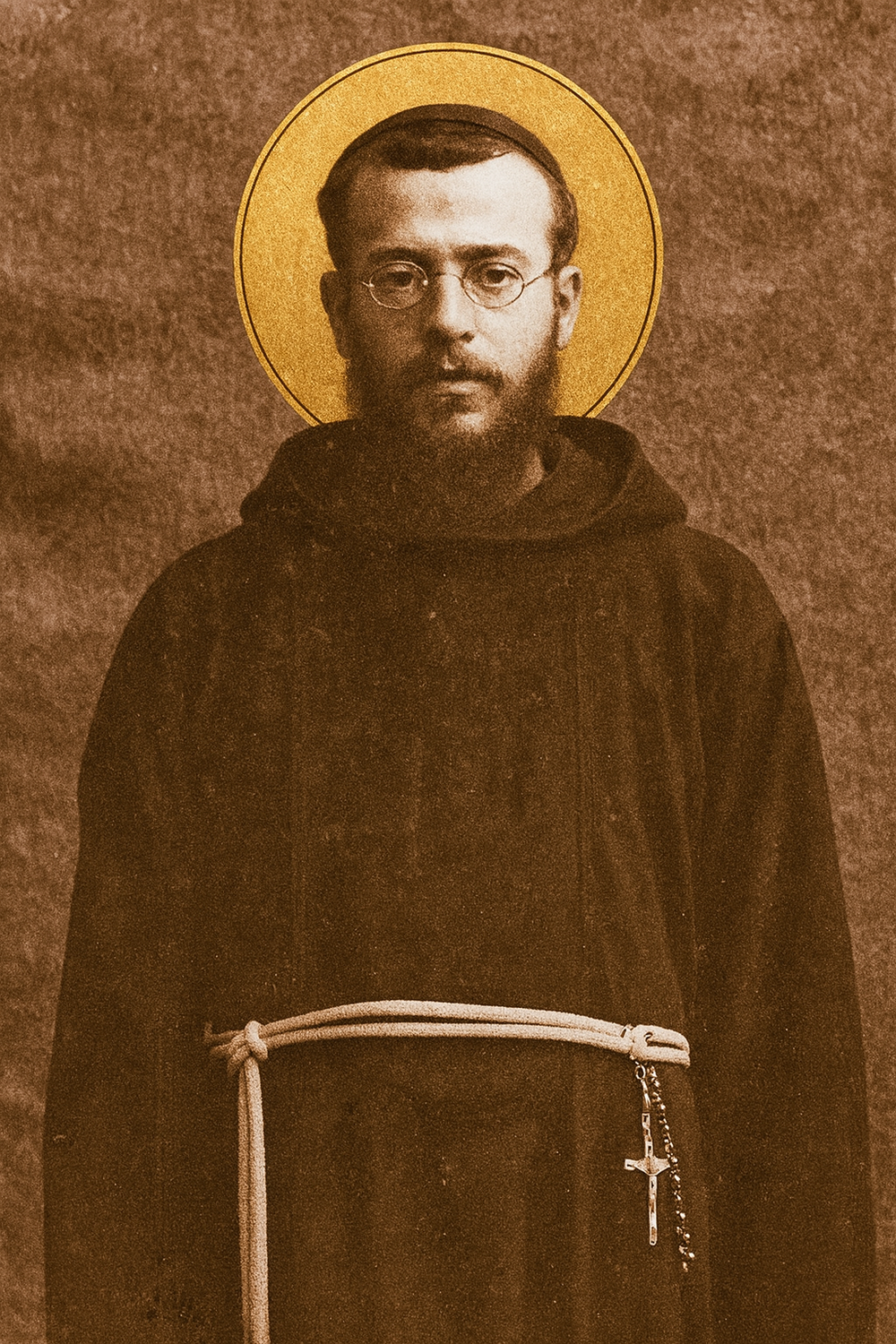
Blessed Thomas Saleh
The Lebanese priest who sheltered a hunted man and paid with his life — and died saying he was not afraid
Blessed Thomas Saleh
Each prayer card is made by hand in Austin, Texas — printed on museum-quality paper, assembled in prayer, with intercessions offered to Blessed Thomas for the person who will receive it.
Get the Prayer Card →A Village That Gave Two Martyrs
There is a village in the mountains above Beirut called Baabdat. It is not large. Its name does not appear in history books. But in the closing years of the nineteenth century, something happened in Baabdat that would echo through the worst catastrophe of the twentieth century's first decades: two boys from the same village, drawn by the same example, made the same choice — to follow God into the most dangerous mission field on earth — and both of them died for it.
Thomas Saleh was born there on May 3, 1879, the fifth of six sons. His companion in life and in death, Leonard Melki, was born in the same village two years later. They grew up watching Capuchin friars at work in their community. Those friars — their poverty, their preaching, their willingness to go where the need was greatest — planted something in both boys that would only grow.
In 1895, when Thomas was sixteen, he and Leonard left Baabdat together. They were heading to Istanbul. They were heading toward a life in the missions, toward the poverty and prayer of the Capuchins, toward the ancient communities of Christians scattered across Mesopotamia who needed priests. They were heading, though they could not know it, toward martyrdom.
The Formation of a Missionary
Thomas entered the Capuchin minor seminary of San Stefano in Istanbul on April 28, 1895. The formation would be long and thorough. He received the Capuchin habit for the first time on July 2, 1899. He made his first religious profession on July 2, 1900. He completed his philosophical and theological studies in Buca and made his solemn, perpetual profession on July 2, 1903. He was ordained to the priesthood on December 4, 1904.
Nine years of formation, from a teenager who had left a Lebanese village to a priest ready to be sent wherever the order needed him. He was twenty-five years old when he was ordained. He had spent more than a third of his life in religious formation by the time he was ready to serve.
What shaped him during those years was not only study. He felt drawn early toward missionary work — toward the idea of preaching and administering the sacraments in different places, among people who had no priest, among communities that held their faith at great personal cost. The Capuchins served Christian communities of many rites in the Ottoman East: Armenian Catholics, Syriac Catholics, Chaldean Catholics. These were not abstract categories for Thomas. They were neighbors, parishioners, people who needed someone to baptize their children and anoint their dying.
The Capuchin Friars Minor maintained a missionary presence in Ottoman-controlled Mesopotamia serving Catholic communities of multiple Eastern rites — Armenian, Syriac, Chaldean — in the cities of Mardin, Kharput, and Diyarbakir. These Christians lived as minorities under Ottoman authority, often subject to discriminatory taxes, legal restrictions, and periodic violence. The Capuchin missionaries managed schools, heard confessions, preached, administered the sacraments, and sustained communities that had no indigenous Catholic clergy of their own. It was extraordinary, unrecognized, dangerous work.
After completing his final examinations on April 23, 1906, Thomas was assigned to the Mesopotamian mission alongside his old companion Leonard Melki. They went to Mardin together — the ancient city perched on the slopes above the plains of southeastern Turkey, then part of the Ottoman Empire, home to a rich mix of Christian communities including Syriacs, Armenians, and Chaldeans. It was there that their priestly lives began in earnest.
The Missionary Years: Mardin, Kharput, Diyarbakir
Thomas threw himself into the mission with the energy of a man who had been waiting a long time to do this work. He dedicated himself to the mission school, teaching students and introducing them to the Third Order of Saint Francis. He became a noted preacher. He heard confessions, administered the sacraments, traveled to serve people in distant places. His ministry took him to Kharput, to different communities, to wherever he was needed.
The communities he served were already living in precarious conditions. The Ottoman Empire's treatment of Christian minorities had been deteriorating for decades. There had already been massacres — in the 1890s, waves of anti-Christian violence organized or prompted by the central government had killed tens of thousands. The Christians of Mesopotamia had learned to keep their heads down, to practice their faith carefully, to depend on their priests for more than just the sacraments — for community, for courage, for the assurance that God had not forgotten them.
Thomas was transferred to Diyarbakir in 1910, continuing his ministry there. He was thirty-one. He had nearly a decade of missionary experience. He understood the terrain, the languages, the communities, the dangers. He had seen what this part of the world could do to people who were in the wrong position at the wrong moment.
In December 1914, with World War I now raging and the political situation in the Ottoman Empire becoming catastrophic for Christians, he was expelled from Diyarbakir along with other missionaries and nuns. He relocated to Urfa. He did not stop working. He continued to shelter and serve and minister, even as the world around him was becoming a killing field.
The Armenian Genocide: The World Around Him Burns
To understand what Thomas Saleh faced in his final years, you need to understand what was happening around him — because what was happening around him was one of the worst mass atrocities in human history.
The Armenian Genocide began in earnest in April 1915. The Ottoman government, under the cover of wartime, undertook a systematic campaign to eliminate the Armenian Christian population of the empire. The massacres began in Constantinople with the arrest of Armenian intellectuals and leaders on the night of April 23–24, 1915. From there it spread across the empire: mass deportations, death marches into the desert, drownings, mass shootings, starvation. Estimates of those killed range from 600,000 to 1.5 million Armenians. Syriac and Assyrian Christians were also targeted in what historians call the Seyfo — their own genocide — simultaneously. The Chaldean communities of Mesopotamia suffered similarly.
Thomas Saleh was living in the middle of this. He watched it happen from inside. He knew from the beginning that his friend and companion Leonard Melki had been killed — arrested in June 1915, marched with over 400 Christian prisoners into the desert including the Armenian Catholic Archbishop Blessed Ignace Maloyan, and massacred on June 11, the feast of the Sacred Heart. The executioners reportedly said afterward: "We have never seen people so strong in their faith. If the Christians had captured us and offered us the same chance to convert, we all would have become Christians."
Thomas knew his friend was dead. He knew his own position was precarious. He knew that the police watched him. He knew that the presence of an active Catholic priest in Urfa was something the authorities increasingly wanted to eliminate.
He stayed. He continued to minister. He continued to shelter those who needed shelter.
The Act That Cost Him Everything
The immediate cause of Thomas Saleh's arrest was an act of charity. An Armenian priest — wanted by the Ottoman authorities — needed shelter. Thomas gave it to him.
This was not a complicated decision for Thomas. It was the obvious decision. A man of God, hunted by people who wanted to kill him for being a Christian and a priest, needed a place to hide. Thomas was a priest. He had a convent. He opened the door.
The police found out. Whether through informants, surveillance, or some other means, they learned that Thomas had sheltered the Armenian priest. They were already looking for a reason to arrest him. Now they had one — or rather, they decided they needed a better one, something that would hold up as a formal charge. And so they did what authoritarian regimes have always done when they want to eliminate someone inconvenient but lack a legal pretext: they manufactured one.
During a search of the convent, the police discovered a small revolver. They had placed it there themselves. The planted weapon gave them the justification they needed for a formal arrest.
On January 4, 1917, Thomas Saleh was taken.
The apostolic nuncio to Turkey at the time of Thomas's death left a written record of what he witnessed: "He was not afraid to die; his death was that of a saint. Blessed is he."
This is not pious embellishment. It is the contemporary testimony of a Vatican official who had seen many things. He was describing a man who faced death with a composure that was not resignation or stoicism, but faith — the kind that had been formed over a lifetime of prayer and priestly service and was now, at the last possible moment, doing exactly what it had been formed to do.
Imprisonment, the Death March, and Martyrdom
What followed Thomas's arrest was a prolonged dying, not a quick execution. The Ottoman authorities did not simply kill him. They subjected him to something that was, in its own way, more terrible.
He was placed in prison with infected prisoners. He was mistreated. He was relocated from prison to prison — a deliberate practice designed to exhaust and demoralize — and forced to endure death marches with other prisoners through the midwinter cold. The conditions were calculated to break him, or to kill him slowly, or to achieve what the arrest itself had aimed at: forcing him to renounce his faith and convert to Islam.
He contracted typhus from the prisoners he was locked with. His constitution, already weakened by the conditions, deteriorated further. He was being marched from Urfa through the winter cold. His body was failing from disease and exhaustion and the accumulated wounds of torture.
He refused to renounce Christ. Through all of it — the mistreatment, the disease, the death marches, the cold, the deliberate attempts to reduce him to a point where he would say whatever they wanted him to say — he held. His last words, repeated as he died on February 28, 1917, in Kahramanmaraş, were these:
He was thirty-seven years old. He had been a missionary priest for eleven years. He had given a decade of his life to communities that no one else was willing to serve. He had sheltered a hunted man because that was what a priest did. And he had refused, to the very end, to say that this had been a mistake.
The Road to Beatification
Thomas Saleh was not immediately celebrated. He was remembered in his village and within the Capuchin order, but the formal process of recognition would take generations to reach its conclusion.
The recovery of his story began in unexpected ways. A great-nephew in Lebanon — Elie Saleh — carried the family memory. Another family member, Fares Melki, kept his great-uncle Leonard Melki's story alive, eventually discovering passages from Melki's diary in a book about the Armenian genocide. A Lebanese Capuchin priest, Father Salim Rizkallah, who had been appointed vice postulator for the cause of Armenian Catholic Archbishop Ignatius Maloyan of Mardin, discovered in his research that Father Melki had been among the 400 martyred with the archbishop. Father Saleh's death came to light alongside this investigation.
Around 1979, Fares Melki and Father Rizkallah began a formal research collaboration for the causes of canonization of the two martyrs from Baabdat. In 2000, during a jubilee pilgrimage to Rome, they spent an entire day in the underground Capuchin archives outside Rome, going outside every half hour for air, photocopying 613 pages of documents. Those documents formed the first draft of the positio — the formal summary of records to be presented to the Vatican.
Father Rizkallah was appointed vice postulator for the causes in 2003. He died in January 2020, ten months before the announcement he had worked decades to bring about. He did not live to see the beatification.
Pope Francis and the Recognition of Martyrdom
On October 27, 2020, Pope Francis signed a decree recognizing the martyrdom of Thomas Saleh and Leonard Melki. The decree determined that Thomas had died ex aerumnis carceris — from the hardships of incarceration — meaning that the suffering inflicted on him during his imprisonment was the direct cause of his death. This is the specific form of martyrdom recognition used when a person is not killed outright but rather dies as a direct consequence of the persecution they endure for their faith.
The formal cause had been opened in 2005 in Beirut, granting both men the title Servant of God. The recognition of martyrdom opened the door to beatification without the need for a separately verified miracle, as is the standard in martyrdom cases.
The Beatification Mass: June 4, 2022
The beatification of Thomas Saleh and Leonard Melki took place on June 4, 2022, at the Convent of the Cross in Jal el Dib, overlooking Beirut and the Mediterranean. Cardinal Marcello Semeraro, prefect of the Dicastery for the Causes of Saints, presided. Thousands gathered as Lebanon was in the midst of a catastrophic economic collapse that had plunged nearly 90% of the population into poverty.
Present at the ceremony were Maronite Patriarch Cardinal Bechara Boutros Rai, Syriac Catholic Patriarch Ignace Joseph III Younan, and Cardinal Mario Grech. The Capuchin Order had provided thirty buses to bring people from throughout Lebanon to attend. Among those present was Danny Saleh, age 67, who had traveled from Tyler, Texas — a great-nephew of Blessed Thomas, whose grandfather had been Thomas's brother and had immigrated to the United States from Baabdat at age 14.
"Humanly, they were victims. They were victims of a wave of hatred that repeatedly swept through the end of the Ottoman Empire and mingled with the tragic events of the persecution of the entire Armenian people and against the Christian faith. If humanly I said they were victims, in the perspective of the Christian faith they were victors."
He described the virtue they demonstrated as the third cardinal virtue — fortitude — and said: "The purpose of the Church is also to bear witness to this strength."
Thomas Saleh and Leonard Melki joined the ranks of Lebanese sainthood alongside Saint Charbel Makhlouf, Saint Rafka, Saint Nimatullah Kassab Al-Hardini, Blessed Stephan Nehmeh, and Blessed Jacques Haddad. Lebanon — a small country of extraordinary suffering — has produced an extraordinary concentration of canonized saints.
Timeline of His Life
His Companion: Blessed Leonard Melki
To understand Thomas Saleh, you need to understand that his life and death were inseparable from Leonard Melki's. They grew up in the same village. They entered religious life together. They were assigned to the same mission. They served the same communities. And they died within two years of each other, both refusing to recant, both choosing faith over safety.
Leonard was arrested in June 1915 after hiding the Blessed Sacrament when Ottoman soldiers raided his monastery in Mardin. He was tortured for six days. He was then placed at the head of a column of more than 400 Christian prisoners — men and women of Armenian, Syriac, and Chaldean rites, including the Armenian Catholic Archbishop Blessed Ignace Maloyan — and marched into the desert. On June 11, the feast of the Sacred Heart, they were massacred at a place called Kalaat Zirzawane. Leonard was stabbed in the heart. He was thirty-four years old.
Thomas survived Leonard by nearly two years. He knew what had happened to his friend. He knew what the system was capable of. And he stayed, and ministered, and when the moment came for him to stand his ground, he did.
They were beatified together, as they had lived and died in the same cause. Their shared feast day — June 10 — honors two men who made the same choice, in different moments, under the same impossible pressure.

What He Teaches Us
Thomas Saleh's story is not primarily about death. It is about a series of decisions, made over a lifetime, that made the final decision possible.
He decided, at sixteen, to leave a comfortable village in Lebanon and commit his life to people who needed a priest. He decided, over nine years of formation, to embrace the poverty and discipline of the Capuchins. He decided, year after year in Mesopotamia, to stay in a difficult and dangerous mission rather than retreat to somewhere safer. He decided, when he knew what was happening to his friend Leonard, to continue serving. He decided, when an Armenian priest arrived at his door needing shelter, to open it. He decided, when the police came, not to recant. And he decided, when he was dying, to say clearly that he trusted God and was not afraid.
None of these decisions were made in a single dramatic moment. They were made across years of small choices that shaped the kind of person who could make the final ones.
The Capuchin Order describes both Thomas and Leonard as witnesses to "the urgent need to proclaim the Gospel even to places most difficult and farthest away, despite dangers and persecutions." That is a correct description. But it is also worth noting what those places look like in practice: schools in Mesopotamia, confessions heard in remote communities, sacraments administered to dying Christians who had no other priest, a convent door opened to a hunted man. This is the Gospel proclaimed in places most difficult. Not with dramatic proclamations, but with the steady, costly work of showing up for people who needed someone to show up.
Faith Lived in the Ordinary
Thomas Saleh's heroism was forged in years of faithful daily priestly service, not in a single dramatic moment. The same principle applies to marriage — holiness grows in the ordinary, the repeated, the daily offering of ourselves to God and to one another. If you are seeking to understand how marriage becomes a school of sanctity, these books are completely free to read online.
Free Marriage Resources →Patronage: For Whom He Intercedes


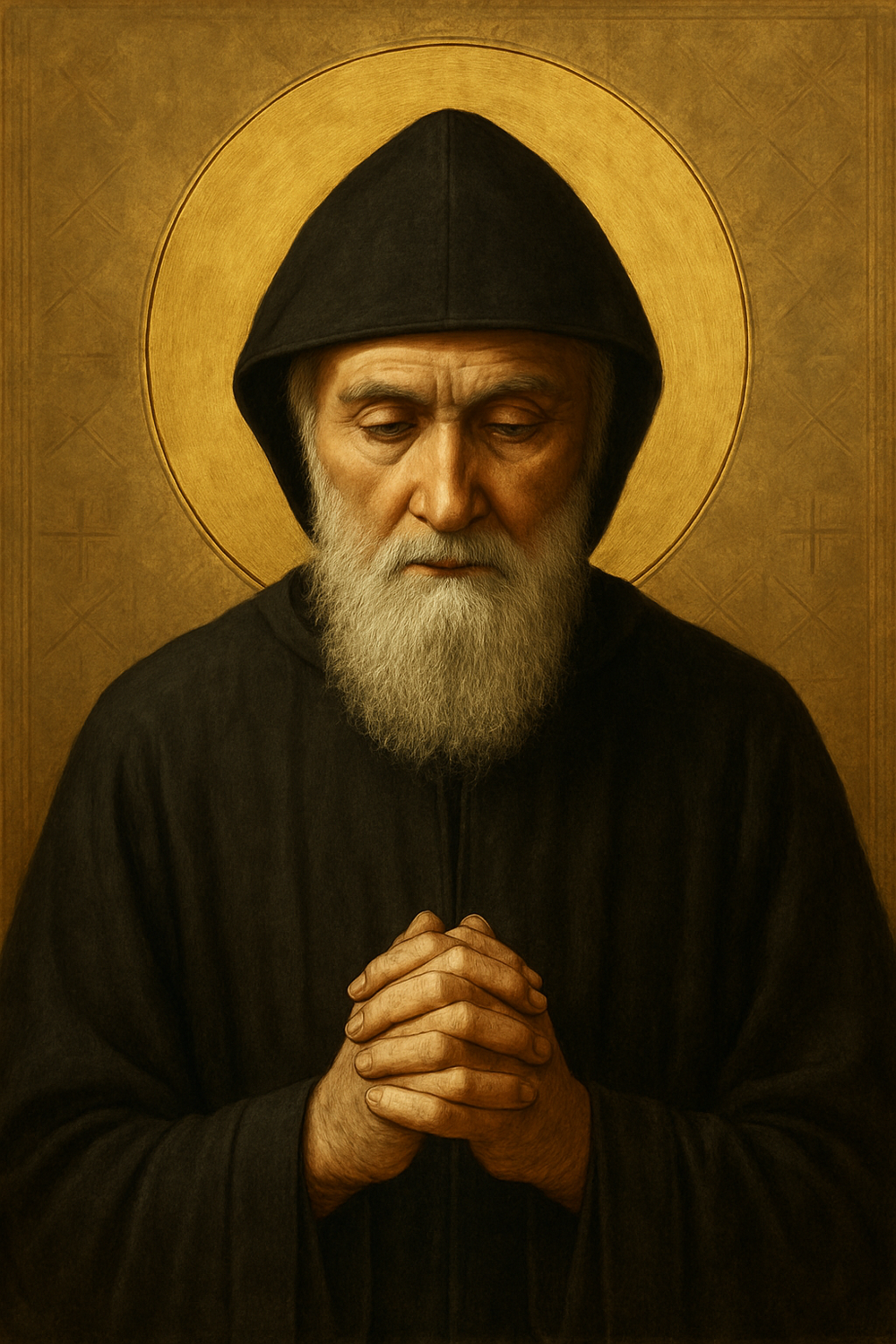
How to Pray to Blessed Thomas Saleh
Blessed Thomas Saleh, martyr of Lebanon and witness to Christ in the darkness of persecution, pray for us.
You held the door open for a man who needed shelter, knowing what it would cost you. You endured prison and torture and death marches and refused to say that Christ was not worth it. Intercede for those who are suffering for their faith today, and give us the grace to hold firm when holding firm is asked of us.
Amen.
Blessed Thomas Saleh, faithful Capuchin and martyr of the Armenian Genocide, pray for me.
You left your village as a boy and spent your life serving people no one else would serve. You watched your friend die. You stayed anyway. You opened your door to a hunted man and paid with your freedom and your life. And at the end, with disease consuming your body and no rescue coming, you said you were not afraid.
I bring you what I am facing today. [Name your need here, in your own words.]
If fear is pressing in on me, give me the courage you showed in that prison. If my faith is being tested by pressure or threat or exhaustion, help me hold the way you held. If I am being asked to do something that will cost me, give me the clarity to know whether it is the right cost to pay.
Teach me that a life given to God — even a life that ends in prison at thirty-seven — is not wasted. Teach me that trust in God is not naive. Teach me that not being afraid of death is the beginning of really living.
Blessed Thomas, you proved that faith stronger than death is possible. Intercede for me, that I may have some small measure of what you had.
Amen.
Blessed Thomas Saleh Prayer Card
Each card is made by hand in Austin, Texas — assembled in prayer, with intercessions offered to Blessed Thomas for the person who will receive it. Not manufactured. Not mass produced. Created one at a time, because every person who needs it deserves to be prayed over specifically.
Get the Prayer Card →


Frequently Asked Questions
Blessed Thomas Saleh — the Capuchin from Baabdat who opened his door to a hunted man and died saying he was not afraid — pray for us.