Catholic Saints for Anxiety and Depression

In our journey through life, many of us face the heavy cross of anxiety or depression. These are not just clinical conditions or psychological challenges; for a Catholic, they are also forms of emotional and spiritual suffering. The Church teaches that our sufferings – even the mental and emotional ones – can have spiritual meaning. Rather than seeing them as useless pain, we can unite our troubles with Christ’s own suffering on the Cross. In doing so, our struggles become a kind of prayer, a participation in Jesus’ redemptive work. This idea of redemptive suffering doesn’t mean we enjoy pain or passively accept injustice. It means we trust that God can bring good out of every hardship. Even our darkest mental anguish can be offered to Him as a plea for grace, healing, and holiness.

Catholics approach mental health holistically, caring for body and soul. We seek medical help for illnesses of the mind, but we also turn to spiritual healing from God. Through prayer, the sacraments, and sacramentals, the Lord pours out peace that transcends understanding. The Sacrament of Reconciliation (confession) can lift the guilt and spiritual burdens that worsen our anxiety. The Holy Eucharist (Communion) brings Jesus Himself into our hearts as divine medicine, strengthening us from within. Even the Anointing of the Sick is available not just for physical illness but for serious mental anguish as well – offering grace, forgiveness, and often a soothing peace of soul. In short, the Catholic Church recognizes that mental suffering has a spiritual dimension, and Christ the Divine Physician wants to heal all of us – body, mind, and spirit.

One of the greatest gifts God gives to comfort us is the Communion of Saints. We are never alone in our pain; we have a whole family in heaven supporting us. The saints are those holy men and women who have gone before us and are now with God, but remain lovingly concerned for those of us still on earth. They know what it’s like to feel fear, sorrow, and even confusion in life – many saints had their own battles with anxiety, depression, or intense spiritual trials. We believe that by God’s design, the saints can intercede for us – meaning they pray with us and for us, asking God to help us in our need. Turning to the saints is not a distraction from God, but a way of drawing closer to Him through the friends of God. Just as you might ask a faithful friend to pray for you when you’re struggling, you can ask the saints to pray on your behalf. Their prayers are powerful because they are very close to God’s heart.

When we carry mental and emotional burdens, certain saints shine out as special companions. Over centuries, Catholics have found hope and strength by praying for the intercession of particular holy figures known to assist with anxiety, depression, and mental illness. In this post, we will reflect on five such saints (including the Blessed Virgin Mary) who lovingly come to the aid of troubled hearts:

  • The Blessed Virgin Mary (under beautiful titles like Our Lady of Sorrows and Our Lady of Mental Peace)

  • St. Dymphna – patroness of mental health concerns

  • St. Thérèse of Lisieux – the Little Flower who knew spiritual darkness yet trusted with childlike faith

  • St. Padre Pio – the modern mystic who urged, “Pray, hope, and don’t worry”

  • St. John of the Cross – the mystic doctor who guides souls through the “dark night” of suffering

Each of these holy figures offers us a unique example and heavenly help. We’ll look at a short biography of each saint, why people invoke them for anxiety or depression, how Catholics express devotion to them, and some real-life examples of the comfort their intercession has brought. May their stories and prayers bring you consolation and a renewed sense of God’s presence in your life.

The Blessed Virgin Mary – Comforter in Our Sorrow

When we speak of suffering, Mary, the Mother of Jesus, stands out as a gentle yet powerful comforter. Mary’s life was not free from anxiety or pain – far from it. From the beginning, she faced uncertainty and trials: fleeing into Egypt to save her infant Son’s life, searching anxiously for the boy Jesus for three days when He was lost, and ultimately standing heartbroken at the foot of the Cross as Jesus suffered and died. In fact, when Mary presented the baby Jesus in the Temple, the prophet Simeon warned her that a sword would pierce her own soul. This prophecy came true in Mary’s many sorrows. Because of these experiences, Mary is often honored under the title Our Lady of Sorrows. She knows better than anyone what it means to endure profound grief, worry, and agony of heart.

Yet Mary also shows us how to respond to suffering with faith. Even in her worst pain, she never lost hope in God’s promise. At the Cross, Jesus entrusted Mary to us all when He said to the beloved disciple, “Behold, your mother!” Catholics truly see Mary as our spiritual mother, tender and compassionate. Just as she comforted Jesus in the manger and again on Calvary, she desires to comfort each of us in our hard times. She is sometimes called Mother of Mercy, Queen of Peace, and even Our Lady of Mental Peace – reflecting the Catholic belief that Mary can obtain from her Son the gift of inner tranquility and hope for those afflicted by mental turmoil.

Catholics pray to Mary with confidence because we know that as a mother, she hears us and brings our cries straight to Jesus. A classic Catholic prayer, the Memorare, expresses this confidence: “Remember, O most gracious Virgin Mary, that never was it known that anyone who fled to thy protection or sought thy intercession was left unaided.” We are never alone or unaided when we have Mary as our mother. She truly understands the anxieties of our hearts and enfolds us in her mantle of love.

How can we seek Mary’s help when we feel anxious or depressed? Here are a few beloved Catholic practices to invite Our Lady’s comfort and mental peace:

  • Pray the Holy Rosary, slowly and meditatively. The gentle repetition of Hail Marys while thinking about Christ’s life can calm a racing mind. Many have found that even a single decade of the Rosary in a moment of panic brings a noticeable sense of peace. Mary’s presence becomes almost tangible as you hold the beads and breathe in rhythm with the prayers.

  • Meditate on the Seven Sorrows of Mary. In this devotion, we reflect on seven heart-wrenching moments in Mary’s life (like the Crucifixion or the loss of the Child Jesus in the Temple). By uniting our own sorrows with Mary’s, we feel understood and less alone. We can even offer our pain to console Mary’s Sorrowful Heart, and in return she consoles us. This mutual sharing of sorrow with our Blessed Mother can mysteriously relieve the sting of our personal grief.

  • Invoke Mary under comforting titles. Simply calling on Our Lady of Sorrows when grief weighs you down, or Our Lady of Mental Peace when your mind is troubled, is a quick prayer in itself. Whisper, “Mother Mary, be my comfort, be my peace,” and believe that she is immediately at your side. Short ejaculations like “Holy Mary, comfort me now” said throughout the day can silently invite her help in anxious moments.

  • Surround yourself with Marian reminders. Many keep a picture or icon of Mary in their room or carry a blessed medal (like the Miraculous Medal) as a sign of her protection. These sacramentals aren’t magic charms, but they turn our thoughts to Mary and, through her, to God. One young woman who struggled with sudden panic attacks started holding a Marian medal in her hand whenever she felt one coming on; she reported that picturing Mary’s loving face helped slow her breathing and fear. Such simple acts of devotion anchor us in the reality that Mary is near.

Countless people have experienced Mary’s motherly aid in times of mental distress. For example, a Catholic mother grieving the loss of her child found that each evening as she quietly sobbed and fingered her rosary beads, an indescribable comfort would eventually wash over her – as if Mary were sitting with her, mourning together and whispering that God would carry her through. Another individual battling severe anxiety began praying the Rosary daily and noticed that over time her panic episodes became less frequent and more manageable; she attributes this to Mary leading her gently to Jesus, the Prince of Peace. Stories like these, repeated over centuries, show that when we turn to Mary, she always responds with a mother’s love. She brings our tears to Jesus and obtains for us the grace of endurance, healing, and hope.

In our darkest moments, we can imagine Mary holding us as she once held the distressed Child Jesus. She is our Mother of Sorrows but also our Mother of consolation. With Mary accompanying us, even when anxiety still clouds our mind, we sense a light in the darkness. Our Lady of Sorrows, and dear Mother of Mental Peace, pray for us who are struggling. May your tender intercession obtain for us the peace of Christ.

Panagia Pantanassa Icon Gift Set from Mount Athos
Panagia Pantanassa Healing Gift Set
An authentic prayer set from Mount Athos including the Pantanassa icon, prayer rope, holy myrrh, and protective amulet. Often chosen by Orthodox faithful praying for healing from cancer and serious illness.
Panagia Pantanassa Symbol of Hope Icon
A revered icon of the Theotokos Pantanassa from Mount Athos, traditionally associated with prayers for healing, strength during treatment, and peace during prolonged illness.
Prayers to the Theotokos Orthodox Prayer Book
Prayers to the Theotokos
A focused Orthodox prayer book dedicated to the Mother of God, commonly used by those seeking healing, comfort, and intercession during times of serious illness.

Saint Dymphna – Patroness of Mental Health and Anxiety

When it comes to saints for mental afflictions, St. Dymphna is always at the top of the list. St. Dymphna’s patronage is very specific: she is invoked as the patron saint of those suffering from mental illness, nervous disorders, depression, and anxiety. Her own story, though tragic, is what led the Church to recognize her powerful sympathy and intercession for the mentally troubled.

Who was St. Dymphna? She lived in the 7th century, the teenage daughter of a pagan Irish chieftain and a devout Christian mother. Dymphna was raised in the Christian faith and consecrated herself to Christ with a vow of chastity. Sadly, her mother died while Dymphna was still young. The death sent Dymphna’s father into an intense grief that unhinged his mind. In his madness, he conceived an evil desire: he decided he would marry Dymphna, his own daughter, because she resembled her mother. Horrified and afraid, Dymphna fled her home. Accompanied by her confessor (a priest named Fr. Gerebernus) and a few loyal companions, she sailed away and eventually settled in the town of Geel (Gheel) in what is now Belgium. For a time, she lived peacefully, devoting herself to prayer and helping the poor. Unfortunately, her father tracked her down to Geel. He demanded she return to Ireland and become his wife. When Dymphna bravely refused, affirming she would never betray her faith and purity, her father’s rage turned deadly. In a fit of insanity and fury, he drew his sword and beheaded his own daughter. Dymphna died a martyr around the age of 15, defending her purity and her faith in God.

It’s a heartbreaking tale – yet from this dark tragedy, God brought forth a great light of healing. After Dymphna’s death, the people of Geel collected her remains and honored her as a martyr. Soon, reports spread of miraculous healings at St. Dymphna’s tomb, particularly healings of those afflicted with epilepsy, madness, or any mental illness. People suffering from depression, paranoia, and other psychological problems who visited the site found relief and even complete cures. Over the centuries, devotion to St. Dymphna grew as more and more people experienced her heavenly help. She became known as a special friend and protector to all who suffer from mental and emotional distress. Her feast day (May 15) is celebrated with particular prayers for those with mental illnesses. St. Dymphna’s name has been a beacon of hope for troubled minds ever since the Middle Ages.

Why do Catholics turn to St. Dymphna for anxiety and depression? First, because of her patronage – the Church officially names her the patron saint of mental and nervous disorders, based on the miracles attributed to her intercession. Second, her very life story resonates with many who suffer emotionally. Dymphna experienced trauma and terror in her short life: the trauma of losing her mother, the fear and betrayal caused by her father’s mental instability, living as a fugitive, and facing a violent death. She knew what it was like to be afraid, confused, and in danger because of another’s insanity. Thus, even though Dymphna herself was not mentally ill, she is a compassionate patron because she witnessed the devastating effects of mental illness in her father and endured great emotional agony as a result. She responded to that darkness with courage and faith in God. Today, anyone who feels overwhelmed by the darkness of depression or the panic of anxiety can find in St. Dymphna a spiritual sister who understands and stands ready to pray for them.

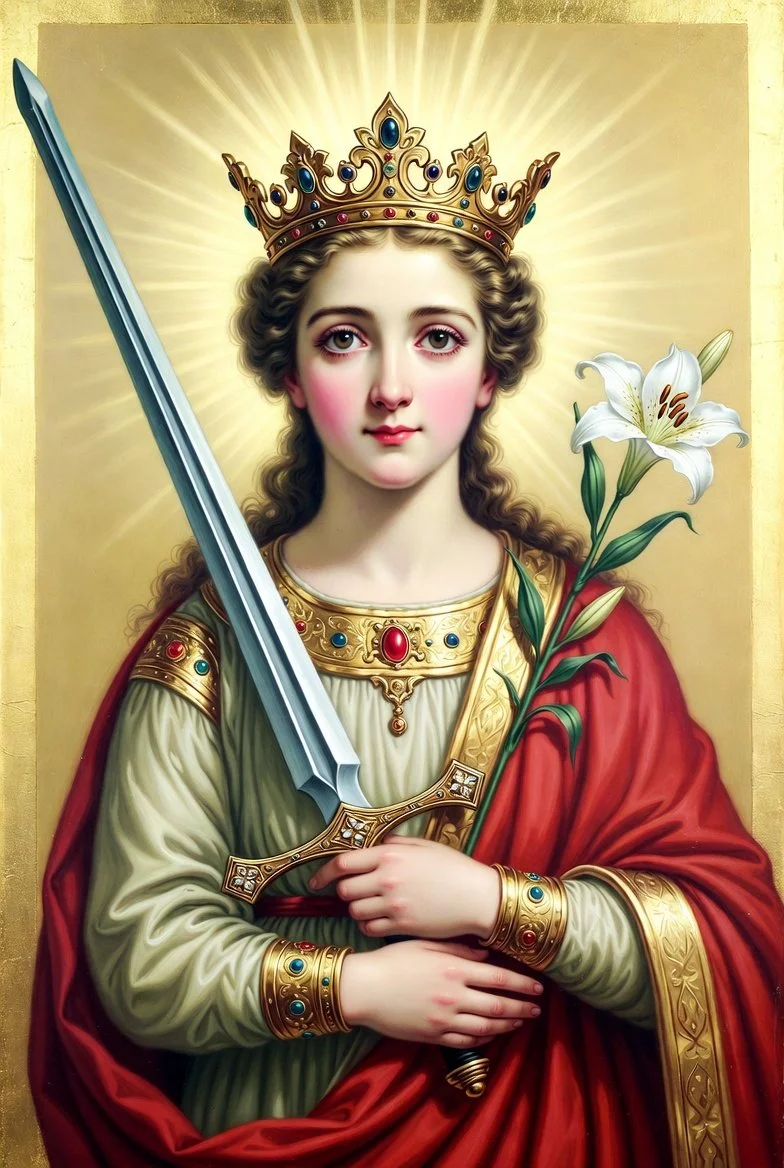
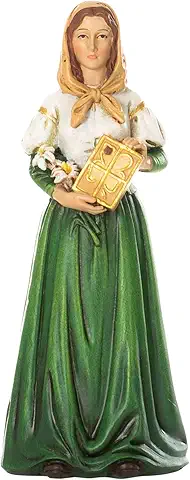
Catholics have developed various devotional practices to honor St. Dymphna and seek her intercession. Many people pray the Novena to St. Dymphna, a set of prayers over nine days, especially when praying for someone’s mental health. There is also a special St. Dymphna chaplet (a string of beads similar to a mini-rosary) used to meditate on her life and ask her prayers. Churches and hospitals sometimes have a statue of St. Dymphna – often depicted as a young girl crowned with flowers, sometimes holding a sword and the Bible (symbols of her martyrdom and faith). Simply lighting a candle by her statue and offering your suffering to God through her can be a comforting ritual. The National Shrine of St. Dymphna in the United States (located in Massillon, Ohio) receives many prayer requests and letters from people seeking help for loved ones with mental illness. Similarly, in recent years, parish support groups for mental health have arisen under her patronage – for example, some parishes host “St. Dymphna’s Disciples” meetings, where people pray the rosary together and share resources for mental wellness, uniting practical help with spiritual support. These efforts reflect the Church’s growing understanding that mental health struggles require both compassionate care and fervent prayer.

One of the most beautiful traditions that grew from St. Dymphna’s story is found in Geel, the very town of her martyrdom. From the Middle Ages onward, Geel became famous for its unique approach to caring for the mentally ill. Pilgrims suffering from mental disorders would travel to Geel seeking St. Dymphna’s intercession. The amazing thing is that the townspeople of Geel opened their homes to these pilgrims, welcoming them not as outcasts but as family. Rather than confining the mentally ill to asylums, many were hosted by families in Geel who cared for them with kindness – a practice that continued for centuries and in some forms even to this day. This community of Geel, inspired by St. Dymphna’s legacy, showed the world a model of integrating those with mental illness into loving family life. Many who went there found improvement or healing, which they attributed to St. Dymphna’s prayers and the environment of acceptance. This centuries-long “miracle of Geel” demonstrates that God’s grace can work through both prayer and compassionate community to heal wounded minds. It’s a legacy that St. Dymphna’s devotees cherish: she inspires us not only to pray for miracles, but also to extend practical love and acceptance to those who suffer mental afflictions.

There are many personal testimonies of St. Dymphna’s help. For example, the parents of a young man with severe depression began a novena to St. Dymphna on his behalf. Around the final day of the novena, their son, who had been despondent and closed-off, suddenly agreed to receive help – he willingly went to a doctor, started therapy, and began to show glimmers of hope and engagement with life again. His parents firmly believe that St. Dymphna gently touched his heart, obtaining the grace he needed to take that first step toward healing. Another story involves a woman who had been suffering frightening panic attacks. She kept a holy card of St. Dymphna in her purse. Whenever she felt an episode coming on, she would hold the card and say, “St. Dymphna, please carry this fear to Jesus for me.” She describes that in most cases, a wave of calm would follow – not necessarily removing all anxiety instantly, but giving her the strength to get through the moment. Over time, her panic attacks lessened. Whether one attributes this purely to psychological reassurance or to real spiritual intervention (or both!), this woman is convinced that the friendship of St. Dymphna made a critical difference in her journey to wellness.

St. Dymphna’s intercession reminds us that God’s love extends into the shadows of mental illness. In her, we have a loving patron who never judges or stigmatizes our psychological struggles, but rather wraps us in prayer and points us toward healing. We should never be afraid or ashamed to ask for help – both human help and heavenly help. St. Dymphna, who upheld her faith amid madness and brought God’s light to the mentally afflicted, is a faithful intercessor for all who call upon her. St. Dymphna, patroness of those with anxiety, depression, and mental struggles, pray for us.

Saint Dymphna Religious Statue
A beautifully detailed devotional statue of Saint Dymphna, the patroness of those seeking mental and emotional wellness. This piece serves as a peaceful addition to any prayer space, offering a visual reminder of faith and intercession during difficult times.
View on Amazon
Saint Dymphna Prayer Card & Medal Set
This Catholic devotional set features a laminated prayer card and a Saint Dymphna medal pendant charm. It is designed to be carried or worn as a source of spiritual comfort and a reminder of the saint's patronage over mental and emotional health.
View on Amazon
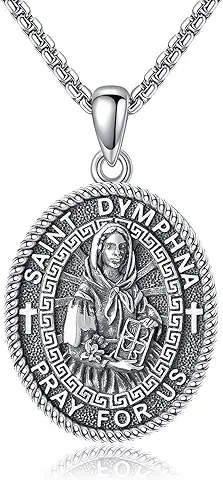
Saint Dymphna Prayer Necklace
A meaningful piece of religious jewelry, this Saint Dymphna necklace features a dedicated medal pendant on a durable chain. It serves as a constant companion for prayer and a symbol of protection for those seeking peace and mental clarity.
View on Amazon

Saint Thérèse of Lisieux – The Little Flower’s Gentle Peace

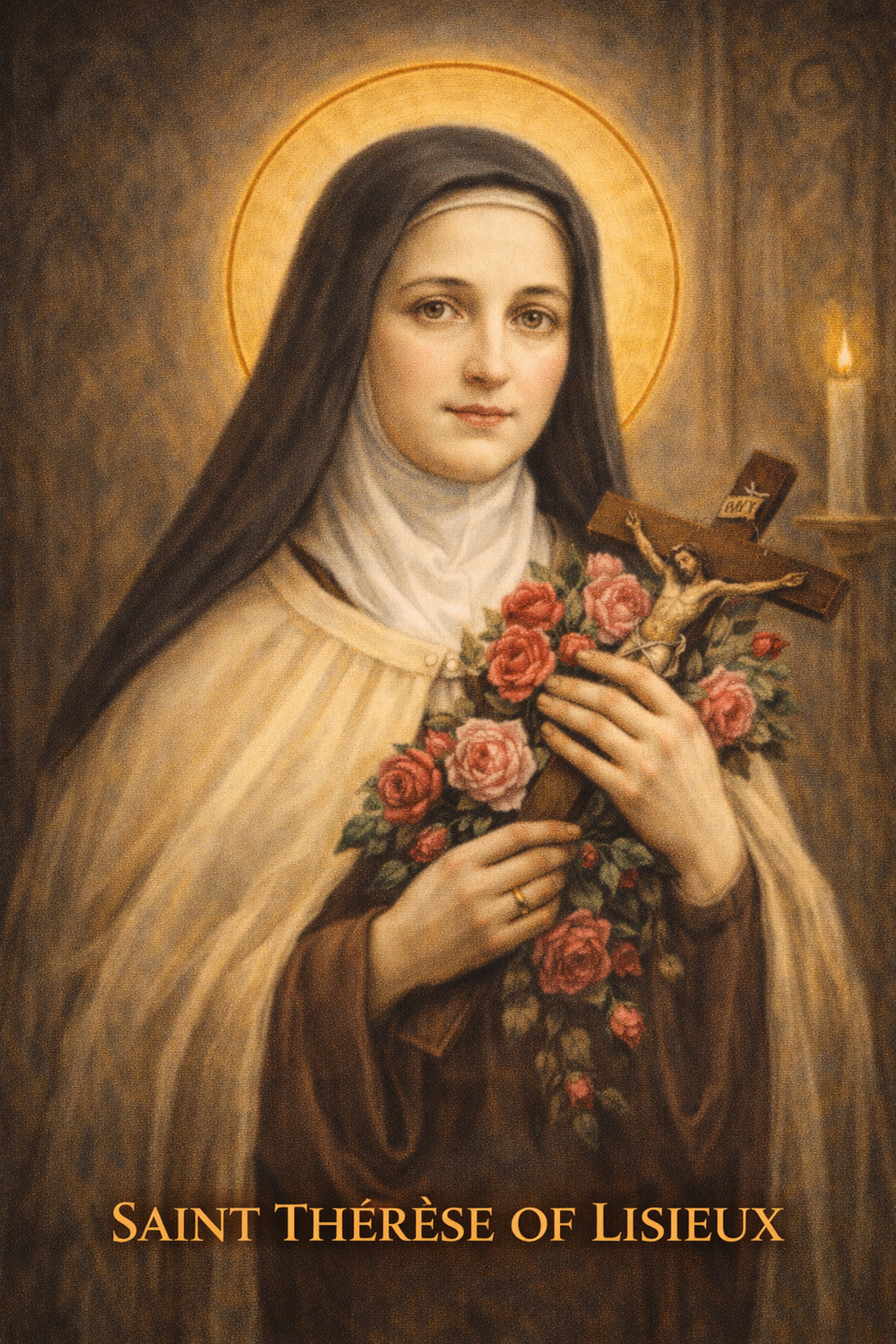
Saint Thérèse of Lisieux, also known as “The Little Flower”, is one of the most beloved modern saints. At first glance, some might not associate her with anxiety or depression – after all, St. Thérèse is often pictured with a serene smile and an armful of roses, symbolizing her shower of blessings from heaven. She is famous for her childlike trust in God and her Little Way of spiritual childhood. But if we step closer into Thérèse’s life, we discover a soul that knew deep emotional pain and mental trials. Her journey from emotional turmoil to profound peace in God makes her a beautiful patroness for those who battle inner darkness.

St. Thérèse was a French Carmelite nun who lived in the late 19th century (she was born in 1873 and died in 1897 at the young age of 24). Her short life was marked by intense experiences of both joy and suffering. As the youngest of nine children (five of whom survived childhood), Thérèse grew up in a devout and loving family, but she was extremely sensitive by nature. Early on, she faced traumatic losses: her mother died of breast cancer when Thérèse was only four, which devastated her. Then, one by one, her older sisters – who had been like second mothers to her – left home to enter the convent. These separations wounded Thérèse deeply; she experienced something akin to separation anxiety and depression during her childhood. In school, she was mercilessly bullied by other girls, which made her cry often and withdraw. At one point, young Thérèse became so ill with a mysterious nervous sickness (with high fevers, hallucinations, and panic attacks) that her family feared she would die. This illness is thought to have been partly psychosomatic, perhaps triggered by the stress and sorrow she had been through. In a moment that Thérèse later described as miraculous, she was suddenly cured after gazing at a statue of the Virgin Mary – she saw Mary smile at her, and her illness vanished. This miracle of the Virgin’s smile marked a turning point in Thérèse’s mental and emotional health.

Despite that healing, Thérèse remained very emotionally delicate for years. She described herself as hypersensitive – prone to tears, mood swings, and scrupulosity (religious anxiety about sin). She often worried she had offended God or that her smallest faults were terrible sins. This scrupulosity is essentially a form of religious OCD, and it tormented her until she learned to trust in God’s mercy more than her own feelings. A second turning point came at Christmas when she was 14. Thérèse overheard her father make a hurtful remark about her childishness (not realizing she could hear). Normally, this would have caused Thérèse to break down weeping. But that night, she felt a sudden surge of inner strength. She describes it as a mini-conversion – she decided to overcome her self-pity and sensitivity and to start living for Jesus and others. From that moment, Thérèse was noticeably more balanced and emotionally strong. A mere three months later, at 15, she boldly asked the Pope for permission to enter the Carmelite convent early, so great was her desire to give her whole life to God.

In the cloistered life of Carmel, Thérèse continued to struggle at times with anxiety, spiritual dryness, and even depression, but she gradually developed her famous spirituality of the “Little Way.” This was a path of radical trust and simplicity: doing small everyday things with great love, and trusting that she was a child in God’s arms no matter how weak or imperfect she felt. She learned to find joy in suffering by believing that even when she felt nothing but darkness, she could offer that feeling to Jesus as an act of love. In her last 18 months, Thérèse endured a particularly grievous trial: she coughed up blood and realized she had tuberculosis (the illness that would kill her), and around the same time she entered a “dark night of faith”. She wrote that her mind was plagued by temptations to disbelief, and she could no longer feel any consolation in prayer. She described it as if a thick fog had settled around her soul, making her unable to see heaven or feel God’s presence – a real spiritual agony, on top of her physical agony. And yet, incredibly, she smiled through this trial. Those around her did not realize the darkness she was in because she deliberately put on a cheerful face, all the while making many acts of faith in the unseen God. She said, “I have made more acts of faith in the past year than all my life.” Her trust was purified in this fire of spiritual depression. By the time of her death, she had achieved a truly heroic abandonment to God’s love.

St. Thérèse is invoked by those with anxiety or depression because she herself went from extreme emotional vulnerability to becoming an example of peaceful trust. She once admitted that if she had not had faith, she would have likely ended her life when she faced so much inner pain – that is how intense her despairing feelings were. But by clinging to Jesus, she emerged victorious over those feelings. This makes her an incredible role model for anyone who feels like they are drowning in sadness or constant worry. Thérèse shows that it is possible to find hope and even joy again, by living one day at a time, doing small things out of love, and leaning completely on God’s grace. She famously said, I will spend my heaven doing good on earth.” She promised to send down a “shower of roses” from heaven – a poetic way to say she would intercede and send graces to those who ask for her help. True to her word, people all over the world have claimed to receive roses (either literal roses or other signs) after praying to St. Thérèse for a favor. This has especially been the case for those praying for emotional healing or a sign of hope in dark times.

Catholics turn to St. Thérèse in various ways. Perhaps the most popular devotion is praying a novena to St. Thérèse, often with the specific hope of receiving a rose as a visible sign of her intercession. Someone struggling with depression might say, “Little Flower, I am in such darkness; if you are praying for me, please ask God to send me a rose as a sign that things will be okay.” Amazingly, many have found a rose in unexpected ways – for instance, randomly encountering a rose in a place they wouldn’t normally, or being given one by a friend “out of the blue” – just around the time they finish the novena. These gentle “God-incidences” bring great comfort, the sense that “Thérèse heard me, and God cares about my sorrow.” Of course, one doesn’t always receive a physical rose, but St. Thérèse has a way of answering with spiritual roses too (like a sudden peace or a solution to a problem).

Reading St. Thérèse’s autobiography, “Story of a Soul,” can itself be a healing experience for someone with anxiety. Her writings are so honest about her weaknesses and fears, yet full of hope in God’s fatherly love. Many readers feel as if Thérèse becomes a personal friend who understands their psyche. She writes, “It is impossible for me to grow up: I must bear with myself such as I am, with all my imperfections.” For an anxious perfectionist, those words are liberating – giving permission to be gentle with oneself. Thérèse also wrote comforting letters to people who were suffering. In one letter to a seminarian struggling with depression, she said she wished she could fly to his side and support him, and assured him that Jesus loved him even in his darkness. These kind of messages resonate deeply with readers today. To pray to Thérèse, one can simply speak to her from the heart (as the Catholic-Link story showed – a teenager at her shrine vented all his frustrations to Thérèse and strongly felt her understanding presence). Some people keep a little statue or image of St. Thérèse with her roses, to remind them to practice her Little Way especially when anxious: doing the next small task, offering up small sacrifices, and saying “Jesus, I trust in You” when fear arises.

There are numerous accounts of St. Thérèse’s intercession bringing peace in mental turmoil. One young woman who suffered from chronic anxiety and panic attacks shared that during one particularly severe night, she prayed through tears for St. Thérèse to help her trust God. The next morning, as she stepped outside, she noticed a single pink rose lying on her doorstep. No one knew of her prayer, and roses were out of season at the time. She took it as a personal sign from the Little Flower. From that day, she said, whenever anxiety threatened to overwhelm her, she remembered that rose and the unspoken message it carried: “You are not alone; heaven is watching over you.” That memory gave her the strength to push through waves of panic with renewed faith.

Another powerful example: A man who fell into a deep depression following a series of personal failures found it hard to even pray. In his desperation, he remembered hearing about St. Thérèse. He muttered, almost skeptically, “Okay Little Flower, if you care, show me.” He decided to read a few pages of Story of a Soul. He later recounted that something in her simple words about trusting God like a child moved him to tears – the first tears of release he had cried in months. In that moment, he believed Thérèse was right there encouraging him. It didn’t cure his depression overnight, but it was the turning point where he felt a spark of hope again and sought help, convinced that God had not abandoned him. Over time, his depression lifted, and he attributes that initial breakthrough to St. Thérèse extending a rose to pull him out of the darkness.

St. Thérèse’s “little way” offers a gentle antidote to the heaviness that anxiety and depression bring. She teaches us to live one day (even one moment) at a time, accepting our limitations and trusting that we are infinitely loved by God despite our weaknesses. When our minds race or sink into despair, Thérèse reminds us to pause and say, “God, I am just a little child who needs You.” In that spiritual childhood, there is freedom from the pressures that weigh us down. Through her intercession and example, the Little Flower scatters rose petals of comfort, trust, and spiritual joy to all who ask. St. Thérèse of Lisieux, flower of love and trust, pray for us and help us to find peace in God’s arms.

Saint Thérèse of Lisieux Prayer Card
A beautifully handmade prayer card honoring the "Little Flower," Saint Thérèse of Lisieux. Crafted with prayer in Austin, Texas, this durable card features her classic image and is perfect for those seeking her "Little Way" and intercession for spiritual healing.
View Product
Little Flower Rosary Beads & Card Set
This Catholic set features **Brazilian hand-crafted** one-decade rosary beads and a Saint Thérèse prayer card. Including the Lord's Prayer, this portable devotional set is perfect for daily prayer and seeking the intercession of the "Little Flower."
View on Amazon
Saint Therese of Lisieux Statue
A finely detailed devotional statue of Saint Thérèse of Lisieux, the "Little Flower." This high-quality figure captures her holding roses and a crucifix, serving as a beautiful centerpiece for a home altar or a reminder of her promise to "let fall a shower of roses."
View on Amazon

Saint Padre Pio – “Pray, Hope, and Don’t Worry”

St. Padre Pio of Pietrelcina is a 20th-century saint (1887–1968) known worldwide as a miracle worker, healer, and incredibly holy priest. He is famous for many extraordinary gifts – he bore the stigmata (the wounds of Christ) for 50 years, he could read hearts in confession, and countless people experienced miraculous healings through his prayers. But perhaps his most famous words of counsel are surprisingly simple: “Pray, hope, and don’t worry.” This was Padre Pio’s advice to all who came to him burdened with troubles and fears. In full, he often said: “Pray, hope, and don’t worry. Worry is useless. God is merciful and will hear your prayer.” For anyone weighed down by anxiety or depression, these words strike right at the heart. They capture Pio’s deep trust in God and his understanding that anxiety only steals our peace, whereas prayer and hope restore it.

Padre Pio’s life was not an easy one, even though he was a living saint. He endured constant suffering, both physically and emotionally. He had chronic health problems, including pain from his stigmata wounds and other illnesses that at times left him very weak. He also went through intense spiritual warfare – he reported that he was harassed by the devil in physical manifestations during the night. On top of that, not everyone in the Church believed his mystical experiences were real; some superiors and even Vatican officials accused him of fraud or fanaticism. In the 1920s, Padre Pio was subjected to investigations and was forbidden to publicly celebrate Mass or hear confessions for a time (this was an enormous suffering for a priest whose whole life was helping souls). Despite these humiliations, Pio obeyed quietly and never lost his serenity. Those who knew him said he always radiated a certain peace and joy, even while he himself bore so many crosses. This makes his counsel “don’t worry” especially credible – he practiced what he preached. He could have succumbed to anxiety about his reputation, his health, or his capacity to carry on, but instead he surrendered all those worries to God.

Padre Pio had a mystic’s insight into the human soul. When anxious people came to him, he often immediately pinpointed the root of their anxiety (sometimes even telling them their unspoken sins or fears, bringing them to confession for relief). He emphasized God’s mercy and providence at every turn. One of his other quotes elaborates: “Do not worry over things that generate preoccupation and anxiety. One thing only is necessary: lift up your spirit and love God.” This reminds us a bit of Jesus’ words to Martha in the Gospel – that she is anxious about many things when really one thing is needed (cf. Luke 10:41-42). Padre Pio echoed Christ’s message: focus on God, and everything else falls into place.

For those suffering depression, Pio was compassionate but also urged them to cling to prayer even when it’s hard. To a spiritual daughter who felt despair, he wrote, The life of a Christian is nothing but a perpetual struggle against self; there is no flowering of the soul to the beauty of its perfection except at the price of pain.” He did not minimize people’s pain; rather, he acknowledged it but encouraged them that their pain united to Jesus would lead to greater good. He had the supernatural gift of healing both bodies and souls, yet he always insisted: “I am just a humble friar, it is God who heals.” This humility and constant pointing to God reassures us that if we seek Padre Pio’s intercession, he will not himself fix our problems, but he will surely pray with us and direct us toward God’s comfort.

Catholics today have a very strong devotion to St. Padre Pio, especially those who are struggling. It’s common to see his photograph or statue in homes – an image of a gentle bearded friar with piercing eyes, often holding a cross or raising his hand in blessing. People draw comfort just from seeing his kind face, imagining him saying, “Don’t worry, my friend; I’m praying for you.” There are also Padre Pio prayer groups all around the world, as he requested people to come together in prayer. These groups pray for the needs of their members, which often include intentions for those with mental suffering. Many individuals pray a Novena to Padre Pio, typically leading up to his feast day on September 23 or anytime they need help. One powerful prayer associated with him is the “Efficacious Novena to the Sacred Heart”, which Padre Pio recited daily for those who asked his prayers. It reflects trust in Jesus’ Sacred Heart and has brought comfort to many devotees.

Another popular devotion is simply repeating his famous motto in times of stress: “Pray, Hope, and Don’t Worry.” Some people frame those words and hang them on their wall as a daily reminder. One might also pray with a relic of Padre Pio (many churches have relics of his gloves or cloth that touched his wounds) – touching a rosary or a holy card to the relic and then using it in prayer, believing it’s a tangible connection to this powerful saint. None of these practices are superstition; they are ways to concretely bolster our faith that God hears us and that the saints are near.

Does Padre Pio actually help those with anxiety or depression in measurable ways? Ask his devotees and you will hear a resounding yes. While scientific verification of “inner peace” miracles is tricky, the anecdotal evidence abounds. A woman who was spiraling into despair after losing her job and dealing with family problems felt she had nowhere to turn. She happened to attend a Mass where a priest spoke about Padre Pio’s life and his message of hope. Moved, she went up after Mass to venerate a relic of Padre Pio that the priest had brought. She said a simple prayer, “Padre Pio, I feel like giving up. Please pray for me to find hope.” She later shared that from that day forward, she felt a weight lift. Her external circumstances didn’t magically change overnight – she was still unemployed for a while – but her outlook transformed. She found the strength to start each day with prayer, to trust that God had a plan, and eventually doors opened for her both in work and emotional healing. She firmly believes Padre Pio’s intercession obtained for her the grace of perseverance and trust, which conquered the depression that had threatened to consume her.

Another account comes from a young man suffering debilitating anxiety attacks. He kept hearing the phrase “don’t worry” associated with Padre Pio and was intrigued, though not particularly devout at first. One night, during a severe bout of anxiety, he remembered a prayer a friend had given him – Padre Pio’s prayer to Jesus, “Stay With Me, Lord.” This is a prayer Pio wrote which is especially fitting for those who feel fearful or alone. In it, one asks Jesus to stay near because we are weak and in need. The young man prayed, “Stay with me, Lord, for I am afraid,” and invoked Padre Pio. He later testified that an indescribable calm enveloped him shortly after, allowing him to finally sleep restfully. It was the first full night’s sleep he’d had in weeks. From then on, whenever he felt anxiety rising, he’d repeat, “Jesus, I trust in You. St. Padre Pio, pray for me.” The panic would subside much quicker than before. He still sought professional help for his anxiety, but he says the spiritual support from Padre Pio was a turning point in regaining control of his life.

Many people also report a certain mysterious sign linked with Padre Pio’s intercession: the fragrance of flowers (particularly roses) or of tobacco (as Padre Pio smoked a pipe in his lifetime) when they pray to him. For instance, a woman caring for her mentally ill husband was at the brink of exhaustion and sorrow. She has a great devotion to Pio, and one evening she broke down crying and begged, “Padre Pio, I need to know you’re with me in this.” In that moment, she suddenly smelled a strong scent of roses in the room – yet no flowers were there. It lingered for a few minutes and then vanished. To her, it was a gentle confirmation that Padre Pio was indeed interceding, and it gave her renewed courage to carry on. While skeptics might shrug at such stories, for believers these experiences reinforce that the saints are truly close by, helping us shoulder our burdens.

Padre Pio’s consistent message was that Christ is the answer to every fear. He directed all souls to prayer and trust. In a very fatherly way, he didn’t want people to waste their lives in anxious fretting. He would often say, lovingly but firmly, “Worry is useless.” This doesn’t mean our problems are trivial; it means that by worrying we cannot add a single hour to our life or solve a single problem – but by praying and hoping, we open the door for God to work. When anxiety or depression weighs on us, St. Pio encourages us to make an act of surrender: to tell Jesus we abandon ourselves to Him, and then let go of the obsessive concern, even if our feelings haven’t caught up yet. “Pray, hope, and don’t worry” encapsulates a spiritual regimen that over time can liberate the mind from constant dread. We do what we can (seek help, take necessary steps in life), and for the rest, trust God’s love.

For anyone reading this who might be struggling with fears, sadness, or uncertainty, Padre Pio offers you this simple yet profound reassurance: God is with you, so you need not be afraid. St. Padre Pio, loving spiritual father to countless troubled souls, pray for us and help us to hand our worries over to God with faith.

Saint Padre Pio Statue
A reverent and detailed statue of Saint Padre Pio of Pietrelcina. This devotional figure captures the beloved stigmatic saint in a classic pose of prayer, making it a beautiful spiritual focal point for any home altar, office, or recovery space.
View on Amazon
Saint Padre Pio Bracelet & Prayer Card Set
This thoughtful gift set includes an adjustable devotional medal bracelet featuring Saint Padre Pio and a matching holy prayer card. It is designed to provide spiritual comfort and a wearable reminder of the saint's powerful intercession.
View on Amazon
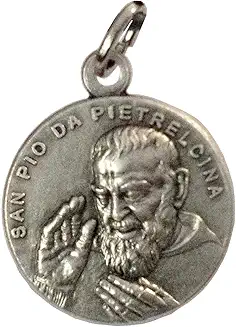
Saint Pio of Pietrelcina (Padre Pio) Medal
A high-quality devotional medal honoring Saint Pio from Pietrelcina. Featuring a detailed likeness of Padre Pio, this silver-toned medal is perfect for adding to a necklace or rosary, serving as a constant companion for those seeking healing and strength.
View on Amazon

Saint John of the Cross – Guide Through the “Dark Night”

Few saints have delved as deeply into the mystery of spiritual darkness and suffering as St. John of the Cross. This 16th-century Spanish saint is a Doctor of the Church, renowned for his mystical writings that map out the soul’s journey toward God. St. John of the Cross gave us the term “the dark night of the soul,” which has entered common language to describe a period of intense trial where God seems absent. If you have ever felt a profound emptiness, a depression that goes beyond clinical symptoms into the realm of existential despair, you might be experiencing something akin to what St. John describes as the dark night. He is a saint who understands that very state. For anyone grappling with depression or crippling spiritual anxiety (“Does God even care about me? Why can’t I feel anything?”), St. John of the Cross stands as a wise guide and friend.

Who was John of the Cross? He was born Juan de Yepes in 1542 in Spain. As a young man he joined the Carmelite order and eventually collaborated with the great St. Teresa of Ávila to reform the Carmelites, seeking to lead a stricter, more prayerful life. This work, however, earned him enemies within his own order. At one point, a group of opponents kidnapped John and imprisoned him in a tiny cell in Toledo for nine months. He was beaten and kept in solitary confinement, with only a small slit for light. During this horrific ordeal, John faced the brink of despair. Yet it was in this darkness that he received some of his greatest inspirations. He composed sublime poetry in his mind (and later wrote it down after a dramatic escape). One of these poems was “The Dark Night,” an allegory of the soul seeking the beloved (God) through painful purgation. After he escaped, John continued a life of holiness, founding new monasteries and guiding many on the spiritual path. But he always carried the lessons of suffering with him. His writings like “Dark Night of the Soul” and “The Ascent of Mount Carmel” systematically lay out how journeying through darkness can purify the soul for union with God. He died in 1591, after much illness and even more unjust treatment, but with a soul shining in love.

Why is St. John of the Cross especially invoked for anxiety or depression? Primarily because he distinguishes between ordinary sadness and the deep spiritual purgation that can mimic depression, offering meaning to those in the latter situation. John teaches that sometimes God allows us to feel abandoned or drained of all consolation as a way to purify our love. In those times, we may indeed experience symptoms much like clinical depression: lethargy, lack of pleasure in anything, a sense of hopelessness, even temptation to give up on prayer or life itself. John writes that the soul in a dark night feels as though it’s in a dark tunnel with no light, and all the things that used to give comfort (spiritual feelings, intellectual insights, etc.) are taken away. Importantly, though, he insists this is not a sign that God has truly abandoned the soul. On the contrary, it may be a sign that God is very close, working in a hidden way to detach the soul from false joys and lead it to a much greater, more enduring peace. This perspective can be incredibly consoling to a believer in the throes of despair: the idea that “perhaps this emptiness I feel has a purpose; perhaps God is still here, loving me in the dark, and leading me somewhere better.” St. John of the Cross basically normalized a kind of spiritual depression as an expected trial in a deep relationship with God. By doing so, he removed some of the stigma or panic that might accompany such an experience. Many saints and ordinary people have gone through periods that sound like clinical depression (feeling of God’s absence, loss of drive, etc.), and John’s teaching suggests that enduring this with faith can lead to an even stronger faith and love.

Now, John of the Cross is very careful to say not every case of depression is a “dark night from God.” He acknowledges natural causes like temperament or illness that can cause similar feelings, which should be treated accordingly (indeed, today we would seek therapy or medication in such cases). But he also says that even in those natural depressions, a person can unite their suffering to God and thereby glean spiritual growth from it. So either way, his guidance and example are invaluable.

Devotion to St. John of the Cross often centers on reading his works and seeking his intercession for spiritual strength. Admittedly, his writings are dense and not always easy to grasp, especially when one is in a fragile state of mind. But there are many accessible summaries and quotes that can speak directly to a heart in pain. One such quote from St. John that is often shared is: “The endurance of darkness is the preparation for great light.” In other words, if you are able to cling to God through the darkest night, you are being prepared for an incredibly radiant dawn of soul. This quote alone has given hope to many who didn’t see a way out of their depression. It promises that darkness is not forever – it’s a tunnel, not a brick wall.

Catholics might honor St. John by celebrating his feast day (December 14) with prayers for those suffering mental or spiritual anguish. A novena to St. John of the Cross can be prayed, reflecting on his insights each day. Furthermore, someone battling anxiety might keep a copy of a prayer he wrote, such as his famous “Prayer of Peace” which begins, “O Blessed Jesus, give me stillness of soul in You. Let Your mighty calmness reign in me,” and later includes the line, My Lord and my God, take from me everything that distances me from You. My Lord and my God, give me everything that brings me closer to You… This prayer is a plea for detachment from anything that isn’t God’s will and an embrace of whatever God allows – a hard prayer, but one that can slowly lead the anxious heart to say, “God, I accept this moment from Your hand.” That act of trust, repeated, is very powerful in anxiety.

St. John of the Cross also emphasized silent contemplation and being with God even when no words come. A practical way someone might pray with St. John’s help is: when feeling depressed and unable to form prayers, simply sit quietly with a crucifix or in front of the Eucharist in a chapel, and say, “Lord, I am here in this dark night, but I remain with You even if I feel nothing. St. John of the Cross, stay with me and help me persevere.” This kind of prayer echoes John’s own approach during his dark dungeon days – he couldn’t do much, but he made an interior act of love by not turning away from God in anger. People who try this often report that, over time, this practice deepens their resilience and faith. It’s like exercising a muscle of trust: initially painful, but gradually one notices a new strength.

There are definitely testimonies of people finding relief and meaning in suffering by following St. John’s path. For example, a seminarian once shared that he was going through a period of severe spiritual dryness and anxiety about his vocation. He was losing interest in prayer and doubting his calling, which brought on depression. His spiritual director had him read some passages from Dark Night of the Soul. Initially, the seminarian found it heavy, but one concept struck him: John wrote that the feeling of God’s absence is actually a call to pure faith – to love God for His own sake and not for His gifts. That gave the young man a spark. He decided to stick it out, telling God each day that even if he never felt joy again, he would still choose to love and serve Him. In time, the darkness passed and he emerged with a more mature, steady faith. He often credits St. John of the Cross for guiding him through that crisis, teaching him not to fear the emptiness but to walk by faith through it.

Another person, a middle-aged mother dealing with a long-term depression, found St. John’s writings a lifeline. She said that reading about the dark night made her realize that her sense of desolation didn’t mean she was a “bad Christian” or that God had rejected her. Instead, she began to see it as a shared experience with many saints, a trial that could have purpose. She especially held onto John’s imagery that in the dark night, the soul is actually being held and transformed by God even though it doesn’t realize it. This helped her to stop blaming herself or God for her depression and instead to surrender it day by day. She combined spiritual help with professional therapy, and eventually saw significant improvement. She now says her faith is stronger than ever, because having gone through darkness, she no longer takes light for granted. In her words, “St. John taught me that hope is still present even when you feel nothing. I learned to trust that God was working in me in secret. And indeed, He brought me out of the pit.”

For someone currently in a bleak place, St. John of the Cross offers both empathy and assurance. Empathy, because he validates that what you feel – the emptiness, the anxiety, the confusion – is real and even common in spiritual life. You’re not the only one, nor are you forsaken by God. Assurance, because he insists that God’s love is at work even when you can’t sense it. The sun is still shining behind the clouds. John advises patience: “If a man wishes to be sure of the road he treads on, he must close his eyes and walk in the dark.” That is so counter-intuitive, but he means that by faith (closing the eyes of relying on feelings or understanding), and continuing step by step, you will be led true. It’s okay not to have it all figured out; you just keep holding on to God’s hand in the dark.

In practical terms, invoking St. John of the Cross might not result in an immediate mood lift or a sudden burst of joy (that wasn’t his style!). But his intercession can bring a gradual deepening of faith and inner fortitude, which is often exactly what one needs to cope with depression or anxiety. John helps us reframe those experiences not as meaningless suffering, but as a possible path to something greater – a more profound union with God and empathy with others who suffer. And he reminds us that dawn does come. Just as he eventually escaped his prison to see the sunlight of a new day, our souls too will find light again by God’s grace.

St. John of the Cross, mystical doctor of hope, pray for us. Help us to find God even when we feel nothing, and lead us through our dark nights into His everlasting Light.

Saint John of the Cross Wood Icon
A high-quality religious wood icon featuring a classic depiction of Saint John of the Cross. This durable plaque is designed for prayer and reflection, making it a beautiful addition to a home chapel or a thoughtful gift for those seeking spiritual depth.
View on Amazon
Saint John of the Cross Sterling Silver Medal
This oval medal is crafted from .925 sterling silver and features a detailed image of the saint. It comes with a stainless steel lite curb chain and a deluxe gift box, serving as a wearable sign of faith and a request for his spiritual intercession.
View on Amazon
The Collected Works of St. John of the Cross
This revised edition contains the complete spiritual writings of the Doctor of the Church, including "The Ascent of Mount Carmel" and "The Dark Night." It is an essential resource for those looking to study his profound teachings on the soul's journey to God.
View on Amazon

Christ Our True Hope and Healer

As we reflect on these saints and the compassionate Mother Mary, a common thread emerges: no matter how heavy the cross of anxiety or depression, we are not carrying it alone. Each of these holy figures suffered in some way – emotionally, mentally, or spiritually – and each one found their strength in Jesus Christ. They now stand ready to help us find that same strength. In Catholic spirituality, healing is understood in a holistic way. Sometimes God grants a physical or mental healing – the depression lifts, the panic attacks cease – and we should thank Him wholeheartedly for those miracles when they occur. But other times, healing takes a different form. Instead of removing the struggle, God heals our perspective and heart within the struggle. He might not take away all our anxiety in a moment, but He gives us new courage to face it. He might not banish every dark feeling, but He lights a little candle of hope that keeps us going through the night. This too is a profound healing, often more lasting than a quick fix.

The saints teach us that suffering can have meaning. It can even become a path to deeper love. St. John of the Cross showed that enduring the dark night purifies our love for God. St. Padre Pio taught that accepting sorrows and uniting them to Christ can make us holier and bring blessings to others. St. Thérèse found her vocation in the heart of the Church by making herself small and weak for Jesus. St. Dymphna’s tragedy sparked centuries of compassion and care for the mentally ill. And our Blessed Mother Mary transformed her sorrow into a mission of maternal comfort for all humanity. None of them would ever glorify suffering for its own sake – rather, they glorify God’s grace that triumphs in suffering. When we offer our pain to God, it is never wasted. It becomes like a seed planted in the dark soil that will, in time, bloom into something beautiful, whether in this life or the next.

It’s important to remember that seeking help through prayer and the saints does not exclude other forms of help. As Catholics, we value the gifts God gives through medicine, therapy, and supportive community. The Church urges us to care for our mental health with all available tools – faith and reason working together. So, someone with clinical depression is encouraged to see a doctor or counselor and to pray, receive sacraments, and ask the saints’ intercession. There is no contradiction here; grace builds on nature. The saints themselves often sought to alleviate suffering with natural means (for instance, many saints ran hospitals or consoled the sick with both prayer and practical care). So, we should never feel that turning to saints and sacraments means we must reject medical aid. God can work through a skilled therapist just as surely as through a miraculous intervention. What our faith adds is the knowledge that even in the best therapy, the soul still needs grace; love, forgiveness, and spiritual meaning are integral to full healing.

Ultimately, Christ is the source of all healing and peace. The saints are like signposts that always point us back to Jesus. They are our friends and intercessors, but Jesus is our Savior. In the Gospels, we see how tenderly Jesus treated those who were afflicted in mind or spirit. He freed people from demons, He comforted the sorrowful, He reassured the anxious (“Do not be afraid,” He said again and again). He even experienced extreme anguish Himself in Gethsemane, to the point of sweating blood – an actual condition associated with intense anxiety. On the cross, He underwent the feeling of abandonment: “My God, why have You forsaken Me?” There is no aspect of human mental suffering that Christ did not taste. Because of this, we can be certain that Jesus perfectly understands every panic attack, every bout of depression, every obsessive worry that we grapple with. He compassionately invites, “Come to me, all who labor and are heavy laden, and I will give you rest.” This promise is the anchor of our hope. The saints we’ve discussed each responded to that invitation and found rest in Christ, even while carrying heavy crosses.

In a very real way, the Church is a hospital for the broken-hearted. Through prayer and the sacraments, especially the Holy Eucharist, Jesus pours His healing love into us. When we receive Communion, we receive the True Physician into our souls. Over time, this can bring a peace the world cannot give – sometimes even when our external circumstances remain challenging. Confession, too, can lift the burden of shame or guilt that may accompany depression or anxiety (for example, some feel guilt for not being “happy” or “grateful enough” – the sacrament assures us of God’s unconditional love). The Anointing of the Sick specifically asks God to relieve and strengthen those in serious illness, including mental illness. And the support of fellow believers – a kind word, a prayer group, a listening ear at church – are channels of God’s grace to us. We should never underestimate how much Christ can touch us through His Body, which is the community of faith.

If you or a loved one are struggling with anxiety or depression, know that there is hope. It may be a journey, but you are not walking it alone. You have a Mother in heaven, Mary, who is by your side wiping your tears. You have friends in the saints who are praying for you and cheering you on. And most importantly, you have Jesus, who calls you His beloved and wants to give you peace. Sometimes that peace will come in quiet, gentle moments – a small respite in prayer, a comfort through a kind word or a beautiful sunset that God puts in your path. Treasure those moments; they are real gifts. Other times, peace might seem very far away, and that’s when we lean even more on faith: trusting that Christ is carrying us even when we cannot feel it.

Healing can indeed take many forms. It might be a sudden breakthrough, or it might be a gradual learning to live freely even with a thorn in the flesh (like St. Paul, who asked for his affliction to be removed, but God answered, “My grace is sufficient for you, for my power is made perfect in weakness.” Paul then realized that when he was weak, relying on God, he was actually strong). Whichever way God works in your life, the end goal is the same: that you know you are loved, that you find meaning in life, and that you grow closer to Him.

As this hope grows, many people even become, in turn, beacons for others. The saints we discussed weren’t born saints – they became saints through suffering transformed by grace. In the same way, your story of suffering can become a story of encouragement for someone else. Who better to empathize with someone anxious than a person who has been through anxiety and found solace in God? Who better to console the depressed than one who has walked that valley and seen the sunrise eventually? God will not only heal you; He can also work through you to heal others, if you allow Him. That is part of the redemptive mystery – our crosses, united to Jesus, bear fruit in love for others.

Let us then take heart from the examples of Mary, St. Dymphna, St. Thérèse, St. Pio, and St. John of the Cross. They all proclaim to us that darkness can turn to light, and sorrow to joy. Above all, they point us to Christ, the Light of the world and the Joy of our hearts. He is the one who says, “Peace I leave with you; my peace I give to you… Let not your hearts be troubled, neither let them be afraid.”

In your own life, when anxiety flares or depression looms, remember to reach out – both to those around you and to the saints above. Whisper a Hail Mary. Call on St. Dymphna or your patron saint. Read a paragraph of St. Thérèse’s writings, or look at an image of Padre Pio and recall his advice not to worry. Ask St. John of the Cross to guide you through the night. And most importantly, open your heart to Jesus. He may not take away all struggle instantly, but He will surely give you the grace to cope with it today. And then again tomorrow. One day at a time, held by His loving hands.

In the end, anxiety and depression do not have the last word. Christ has the last word, and that word is “Love” and “Life.” With the help of prayer, the sacraments, and the tender intercession of the saints, you can find hope and even deep peace amid the storm. The road to healing might be long, but every step taken with God is a step toward wholeness. May you feel the presence of these heavenly friends alongside you, and may the peace of Christ, “which surpasses all understanding,” guard your heart and mind (Philippians 4:7).

Take courage: you are immensely loved, and heaven is working on your behalf. Jesus, Mary, and all the holy saints, be with us now and always, especially in our times of anxiety and depression. Amen.

Jeremy

Jeremy is the founder of The Eastern Church, dedicated to sharing handmade Maronite, Eastern Catholic, and Orthodox prayer cards rooted in tradition and prayer. He is also the author of Love on Purpose: How God’s Design for Marriage Leads to Lasting Happiness, a book that inspires couples to strengthen their faith through marriage. Based in Austin, Texas, Jeremy and his family design each card with devotion and historical care. If you are ever traveling to Austin and want an uplifting church experience, he warmly invites you to worship at Our Lady’s Maronite Catholic Church in Austin, Texas.

Previous
Previous

Saints for Depression and Despair: Catholic and Orthodox Champions of Hope

Next
Next

Orthodox Saints for Anxiety and Depression