Saints of Healing: Hope and Intercession in the Battle Against Autoimmune Disease
Complete Guide to Catholic Healing Saints
Saints of Healing: Hope, Intercession, and Miracles in the Battle Against Autoimmune Disease and Chronic Illness
For every person in pain who has asked “Why me?” — a complete guide to the saints who understand chronic suffering, the miracles attributed to their intercession, and the specific prayers to bring to them when healing feels impossible
If you found this page, you are almost certainly carrying something heavy. Perhaps you were just diagnosed with lupus, rheumatoid arthritis, multiple sclerosis, Crohn’s disease, or one of the dozens of other conditions in which the body’s own immune system turns against itself. Perhaps you have been living with one of these conditions for years and today is a harder day than most. Perhaps someone you love is in a hospital bed and you have run out of things to say to doctors and are beginning to ask questions that only God can answer. You are in the right place.
This article covers the full biography and spiritual significance of each saint, their own experience of suffering and how it qualifies them to intercede for you, documented healing miracles attributed to each of them, relic locations where you can venerate them in person, and traditional prayers the Church uses to invoke their intercession — for before a treatment, during a flare-up, in a hospital room, and in the darkest hours of a long night.
The Catholic tradition does not offer a formula for miraculous healing. It offers something more honest and, in the long run, more sustaining: the conviction that suffering can be transformed rather than merely explained, that you are not alone in yours, and that the men and women we call saints — who suffered in bodies like yours — are alive in God right now and ready to intercede. Read this article the way you would read a letter from a friend who has been where you are. Take what is useful. Bring the prayers that speak to your heart. And know that by the time you reach the end, you will not be praying alone. See also our guides to five Orthodox and Catholic intercessors for autoimmune disease and to healing saints for chronic pain.
The Catholic Understanding of Suffering, Healing, and Intercession
The Catholic Church teaches that Jesus Christ is the Divine Physician — not a metaphor but a reality. He healed the sick throughout his earthly ministry, declared himself the fulfillment of Isaiah’s prophecy about one who would heal the brokenhearted, and instituted the Sacrament of the Anointing of the Sick as a permanent channel of his healing presence in the Church. The Church does not teach that all sickness is punishment for sin (Jesus explicitly rejected this interpretation in John 9:3), nor that sufficient faith will always produce physical recovery. What it does teach is that Christ is present in suffering, that grace can work through and within illness as well as healing it, and that the community of the Church — both the living and the dead — accompanies every sick person.
The theology of redemptive suffering is often misunderstood. It does not mean that suffering is good in itself, or that seeking healing is a failure of faith, or that the sick person should simply accept pain without seeking treatment. It means something far more specific and far more powerful: that when suffering is consciously united to the suffering of Christ on the Cross, it participates in his redemptive work and bears fruit. Saint Paul writes: “Now I rejoice in my sufferings for your sake, and in my flesh I am filling up what is lacking in Christ’s afflictions for the sake of his body, that is, the church” (Colossians 1:24). This is not passive acceptance; it is active spiritual agency.
On the question of asking the saints to intercede: Catholic teaching is clear and ancient. The saints are not dead; they are more alive than we are, united to the living God in whose presence they dwell. Asking a saint to pray for you is identical in structure to asking a friend on earth to pray for you. When you invoke a healing saint, you are not bypassing God; you are deepening your connection to the whole body of Christ, which is the Church in heaven and on earth together.
Finally, it must be said plainly: miracles of physical healing do happen. The Church has a rigorous, scientifically supervised process for verifying them. Over seventy healings at Lourdes alone have passed this process and been formally declared miraculous — meaning that after examination by the Medical Bureau (which includes physicians of all faiths and none), no natural medical explanation could be found. Saint Charbel’s shrine in Lebanon has documented over 29,000 favors received through his intercession. These are not legends; they are documented cases with names, dates, medical records, and professional witnesses. The saints we are about to discuss have a track record. Come to them with confidence.
The Anointing of the Sick is not a last rite for the dying. It is a sacrament for any person facing serious illness, significant surgery, or chronic conditions that affect daily life. Through the priest’s anointing and prayer, Christ himself acts: strengthening the soul, forgiving sins, and sometimes healing the body. If you have a serious chronic illness and have never received this sacrament, ask your priest about it.
Holy Communion can be brought to your home or hospital room by a priest or Extraordinary Minister. The ancient Church called the Eucharist the medicina immortalitatis — the medicine of immortality.
Confession relieves spiritual burdens that can compound physical suffering. The peace of forgiveness is itself a form of healing that should not be deferred during illness.
The Blessed Virgin Mary
Health of the Sick, Comforter of the Afflicted, and Our Lady of Lourdes
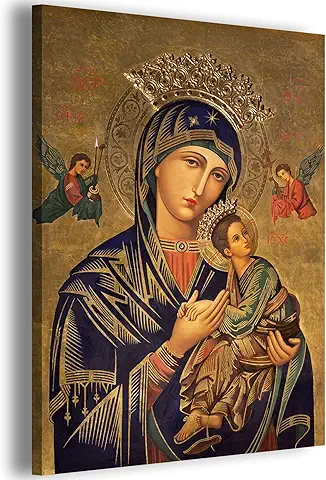
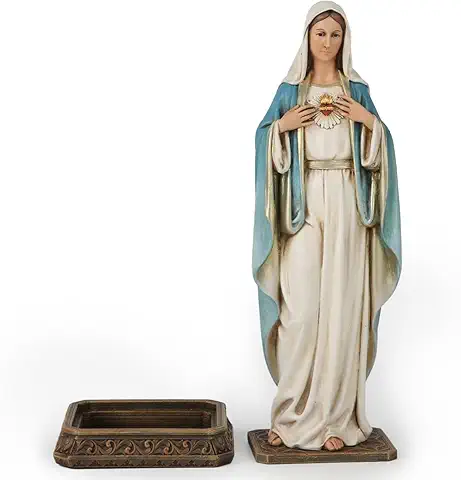
Every list of healing saints in the Catholic tradition begins here, because Mary begins everything. She is not a saint in the same category as the others — she is the Mother of the Divine Physician himself, the woman who stood at the foot of the Cross and has stood at every cross since. She holds in the Church the title Salus Infirmorum — Health of the Sick — and the title Consolatrix Afflictorum — Comforter of the Afflicted. These are not poetic honorary titles; they reflect centuries of testimony from the sick and suffering who have brought their needs to her and received them back transformed.
Mary’s qualification to intercede for the suffering is rooted in the specific kind of suffering she endured. She did not suffer the illness of the body (as far as we know), but she suffered something that every person with a chronic or serious illness knows intimately: the helplessness of watching someone she loved suffer in ways she could not prevent or fix. She stood at the foot of the Cross when her Son, her God, was dying in agony. She did not turn away. She did not collapse. She stood and she prayed and she trusted. That interior posture — remaining present in suffering without being destroyed by it — is the very posture that chronic illness requires of those who bear it.
Our Lady of Lourdes and the Healing Spring
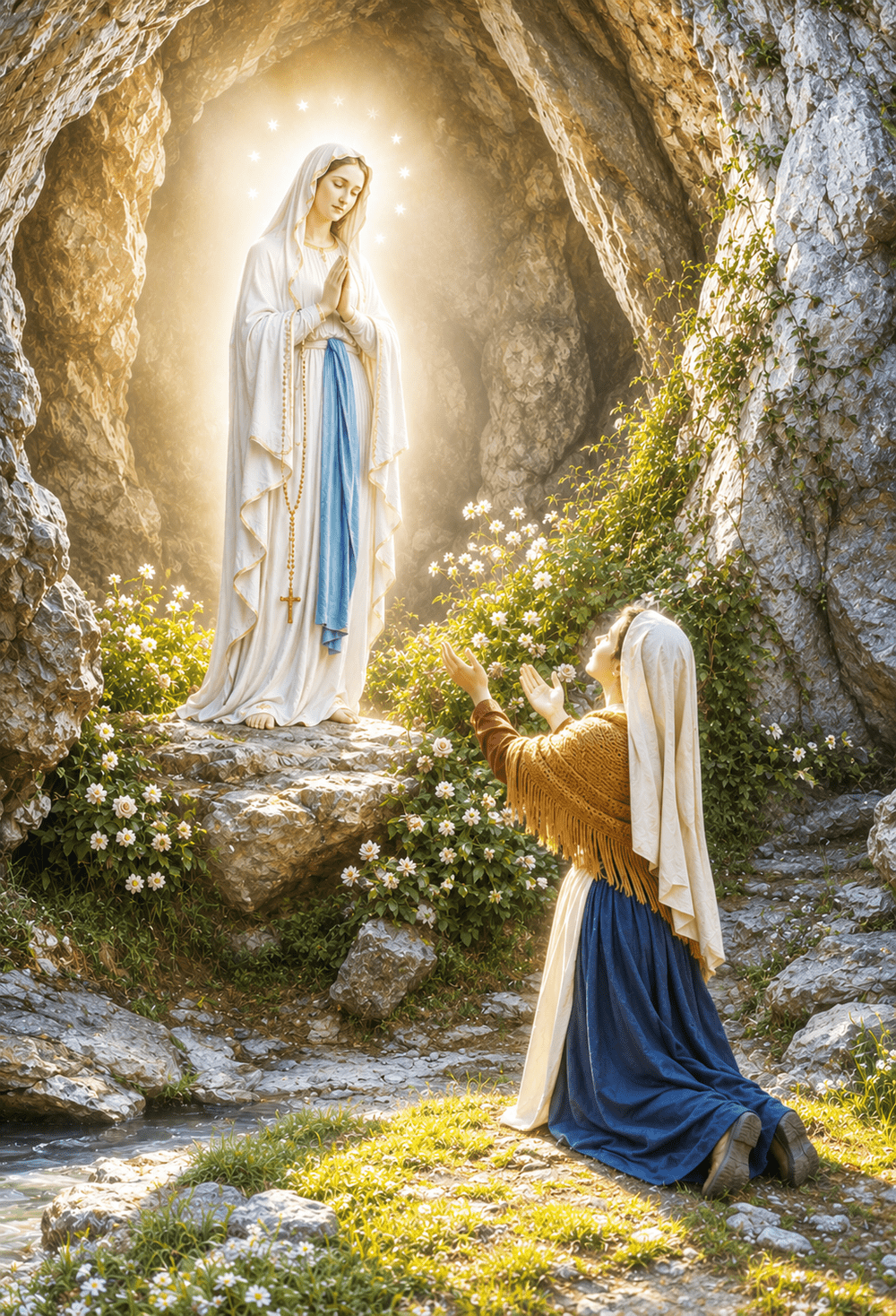
In 1858, the Virgin Mary appeared eighteen times to a fourteen-year-old girl named Bernadette Soubirous in a rocky grotto by the river Gave in Lourdes, France. Bernadette was a poor asthmatic child, chronically ill herself. During the ninth apparition, Mary directed Bernadette to scratch at the muddy ground in a corner of the grotto. Bernadette did so, and a spring of water began to flow — a spring that has not ceased in 167 years.
The medical bureau at Lourdes is the most rigorous investigatory body in the history of claimed religious healing. For a healing to be formally declared miraculous by the Church, it must pass through the Bureau’s investigation, then through a further diocesan process. To date, 70 cures have been officially declared miraculous by the Catholic Church. Thousands more have been recorded by the Bureau as medically inexplicable but not yet formally investigated.
Sister Bernadette Moriau — Multiple Neurological Deficits
Sister Bernadette Moriau had suffered since 1975 from cauda equina syndrome, a compression of the spinal nerve roots that left her with permanent neurological damage, an atrophied foot requiring a splint, chronic pain, and bladder dysfunction requiring a catheter she had worn for years. Her condition was considered medically permanent. In 2008, she made a pilgrimage to Lourdes, bathed in the waters, attended Mass, and received the Anointing of the Sick. On the train home, she felt an internal command to remove her brace. She did so. Her foot was normal. Her pain was gone. Her catheter became immediately unnecessary. Her neurologist examined her and could provide no medical explanation for the recovery of function in nerve tissue that had been permanently damaged for over thirty years. In 2018, the cure was formally declared a miracle.
Vittorio Micheli — Sarcoma of the Hip
A 23-year-old Italian soldier was diagnosed with a massive sarcoma of his left hip. The tumor had so destroyed the bone that the femur had almost completely separated from the pelvis. His doctors considered him terminal. After bathing at the Lourdes shrine in 1963, subsequent X-rays showed progressive and complete reconstruction of the hip joint — the bone had regenerated. Follow-up imaging over years confirmed a fully normal hip. This healing was formally declared miraculous by the Church in 1976.
Traditional Prayers to Our Lady for Healing
The Memorare — For Any Urgent Need
Remember, O most gracious Virgin Mary, that never was it known that anyone who fled to your protection, implored your help, or sought your intercession was left unaided. Inspired by this confidence, I fly unto you, O Virgin of virgins, my mother; to you do I come, before you I stand, sinful and sorrowful. O Mother of the Word Incarnate, despise not my petitions, but in your mercy, hear and answer me. Amen.
Prayer to Our Lady, Health of the Sick
O Mary, Mother of Jesus Christ and our Mother, you who bore in your own heart the sword of sorrow and stood unwavering at the foot of the Cross, look upon me now in my illness and do not turn away. You know what it is to watch someone you love suffer. You know the helplessness, the fear, and the endless nights of not knowing. Bring my suffering to your Son, who is the Divine Physician. Ask Him to heal me if it is His holy will, and if not to heal me, then to give me the grace to bear this cross as He bore His — with faith, with love, and with trust in the Father’s plan. Health of the Sick, pray for me. Comforter of the Afflicted, comfort me. Our Lady of Lourdes, intercede for me. Amen.
Novena Prayer to Our Lady of Lourdes
O ever Immaculate Virgin, Mother of Mercy, Health of the Sick, Refuge of Sinners, Comforter of the Afflicted, you know my wants, my troubles, my sufferings. Deign to cast upon me a look of mercy. By appearing in the Grotto of Lourdes, you were pleased to make it a privileged sanctuary, whence you dispense your favors; and already many sufferers have obtained the cure of their infirmities, both spiritual and corporal. I come, therefore, with the most unbounded confidence to implore your maternal intercession. Obtain, O loving Mother, the grant of my requests. I will endeavor to imitate your virtues, that I may one day share your glory, and bless you in eternity. Amen. (Pray for nine consecutive days as a novena, adding your specific petition each day.)

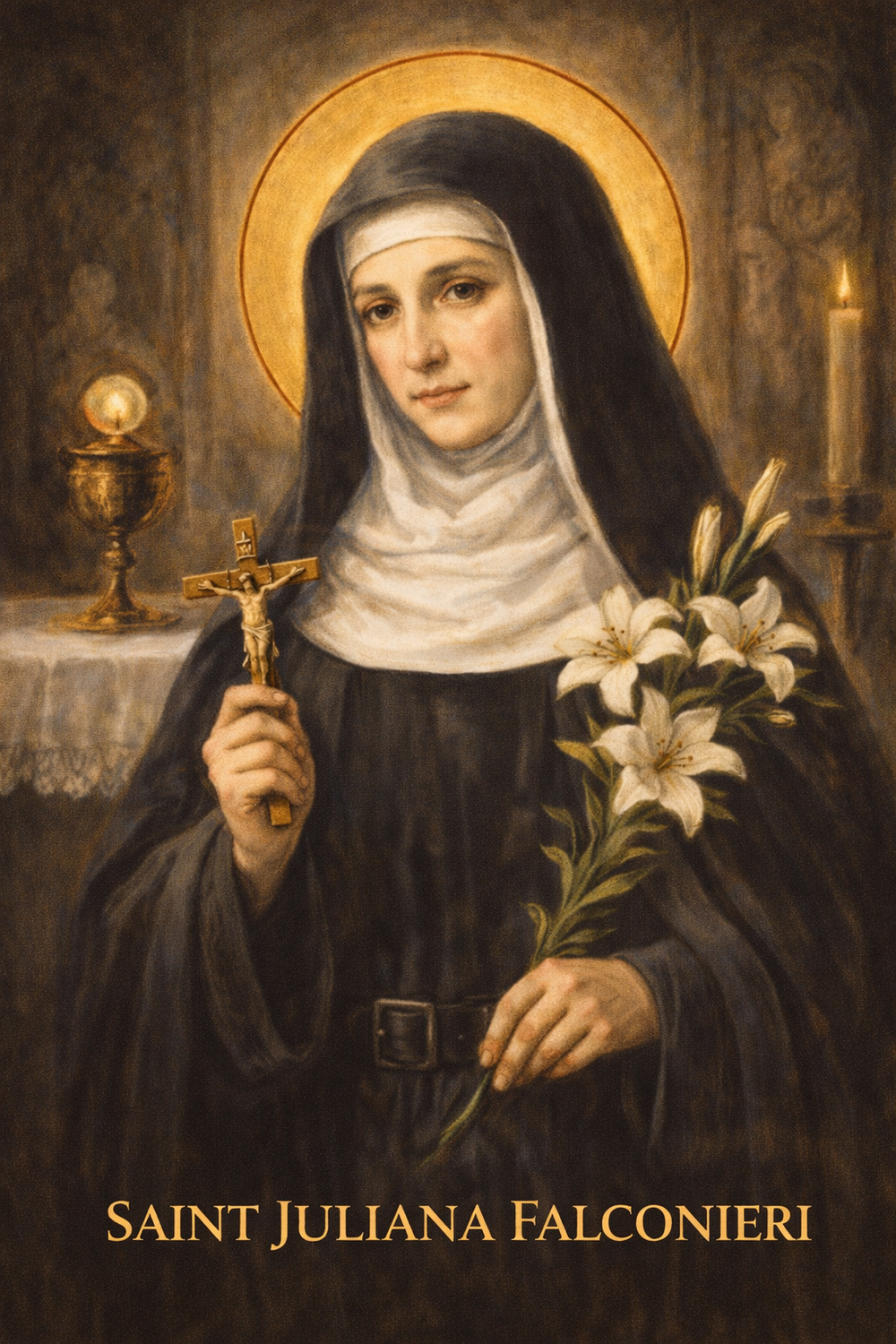
Saint Juliana Falconieri
Patron of Those with Chronic and Incurable Illness
If you have spent years managing an illness that other people cannot see, that flares without warning, that makes eating or digesting difficult, that has left you dependent on others in ways that feel humiliating — you need to know Saint Juliana Falconieri. She is the officially designated patron of chronic illness and incurable conditions, and she earned that title not by any supernatural shortcut but by spending decades living exactly that experience, with a grace that transformed it into holiness.
Juliana was born in 1270 in Florence, Italy, into the noble Falconieri family. Her uncle, Saint Alexis Falconieri, was one of the seven founders of the Servite Order, and his example shaped her deeply from childhood. She took a vow of virginity at fourteen and eventually founded the women’s branch of the Servite Third Order, devoting herself fully to prayer, fasting, and service to the poor and sick.
What gave Juliana her unique intimacy with chronic illness was a persistent and mysterious gastrointestinal disorder that caused constant nausea, vomiting, and an inability to retain food. In a century without gastroenterology or autoimmune diagnostics, her condition was simply described as an affliction of the stomach and intestines that left her chronically weak, unable to eat normally, and subject to sudden acute episodes. Modern physicians who have studied her case history suggest symptoms consistent with Crohn’s disease, autoimmune gastritis, or celiac disease. Whatever the precise diagnosis, she lived for decades with a body that could not nourish itself — and she bore it with a patience that her community found extraordinary.
She bore it, and she continued to serve. Even when bedridden she received visitors seeking spiritual counsel. She understood her illness as participation in Christ’s passion, and she offered it to God without bitterness. Her biographers record that she was known for her joy — not the forced cheerfulness of someone performing acceptance, but the genuine peace of someone who had found God present precisely in the place where everything else had failed.
The Eucharistic Miracle of Her Death
As her condition worsened in her final weeks, Juliana could not swallow any solid food without immediately vomiting — which meant she could not receive Holy Communion. On her deathbed, she made one final request: to see the Blessed Sacrament one more time. The priest brought the consecrated host. He placed it on a corporal (a small liturgical cloth) over her chest, trusting God to understand what human means could not provide. As witnesses watched, the host miraculously disappeared — absorbed directly into her heart. Juliana’s face transformed with a radiance they had never seen. Shortly afterward, she died peacefully. Her incorrupt heart, according to the canonical proceedings, bore an imprint of the sacred host at the location where it had rested. This miracle speaks directly to every person whose chronic illness has prevented them from participating fully in the sacramental life of the Church.Prayer to Saint Juliana Falconieri for Healing
O Saint Juliana, you who endured for decades the suffering of a body that could not nourish itself, who lived with the invisible cross of chronic illness while serving others with tireless love — look upon me in my own suffering and do not turn away. You know what it is to be sick in ways that no one can see. You know the exhaustion of a body at war with itself. You know the grief of watching ordinary life slip away on days when simply eating becomes an ordeal.
I ask you, dear Juliana, to bring my suffering before God with yours. You united your illness to the Passion of Christ and made it holy. Teach me to do the same. Ask the Lord to grant me healing, if it be His will. Ask Him to give me the grace to carry this cross with love if healing does not come in the way I hope. And when I cannot receive His Body in the Eucharist as I would wish, remind me of what God did for you — that He is never prevented from reaching those who love Him.
Saint Juliana, patron of the chronically ill, pray for me. Amen.
Short Invocation to Saint Juliana
Saint Juliana Falconieri, you who suffered long and loved deeply, intercede for me today. Ask Christ to heal my body if it be His will, and give me the grace of your peace and your joy, which sickness could not take from you. Amen.


Saint Lidwina of Schiedam
Patron of the Chronically Ill, the Disabled, and Possibly the First Recorded Case of Multiple Sclerosis
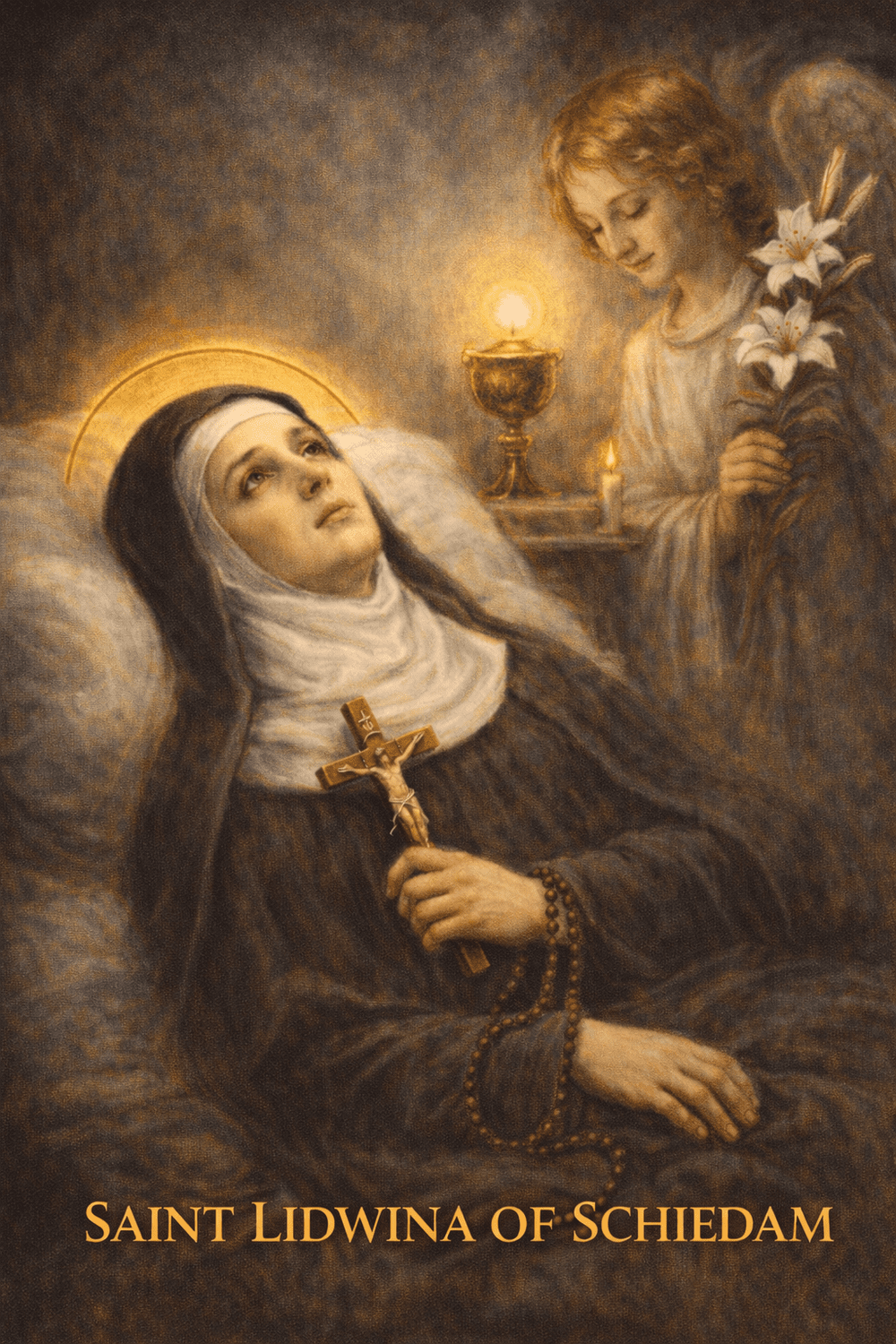
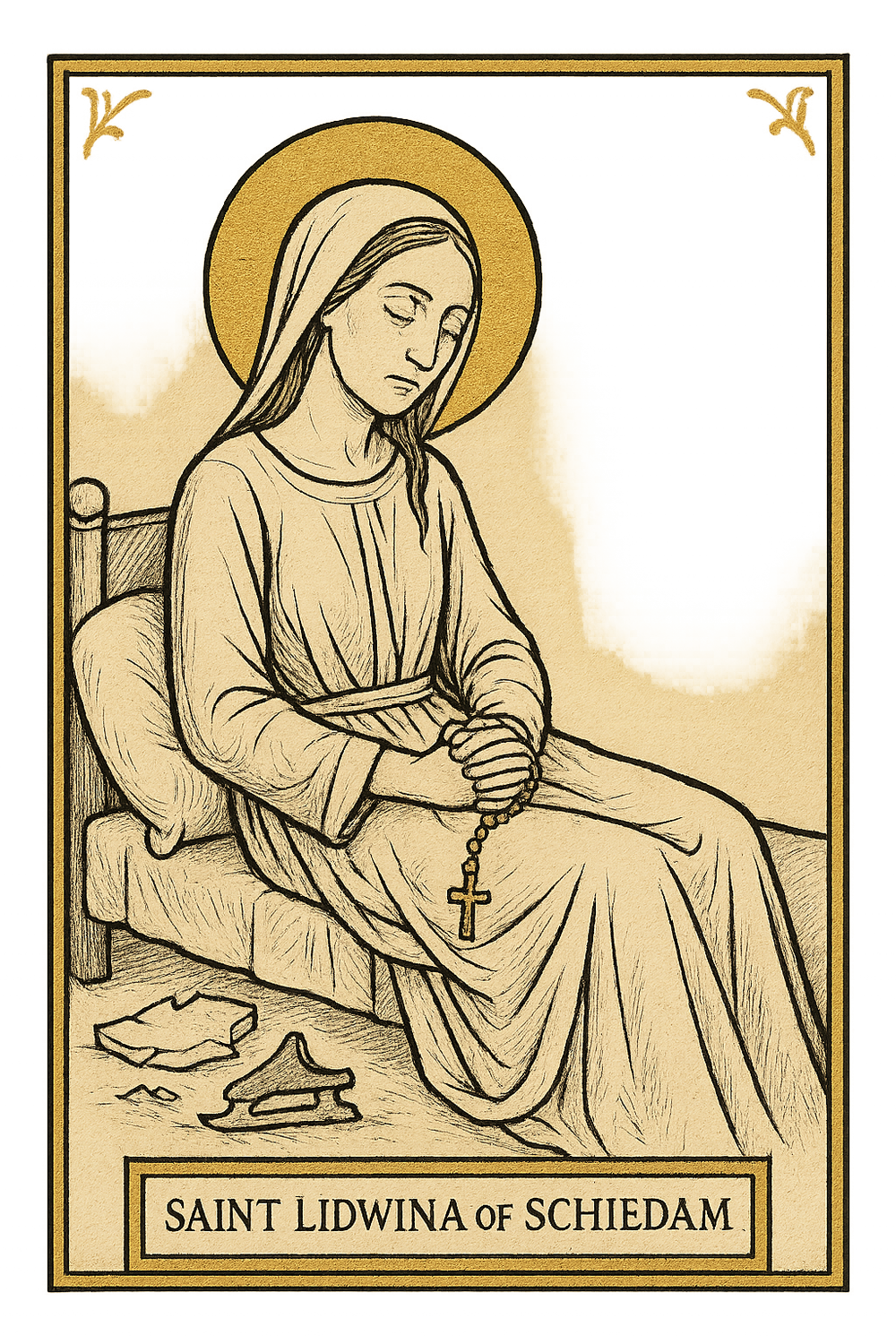
The story of Saint Lidwina of Schiedam (1380–1433) begins with an ice-skating accident and becomes one of the most extraordinary accounts of redemptive suffering in the entire history of the Church. She is the patron saint of the chronically ill, of those with long-term disabilities, and of ice skaters. She is also, based on the detailed medical descriptions preserved by her 15th-century biographers, widely believed by modern neurologists to be the earliest documented case of multiple sclerosis in recorded history.
Lidwina was born in 1380 in Schiedam, a small town near Rotterdam in what is now the Netherlands. At the age of fifteen, in February 1395, she was persuaded to go ice-skating with friends on the frozen canal near her home. During the outing she fell and broke a rib. The injury seemed to heal at first, but over the following months it became apparent that something had gone deeply wrong. Infections developed, then spreading paralysis, then the slow, progressive loss of function that would continue for the remaining 38 years of her life.
By the time she died at 53, Lidwina was effectively completely paralyzed, blind in one eye, deaf in one ear, and confined entirely to her bed. She had not been able to eat solid food for years. Parts of her body had ulcerated. By all natural standards, her life should have been characterized by nothing but suffering and despair. Instead, the accounts from her confessors, biographers, and the visitors who came from across Europe to see her describe a woman of extraordinary serenity, joy, and spiritual depth — who prayed ceaselessly from her sickbed, whose counsel was sought by pilgrims who came to see her, and whose mystical experiences were recorded in careful detail by those who witnessed them.
The Medical Case for Lidwina as the First MS Patient
Modern neurologists who have studied the historical account of Lidwina’s illness have noted a remarkable correspondence with the clinical presentation of multiple sclerosis: onset in adolescence following a minor trauma; progressive, relapsing course; visual disturbances and partial blindness; trigeminal neuralgia; progressive weakness and ataxia; eventual paralysis; and a disease course extending over decades. Dr. Jan van Gijn of the University Medical Center Utrecht published an analysis in 1998 in the Journal of Neurology, Neurosurgery and Psychiatry arguing that Lidwina’s documented illness is the earliest plausible case of MS in the medical literature. Her feast day (April 14) is sometimes observed by MS patient communities as a day of special prayer.Patient with Fibromyalgia and Chronic Fatigue Finds Interior Healing
A woman in her forties with fibromyalgia and chronic fatigue syndrome had lived for years with daily pain, severe fatigue, and a sense of complete uselessness. After reading about Saint Lidwina, she was struck by the account of Lidwina ministering to others from her sickbed — the detail that people came to her for prayer and counsel even when she could barely move. She began praying to Lidwina every morning, asking not primarily for healing but for the grace to be useful to God in whatever state her body allowed. She reports that within several months her relationship to her illness was completely transformed: the bitterness and despair had been replaced by genuine peace and a sense of vocation within her limits. She also reports a significant reduction in her pain levels. “Lidwina showed me that I don’t have to be well to be holy,” she wrote. “And somehow that understanding also made me less sick.”
Prayer to Saint Lidwina for Perseverance in Chronic Illness
Saint Lidwina, you who lay bedridden for 38 years and made your sickbed into an altar of prayer — I come to you in my own suffering, which feels so much smaller than yours and yet so much larger than I can bear alone. You know what it is to lose the life you had planned. You know what it is to watch the world continue while your body will not let you follow. You know the darkness of long nights when pain will not relent and morning seems too far away.
I ask you to pray for me. Ask the Lord Jesus, who knows suffering from the inside, to heal my body if it is His will. Ask Him to give me the grace that He gave you: the grace to find His presence precisely in the place where my own strength runs out. You turned your sickbed into a place of ministry. Help me to believe that my suffering too can serve, that my prayers from this bed or this chair are heard and effective.
You were not healed in this life, dear Lidwina, and yet you radiated God’s joy. If that is the miracle I am to receive, then give it to me fully. And if physical healing is also God’s will, bring that petition to Him with your own voice, which He loves. Saint Lidwina of Schiedam, patron of the chronically ill, pray for me. Amen.

Saint Alphonsus Liguori
Patron of Those with Arthritis, Rheumatism, and Chronic Joint Pain
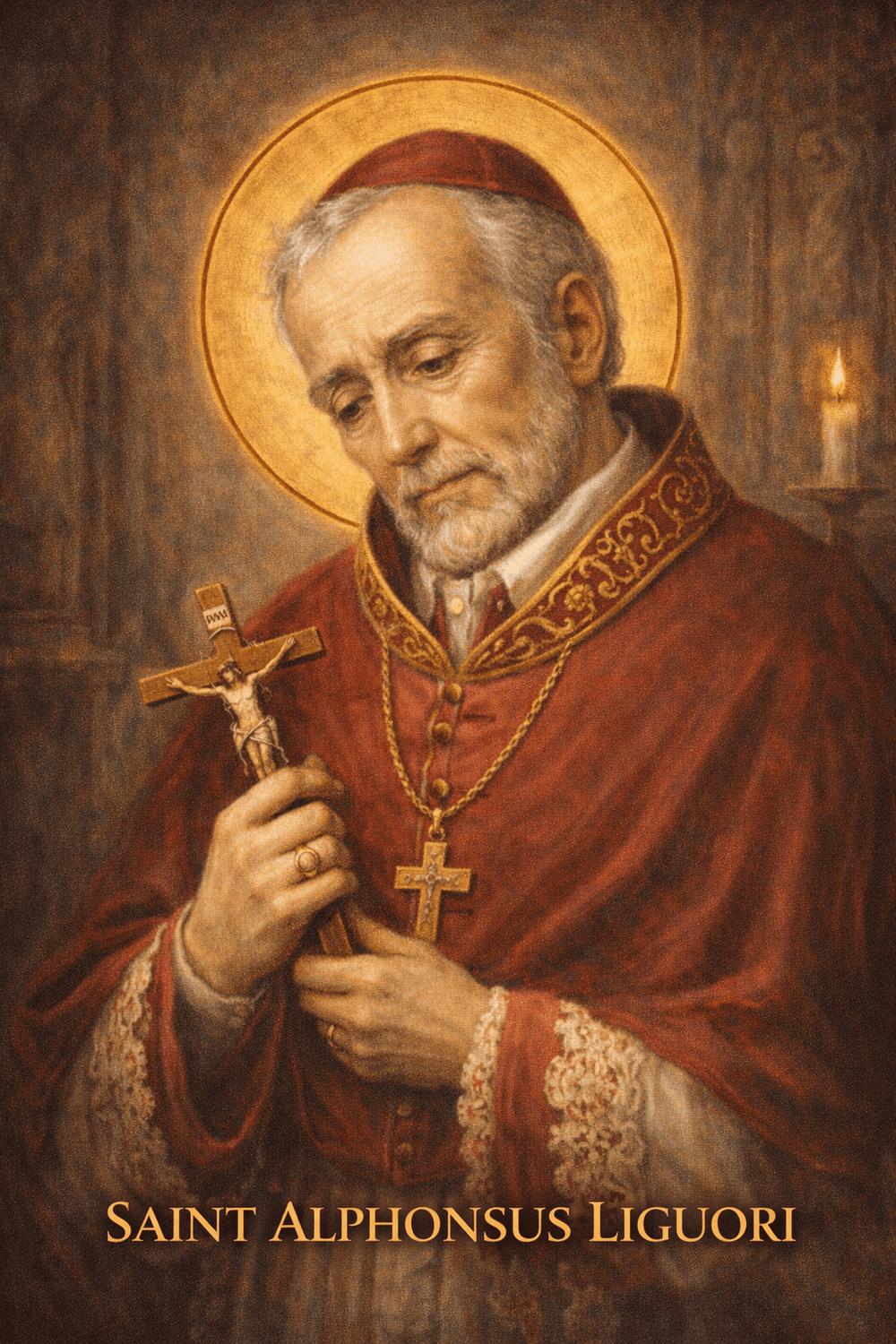
Rheumatoid arthritis, ankylosing spondylitis, psoriatic arthritis, lupus affecting the joints — these are conditions in which the immune system attacks the connective tissue of the body’s own skeleton, causing progressive inflammation, deformity, and pain. The patron saint of all who suffer from arthritis and chronic joint diseases is a man who spent the last years of his life with his body bent so severely by spinal disease that his chin nearly rested on his chest.
Alphonsus Maria de Liguori was born in 1696 near Naples, Italy, into an aristocratic family. He was a child prodigy: graduating with doctorates in both civil and canon law at the age of sixteen, before a pivotal courtroom defeat led him to abandon law entirely and pursue the priesthood instead. He was ordained in 1726 and became one of the most effective popular preachers in southern Italy. In 1732 he founded the Congregation of the Most Holy Redeemer (the Redemptorists), dedicated to preaching missions to the rural poor. He was declared a Doctor of the Church in 1871 and patron of moral theologians and confessors in 1950.
Beginning in his early eighties, Alphonsus developed a severe and progressive disease of his cervical spine — described in contemporary accounts as a form of rheumatic arthritis or inflammatory spinal disease — that caused his neck and upper spine to curve permanently forward and downward. By his late eighties, his head was bent so far toward his chest that he could not look forward when standing. He also suffered from constant pain from nerve compression caused by the spinal curvature. For a man who had spent decades standing at altars and preaching from pulpits, this was a radical and humiliating limitation.
He adapted. From his fixed chair in the Redemptorist house at Pagani, he continued to write, to direct his congregation, to receive visitors, to pray, and to counsel. His letters from this period are remarkable for their absence of self-pity; he writes about God’s love with the same warmth and clarity he had always shown, and only incidentally mentions the pain he is in. He died in 1787 at the age of 90, still bent, still praying, still writing.
Prayer to Saint Alphonsus Liguori for Healing
Saint Alphonsus, you who preached the mercy of God throughout your long life and then demonstrated it yourself by bearing a body bent and broken with pain — look upon me, who suffer in my joints and bones and connective tissue. You know what it is to have the body that was your instrument turn against you. You know the humiliation of visible deformity and the constancy of physical pain that cannot be hidden.
I ask for your intercession. Bring my pain before the God of all compassion. Ask Jesus the Divine Physician — who cured the bent woman in the synagogue who had been bowed down for eighteen years — to have mercy on my own bowed places. If it be His will, restore what has been lost. If it be His will to leave me as I am, give me your grace: the grace to remain productive, to find new ways to serve, to write from my chair as you wrote from yours.
Saint Alphonsus Liguori, patron of those who suffer in their joints and spine, pray for me. Amen.
Act of Conformity to God’s Will — From the Writings of Saint Alphonsus
My God, I offer You this pain. I accept it from Your hands, not because I understand it, but because I trust You. You are good. Your plan for me is good, even in this. I unite this suffering to the Passion of Your Son, and I offer it for my own sanctification and for the salvation of those You love. Let me not waste it in bitterness. Let me not miss You in the middle of it. I am Yours. Do with me as You will. Amen.


Saint Jude Thaddeus
When the Diagnosis Feels Hopeless
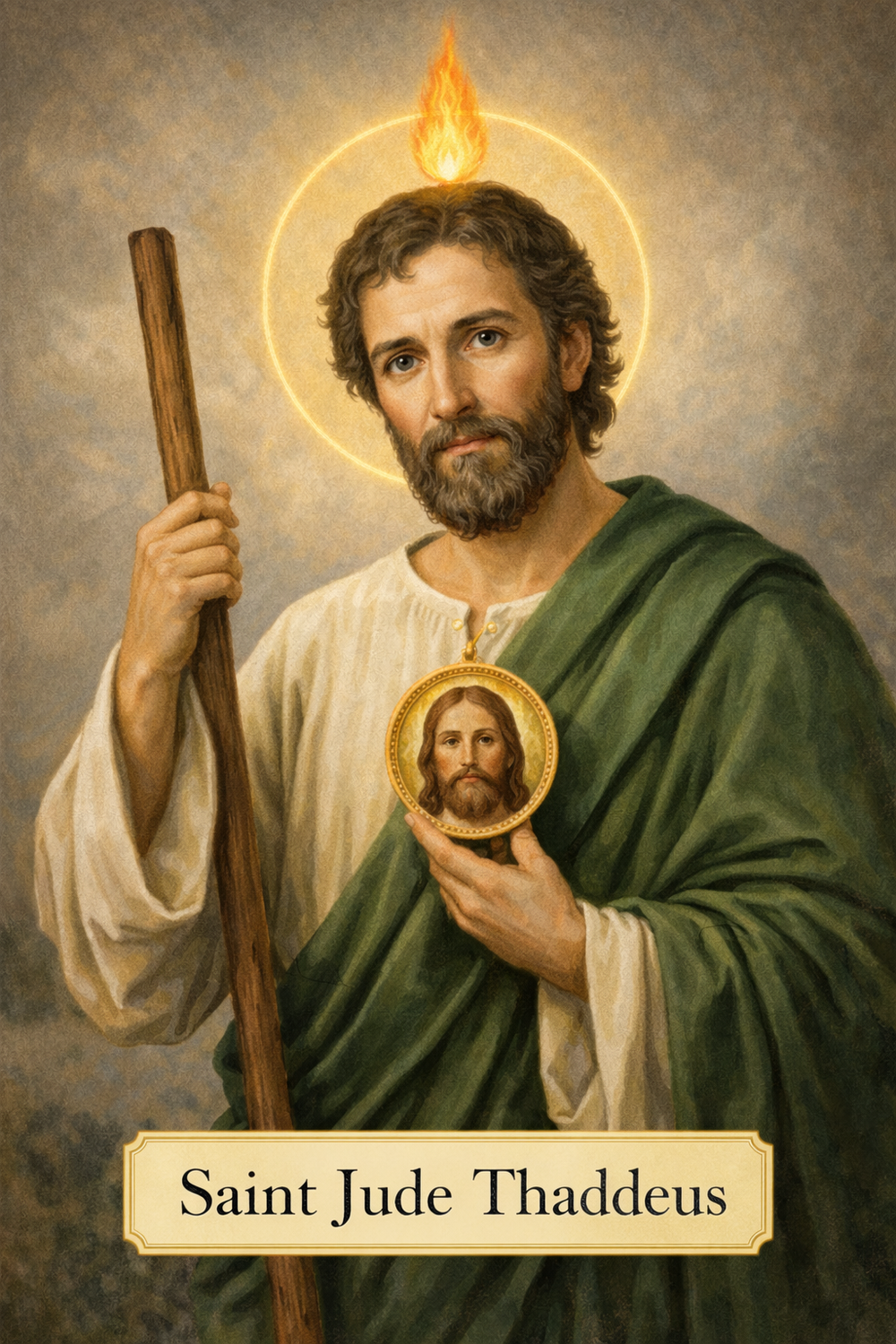
Every person with a serious autoimmune condition has had a moment in a doctor’s office where a word was said — “incurable,” “progressive,” “no effective treatment,” “you’ll need to manage this for life” — that landed like a sentence. It is for exactly that moment that Saint Jude Thaddeus exists in the Catholic tradition. He is the Apostle of impossible causes, the patron saint of desperate situations, and the intercessor Catholics have turned to for two thousand years when everything else has failed and hope requires more than human logic can supply.
Saint Jude was one of the Twelve Apostles, the son of Alphaeus and the brother of James the Less. He is the traditionally identified author of the Epistle of Jude, a short letter in the New Testament calling Christians to “contend for the faith.” After Pentecost, tradition holds that Jude preached in Mesopotamia, Persia, and Armenia, eventually dying as a martyr. His feast day is October 28, shared with Saint Simon the Zealot. For his full biography, see our complete biography of Saint Jude.
The folklore connecting Jude to “impossible causes” has a particular and charming logic: because his name sounds similar to “Judas,” early Christians were hesitant to invoke him, fearing confusion with the betrayer. As a result, Jude was seldom asked for anything — and the tradition goes that he became especially eager to help when anyone finally did call on him, taking on the cases that were truly desperate just to prove that he was not Judas. Whatever the origin, what is certain is that over two thousand years, millions of people have experienced remarkable help after invoking Saint Jude in seemingly hopeless situations.
Saint Jude Children’s Research Hospital
In the early 1950s, a young Lebanese-American entertainer named Danny Thomas was struggling desperately in his career, nearly bankrupt. In a moment of real desperation, he prayed to Saint Jude Thaddeus: “Show me my way in life, and I will build you a shrine.” Within weeks, his career began to turn. He became one of the most successful entertainers of the 1950s and kept his promise. In 1962, in Memphis, Tennessee, he opened Saint Jude Children’s Research Hospital — free of charge to all families. At the time of its founding, the survival rate for childhood acute lymphoblastic leukemia was about 4%. Today, through the research conducted there, it is above 94%. The “impossible case” of childhood cancer has been substantially transformed.Woman with Systemic Lupus Nephritis Receives Donor Kidney
A woman in her forties with systemic lupus erythematosus had been in progressive renal failure for two years despite aggressive treatment. Her nephrologist had placed her on the transplant list but warned the family that waiting times in their region were typically three to five years and that her condition was deteriorating faster than anticipated. Her family began a nine-day novena to Saint Jude together, praying specifically for a kidney to become available before her condition became unsurvivable. On the last day of the novena, they received a call from the transplant coordinator: a matching donor kidney had unexpectedly become available — months, not years, into the wait. The transplant was successful. She is alive and well.
Novena Prayer to Saint Jude Thaddeus
O Holy Saint Jude, Apostle and Martyr, great in virtue and rich in miracles, near kinsman of Jesus Christ, faithful intercessor of all who invoke your special patronage in time of need: to you I have recourse from the depths of my heart, and humbly beg you to whom God has given such great power, to come to my assistance. Help me in my present and urgent petition — [state your need specifically] — in return I promise to make your name known and cause you to be invoked.
Saint Jude, worker of miracles, pray for us.
Saint Jude, helper of the hopeless, pray for us.
(Pray this for nine consecutive days. It is traditional to publish a thank-you if your prayer is answered, spreading devotion to Saint Jude.)
Daily Prayer to Saint Jude
Saint Jude, Apostle of Jesus Christ, friend of those with no one else to turn to: I bring you my situation today. You were there when Jesus said “I am the way, the truth, and the life.” You believed it when it cost you everything. Help me believe it now. Intercede for me before the God who can do what no physician can. And whatever His answer, give me the courage to trust it. Amen.


Saint Rita of Cascia
The Patron Who Understands When Life Feels Trapped
Saint Rita of Cascia (1381–1457) is called the “Saint of the Impossible” because her entire life was a series of situations that should have been impossible and were not. She wanted to be a nun and was forced to marry. She wanted peace and was given a violent husband. She wanted her sons to become holy rather than avengers and watched them die before they could sin. She wanted to enter a convent as a widow and was turned away three times. At every point, God found a way. She is particularly sought by those whose illness has trapped them — whose chronic condition has locked them into a life that was not the one they planned, whose suffering has become compounded by the grief of lost possibility.
Rita was born in 1381 in Roccaporena, a small village near Cascia in Umbria, Italy. After her husband’s death, she sought entry to the Augustinian convent of Santa Maria Magdalena in Cascia. She was refused three times — once because she was a widow, once because she was too old, and once because she simply did not meet the requirements. After the third refusal, according to tradition, she was miraculously transported inside the convent walls during the night. The nuns, understanding this as a divine sign, accepted her.
In the convent, Rita grew rapidly in holiness. In 1432, in a moment of prayer before a crucifix, she asked to share in Christ’s suffering. A thorn from the crown of thorns in the crucifix detached and embedded itself in her forehead, creating a wound that remained for the last fifteen years of her life, was chronically infected, and caused her significant daily pain and social isolation. She bore this wound as a gift rather than a burden, and it became a mark of her particular share in Christ’s passion.
After her death in 1457, her body was found incorrupt. Healings began — documented from the 15th century to the present — eventually leading to her beatification in 1628 and canonization in 1900. The Church investigated and verified a miraculous healing as part of her canonization process: Francesco Piergili of Cascia, who had a large cancerous tumor in his throat making swallowing impossible, was cured at her tomb in the early 16th century. The cure was sudden, complete, and medically inexplicable. For those dealing with cancer and serious illness, Saint Rita stands as a powerful intercessor.
Novena Prayer to Saint Rita of Cascia
O Holy Patron of those in need, Saint Rita, so humble, so pure, so patient, whose pleadings before your Divine Lord are so effective — for this reason all confidently have recourse to you, expecting if not always relief, at least consolation. Advocate of the desperate and of those almost without hope, be propitious to my petition.
Show to the Giver of all good things your power of intercession for those who have no other succor. Be prodigal to me of your favors and obtain for me [state your specific need] if it be for the honor of God and my eternal welfare. I promise to glorify you by making known your graces to all men and to honor you by faithful devotion. Amen. (Pray for nine consecutive days.)
Prayer to Saint Rita for Those Whose Illness Has Changed Their Plans
Saint Rita, you who wanted the convent and got a difficult marriage, who wanted peace and got a feud, who wanted entry and got repeated rejection — and who found God at every single closed door — I come to you with my own series of doors that have closed.
My illness has closed doors I never expected to close. It has taken from me capacities I counted on, plans I had built my life around, a future I had already started to imagine. I am trapped in a body that does not do what I need it to do, in a life that is not the one I planned.
You know this place. You lived it. And you found God there — so thoroughly and so completely that the thorn in your forehead became a gift you bore with peace. I am not asking you to find me a way out, dear Rita. I am asking you to help me find God here, the way you did. And if healing is also God’s will, bring that petition to Him with your powerful voice. The Saint of the Impossible is exactly who I need. Amen.


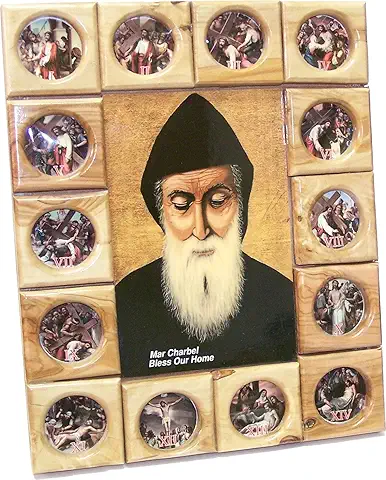
Saint Charbel Makhlouf
29,000 Documented Miracles and Counting
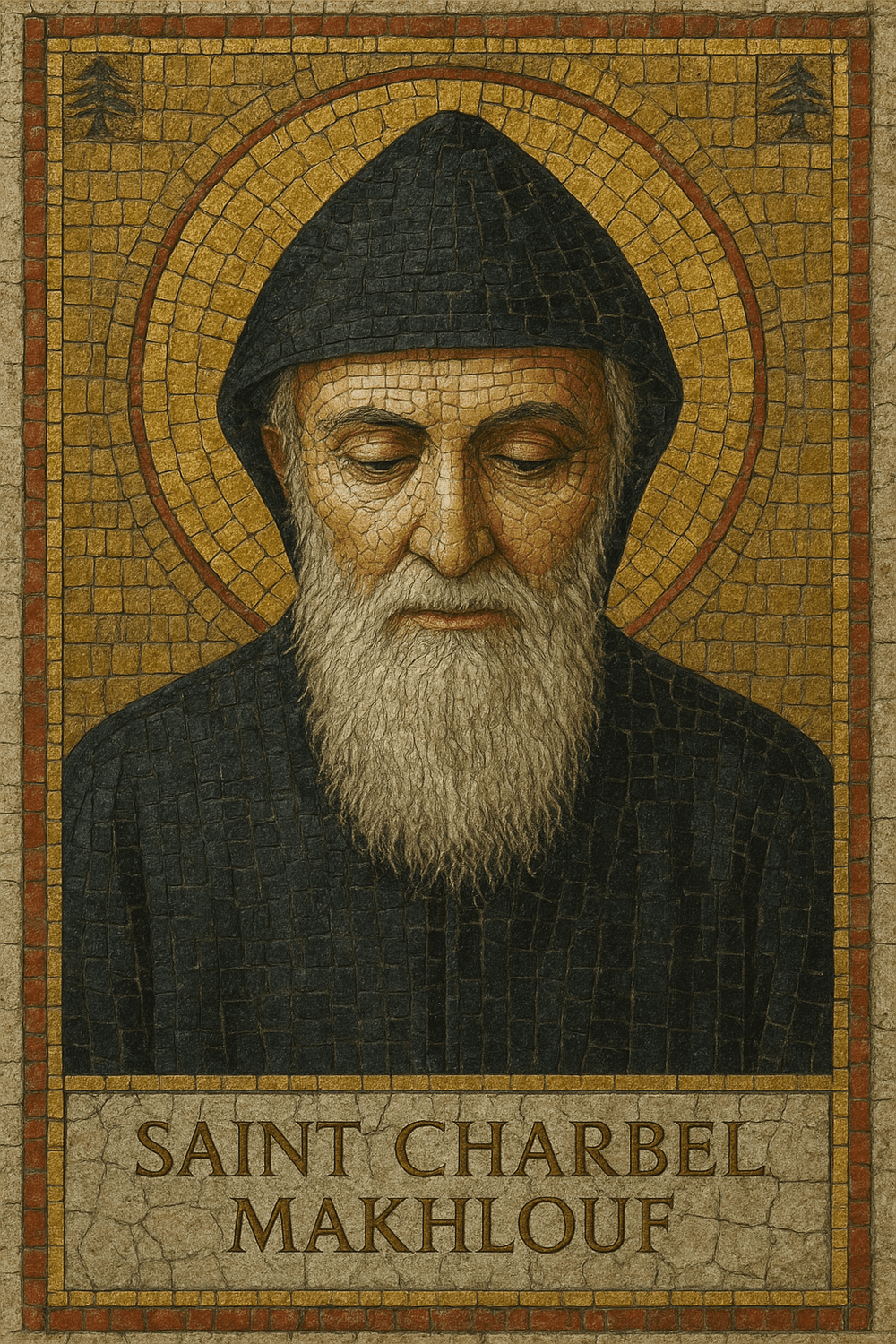
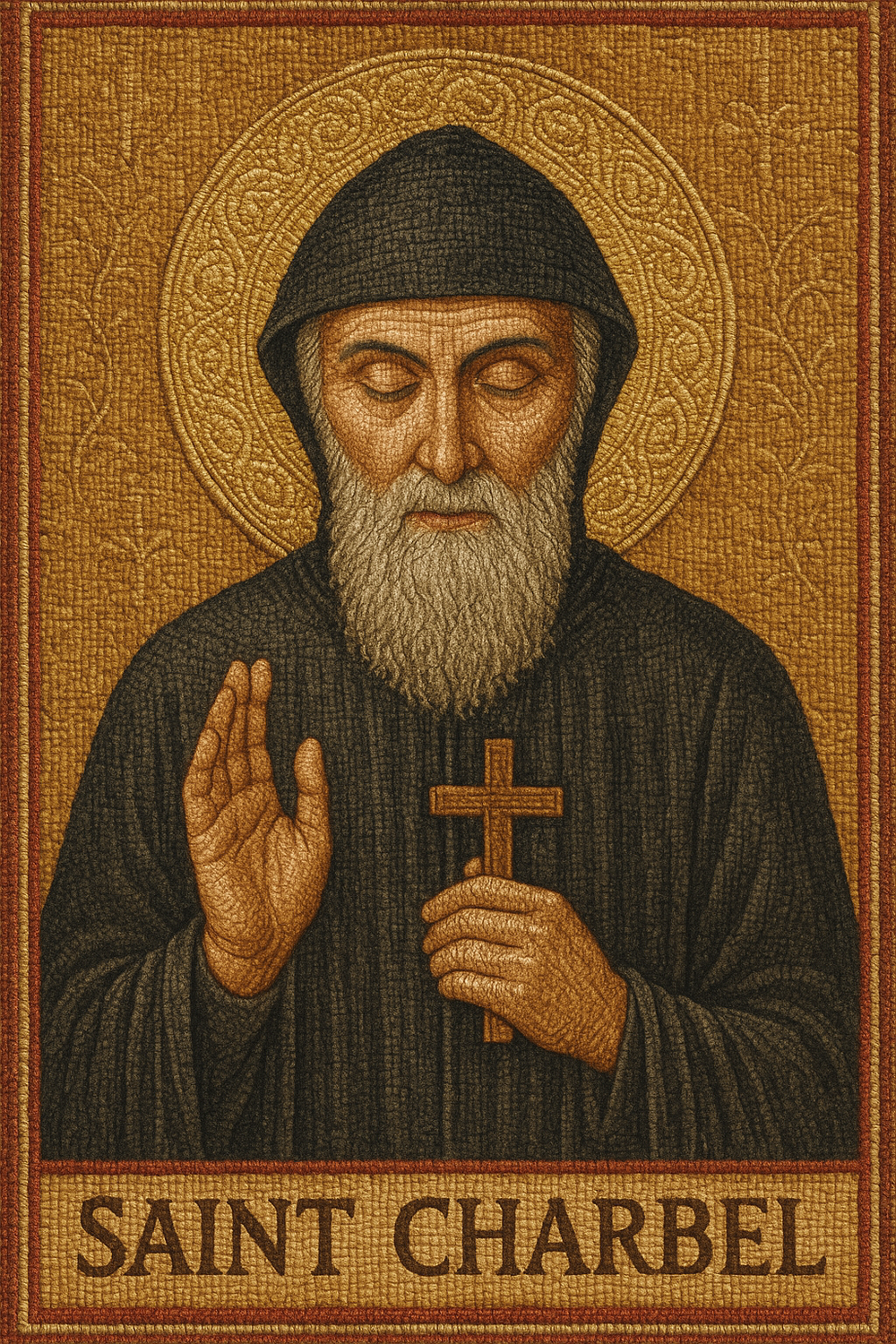
If you want to understand why Catholics pray to the saints, there is no better place to start than Saint Charbel Makhlouf of Lebanon. He died in 1898. He was a Maronite Eastern Catholic monk who lived for twenty-three years in a hermitage on a mountain in Lebanon, praying, fasting, and tending a small chapel. No one outside his region knew he existed. He did not write any famous books or found any religious order. He simply prayed, for decades, with an intensity that his contemporaries could see glowing on his face. And then he died, and his body began doing things that bodies are not supposed to do.
Joseph Antoun Makhlouf was born in 1828 in Beqa Kafra, a village in the mountains of northern Lebanon. He joined the monastery of Saint Maron at Annaya, taking the name Charbel. He was ordained a priest in 1859. For sixteen years he lived as a monk in the main monastery, then in 1875 received permission to transfer permanently to the hermitage of Saints Peter and Paul, where he remained until his death. His life in the hermitage was extreme even by monastic standards: he prayed for hours before the Blessed Sacrament daily, fasted severely, slept little, and spoke very rarely. On December 16, 1898, he suffered what appears to have been a stroke during the celebration of Mass and died on Christmas Eve. He was 70 years old.
The remarkable story of Saint Charbel begins at his death. In the days following his burial, neighbors reported a brilliant light surrounding his tomb at night. When exhumed, his body was found incorrupt — flexible, neither decomposed nor mummified, seeping a liquid that soaked through his garments. The phenomenon continued for decades. His body, examined multiple times over the following century, remained in this inexplicable state. And around his shrine, healings began.
The monastery of Saint Maron at Annaya has maintained a formal register of reported miracles since the 1950s. As of 2024, this register contains documentation for over 29,000 favors attributed to Saint Charbel’s intercession — healings, resolutions of desperate situations, and other extraordinary events reported by people of all backgrounds, including non-Christians. The range of conditions includes cancers at all stages, paralysis and neurological disorders, blindness and severe visual impairment, autoimmune conditions, bone diseases, psychiatric disorders, and conditions that were inoperable or terminal at the time of prayer.
Nohad El Shami — Paralysis Healed with Surgical Marks Appearing
Nohad El Shami was a 55-year-old Lebanese woman who had been paralyzed on her right side following a stroke and was living in significant disability. On the night of January 22, 1993, she reported a vision in which two monks appeared and performed surgery on her neck. When she woke in the morning, she was completely healed — the paralysis was gone, her movement was restored, and she had full use of her right side. She also bore two fresh surgical incisions on the sides of her neck, despite the fact that no surgery had been performed on her during the night. A physician who examined her the next day confirmed the presence of the fresh surgical wounds and the complete remission of her paralysis. This healing is among the most thoroughly documented modern miraculous claims in the Catholic world, with medical testimony, photographic documentation of the wounds, and multiple independent witness accounts.
Italian Woman with Neurological Disease and Corrosive Injuries
An Italian woman in her forties who had been suffering from a progressive neurological disorder with autoimmune features attempted suicide by ingesting corrosive acid, causing severe damage to her esophagus and stomach. Her family began a prayer chain invoking Saint Charbel’s intercession and applied blessed oil from his shrine to her body. According to accounts from the hospital and subsequently documented by the monastery, the woman experienced a sudden and complete healing of both conditions: her damaged esophagus and stomach were restored to normal function (confirmed by imaging), and her neurological symptoms went into remission. Her physicians could offer no medical explanation for the recovery.
Prayer to Saint Charbel for Healing
O Saint Charbel, who spent your life in the presence of the Holy Eucharist, in the silence of the hermitage, and in the love of God — you whose body even after death bore witness to God’s power over nature — look upon me now in my illness and in my need.
I do not understand why I am sick. I do not understand the plan of God in this suffering. But I believe, as you believed in the darkness of your hermitage, that God is good and that His mercy is greater than my pain. I bring to you my body, which is fighting itself. I bring to you the name of my illness, and the names of my doctors, and the face of the person I love who is suffering. I bring you all of it, because I do not know what else to do with it.
You who interceded for thousands — for the paralyzed, the blind, the cancerous, the desperate — intercede for me. Apply the oil of your prayers to this wound. Ask the God who kept your body incorrupt for more than a century to work in me whatever He wills for His glory. I ask for healing. I ask for peace. I ask for whatever is best. And I trust you to bring it to Him. Saint Charbel, beloved hermit and wonder-worker, pray for me. Amen.
Prayer Before Using Blessed Oil from Saint Charbel’s Shrine
Saint Charbel, I anoint [myself / the name of the sick person] with this blessed oil that has burned before your relics. I do not place my trust in the oil itself but in the God whose servant you are and whose power flows through your prayers. May this anointing be accompanied by your intercession, and may it open whatever God wishes to pour into this body and this soul. Heal what can be healed. Sanctify what cannot. And let the fragrance of your holiness rest upon this person who is suffering. Amen.


The Sacraments, the Community, and the Eternal Perspective
The saints we have walked with in this article are not isolated figures in a private devotional practice. They are members of the Church, the Body of Christ, which stretches from the first Pentecost to the end of time and includes everyone from the first martyrs to the person in the hospital bed reading this right now. When you invoke their intercession, you are not going around the Church; you are going deeper into it.
The fullest Catholic response to serious illness operates simultaneously at multiple levels. The saints’ intercession is one level; the sacramental life of the Church is another; the support of the living community around you is a third; and underneath all of them is the direct relationship with God in prayer that no external reality can provide but that all the externals are meant to support and express.
The Sacrament of the Anointing of the Sick is the single most important sacramental resource for those who are seriously ill, and it is also the most misunderstood. Many Catholics still think of it as “Last Rites” — something that happens in the final hours when death is imminent. This is a theological error. The sacrament was instituted by Christ for the sick — any person with a serious illness, facing surgery, managing a chronic condition that significantly affects daily life. Through the anointing with blessed oil and the priest’s prayer, Christ himself acts in the person: fortifying their spirit, forgiving sins where necessary, and sometimes healing the body. Do not wait until you are dying. Ask for this sacrament now.
The Eucharist, received frequently and intentionally, is what the early Church called the medicina immortalitatis — the medicine of immortality. For those who cannot attend Mass due to illness, the Church provides for Communion to be brought to the home or hospital room. For those whose illness prevents them from receiving Holy Communion at all, the tradition of spiritual communion — the prayer of longing and desire for union with Christ in the Eucharist — is recognized as a genuine sacramental act of spiritual nourishment.
The living community around you is also the Church, and its care for you is not merely human but sacramental. Do not refuse it out of a reluctance to burden others. You are not a burden; you are a member of the Body, and the Body takes care of its own. The chronically ill person who allows themselves to be cared for gives their community the gift of practicing the love that Christ commanded. For more on how the Catholic and Orthodox healing traditions work together, see our guides to saints for chronic pain and to patron saints of autoimmune diseases.
Finally, the eternal perspective. Saint Paul wrote from prison, from physical suffering: “I consider that the sufferings of this present time are not worth comparing with the glory that is to be revealed to us” (Romans 8:18). He was not dismissing suffering; he was locating it within a larger story whose final chapter is resurrection. Every saint we have met in this article knew that chapter was coming. None of them treated suffering as the last word, because they knew it was not.
A Prayer for All Who Suffer from Autoimmune Disease
A Concluding Prayer — From the Whole Communion of Saints
O God of all compassion, Father of mercies, Divine Physician of souls and bodies — look upon me in my illness with the same eyes that looked on the leper, on the blind man, on the woman bent double for eighteen years, on the paralytic at the pool of Bethesda. You see me. You know the name of every condition attacking my body, every medication I have tried, every doctor who has offered hope and every one who has taken it away. You know the nights I have spent unable to sleep from pain, the mornings I have woken up afraid of the day, the grief of watching my life become smaller.
I bring to you, Lord, the intercession of your holy servants:
Through the prayers of the Blessed Virgin Mary, Health of the Sick and Comforter of the Afflicted,
Through the prayers of Saint Juliana Falconieri, who bore her own chronic illness with grace and patience,
Through the prayers of Saint Lidwina of Schiedam, who spent 38 years in bed and shone with your light,
Through the prayers of Saint Alphonsus Liguori, whose body bent with arthritis yet whose spirit remained unbowed,
Through the prayers of Saint Jude Thaddeus, the Apostle of impossible causes,
Through the prayers of Saint Rita of Cascia, the Saint of the Impossible,
Through the prayers of Saint Charbel Makhlouf, whose intercession has been confirmed in 29,000 documented healings —
I ask you, Lord, for healing. Heal what can be healed, if it be your holy will. Restore what has been lost. Quiet what is fighting inside this body. Bring the immune system that is attacking me back into the order you designed for it.
And if healing comes in a different form than I am asking — if the miracle you have planned for me is not the restoration of my physical body but the transformation of my soul — then give me that miracle too, fully and without reservation. Make me a person who can say with Saint Paul that I have learned, in whatever state I am, to be content. Make me a person whose suffering glorifies you.
You are good. Your plan is good. I do not always understand it, but I trust it. And I trust the company of saints you have given me — who have all been where I am and have all found you there — to walk with me until I reach the place where there is no more pain, no more illness, no more immune system turning against itself, but only the fullness of the life you created me for.
Lord Jesus Christ, Divine Physician, have mercy on me. Amen.
Frequently Asked Questions
Continue Reading
More resources on healing saints, chronic illness, and intercessory prayer across the Catholic and Orthodox traditions.
Five Intercessors for Autoimmune Disease
A companion guide to the saints who know invisible suffering from the inside — Catholic and Orthodox voices on chronic illness.
Read the guide →Healing Saints for Chronic Pain
The broader tradition of Catholic and Orthodox healing saints for those living with persistent physical pain.
Read the guide →Saints for Cancer & Serious Illness
Five intercessors for those facing the most difficult diagnoses — saints who walk with the seriously ill.
Read the guide →Saint Lidwina of Schiedam
The complete biography of the patron of MS and chronic illness — the woman who turned 38 years of paralysis into a life of prayer and ministry.
Read the biography →Saint Charbel: Full Life & 29,000 Miracles
The complete story of the Maronite wonder-worker whose healing legacy continues to grow more than a century after his death.
Read the full story →Catholic Saints for Anxiety & Depression
When chronic illness brings mental and emotional suffering alongside the physical — the saints who intercede for both.
Read the guide →You Are Not Alone in This
The saints in this article were real people. They had real bodies that failed them in real and specific ways. They had real moments of despair and real moments of grace. They prayed prayers like yours and lived through the long silences between asking and receiving. And then they died — some healed, some still suffering, all of them held by God — and they have been interceding ever since for people exactly like you.
Browse All Healing Saint Prayer Cards → Free Eastern Christian Marriage Books →As an Amazon Associate, The Eastern Church earns from qualifying purchases.
Offer a Dedication
If this page was meaningful to you, you’re welcome to dedicate this or any educational page in memory of a loved one, for a prayer intention, or in gratitude for blessings received.
Each dedication quietly supports the continued sharing of Eastern Christian history, prayer, and the lives of the saints.