Saints of Healing: Hope and Intercession in the Battle Against Cancer
When a Catholic faces a cancer diagnosis — or walks with a loved one who does — the journey can be frightening and isolating. Yet in these dark valleys, the Church offers profound sources of comfort and hope. Our faith teaches that Christ is the Divine Physician and that through prayer, sacraments, and the support of the Christian community, we encounter His healing grace. In particular, Catholics often turn to the Blessed Virgin Mary and the canonized saints as heavenly companions in times of illness. This pastoral reflection will explore several saints closely associated with healing from cancer, explaining why they are invoked, how the faithful pray with them, and sharing real accounts of hope and healing attributed to their intercession. Throughout, we will also emphasize a truly Catholic understanding of healing — one rooted in the sacraments, trust in God’s will, and the loving presence of the Communion of Saints in our lives.
The Catholic Understanding of Healing and Intercession
Before we meet these holy helpers, it’s important to recall how healing is viewed in Catholic life. Illness is never just a medical event; it affects the whole person — body and soul. Thus the Church responds with both spiritual and physical care. In the sacraments, especially the Anointing of the Sick, the suffering person is united to Jesus’ saving love. This sacrament (often received along with Confession and Holy Communion) prays for both spiritual strength and, if God wills, physical healing. We believe that Christ can work miracles, but also that even when physical cures do not occur, His grace brings peace, courage, and closeness to Him in the suffering.
Prayer to the saints is another vital aspect of our tradition. We do not see the saints as magical healers on their own; rather, we believe these faithful ones are alive with God in heaven and join their prayers with ours. When facing cancer, many find it consoling to ask a patron saint who understands their struggle to intercede. It’s akin to asking an experienced friend to pray for you — except this friend stands before the Throne of God! In Catholic parishes and homes, it is common to hold novenas (nine-day prayer sequences) or to light candles before statues of these saints, entrusting them with our needs. Many cancer patients also receive small sacramentals: perhaps a medal of a patron saint, a rosary, or a small relic, as tangible reminders that they are not alone. The saints’ own stories of suffering, faith, and even miraculous cures provide inspiration. And indeed, throughout history there have been numerous accounts of healing — some well-documented and declared miraculous by the Church — attributed to the prayers of the saints we will discuss.
Below, we will look at the Blessed Virgin Mary (especially under titles related to healing) and several canonized saints often associated with aiding those with cancer. For each, we’ll see why they are connected to this cause, how Catholics invoke their help, and examples of hope or cures linked to their intercession. May these stories strengthen our faith that, in Christ, no one suffers alone and that God’s love is powerfully at work even amid illness.
The Blessed Virgin Mary – Mother of the Sick and Consoler of the Afflicted
“Holy Mary, Mother of God, pray for us sinners, now and at the hour of our death.” These familiar words of the Hail Mary take on even deeper meaning when someone is seriously ill. The Blessed Virgin Mary is revered as a tender mother to all the faithful, and countless Catholics battling cancer have found strength by entrusting themselves to her care. Mary knows what it means to suffer alongside a loved one — she stood by Jesus at the foot of the Cross — and thus she is often invoked as Comforter of the Afflicted and Health of the Sick (titles given to her in the Church’s Litany of Loreto). While not “patron of cancer” in a formal sense, Mary’s intercession has been linked to many healing miracles, and her motherly presence brings peace to anxious hearts.
One of the most powerful associations of Mary with physical healing is Our Lady of Lourdes. In 1858 the Virgin appeared to St. Bernadette Soubirous in Lourdes, France, revealing a spring of water. Ever since, that spring has become a sign of God’s healing mercy: pilgrims (including the gravely ill) bathe in its waters, and the Church has officially recognized dozens of miraculous cures at Lourdes. Among them was Vittorio Micheli, a young Italian man who in 1962 was diagnosed with an aggressive bone cancer in his pelvis. His doctors had sadly given up hope. Vittorio’s family brought him, desperate and wheelchair-bound, to the Lourdes shrine. There he participated in Masses and processions and bathed in the cold spring water. At first he noticed no sudden change, but on returning home he realized his pain had ceased and his appetite returned. X-rays confounded his doctors: the tumor had completely vanished, and even his eroded bones were regenerating. He had been healed. In 1976, after years of rigorous investigation, the Church declared Vittorio’s cure the 63rd official miracle of Lourdes. Today, decades later, he still visits Lourdes in thanksgiving each year, walking on his own two legs.
Stories like this have led many cancer patients to seek Mary’s help. How do Catholics pray with Mary for healing? Often, families will pray the Rosary together, specifically offering each decade for the healing of their loved one. Some will anoint the sick with water brought from Lourdes or with oil from shrines dedicated to Mary. Pilgrimages to Marian sanctuaries (if the person is well enough to travel) are another practice; places like Lourdes in France, Fátima in Portugal, or Nuestra Señora de Guadalupe in Mexico see millions of pilgrims who come to ask the Blessed Mother’s intercession for health. Even at home, a cancer patient might keep a statue or image of Mary by their bedside. Many have testified that simply gazing at Mary’s image and holding a rosary during chemotherapy or in moments of pain brings tremendous consolation — as if Mary were whispering, “I am with you in this.” There are also specific prayers, such as Our Lady of Lourdes Healing prayers or the simple but powerful Memorare prayer, that Catholics recite to seek Mary’s aid.
Historical and modern examples abound of Mary’s maternal care in dire illness. In the gospels, her intercession at Cana led Jesus to perform his first miracle; today, her intercession still leads people to experience miracles. We heard of Vittorio Micheli’s cure in 1960s Lourdes. In another case, in the 1970s, a young girl named Delizia Cirolli was dying of a malignant tumor in her knee. She was brought to Lourdes as a last hope. After prayer, the tumor disappeared — leaving even a leading atheist doctor (who later won a Nobel Prize) utterly astonished and eventually moved to faith when he witnessed her healing. In our own time, there was news in 2022 of an American priest, Father John Hollowell, who had a severe brain tumor and traveled on pilgrimage to Lourdes. After praying there, scans showed his tumor was inexplicably gone. These are just a few instances among thousands of recorded favors.
Yet Mary’s help is not only measured in dramatic physical cures. Many cancer sufferers speak of a miraculous inner healing — the grace to accept treatment bravely, the easing of anxiety, reconciliation in their families, or a return of hope — after consecrating their struggle to Mary. They often echo Mary’s own words, “Let it be done to me according to your word,” finding strength in uniting their will to God’s. Whether one receives a physical cure or not, turning to the Blessed Mother ensures that her Son Jesus will bring forth some form of healing. Like a loving nurse at our bedside, Mary tends to our hearts, bandages our wounds with her prayers, and points us toward her Son, in whom ultimate healing — eternal life — is promised.


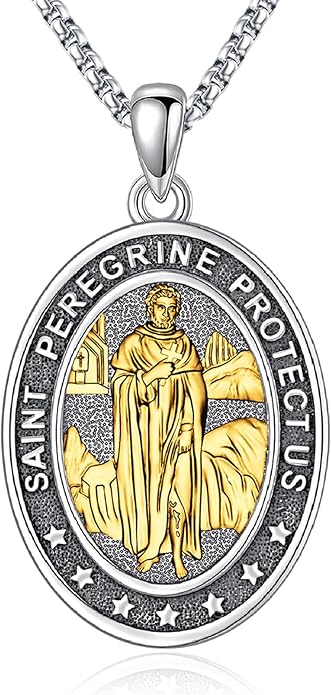
Saint Peregrine Laziosi – Patron Saint of Cancer Patients
When discussing saints associated with cancer, St. Peregrine Laziosi is invariably the first name that comes up. Declared the Patron Saint of those suffering from cancer and incurable illnesses, St. Peregrine is a beacon of hope for the sick. His life (1265–1345) holds a remarkable testimony to God’s healing power, which is exactly why the Church and countless individuals look to him in times of dire diagnosis.
Why is St. Peregrine associated with cancer? Quite literally, because he had cancer himself and was healed in a miraculous way. Peregrine was an Italian lay brother of the Servite order. In his youth he was far from saintly (in fact, he once struck a papal representative in anger), but he experienced a profound conversion and devoted his life to prayer, penance, and service of the poor. In his sixties, Peregrine developed a serious illness in his leg — described in records as an ulcerating, cancerous tumor that had become gangrenous. The wound was painful, foul-smelling, and worsening by the day. Physicians of the time could do nothing except plan to amputate the leg in hopes of saving his life.
On the night before his scheduled surgery, the frightened Peregrine did what he knew best: he prayed fervently. According to tradition, he dragged himself before a crucifix in the chapel and kept a long vigil, asking Jesus to comfort and heal him if it be God’s will. Finally, exhausted, he fell asleep in prayer. In a dream or vision, Christ appeared to him from the Cross and gently touched his diseased leg. Peregrine awoke with a start — and to his astonishment, his leg was completely healed, the skin fresh and healthy as if nothing had ever been wrong! The next morning, the surgeon arrived to find no surgery was needed; God had intervened. This dramatic cure, verified by those present, became the foundation for St. Peregrine’s patronage. He went on to live many more years in good health, caring for others and giving glory to God. When he died, people already venerated him as “the wonder-worker,” and centuries later (in 1726) the Church canonized him after investigating many healing miracles attributed to his intercession.
Because of this legacy, Catholics facing cancer have a special love for St. Peregrine. How do they seek his help? One common practice is praying the Novena to St. Peregrine, nine days of prayer often said by families or parish groups for someone battling cancer. Many parishes hold regular healing Masses or prayer services in honor of St. Peregrine, where the Anointing of the Sick is offered and a relic or image of the saint is used to bless the sick. For instance, some churches have a statue of St. Peregrine where people can light candles or touch names of loved ones to his image while praying for healing. There is even a National Shrine of St. Peregrine at a basilica in Chicago, where thousands send prayer requests. It’s not uncommon for Catholics to wear a St. Peregrine medal or keep a holy card of him during treatments — a small reminder that this saint is praying with them through every chemo session, every scan, every sleepless night. His feast day (May 1st) is observed with special affection by cancer support groups; in his hometown in Italy, people eat a certain fruit (citrons) on that day and pray to be spared from cancer.
Accounts of St. Peregrine’s intercession continue to surface, both historical and current. The very fact of his canonization involved several posthumous miracles: the Church documented cases of people in the 17th and 18th centuries who were reportedly cured of cancer or deadly illnesses after praying to Peregrine. In more recent times, while not all such claims undergo formal investigation, many believers will attest informally to “St. Peregrine’s help.” For example, there are stories shared in parish newsletters or online forums of patients with terminal diagnoses who experienced inexplicable remission after a St. Peregrine novena. Doctors might call it a lucky turn or unexplained regression, but those patients firmly credit the saint’s prayers. One mother wrote that her child’s scans suddenly showed a tumor had shrunk dramatically after the family placed a St. Peregrine relic on the child’s hospital bed and stormed heaven with prayers. Another man visited St. Peregrine’s shrine while fighting Stage IV cancer and later found his condition improved against all odds. While each situation is unique, the common refrain is that praying with St. Peregrine brings peace and often surprising grace. At the very least, even when a physical cure doesn’t come, people report that through this devotion they receive the strength to face their illness with a newfound hope and surrender, much like Peregrine did on the night of his healing.
Ultimately, St. Peregrine reminds us that no situation is beyond God’s power. Those who suffer from cancer can look to this gentle, strong saint and realize that he truly understands their fears and pain. In moments of despair, one can imagine St. Peregrine whispering: “I’ve been where you are. Do not lose faith. Cling to Christ.” And as we ask for his intercession, we trust that, just as Jesus touched Peregrine’s wounded leg, He will also touch our wounded lives with love, whether in bodily healing or in deeper spiritual renewal. St. Peregrine, pray for us and all who suffer from cancer!


Saint Agatha of Sicily – Hope for Those with Breast Cancer
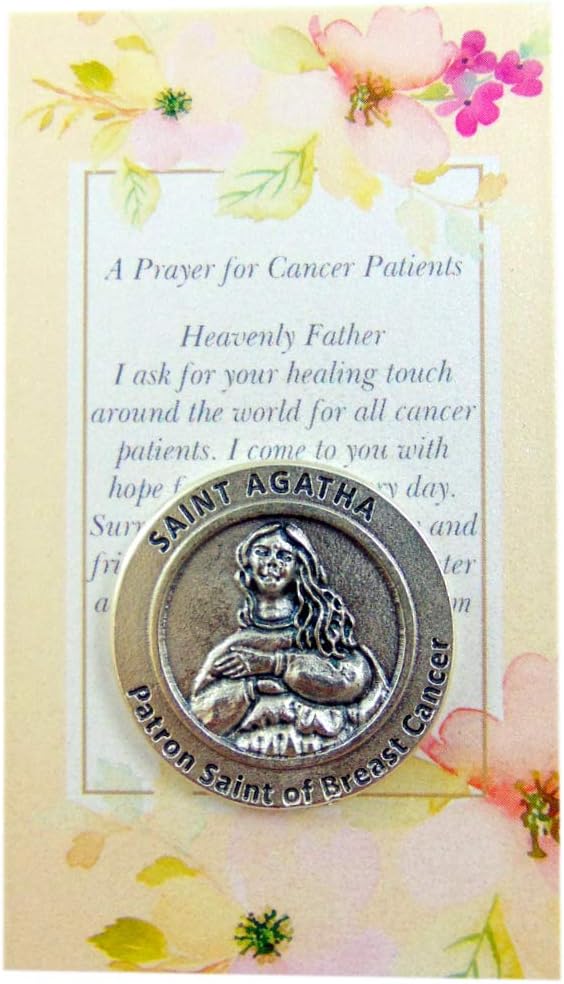
For women (and men) struggling with breast cancer, St. Agatha of Sicily shines as a powerful patron and source of courage. Agatha was a young Christian woman who lived in the third century (she was martyred around the year 251 AD). Though separated from us by many centuries, her story of heroic faith and bodily suffering has made her the patron saint of breast cancer patients and others with diseases of the breast.
Why this association? The connection comes from the particularly brutal tortures St. Agatha endured for love of Christ. Agatha had consecrated herself to God as a virgin, and when a Roman official desired her and was spurned, he retaliated by having her arrested for being a Christian. During her imprisonment, Agatha was subjected to terrible torments meant to break her resolve. In one especially horrific act, the authorities cut off her breasts, a form of mutilation meant to both inflict pain and mock her womanhood. It is said that Agatha refused to give in throughout, proclaiming her faith in Jesus even in agony. According to ancient accounts, in the midst of the night a miraculous thing occurred: St. Peter the Apostle appeared to Agatha in her cell and healed her wounds. The next day, her captors found her breasts restored and her body whole, by the grace of God. Though eventually Agatha was martyred (she died in prison, possibly by further torture or sheer trauma), her steadfast faith and this miracle of healing made a deep impression on Christians. Soon the Church venerated her as a saint. Devotion to St. Agatha spread especially in Sicily and Italy, where people came to see her as a special protector in times of physical vulnerability.
Over the centuries, Catholics with any breast illness — cancer, tumors, mastectomies, even nursing difficulties — have sought St. Agatha’s intercession. She symbolically understands the suffering of breast cancer patients because part of her trial involved that same area of the body. Many women battling breast cancer find in her a sister who knows their pain, both physical and emotional. How do they pray with St. Agatha? Often, a simple prayer asking her intercession is used, such as: “St. Agatha, renowned for your courage and faith, you withstood the cutting of your breasts rather than forsake Christ. I ask you to pray for me (or name) in this time of illness. May your prayers obtain healing, courage, and trust in the Lord, just as you had.” This or similar prayers can be prayed as a daily petition or as a novena leading up to her feast day. St. Agatha’s feast is on February 5th, and on that day some parishes offer special blessings for the sick or will distribute St. Agatha medals. In parts of Italy, traditional breads or pastries shaped like breasts (called “Agatha’s breasts”) are baked to honor her — an unusual custom, but one that sanctifies a traumatic symbol into one of faith and victory. It’s a reminder that no part of our lives, even the wounded parts, are outside God’s care.
Devotees also keep images or statues of St. Agatha. She is often depicted holding her amputated breasts on a plate (as odd as that seems to modern eyes, it’s a sign of what she endured). While such an image is stark, many find it uplifting: Agatha’s expression is usually serene, eyes lifted to heaven, conveying that her soul triumphed over her suffering. A woman going through surgery or chemotherapy for breast cancer might hold a St. Agatha medal or prayer card during treatment, recalling Agatha’s bravery.
Are there known accounts of St. Agatha’s intercession in cancer cases? While Agatha lived so long ago that we don’t have contemporary medical records, tradition holds that people have received help by invoking her. In particular, there have been reports of women with breast tumors who prayed to St. Agatha and later found their tumors benign or easily cured. For example, an Italian woman in the 19th century who visited Agatha’s tomb in Catania (Sicily) claimed a sudden improvement in her advanced breast disease after praying there. In our own era, one might hear a testimony like: “During my darkest hour with breast cancer, I asked St. Agatha to pray for me. I felt a tangible strength. My surgery went better than expected, and I am now cancer-free. I believe St. Agatha was with me.” Such personal witnesses, even if not documented by the Church as “miracles,” fuel the faith of others to seek her prayers.
St. Agatha’s legacy also lives on in modern initiatives: for example, some Catholic hospitals or foundations for breast cancer bear her name, keeping her patronage alive. Perhaps most beautifully, her story reminds every cancer fighter (male or female) to hold fast to faith. She teaches us that our true worth is not diminished by bodily scars or losses; our dignity is secure in being God’s children. Those who lose a part of themselves (like a breast to surgery) can look to Agatha and see that even in that wound, holiness can shine. In prayer, one might even imagine St. Agatha gently covering them with her mantle, encouraging: “Be brave, my friend. Christ is with you and so am I.” In this way, St. Agatha offers both comfort and courage to anyone facing breast cancer, pointing them to the ultimate healer, Jesus Christ.


Saint Jude Thaddeus – Patron of Impossible Causes and Desperate Situations
Cancer is often a long and uncertain battle, and at times patients and families may feel like they’ve hit a wall — when treatments fail or the prognosis is grim. In those moments of desperation, many Catholics turn to St. Jude Thaddeus, known as the patron saint of impossible causes and things despaired of. St. Jude was one of the Twelve Apostles of Jesus, and although little is recorded about him in Scripture, devotion to him blossomed in the past century as countless people have experienced powerful help after invoking him in seemingly hopeless situations.
Why is St. Jude associated with hopeless or impossible cases? There is a pious tradition that because his name “Jude” is similar to “Judas,” he was initially overlooked by the faithful (not wanting to confuse him with Judas Iscariot). Thus, for a long time few prayed for his intercession, and he became eager to assist anyone who asked — especially in dire needs that no one else could help with! Whether or not one believes that legend, the Church has indeed recognized St. Jude as a patron for the impossible. His name is often linked with miraculous outcomes where all human hope was nearly lost.
For cancer patients, St. Jude’s patronage resonates deeply. A terminal diagnosis or an aggressive cancer can certainly feel impossible to overcome. Turning to St. Jude is a way of saying: “God, I have no other hope but You — please hear the prayer of St. Jude on my behalf.” How do people pray to St. Jude in the context of cancer? Perhaps the most well-known method is the St. Jude Novena. This is typically nine days of the same prayer repeated, which includes lines like, “St. Jude, worker of miracles, pray for us. St. Jude, help of the hopeless, pray for us.” Families might pray this together around a candle or in front of a St. Jude statue. Many prayer pamphlets encourage a practice where, after your petition is granted, you publicly thank St. Jude (hence one often sees “Thank you St. Jude!” notes in newspaper classifieds or church bulletins). Even in this digital age, people post testimonies online of favors received, which often include recovery from serious illnesses such as cancer.
One beautiful real-life story tied to St. Jude’s intercession is the founding of St. Jude Children’s Research Hospital in Memphis, Tennessee. In the 1950s, a young entertainer named Danny Thomas found himself in a financial and career low point. He fervently prayed to St. Jude Thaddeus for help, promising that if success came, he would do something significant in the saint’s honor. His prayers were answered; as his career took off, Danny Thomas kept his promise. He spearheaded the creation of a hospital dedicated to treating children with catastrophic illnesses (especially leukemia and other cancers) free of charge. He named it St. Jude Hospital, believing that the saint had guided and helped him. Since its opening in 1962, St. Jude’s Hospital has become a world-renowned center where survival rates for childhood cancers have dramatically improved. One could say that through St. Jude’s inspiration, countless children have been given hope and life, an ongoing miracle of compassion and science combined. This legacy stands as a modern testament to St. Jude’s role as a patron in seemingly hopeless situations.
While not every story is as grand, many individuals credit St. Jude with personal miracles. For instance, there are accounts of patients with Stage IV cancers who suddenly go into remission against all expectation after intense prayer to St. Jude. A woman once shared that her father was given only weeks to live with advanced cancer; the family began a continuous St. Jude novena, and not only did those weeks pass, but the father recovered enough to leave the hospital. Doctors were baffled, but the family firmly believed St. Jude had carried their plea to Jesus. Even when physical healing doesn’t occur, devotees often speak of spiritual miracles wrought by St. Jude’s intercession: a sense of peace replacing panic, a reconciled relationship before a loved one passes, or the strength to face whatever comes with trust in God.
Catholic parishes sometimes have a shrine or an altar to St. Jude where the sick and their relatives can kneel and pray. On his feast day (October 28th), some communities hold a special Mass or healing service invoking him. The popularity of St. Jude devotion worldwide (from the United States to the Philippines to India) means that wherever one is, if they mention a need for prayers, someone is likely to respond, “Pray to St. Jude!” It’s a beautiful example of the “lived prayer practice” of the Church — an apostle from the first century continuously “networking” miracles through the ages by bringing our cries to Christ.
In moments when a cancer journey feels overwhelming or a cure seems out of reach, St. Jude reminds us that no cause is truly lost when we place it in God’s hands. His own faith in following Jesus unto martyrdom is an example of persevering when all seems dark. By asking for St. Jude’s prayer, we affirm that we believe in a God for whom nothing is impossible. And even as we hope for miracles, we know that St. Jude will also pray for our acceptance and inner healing. Thus, whether the mountain moves or we are given strength to climb it, those devoted to St. Jude often find that they emerge from crisis with renewed faith. St. Jude, faithful apostle, pray for us, especially in our most desperate needs!


Saint Rita of Cascia – Saint of the Impossible and Peacemaker in Suffering
Another beloved intercessor for difficult causes — including seemingly impossible health crises — is St. Rita of Cascia. Living in Italy in the 14th-15th century, St. Rita’s life was marked by many hardships: a turbulent marriage to an abusive husband, the violent death of her loved ones, and a miraculous thorn wound on her forehead that she bore for many years. Because God accomplished amazing things for her and through her despite these hardships, Rita is often called “The Saint of the Impossible.” She has become an avocat for those in need of miracles, which certainly includes those seeking healing from aggressive diseases like cancer.
St. Rita’s connection to healing might not be as immediately obvious as St. Peregrine’s, since Rita herself didn’t suffer from cancer. However, her patronage of impossible causes naturally extends to situations of severe illness where medical hope is dim. She is a reminder that God can bring new life into the most hopeless situations. In Rita’s own time, people began reporting miracles at her tomb soon after her death (she died in 1457). One famous historical account from the process of her beatification involves a man named Francesco, who had a grievous cancerous tumor in his throat around the year 1510. Francesco experienced multiple visions in which St. Rita appeared to him, encouraging him. Though at first he doubted, he finally made a pilgrimage to Cascia, to Rita’s tomb. While praying there, he was completely cured of his throat cancer. Witnesses recorded that he left the shrine with no trace of the disease, causing great astonishment and rejoicing. This was one of the miracles examined by the Church in declaring St. Rita blessed. It cemented her reputation as a heavenly help for the gravely ill.
Today, Catholics invoke St. Rita through novenas and prayers especially when a case seems “impossible.” A common scene in many parishes: a small group gathered around May 22 (her feast day) praying a novena, often holding roses (a symbol of St. Rita) or placing a rose by her statue, since roses figure in some of her miracles. For example, one popular prayer says, “Holy patroness of those in need, St. Rita, whose pleadings before your Divine Lord are almost irresistible, who for your lavishness in granting favors have been called the Advocate of the Hopeless…we come to you with confidence in our great need.” Such words resonate for a family praying for a loved one with late-stage cancer. They might pray this novena at home each night, perhaps with a candle burning near St. Rita’s image and a vase of fresh roses, renewing their trust in God’s providence.
Examples of St. Rita’s intercession in cancer cases are shared in Catholic communities worldwide. In one modern instance, a woman from the Philippines recounted that she had been diagnosed with an advanced ovarian cancer. The prognosis was poor, and she was terrified. Being a devout Catholic, she started a devotion to St. Rita, wearing a St. Rita medal and praying her novena repeatedly. She also promised that if she recovered, she would make a pilgrimage to St. Rita’s shrine in Cascia. After surgeries and treatments, to the doctors’ surprise, her cancer went into full remission. She firmly believed it was through St. Rita’s prayers that God granted her more time, and indeed she later traveled to Italy to thank St. Rita. Another story: in Italy, a young father with an aggressive cancer visited Cascia and prayed at St. Rita’s basilica. Though not immediately cured, he experienced a profound peace. His condition stabilized enough that he could spend quality time with his family far beyond what doctors predicted. He considered that extra year of life a gift through St. Rita’s intercession. Stories like these underscore that miracles can be both dramatic and subtle: sometimes a complete cure, other times an extension of life or a spiritual miracle of acceptance and reconciliation.
St. Rita is also associated with peace and forgiveness, given the way she forgave those who hurt her family. In a cancer journey, where stress and emotions run high, families sometimes pray to St. Rita to help heal relational wounds or bring peace to the patient. There have been instances where a person dying of cancer, after praying to St. Rita, found the strength to forgive estranged family members or to face death with serenity. Those too are tremendous healings — of the heart and soul.
In parishes named after St. Rita or with her devotion, one might find support groups or prayer circles for the sick that ask her intercession regularly. The sight of a statue of St. Rita holding a crucifix and roses, with a gentle, compassionate gaze, can itself uplift someone who feels their situation is impossible. It’s as if she’s assuring them, “Nothing is impossible with God. I will pray with you. Keep faith.”
In summary, St. Rita’s life is a testament that God’s love can overcome the hardest trials. When cancer patients and their loved ones feel trapped in a hopeless corner, St. Rita points them to the Crucified and Risen Lord – the source of all miracles. Whether a tumor vanishes like Francesco’s did centuries ago, or whether the miracle is an outpouring of inner strength, those who pray to St. Rita often find renewed hope. St. Rita of Cascia, patroness of the impossible, pray for us in our needs!


Saint Ezekiel Moreno – A Saint Who Shared the Suffering of Cancer Patients
Among the more recently canonized saints is St. Ezekiel Moreno, a Spanish missionary bishop who lived in the late 19th century. His name might not be as commonly known as some others, but for those in the know, St. Ezekiel is a patron saint of cancer patients precisely because he walked that painful path himself. He offers a powerful example of accepting suffering with faith and has proven a compassionate intercessor especially in Latin American and Filipino Catholic communities (places where he served as a priest and bishop).
St. Ezekiel Moreno was born in 1848 in Spain and became an Augustinian Recollect priest. He spent many years as a missionary in the Philippines and later in Colombia, South America. He was known for his zeal, humility, and deep prayer life. In 1905, while serving as Bishop of Pasto in Colombia, he was diagnosed with a tumor in his palate (upper mouth) and nasal passages – an extremely painful and then untreatable form of cancer. He underwent surgeries, but the cancer was advanced. St. Ezekiel endured excruciating pain in his face and head, yet those around him witnessed his remarkable peace and trust in God’s will throughout. He offered up his sufferings for his people and spent his final days in prayer near the Blessed Sacrament, often pressing his head against the tabernacle in search of strength. He died on August 19, 1906, reportedly saying with his last breaths, “I am going to see God.” Given his holy reputation, he was beatified in 1975 and canonized by St. John Paul II in 1992.
Why do cancer patients relate to St. Ezekiel? Simply put, because he knows their agony firsthand. In our prayers we often seek someone who “gets it” — and here is a saint who suffered the ravages of cancer in an era with no modern pain relief. Yet he held on to God. Thus, Catholics ask for his prayers to cope with pain, to not lose faith, and of course for possible healing miracles.
The Church itself has recognized two major miracles attributed to St. Ezekiel’s intercession, both involving cancer patients, which opened the door for his beatification and canonization:
The 1947 Miracle (for Beatification): In Pasto, Colombia, a woman named Carmela Jurado was dying of an aggressive cancer in her nasopharyngeal area – essentially the same kind of cancer St. Ezekiel had succumbed to decades before. Her condition was terminal; doctors had sent her home to be comfortable in her final days. Carmela and her family began praying novenas to Fr. Ezekiel Moreno (then not yet beatified) for help. One night, when death seemed imminent, Carmela suddenly awoke pain-free. To everyone’s astonishment, she started recovering strength. Medical examinations found no trace of the tumor or any damage. She was completely healed, against all scientific explanation. This astonishing cure was investigated and declared miraculous, leading to St. Ezekiel’s beatification. Imagine the encouragement this gives to someone praying to him — the very cancer that killed him was utterly cured in another person through his prayers!
The 1986 Miracle (for Canonization): Decades later in 1986, another case emerged. Maria de Jesús Náñez, a woman in Colombia, had undergone surgery for cancer in her right leg. Tragically, the cancer had already spread to her left breast, making her prognosis very grim. She too prayed ardently for Bishop Ezekiel’s intercession. As the story goes, on the night of July 18, 1986, Maria felt a deep sense of peace wash over her during prayer — a moment of inexplicable spiritual warmth. By the next morning, she noticed that the swelling and pain in her body were gone. Medical tests soon confirmed that all traces of cancer had disappeared from her body. It was a complete and instantaneous healing. This second miracle cleared the path for St. Ezekiel’s canonization in 1992.
These documented miracles have made St. Ezekiel Moreno a figure of hope, especially in Spanish-speaking countries. Many churches in the Philippines and Latin America hold healing Masses on his feast day (August 19). There are novena prayers to St. Ezekiel circulating in prayer booklets and online, where people pray lines like: “You knew the pain of cancer, O Saint Ezekiel, and through it all you trusted in the Heart of Jesus. Pray for me, that I may be granted healing and patience in my illness.” People often pray to him not only for physical healing but also for the grace to endure treatment or to offer their sufferings meaningfully to God as he did.
In terms of lived prayer practices, some devotees of St. Ezekiel keep a small relic or a holy card of him, touching it to the part of the body afflicted by cancer while praying. Because he was an Augustinian, Augustinian communities particularly promote his intercession. He is fondly called “the saint who walks with cancer patients” — suggesting that if you or a loved one must journey through chemotherapy, surgeries, and uncertainty, St. Ezekiel “walks” beside you, supporting you in spirit. Knowing that he too experienced nights of pain and prayer is a consolation that one’s own pain is not meaningless or unseen by God.
Even beyond the big canonization miracles, there are personal testimonies: A man undergoing radiation therapy for throat cancer found that reading about St. Ezekiel’s endurance gave him the courage to continue treatment when he wanted to give up. A mother of a child with cancer reported that after praying to St. Ezekiel, her child’s next scans showed unexpected improvement. Whether scientifically miraculous or not, these instances point to a saint actively interceding and caring for those in the fight of their lives.
St. Ezekiel Moreno’s example also powerfully reaffirms the Catholic view of suffering: that God never leaves us, and that suffering offered in union with Christ can bear fruit. He embodied how to face illness with grace. So, when cancer patients pray to him, they’re not just asking for a cure; they’re asking to borrow some of his faith and courage. In any outcome, that is a precious gift. St. Ezekiel Moreno, companion of the sick and patron of cancer sufferers, pray for us!


Saint Charbel Makhlouf – A Modern Saint Bringing Miracles of Healing
While many patrons of the sick come from the early Church or medieval times, St. Charbel Makhlouf is a relatively modern saint (19th century) who has become world-famous for the multitude of miracles attributed to his intercession, especially healings. A hermit monk from Lebanon, St. Charbel was largely unknown outside his region until after his death — when astonishing events at his tomb drew global attention. Today, people of all backgrounds, not only Catholics, invoke St. Charbel for healing from every kind of illness, including cancer, and there are numerous well-documented cases of cures.
St. Charbel lived from 1828 to 1898, a Maronite Catholic monk who spent the last 23 years of his life in solitude, prayer, and severe asceticism in the hills of Lebanon. He had no headlines in life, but in death God glorified him: a bright light was seen around his grave, and when his body was exhumed years later, it was found incorrupt and even exuding a fluid. Pilgrims began flocking to his tomb in Annaya, Lebanon, and miracles began to occur. Cripples walked, the blind saw, the sick were healed — reminiscent of the wonders at the tombs of saints in ancient times. Over the 20th century, his fame as a “miracle monk” spread. He was beatified in 1965 and canonized in 1977, and to this day the flow of favors through his intercession has not stopped — it has only increased.
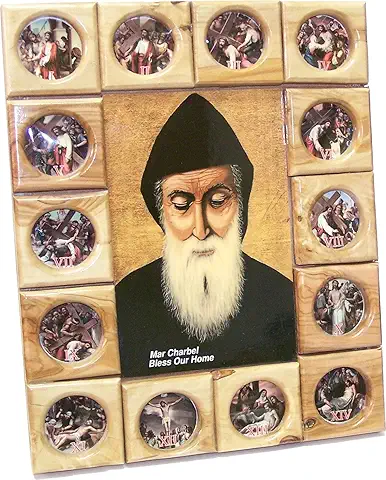
For those with cancer, St. Charbel’s intercession has been particularly striking in many instances. How do people seek St. Charbel’s help? In Lebanon and among the Lebanese diaspora, there is a beautiful tradition: on the 22nd of each month (since he died on December 24, and 24-2=22, or because miracles were noted on the 22nd), devotees hold a special prayer day honoring St. Charbel. They may attend Mass, process with his image or relic, and pray a specific prayer to obtain graces through St. Charbel. Many also anoint the sick with oil from the lamp at St. Charbel’s tomb or give them a piece of cloth touched to his shrine, as sacramentals. Even those who cannot travel to Lebanon sometimes get holy oil or soil from his grave sent to them, which they use in faith (always understanding it is God who heals, with St. Charbel as an intercessor). Around the world, images and statues of St. Charbel have found their way into hospitals and homes. He is depicted as a bearded monk in a black habit with a serene face. People often say that just looking at his icon while praying brings them calm.
There are many recorded cases of St. Charbel’s intercession in cancer healing, both in past decades and even very recently. For example, one famous early miracle: A woman named Nohad El Shami in Lebanon was partially paralyzed and bedridden; she wasn’t a cancer patient, but her overnight miraculous cure in 1993 (after seeing St. Charbel in a dream perform surgery on her neck) reignited worldwide devotion to him. In terms of cancer specifically, consider a more recent story: In 2016, a man in Arizona (USA) named Deacon Michael was diagnosed with a rare, aggressive form of cancer. He traveled to the St. Charbel shrine in Lebanon to pray. He later testified that his cancer inexplicably disappeared and he credited God’s mercy through St. Charbel’s intercession. Similarly, there are accounts from Australia, Mexico, Italy, and beyond, of individuals who were in late stages of cancer, visited St. Charbel’s monastery or prayed fervently to him, and then received clean medical reports.
To illustrate, a documented miracle from just a few years ago: A Lebanese woman, Mrs. Hoda Chalhoub, had lung cancer evidence on her scans. She went to St. Charbel’s tomb, prayed with trust, applied the holy oil, and even noted smelling a mysterious scent of incense one night after prayer. When doctors performed a biopsy to plan a transplant, they found no cancer cells at all. The disease was simply gone, confounding the medical team. She and her family returned to the monastery in Annaya full of gratitude, calling St. Charbel “the heavenly doctor.” Another recent case from 2023: a lady with a large brain tumor prayed at the shrine and took home a bit of the soil from his tomb which she consumed with faith (an unusual but devout custom). On her next scan, that tumor had vanished or turned into what looked like a harmless scar. These stories are recorded in the monastery’s official register of miracles.
Beyond such dramatic cures, countless cancer patients say that praying to St. Charbel gave them hope when they were drowning in fear. One might wake up from a prayer dream feeling strangely strengthened, or a treatment might go far better than expected — “I know St. Charbel was interceding for me,” they’ll say. In hospital rooms, one can find his picture taped on IV poles or next to a bed, a quiet assurance that a holy friend is near. Even some doctors of faith will encourage patients: “Pray; there is this saint, Charbel, ask him to pray for you too.”
What makes St. Charbel especially relatable is his humility and single-hearted focus on God. He performed no medical work in life; he was not a physician like St. Luke. He was a simple monk, but utterly devoted to God’s will. And now God chooses him as a conduit of grace. This can encourage a cancer patient that you don’t need any special qualification to be heard by God — just a trusting heart. St. Charbel seems to emphasize that God’s love is universal: people of various Christian traditions, even Muslims and Druze in Lebanon, have sought his help. He does not “pick and choose,” as one article said; his intercession touches anyone who asks, reflecting God’s merciful love for all.
Catholics praying to St. Charbel will often combine it with the sacraments: for instance, they will go to confession and Mass, then use Charbel’s oil or relic as a secondary means of asking for healing. This underscores that authentic Catholic healing spirituality doesn’t treat saints like separate healers, but always brings one back to Christ the Healer, present in the Eucharist and in the prayers of His saints.
In summary, St. Charbel is a modern gift to the Church’s ministry to the sick. His life of prayer continues in heaven, where he intercedes as a “heavenly physician” for those in need. If you or a loved one are battling cancer, you might consider invoking St. Charbel’s help — many have found in him a true friend and powerful intercessor. And as always, any healing that comes is ultimately God’s gift, for which Charbel would be the first to say: “Thank the Lord, not me.” St. Charbel Makhlouf, wonder-worker and friend of the sick, pray for us.


Faith, Sacraments, and the Communion of Saints in Healing
Walking the road of cancer — whether as a patient or as someone supporting a loved one — is undoubtedly one of the most challenging journeys in life. The Catholic Church, in her wisdom, does not promise a life free of suffering, but she does offer us every spiritual aid for the journey: the presence of Christ in the sacraments, the strength of His Word, and the loving intercession of Mary and the saints. In this article, we have reflected on a number of saints (and our Blessed Mother) especially associated with healing from cancer. Each of them shines a particular light:
Mary, the Mother of the Lord, who tenderly draws us to Jesus and has been a channel of so many healing graces (as seen at Lourdes and beyond).
St. Peregrine, whose own miraculous cure gives hope that God can still work wonders today.
St. Agatha, who models courage and stands with those afflicted by breast cancer and similar trials.
St. Jude, who continually reminds us that even when we think “all is lost,” God can surprise us.
St. Rita, who encourages us to trust God in the “impossible” and to seek peace and surrender.
St. Ezekiel Moreno, who shows that sanctity can blossom in the very throes of cancer and who walks in prayer with the sick.
St. Charbel, who demonstrates that God’s healing love is active in our modern world, touching souls and bodies across every land.
In invoking these saints, Catholics do not bypass Jesus – we run to Him. The saints are like companions holding our hand, lifting our prayers when we are too weak or frightened to pray alone. And always, the goal is to draw nearer to the Divine Physician. Sometimes that nearness results in a physical miracle; sometimes it results in the even greater miracle of a heart transformed by grace, able to accept and unite its sufferings to Christ’s for the salvation of the world. We recall what St. Paul wrote: “I consider that the sufferings of this present time are not worth comparing with the glory that is to be revealed to us” (Romans 8:18). Saints like Peregrine, Agatha, Jude, Rita, Ezekiel, Charbel — they all clung to that promise of future glory, and they encourage us to do the same.
The Catholic sacramental understanding of healing also teaches that God often works through ordinary means: through skilled doctors and medicines (which we gratefully embrace as answers to prayer), and through the sacraments. A very concrete advice the Church gives to anyone facing a serious illness is: Call a priest; receive the Anointing of the Sick. This sacrament, instituted by Christ (see James 5:14-15), imparts forgiveness and an outpouring of the Holy Spirit’s healing grace. Many have experienced relief — sometimes even physical improvement — after being anointed. It’s not “faith-healing” in a showy sense; it’s a quiet but powerful channel of God’s love. Likewise, continuing to receive Holy Communion (the Eucharist) regularly becomes a source of nourishment and healing from within, often called the “medicine of immortality” in our tradition. Even the practice of Confession can bring healing, as carrying the weight of sin or guilt can impede our spiritual and even emotional healing. When one’s soul is at peace with God, the body can also relax into God’s providence.
When we combine these sacramental helps with the intercession of the saints, we are effectively surrounding the sick person with a great cloud of witnesses and channels of grace. Picture a patient in a hospital bed: the IV line brings medicine to fight disease, while around the bed are photos or statues of Mary and the saints, rosary beads in the patient’s hands, blessed oil on the forehead from anointing, family at the foot of the bed praying. It is a holistic embrace of both faith and reason, prayer and treatment — each complementing the other. The patient is not alone; heaven and earth are united in that room.
Finally, it’s important to acknowledge that not every prayer for a cure is answered in the way we want. Sometimes despite fervent prayers and saintly intercessors, a loved one may not recover. This is a mystery that can test our faith. Yet, even in those outcomes, our faith holds that God ultimately heals in His own time and way. The saints help us with that, too: for example, St. Thérèse of Lisieux (whom we mentioned as a patron of those with lung ailments) died young of tuberculosis despite many prayers, but she accepted it as God’s path for her and promised to shower roses of grace after her death. When a cure doesn’t happen, it does not mean the saints “failed” or God “ignored” us. It means the healing granted might be a spiritual one — reconciliation with God, a peaceful passing (itself a grace), or the inspiration of that person’s faith to others. In Catholic understanding, death is not the ultimate defeat if it ushers us into eternal life. The saints and Mary ultimately want us to reach heaven, where there is no more pain, no more cancer, no more tears. In that sense, every prayer for healing is answered — either here and now, or in the resurrection to come.
In closing, if you or someone you love is struggling with cancer, know that the entire Church wants to support you. Jesus is with you — He who healed the lepers and raised the dead, He who wept at Lazarus’s tomb and then turned that sorrow into joy. And around Jesus stand His holy ones, our older siblings in faith, ready to help. Turn to Mary; she is your mother and will comfort you. Call on St. Peregrine, St. Agatha, St. Jude, St. Rita, St. Ezekiel, St. Charbel, or any saint you feel drawn to – they are all eager to bring your plea to Jesus. Participate in the sacraments; let the grace of God fortify you from within.
The road may still be hard, but you are not alone for one single step of it. The saints walk with you, the Holy Spirit dwells in you, and Christ Himself carries you. Even in the valley of the shadow of death, we fear no evil, for the Good Shepherd is at our side (cf. Psalm 23). May God’s healing hand — through the prayers of all His saints — be upon all who suffer from cancer. And may we all find hope in the unwavering love of Christ, which triumphs over every disease and even over death itself.
“O God, in Your saints you have given us lasting signs of Your presence and care. Through the intercession of the Blessed Virgin Mary, St. Peregrine, St. Agatha, St. Jude, St. Rita, St. Ezekiel, St. Charbel, and all the saints, grant healing and hope to those who are afflicted by cancer. In all things, Thy will be done. Amen.”
Offer a Dedication
If this page was meaningful to you, you’re welcome to dedicate this or any educational page in memory of a loved one, for a prayer intention, or in gratitude for blessings received.
Each dedication quietly supports the continued sharing of Eastern Christian history, prayer, and the lives of the saints.