11 Elder Paisios Quotes on Modern Life, Smartphones & Spiritual Warfare
Orthodox Spirituality • Elder Paisios • 11 Quotes on Modern Life
11 Elder Paisios Quotes on Modern Life, Smartphones & Spiritual Warfare
He never owned a television, never used a phone, and rarely left a small hut on Mount Athos — yet thousands of people came to him with the exact problem you're carrying right now: a mind that won't stop scrolling, a soul that can't settle, and thoughts that keep landing where they shouldn't. Here is what Elder Paisios actually said about it, with the full context behind each quote.
This Article at a Glance
- Saint Featured
- St. Paisios the Athonite (1924–1994), canonized 2015
- Central Theme
- Distraction, thoughts, television, and the modern mind
- Most-Searched Quote
- “Thoughts are like airplanes”
- Source Texts
- Spiritual Counsels (4 volumes) & Elder Paisios of the Holy Mountain
- Prayer Card
- St. Paisios the Athonite, $3.00
- Also Available
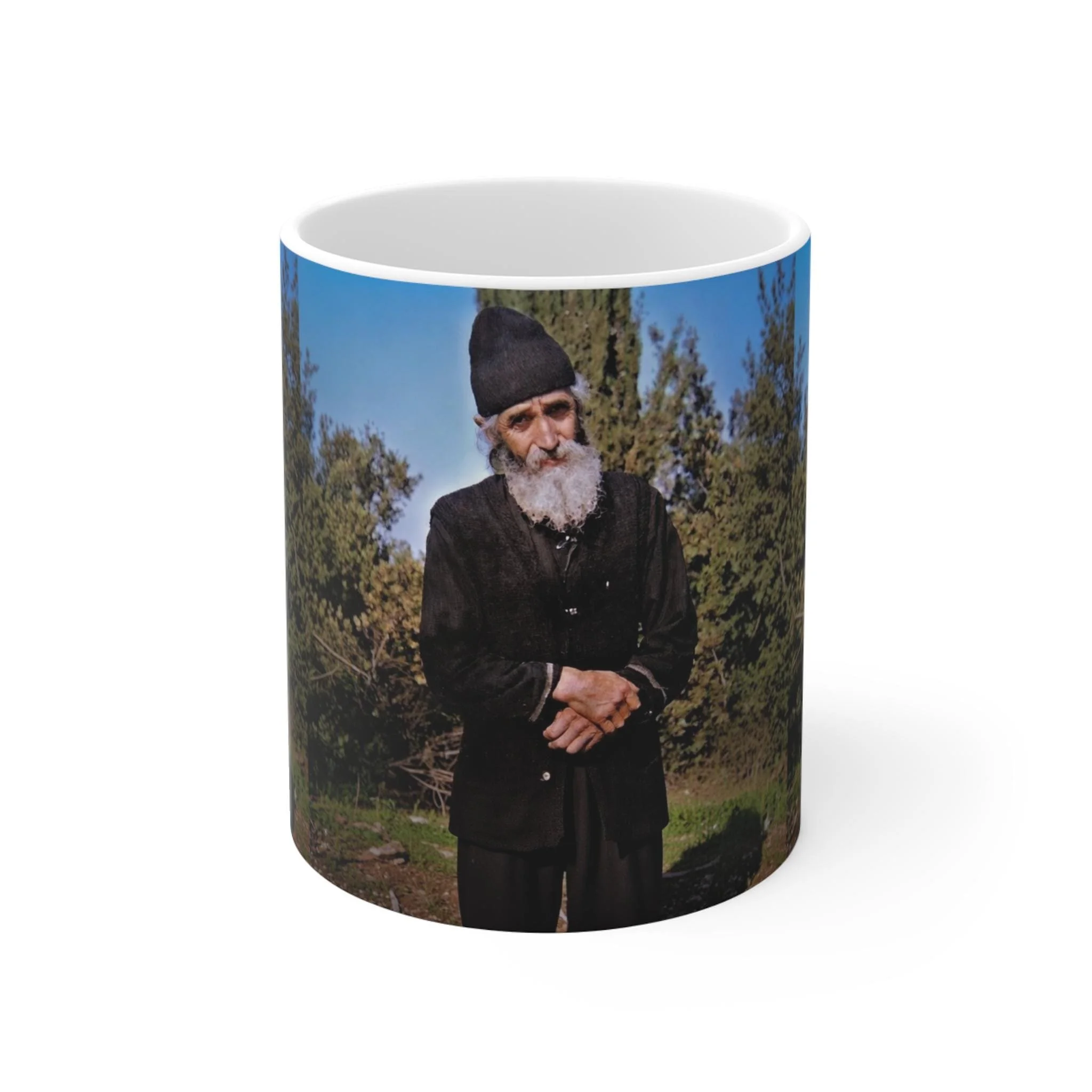
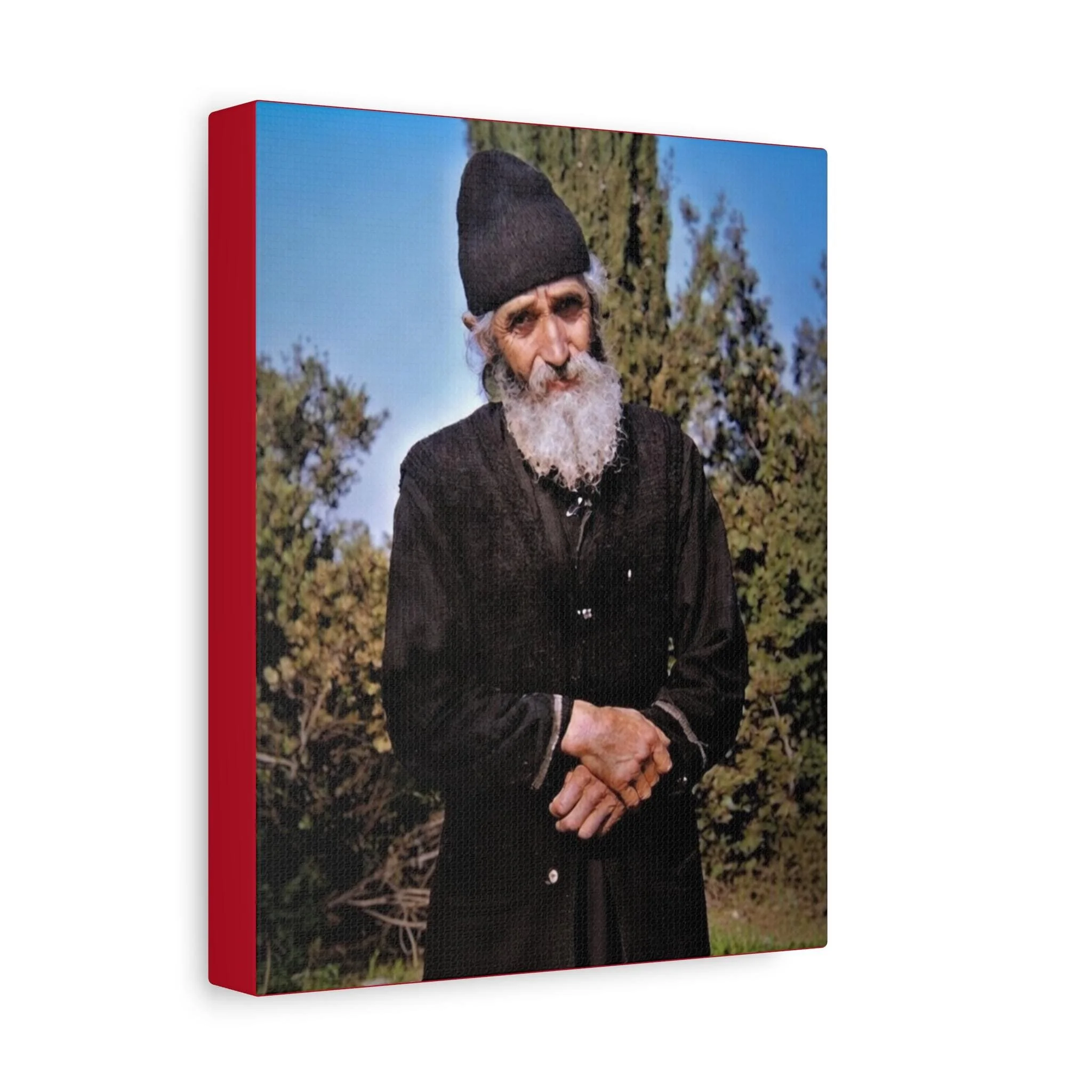
- St. Paisios mug, canvas print & t-shirt
- Related CTA
- Christian marriage coaching — protecting attention within marriage
- Reading Time
- 9–11 minutes
Elder Paisios died in 1994, three years before the first smartphone prototype existed. He never scrolled a feed, never received a notification, and never lost an evening to a screen. And yet almost nothing he said about the mind, distraction, and the modern world needs translation to apply to right now. He was not predicting technology — he was diagnosing something underneath it: a mind that has stopped guarding itself, and a heart that has grown used to noise. Below are eleven of his most searched, most quoted, and most misunderstood sayings, each with the fuller context behind it.
Who Was Elder Paisios?
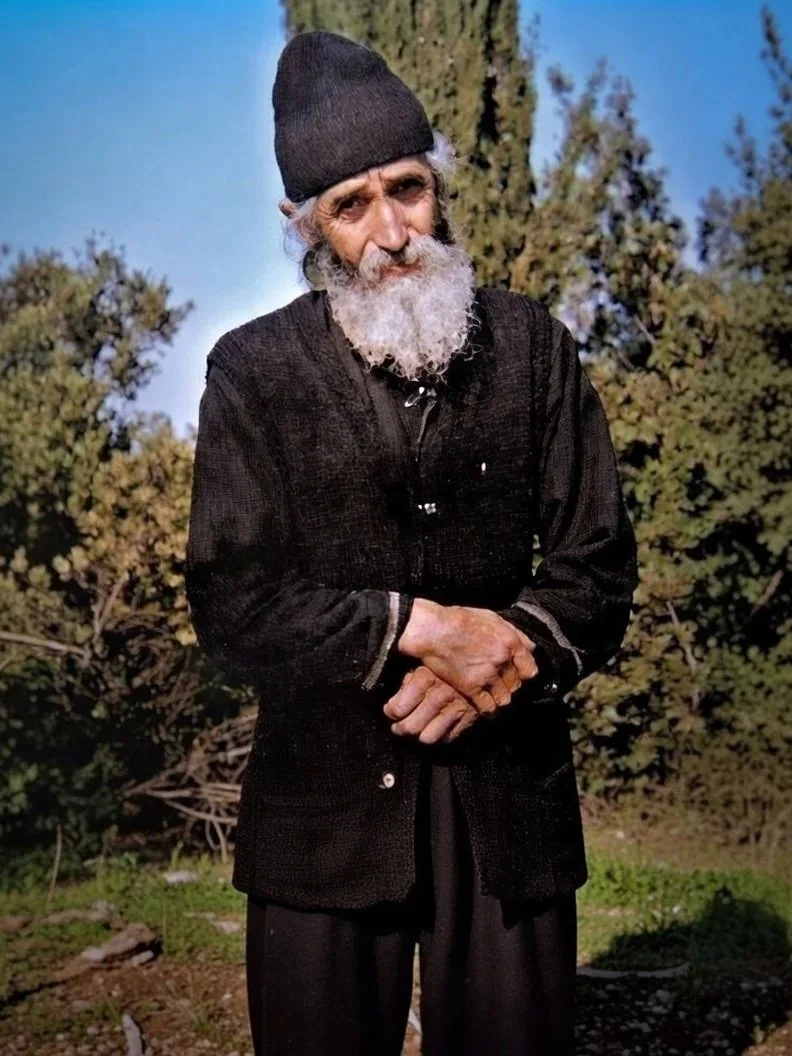
Born in Cappadocia in 1924 and raised in Greece after his family fled in a wave of forced population exchange, Paisios became a monk on Mount Athos and spent most of his adult life in small huts at Stomio and later Souroti, living an intensely ascetic life of prayer, fasting, and almost total withdrawal from the modern world. He owned almost nothing.
What makes Paisios unusual among the desert and mountain ascetics is how *available* he made himself. Thousands of ordinary people — soldiers, mothers, students, the divorced, the grieving, the anxious — traveled to see him, and he listened to every one of them. Because he heard the same complaints over and over, he became, in the words of one of his biographers, a diagnostician of what he called the spiritual diseases of modern Western man: above all, rationalism, distraction, and grumbling. He was canonized by the Ecumenical Patriarchate in 2015.
I.
“Thoughts Are Like Airplanes”
This is by far Paisios's most quoted and most searched saying, and for good reason: it describes, almost perfectly, what it feels like to pick up a phone for "just a second" and lose forty minutes. A thought, a notification, an idea, an urge to check something — on its own, Paisios says, none of it is dangerous. The danger begins the moment we give it our attention long enough to let it land and unload its cargo into our day.
The Airport Inside Your Head
Paisios developed this airplane image further in his teaching on temptation, comparing an unwelcome thought to a seed: if it is not allowed to fall onto the soil of the soul, it cannot grow. But if it lands — and especially if it is watered with repeated attention — it takes root.
Read together, the airplane and the seed form a complete picture: most of what passes through the mind in a single hour is simply noise — an algorithm's suggestion, an old grievance, a flicker of envy. The question Paisios is asking is not "how do I stop having thoughts," which is impossible, but "how do I stop building landing strips for the ones that don't deserve to stay."
On Television & the Judgment to Come
Paisios used the most common screen of his own era — television — as an image for something he believed every person would eventually face: total, unavoidable self-knowledge.
It is a striking irony that he reaches for television — the very medium he was wary of — to describe the moment of ultimate clarity. His point was not that screens are evil, but that they illustrate something true about the soul: nothing stays hidden forever, and the habits we form in private eventually become visible in full.
Godlessness Allowed on Television
This quote is often shared in apocalyptic contexts, but its sharpest edge is closer to home than prophecy: Paisios is describing spiritual numbness — the slow process by which a culture (and a person) becomes comfortable with content that would have once provoked alarm. He was less concerned with predicting specific events than with naming a pattern: indifference grows the same way a habit does, one unremarkable exposure at a time.
Don't Believe Your Thoughts
This teaching cuts both ways and resists a particularly modern trap: the habit of constant self-narration that social media trains into people, swinging between self-loathing and self-promotion. Paisios's counsel is the same in both directions — don't trust the voice that tells you either story, because both are usually exaggerations designed to either discourage or inflate you, not to tell you the truth.
The Fly & the Honeybee
One of Paisios's most beloved parables answers a question people still bring to him in writing decades after his death: why does the Church, or the world, or other people, seem so full of flaws?
Applied to an endless scroll of headlines, comment sections, and outrage cycles, this teaching becomes almost a media literacy lesson: the same environment offers both filth and flowers, and what a person finds tends to reveal what they were searching for, not just what is actually there.
Grumbling Begets Grumbling
Paisios taught this as a near law of the spiritual life: complaint is self-reinforcing, and so is gratitude. He even described the devil as actively seeking out people already in a grumbling state to make their situation worse, while leaving the grateful person largely alone because there is less spiritual leverage to work with. For a mind trained by algorithms to notice what's wrong, this is a direct and practical countermeasure.
Pray With Pain of Heart
Paisios was once asked directly why prayer so often feels distracted — the mind wandering "here and there" even during the attempt to focus.
This is one of his more demanding teachings, but it explains something many people experience without understanding why: prayer offered casually, with no real investment, scatters easily — the same way attention scatters during anything we don't actually care about. Paisios is not asking for manufactured suffering; he is pointing out that genuine concern naturally gathers the mind in a way distraction never can.
Make the Other's Pain Your Own
Paired with the quote above, this teaching reframes attention itself as a moral act. A mind constantly absorbed in its own feed, its own notifications, its own small grievances has little room left to actually carry someone else's burden. Paisios suggests that the cure for distraction is not discipline alone, but love directed outward — a mind occupied with someone else's pain in prayer is, almost by definition, no longer occupied with the airport of its own idle thoughts.
Modern Man & the Cage of Materialism
This passage, recounted by one of the Elder's spiritual sons, is sharper than most of Paisios's other sayings and is worth reading carefully rather than just quoting. The phrase "hungry consumer in a cage of materialism" describes a very specific feeling many people recognize: a constant low-grade craving that consumption never actually satisfies, paired with real resistance to anything that might interrupt the cycle long enough to ask why.
Live Simply, Without Thinking Too Much
This is one of the quotes most likely to be misread out of context, as if Paisios were anti-intellectual. He was not. His concern, expressed elsewhere as a diagnosis of "rationalism" as a spiritual disease of the modern West, was with a particular kind of restless overthinking — the endless second-guessing, calculating, and analyzing that keeps a person locked in their own head rather than resting, like a child, in trust. It is the same mind that builds airports for every passing thought that also struggles to simply rest in faith.

Paisios did not intend any of this as inspirational decoration. The practical version of his teaching is simple, even if it isn't easy: notice the thought (the airplane), decide deliberately whether it deserves attention (don't build the airport), and replace the empty seconds you'd otherwise spend scrolling with something that actually gathers the mind — the Jesus Prayer, a short prayer rope cycle, or simply naming one thing to thank God for instead of one thing to complain about.
Attention & Marriage
Protecting Attention Within Marriage
Paisios's teaching on thoughts and distraction has an obvious application to prayer, but it applies just as directly to marriage. A spouse who has built an "airport" for every passing grievance, every scrolling habit, and every distraction from the people right in front of them will struggle to be fully present — and presence, more than almost anything else, is what a marriage runs on.
When Distraction Becomes Distance
Jeremy and Ashley offer Christian marriage coaching rooted in this same Eastern Christian tradition — Jeremy works directly with husbands, and Ashley works directly with wives, helping couples notice where scattered attention has quietly become scattered intimacy, and how to rebuild the habit of real presence with each other.
Learn About Marriage Coaching →“O Lord, gather my scattered mind and cleanse my frozen heart, giving me repentance...”
This traditional Orthodox prayer for distraction in prayer can be said any time the mind feels pulled in a dozen directions at once — a short, direct request for exactly what Paisios spent his life teaching others to seek.
Common Questions
Frequently Asked Questions
Don't Let the Plane Land
Every thought that crosses your mind today is, in Paisios's image, just an airplane passing overhead. You don't have to fight it, argue with it, or chase it away. You simply don't have to build it a runway.
Keep his prayer card somewhere you'll actually see it — on your desk, by your phone charger, wherever the scrolling usually starts.
Get the St. Paisios Prayer Card →