What Is Hesychasm?
What Is Hesychasm?
The ancient Eastern Christian tradition of inner stillness, unceasing prayer, and the slow transformation of the human heart — the most complete introduction available.
Hesychasm is one of Christianity's oldest and most profound spiritual traditions. It is not a technique, a philosophy, or an exotic mystical system. It is a way of life — a disciplined, humble, patient turning of the whole person toward God through prayer. This page traces its origins, its theology, its controversy, its revival, and its practice in the world today, including why it remains largely unknown in Roman Catholicism while quietly flourishing in the Eastern Catholic and Orthodox churches.
✦ Free Resource for Couples ✦
Access Free Eastern Christian Marriage ResourcesIn This Article
The Meaning of Hesychasm
The word hesychasm comes from the Greek hesychia — stillness, silence, quiet, rest. This is not merely the absence of external noise, and it is not the same as emotional calm. In the language of Eastern Christian spirituality, hesychia refers to an interior condition: a gathered heart, a settled mind, and a soul that has learned to stand attentively before God without being scattered in every direction at once.
Hesychasm describes a way of life built around prayerful stillness. It is the gradual training of the whole person — mind, heart, body, and will — to become receptive to God's presence. Through continual prayer and watchfulness, the Hesychast seeks to move from the fragmented, distracted inner life that most modern people recognize as their default condition into a unified awareness where the heart becomes the center of spiritual perception rather than a battleground of competing impulses.
This is one of Hesychasm's most counterintuitive insights: the problem it addresses is not primarily external. The Desert Fathers discovered something in the Egyptian wilderness that anyone who sits quietly for ten minutes will immediately recognize — that when the outside world goes silent, the inside world gets louder. Memories surface. Worries intensify. Old resentments speak. Desires sharpen. Hesychasm does not fight this phenomenon directly. It addresses it indirectly, by giving the heart something better to do than argue with itself: it gives the heart Christ.
Christian usage defines Hesychasm specifically as a form of inner prayer centered on quieting the mind, guarding the heart, and continually invoking the name of Jesus. This invocation is not mechanical repetition. It is not a mantra in the Hindu or Buddhist sense. It is a conscious, personal turning toward Christ with humility and faith, repeated patiently until the prayer becomes woven into the fabric of consciousness itself.
Hesychasm is often misunderstood as a mystical technique for inducing spiritual experiences. In reality, it is almost the opposite. The tradition does not pursue visions, ecstasies, or altered states of consciousness — it treats these with considerable suspicion. What Hesychasm pursues is repentance, humility, and love. Its goal is not to feel something extraordinary. Its goal is to become someone different: a person in whom prayer has become as natural and continuous as breathing.
The Jesus Prayer: The Heart of the Tradition
At the center of Hesychasm stands a single sentence. It has been prayed by hermits in Egyptian caves, by monks on wind-swept Athonite cliffs, by soldiers in trenches, by pilgrims on foot across Russia, by nurses in hospital corridors, and by parents in the middle of the night beside sick children. Seven words — or in its longer form, twelve — that the tradition regards as containing an entire theology of salvation in concentrated form:
"Lord Jesus Christ, Son of God, have mercy on me, a sinner."
The prayer contains four theological movements. Lord — an acknowledgment of absolute sovereignty. Jesus Christ, Son of God — a confession of the Incarnation, affirming both the humanity and divinity of Christ in a single breath. Have mercy on me — an appeal rooted not in demand but in desperate dependence. A sinner — an acceptance of one's real condition before God, without excuse or defense.
Shorter forms are also used: "Lord Jesus Christ, have mercy on me" · "Lord, have mercy" · "Jesus, mercy." The tradition has always prioritized interior attention over verbal precision.
The prayer did not appear suddenly in finished form. Its roots are unmistakably biblical. Throughout the Gospels, people approach Jesus with simple, desperate cries: the blind man on the roadside shouts "Jesus, Son of David, have mercy on me" and refuses to be silenced. The tax collector in the Temple parable stands at a distance and prays only "God, be merciful to me, a sinner." The ten lepers cry "Master, have mercy on us." These are not polished liturgical formulas. They are stripped-bare appeals made in genuine need.
The Jesus Prayer gathers these biblical cries into one unified invocation and places them in the hands of anyone who wants to pray continuously. It is short enough to be carried everywhere. It is theologically dense enough to sustain decades of reflection. It is humble enough to survive genuine hardship. And it is personal enough — addressed to a specific person, not a vague divine force — to remain an act of relationship rather than a meditation technique.
What makes the Jesus Prayer uniquely suited to Hesychasm is precisely its portability. It can be spoken aloud or held silently. It requires no special posture, no specific location, no particular time of day. It can accompany a commute, a walk, a difficult conversation, a meal, or a sleepless night. The tradition calls this prayer "the prayer of the name," and the theology behind it is ancient: the name of Jesus is not merely a label. To call upon it is to place oneself consciously in the presence of the One it names.


The Desert Origins: Where Hesychasm Was Born
Hesychasm did not begin as a formal system, a theological movement, or a spiritual method. It emerged organically in the early centuries of Christianity among men and women who withdrew into the deserts of Egypt, Palestine, and Syria in search of God with undivided attention. These early ascetics — later known as the Desert Fathers and Desert Mothers — were not escaping humanity. They were responding to what they understood as a radical call of the Gospel.
As Christianity became socially accepted, increasingly official, and inevitably comfortable in the Roman Empire following the Edict of Milan in 313 AD, some believers felt that comfort was dulling the spiritual urgency of the Gospel. The desert offered what the increasingly Christianized cities could not: silence, solitude, and clarity. The movement was spontaneous and massive. Within decades of Anthony the Great's withdrawal around 270 AD, tens of thousands of Christians had followed into the Egyptian wilderness, forming communities and hermitages that stretched across the desert landscape.
In those harsh landscapes, the early monks discovered something profound about the human condition that the noisy life of the city had obscured. Even when external distraction disappears, internal distraction does not. The desert revealed that the greatest struggles are not external but internal — and that the interior world requires as much attention and discipline as any external enemy.
Evagrius Ponticus and the Mapping of Inner Experience
One of the earliest figures to articulate this inner struggle with systematic clarity was Evagrius Ponticus (345–399 AD), a sophisticated Greek theologian who eventually settled among the desert communities in Egypt. Evagrius carefully mapped the patterns of temptation and inner distraction, producing what became the foundational psychology of Eastern Christian spirituality.
He taught that intrusive thoughts arrive in predictable stages: first as a brief suggestion (prosbole), then as a conversation the mind entertains (synduasmos), then as emotional attachment (synkatathesis), and finally as action. His revolutionary insight was that spiritual combat begins not at the level of outward behavior, but at the level of the initial thought — and that prayer, especially short, focused prayer, can interrupt the sequence at its earliest stage.
Evagrius also taught that the goal of prayer is not emotional consolation but apatheia — not passivity or emotional numbness, but a freedom from compulsive emotional reactions, a settled clarity in which love can operate without being constantly disrupted by fear, anger, lust, or pride. This was the soil from which hesychasm grew.
Evagrius identified eight primary patterns of destructive thought that he called logismoi: gluttony, lust, avarice, sadness, anger, acedia (spiritual listlessness), vainglory, and pride. This list became the basis for what the Western Church eventually simplified into the Seven Deadly Sins. But Evagrius's framework was more psychological than moral: he was not primarily interested in cataloguing offenses. He was mapping the inner landscape so that the soul could learn to navigate it without being constantly ambushed.
Watchfulness: The Practical Discipline
From Evagrius and the Desert Fathers emerged the foundational hesychast discipline of nepsis — watchfulness, sobriety, attentiveness. The Hesychast learns to observe thoughts at their first appearance, without immediately identifying with them or being carried away by them. This is not repression. It is discernment. The soul learns to notice what arises, to examine whether it leads toward God or away from God, and to return attention to prayer when distraction occurs.
This watchfulness is gentle rather than violent. The tradition consistently warns against harsh self-condemnation, which it regards as a trap of pride in its negative form. The Desert Fathers prescribed simple return — not self-criticism, not dramatic interior struggle, not forcing the mind to go blank, but quiet return to the prayer. "When you notice you have wandered," they taught, "simply come back. That is the whole practice."
From the Desert to the Byzantine World: The Philokalia and the Spread of Hesychasm
As monasticism spread throughout the Christian East, the wisdom of the desert traveled with it. What began in the solitude of Egypt and Palestine gradually took root in monasteries across the Byzantine world — in Sinai, in Palestine, in Cappadocia, in Constantinople, and eventually in Mount Athos. The practices of stillness, short prayer, and watchfulness were carried from generation to generation not primarily through formal instruction or theological curriculum, but through the lived transmission of elder to disciple.
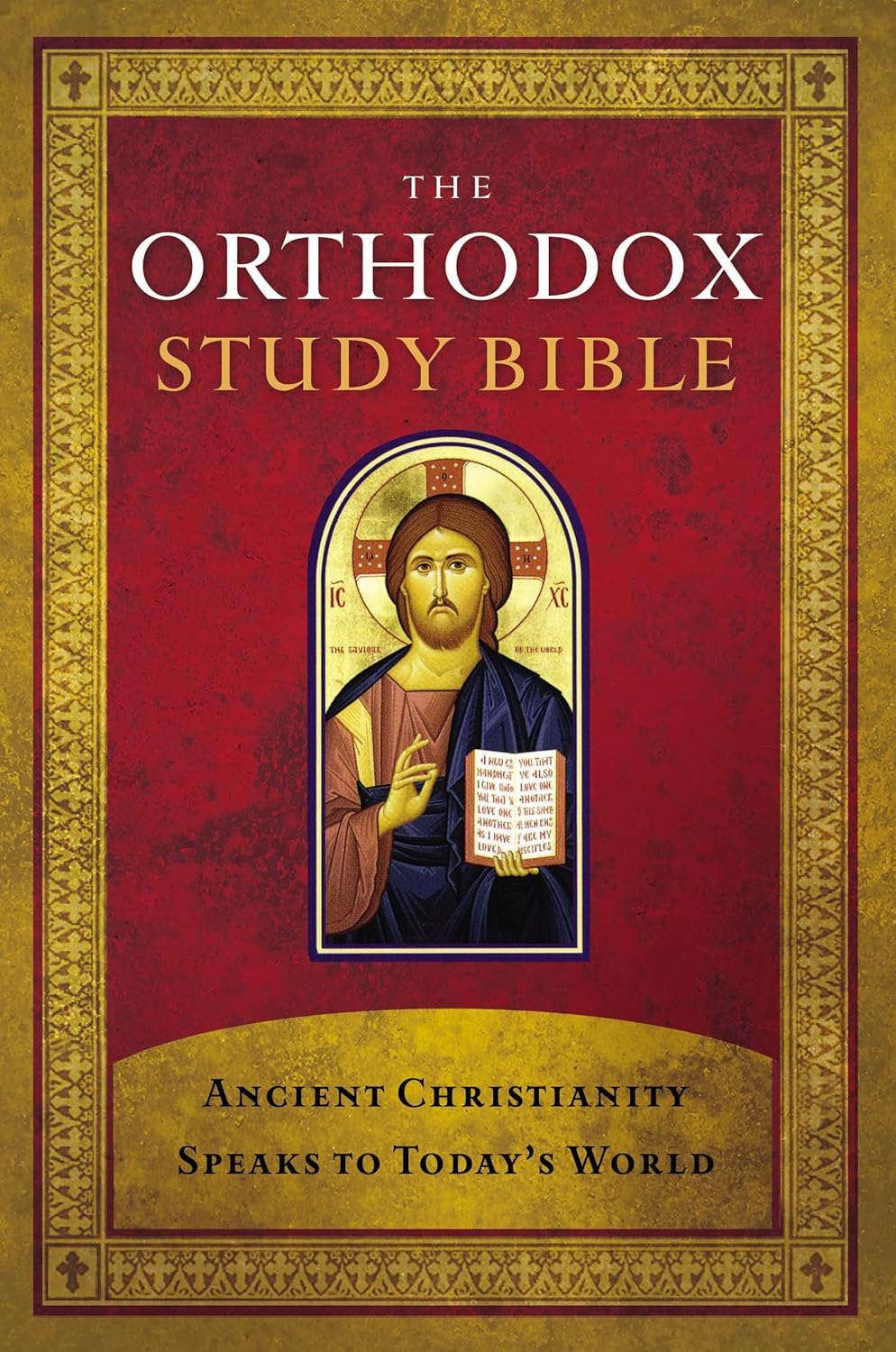
This transmission produced, over more than a thousand years, an extraordinary body of spiritual literature. The defining collection is the Philokalia — a Greek word meaning "love of beauty" or "love of the good" — first compiled by Saint Nikodimos of the Holy Mountain and Saint Makarios of Corinth in 1782. The Philokalia gathers texts from the 4th through the 15th centuries, spanning more than thirty authors, all united by a common preoccupation: the purification of the heart and the achievement of unceasing prayer.
Anthony the Great (c. 251–356) — Father of Christian monasticism. Withdrew into the Egyptian desert and spent decades in solitary prayer, emerging transformed.
Evagrius Ponticus (345–399) — First systematic theorist of the inner life and thought-patterns. Foundational for all subsequent hesychast psychology.
John Climacus (c. 579–649) — Abbot of Sinai, author of The Ladder of Divine Ascent, the classic manual of monastic spiritual progress.
Symeon the New Theologian (949–1022) — The most passionate advocate for the direct, personal experience of divine light, insisting that all Christians are called to experiential knowledge of God, not just monks.
Gregory Palamas (1296–1359) — Archbishop of Thessalonica, the great theological defender of hesychasm in the 14th-century controversy. His theology of divine energies gave hesychasm its formal doctrinal foundation.
Gregory of Sinai (c. 1265–1346) — Revived the hesychast tradition on Mount Athos and transmitted it to Slavic lands, especially Bulgaria and Serbia.
Paisios Velichkovsky (1722–1794) — Ukrainian-born monk whose translation of the Philokalia into Church Slavonic ignited the 18th-century hesychast revival in Russia, Romania, and all of Slavic Orthodoxy.
The Philokalia's influence on Eastern Christianity is difficult to overstate. When Paisios Velichkovsky translated it into Church Slavonic in 1793 — and when it was subsequently translated into Russian, Romanian, Greek, and eventually modern Western languages — it transmitted fifteen centuries of desert wisdom to an entirely new audience. The 18th- and 19th-century revival of hesychasm across Russia, Romania, Greece, and the Balkan churches drew directly from this collection.

The Hesychast Controversy: Gregory Palamas and the Theology of Divine Communion
In the fourteenth century, what had been lived quietly in monasteries for a thousand years was suddenly required to defend itself in public theological debate. The controversy that erupted in the Byzantine world between roughly 1337 and 1351 remains one of the most consequential theological disputes in Christian history — and its resolution gave hesychasm its formal doctrinal foundation.
The controversy began when Barlaam of Calabria, a Greek monk with strong rationalist sympathies and sophisticated training in Western scholastic philosophy, launched a critique of the Athonite hesychasts. His objection was fundamental: he argued that genuine knowledge of God was impossible through experience, that it was accessible only through intellectual engagement with theology and philosophy, and that the hesychasts' claims of direct experiential communion with God — and particularly the tradition of perceiving the divine light during deep prayer — were either psychological delusion or outright heresy.
Gregory Palamas and the Distinction Between Essence and Energies
Gregory Palamas (1296–1359) was an Athonite monk and a hesychast himself before he became Archbishop of Thessalonica. His response to Barlaam was not a defensive retreat but a rigorous theological offense, and it produced what is arguably the most important theological development in Eastern Christianity after the patristic period.
Palamas made a careful distinction between God's essence and God's energies. God's essence — what God is in Godself — remains forever beyond all creaturely knowledge. No created mind can comprehend the divine nature. On this point, Palamas and Barlaam agreed. Where they parted ways was what followed.
Palamas argued that while God's essence is incomprehensible, God genuinely gives Himself through His energies — His activities, His presence, His grace, His life operating in the world and in the human soul. These energies are not creatures. They are not effects produced by God from a distance. They are truly divine, truly uncreated, truly God-in-action. And they are genuinely communicable to human beings through prayer, repentance, and grace.
The practical meaning is this: when a hesychast monk, deep in prayer, reports being flooded with an interior light they understand as divine, they are not hallucinating, and they are not confusing psychological states with metaphysical realities. They are genuinely participating in the uncreated life of God. Not God's essence — which remains beyond all creaturely participation — but God's real, divine, truly uncreated self-communication.
The Councils of Constantinople and the Triumph of Hesychasm
A series of councils in Constantinople examined the controversy carefully. In 1341, 1347, and 1351, the Byzantine Church formally affirmed Palamas's theology. His distinction between divine essence and divine energies was declared orthodox. The hesychast tradition was confirmed not as fringe mysticism confined to eccentric monks, but as authentic Christian theology — and authentic Christian anthropology. Human beings are not merely called to obey God from a distance. They are called to participate in divine life.
The significance of this affirmation extended far beyond the specifics of the controversy. It meant that the goal of the Christian life is real communion with God — not merely moral improvement, not merely intellectual belief, not merely liturgical observance, but genuine participatory union. It meant that inner prayer is not psychological self-soothing. It meant that hesychasm stands at the center of what Eastern Christianity believes a human being is for.
Gregory Palamas was canonized in 1368, just nine years after his death. The second Sunday of Great Lent in the Eastern Orthodox calendar is dedicated to his memory — placing him alongside the Sunday of Orthodoxy itself as one of the defining pillars of Eastern Christian theology.
Mount Athos and the Living Tradition: Where Hesychasm Never Stopped
Mount Athos — the Holy Mountain — is a peninsula in northern Greece, approximately 50 kilometers long, accessible only by boat, and home to twenty ruling monasteries and dozens of smaller sketes and hermitages that have been continuously inhabited by Orthodox monks since the 9th century. It is the geographic heart of hesychasm in the world today, and it has been for more than a millennium.
Women are not permitted on the peninsula. Political leaders and heads of state visit but have no authority there. The calendar used on Athos differs from the civil calendar. The time system is Byzantine. The entire social, economic, and administrative organization of the peninsula exists to serve a single purpose: the uninterrupted practice of prayer.
This is not a tourist destination or a heritage museum. It is a living monastery-city of approximately 2,000 monks, and it operates in 2026 essentially as it has operated since the middle ages. The Divine Office is chanted daily in its fullness. Manual labor fills the hours between prayer. Silence structures the common life. The Jesus Prayer is breathed through every waking moment.
The Skete of Kavsokalyvia and the Hesychast Elders
The most intense hesychast life on Athos is found not in the large cenobitic monasteries but in the smaller sketes — semi-eremitic communities where monks live in individual cells with minimal communal structure — and in the hermitages scattered across the most inaccessible parts of the mountain. The skete of Kavsokalyvia, on the southern tip of the peninsula, has produced some of the most significant hesychast saints and elders of the modern era, including Saints Agathon, Porphyrios, and others whose names are now widely known across the Orthodox world.
The 20th-century hesychast revival is inseparable from Athonite figures. Saint Silouan the Athonite (1866–1938), a Russian peasant who became one of the great contemplatives of the modern era, spent nearly forty-six years on Athos and left behind writings of extraordinary depth. Saint Porphyrios of Kavsokalyvia (1906–1991) received hesychast formation at the same skete from early adolescence and carried the tradition's gifts — clairvoyance, healing, interior prayer — into the middle of 20th-century urban Athens. Saint Paisios of the Holy Mountain (1924–1994), canonized in 2015, embodied hesychasm for a generation of pilgrims who traveled from across the globe to his cell near the Monastery of Koutloumous.
These men were not historical curiosities. People alive today met them, argued with them, were healed by them, and were permanently changed by the encounter. Hesychasm on Athos is not a tradition preserved in amber. It is alive.
The Prayer Rope: The Physical Anchor of Hesychasm
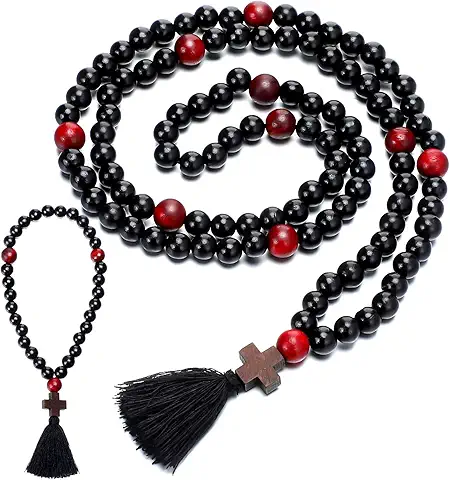
Ask any hesychast what they carry with them at all times, and the answer is almost always the same: the komboskini in Greek, the chotki in Russian, the broyanitsa in Serbian — the prayer rope. It is a loop of wool, knotted in a specific cross-shaped pattern, with anywhere from 33 to 300 individual knots, used to count repetitions of the Jesus Prayer.
The prayer rope is not a rosary. The rosary is a Western Catholic tool for structured vocal prayer through specific meditations. The prayer rope is something different: it is a physical aid for the unceasing, formless repetition of a single short prayer. There is no meditative content attached to each knot. There is no structural progression. There is only the prayer, repeated, knot by knot, throughout the day.
The physical act of moving a knot between thumb and finger serves a specific purpose: it anchors the wandering mind. The hand's tactile engagement with the rope provides a gentle physical counterpart to the interior movement of the prayer. When the mind wanders — and it will — the fingers continue. When attention returns to the prayer, the body is already there, having maintained the rhythm the mind abandoned.
The tradition is that the prayer rope must be made by a monk — and made prayerfully. Each knot in an Athonite prayer rope is tied with nine crossings of the thread, forming a small cross within the knot. This is not merely structural. It is a deliberate act of prayer: each knot is a cross, and the making of the rope is itself an act of the very prayer it will be used for.
Many hesychasts carry the prayer rope in their left hand throughout the day — tucked into a pocket, wrapped around the wrist, held loosely at the side — praying the Jesus Prayer as a continuous undercurrent beneath whatever else they are doing. The rope does not demand full attention. It simply reminds the hand, and through the hand, the heart, that prayer is always available, always possible, always already underway.


The Way of the Pilgrim: Hesychasm for Ordinary Life
For many modern Western readers, hesychasm becomes tangible for the first time through a small, anonymous 19th-century Russian book called The Way of the Pilgrim. It is not a theological treatise. It is a narrative: the story of an unnamed Russian man who becomes consumed by a single verse of Scripture — "Pray without ceasing" — and sets out on foot across Russia to find someone who can tell him how to do it.
The pilgrim is not a monk, not a theologian, not a spiritual prodigy. He is ordinary. He owns almost nothing. He has no stable home. He simply walks, and asks. A spiritual father eventually teaches him the Jesus Prayer and gives him a simple instruction: say it three thousand times a day, then six thousand, then twelve thousand, and observe what happens.
What happens, the pilgrim discovers, is hesychasm — gradually, imperfectly, realistically. The prayer is mechanical at first. The mind wanders constantly. There are days of boredom, days of discouragement, days when he forgets entirely. But he keeps returning, and slowly something shifts. The prayer begins to follow him into ordinary moments without being consciously initiated. It continues during sleep. It reshapes his perception of other people. It gentles his reactions. It makes the world luminous.
The book's great contribution to the hesychast tradition is its insistence that this practice belongs to everyone. Not to monks, not to the educated, not to the spiritually gifted. The pilgrim owns nothing, has no structured prayer schedule, moves constantly through the world — and the prayer takes root in him anyway, because he remains faithful to one simple act: returning to Christ, again and again, with whatever is available in the moment.
Hesychasm and the Catholic World: A Hidden Treasure
One of the most significant and least discussed aspects of hesychasm in the contemporary Christian world is its near-invisibility in Roman Catholicism — and its quiet vitality in the Eastern Catholic churches. Understanding why requires a brief account of how Western and Eastern Christianity diverged in their approaches to contemplative prayer.
Why Hesychasm Is Largely Unknown in Roman Catholicism
The Latin West developed its own rich contemplative tradition, distinct from the Eastern hesychast stream. The Rhineland mystics (Meister Eckhart, Tauler, Ruusbroec), the Spanish Carmelites (John of the Cross, Teresa of Ávila), the Cistercians (Bernard of Clairvaux, William of Saint-Thierry), and the tradition of lectio divina all represent genuine and deep engagement with contemplative prayer in the Western church. These traditions are not inferior to hesychasm. They are simply different, shaped by different theological frameworks and different cultural contexts.
The specific hesychast tradition — with its Jesus Prayer, its komboskini, its emphasis on nepsis (watchfulness), and its theology of divine energies as developed by Palamas — remained largely on the Eastern side of the theological and cultural divide. The Great Schism of 1054 was not the end of theological exchange, but it was the beginning of a gradual separation of spiritual vocabularies that deepened over centuries.
Palamas's theology of divine essence and energies in particular never received formal reception in the West. The Council of Florence in 1439–1445, which attempted reunion between Rome and Constantinople, touched on these issues but did not resolve them. In subsequent centuries, some Western scholastic theologians were critical of the essence-energies distinction, and Palamism was associated in Western minds with the Eastern "other" rather than integrated into Catholic theological discourse.
The result is that most Roman Catholics today — even devout, theologically literate ones — have never heard of the Jesus Prayer as a sustained spiritual practice, have never held a prayer rope, have never encountered the Philokalia, and would not recognize the word nepsis. This is not a criticism. It simply reflects the reality that two major streams of Christian contemplative tradition developed largely in parallel rather than in mutual conversation.
Eastern Catholic Churches: Where Hesychasm Lives Within Communion with Rome
For Roman Catholics who encounter hesychasm and want to explore it while remaining in full communion with the See of Rome, the Eastern Catholic churches offer something remarkable: the full hesychast tradition, intact and living, within the Catholic communion.
There are twenty-three Eastern Catholic churches in full communion with Rome, each preserving its own liturgical rite, spiritual tradition, and theological heritage. The Byzantine Catholic churches — Greek Catholic, Ukrainian Greek Catholic, Melkite Greek Catholic, Ruthenian Byzantine Catholic, and others — share the same liturgical tradition as Eastern Orthodoxy, including the Divine Liturgy of Saint John Chrysostom, the daily Office, the Philokalia, the Jesus Prayer, and the prayer rope. Their theology is formally Palamite: the essence-energies distinction is part of their theological heritage, not a foreign import.
Maronite, Coptic Catholic, Armenian Catholic, and Syriac Catholic churches each carry their own contemplative traditions — many of them rooted in the same desert asceticism that gave birth to hesychasm in the 4th century. The Syriac tradition in particular has deep roots in the very desert communities where the Jesus Prayer and the practice of nepsis were first developed.
The Byzantine Catholic churches (Greek Catholic, Ukrainian, Melkite, Ruthenian) fully participate in the hesychast tradition through the Philokalia, the Jesus Prayer, the prayer rope, and the theology of Gregory Palamas.
The Coptic Catholic Church carries the desert monastic tradition of Egypt — the same tradition that produced the Desert Fathers and the earliest hesychast spirituality — in full communion with Rome.
The Maronite Church is rooted in the Syriac Antiochene tradition and the asceticism of Saint Maron, which shares deep structural similarities with the Egyptian desert tradition that gave birth to hesychasm.
The Armenian Catholic Church preserves the same Cyrillian theological heritage and the same spiritual formation traditions as the Armenian Apostolic Church.
All Eastern Catholic faithful may use the Jesus Prayer, the prayer rope, and the Philokalia as fully legitimate and encouraged spiritual tools within their traditions. For Roman Catholics drawn to hesychasm, attendance at an Eastern Catholic Divine Liturgy is often described as the most accessible entry point into the world from which hesychasm emerged.
It is worth noting that the Second Vatican Council's decree on ecumenism, Unitatis Redintegratio (1964), explicitly acknowledged that the Eastern churches possess their own traditions, theological expressions, and spiritual disciplines — including the theoria and the contemplative tradition — that are not merely tolerated but recognized as genuine gifts to the whole Church. Pope John Paul II's apostolic letter Orientale Lumen (1995) went further, describing the Eastern contemplative tradition — explicitly including hesychasm — as a treasure that the whole Church needs and from which all Catholics are invited to learn.


Hesychasm in Everyday Life Today
Hesychasm today exists wherever Christians seek inner stillness through prayer. While it continues to be lived with maximum intensity in the monasteries of Mount Athos and in the great Orthodox monastic communities of Russia, Romania, Greece, Georgia, and the Middle East, it has also quietly spread far beyond cloistered walls. It now lives in ordinary places occupied by ordinary people doing ordinary things.
It lives in homes where someone rises a few minutes early to whisper the Jesus Prayer before the day begins. It lives in cars during commutes, in hospital hallways, in offices between meetings, in kitchens while preparing meals, in the brief pause before a difficult conversation. It lives in the hearts of teachers, nurses, hairstylists, accountants, construction workers, police officers, parents, and retirees who have discovered that the prayer fits everywhere because it demands so little and offers so much.
Most of the people practicing hesychasm today would never describe themselves that way. The tradition has always been this way. It does not announce itself. It does not produce visible spiritual celebrities. It grows quietly in the interior life of those who have discovered, through patient practice, that unceasing prayer is not only possible but that once the prayer takes root, it becomes harder to stop than to continue.
The 20th-Century Revival and Its Ongoing Effects
The modern accessibility of hesychasm owes a great deal to several specific 20th-century developments. The translation of the Philokalia into modern Greek, Russian, English, French, and other European languages brought fifteen centuries of hesychast wisdom to readers who would never have encountered it in patristic or Byzantine Greek. The publication of The Way of the Pilgrim in English brought the practice of the Jesus Prayer to Western Christian audiences who found in its anonymous Russian pilgrim a recognizable, non-monastic figure they could identify with.
The life and writings of the Athonite elders — Silouan, Porphyrios, Paisios, Sophrony — provided living, documented, modern examples of hesychasm operating in the 20th century. These were not distant historical figures whose holiness could be safely admired without personal implication. They were recent. Their disciples are still alive. Their books are in print. Their prayer cards are on Amazon. Their example is immediate and inescapable.
The result is that hesychasm in 2026 is quietly permeating Christian spirituality in ways its practitioners rarely advertise. It appears in Roman Catholic contemplative movements that draw on the Jesus Prayer alongside Western contemplative methods. It shapes the approach to prayer in Eastern Catholic parishes that are experiencing renewal. It is the explicit spiritual foundation of the growing contemporary Orthodox monasteries in the United States, Canada, Western Europe, and Australia that are drawing postulants from entirely secular and Protestant backgrounds.
How to Begin: A Practical Guide to Hesychastic Prayer
The tradition is unanimous on one point: beginning is simple. The complexity of hesychasm lies in its depth, not in its entry point. Anyone can start today, with what they have, in wherever they are. No special equipment is required, no specific location, no spiritual formation beyond what you already have.
Step One: The Prayer Itself
Begin with the Jesus Prayer in its full form: Lord Jesus Christ, Son of God, have mercy on me, a sinner. Sit quietly if you can, stand if you cannot, walk if that is what you have. Say the words slowly and with attention, not mechanically. The goal at the beginning is simply to say the prayer with genuine awareness of what the words mean and to whom they are addressed.
When the mind wanders — and it will wander immediately — do not criticize yourself. Do not analyze why it wandered or what the wandering thought means. Simply return to the prayer. That act of return is the practice. Every return is itself a prayer. The tradition counts moments of return, not moments of pure concentration: distraction is not failure, it is the occasion for the most important act the Hesychast performs.
Step Two: The Prayer Rope
A prayer rope is not required to begin, but it is extraordinarily helpful within the first few weeks. The physical rhythm of moving knots through the fingers anchors the prayer in the body and provides a gentle counter-pressure against mental drift. Most practitioners find that without the rope, the prayer becomes intermittent; with it, it becomes sustained.
A traditional approach is to begin with 33 repetitions (one for each year of Christ's earthly life), then 100, then 300, then more as the prayer becomes natural. Do not count in a way that makes the counting the focus. The knots exist to serve the prayer, not to measure spiritual achievement.
Step Three: Coordination with Breathing
Many practitioners find it helpful — though never mandatory — to coordinate the prayer with the breath. Inhaling: Lord Jesus Christ, Son of God. Exhaling: have mercy on me, a sinner. This coordination slows the prayer naturally, connects it to the body's most fundamental rhythm, and over time creates a subtle physical memory of the prayer that persists even when conscious attention wanders.
Step Four: Carrying the Prayer Through the Day
The goal of hesychasm is not to create a daily prayer period. It is to make prayer continuous. This does not mean verbal repetition every moment of every day — that would be impossible and counterproductive. It means developing an interior orientation toward Christ that persists beneath all other activities, surfacing in the prayer whenever attention returns to it.
Practically, this means beginning to notice the natural pauses in the day — waiting for a light to change, walking between buildings, the moment before sleep — and filling them with the prayer instead of with a phone screen. It means carrying the prayer rope in a pocket and reaching for it in moments of anxiety, boredom, or agitation, not as a magic talisman but as a physical reminder of where attention should go.

Frequently Asked Questions About Hesychasm
Is hesychasm only for monks and Orthodox Christians?
No. The tradition has always insisted that the calling to unceasing prayer is universal — given by Paul to all Christians, not only to monastics. The Way of the Pilgrim is precisely a demonstration of this: an itinerant layman with no formal spiritual formation discovers that the Jesus Prayer takes root in his life through fidelity alone. Eastern Catholic Christians of all rites practice it as a fully legitimate part of their tradition. Roman Catholics who encounter it are not doing anything foreign — Pope John Paul II explicitly described the Eastern contemplative tradition as a gift for the whole Church. And any Christian, regardless of denomination, who begins quietly repeating the Jesus Prayer in daily life is doing exactly what the tradition invites.
What is the difference between hesychasm and Eastern meditation practices like Buddhism or yoga?
The difference is fundamental, not superficial. Buddhist meditation techniques generally aim at the cessation of thought, the dissolution of the self, or the cultivation of mindful awareness of the present moment as an end in itself. Hesychasm aims at personal relationship with the personal God of Christian revelation. It does not seek to empty the mind — it seeks to fill the mind with Christ. The Jesus Prayer is not a mantra in the Hindu sense; it is a personal address to a specific divine Person. The goal of hesychasm is not enlightenment, not inner peace as an end in itself, and not union with an impersonal absolute, but communion with the Trinity — Father, Son, and Holy Spirit — in genuine personal relationship. The resemblance between hesychasm and Eastern meditation practices is largely superficial, a matter of shared vocabulary (stillness, inner attention, breathing) that points to very different destinations.
Why is hesychasm not well known in Roman Catholicism?
The short answer is that the Great Schism of 1054 separated the Western and Eastern churches before the most important hesychast theological developments — particularly the theology of Gregory Palamas in the 14th century — could be fully integrated into Western Catholic thought. The West developed its own rich contemplative traditions (Carmelite, Cistercian, Rhineland mystics) largely independently of the Eastern hesychast stream. Additionally, Palamism — the theological foundation of hesychasm — was viewed with suspicion in some Western scholastic circles and never received formal Catholic doctrinal reception. However, Unitatis Redintegratio (1964) and especially Pope John Paul II's Orientale Lumen (1995) explicitly recognized the Eastern contemplative tradition as a treasure of the whole Church. The door is open; most Roman Catholics simply haven't been told the tradition exists.
What is the theology of divine energies and why does it matter for hesychasm?
Gregory Palamas's distinction between God's essence (what God is in Godself, forever incomprehensible to creatures) and God's energies (God's genuine self-communication in grace, light, and life) is the theological foundation of hesychasm. It matters because without it, there are only two options: either the contemplative's experience of "divine light" or interior communion during deep prayer is a delusion (which Barlaam argued), or it involves a direct grasp of God's incomprehensible essence (which would make the mystic equal to God in knowledge, an obvious error). Palamas's distinction opens a third possibility: the contemplative genuinely participates in divine life — not in God's essence, but in God's real, uncreated, genuinely divine self-giving. This means hesychastic prayer is not psychological self-soothing. It is real participation in the life of the Trinity, received as gift through grace.
How long does it take for the prayer to "move into the heart"?
The tradition consistently refuses to give a timeline, and for good reason. Progress in hesychasm is not linear, is not uniform across different individuals, and is not reliably measurable. Some people report that the prayer begins to feel natural within weeks of beginning. Others pray for years before noticing a significant shift. The tradition is unanimous that seeking specific experiences or measuring progress against expected milestones is one of the most reliable ways to derail the practice — because the moment the prayer becomes about achieving a state, it has ceased to be about the Person to whom it is addressed. The counsel is always the same: be faithful, be humble, be patient, be willing to begin again after every distraction, and leave the rest to God.
The Quiet Revolution Still Underway
There exists today a vast, silent fellowship of Christians — across every denomination, every country, every walk of life — who are praying the Jesus Prayer throughout their days. They do not advertise it. They do not form movements around it. They carry a prayer rope in a pocket or a purse, return to the prayer in the gaps between activities, and gradually find that the gaps are closing: that prayer is beginning to accompany everything.
Hesychasm has survived for seventeen centuries because it works. Not because it produces extraordinary experiences — it may or may not — but because it slowly, inexorably, reliably reshapes the human heart. The anxious become steadier. The reactive become gentler. The hardened become tender. The fragmented become whole. Prayer does this not by force but by faithful return, by the patient accumulation of ten thousand acts of turning back toward Christ.
The tradition is waiting for you. The prayer is simple. The rope fits in a pocket. Begin.
Browse Eastern Christian Prayer Cards💍 Free Eastern Christian Marriage Resources
Hesychasm is not only for hermits. The Desert Fathers and Eastern mystics consistently taught that the deepest spiritual life is lived in relationships — and marriage is one of the most demanding and most transformative of all. Our free Eastern Christian marriage resources are offered at no cost.
Access Free ResourcesAs an Amazon Associate, The Eastern Church earns from qualifying purchases.