The Most Important Orthodox Books Every Christian Should Own
For New Converts • Lifelong Orthodox Christians • Every Serious Seeker • The Complete Orthodox Library
The Most Important Orthodox Books Every Christian Should Own
From the Orthodox Study Bible and the Jordanville Prayer Book to the Philokalia, the Ladder of Divine Ascent, and a new book applying the Church's ancient discernment of spirits to today's UAP disclosure moment — the essential books that form the complete Orthodox Christian library, whether you entered the Church last year or were baptized as an infant.
“Acquire the Holy Spirit, and thousands around you will be saved.”— Saint Seraphim of Sarov • 18th–19th Century Russian Elder • Miracle-Worker of Diveyevo
Quick Reference — Best Orthodox Book by Reader Type
- Best Overall • #1 in Christian Church History
- The Orthodox Study Bible → Amazon
- Best Daily Prayer Book
- The Jordanville Prayer Book → Amazon
- Best for New Converts
- The Orthodox Way (Kallistos Ware) → Amazon
- Best Introduction to Orthodox Prayer
- The Way of a Pilgrim → Amazon
- Most Loved Orthodox Spiritual Journal
- My Life in Christ (St. John of Kronstadt) → Amazon
- Greatest Ascetic Classic
- The Ladder of Divine Ascent → Amazon
- The Supreme Orthodox Collection
- The Philokalia, Volumes 1–5 → Amazon
- Best Convert Memoir
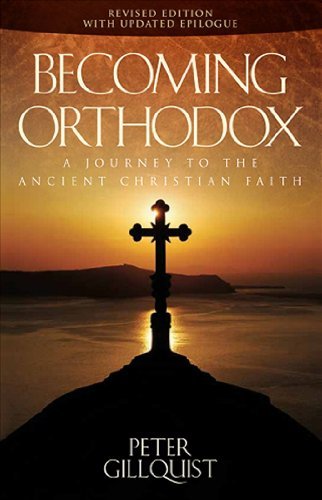
- Becoming Orthodox (Peter Gillquist) → Amazon
- Best Book on the Spiritual Struggle
- Unseen Warfare → Amazon
- Best Orthodox Book on Modern Spirituality
- Orthodoxy & the Religion of the Future → Amazon
- New: Discernment for the UAP Disclosure Era
- Aliens and Demons: Discerning the Great Deception → Amazon
Jump to a Section
Every Orthodox Christian Needs These Books — Here Is Why
Orthodox Christianity is not a faith you absorb through a single Sunday homily or a weekend retreat. It is a complete way of life — a transformation of the mind, the heart, and the body — that has been passed down through an unbroken living Tradition for two thousand years. The books on this list are not optional enrichment. They are the portable containers of that Tradition: the prayers, the theology, the ascetic wisdom, the lives of those who lived the Faith before us, and the guides for those who are living it now.
This list is for everyone. It is for the catechumen who was received into the Church six months ago and does not know where to begin. It is for the cradle Orthodox Christian who has attended the Divine Liturgy since childhood but has never read the Philokalia. It is for the Protestant or Catholic inquirer who has heard something about hesychasm and the Jesus Prayer and wants to understand what Orthodox spiritual life actually looks like from the inside. And it is for the priest, the reader, the choir director — the people who serve the Church and want to go deeper than the Liturgy books alone will take them.
The books are organized here in the order a new reader is most likely to benefit from them — beginning with the two books every Orthodox home needs on the shelf before any other, moving through the books for converts and inquirers, the great prayer books, the ascetic classics that the holy fathers have read for centuries during Great Lent, the theological masterworks, a newly published guide to applying that same discernment to the UAP disclosure phenomenon now unfolding in real time, the lives of the saints, and finally the books that address marriage, family, and the ancient scriptures that have shaped the Orthodox imagination from the beginning.
Not every book here is easy. The Philokalia is not easy. The Ladder of Divine Ascent is not easy. But the Orthodox Tradition has never promised that the path to God would be comfortable — only that it is real, and that those who have walked it have left these books behind as guides for those who follow. That is exactly what they are.
All 21 Orthodox Books — Complete Overview
| # | Book | Author | Best For |
|---|---|---|---|
| 1 | The Orthodox Study Bible | Thomas Nelson / Church Fathers | #1 in Church History — Every Orthodox home |
| 2 | The Jordanville Prayer Book | Holy Trinity Monastery | Daily prayer rule — The standard English prayer book |
| 3 | The Orthodox Way | Met. Kallistos Ware | New converts, theology overview |
| 4 | Becoming Orthodox | Peter E. Gillquist | Converts, seekers, inquirers |
| 5 | A Complete Guide to the Divine Liturgy | Alexander Egger | Understanding the Liturgy of St. John Chrysostom |
| 6 | The Way of a Pilgrim | Anonymous (Olga Savin, trans.) | The Jesus Prayer, Hesychasm, prayer life |
| 7 | My Life in Christ | St. John of Kronstadt | Daily spiritual reading, devotion, prayer |
| 8 | On Acquisition of the Holy Spirit | St. Seraphim of Sarov | The goal of the Christian life |
| 9 | The Way of Mystical Christian Prayer | Hank Freeman | Ancient prayers for stillness and inner life |
| 10 | The Ladder of Divine Ascent | St. John Climacus | Asceticism, Great Lent reading, spiritual growth |
| 11 | Unseen Warfare | St. Nikodemos / St. Theophan | The inner spiritual struggle, Philokalia gateway |
| 12 | The Philokalia, Vols. 1–5 | St. Nikodemos of the Holy Mountain | The supreme Orthodox spiritual collection |
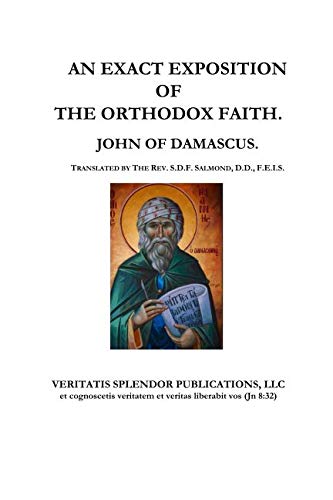
| 13 | An Exact Exposition of the Orthodox Faith | St. John of Damascus | Systematic Orthodox theology |
| 14 | The Mystical Theology of the Eastern Church | Vladimir Lossky | Advanced theology, theosis, deification |
| 15 | Orthodoxy and the Religion of the Future | Fr. Seraphim Rose | #1 Comparative Religion — Discernment of spirits |
| 16 | Aliens and Demons: Discerning the Great Deception New | A Servant of God | UAP disclosure through the Church's tradition of testing spirits |
| 17 | Lives of the Saints for Orthodox Christians | Dean Marais | Daily saint reading, Church calendar |
| 18 | The Gurus, the Young Man, and Elder Paisios | Dionysios Farasiotis | Modern conversion narrative, Elder Paisios |
| 19 | St. John Chrysostom: On Marriage and Family Life | St. John Chrysostom | Christian marriage, parenting, family life |
| 20 | The Eucharist and the Eternal Sacrifice of Christ | Thomas Paschal | Understanding the Eucharist theologically |
| 21 | Book of Enoch: Watchers & Nephilim Edition | Samual David | Ancient scripture, Ethiopian Orthodox canon |
Book No. 1 • #1 Best Seller in Christian Church History • The Foundation
The Orthodox Study Bible — The Bible of the Early Church

Before any other book on this list, before the Philokalia and the Ladder and the Way of a Pilgrim, there is this: the Word of God as the Orthodox Church has always read it. The Orthodox Study Bible is the first complete study Bible ever produced for Orthodox Christians, and it is not a minor achievement — it is the culmination of decades of scholarly and spiritual labor by a team of Orthodox theologians, clergy, and academics who set out to give English-speaking Orthodox Christians a Bible that is actually theirs.
The most important distinction between this Bible and every other English Bible is the Old Testament. The Orthodox Study Bible's Old Testament is newly translated from the Septuagint — the ancient Greek translation of the Hebrew Scriptures made in Alexandria around 250 BC, which is the Old Testament actually used in Orthodox worship, quoted in the New Testament by the Apostles, read by the early Church Fathers, and still chanted in Orthodox services today. Most English Bibles — Protestant, Catholic, and otherwise — translate the Old Testament from the Hebrew Masoretic text. When an Orthodox priest or deacon reads from the Old Testament at Vespers or Orthros, they are reading from a text derived from the Septuagint. For the first time, English-speaking Orthodox Christians can now have that same text in their hands.
The commentary throughout is drawn from the early Church Fathers — the Cappadocians, John Chrysostom, Athanasius, Cyril of Alexandria, John of Damascus — rather than from modern academic biblical scholarship. The result is a commentary that asks not "what do modern scholars think this passage meant to its original audience?" but "what has the Church understood this passage to mean across two thousand years of reading, praying, and dying by its light?" Those are different questions. This Bible answers the Orthodox one.
With 5,459 reviews at 4.8 stars and the permanent #1 position in Christian Church History on Amazon, the Orthodox Study Bible has proven itself not just as an important publication but as a book Orthodox Christians actually use. The full-color icons, liturgical reading markers aligned to the church calendar, and 9.5-point type suitable for extended reading make this a Bible for daily use — not a shelf trophy. If you have only one book from this entire list, let it be this one.
Book No. 2 • Best Orthodox Prayer Book • The Daily Standard
The Jordanville Prayer Book — The Most Popular Orthodox Prayer Book in English

There is a moment that comes for nearly every person who enters the Orthodox Church — usually in the first weeks of attending Liturgy — when a priest or a friend hands you a small maroon book with a gold embossed cross on the cover and says: this is how you pray in the morning and the evening. That book is almost certainly the Jordanville Prayer Book.
Published by Holy Trinity Monastery in Jordanville, New York — one of the great centers of Russian Orthodox monastic life in North America — and in continuous publication since 1979, the Jordanville Prayer Book has sold thousands of copies every year for more than four decades. That is not because it is beautifully marketed. It is because Orthodox Christians who use it keep using it, keep recommending it, and keep pressing it into the hands of everyone they know who is beginning a prayer rule.
The contents are comprehensive in exactly the ways that matter most for daily Orthodox prayer. Morning and Evening Prayers drawn from the great prayer books of the monastic tradition. The Divine Liturgy of St. John Chrysostom. Excerpts from Matins and Vespers. Troparia for every day of the week and all the major Feast Days. Akathists and Canons to our Lord and the Theotokos. The complete preparatory prayers and Canon for Holy Communion — and the Thanksgiving After Holy Communion. The range covers everything a layperson needs to maintain a rich and full prayer rule without needing a shelf of separate service books.
The prayer language is traditional English — the elevated Thee and Thou and Thine of Classical Prayer Book English that many Orthodox Christians prefer precisely because it creates a register of speech set apart from ordinary life. For those who find this difficult at first, the prayers' repetition over weeks and months transforms what feels unfamiliar into the most natural voice in which to address God. With 1,417 reviews at 4.8 stars, this is among the highest-rated Orthodox books in print. It belongs in every Orthodox home, and ideally, on the prayer corner.
The Jordanville Prayer Book is the text; your Orthodox prayer rule is the discipline. Read our guide to establishing a morning and evening prayer practice, including how to adapt the rule for laypeople with families and work obligations. A prayer rope from Mount Athos is the traditional companion to the Jordanville Prayer Book for those who also pray the Jesus Prayer.
Part II
For New Converts, Inquirers & Those Seeking the Ancient Faith
Every year, thousands of Christians from Protestant, Catholic, and non-denominational backgrounds find their way into the Orthodox Church — through a Liturgy, a saint's life, a conversation with a priest, or an encounter with the icon of Christ that changes how they see everything. These three books are for that journey. They are also for Orthodox Christians who have attended Liturgy since childhood but have never fully understood where the Church came from, what happens during the Divine Liturgy, and what it means theologically to be Orthodox in the 21st century.


Book No. 6 • The Jesus Prayer • The Book That Introduced the World to Orthodox Prayer
The Way of a Pilgrim — The Most Beloved Orthodox Prayer Book in the World

There are books that explain Orthodox prayer, and there is The Way of a Pilgrim — the book that does something no explanation ever could: it shows what Orthodox prayer actually feels like from the inside, in the hands of a wandering Russian peasant who had nothing but a Bible, a prayer rope, and some dried bread, walking across the 19th-century steppe with the name of Jesus on his lips.
The story begins with a single question. An unnamed peasant, recently widowed, hears the Apostle Paul's words read at Liturgy: "Pray without ceasing" (1 Thessalonians 5:17). He is arrested by this command and cannot let it go. How does one pray without ceasing? He sets out across Russia to find an answer, walking from monastery to monastery, from priest to priest, until a starets — a holy elder — teaches him the Jesus Prayer: "Lord Jesus Christ, Son of God, have mercy on me, a sinner." The starets instructs him to pray this prayer twelve thousand times a day, then twenty-four thousand, then ceaselessly. As the pilgrim walks and prays, something extraordinary happens: the prayer moves from his lips to his heart. He begins to pray without effort, without ceasing, in his sleep. The prayer becomes his life.
The Way of a Pilgrim is one of the most widely circulated spiritual texts in the Western world — with 5,600 Goodreads ratings and a permanent place on every list of essential Orthodox and Christian spiritual reading. It introduced the practice of hesychasm and the Jesus Prayer to millions of readers who had never encountered the Eastern spiritual tradition, and it continues to do so. The Shambhala Classics edition with Olga Savin's translation and Thomas Hopko's foreword is the most widely recommended edition currently available, and it includes the essential sequel, The Pilgrim Continues His Way, which contains a full appendix reviewing the Church Fathers' teaching on the Jesus Prayer.
If you have any interest in Orthodox prayer — if you have heard the words hesychasm or Jesus Prayer and wondered what they mean in lived practice — this is where you begin.
Book No. 7 • Read by Millions • The Greatest Orthodox Spiritual Journal
My Life in Christ — St. John of Kronstadt’s Spiritual Journals

St. John of Kronstadt (1829–1908) was the most beloved Russian priest of the 19th century — a man whose life of prayer was so extraordinary that the sick came from across Russia to be healed at his Liturgies, the poor crowded outside his door in the night, and the Tsar himself requested his presence during the final illness of Alexander III. He was canonized by the Russian Orthodox Church in 1990. My Life in Christ is his spiritual journal: private reflections on prayer, repentance, sin, love, and God's presence, written for himself and never intended for publication — which is precisely what makes it so devastating.
The book does not read like theology. It reads like a man wrestling with God in real time. The entries are brief — sometimes only a sentence or two — and the register oscillates between ecstatic gratitude and raw, unsparing self-examination. St. John writes about failing in prayer, about the temptations of pride and sloth, about the mercy of God that keeps coming regardless. He writes about the Eucharist with a directness that few theological treatises match. Generations of Orthodox Christians have read these pages as spiritual medicine — practical, personal, and impossible to read without being convicted.
This new hardcover edition from Holy Trinity Publications presents a thoroughly revised English translation in a beautiful Smyth-sewn binding with gold stamping and a grosgrain ribbon marker. The bite-sized format — short reflections that can be read one or two at a time, in a minute or in an hour — makes it ideal for daily reading alongside the morning and evening prayers of the Jordanville Prayer Book. My Life in Christ has been read by millions. There is a reason it has not gone out of print in over a century.
More Essential Books of Orthodox Prayer


Book No. 10 • The Great Lenten Classic • The Monks’ Book
The Ladder of Divine Ascent — The Masterwork of Orthodox Ascetic Spirituality

Written in the early seventh century by St. John Climacus — a monk of Mount Sinai who became its abbot and earned the surname Climacus, from the Greek word for ladder — The Ladder of Divine Ascent has been read in Orthodox monasteries during Great Lent without interruption for fourteen hundred years. If you attend an Orthodox parish and notice that the iconostasis often contains a dramatic icon of monks ascending a golden ladder toward Christ while demons pull some of them off into the abyss — that is the icon of this book. The Ladder of Divine Ascent is not a marginal text. It is woven into the visual and liturgical fabric of Orthodox Christian life.
The book is organized in thirty steps or "rungs" — one for each year of Christ's hidden life before His public ministry. Each step addresses a particular movement in the soul's ascent toward God: renouncing the world, practicing obedience, cultivating mourning and repentance, overcoming anger and malice, achieving vigilance over thoughts, acquiring discernment, and finally attaining the union of faith, hope, and love that St. John calls the summit of the ascent. The structure is not arbitrary — it reflects the monastics' experienced understanding that certain virtues must precede others, that certain passions must be addressed before subtler temptations are even visible, that the soul's growth toward God has a real shape that can be described.
The Archimandrite Lazarus Moore translation used in this edition preserves both the depth and the spiritual directness of the original. The Ladder is not a gentle book — it speaks about the inner life with the unsparing clarity of someone who has spent decades observing how the soul works and how easily it deceives itself. But this is precisely its value: it tells the truth about the spiritual life in a way that more comforting books cannot. Fourteen hundred years of monks have read it during the forty days before Pascha and found that the truth, however demanding, was exactly what they needed.
Book No. 12 • The Supreme Orthodox Collection • The Book Behind the Book
The Philokalia — The Complete Five-Volume Anthology of Orthodox Spiritual Wisdom

The Way of a Pilgrim is a story about a man who read the Philokalia. My Life in Christ is the journal of a priest formed by the Philokalia. The Ladder of Divine Ascent is one of the texts the Philokalia draws from. Every road in Orthodox spiritual reading eventually leads to this book — the anthology of the holy fathers' writings on prayer, watchfulness, and the soul's journey toward union with God that St. Nikodemos of the Holy Mountain compiled on Mount Athos in 1782 and which has been the supreme reference work of Orthodox spirituality ever since.
The word Philokalia means "love of the beautiful" or "love of the good" — a fitting name for a collection that presents beauty not as an aesthetic category but as the inner life of God himself, dimly perceived through prayer and purification and union. The five volumes gather writings from spiritual fathers spanning the fourth through the fifteenth centuries: St. Anthony the Great, St. Maximos the Confessor, St. Symeon the New Theologian, St. Gregory Palamas, and dozens of others whose names are celebrated in the Orthodox Church and whose writings have been shaping Orthodox ascetic life since the earliest desert tradition.
This edition makes the complete five-volume text available in a single volume — a format that eliminates the need to manage multiple books and allows the reader to appreciate the Philokalia as what it is: a unified whole, a single interconnected conversation about the nature of prayer and the soul's movement toward God that spans twelve centuries of Orthodox experience. The themes that run through it — noetic prayer, the guarding of the heart, the struggle against the passions, the practice of stillness, the uncreated light of God — do not change from writer to writer, but deepen and illuminate one another in a way that becomes visible only when the whole collection is held together.
The Philokalia is not a book for beginners. Every traditional Orthodox spiritual guide has advised that the Philokalia should be read with a confessor's guidance and only after the foundational practices — daily prayer rule, the sacraments, regular fasting — are established. The Way of a Pilgrim is where you begin. Unseen Warfare is the next step. The Philokalia is where, years later, you realize you have been heading all along.
Unseen Warfare — The Gateway to the Philokalia

Part V — Theological Foundations
The Great Books of Orthodox Theology
Orthodox theology is not an academic discipline practiced by specialists at a safe remove from the spiritual life. In the Orthodox tradition, all true theology is mystical — it arises from prayer, from the encounter with God in the Liturgy and the sacraments, from the experience of the holy fathers who have gone before. The books in this section represent three very different approaches to that encounter: the foundational 8th-century systematic theology that gave the Eastern Church its definitive doctrinal summary; the 20th-century masterwork that introduced Western readers to the mystical dimension of Orthodox theology; and the controversial but indispensable Orthodox examination of where modern spirituality is heading.


New Release • Applying the Church’s Oldest Test to Today’s Newest Question
Aliens and Demons — Discernment for the UAP Disclosure Era

Something is happening in our skies, and for the first time, the people who are supposed to know are admitting they don't fully understand it. Sworn testimony before Congress. Trained military pilots describing craft that outperform anything we can build. Declassified footage the Pentagon itself cannot explain. Disclosure is no longer a conspiracy theory — it is government policy. The question has shifted from is something real to what is it, and what does it want.
Most people chasing that question are reaching for either speculative science or vague spirituality. Neither has an actual method for testing what they're looking at. The Church does. It has for two thousand years. Aliens and Demons is a framework, not a comfort book. Drawn from Scripture, the Church Fathers, the desert saints, and the documented tradition of spiritual discernment, it gives you the same tool exorcists still use today to test a claimed encounter and determine what it actually is. It builds its case the way Fr. Seraphim Rose built his in Orthodoxy and the Religion of the Future: patiently, with sources named, with no fabricated claims, and with a single governing question the tradition has refined for three thousand years — not did the sign happen, but where does it lead.
- Reads the disclosure phenomenon through the same lens the Church has used on deceiving spirits since the book of Deuteronomy — and shows why "is it real" was never the question that mattered
- Traces the ancient sons of God who "came down" in Genesis, and explains exactly why the Church has classified beings like them for over a thousand years
- Applies the one test the Apostle John gave the Church for distinguishing a true spirit from a false one — a test that has never once failed under scrutiny
- Covers what the Church Fathers taught about the gods of the pagan world, and why Scripture never claims those powers ceased to exist, only that Christ broke their dominion
- Identifies the pattern behind why the old names are resurfacing openly, in music, entertainment, and ceremonies staged in front of the world's own heads of state
- Weighs the testimony of two modern exorcists, one in Rome and one in America, describing what they have personally encountered and how it maps onto the phenomenon
- Situates today's disclosure moment inside the Church's own teaching on the "man of lawlessness" and the counterfeit signs of the last days
This is a book for the reader who is already paying attention and wants a sharper instrument, not a softer landing. It does not ask you to be afraid of what is happening. It gives you the means to test it, name it, and stand on solid ground while everyone else is still guessing.
Orthodoxy and the Religion of the Future (Fr. Seraphim Rose) established the patristic method for discerning modern spiritual deception fifty years ago. Aliens and Demons applies that same method to the question dominating headlines and congressional hearings right now. Read them together for the fullest picture of Orthodox discernment, from the New Age movements of the 1970s to the disclosure movement of today.
Part VI — The Lives of the Saints
Knowing the Saints — Their Lives Are the Theology Made Flesh
Metropolitan Kallistos Ware often quoted Dostoevsky: the saints are not just moral examples — they are proofs that holiness is actually possible, that the promises of the Gospel have been fulfilled in real human beings who lived in real history. Every Orthodox church contains icons of the saints not as decoration but as a theological statement: these people did it. They walked the Ladder. They acquired the Holy Spirit. They prayed without ceasing. The following books bring those lives into your home.


Many of the saints in these books have prayer cards available in The Eastern Church store. Including St. Paisios of Mount Athos, St. Nektarios of Aegina, St. John Chrysostom, and more — beautiful prayer card companions to the saint biographies you are reading.
Part VII — Marriage, Family & the Sacraments
The Orthodox Home — Marriage, Children, and the Eucharist


Part VIII — Ancient Scripture
The Book of Enoch — Ancient Scripture Still in the Orthodox Canon

Where to Begin
Which Orthodox Books Should You Start With?
Year One (Foundation): The Orthodox Study Bible + The Jordanville Prayer Book + The Orthodox Way (Ware) + Becoming Orthodox (Gillquist). These four books establish everything: the Scripture, the daily prayer, the theology, and the lived experience of conversion. Nothing else is needed to begin living a full Orthodox Christian life.
Year Two (Prayer Life): The Way of a Pilgrim + My Life in Christ + On Acquisition of the Holy Spirit (St. Seraphim) + Complete Guide to the Divine Liturgy. This year deepens prayer from an obligation into a vocation — from reading prayers to actually praying them.
Year Three and Beyond (The Ascetic Classics): The Ladder of Divine Ascent (read during Great Lent) + Unseen Warfare + The Philokalia. This is where Orthodox Christian life becomes a genuine spiritual warfare — where the books stop being interesting and become necessary. These are the books the holy fathers read. They are the books for becoming holy.
Theology, Discernment, Saints, and Everything Else: An Exact Exposition of the Orthodox Faith (John of Damascus) + Mystical Theology of the Eastern Church (Lossky) + Orthodoxy and the Religion of the Future (Seraphim Rose) + Aliens and Demons: Discerning the Great Deception + Lives of the Saints + The Gurus, the Young Man, and Elder Paisios. These can be read in any order, at any time, alongside everything else.
You are considering Orthodoxy for the first time
Start with Becoming Orthodox (Gillquist) for the human story, then The Orthodox Way (Ware) for the theology. Two books. You will know whether Orthodoxy is home.
Becoming Orthodox on Amazon →You were just received into the Church
Get the Orthodox Study Bible and the Jordanville Prayer Book immediately. These are not optional. Then read The Way of a Pilgrim to understand what you are being invited into.
Orthodox Study Bible on Amazon →You are a cradle Orthodox Christian who has never read seriously
My Life in Christ — it will convict you, comfort you, and give you a vision of Orthodox prayer life that no homily has ever articulated. Then the Ladder of Divine Ascent the following Great Lent.
My Life in Christ on Amazon →You want to go deeper in prayer
Read The Way of a Pilgrim first. Then Unseen Warfare. Then, when you are ready, approach the Philokalia — with a confessor's guidance if possible, with the full text available if not.
Way of a Pilgrim on Amazon →You want to understand Orthodox theology seriously
The Mystical Theology of the Eastern Church (Lossky) followed by An Exact Exposition of the Orthodox Faith (John of Damascus). One gives you the living theology; one gives you the systematic foundation.
Mystical Theology on Amazon →You are a parent raising children in the Orthodox Faith
St. John Chrysostom on Marriage and Family Life for you and your spouse. Lives of the Saints to read aloud with your children at dinner. The saints are the best catechism.
Chrysostom on Marriage on Amazon →You are encountering New Age spirituality in your world
Orthodoxy and the Religion of the Future by Fr. Seraphim Rose. The #1 book in Comparative Religion on Amazon for a reason. The patristic framework for discernment of spirits has never been more necessary.
Religion of the Future on Amazon →You are following the UAP disclosure hearings and want an Orthodox framework
Aliens and Demons: Discerning the Great Deception. The same patristic method Seraphim Rose applied to New Age spirituality, applied to the disclosure phenomenon dominating the headlines right now.
Aliens and Demons on Amazon →You want to read about modern saints
The Gurus, the Young Man, and Elder Paisios — the most compelling modern Orthodox narrative available in English, and an encounter with one of the greatest saints of the 20th century.
Elder Paisios book on Amazon →Frequently Asked Questions
Orthodox Books — Questions Answered
The Library Is the Tradition Made Portable
The Orthodox Church has carried these books — and the living faith they contain — through seventeen centuries of empire and persecution, of martyrdom and revival, of schism and renewal. They survived the iconoclast councils and the fall of Constantinople and the Soviet gulags and the diaspora. They contain what the holy fathers found when they went looking for God and what they left behind so that you could find it too.
You do not have to buy all twenty-one books today. Buy two. The Orthodox Study Bible and the Jordanville Prayer Book. Put them on the prayer corner. Open them tomorrow morning. That is how every Orthodox library begins — and how every Orthodox life deepens.
Orthodox Study Bible → Jordanville Prayer Book → Aliens and Demons →