The Complete Guide to Orthodox and Catholic Christian T-Shirts: What Every Symbol Means
A three-bar cross. A saint frozen mid-miracle. A prayer nobody notices unless they know what to look for. Every design in this guide carries a real story behind it, and this article walks through what each one actually means, so that whatever you wear, you know exactly why you're wearing it.
Something has been changing quietly for the past several years: more Christians, especially younger men and women drawn to ancient, unbroken tradition, are choosing to wear their faith visibly rather than keep it folded away for Sunday mornings. The three-bar Orthodox cross has become recognizable enough on the street that people now search specifically for its meaning after seeing it on someone else's shirt. A whole informal culture, often called "orthobro" online, has grown up around this instinct: prayer ropes on the wrist, the Jesus Prayer on repeat, and apparel that says something true rather than something trendy.
This guide exists for two reasons. First, because every single design described below carries real theological and historical weight, and knowing that weight makes wearing it mean something. Second, because if you're looking for a specific saint, symbol, or icon to wear, this is the fastest way to find exactly the one that fits your story, your patron, or the person you're buying a gift for. Every shirt in this guide is available in our store, organized below by theme so you can find what speaks to you.
Section I
Icons of Christ
Pantocrator • Divine Mercy • The Holy Face • The Mandylion • The Transfiguration
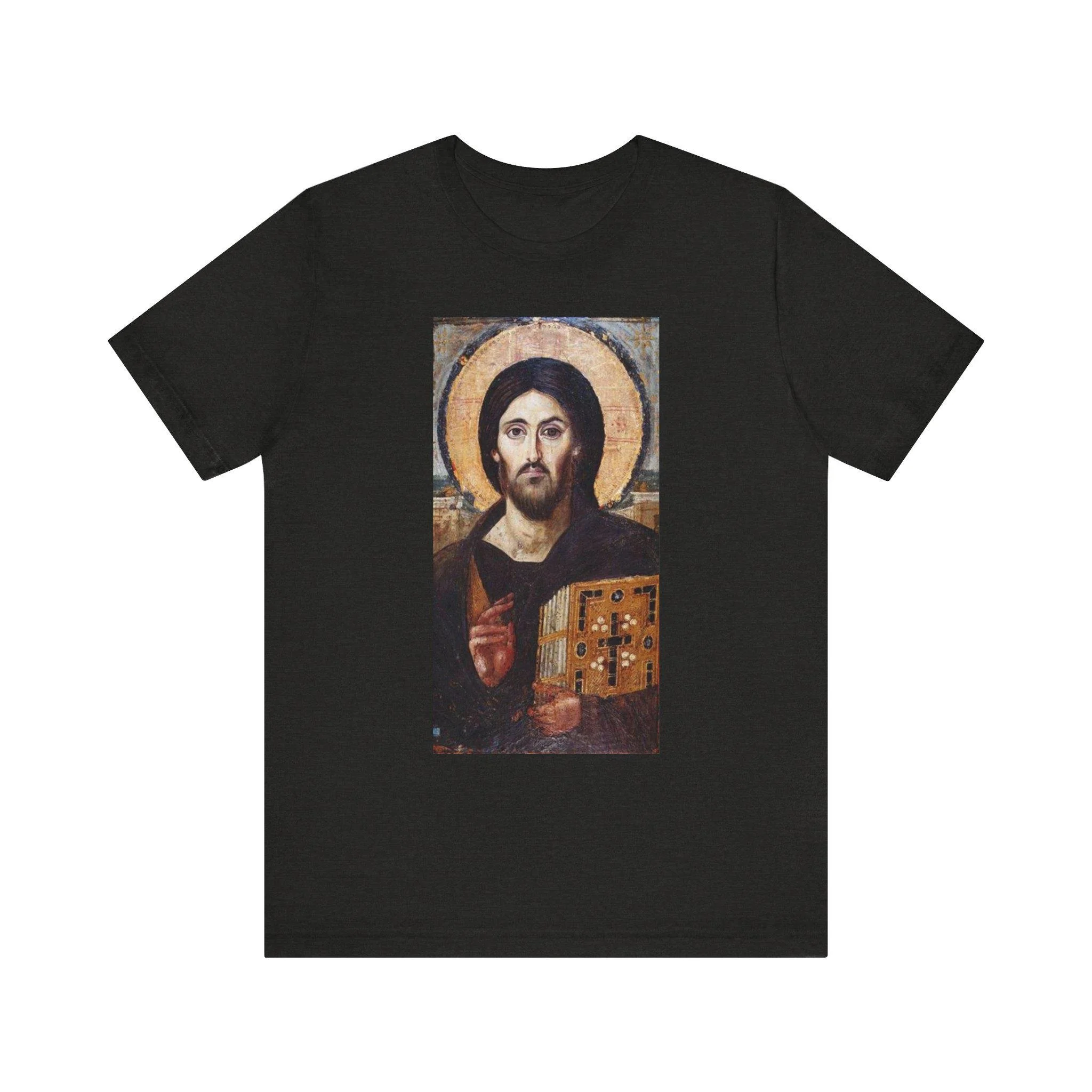
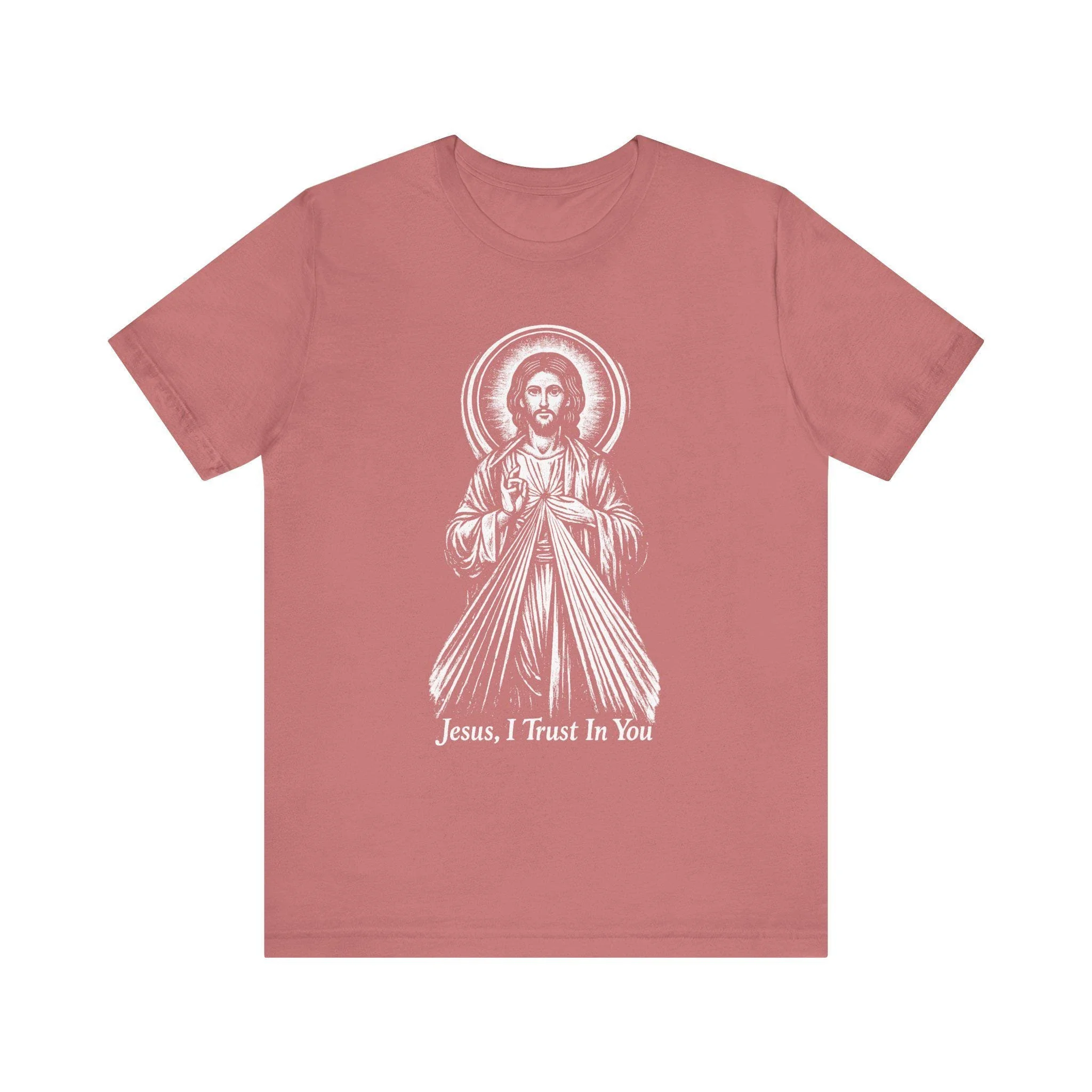
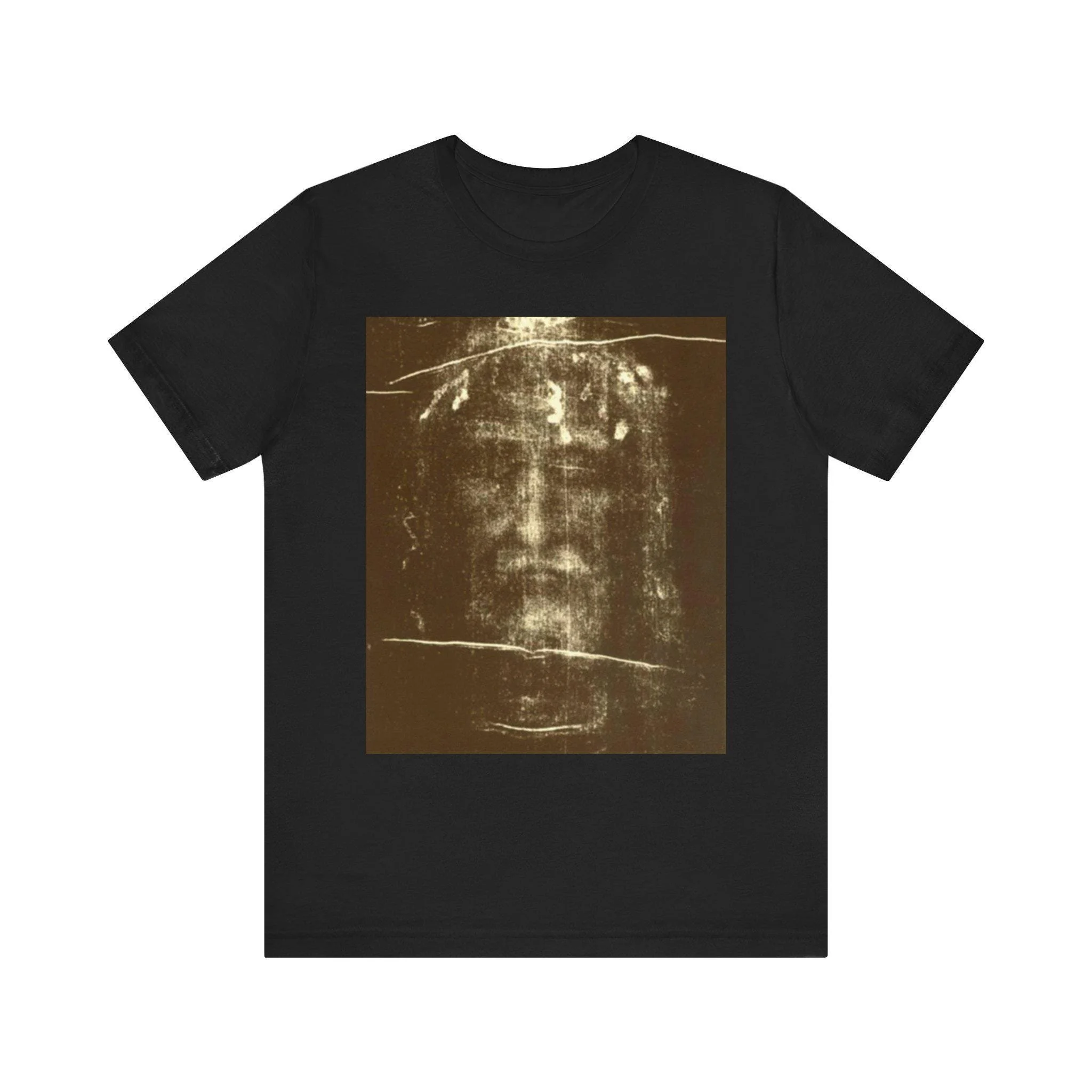
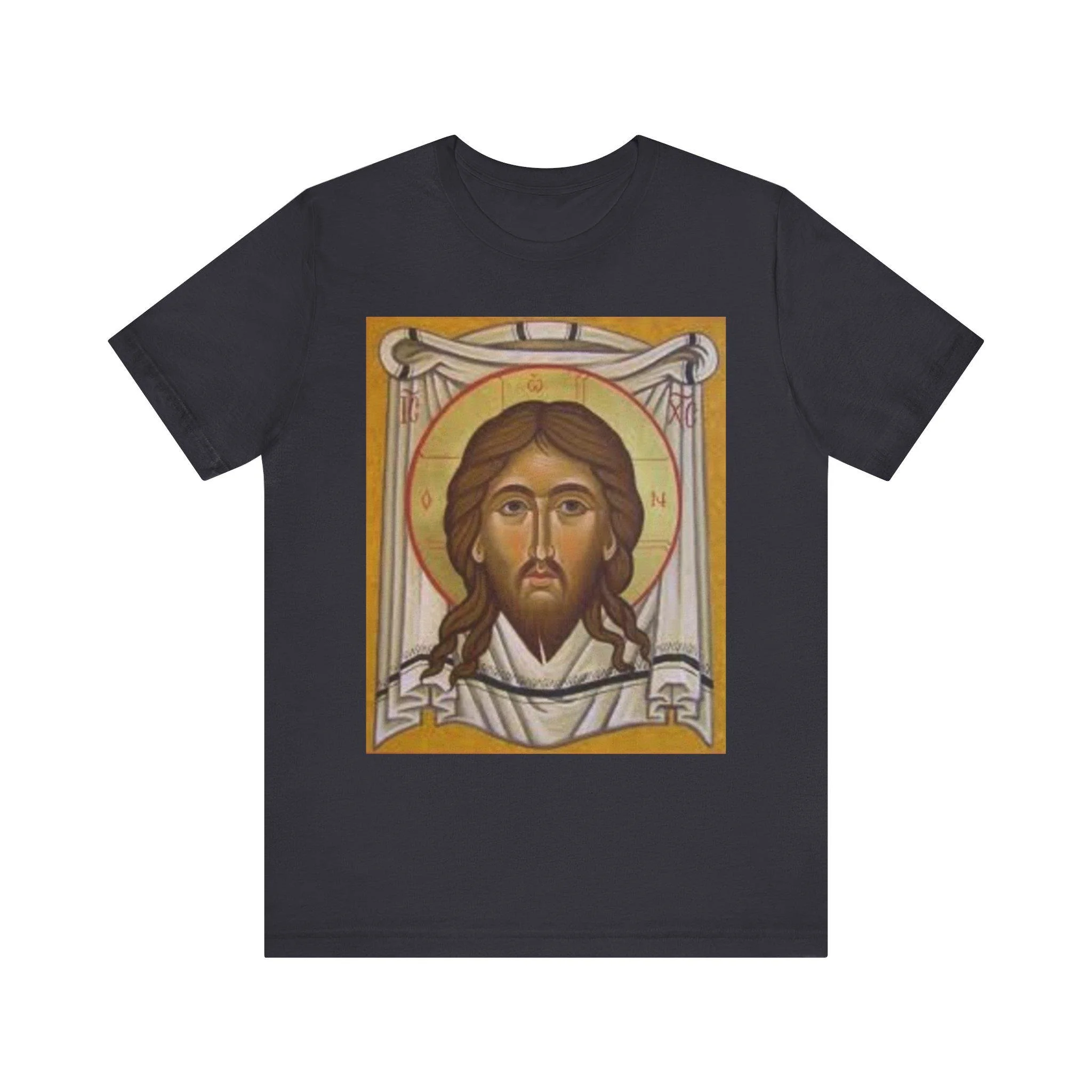
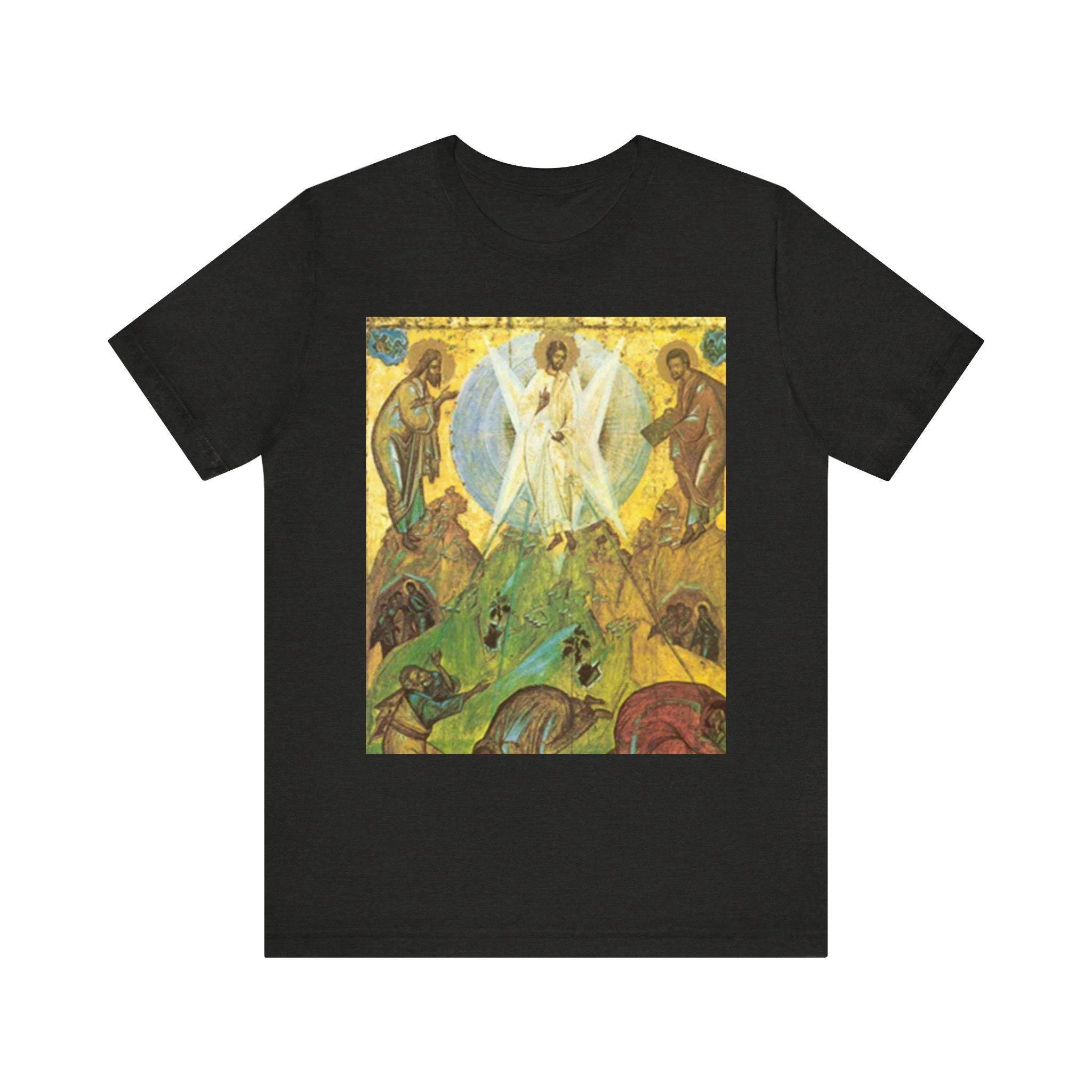
Before any saint, there is Christ himself, and some of the oldest and most theologically direct designs in this collection put his own image front and center. The Pantocrator, "Ruler of All," is the classical Byzantine depiction of Christ in majesty, one hand raised in blessing, the other holding the Gospel. The Divine Mercy image, revealed to Saint Faustina Kowalska in the 20th century, carries the words "Jesus, I Trust in You" beneath rays of red and pale light representing blood and water flowing from his pierced side. The Shroud of Turin and the Holy Mandylion both point to the same ancient tradition: an image of Christ's face not made by human hands, and the Transfiguration recalls the moment his divine glory broke visibly through on Mount Tabor.
Christ Pantocrator of Sinai Tee
The oldest surviving icon of Christ in existence, from Saint Catherine's Monastery, "Ruler of All" rendered in vintage icon style.
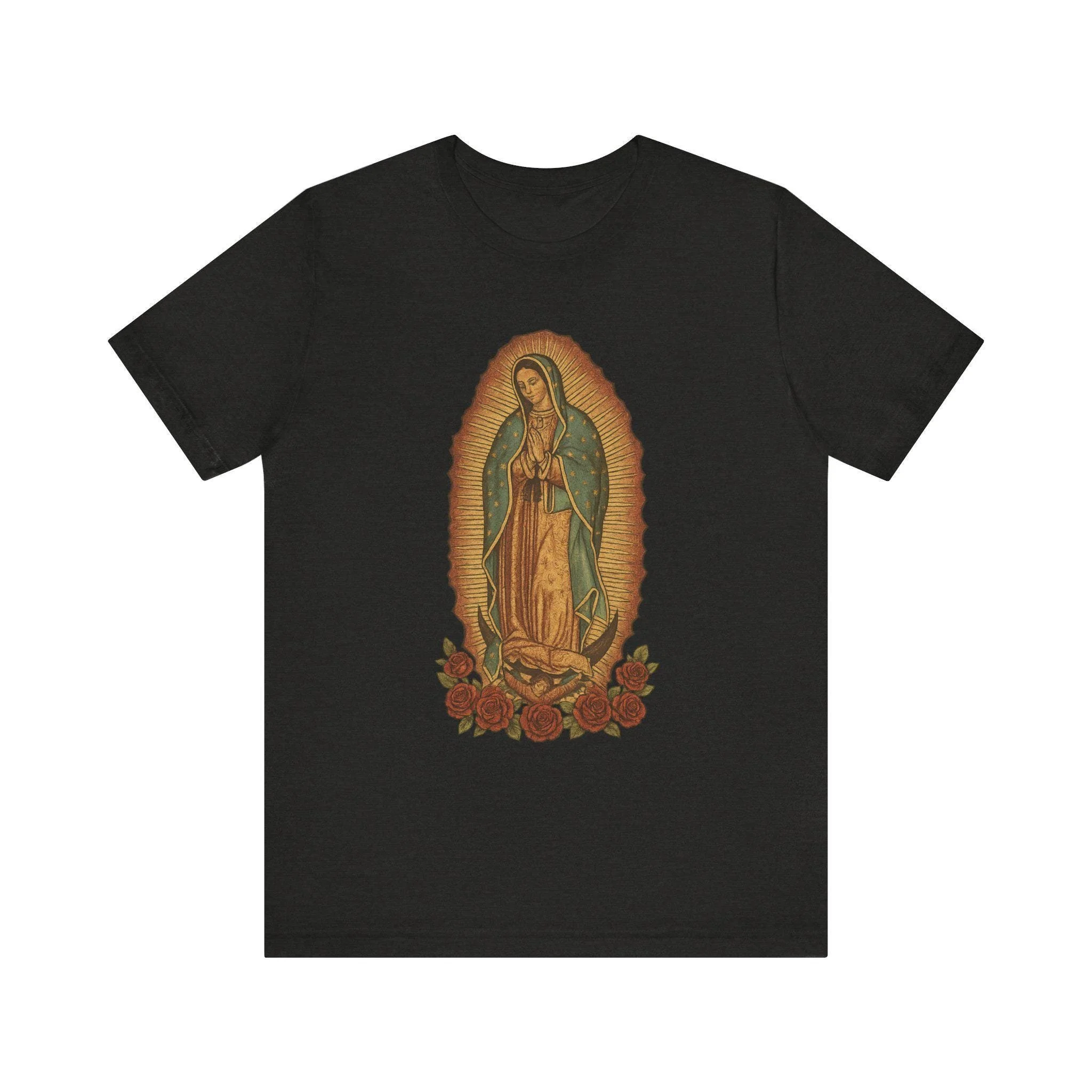
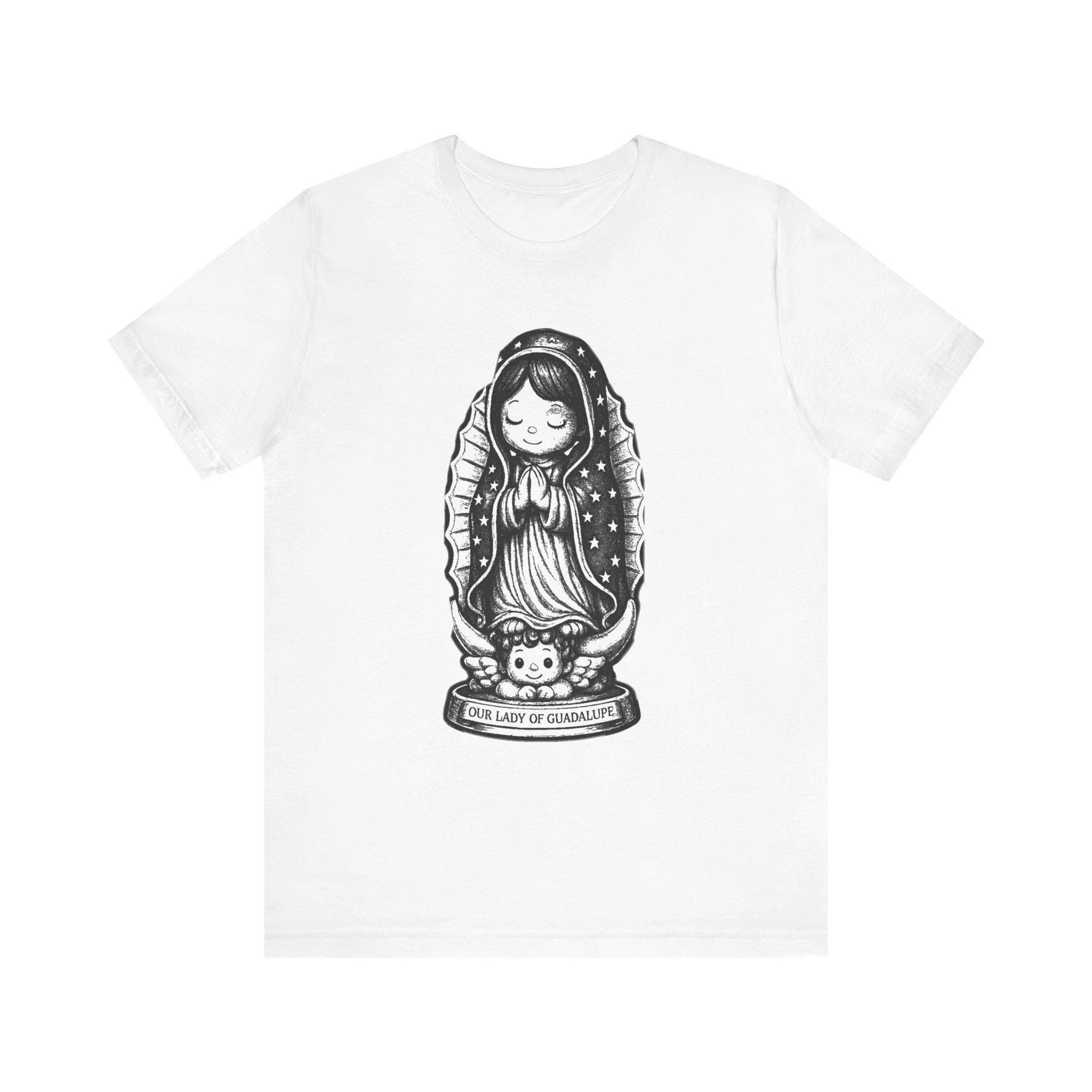
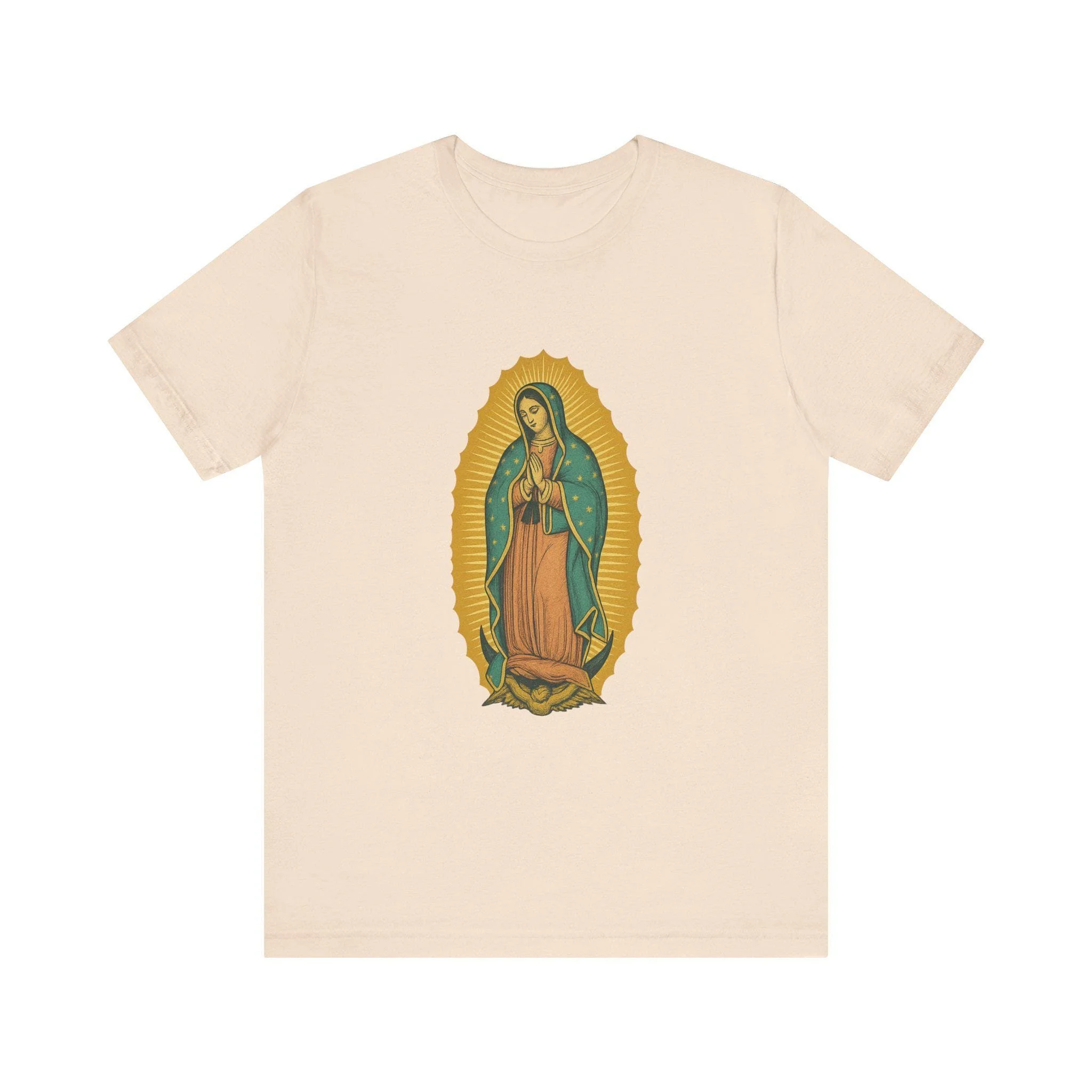
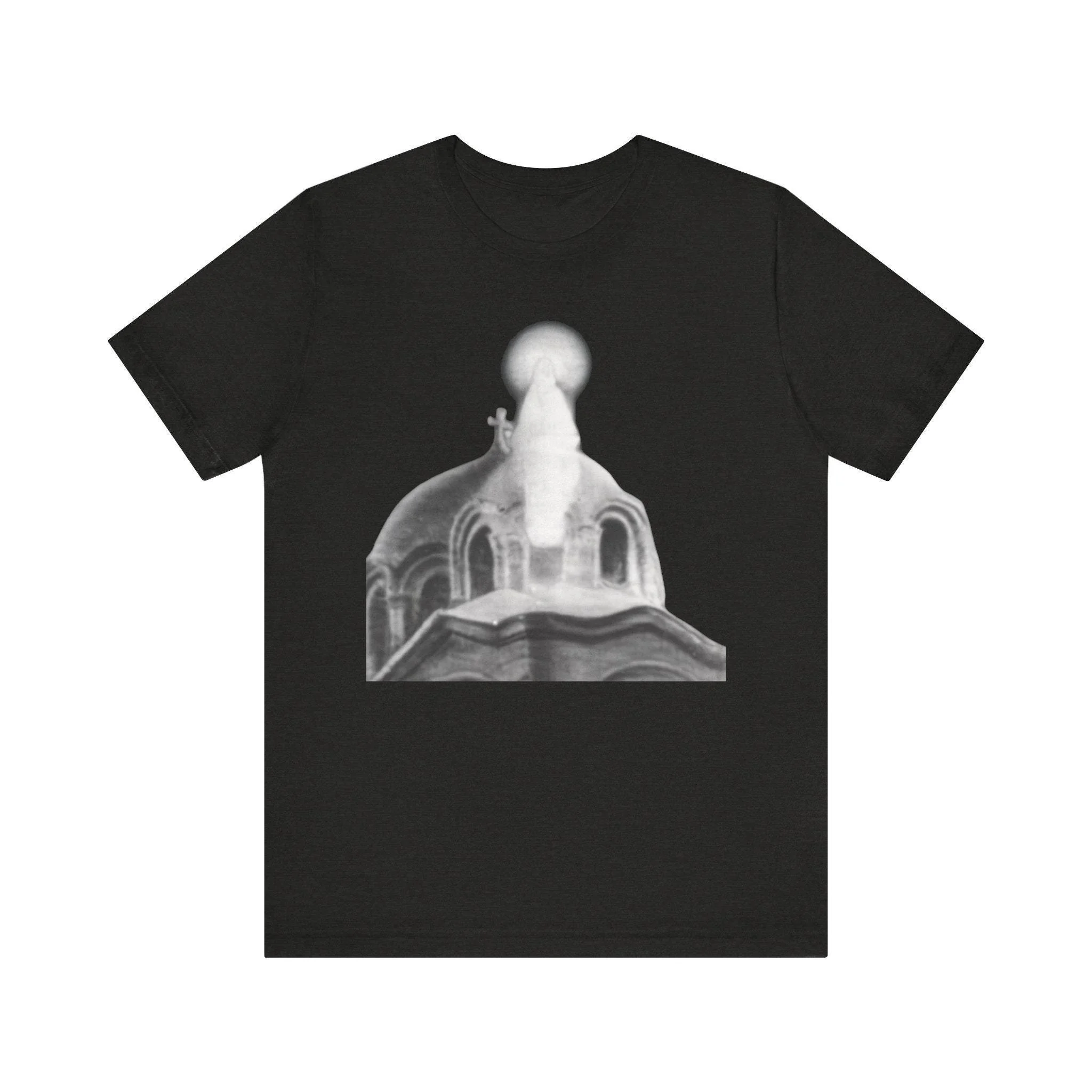
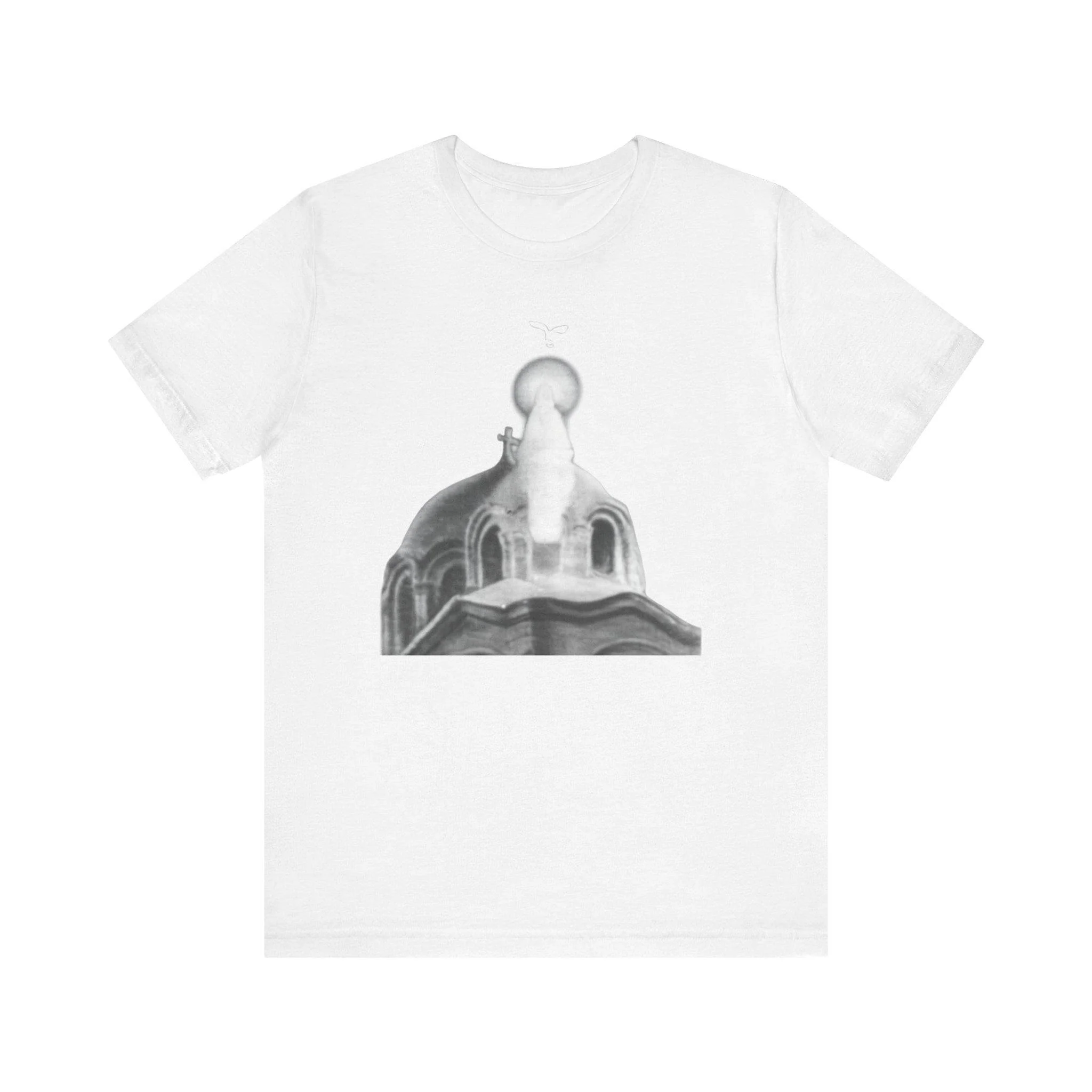
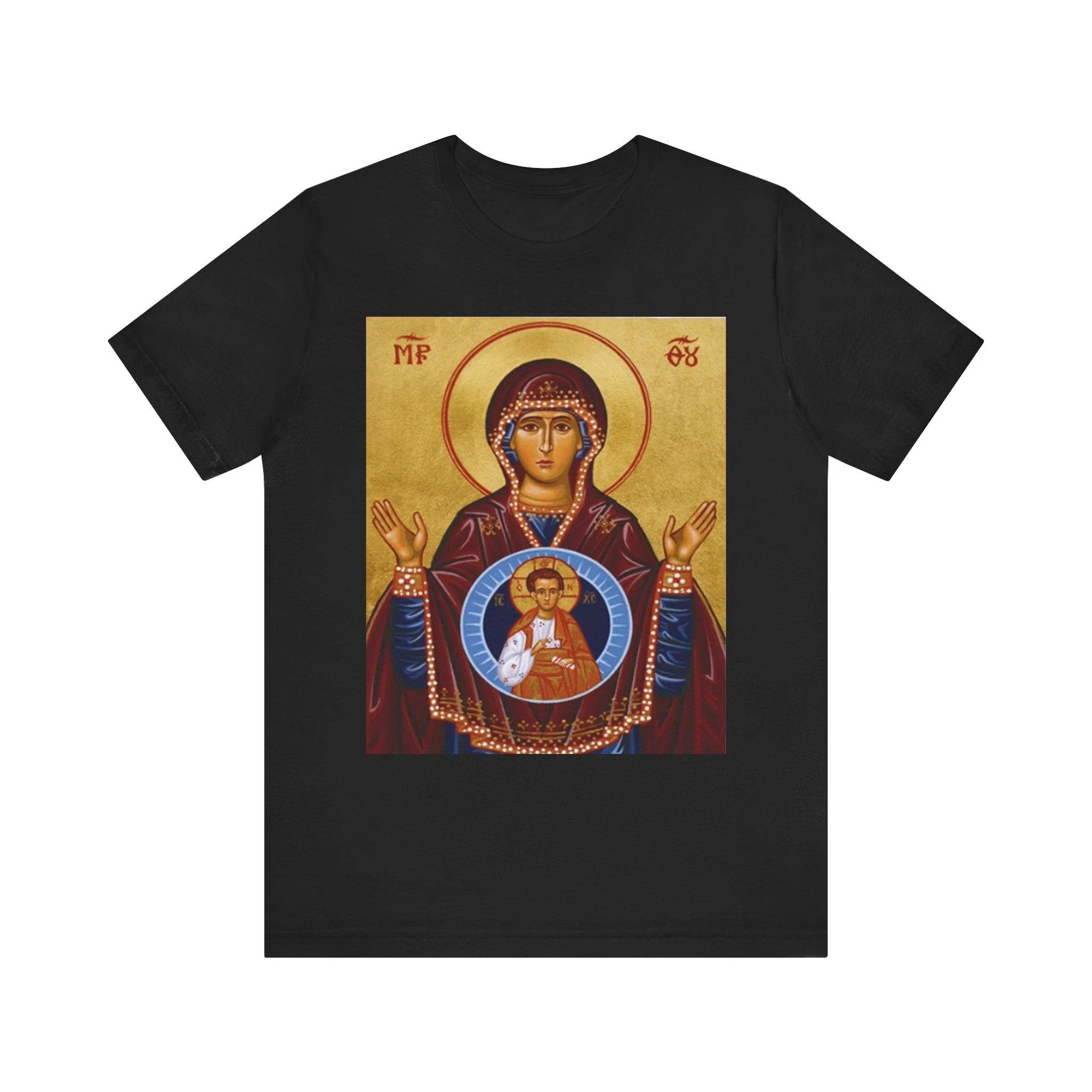
Marian apparitions carry a unique kind of evidentiary weight in Christian devotion: real times, real places, real witnesses, sometimes photographed. Our Lady of Guadalupe's 1531 appearance to Saint Juan Diego in Mexico remains one of the most consequential Marian events in Church history, credited with the conversion of millions across the Americas. Our Lady of Zeitoun's 1968 apparition over a church in Cairo was witnessed by enormous crowds, including non-Christians, and captured in photographs still studied today. Our Lady of the Sign depicts an ancient Orthodox iconographic type of Mary with arms raised in prayer, Christ enclosed within her.
Virgin of Guadalupe Tee, Vintage
The 1531 apparition to Saint Juan Diego, credited with one of the largest waves of conversion in Christian history.
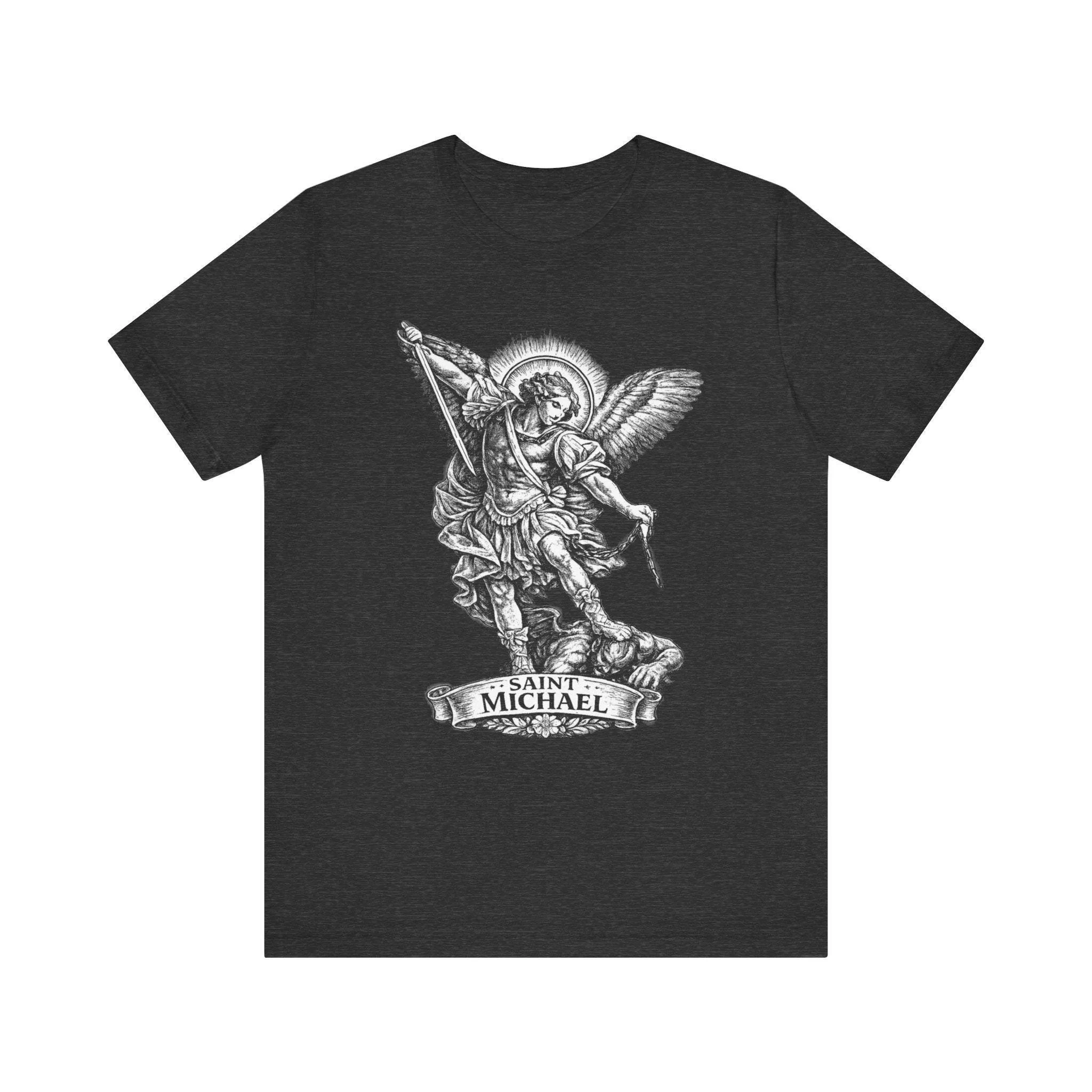
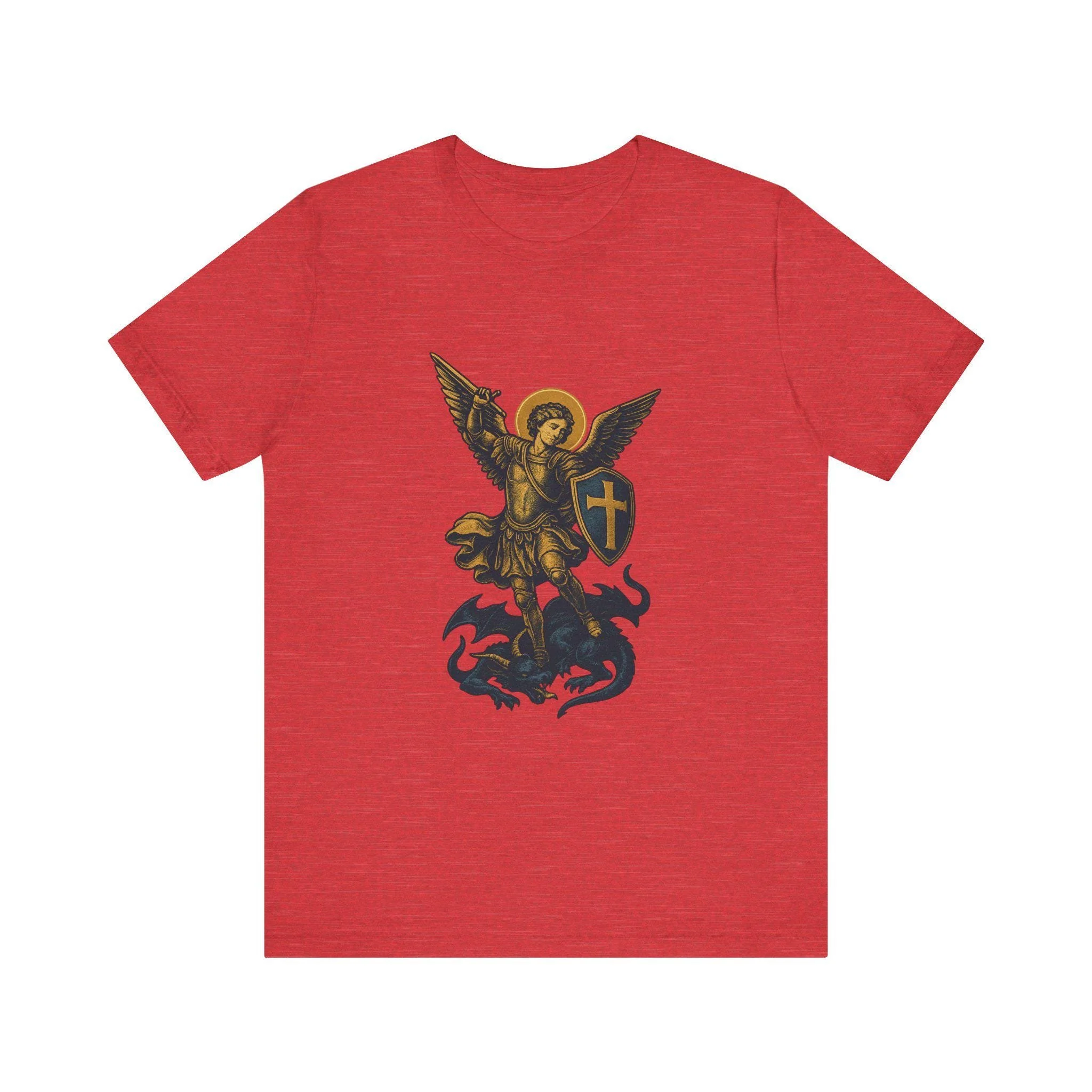
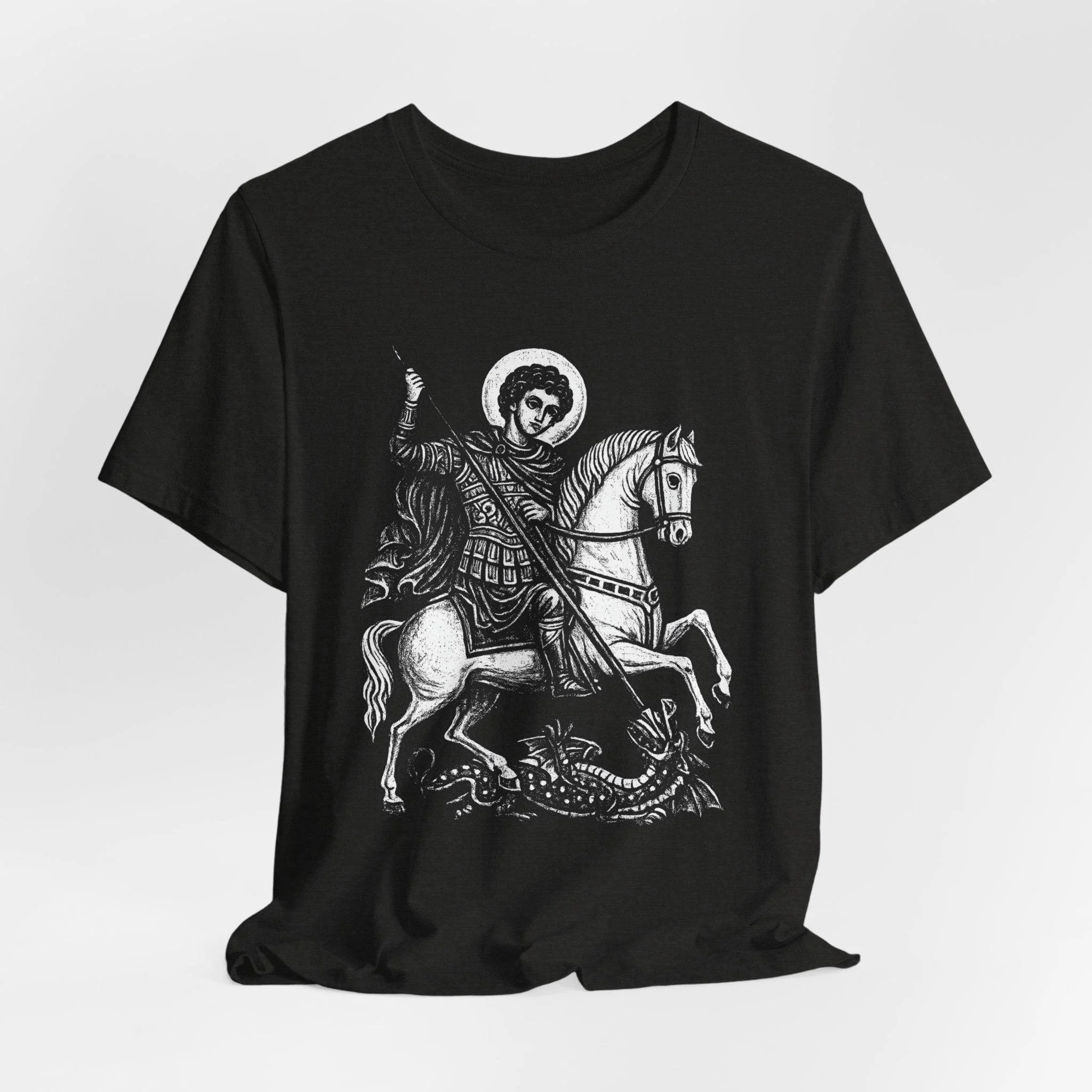
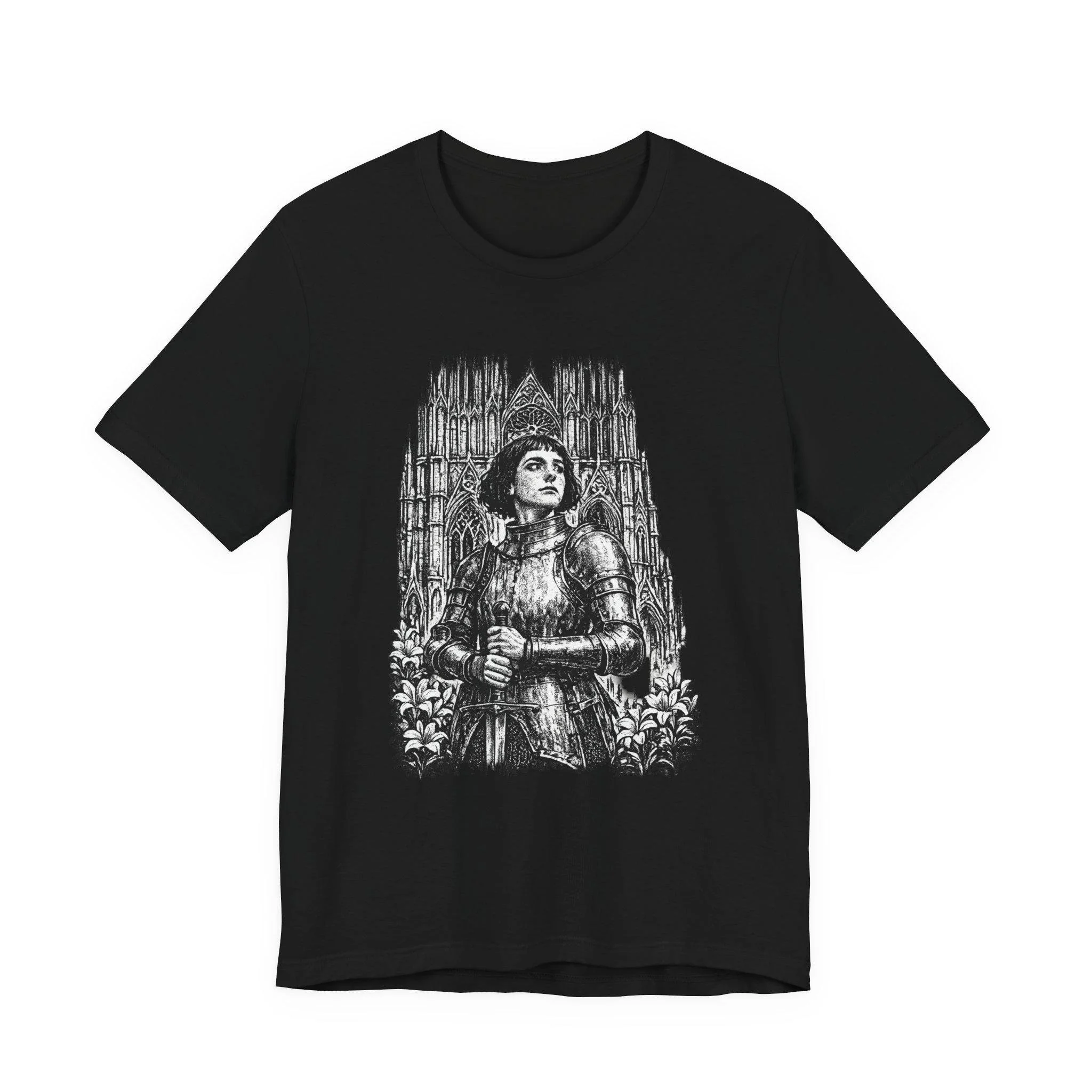
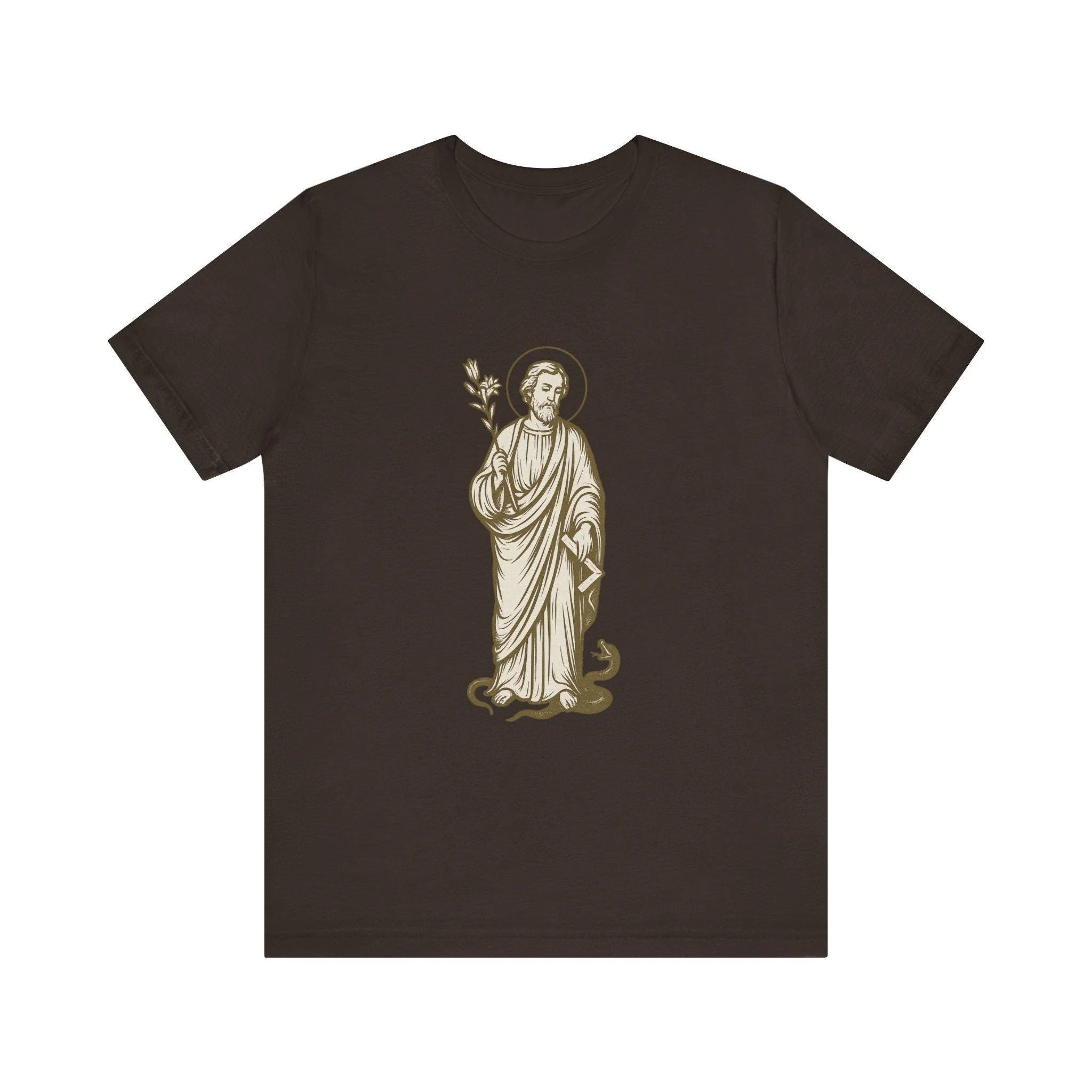
Spiritual warfare is not a metaphor Christian tradition invented recently. Saint Michael the Archangel, whose name means "who is like God," is the commander of the heavenly host and the figure most directly invoked against evil in Christian prayer. Saint George's defeat of the dragon has stood for sixteen centuries as the Church's most enduring image of courage confronting evil head-on. Joan of Arc led armies at nineteen and died refusing to recant her faith. Saint Joseph, quiet as his role in the Gospels is, has been invoked as "Terror of Demons" in the Litany of Saint Joseph for centuries, a title that surprises people who only know him as gentle and silent.
Saint Michael, Spiritual Warfare
The commander of the heavenly host, invoked directly against evil in Christian prayer for centuries.
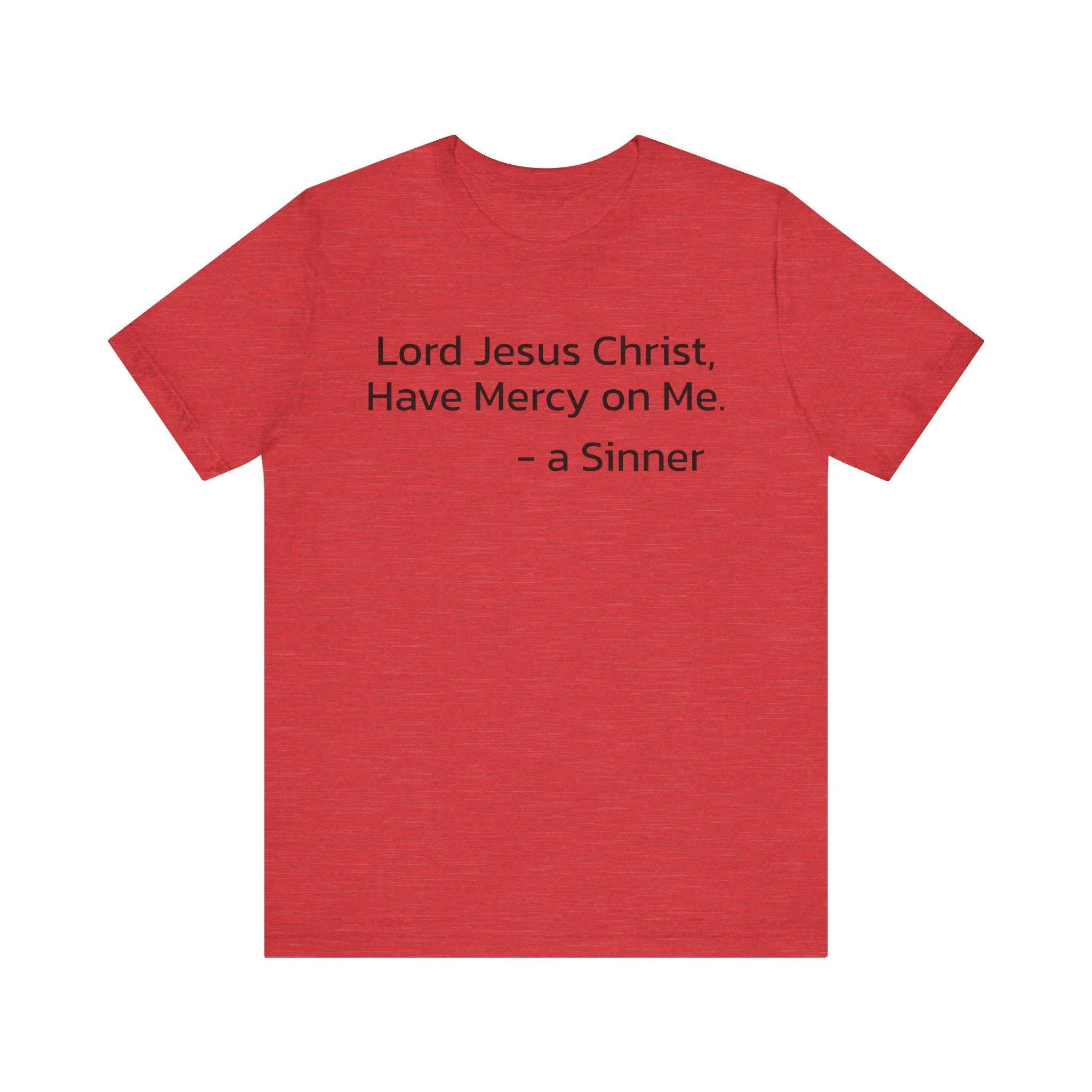
"Lord Jesus Christ, Have Mercy" • The Three-Bar Cross • The Heart of Orthobro Style
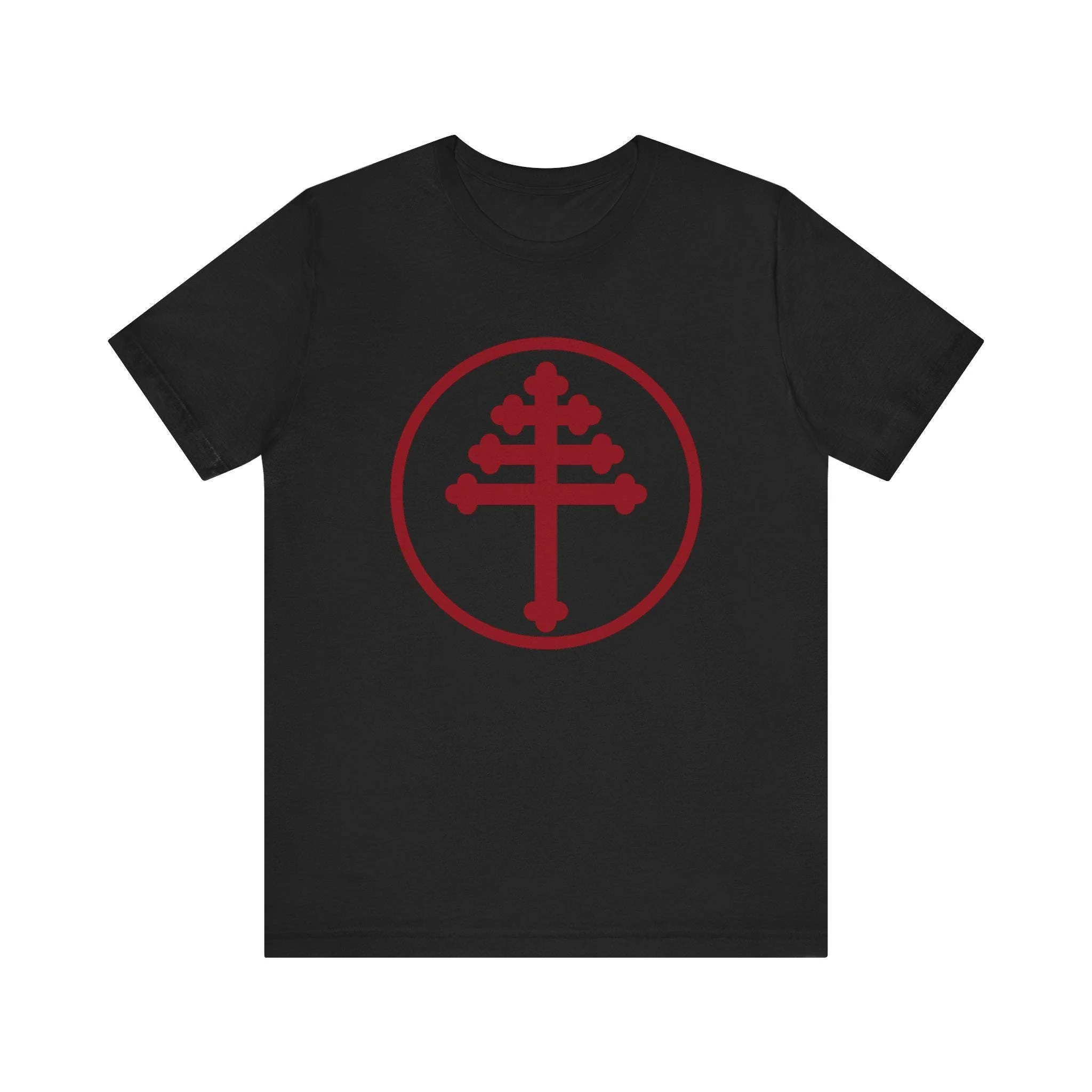
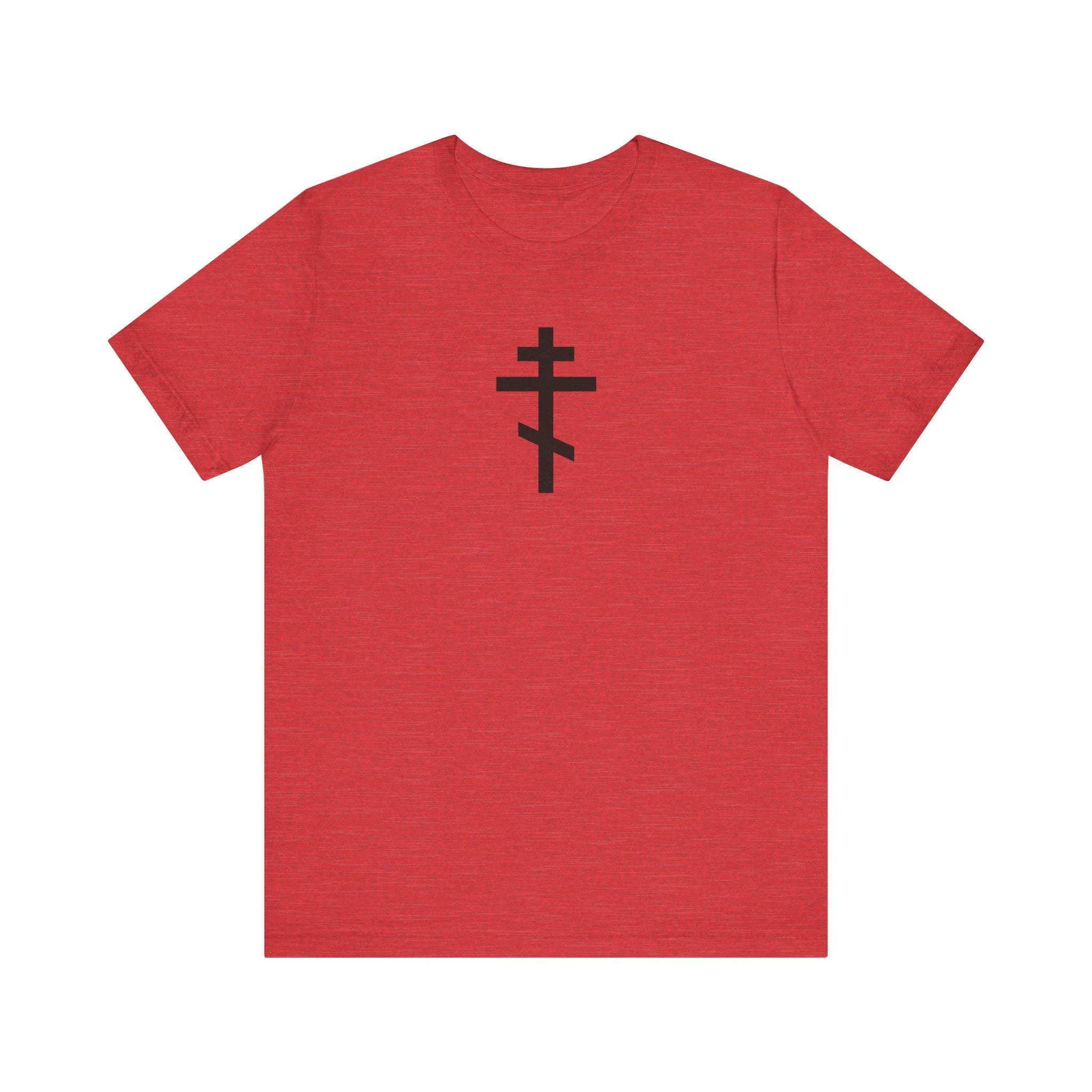
This is the section most closely tied to the growing "orthobro" movement, and for good reason: these two symbols, the Jesus Prayer and the three-bar Orthodox cross, are the most immediately recognizable markers of traditional Eastern Christian identity in apparel today. The Jesus Prayer, "Lord Jesus Christ, Son of God, have mercy on me, a sinner," is a short, repeated prayer rooted in the ancient monastic tradition of the Egyptian and Sinai deserts, traditionally prayed on a knotted prayer rope as a way of fulfilling Saint Paul's call to "pray without ceasing." The three-bar cross carries its own layered meaning: the top bar for Pilate's inscription, the main bar for Christ's outstretched arms, and the slanted bottom bar representing the footrest and the two thieves crucified beside him, one who repented and rose, one who did not.
Masculine Orthodox Cross Shirt
The Russian three-bar cross, rugged and understated. The design most associated with the orthobro movement.
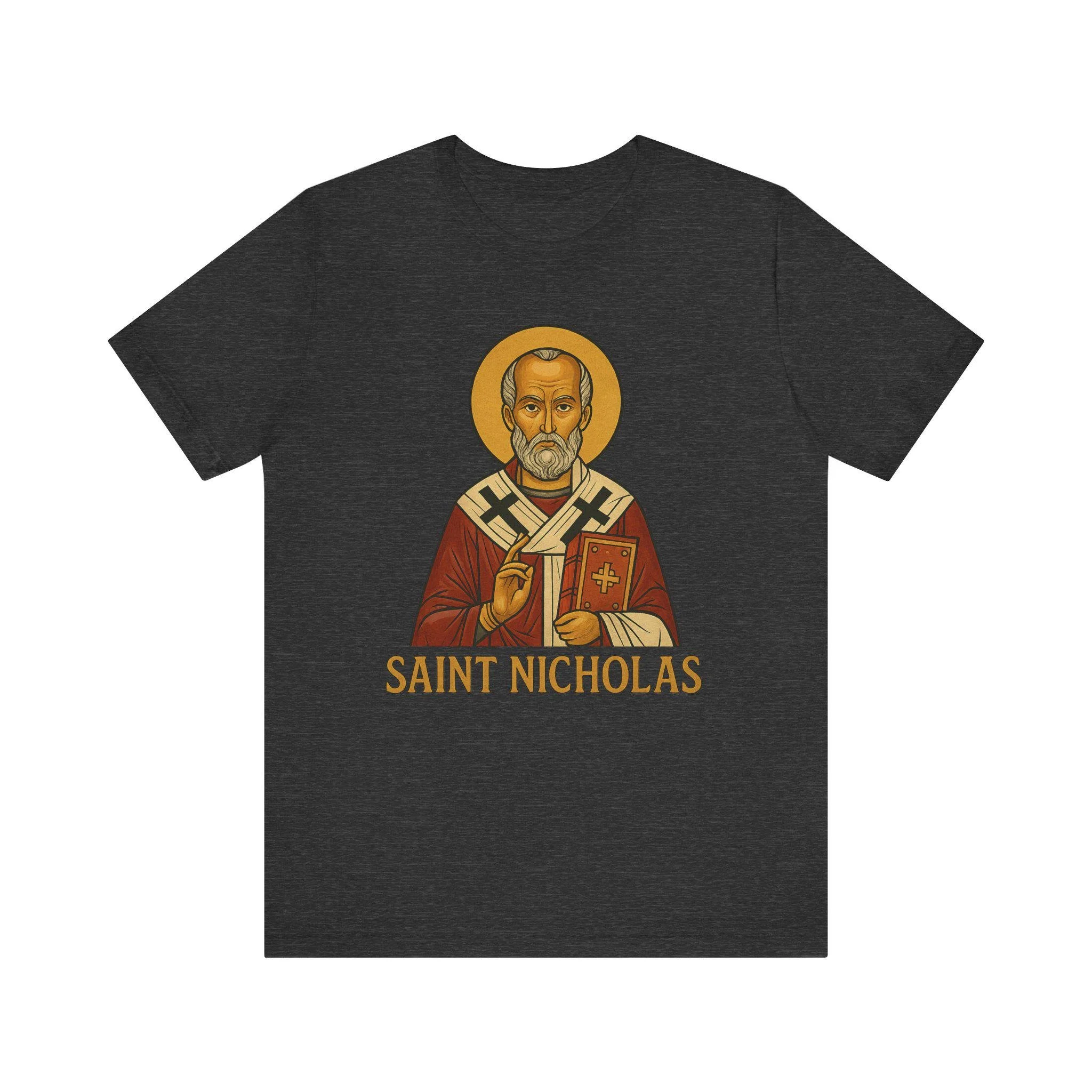
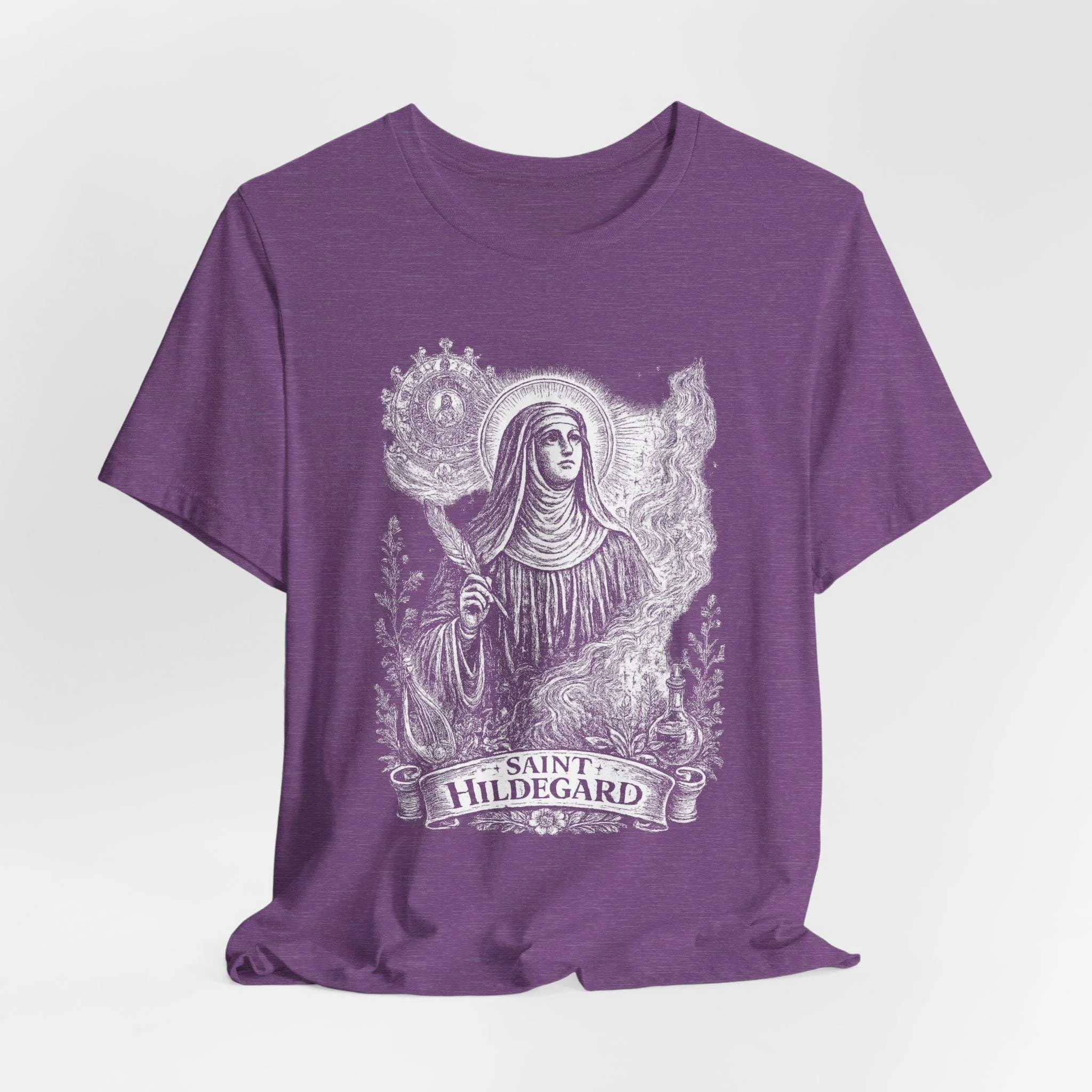
Seraphim • Paisios • Gabriel • Moses the Black • Nicholas • Hildegard
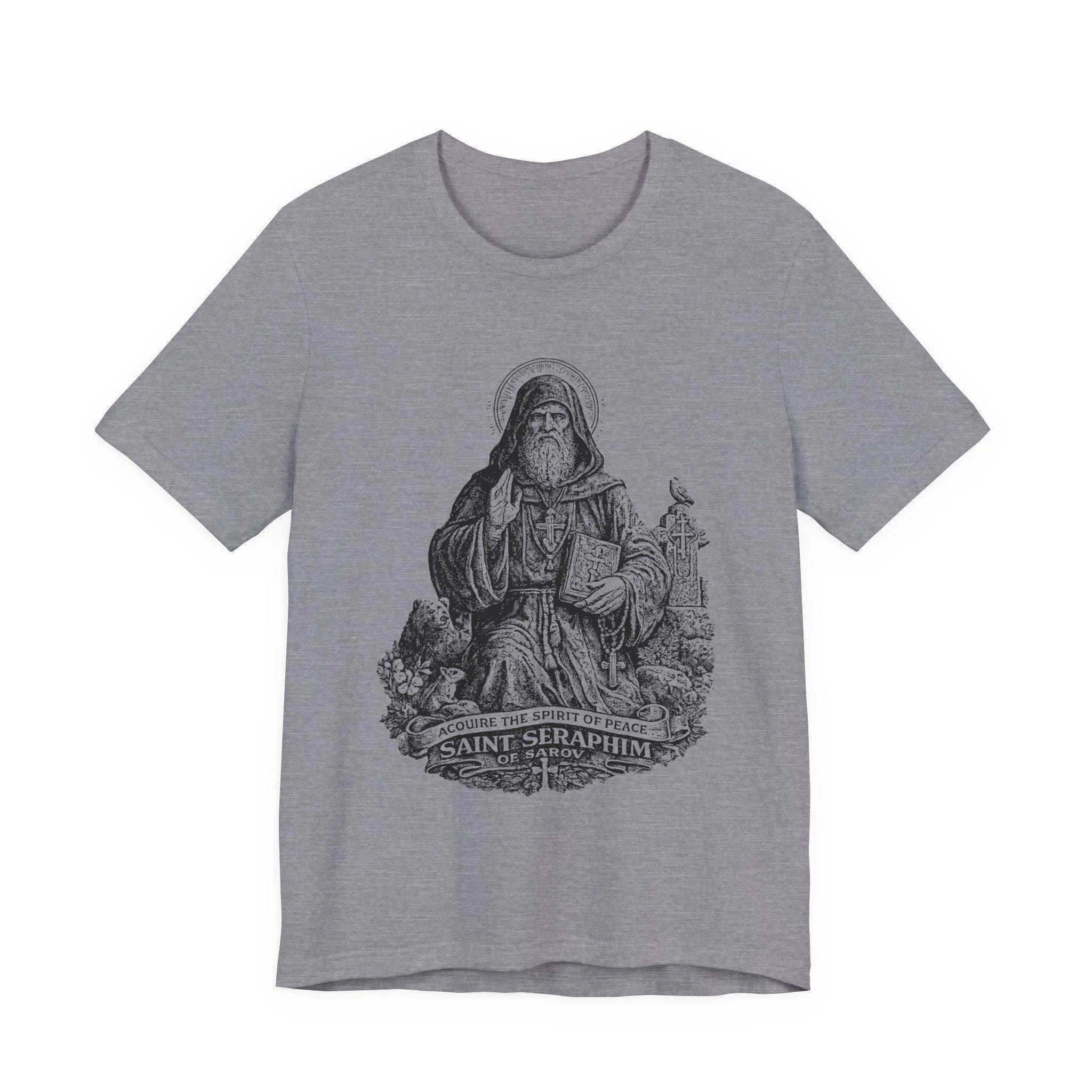
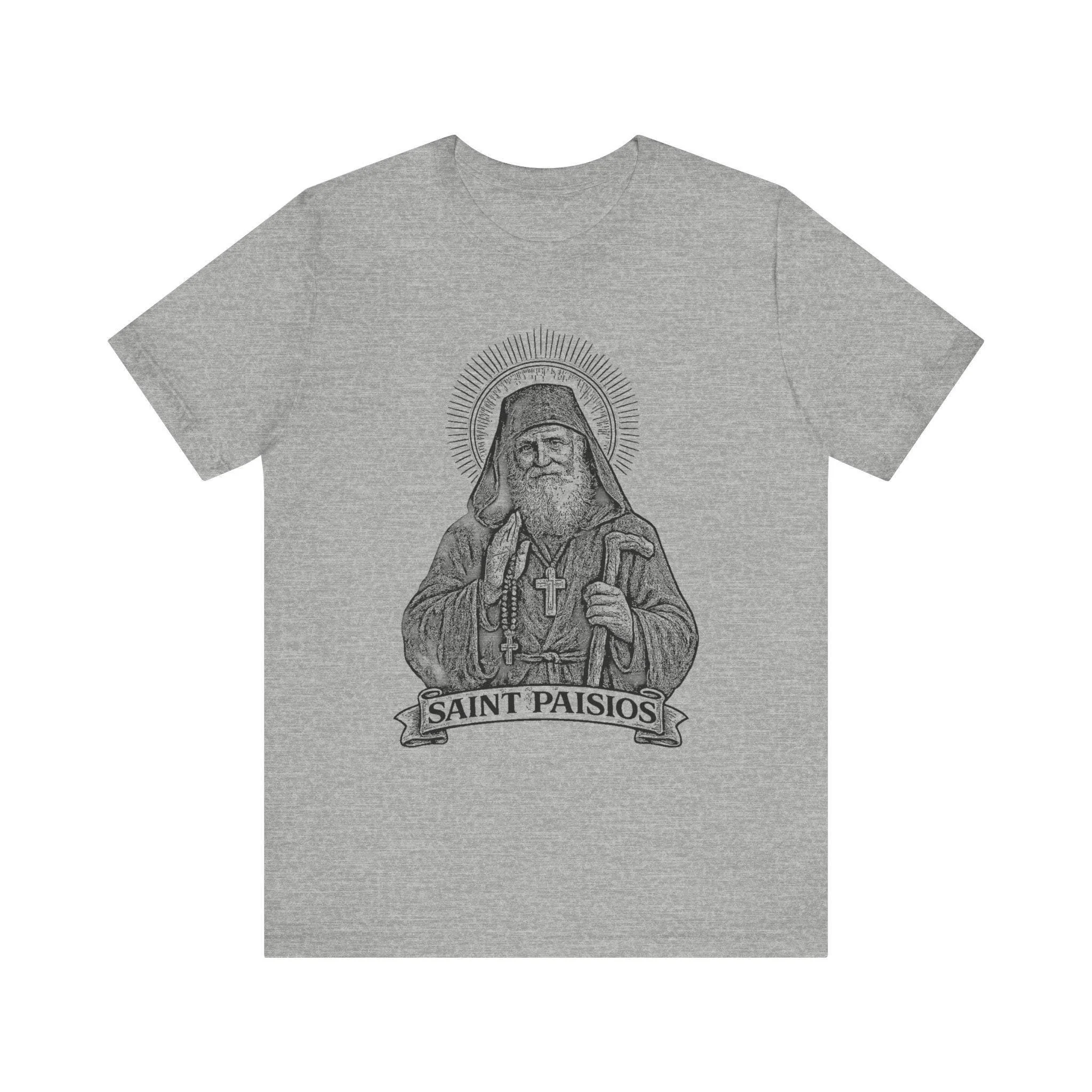
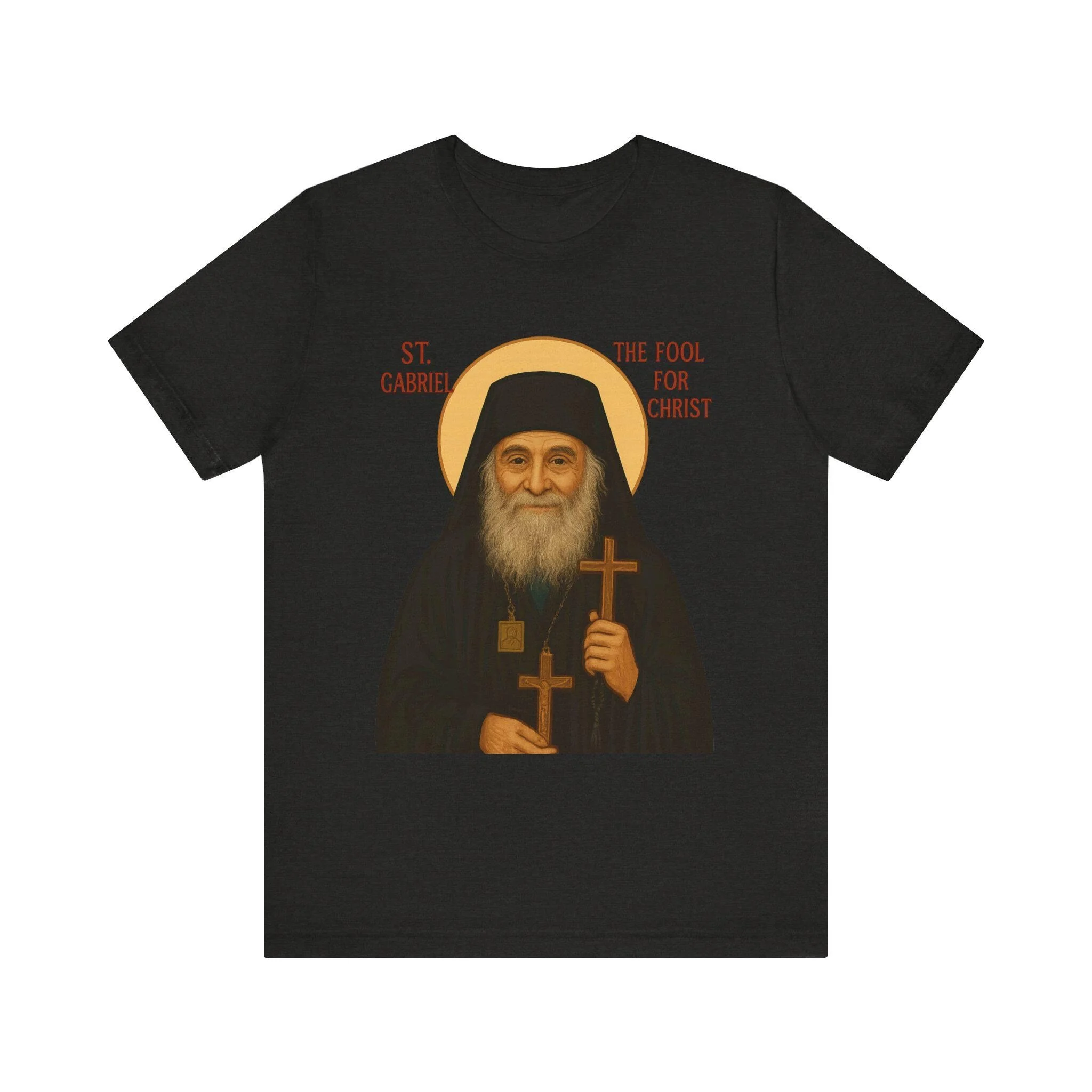
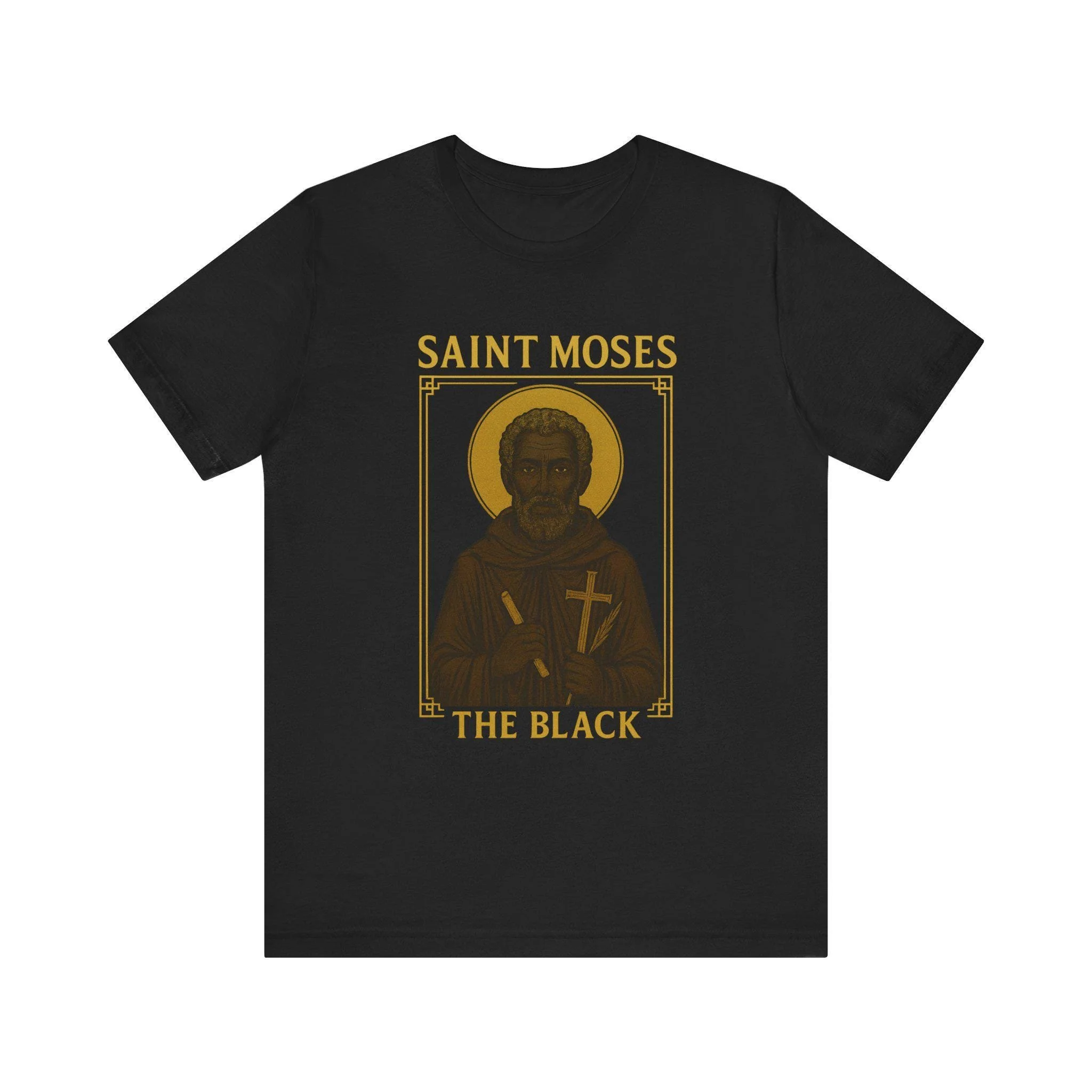
These are the saints most closely tied to the deep interior life of prayer, and several of them are figures who transformed radically before becoming who they're remembered as. Saint Seraphim of Sarov's counsel to "acquire the Spirit of Peace, and a thousand souls around you will be saved" remains one of the most quoted lines in modern Orthodoxy. Saint Paisios of Mount Athos was a 20th-century monk whose plainspoken wisdom continues shaping Orthodox spiritual life today. Saint Moses the Black went from outlaw to one of the most venerated of the Egyptian desert fathers. Saint Nicholas, better known for Myra and Christmas legend, was above all a wonderworking bishop. Saint Hildegard of Bingen was a visionary, composer, and Doctor of the Church whose influence reaches well beyond religious circles.
Saint Seraphim of Sarov
"Acquire the Spirit of Peace," one of the most quoted lines in all of modern Orthodoxy.
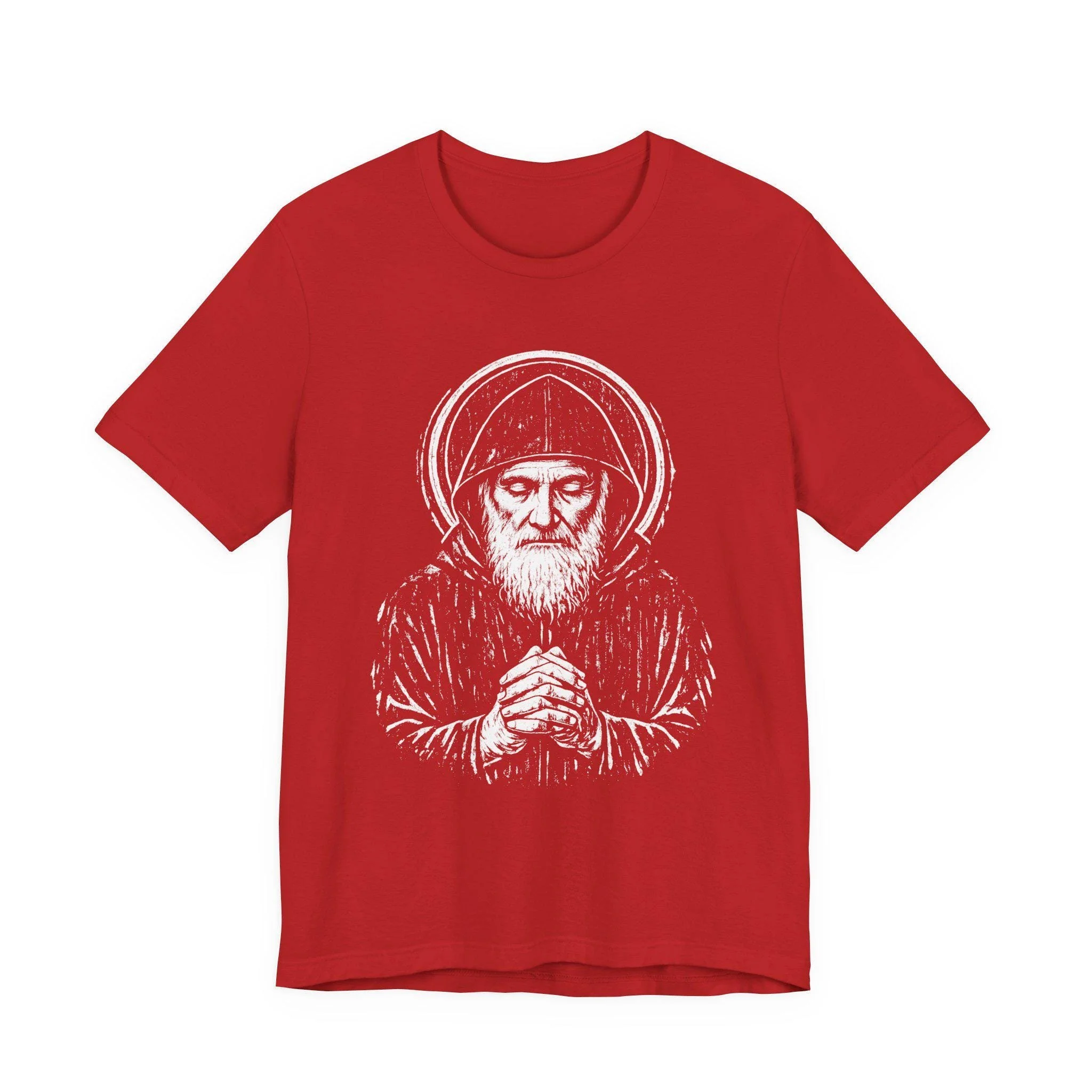
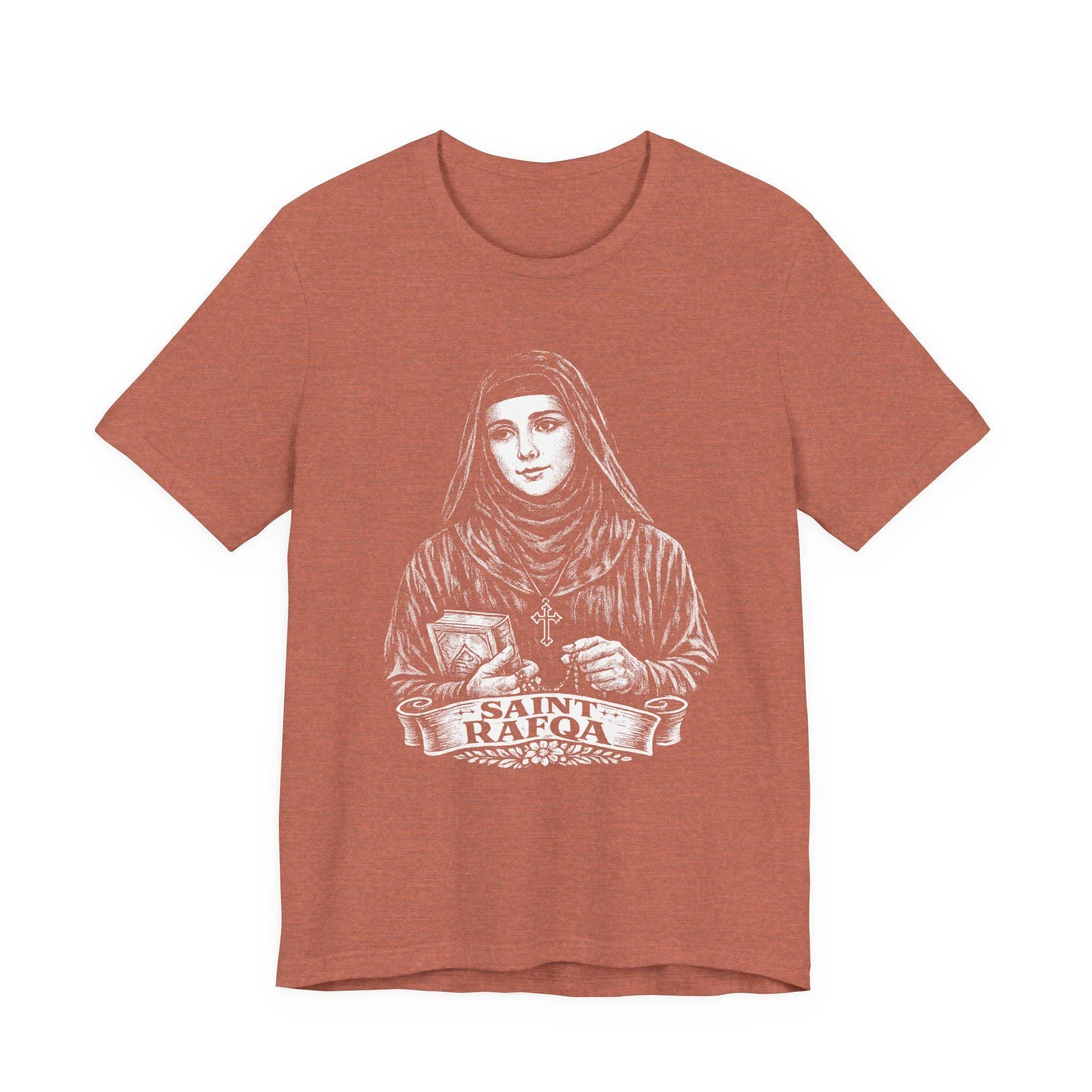
Charbel • Rafqa • Qadishat Aloho • The Maronite Cross
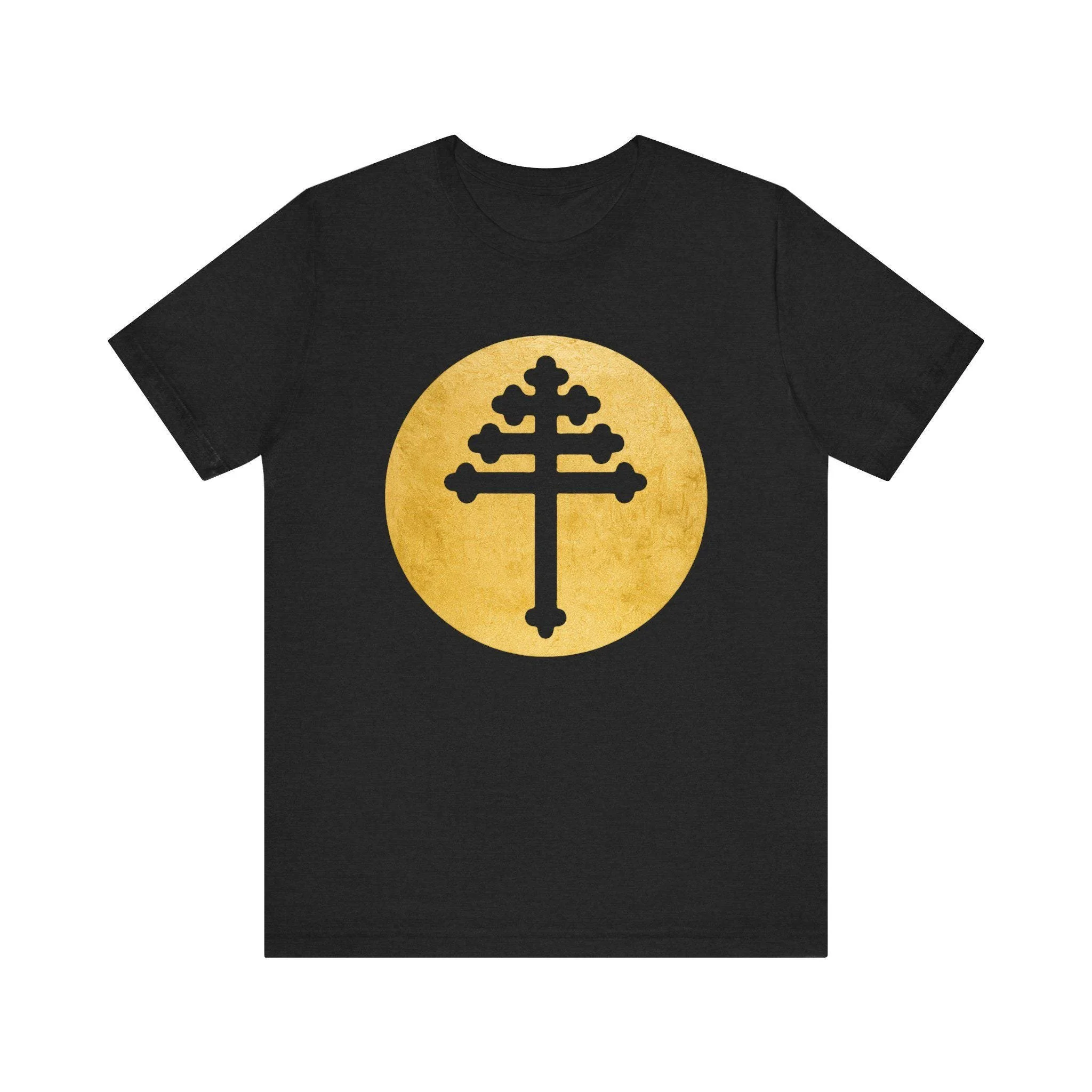
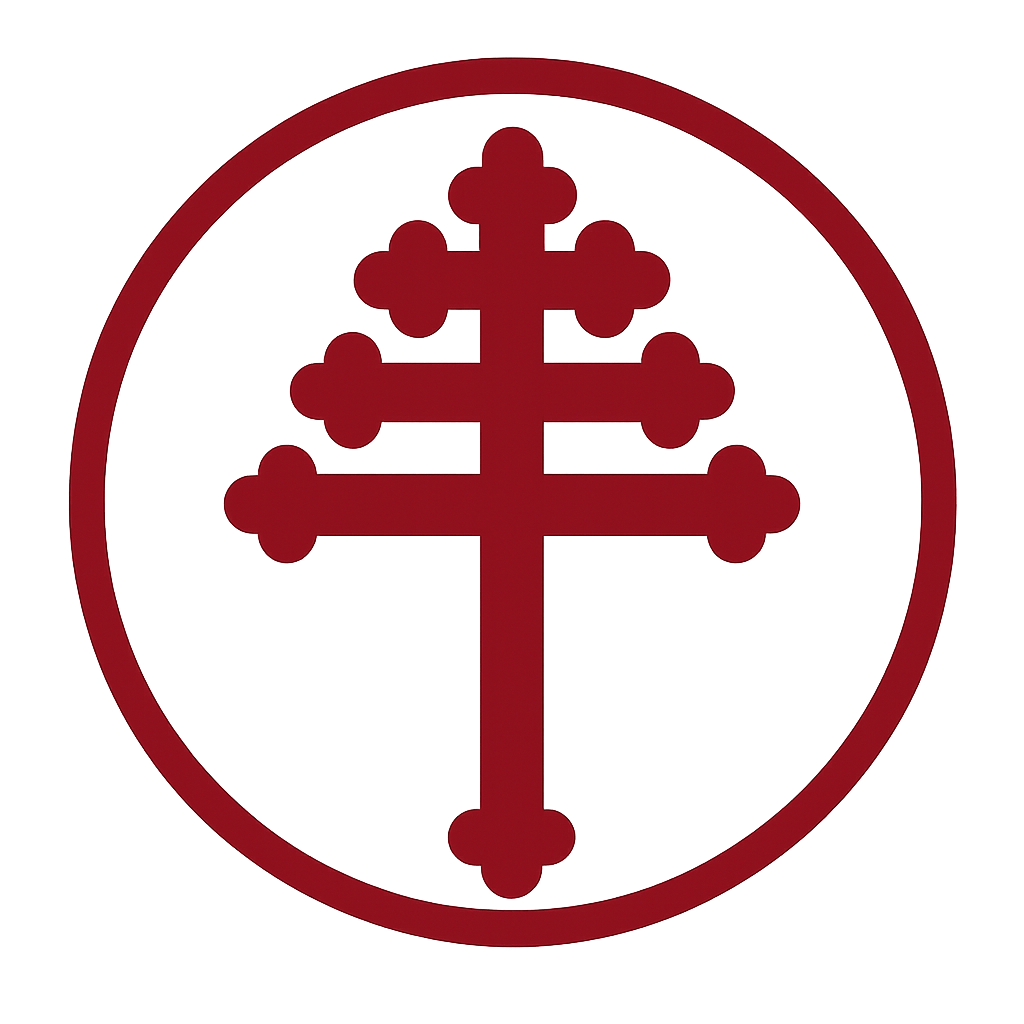
The Maronite Church, the Eastern Catholic tradition centered in Lebanon, carries a liturgical heritage stretching back to the ancient Church of Antioch, worshipping in Syriac, a dialect of Aramaic, the language tradition associates with Jesus himself. Saint Charbel Makhlouf and Saint Rafqa are the two most beloved Maronite saints of the modern era, both credited with extraordinary healing and endurance through suffering. Qadishat Aloho, "Holy God" in Syriac, opens the Trisagion hymn sung in the Maronite Divine Liturgy. The Maronite cross itself marks a heritage rooted in an unbroken claim to communion with Rome stretching back further than the Great Schism.
Saint Charbel Makhlouf
The Miracle Monk of Lebanon, credited with tens of thousands of reported healings at his tomb.
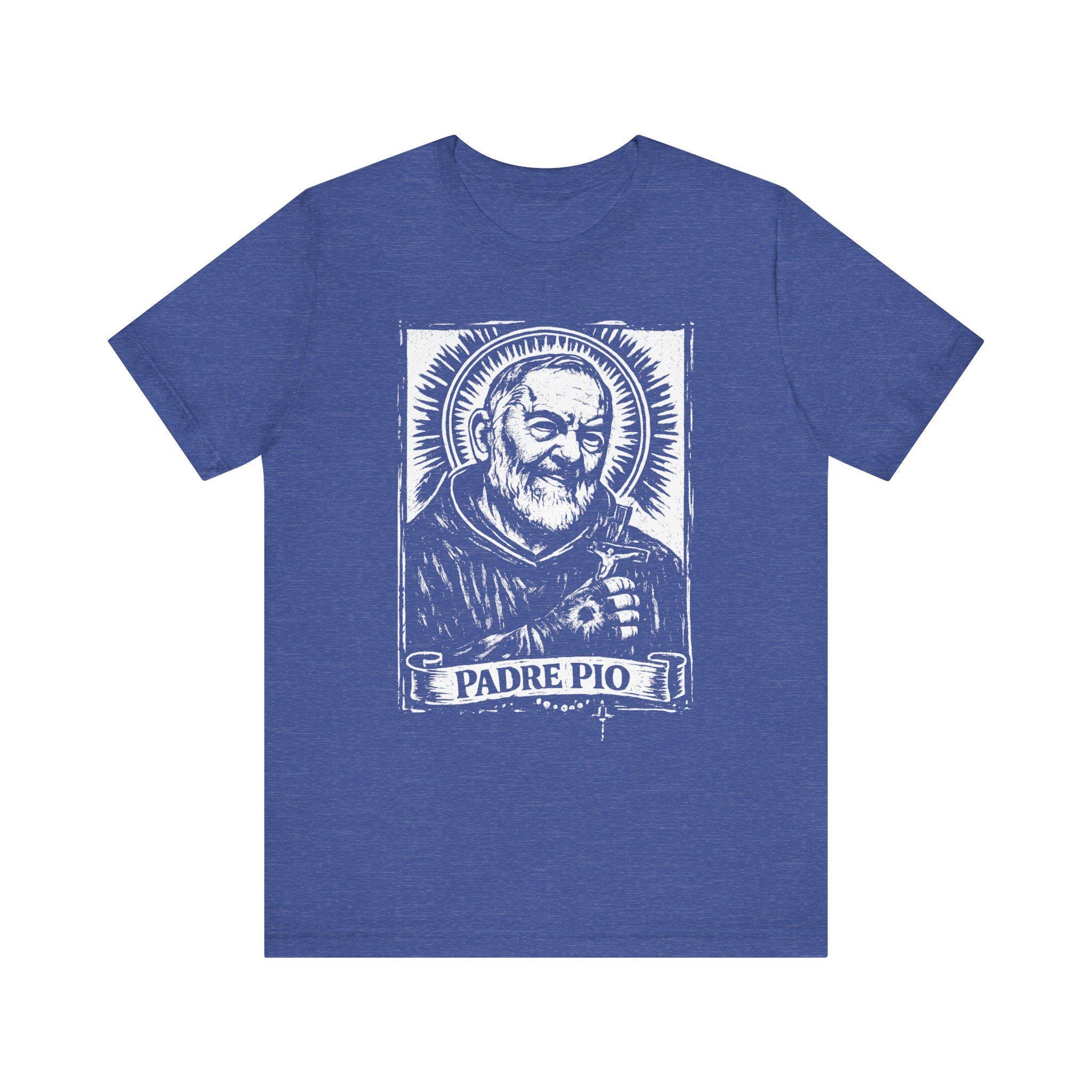
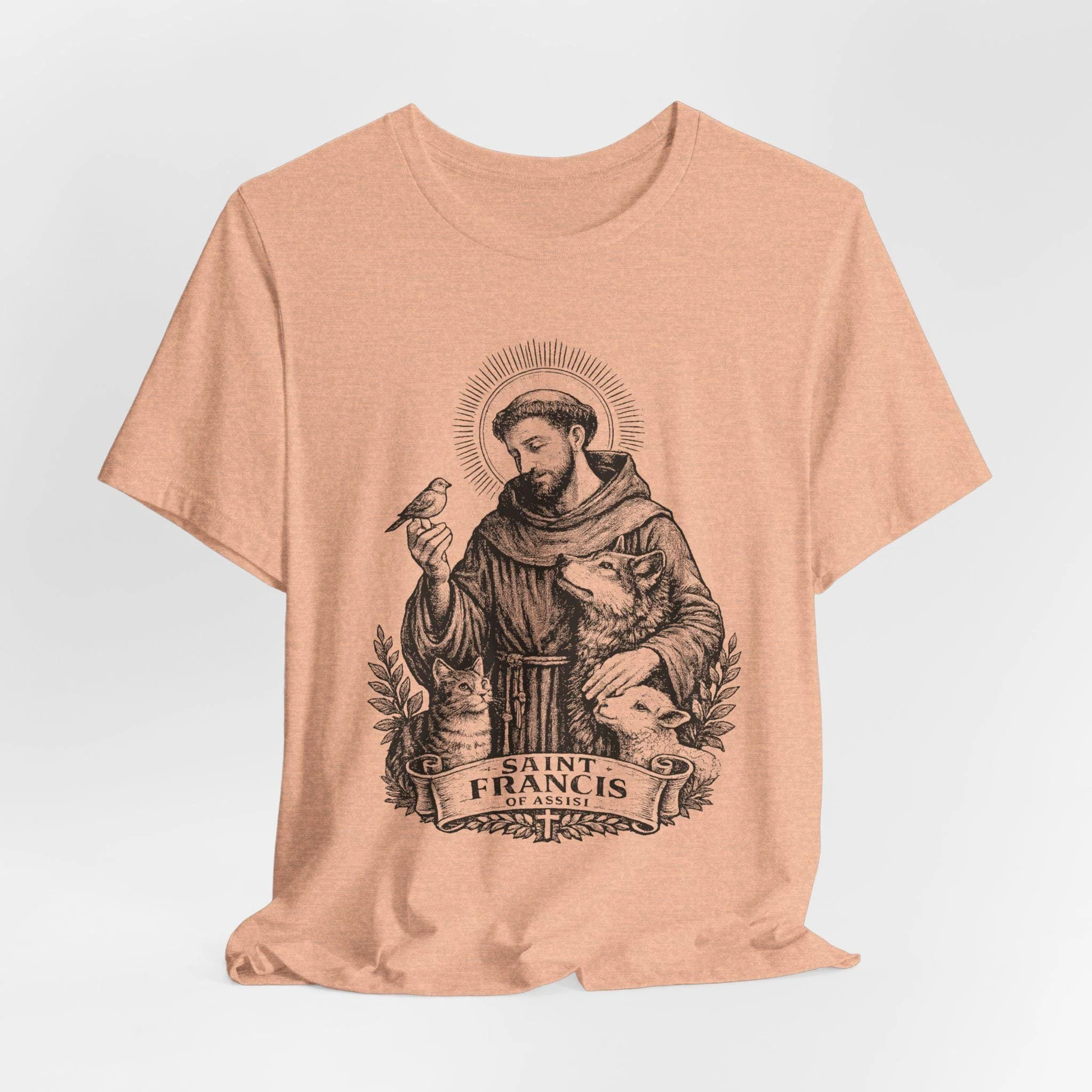
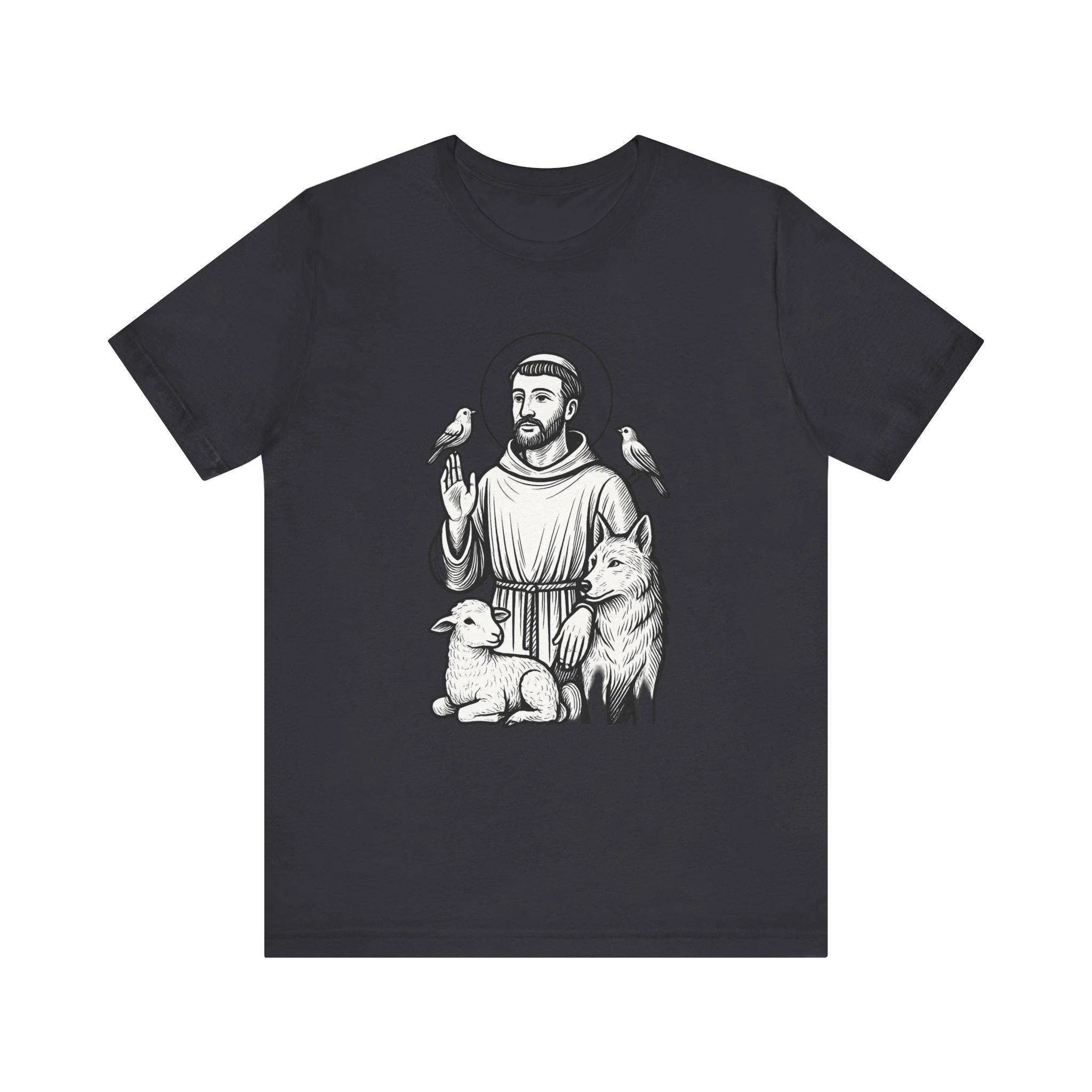
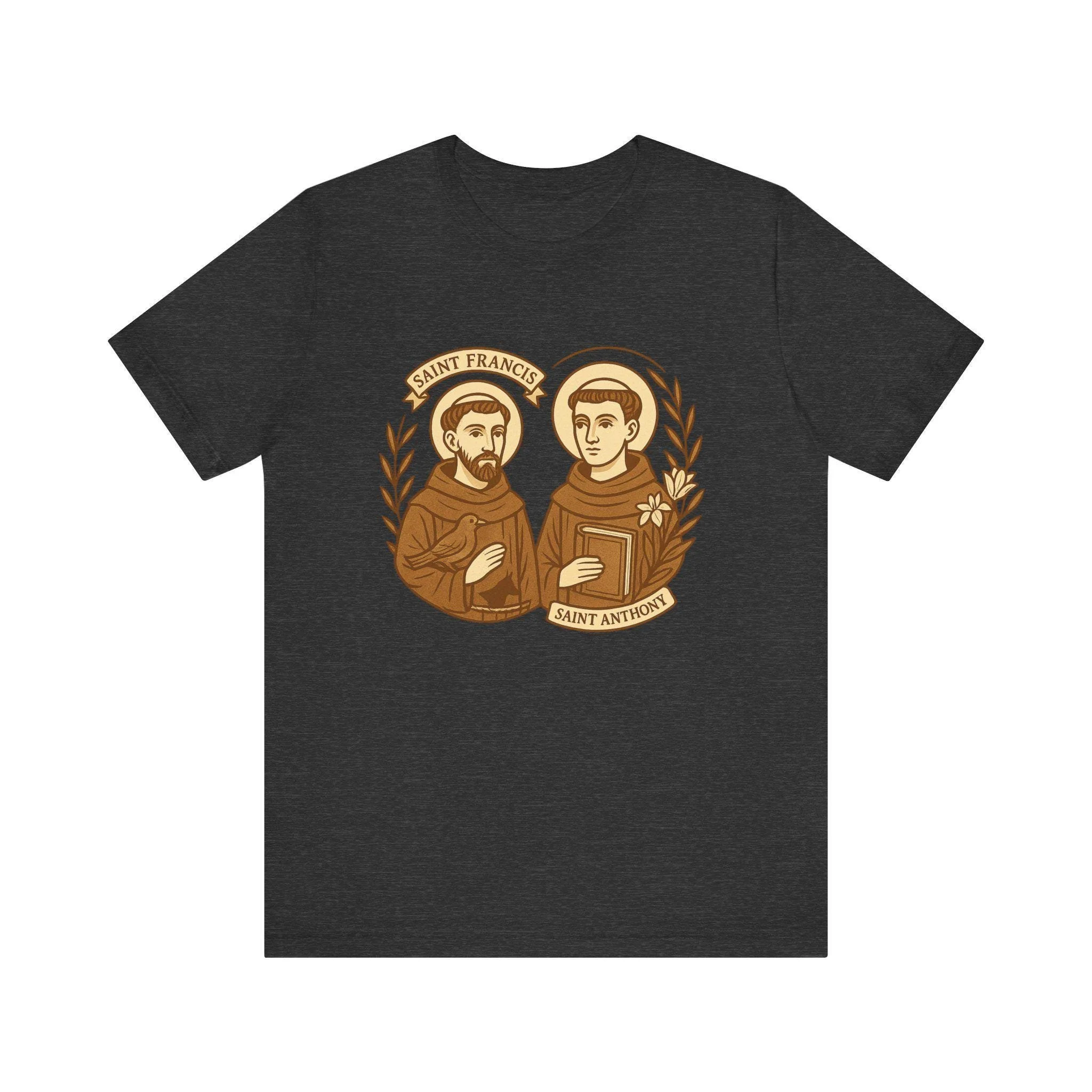
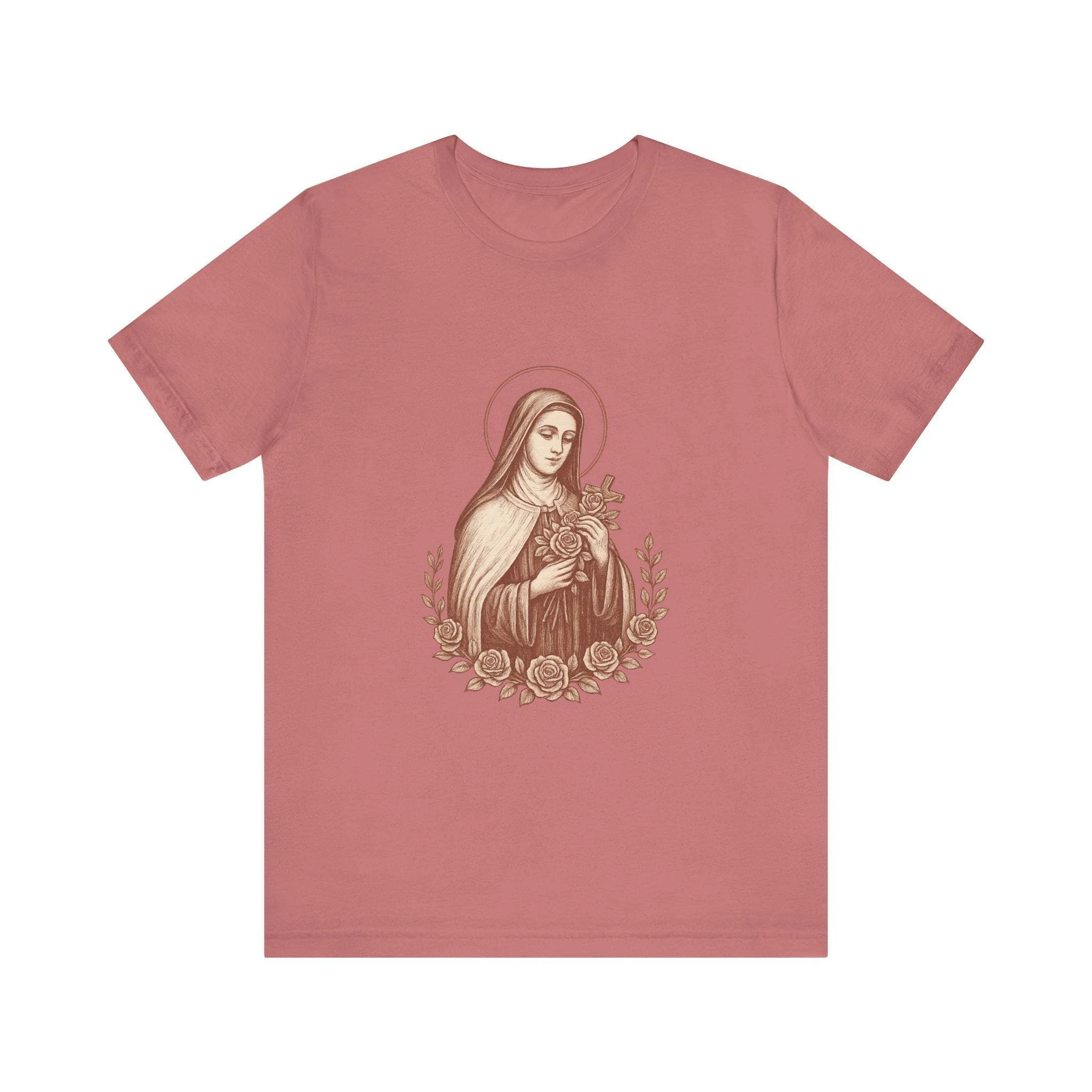
Some saints have become so beloved across the Catholic world that they need almost no introduction. Padre Pio bore the stigmata for fifty years and reportedly read souls in the confessional with uncanny precision. Saint Francis of Assisi remains the patron most associated with animals, poverty, and radical simplicity. Saint Anthony of Padua, often paired with Francis, is the saint most invoked for lost things. Saint Thérèse of Lisieux, the "Little Flower," died at twenty-four and left behind a "little way" of spiritual childhood that has shaped Catholic spirituality for over a century.
Padre Pio
Bore the stigmata for fifty years, reportedly reading souls in the confessional with uncanny precision.
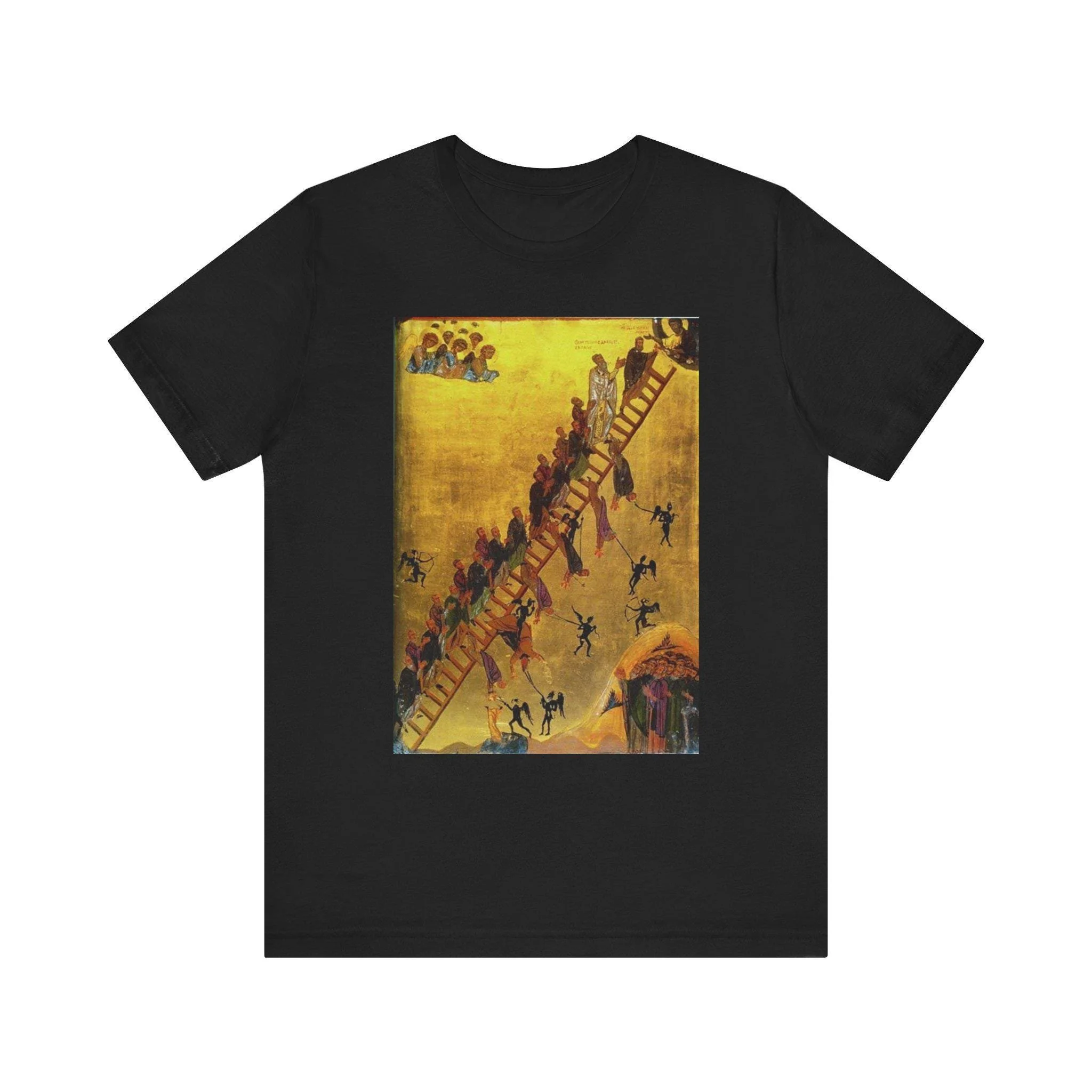
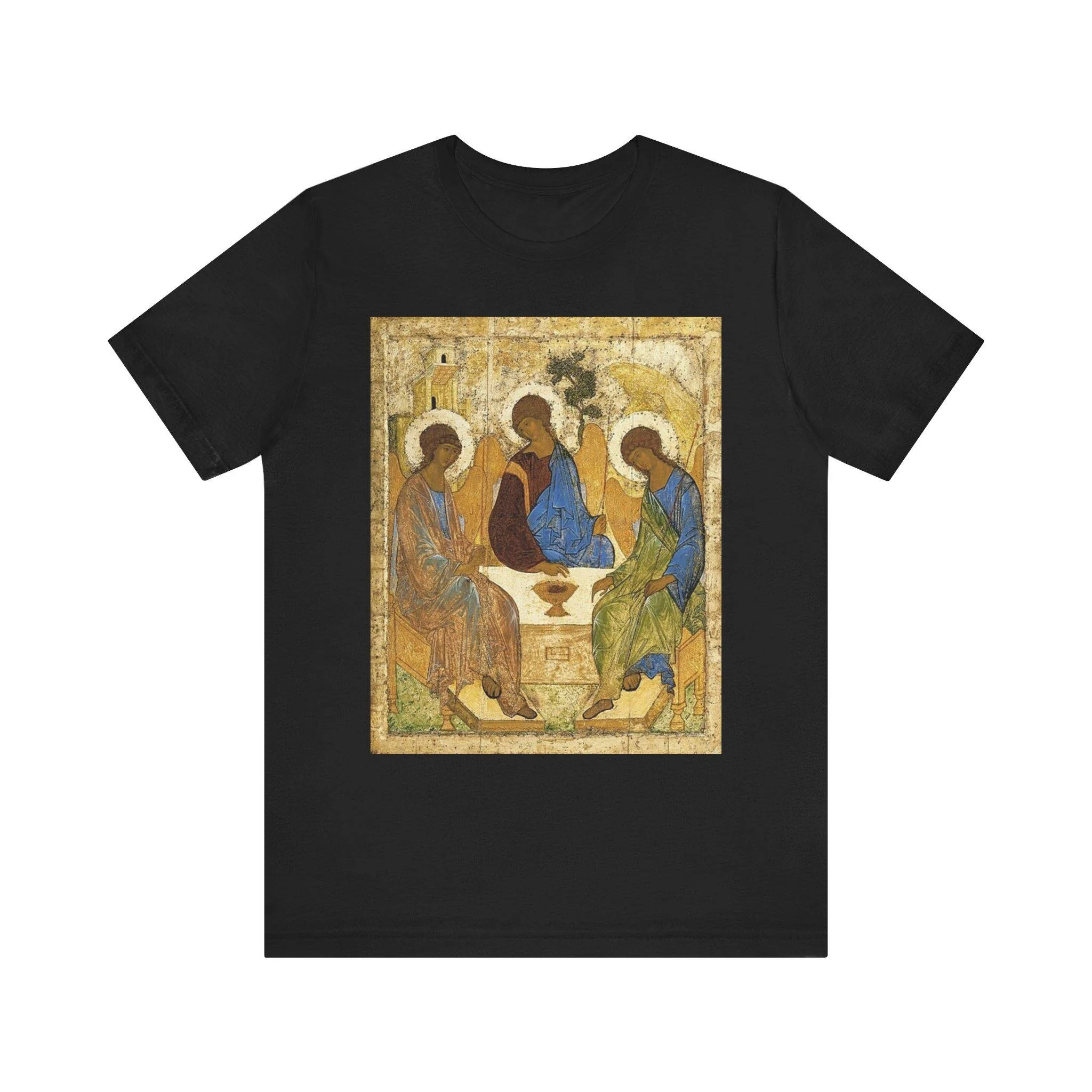
Two designs here go beyond a single saint or apparition into the deeper structure of Christian spiritual life itself. The Ladder of Divine Ascent, from Saint John Climacus's classic work of the same name, depicts monks climbing thirty rungs toward Christ while demons pull at them from below, a vivid image of the real spiritual struggle behind every step of growth in holiness. Andrei Rublev's Holy Trinity icon, painted in the 15th century, remains the most theologically celebrated depiction of the Trinity in all of Christian art, three angelic figures seated around a table in perfect, quiet communion.
Ladder of Divine Ascent
Monks climbing thirty rungs toward Christ, a vivid image of the real struggle behind spiritual growth.
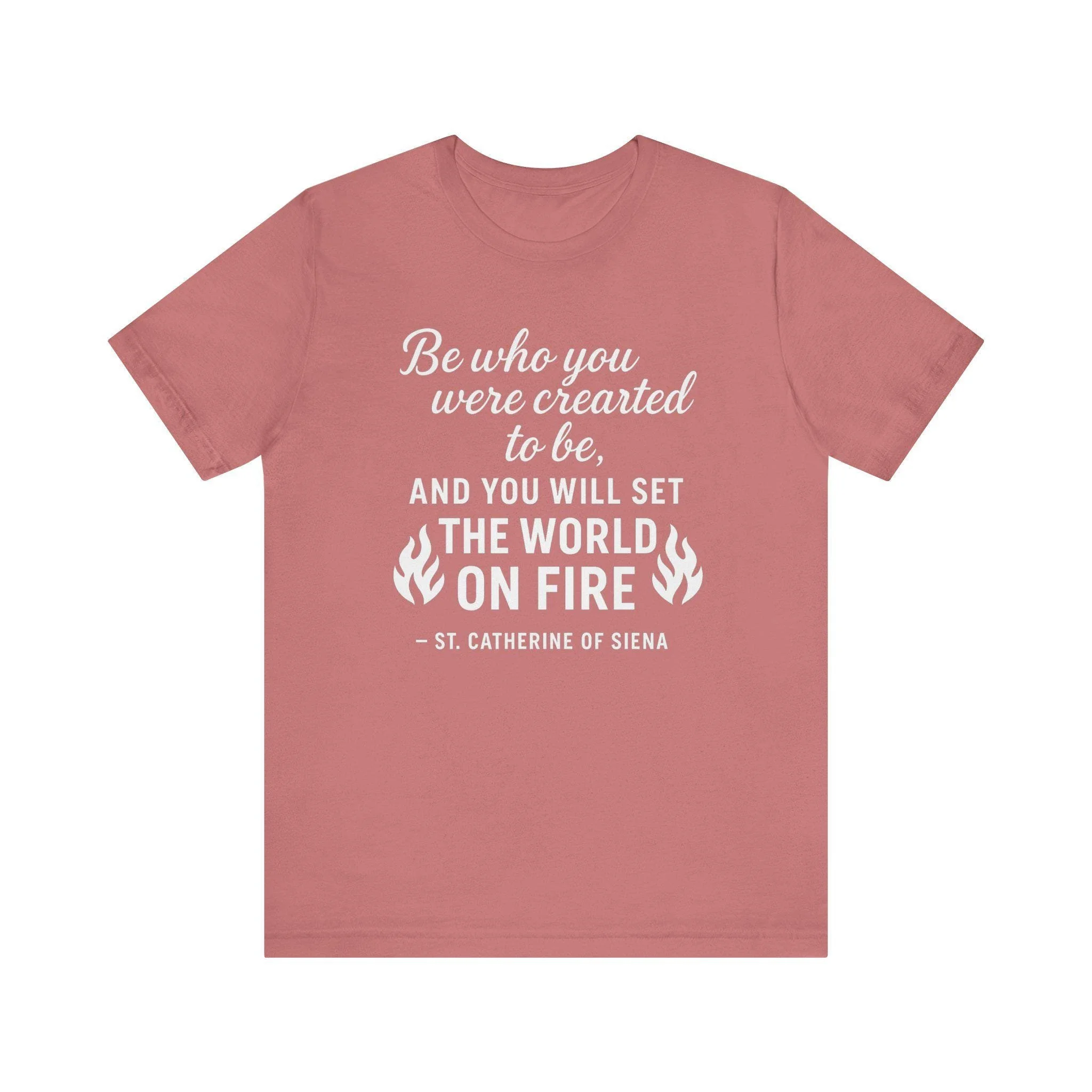
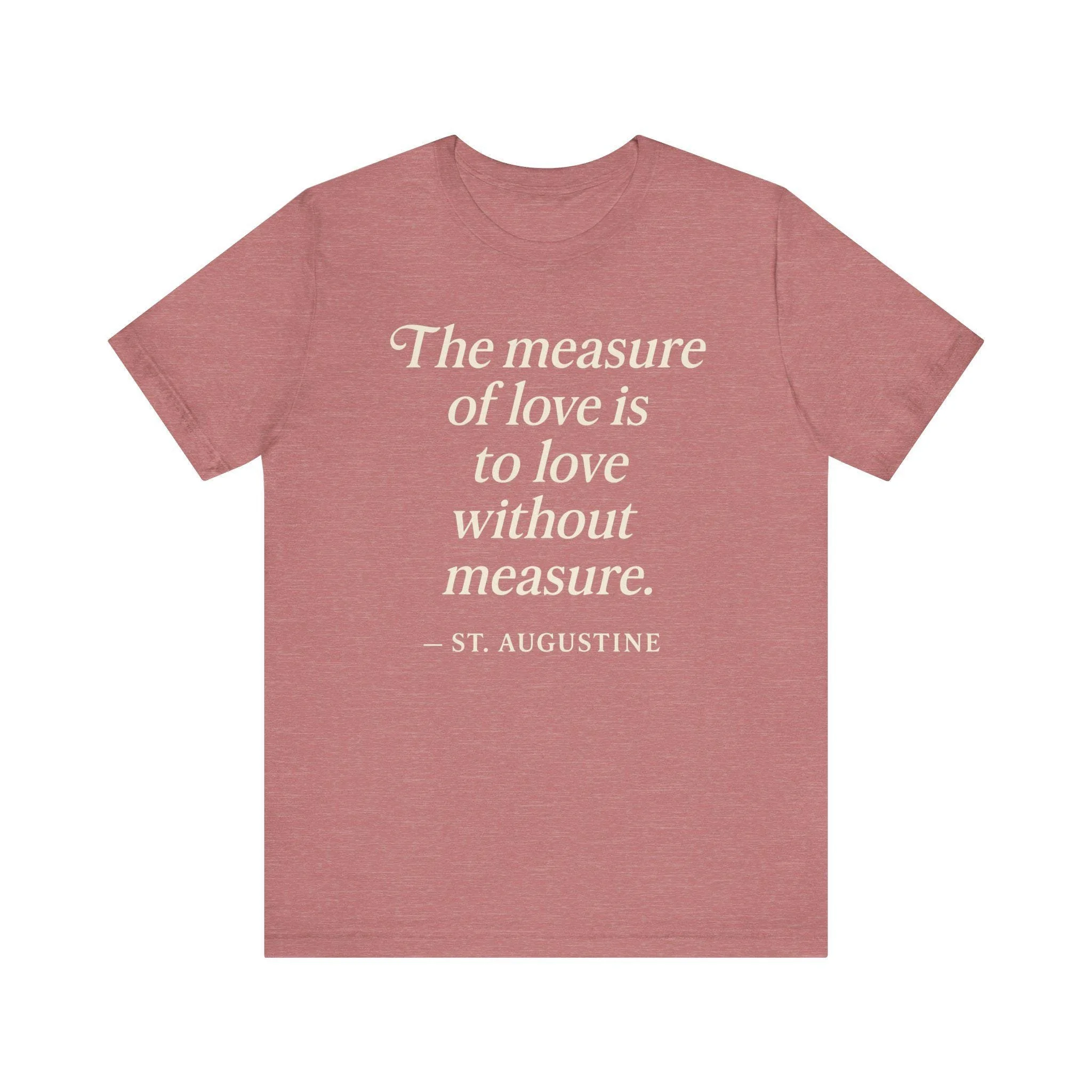
Two designs speak directly and simply, built around lines that have outlasted the centuries they were written in. Saint Catherine of Siena, a Doctor of the Church who advised popes and reformed a divided Church in the 14th century, is remembered for the line "Be who you were created to be, and you will set the world on fire." Saint Augustine's reflections on love in his own Confessions have shaped Christian thought on the subject for over 1,600 years.
"Be Who You Were Created to Be"
Saint Catherine of Siena's most famous line, a Doctor of the Church who advised popes.
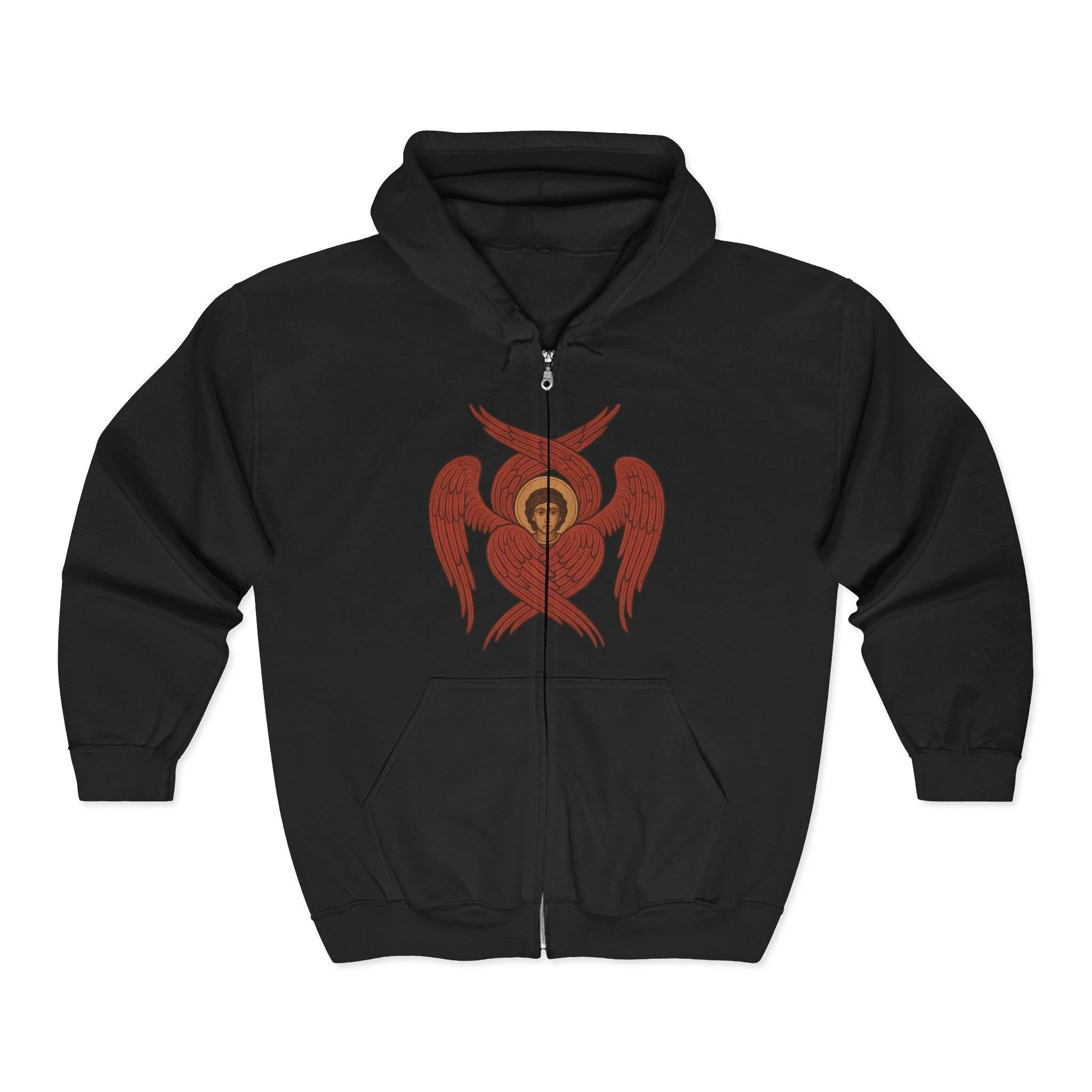
Not everything in this collection is a t-shirt. For colder weather, the Seraphim Angel design is also available as a zip-up hoodie, carrying the same Byzantine iconographic style in a warmer, everyday layer.
Seraphim Angel Zip-Up Hoodie
Byzantine icon style in a warm, everyday layer, for the colder months.
The three-bar cross, sometimes called the Russian Orthodox cross or Suppedaneum cross, has three horizontal beams. The top short bar represents the plaque bearing the inscription Pilate ordered placed above Christ's head. The main bar is where his arms were stretched. The bottom slanted bar represents the footrest his feet were nailed to, tilted to symbolize the two thieves crucified beside him, one who repented and rose toward heaven, and one who did not.
Orthobro is an informal, widely used term for a growing movement of especially younger men embracing traditional Eastern Orthodox Christianity, often expressed visibly through apparel, prayer ropes, and a renewed interest in ascetic and monastic spirituality. Apparel featuring the three-bar cross and the Jesus Prayer has become closely associated with this movement.
Wearing images of saints, icons, and Christian symbols on clothing has a long history rooted in the same impulse behind wearing a cross necklace or carrying a prayer card: keeping a visible, physical reminder of one's faith close at hand throughout the day. Many people find that wearing a saint whose story speaks to their own struggles or aspirations functions as a quiet, ongoing form of devotion and conversation-starter about their faith.
The Jesus Prayer is a short, repeated prayer central to Eastern Christian spirituality: "Lord Jesus Christ, Son of God, have mercy on me, a sinner." Rooted in the ancient monastic tradition of the Egyptian and Sinai deserts, it is traditionally prayed repeatedly, often with a knotted prayer rope, as a way of fulfilling Saint Paul's instruction to "pray without ceasing."
Qadishat Aloho is Syriac for "Holy God," the opening words of the Trisagion hymn: "Holy God, Holy Mighty, Holy Immortal, have mercy on us." It is sung in the Maronite Divine Liturgy and other West Syriac traditions in the Syriac language, a dialect of Aramaic, connecting worshippers audibly to the language of the ancient Church of Antioch.
A Latin or Catholic cross typically has a single horizontal beam. The Orthodox or Byzantine three-bar cross adds a short top bar for Pilate's inscription and a slanted bottom bar representing the footrest and the two thieves. Some Eastern Catholic traditions, including Maronite and Melkite communities, also use the three-bar cross or their own distinct cross forms reflecting their particular liturgical heritage.
Every design in this guide was chosen for the same reason: because it means something real, whether that's a martyr's courage, a mystic's counsel, a mother's apparition, or a single line of prayer that has been repeated for over a thousand years. Whatever speaks to your own story, patron, or heritage, wear it knowing exactly what it's saying.
The work here is about bringing little-known saints to light, so their holiness can stand as an example for the whole world. If you'd like to support this mission, please consider purchasing a prayer card. This site was never just about the cards themselves — they're the way I help fund the research and documentation of saints both known and forgotten.
If buying a card to support the work isn't possible for you right now, could I ask you for something else instead? A prayer. I love our Heavenly Father, and I would only ask that you pray I might love Him more.
Lord Jesus Christ, Son of God, please have mercy on me, a horrible sinner.