The Siege of Constantinople, 626 AD: How the Akathist Hymn Was Born From a City's Deliverance
Church History • Byzantine Empire • Marian Devotion • Origins of a Hymn
The Siege of Constantinople, 626 AD: How the Akathist Hymn Was Born From a City's Deliverance
Fewer than eight thousand defenders. An emperor a thousand miles away. Two armies converging on a single city from two directions at once. What happened at the walls of Constantinople in the summer of 626 produced not just an improbable military survival, but one of the most beloved hymns in all of Eastern Christianity, still sung standing to this day.
The Siege of Constantinople, 626 AD — At a Glance
- Date
- Summer 626 AD, main assault late July–early August
- Attackers
- Avar Khaganate, allied Slavic tribes & Sassanid Persian forces
- Defenders
- Fewer than 8,000 troops under Patriarch Sergius & Bonus
- The Emperor
- Heraclius, campaigning against Persia in the east
- The Icon
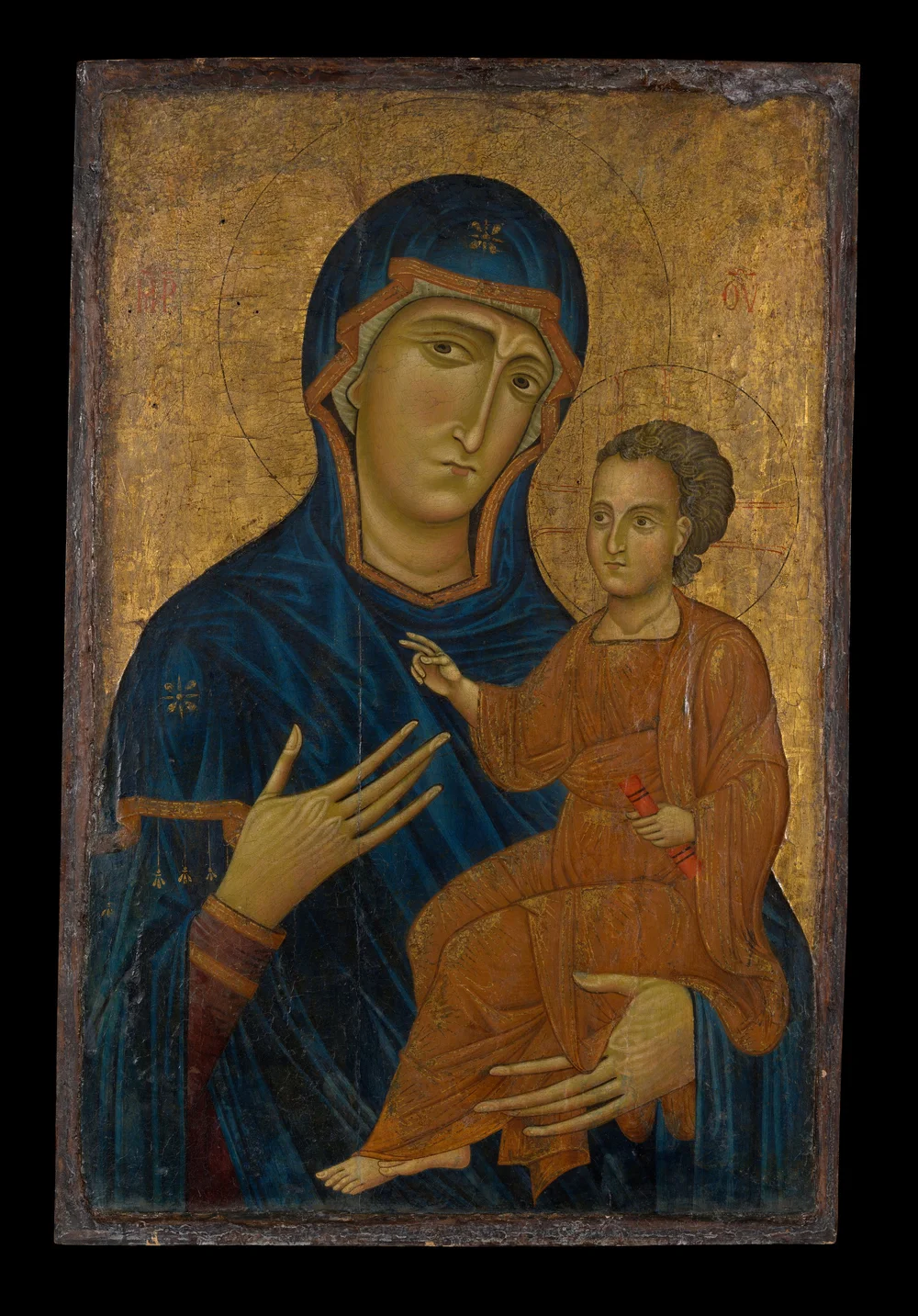
- Traditionally the Hodegetria, icon of the Theotokos
- Decisive Moment
- Destruction of the Slavic fleet in the Golden Horn
- Result
- The siege lifted; the city survived
- Living Legacy
- The Akathist Hymn, sung standing to this day
A City That Shouldn't Have Survived
In the summer of 626 AD, Constantinople faced a threat that, by any reasonable military calculation, it should not have survived. Two hostile forces, an Avar-led army with allied Slavic tribes advancing from the European mainland, and a Sassanid Persian army occupying the opposite shore of the Bosphorus, converged on the city from two directions at once, aiming to link up and crush the Byzantine capital between them. The emperor was not there to lead the defense. Heraclius was deep in the east, gambling the empire's survival on a counteroffensive against Persia, and the city he left behind held, by the most detailed contemporary account, fewer than eight thousand defenders against tens of thousands of attackers.
The city survived. What happened in those weeks, and what the people of Constantinople did the moment the danger passed, produced far more than a single military victory. It produced the Akathist Hymn, one of the most theologically rich and widely loved hymns in the entire Eastern Christian tradition, still sung standing, exactly as it was sung the night the siege was lifted, in Orthodox and Eastern Catholic churches around the world today. This article tells the complete story: the desperate military situation, the icon carried along the walls, the night the enemy fleet was destroyed, and an honest account of where the historical record and the beloved tradition agree, and where they diverge.
Part II
An Empire on the Edge
The crisis of 626 did not appear out of nowhere. The Byzantine-Sasanian War had been grinding on since 602, triggered in part by the chaos following the usurper Phocas's violent coup against Emperor Maurice. Under Phocas's incompetent and brutal rule, the empire's eastern defenses collapsed, and the Persian king Khosrau II, who had personal ties to the murdered Maurice, used the coup as pretext to launch a devastating invasion that swallowed Byzantine Syria, Palestine, and Egypt in the years that followed.
Heraclius, who had overthrown Phocas in 610, spent years rebuilding Byzantine military capacity before finally taking an enormous gamble: rather than defend Constantinople directly, he would strike deep into Persian territory itself, hoping to force Khosrau to abandon his conquests to defend his own homeland. By 626, that campaign had drawn Heraclius far from the capital, into Armenia and the Caucasus, at exactly the moment the Avars, Byzantium's dangerous nomadic neighbors to the north, chose to strike at the undefended heart of the empire in coordination with the Persian forces still occupying Chalcedon, directly across the water from Constantinople itself.
Part III
Two Armies Converge on One City
The Avar Khaganate, ruling a confederation that stretched across much of Central and Eastern Europe, advanced on Constantinople with an army modern historians estimate at somewhere between fifteen thousand and eighty thousand troops, depending on the source, joined by large numbers of allied Slavic warriors who brought with them a critical asset: monoxyla, small dugout canoes capable of ferrying troops across the water that separated the Avar forces from their Persian allies on the Asian shore. The strategy was straightforward and dangerous: if the Slavic canoes could ferry the Persian army across the Bosphorus or the Golden Horn to link up with the Avar forces, the combined weight of both armies against the Theodosian Walls might finally overwhelm the city's defenses.
Against this, Constantinople had what one contemporary source describes as fewer than eight thousand troops, a garrison outnumbered by a factor approaching ten to one by the most conservative modern estimates. The city's one true asset was the Theodosian Walls themselves, among the most formidable fortifications in the ancient and medieval world, a triple line of defense that had turned back every previous assault in the two centuries since their completion. On June 29, 626, the Avars began their assault in earnest.
Part IV
Patriarch Sergius Takes Command
With Heraclius absent, authority over the besieged capital fell to a regency council led by Patriarch Sergius I and the senior official Bonus, with the emperor's young son, also named Heraclius, serving as a nominal figurehead. It was Sergius, more than any general, who is remembered as the defense's true spiritual and moral center. According to Theodore Synkellos, whose sermon on the siege was delivered the following year and stands as the earliest detailed eyewitness-adjacent account to survive, the Patriarch made repeated processions along the full circuit of the Theodosian Walls, an image of Christ "not made by human hands" carried before him, while additional icons of the Theotokos were displayed prominently along the ramparts to hearten the defenders and, in the theology of the moment, to invoke divine protection over the city directly.
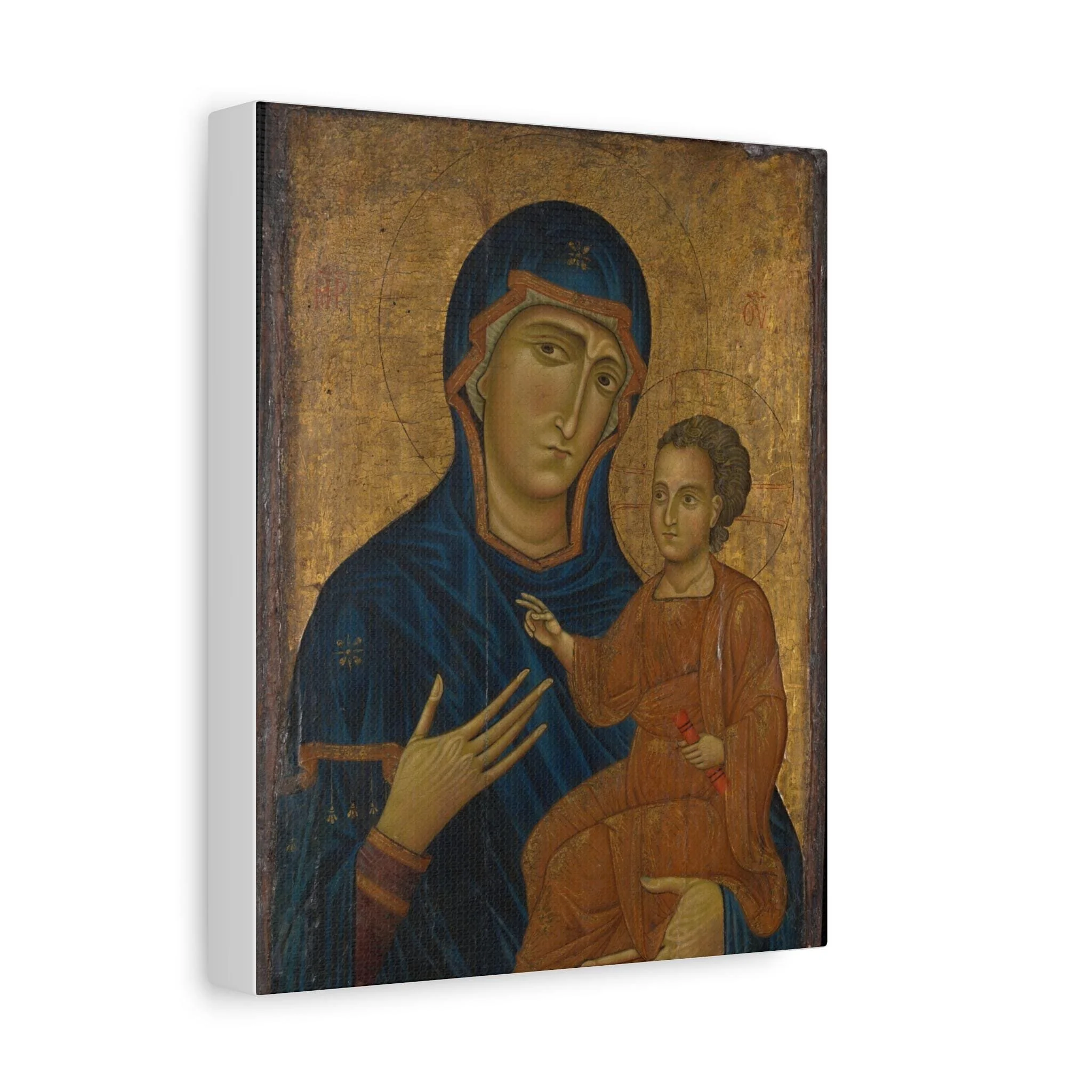
Later Byzantine tradition, developing over the following centuries, consolidated this memory around a single, specifically named icon: the Hodegetria, an image of the Theotokos housed at Constantinople's Hodegon Monastery and, from around the eleventh century onward, believed by popular tradition to have been painted by Saint Luke the Evangelist himself. By the late Byzantine period, the Hodegetria had become the city's principal protective icon, its palladion, paraded through the streets on a weekly basis in a ritual many historians believe developed as a direct commemoration of exactly this 626 procession.
Part V
The Night the Fleet Was Destroyed
The decisive moment of the entire siege came in the waters of the Golden Horn. As the Slavic monoxyla attempted to ferry Avar troops and coordinate with the Persian forces waiting across the water, the Byzantine navy, still commanding the sea despite the empire's crisis on land, moved to intercept them. The lightly built dugout canoes were no match for organized Byzantine warships in open engagement, and the Slavic fleet was destroyed, its wreckage and drowned crews reportedly washing ashore near the Church of the Theotokos at Blachernae.
With their naval element shattered, the Avars had no way to bring the Persian army across the water to reinforce the land assault, and without that reinforcement, the siege of the Theodosian Walls could not succeed. The Avar khagan, his strategy broken, withdrew from Constantinople not long afterward, and the Persian army on the Asian shore, unable to cross without Avar naval support, likewise abandoned the effort. The city that should not have survived, survived.

Part VI
"To Thee, the Champion Leader"
As the danger lifted, the people of Constantinople gathered at the Church of the Theotokos to give thanks, and it was here, according to tradition, that Patriarch Sergius introduced a new hymn of victory and gratitude, beginning with the words still recited today: "To thee, the Champion Leader, we thy flock dedicate a feast of victory and of thanksgiving, as ones rescued out of sufferings, O Theotokos." The hymn was sung standing rather than seated, a mark of reverence and exhausted relief after the sleepless nights of the siege, and this manner of singing gave the hymn its lasting name: Akathistos, "not sitting."
The relationship between this victory hymn and the larger, older Akathist Hymn most Orthodox and Eastern Catholic Christians know today is more complicated than popular retelling usually admits. The main body of the hymn, twenty-four stanzas built as an acrostic following the Greek alphabet and covering the events of the Annunciation and Nativity in rich, poetic detail, may well predate 626 entirely, with scholars variously crediting it to the sixth-century hymnographer Romanos the Melodist or to an unnamed earlier author. What does appear to date specifically to the aftermath of the siege is the short introductory stanza, the "Champion Leader" prooimion, traditionally connected to Sergius himself, though some historians attribute its actual composition to George of Pisidia, the era's leading court poet. Whoever wrote which part, the fusion of the older Marian hymn with the new victory prooimion produced the single hymn now inseparably associated with this deliverance.

Part VII
Theotokoupolis: The City of the Theotokos
The deliverance of 626 reshaped how Constantinople understood itself. The city began to be called, informally but persistently, Theotokoupolis, the city of the Theotokos, or the city guarded by the Mother of God, an identity that would deepen further through subsequent centuries and further sieges the city survived against equally daunting odds. A weekly ritual developed in which the Hodegetria icon was carried in procession, traditionally on Tuesdays, in what many historians believe was a deliberate liturgical reenactment of Patriarch Sergius's original circuit of the walls.
The 626 deliverance also reinforced a broader theological framing that had already begun developing in Byzantine thought: the idea of Constantinople as a New Jerusalem, a city under direct divine protection in the way ancient Jerusalem had been understood to be protected by God in the Old Testament. That framing would shape Byzantine civic and religious self-understanding for the rest of the empire's existence, right up until the city's eventual fall to the Ottomans in 1453, an event that Orthodox memory has never entirely stopped mourning as the loss of a city that had once, against every reasonable expectation, been saved.
Part VIII
What History Can Actually Confirm
This site's standard is to separate documented history from devotional tradition rather than blur the two, and this story offers three specific places where that distinction genuinely matters.
Solid Historical Ground
That Constantinople was besieged by a combined Avar, Slavic, and Persian force in 626 while Heraclius campaigned in the east is not disputed; the siege is documented across multiple contemporary and near-contemporary sources, both Byzantine and external, and its outcome, the destruction of the Slavic fleet and the subsequent withdrawal of both attacking armies, is treated as settled history by modern scholarship.
The Icon, Honestly Examined
The identification of the specific icon carried along the walls as the Hodegetria is a later development rather than a detail present in the earliest surviving account. Theodore Synkellos, writing the year after the siege, describes an icon of Christ "not made by human hands" as the object Patriarch Sergius personally carried, with images of the Theotokos displayed separately along the ramparts rather than singled out as the one decisive icon. The specific, named attribution to the Hodegetria developed over the following centuries of retelling and had become the fixed popular tradition well before the end of the Byzantine period. This does not make the tradition false, later liturgical memory often correctly preserves the essential shape of an event even while individual details shift, but an honest account should note that the earliest witness and the most familiar modern version do not describe quite the same object.
Storm or Navy, or Both
Modern military historians generally describe the destruction of the Slavic fleet as a Byzantine naval victory, warships intercepting lightly built canoes in an engagement the Byzantine navy was well equipped to win. Christian sources writing in the immediate aftermath framed the same event as a storm sent directly through the Theotokos's intervention. These two descriptions need not be treated as mutually exclusive; a storm and a naval engagement could easily have coincided, and ancient authors routinely read providential meaning into events modern readers would describe in purely tactical terms. Readers can hold both descriptions honestly: a real naval battle happened, and the people who lived through it understood it as a miracle.
A Complicated Patriarch
One further honest note concerns Patriarch Sergius himself. His leadership during the 626 siege is remembered with genuine gratitude in Orthodox tradition, and rightly so. But later in his patriarchate, Sergius became the chief architect of Monothelitism, the teaching that Christ possessed only one will rather than a fully divine and fully human will, formalized in an imperial document called the Ecthesis. Monothelitism was condemned as heresy at the Third Council of Constantinople in 681, after Sergius's death, and he is not venerated as a saint. His defense of Constantinople in 626 and his later doctrinal controversy are, historically, two separate matters, and this site presents both plainly rather than quietly omitting the second to make the first easier to celebrate.
Part IX
Legacy: A Hymn Still Sung Standing
Fourteen centuries after the siege of 626, the Akathist Hymn remains one of the most beloved and frequently sung hymns to the Theotokos across the Orthodox and Eastern Catholic world. Its full, formal chanting takes place on Akathist Saturday, the fifth Saturday of Great Lent, when churches throughout the Byzantine liturgical tradition gather to sing all twenty-four stanzas standing, exactly as the exhausted and grateful people of Constantinople are remembered to have done in the summer of 626. Shorter portions of the hymn are also chanted in many parishes on other occasions throughout the year, its "Rejoice" refrains among the most recognizable and repeated phrases in all of Byzantine hymnography.
What began as an improbable military survival became, through the memory and liturgical instinct of the Byzantine Church, something that has long outlasted the empire that produced it. Constantinople fell in 1453; the Akathist Hymn is sung standing every single year, in languages and countries the sixth-century hymnographers who may have written its earliest verses could never have imagined.

Timeline
Complete Timeline of the 626 Siege & the Akathist Hymn
- 602 ADThe usurper Phocas overthrows Emperor Maurice, triggering decades of instability and giving Persia's Khosrau II pretext for war.
- 610 ADHeraclius overthrows Phocas and becomes emperor, inheriting a collapsing eastern frontier.
- 610–626 ADPersian forces conquer Byzantine Syria, Palestine, and Egypt; Sergius I serves as Patriarch of Constantinople from 610.
- 622 ADHeraclius launches a bold counteroffensive deep into Persian territory, leaving Constantinople's direct defense to a regency.
- 626 AD, June 29The Avar-led siege of Constantinople begins in earnest, coordinated with Persian forces occupying Chalcedon across the water.
- 626 AD, summerPatriarch Sergius processes an icon of Christ, alongside displayed images of the Theotokos, along the full circuit of the Theodosian Walls.
- 626 AD, late July–early AugustThe Byzantine navy destroys the Slavic fleet of monoxyla in the Golden Horn, breaking the coordination between the Avar and Persian forces.
- 626 AD, shortly afterThe Avar army withdraws; the Persian army, unable to cross without naval support, abandons the siege as well.
- 627 ADTheodore Synkellos delivers his sermon on the siege, the earliest detailed surviving eyewitness-adjacent account.
- 7th century onwardConstantinople becomes popularly known as Theotokoupolis, and the "Champion Leader" hymn of thanksgiving becomes permanently joined to the older Akathist Hymn.
- 11th century onwardPopular tradition specifically identifies the icon of 626 as the Hodegetria, attributed by legend to Saint Luke the Evangelist.
- 681 ADThe Third Council of Constantinople condemns Monothelitism, the teaching Patriarch Sergius had promoted later in his life, as heresy.
- 1453 ADConstantinople falls to the Ottoman Empire, ending the empire the Akathist Hymn's earliest verses had once celebrated as divinely protected.
- TodayThe Akathist Hymn is chanted in full, standing, on Akathist Saturday every year across the Orthodox and Eastern Catholic world.
Devotional Prayer
A Prayer of Thanksgiving
O Theotokos, champion and leader of a city that had no right to survive, I bring you whatever is surrounding me right now, whatever feels like it has come from two directions at once with no reasonable way through.
Teach me the patience of Patriarch Sergius walking the walls when the odds gave him nothing to stand on but faith, and the gratitude of a city that stood rather than sat the moment the danger passed, unwilling to receive deliverance without giving thanks on its feet.
Whatever storm needs to break, whether by your hand directly or through the ordinary means you so often work through, grant me the same ending Constantinople received: not a war I win by my own strength, but a mercy I did not fully deserve and will not forget to thank you for.
A private devotional composition inspired by the tradition surrounding the 626 siege of Constantinople and the origin of the Akathist Hymn. Not a liturgical text of the Church.
FAQ
Frequently Asked Questions About the Siege & the Akathist Hymn
A City Stood, and So Did Its Hymn
Fourteen centuries later, nobody sings the Akathist Hymn while thinking about troop numbers or naval tactics. They sing it standing, the way it was first sung by people who had spent weeks not knowing whether their city would still exist by morning, and who chose, the moment it was over, not to sit down. That instinct, to meet deliverance on your feet rather than collapse into a chair, says something true about gratitude that has outlasted the empire, the walls, and even the city's own name.
Whatever your own walls are facing right now, this hymn was written by people who understood exactly what it feels like to be surrounded on every side and still be standing when morning comes.
Get the Hodegetria Prayer Card →