Saint Gregory the Wonderworker: The Bishop Whose Prayer Moved a Mountain
Saint Biography • Early Church History • Miracle Accounts • Faith Moving Mountains
Saint Gregory the Wonderworker: The Bishop Whose Prayer Moved a Mountain
In the third century, in a small Roman province on the Black Sea coast, a bishop named Gregory was already being described by his own contemporaries in extraordinary terms: a man of such total faith that the earth itself moved when he prayed. Here is his complete story, and an honest look at what the earliest surviving account actually says moved.
Saint Gregory the Wonderworker — At a Glance
- Also Known As
- Gregory Thaumaturgus, Gregory of Neocaesarea
- Lived
- c. 213 – c. 270 AD • Neocaesarea, Pontus (modern Niksar, Turkey)
- Title
- Bishop of Neocaesarea
- Feast Day
- November 17 (Eastern Orthodox, Byzantine Catholic & Roman Catholic)
- Venerated In
- Eastern Orthodox, Eastern & Roman Catholic Churches
- Teacher
- Studied under Origen at Caesarea, c. 233–238 AD
- Known For
- Moving a stone (or, per later tradition, a mountain) through prayer
- Patronage
- Against earthquakes and floods • desperate, lost & impossible causes
A Bishop Whose Prayer Was Said to Move the Earth
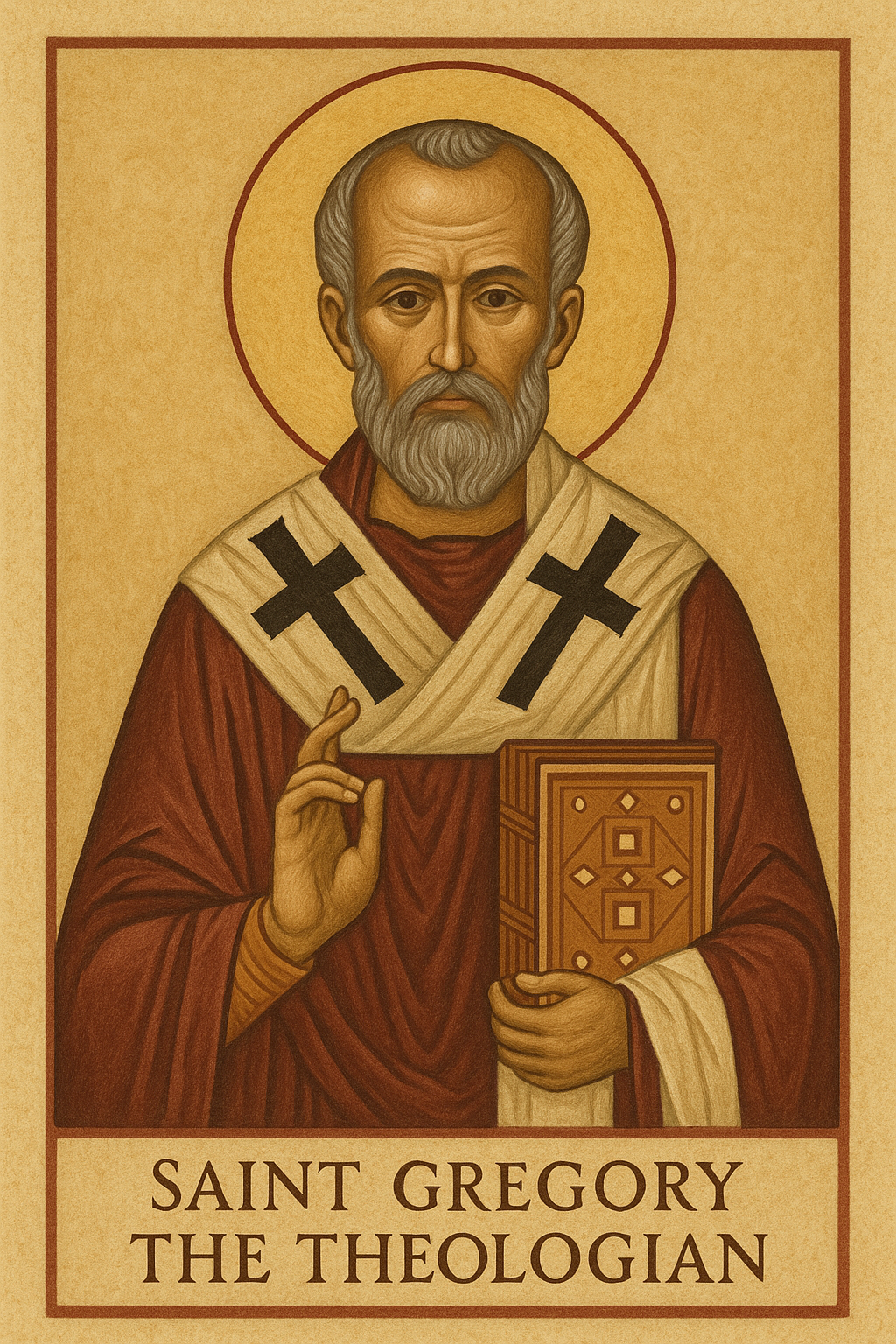
In the Roman province of Pontus, on the southern shore of the Black Sea, a bishop named Gregory was described by his own contemporaries in extraordinary terms: a man of such total faith that the earth itself moved when he prayed. Gregory Thaumaturgus, "the Wonderworker," is one of the earliest and best-attested miracle workers in Christian history, praised by name in the surviving writings of Basil the Great and given a full biography by Basil's own younger brother, Gregory of Nyssa. Within a generation of his death he was already being compared, without irony, to Moses.
This article gathers the complete account of his life, his teaching, and his miracles, and, honestly, what the earliest sources actually say happened to the mountain he is most remembered for, because the popular version and the earliest surviving account do not quite agree, and that disagreement is itself part of a fascinating story. Christian history holds very few genuine pairs of saints separated by centuries and credited with the same extraordinary miracle, and Gregory is one half of the earliest known example: seven centuries after his death, a Coptic craftsman named Simon the Tanner would be credited with the same feat in Cairo, a connection this article touches on but which stands entirely on its own regardless of what came later.
Part II
From Pagan Law Student to Origen's Pupil
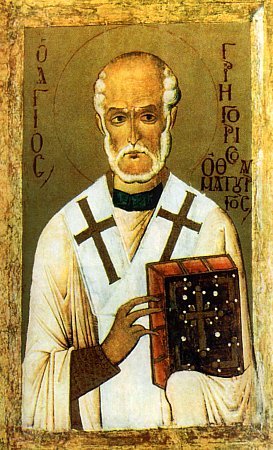
Gregory was born around 213 AD in Neocaesarea, a city in the Roman province of Pontus on the Black Sea coast, in what is now northern Turkey. He was originally named Theodore and belonged to a wealthy pagan family; his father died when Theodore was fourteen, and his mother saw to it that he and his siblings received an excellent education. He trained in rhetoric and Roman law, intending to continue his legal studies at the renowned law school in Berytus (modern Beirut).
Around 233 AD, traveling with his sister to Caesarea in Palestine, where her husband served in the Roman administration, Theodore's route brought him into contact with a major center of Christian learning in the city, where the well-known Christian teacher of the era had recently settled. What was meant to be a stopover on the way to Beirut turned into a five-year stay. Deeply affected by his studies there, Theodore converted to Christianity, took the baptismal name Gregory, and later wrote a farewell address of thanks to his teacher before returning home to Pontus around 238 AD, intending, by his own account, to live a quiet life of study rather than public ministry.
Part III
The Vision That Shaped the Nicene Creed
Before Gregory became a bishop, according to Gregory of Nyssa's account, he spent a troubled, sleepless night wrestling with theological questions that unsettled him, uncertain how to answer teachings he found confusing and difficult. In that state, an elderly figure of striking dignity appeared to him, and beside this figure stood a second presence, a female form whose radiance was such that Gregory could not bear to look directly at her. Listening rather than looking, Gregory understood from their conversation that the elderly figure was the Apostle John, and that the woman had asked John to reveal to the young man the true mystery of the faith, out of her love for the Lord she had borne. Before vanishing, the vision left behind a short, precise statement of Trinitarian belief, which Gregory was instructed to write down and later proclaim in his church.
This is one of the earliest recorded visions of the Virgin Mary in Christian history, though, as with every element of this story, that dating depends on trusting a biography written roughly a century after the events it describes. The creed itself, sometimes called the Symbol of Gregory Thaumaturgus, affirms one God the Father, one Lord the Son, and one Holy Spirit, using language of a "perfect Trinity" that anticipates, in striking ways, the more developed Trinitarian formulas later debated and refined at the great councils of the fourth century. Whatever one makes of the vision's precise historical details, the creed's later influence on Christian theology, discussed further below, is genuinely traceable and well documented.

Part IV
Bishop by Ambush
Bishop Phaedimus of Amasea, a neighboring city, had come to regard Gregory as exactly the leader Neocaesarea needed, and set out to consecrate him bishop. Gregory, who had returned home hoping for a life of quiet study rather than public office, saw this coming and deliberately hid himself from Phaedimus's messengers. According to the tradition, Phaedimus, unable to locate Gregory in person, resolved the standoff in an extraordinary way: standing three days' journey away, he consecrated Gregory bishop in absentia, addressing God directly and treating the distance as no obstacle to a decision he believed was divinely guided.
Gregory accepted the office once it was, in effect, forced upon him. At the time, Neocaesarea and its surrounding region held no more than seventeen professed Christians, a genuinely tiny minority in an overwhelmingly pagan city. It was from this improbable starting point that one of the most dramatic regional evangelizations in early Church history began.
Part V
Driving Out the Temple & Moving the Stone
Arriving at Neocaesarea to take up his new office, Gregory was caught in a sudden violent storm and took shelter for the night in the only nearby structure available: a pagan temple known locally for the oracles its resident spirit supposedly delivered through its priest. Gregory spent the entire night there in prayer, having first made the sign of the cross to purify the space. By morning, the temple's priest found he could no longer perform his usual rites; the presiding spirit, he was told by frightened attendants, would not return while the purified space remained occupied by the stranger who had prayed there all night.
Furious, the priest confronted Gregory and threatened to report him to the civic authorities. Gregory, unmoved, offered to restore things to how they had been, tore a scrap from a notebook, and wrote on it a brief and famously blunt instruction: "Gregory to Satan: enter." When the priest placed this note on the altar as directed, the spirits did indeed return, proving to the priest's own satisfaction that the power that had excluded them belonged entirely to Gregory, not to any trick or coincidence. Struck by what he had witnessed, the priest asked for a further sign, something that would put his newfound faith beyond doubt. According to Gregory of Nyssa's account, the priest pointed to an enormous stone nearby, one he judged impossible for any human strength to move, and asked Gregory to command it. Gregory did, and the stone moved to the exact place the priest had indicated. Overwhelmed, the temple keeper abandoned his position, his household, and his former life entirely to follow Gregory as a disciple.
Part VI
The Mountain That Moved: How the Story Grew
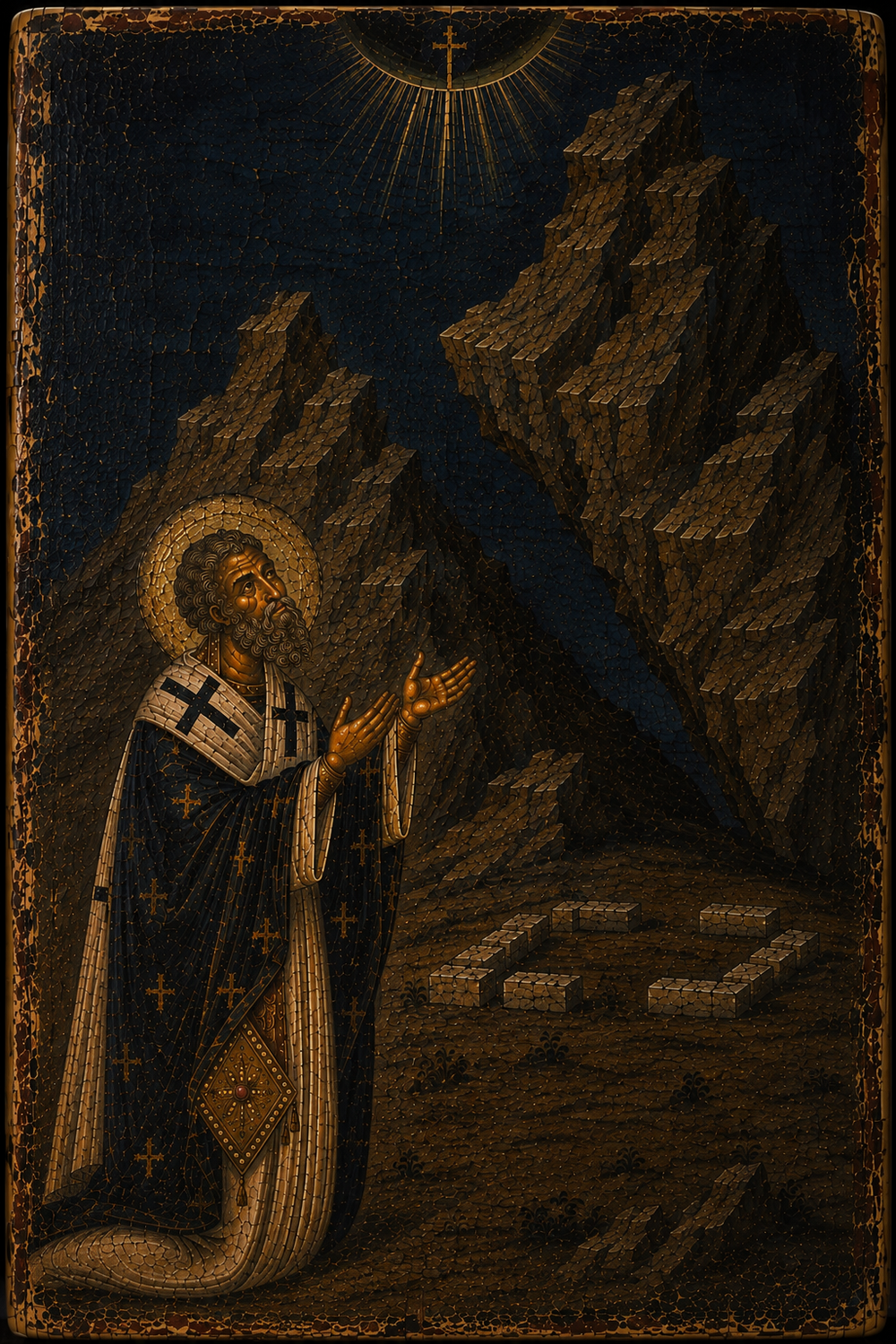
Here is where an honest account owes readers real transparency, because the version of this story most people know today does not match, word for word, the earliest surviving source. The version repeated across countless modern retellings, and reflected in the widely used Roman Breviary reading for Gregory's feast, describes an entire mountain blocking the intended site of a church, moved back by Gregory's prayer in front of a crowd of both pagans and Christians so the building could be constructed to its full planned size.
But Gregory of Nyssa's Life of Gregory the Wonderworker, written around 380 AD and the earliest substantial account of Gregory's life to survive, describes something narrower: a large stone, not a mountain, moved specifically to convince the doubting temple keeper described above, with no mention of a church's dimensions or a crowd of onlookers. Saint Basil the Great, writing even earlier than his brother Gregory of Nyssa, praises Gregory in general terms for command over nature, rivers turned from their course, prophetic insight comparable to the Old Testament prophets, without specifically naming a mountain in his surviving reference to Gregory's wonders.
The most likely honest explanation is that the specific, dramatic image of an entire mountain relocating for a church is a later elaboration of the stone story, one that had fully entered devotional tradition by the time of the medieval Latin liturgical books and has been retold that way ever since, including in the Roman Breviary itself. It is also possible a separate mountain tradition existed alongside the stone account and simply was not included in Gregory of Nyssa's incomplete biography, which openly admits it omits many miracles attributed to its subject. Either way, both versions point to the same underlying and consistently attested tradition across every source: that Gregory's faith was remembered, from the generation immediately following his death onward, as having visibly and physically moved the earth itself.
Part VII
The River, the Lake & the Rest of the Wonders
The Lycus, a wild river prone to violent seasonal flooding, regularly devastated the farmland and homes along its banks. According to Gregory of Nyssa, Gregory traveled to the site on foot, using only a walking staff, and after praying, planted the staff firmly into the riverbank as a marker, asking God to set a limit the water would never again cross. The staff, tradition holds, took root and grew into a living tree, still pointed to by locals generations later as the boundary the Lycus never again overran.
Two brothers, locked in a bitter and increasingly violent dispute over a lake they had inherited jointly, could not be reconciled by ordinary arbitration and were preparing to settle the matter by force. Gregory spent a night in prayer at the water's edge, and by dawn, the lake had dried completely, leaving only fertile, arable land with nothing left to fight over. When the danger of continued violence had fully passed, tradition says the water gradually returned.
Earlier, as a young man newly returned from his studies, Gregory had been the target of a deliberate smear: a woman was bribed to publicly accuse him, in front of a crowd, of owing her payment for an illicit encounter that had never occurred. Rather than protest his innocence, Gregory quietly arranged for a friend to pay her the demanded sum, declining to dignify the accusation with an argument. The moment she accepted the unjust payment, she collapsed into what witnesses described as a violent demonic fit, exposing the plot before the entire crowd. Gregory of Nyssa records this as the very first of Gregory's miracles, the beginning of everything that followed.

Part VIII
Persecution and the Charcoal-Burner Bishop
When Emperor Decius launched an empire-wide persecution of Christians in 250 AD, Gregory advised his flock that fleeing to survive was not cowardice but wisdom, and he and his deacon withdrew into the mountains near Neocaesarea. When soldiers, informed of their hiding place, searched the terrain thoroughly, tradition says they passed directly by the two praying men several times without seeing them, later reporting to the city that nothing was there but two trees standing close together. After the persecution passed, Gregory instituted annual feast days honoring the martyrs, a pastoral innovation credited with helping keep the newly Christian population engaged with the faith through familiar seasonal celebration.
One of the more human stories from Gregory's episcopate concerns a man named Alexander, a charcoal burner by trade, poor, physically unimpressive, and covered in the soot of his profession. When the city's elite, resisting Gregory's preferred choice for a vacant church office, sarcastically suggested that if the bishop's own nominees would not do, they might as well hand the position to "Alexander the charcoal maker," they meant it as an insult. Gregory took the suggestion seriously, called Alexander forward, and, after learning that the man's degraded appearance concealed a life of deliberate, hidden asceticism and philosophical seriousness, had him washed, robed, and ordained on the spot. Alexander went on to preach with genuine substance despite his rough manner of speech, silencing his mockers and becoming, by later tradition, bishop of Comana.
Part IX
What History Can Actually Confirm
This site's standard is to separate documented history from devotional tradition rather than blur the two, and Gregory's story offers an unusually rich case for doing exactly that.
Solid Historical Ground
That Gregory was bishop of Neocaesarea in the mid-to-late third century is not seriously disputed; he is independently referenced by the church historian Eusebius, and he personally participated in the Synod of Antioch around 264-265 AD, a real and datable ecclesiastical council that condemned the teaching of Paul of Samosata. His theological influence on later Cappadocian writers, discussed below, is well documented through their own surviving works, not just through his biography.
The Seventeen-to-Seventeen Myth, Corrected
Nearly every popular retelling of Gregory's life repeats a beautifully symmetrical detail: he became bishop of a city with seventeen Christians and died leaving only seventeen pagans. It is a wonderful detail, and it is very likely wrong. Gregory of Nyssa's own text confirms the figure of seventeen Christians at the start of Gregory's ministry, but its account of his final years states that no more than seventy people still held to the old religion when he died, not seventeen. The two numbers appear to have been confused or deliberately smoothed into a tidier symmetry somewhere across sixteen centuries of retelling, and this article corrects the record: seventeen at the start, roughly seventy holdouts at the end, an evangelization of a city still remarkable without needing the poetic exaggeration.
Sacred Tradition, Honestly Labeled
Modern scholarship has, over the past several decades, raised genuine questions about parts of Gregory's traditional biography, including debate over whether the extent of his study under Origen matches the ancient accounts precisely, and whether certain theological texts attributed to him were actually written by later authors under his name. Gregory of Nyssa himself, writing the primary account this article relies on most heavily, openly signals awareness that his sources blend documented fact with popular legend, explicitly declining at points to repeat every miracle attributed to his subject "in a desire to spare unbelieving ears." That is, even the earliest biographer treats parts of the tradition with visible caution. This site follows that same lead: presenting the full, cherished tradition as the Church has received it, while being transparent that the stone-versus-mountain question, and other supernatural specifics throughout, belong to the category of sacred memory rather than independently verifiable secular fact.
Part X
Legacy: The Theological Grandfather of Nicaea
Gregory's most lasting legacy did not come through his miracles at all, but through a family line of faith. Macrina the Elder, a woman later venerated as a saint in her own right, was among those personally instructed by Gregory in Pontus. She went on to raise her grandchildren in that same faith, a household that included two of the most consequential theologians in Christian history: Basil the Great and Gregory of Nyssa, who together with their friend Gregory of Nazianzus are remembered as the Cappadocian Fathers, the theologians most responsible for the mature articulation of Trinitarian doctrine affirmed at the First Council of Constantinople in 381 AD.
Gregory of Nyssa's own decision to preach and preserve his teacher-by-family-tradition's biography, delivered on Gregory the Wonderworker's feast day in 380 AD, a single year before that council met, is not a coincidence easily dismissed. The short Trinitarian creed Gregory Thaumaturgus is said to have received in his night vision, affirming one God, one Lord, and one Holy Spirit as a "perfect Trinity," anticipated by more than a century the more fully developed language the Church would eventually adopt as settled doctrine. Whatever one concludes about the vision itself, the theological line from a bishop's night vision in Pontus to the language recited in churches worldwide today is genuinely traceable, an inheritance carried forward not by scholars debating in isolation but by a grandmother teaching her grandchildren the faith she had received from a wonderworking bishop.
Timeline
Complete Timeline of Saint Gregory the Wonderworker
- c. 213 ADTheodore (later Gregory) is born to a wealthy pagan family in Neocaesarea, Pontus.
- c. 227 ADHis father dies when Theodore is fourteen; his mother ensures his continued education in rhetoric and law.
- c. 233–238 ADTraveling toward Beirut, Theodore instead remains five years in Caesarea, Palestine, studying under a leading Christian teacher and converting to Christianity as Gregory.
- c. 238–240 ADGregory returns to Neocaesarea intending a quiet life of study; a night vision of the Virgin Mary and the Apostle John reportedly reveals to him a short Trinitarian creed.
- c. 240 ADBishop Phaedimus of Amasea consecrates Gregory bishop of Neocaesarea in absentia after Gregory hides to avoid the office; only seventeen Christians are known in the city.
- c. 240 ADSheltering from a storm, Gregory purifies a pagan temple through a night of prayer and, according to the earliest source, moves a large stone to convince the temple's keeper of Christ's power.
- c. 240s ADGregory diverts the flooding Lycus River by planting his staff, which reportedly becomes a tree, and dries up a disputed lake overnight to end a violent quarrel between two brothers.
- 250–251 ADEmperor Decius launches an empire-wide persecution; Gregory and his flock withdraw into the mountains near Neocaesarea.
- 252–254 ADGothic invasions devastate Pontus; Gregory writes his Canonical Letter addressing the pastoral crisis that follows.
- 264–265 ADGregory attends the Synod of Antioch, which condemns the teaching of Paul of Samosata.
- c. 270–275 ADGregory dies at Neocaesarea; tradition holds that no more than seventy pagans remained unconverted in the region.
- 380 ADGregory of Nyssa delivers the Life of Gregory the Wonderworker, the earliest surviving substantial biography, on Gregory's feast day at Neocaesarea.
- 381 ADThe First Council of Constantinople affirms the mature Trinitarian doctrine the Cappadocian Fathers, taught in the faith Gregory's own creed had anticipated, helped shape.
- TodayGregory the Wonderworker is venerated on November 17 across the Eastern Orthodox, Eastern Catholic, and Roman Catholic Churches, remembered alongside Saint Simon the Tanner as one of Christian history's two great mountain-moving saints.
Devotional Prayer
A Prayer for Impossible Causes
O Holy Gregory, bishop of a city that barely knew Christ, you did not wait for the odds to improve before giving your whole life to the work. Whether it was a stone or a mountain that gave way before your prayer, teach me the same confidence: that no obstacle in front of me is too large for the God who moved it.
Intercede for me in what feels desperate, forgotten, or impossible right now. Grant me your patience at the river's edge and the lake's shore, willing to stay in prayer through an entire night if that is what the answer requires.
Through your prayers, and through the faith you passed down to Macrina and her grandchildren after you, may the Trinity you were shown in a vision be the same Trinity I trust with everything I cannot move on my own.
A private devotional composition inspired by the traditional account of Saint Gregory the Wonderworker's life. Not a liturgical text of the Church.
FAQ
Frequently Asked Questions About Saint Gregory the Wonderworker
A Faith That Moved What Could Not Be Moved
Saint Gregory the Wonderworker spent a lifetime doing exactly what his title suggests: proving, again and again, in front of skeptical priests, warring brothers, flooding rivers, and a city that started with only seventeen believers, that faith was never merely a private feeling. Centuries later, in a different empire, under a different threat, Saint Simon the Tanner would be remembered for the same kind of faith in Cairo, a distant echo of a pattern Gregory had already set. His own story needs no comparison to stand: a bishop who moved the earth itself, and left a theological inheritance that helped shape how the Church would come to speak of God.
Whether it was a stone or a mountain that gave way at Neocaesarea, the faith behind it did not need the detail settled to be real. Carry that same confidence into whatever feels immovable in your own life.
Get the Mountain Miracle Prayer Card →