When Faith Literally Moved the Mountain: The Complete Story of Saint Simon the Tanner
Saint Biography • Coptic Church History • Miracle Accounts • Faith Moving Mountains
When Faith Literally Moved the Mountain: The Complete Story of Saint Simon the Tanner
A caliph handed the Coptic Pope of Alexandria three days to prove that Christ's words in Matthew 17:20 were literally true, or watch every Christian in Egypt die. What happened next did not come from a bishop, a scholar, or a soldier. It came from a one-eyed water carrier no one in Cairo thought to look for, and it is still being lived out today by the poorest Christians in the city he saved.
Saint Simon the Tanner — At a Glance
- Lived
- Late 10th century AD • Fustat (Old Cairo), Egypt
- Also Known As
- Simon the Shoemaker, Simon the Cobbler • Sama'an el-Dabbagh
- Venerated In
- Coptic Orthodox Church • also honored in Syriac Orthodoxy
- The Event
- The Miracle of Mokattam Mountain, c. 979 AD, Cairo
- The Ruler
- Fatimid Caliph al-Mu'izz li-Din Allah
- The Pope
- Abraam the Syrian, 62nd Pope of Alexandria (975–978 AD)
- Attributes
- One eye • eyepatch • leather waterskin
- Living Legacy
- The Cave Church of Mokattam & the extra 3 days of the Coptic Nativity Fast
Faith, Put to the Test
Somewhere in the archive of Christian history sits a story almost too specific, too dated, and too strange to be pure legend, and yet too miraculous for a purely secular textbook to hold. It is the story of a mountain outside Cairo that a Muslim caliph publicly dared Christians to move, using their own scripture against them, on pain of death for every Copt in Egypt if they failed. It is the story of a Pope who did not answer with a theological argument, but with three days of fasting and a search for a man nobody important had ever noticed. And it is the story of a humble tanner with one eye, who gave the instructions, stood in the crowd rather than at its front, and vanished the moment the miracle was finished, refusing even to be thanked.
This happened, according to Coptic tradition, in the year 979 AD, in the shadow of what is now called the Mokattam Mountain, on the eastern edge of Cairo. It is the most famous invocation in Christian history of Christ's promise in the Gospel of Matthew: "If you have faith as small as a mustard seed, you can say to this mountain, 'Move from here to there,' and it will move. Nothing will be impossible for you" (Matthew 17:20). Most people who quote that verse are using it as a metaphor. The Copts of tenth-century Cairo were handed the verse as a literal death sentence, and history says they answered it literally too.
This article gathers the complete story as it has been preserved: the political and religious world of Fatimid Cairo that produced the challenge, the debate that provoked it, the three days of fasting and the vision that followed, the full account of who Simon the Tanner actually was and what led him to sacrifice his own eye, the miracle itself in as much detail as the sources preserve, what can honestly be said about its historical footing, and the astonishing way this exact mountain is still, right now, being reshaped by the faith of the poorest Christians in Cairo.
Part II
Coptic Cairo Under the Fatimids
By the late 10th century, Egypt had come under the rule of the Fatimid Caliphate, a Shia Muslim dynasty that had recently founded a new capital, Cairo, just north of the ancient Christian and Roman city of Fustat, or Old Cairo. The reigning Caliph, al-Mu'izz li-Din Allah, is remembered by both Muslim and Coptic sources as an unusually cultured and curious ruler, fond of literary gatherings and religious debate, who regularly invited leaders of different faiths into his court to argue points of doctrine in his presence, seemingly for his own intellectual entertainment rather than as an act of persecution.
The Coptic Christians of Egypt at this time, descendants of the ancient Egyptian Church of Alexandria founded, by tradition, by Saint Mark the Evangelist, were a substantial and economically significant community, though one increasingly concentrated in trades considered undesirable or ritually unclean by the Muslim elite around them. Tanning was one of these trades: the processing of animal hides was dirty, physically demanding, and low in social status, and Copts filled this niche in large numbers, along with the related crafts of cobbling and shoemaking. This is the world the man history remembers only as Simon the Tanner belonged to: educated, faithful, and almost entirely invisible to the political and religious elite whose fate would soon depend on him.
Anthony's example of withdrawal did not stay solitary for long. Within a generation, another Egyptian, Saint Pachomius, took that same desert impulse and organized it into structured communal monasticism for the first time in Christian history, the direct ancestor of the monastic pattern that would later shape Coptic religious life around Simon himself.
Part III
The Debate That Started It
The chain of events begins, almost mundanely, with a debate the Coptic side won. Caliph al-Mu'izz had gathered religious leaders for one of his regular discussions, and among those present were Pope Abraam the Syrian, the 62nd Pope of Alexandria, and a man named Yaqub ibn Killis, a Jewish-born vizier who had converted to Islam and risen to real influence in the Fatimid administration. In the exchange that followed, Pope Abraam got the better of the argument, and ibn Killis, according to the tradition, could not let the humiliation stand.
Looking for a way to strike back, ibn Killis reached for Christian scripture itself. He reminded the Caliph of Christ's words recorded in the Gospel of Matthew: that genuine faith, even faith as small as a mustard seed, could command a mountain to move. He framed it as a simple test of whether Christianity's own foundational text was true. The Caliph, intrigued, turned to Pope Abraam directly and asked whether this was indeed written in his Gospel. Abraam could not deny it; the words were exactly as ibn Killis had quoted them. Having backed the Pope into a corner with his own scripture, the Caliph then delivered the ultimatum: perform this miracle, or every Christian in Egypt would be put to death.
Part IV
Three Days of Fasting and a Vision
Pope Abraam asked the Caliph for time, and was granted three days. He went immediately to the Hanging Church, Saint Mary's Church of al-Mu'allaqa in Old Cairo, and summoned the bishops, priests, and faithful of the city, calling on all of them to fast and pray without ceasing for the full three days, pleading for God's mercy on behalf of the entire Christian population of Egypt, whose lives now depended on the outcome.
The tradition describes the third night in vivid, human detail. Pope Abraam, exhausted from grief and continuous vigil, finally fell asleep, and in that sleep the Virgin Mary appeared to him. She asked what troubled him, and when he explained the crisis, she did not give him a miracle directly. Instead, she gave him an address: if he went out through the iron gate leading toward the market at dawn, he would meet a one-eyed man carrying a sack of water. That man, she told him, was the one through whom the miracle would be accomplished.

Part V
The Humble Man No One Thought to Look For
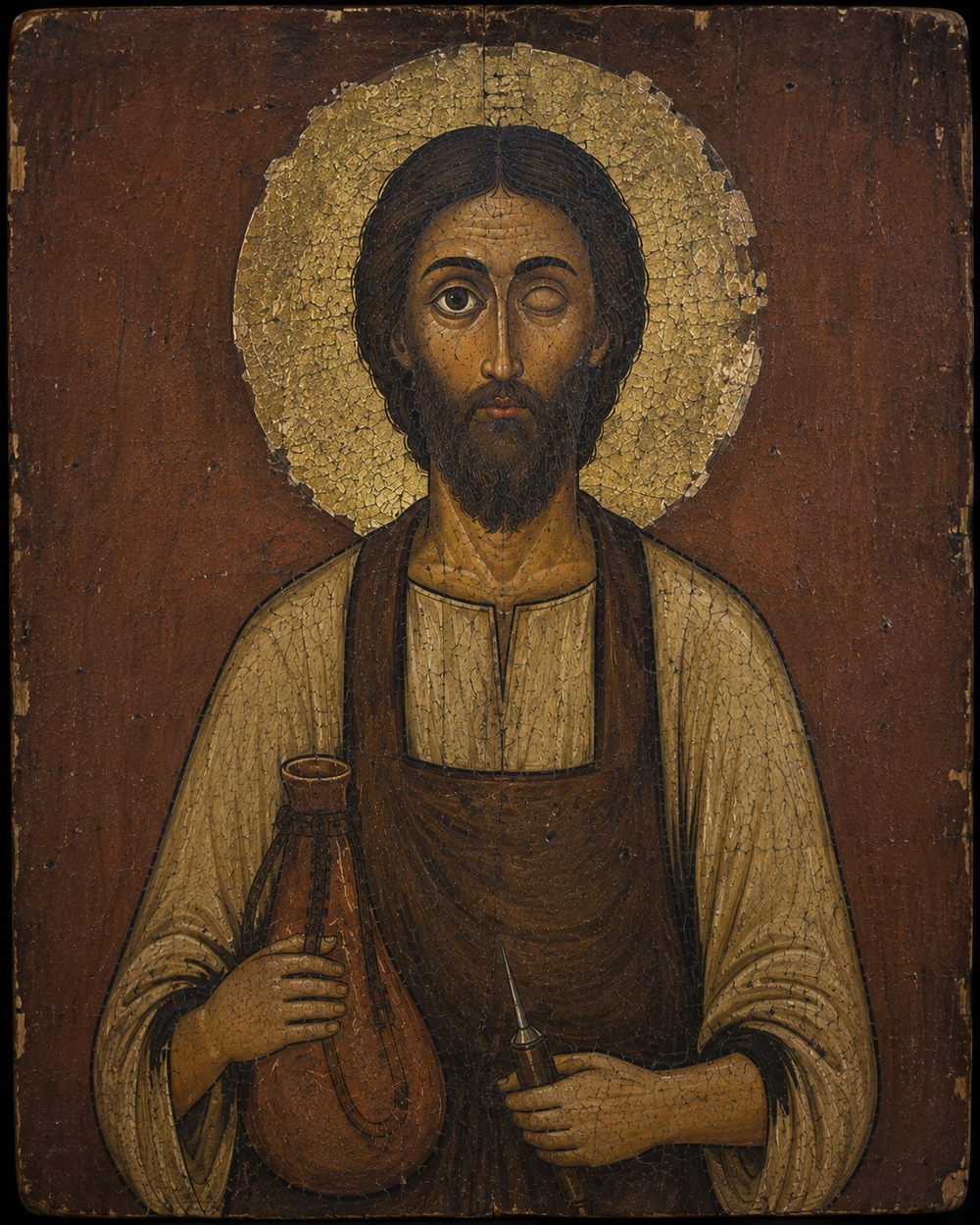
Pope Abraam did exactly as the Virgin had instructed, going out through the iron gate at dawn, and there, exactly as described, he found a one-eyed man carrying water. This was Simon, a craftsman who worked in the leather trades common to Copts of Fustat, known variously as the Tanner, the Cobbler, and the Shoemaker depending on which part of the trade a given source emphasized. He was, by every account, a man of no particular standing: not a monk, not a cleric, not a scholar, simply a working tradesman with a habit that had already made him locally known for quiet, unglamorous charity, rising every morning before his shop opened to carry water on his back to elderly and sick neighbors who could not fetch it themselves.
The Pope asked him about his life, and it was here that Simon explained the eye. According to the traditional account, a woman had once come to his shop to have her shoes repaired, and as she removed them to be worked on, Simon looked at her with a flash of lustful thought. Taking with total literalness the words of Christ in Matthew 5:28-29, that if the right eye causes sin it should be gouged out and thrown away, Simon drove his cobbler's awl into his own eye rather than let the thought take root. It is an act later generations of Copts have generally treated not as a literal instruction to be copied, but as a vivid, almost shocking illustration of how seriously this ordinary man took the demands of holiness, applied to himself with a severity he never extended to anyone else.
Rather than accepting any honor for what was about to happen, Simon gave the Pope precise instructions and then insisted on disappearing into the crowd as an anonymous participant rather than a leader. He told Abraam to gather the people at the mountain, to have them carry Bibles, crosses, and candles in procession, to pray the Kyrie eleison, "Lord, have mercy," four hundred times, and then, with the Pope and clergy kneeling, to make the sign of the cross toward the mountain and wait to see the glory of God. Simon told the Pope he himself would stand among the ordinary people, "as one of the people," not beside the Pope, not at the front, not identified in any way.
Part VI
The Mountain Moves
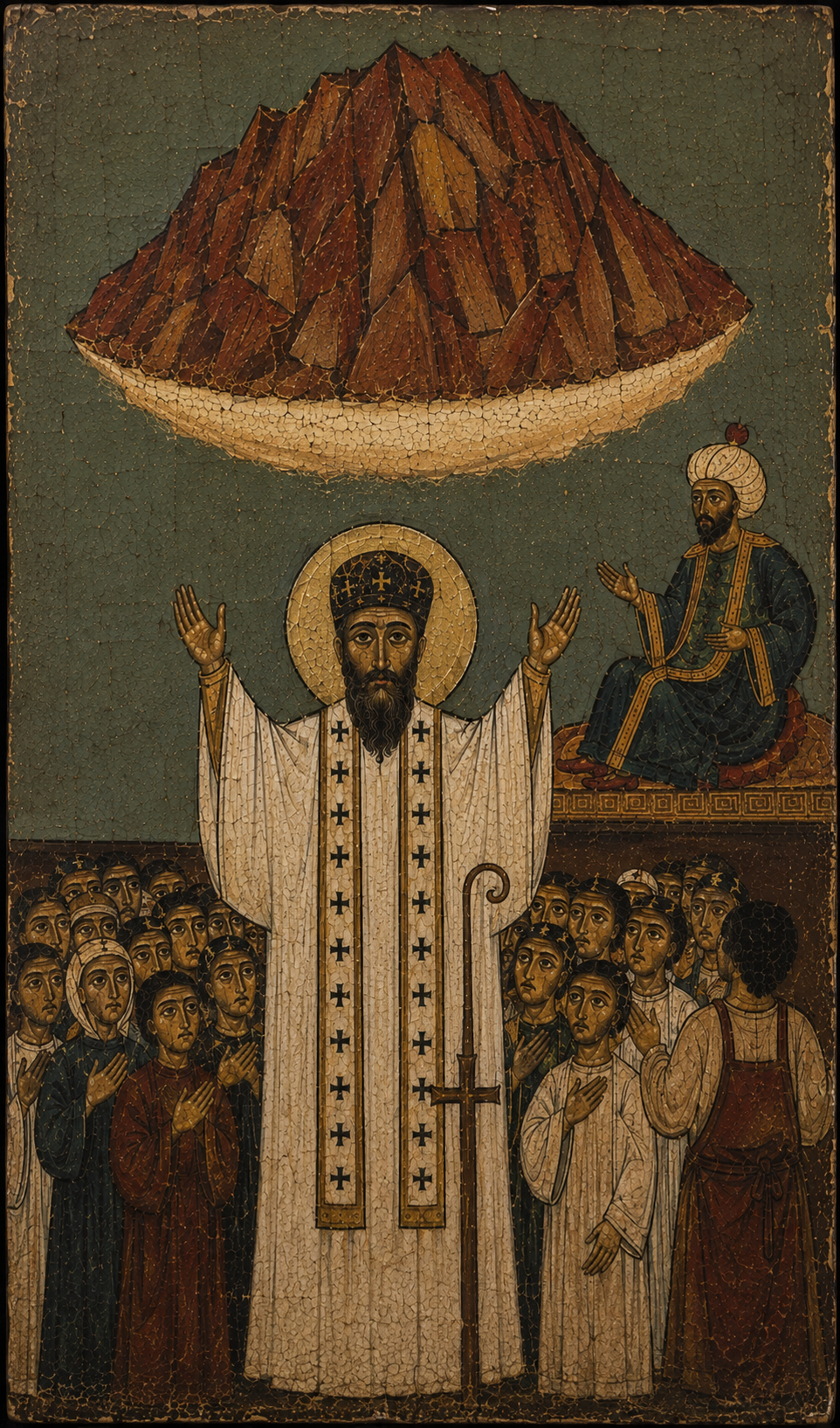
On the appointed day, Pope Abraam led the procession to the base of Mokattam Mountain exactly as Simon had instructed, with the Caliph al-Mu'izz present to watch either the miracle or the executions that would follow its failure. The clergy and faithful carried their crosses and candles, sang the liturgy's prayers, and repeated the Kyrie eleison as directed. Then the Pope and priests knelt, and Abraam made the sign of the cross over the mountain.
According to the tradition, what followed was not a single instant but a rhythm, described across multiple Coptic sources with remarkable consistency: each time the people rose to their feet in prayer, the mountain was thrust upward, with daylight visibly appearing in the gap beneath its base, and each time the people knelt back down, the mountain settled again. This repeated three times before the assembled crowd, the clergy, and the Caliph himself. It was, by every description, less a single clean event than a shuddering, earthquake-like motion that unmistakably answered the challenge that had been issued three days earlier.
In the aftermath, with the crowd overwhelmed and the Caliph reportedly astonished, Pope Abraam looked for Simon, the man whose instructions had made the entire procession possible, so that he could be publicly honored and thanked. Simon could not be found. He had already withdrawn back into the anonymity he had insisted on from the beginning, and, according to Coptic tradition, was never seen again in his lifetime. It is one of the most quietly powerful details in the entire account: the man at the center of the miracle made certain he would not be the one people remembered.
Part VII
What Happened Next
Coptic tradition holds that Caliph al-Mu'izz, having witnessed the miracle himself, turned to Pope Abraam and declared that he now recognized the truth of the Christian faith, and that shortly afterward the Caliph decided to convert to Christianity. As physical evidence of this claim, tradition points to a real, still-existing baptismal font at the Church of Saint Mercurius (Abu Seifein) in Old Cairo, large enough for the full immersion of an adult, known to this day as Ma'moudiat al-Sultan, the Baptistry of the Sultan, said to have been built specifically for the Caliph's own baptism.
An honest account has to hold two things at once here. The font is real, and its name and its association with this story have persisted in Coptic memory for a very long time; that much is not in dispute. But mainstream historical sources, Muslim and secular alike, record no conversion of al-Mu'izz, who continued to reign as the Fatimid Caliph, a Muslim head of state, until his death in 975 AD. The claim that he personally converted belongs, on the best available evidence, to devotional tradition rather than documented history, treasured and retold by generations of Copts as the fitting capstone to the miracle, even though it cannot be independently verified outside Coptic sources.
Part VIII
What History Can Actually Confirm
This site's standard is to separate documented history from devotional tradition rather than blur the two, and this story offers an unusually good case for doing exactly that, because it is better attested than most medieval miracle accounts.
Solid Historical Ground
The broader political setting is not seriously disputed: the Fatimid Caliphate did rule Egypt from this period, al-Mu'izz li-Din Allah was a real and well-documented caliph known for his religious debates, Abraam the Syrian was the historically attested 62nd Pope of Alexandria (975–978 AD), and a converted vizier named Yaqub ibn Killis did hold real influence at the Fatimid court in exactly this period. This is genuine, cross-referenced tenth-century Egyptian history, not later invention.
A Genuinely Early Source
What sets this story apart from many hagiographic accounts is the strength of its earliest surviving record. Bishop Sawirus ibn al-Muqaffa, a Coptic bishop who was personally and closely connected to both Caliph al-Mu'izz and Pope Abraam, recorded the miracle in his History of the Patriarchs of the Coptic Church of Alexandria, one of the foundational works of Coptic Church history, writing, by his own account, as someone close enough to these events to have known them firsthand rather than as a distant chronicler working from rumor generations later. This does not prove the miracle in the way a modern historian would require, but it means the story was already circulating as an authoritative account within the same generation the event supposedly occurred, not invented centuries afterward.
Sacred Tradition, Honestly Labeled
The specific supernatural content, the appearance of the Virgin Mary in a dream, the mountain's visible three-fold rising, and especially the Caliph's alleged conversion, belongs to the category of sacred tradition rather than independently verifiable secular fact. The Coptic Orthodox Church has nonetheless preserved and proclaimed this account continuously and without interruption for over a thousand years, embedding it directly into its liturgical calendar through the extended Nativity Fast discussed below, which is itself a remarkable, dated, and still-observed piece of physical evidence that something significant enough to reshape the Church's fasting calendar was believed to have happened.
The 1991 Discovery
Between 1989 and 1991, Coptic clergy and archaeologists conducted a deliberate search for Simon's remains, based on records suggesting burial in the al-Habash cemetery of Old Cairo. On August 4, 1991, a skeleton believed to be his was discovered roughly one meter beneath the floor of the Church of the Holy Virgin (the Hanging Church) in Old Cairo during restoration work, with some accounts noting the hair was still intact after nearly a thousand years. This is a documented, dated modern archaeological event connected to the saint, whatever one concludes about the miracle attributed to him.

Part IX
Faith Still Moving This Mountain
If the story ended in the 10th century, it would already be remarkable. What makes it extraordinary is what has happened on that same mountain in living memory. Beginning in the 1940s, farmers displaced by poverty in Upper Egypt began migrating to Cairo and settling on its margins, eventually specializing in collecting and sorting the city's garbage for salvageable materials, a trade that, much like tanning a thousand years earlier, was considered unclean and was left almost entirely to Coptic Christians. This community, known as the Zabbaleen, was forcibly relocated by the Cairo governorate at the end of the 1960s to the base of the Mokattam hills, the same mountain associated with Simon's miracle, where they built a settlement now commonly known as Garbage City.
In 1975, a priest named Father Samaan Ibrahim began ministering to this marginalized, overlooked community, and after a fire swept through the settlement in 1976, the Zabbaleen themselves began carving a church directly into the mountain's caves, by hand, with almost no outside resources. What started as a single cave chapel grew over the following decades into a complex of at least six to seven churches carved into the rock, dominated by the Monastery of Saint Simon the Tanner, an open-air amphitheater church with an estimated seating capacity between 15,000 and 20,000 people, widely regarded as one of the largest churches in the Middle East, its walls covered in relief carvings depicting scenes from the life of Christ, carved not by professional artisans but by the residents of Garbage City themselves.
It is difficult to overstate how fitting this is. The same mountain a marginalized tradesman is said to have moved through faith a thousand years ago has, within living memory, been literally reshaped, cave by cave, by another marginalized Coptic community that society looked down on for its trade, exactly as Simon's own contemporaries once looked down on tanners. Faith did not just move this mountain once in the tenth century. It has been carving into it, patiently, by hand, for the last fifty years.
Part X
Legacy: A Fast, a Feast, an Icon
The clearest, most concrete mark this event has left on the Coptic Church today is calendrical. The standard Nativity Fast observed across much of Eastern Christianity runs forty days. The Coptic Orthodox Church observes forty-three, adding three extra days at the very start of the fast, beginning around November 25, specifically and explicitly to commemorate the three days Pope Abraam and the Coptic people fasted and prayed before the Mokattam Mountain miracle took place. Every year, without exception, Coptic Christians around the world begin their preparation for Christmas three days earlier than most other Christians, and the reason is this exact story.
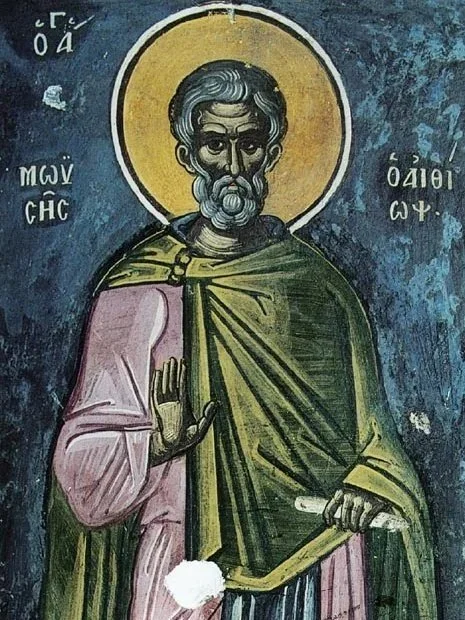
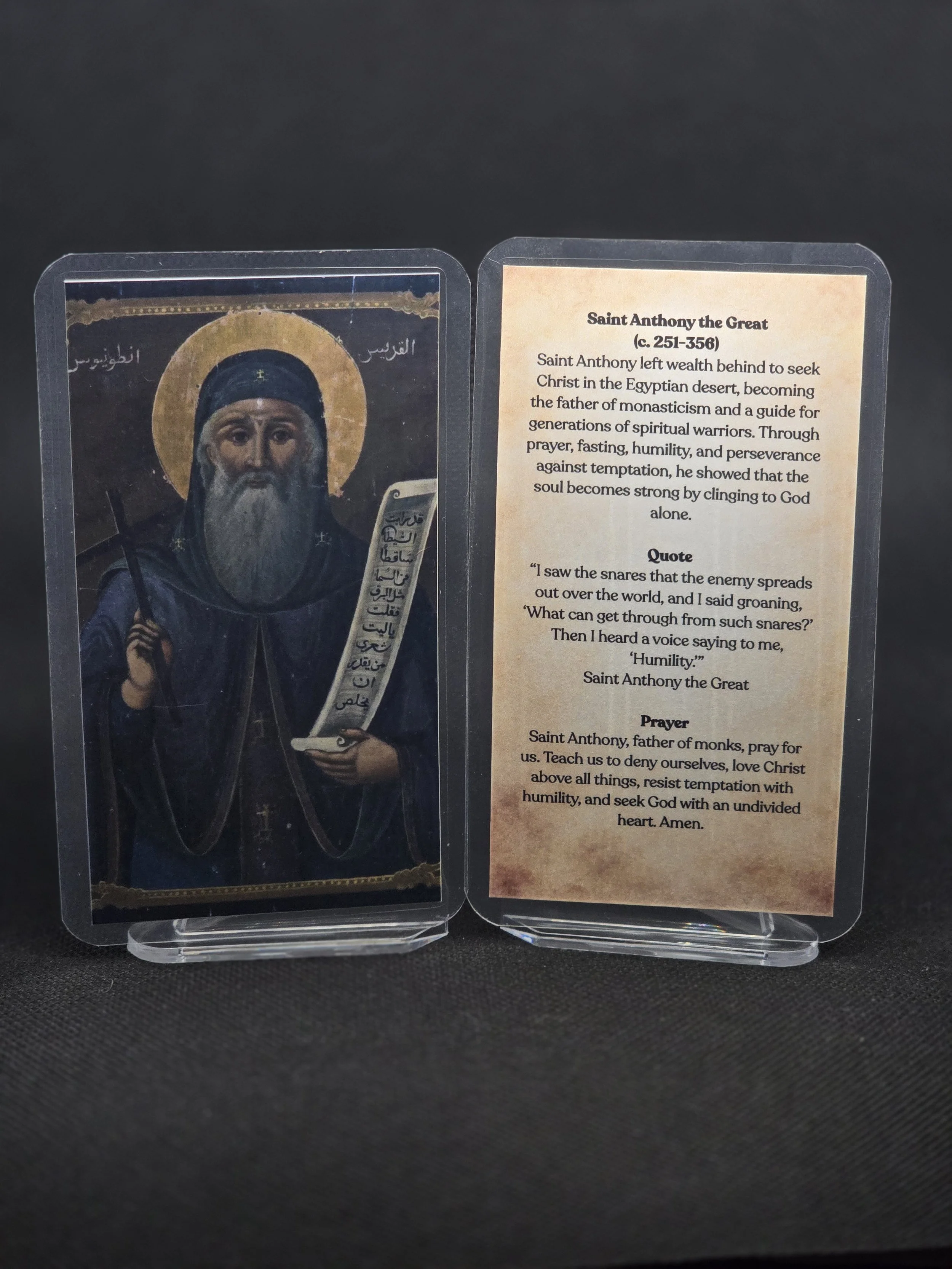
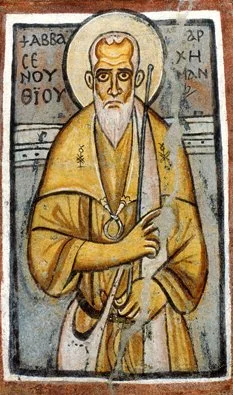
In Coptic iconography, Simon is consistently depicted as a one-eyed man, sometimes with a simple eyepatch, carrying a leather waterskin, the visual shorthand for his quiet ministry of carrying water to the sick and elderly before dawn each day. Unlike most venerated saints, he has no known tomb that was continuously honored across the centuries; his relics were lost to memory until their rediscovery in 1991, a gap of roughly a thousand years that itself echoes his final act in the story, disappearing rather than being celebrated.
Timeline
Complete Timeline of Saint Simon the Tanner and the Mokattam Miracle
- 953–975 ADAl-Mu'izz li-Din Allah reigns as Fatimid Caliph, having recently founded the new city of Cairo; he is known for hosting religious debates at his court.
- 975–978 ADAbraam the Syrian serves as the 62nd Pope of Alexandria, the historically attested Coptic Pope of this period.
- c. 979 ADPope Abraam wins a public debate against the converted vizier Yaqub ibn Killis, who seeks revenge by citing Matthew 17:20 and demanding proof that faith can move a mountain.
- c. 979 ADCaliph al-Mu'izz gives Pope Abraam three days to move the Mokattam Mountain or see all Egyptian Christians killed.
- c. 979 ADPope Abraam and the Coptic people of Cairo fast and pray for three days at the Hanging Church (Saint Mary's, al-Mu'allaqa).
- c. 979 ADOn the third night, the Virgin Mary appears to Pope Abraam in a vision and directs him to a one-eyed water carrier near the iron market gate.
- c. 979 ADPope Abraam finds Simon the Tanner, who explains his blinded eye and gives instructions for the procession and prayer to come.
- c. 979 ADBefore the Caliph and a gathered crowd, the mountain reportedly rises three times as the Pope and people pray, and Simon vanishes before he can be thanked.
- c. 979 ADTradition holds that Caliph al-Mu'izz was so moved that he decided to convert to Christianity; the Ma'moudiat al-Sultan baptismal font is built at the Church of Saint Mercurius.
- 10th centuryBishop Sawirus ibn al-Muqaffa, a contemporary of both the Caliph and the Pope, records the miracle in his History of the Patriarchs of the Coptic Church of Alexandria.
- Late 10th century onwardThe Coptic Orthodox Church permanently extends its Nativity Fast to 43 days, adding three days in commemoration of the miracle.
- 1940sFarmers displaced from Upper Egypt begin migrating to Cairo, eventually forming the Zabbaleen, Cairo's Coptic garbage-collecting community.
- 1969–1970The Cairo governorate relocates the Zabbaleen community to the base of the Mokattam hills.
- 1975Father Samaan Ibrahim begins ministering to the Zabbaleen and founds what becomes the Cave Church.
- 1976 onwardFollowing a fire in the settlement, the Zabbaleen begin hand-carving churches directly into the Mokattam mountainside.
- August 4, 1991A skeleton believed to be Saint Simon the Tanner's is discovered beneath the Hanging Church in Old Cairo during restoration work.
- TodayThe Monastery of Saint Simon the Tanner, the Cave Church, seats an estimated 15,000 to 20,000 worshippers, making it one of the largest churches in the Middle East, carved by hand into the very mountain the saint is said to have moved a thousand years earlier.
Devotional Prayer
A Prayer for Mountain-Sized Faith
O Lord, who answered the desperate faith of a whole people through the hands of a man nobody thought to look for, teach me to trust you the way Simon did, quietly, without needing anyone to know my part in it.
When the mountain in front of me feels immovable, when the ultimatum feels impossible, when three days feels like no time at all, remind me that you have never needed powerful people to accomplish powerful things. You have only ever needed faith the size of a mustard seed, and a heart willing to be used and then forgotten.
Through the prayers of Saint Simon the Tanner and the intercession of the Virgin Mary who once pointed a desperate Pope toward the very person who could help, move whatever stands between me and you, and give me the humility to disappear quietly into the crowd once it is moved.
A private devotional composition inspired by the traditional account of the Mokattam Mountain miracle. Not a liturgical text of the Coptic Church.
FAQ
Frequently Asked Questions About Saint Simon the Tanner
The Man Who Moved a Mountain and Asked for Nothing
Saint Simon the Tanner left behind no writings, no monastery he founded, no title, not even a grave anyone could visit for a thousand years. He left behind a single instruction to a frightened Pope, a mountain that moved in front of a caliph and a crowd, and a decision to disappear the moment credit might have come his way. Every year, when Coptic Christians around the world begin their Christmas fast three days earlier than everyone else, they are marking the anniversary of a faith so total it needed no name attached to it at all.
If your own mountain feels immovable right now, this is the saint whose story says otherwise: not because you need to be someone important, but because you might already be the humble, overlooked person faith is waiting to work through.
Get the Miracle of Mokattam Prayer Card →