Saint Gregory of Nyssa: Bishop, Cappadocian Father and Theologian of the Infinite God
The bishop who taught that the soul never stops growing toward God
At a Glance
- Born
- About 335, probably Caesarea in Cappadocia (UNCERTAIN; some give 331)
- Died
- After 394, place and date unknown (UNCERTAIN)
- Feast day
- January 10 in the Byzantine calendar; Western calendars vary, including March 9 in older books
- Known as
- Bishop of Nyssa, Cappadocian Father, brother of Saint Basil
- Family
- Son of Basil the Elder and Saint Emmelia; brother of Saint Macrina the Younger
- Veneration
- Ancient cult; no formal canonization date is recorded
- Who Was Saint Gregory of Nyssa?
- A Cappadocian Family of Saints
- From Rhetoric to the Church
- Bishop of Nyssa and Exile
- The Council of Constantinople
- His Major Writings
- The Life of Moses and the Endless Ascent
- A Pastoral and Social Voice
- Death, Controversy and Tradition
- Saint Gregory and the Eastern Churches
- Frequently Asked Questions
Who Was Saint Gregory of Nyssa?
Saint Gregory of Nyssa was a bishop and theologian of the fourth century who lived in Cappadocia, in what is now Turkey. Together with his older brother Saint Basil the Great and their friend Saint Gregory of Nazianzus, he is counted among the three Cappadocian Fathers. Their writings helped the early Church explain how God can be one in nature and three in persons.
He is also remembered as a mystical writer. In works such as the Life of Moses and the Homilies on the Song of Songs, Gregory describes the Christian life as a journey that never reaches an end, because God is infinite. Pope Benedict XVI gave a series of teachings on him and called attention to this idea.
Many details of his life are uncertain. We know much about his writings and his public controversies, but we do not know the exact dates of his birth and death. In this article, stories that depend on later tradition are marked TRADITION, and disputed points are marked UNCERTAIN.
A Cappadocian Family of Saints
Gregory was born into a wealthy Christian family in Cappadocia. His parents were Basil the Elder and Saint Emmelia. The year of his birth is usually given as about 335, though the Greek Orthodox Archdiocese gives 331. No birth record settles the question, so the date is UNCERTAIN.
He grew up with remarkable brothers and sisters. His oldest sister, Saint Macrina the Younger, became an ascetic who led a community at Annisa in Pontus. His older brother Basil became bishop of Caesarea and a leading defender of the Nicene faith. Another brother, Peter, later became bishop of Sebaste, and a third, Naucratius, chose a quiet life of service and died young.
Gregory did not study in the great schools in the way Basil did. He seems to have learned much from his family, from his own reading and from Basil, whom he later honored as his teacher. He became skilled in rhetoric and in philosophical argument, and he later used both to explain Christian doctrine.
From Rhetoric to the Church
Gregory was raised as a Christian, so there was no conversion from another religion. His path was a gradual turn from worldly ambition toward service of the Church. He began as a teacher of rhetoric, a career that disappointed some Christians who hoped he would give himself fully to the Church.
Some accounts say he first served as a reader in the Church and then returned to secular teaching. This is plausible, but the exact sequence of events is UNCERTAIN.
Gregory was probably married. Pope Benedict XVI speaks of him as having been married, and a letter of Gregory of Nazianzus mentions a woman named Theosebia. However, scholars disagree about whether she was Gregory's wife, his sister or a woman connected to his ministry. The safest statement is that he probably married, and the identity of his wife is UNCERTAIN.
Many people in his time were drawn to the ascetic life, and his family was among them. Later in life Gregory wrote On Virginity, a work praising a life given wholly to God. It shows that although he may have been married, he held the ascetic ideal in high honor.
Bishop of Nyssa and Exile
Around 372, Basil arranged for Gregory to become bishop of Nyssa, a small town in Cappadocia. Basil was trying to strengthen the Nicene party in a region where the emperor Valens favored rivals of the Nicene faith. Gregory did not begin as a skilled administrator. Basil sometimes rebuked him for his lack of practical sense, but he trusted him as a defender of the faith.
The political situation soon turned against Gregory. His opponents accused him of mismanaging Church funds and of irregularities in his appointment. A synod deposed him in 376, and he was forced to leave his see. These charges came in a tense political climate, and they should not be repeated as proven wrongdoing.
When Valens died in 378, Gregory was able to return to Nyssa. The people welcomed him. In the following year Basil died, and Gregory took a larger role in explaining and defending the theology they had shared.
This period shaped Gregory deeply. He moved from being the younger brother in Basil's shadow to a theologian with a voice of his own.
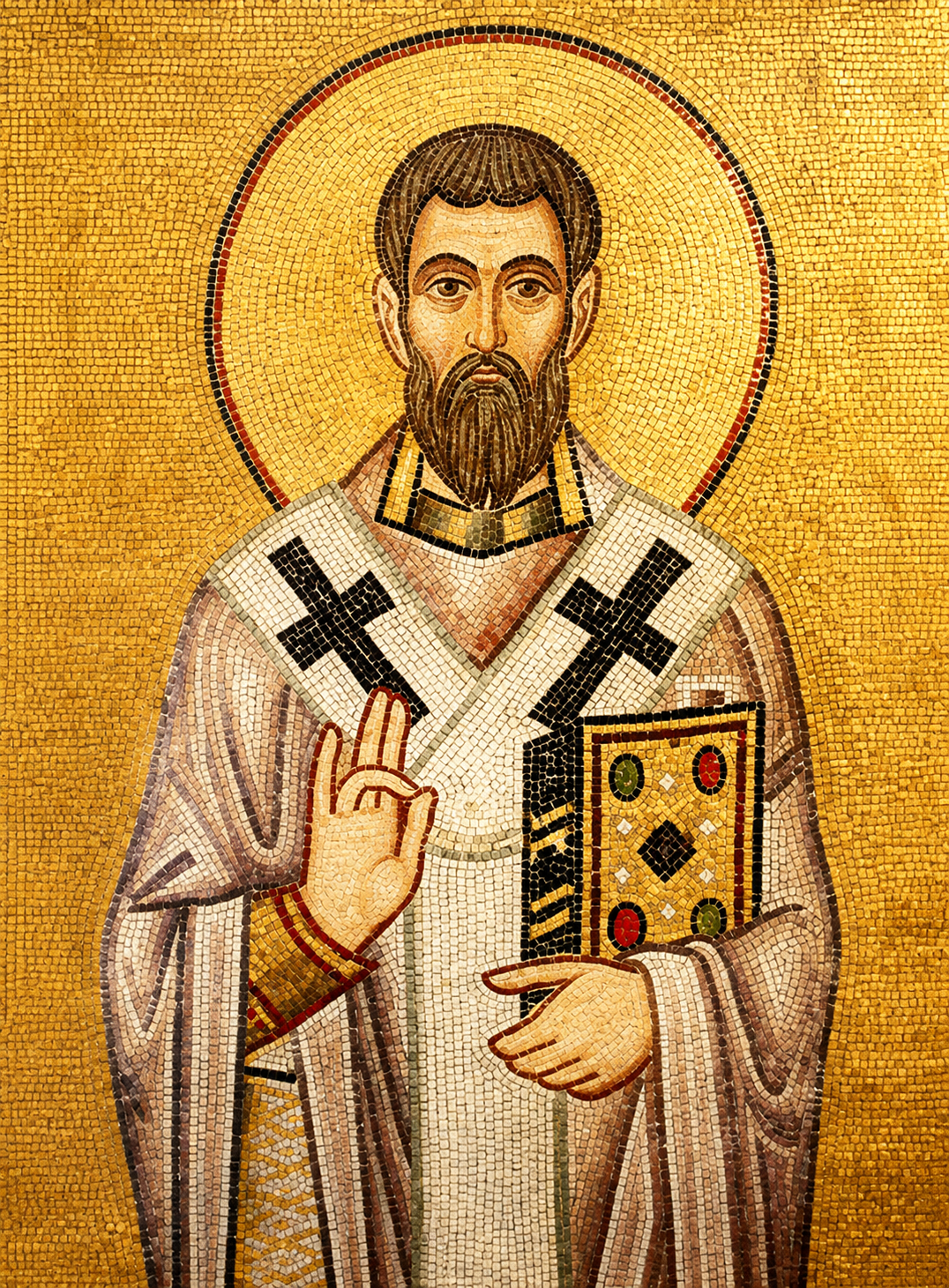
The Council of Constantinople
Gregory took a prominent part in the First Council of Constantinople in 381. The council reaffirmed the Nicene faith and clarified the confession of the divinity of the Holy Spirit. Gregory was among the leading Nicene bishops there, and later sources speak of him with great respect.
The records do not allow us to say exactly which formulas came from him. It would go beyond the evidence to attribute particular lines of the Creed to Gregory. What is well attested is his standing among the bishops and his role in defending the Trinitarian faith.
He also opposed Apollinarianism, which taught that Christ did not have a full human mind. Gregory argued that if Christ did not take on all of human nature, then human nature was not fully healed. This reasoning appears in several of his writings and became part of the larger Christian answer.
Gregory was also sent on missions for the Church, and he gave public speeches on important occasions. His last securely documented appearance was at a synod in Constantinople in 394. After that, the record is silent.
His Major Writings
Gregory left a large body of work. Against Eunomius defends Nicene teaching against Eunomius, who claimed that human reason could grasp the essence of God. Gregory replied that God is beyond all human concepts and that language about God always falls short.
On the Making of Man deals with the image of God in humanity. The Great Catechism, also called the Catechetical Oration, explains the Incarnation, redemption, baptism and resurrection to those teaching the faith. On Not Three Gods answers the charge that confessing Father, Son and Holy Spirit leads to belief in three gods.
His Homilies on the Song of Songs read the biblical love poem as a picture of the soul's longing for God. His Life of Macrina and the dialogue On the Soul and the Resurrection preserve what we know about his sister, as explained in our article on Saint Macrina the Younger.
Gregory also wrote homilies on the Beatitudes, on the Lord's Prayer and on caring for the poor. Together these show a writer who joined careful argument with pastoral warmth.
The Life of Moses and the Endless Ascent
The Life of Moses is probably Gregory's best known spiritual work. He reads the story of Moses as a picture of the soul's journey to God. The soul leaves Egypt, crosses the sea, climbs the mountain and enters the cloud where God is present but cannot be seen.
At the heart of the book is the idea that God is infinite. If God has no limit, then the soul can never reach a final point where it knows everything about him. Gregory draws on Saint Paul's words in Philippians about straining forward to what lies ahead. He teaches that perfection is not a place of rest but a movement into ever deeper love. Later writers call this idea epektasis.
This teaching shaped later Eastern Christian writers on prayer and contemplation. Scholars connect his influence with thinkers such as Pseudo-Dionysius and Maximus the Confessor. The University of Graz patristic resources also name Gregory Palamas among those later authors who stand within the same stream, though the exact lines of influence are debated.
For readers today, the message is simple and hopeful. We do not have to feel that we have failed because we have not reached the end of the spiritual life. The search for God is itself part of holiness.
A Pastoral and Social Voice
Gregory was not only a thinker. He was a bishop who preached to ordinary people. His homily On the Love of the Poor urges the wealthy to share with those in need. He insists that the poor are bearers of the image of God and that neglect of them is a failure of faith.
He is perhaps best known today for a passage in his fourth homily on Ecclesiastes, where he condemns slavery. He asks how a human being made in the image of God can claim to own another. David Bentley Hart has described the passage as unusual in ancient literature because it attacks the institution itself and not only the abuses within it.
It would be wrong to say that Gregory led a movement to end slavery in his time. His society continued to depend on it. His words stand as a strong statement of principle and a witness to how the faith can challenge social habits.
Gregory also wrote consolation and funeral speeches, including words for family and church leaders. These speeches show a bishop who knew grief and who spoke about the resurrection with tenderness.
Death, Controversy and Tradition
After 394, the record is silent. His death is often placed around 395, but the exact date and place are UNCERTAIN, and the location of his original tomb is not known. Relics attributed to him exist in various places, but we have no clear chain of custody back to the fourth century.
One long debate concerns his thoughts on the final restoration of all things, often called apokatastasis. Some passages seem to say that all creatures will in the end be healed and brought to God. Scholars disagree on how to read these passages. Morwenna Ludlow argues that he expressed universal restoration with real confidence, while other scholars read him more cautiously. The question is UNCERTAIN, and the Church has not treated Gregory as a heretic. He remains honored in the East and in the West.
There is a TRADITION recorded by the Greek Orthodox Archdiocese about his youth. According to the story, he fell asleep at a service honoring the Forty Martyrs of Sebaste, and the martyrs appeared in a dream and rebuked his lack of seriousness. This is a pious account and not a verified event.
He is also called the Father of Fathers in Eastern tradition. The origin of this title is uncertain, but it reflects the deep respect later generations felt for his writings. No formal canonization date is known. Like many saints of the early centuries, he was honored by the ancient Church long before formal processes existed.
Lord Jesus Christ, infinite and beyond all words, you called Saint Gregory to teach your Church. Give me a heart that does not rest in what I already know of you. Lead me from one beginning to another, and keep me humble in the search. Teach me to see your image in the poor. Through the prayers of your servant Gregory, have mercy on me and save me. Amen.
This prayer was written for this page. It is not an official liturgical text.
Saint Gregory and the Eastern Churches
Gregory lived before the division between East and West, and he belongs to the whole Church. In the Byzantine tradition he is commemorated on January 10, with hymns that praise his wisdom, humility and defense of the faith. Western calendars have used different dates, including March 9 in older books, and some local calendars differ.
For Eastern Catholics and Orthodox Christians, he is a source of the language for speaking about the Trinity, the limits of human knowledge of God and the nature of prayer. His teaching on the infinite God shapes the Eastern emphasis on mystery, silence and wonder.
He also reminds readers that the Church has always had room for difficult questions. His writing on universal restoration is debated. His teaching on the endless ascent is cherished. Honest study of Gregory means holding both facts together.
Pope Benedict XVI also presented him to Western Catholics as a model of theology joined to prayer, which shows how widely he is respected.
Frequently Asked Questions
A Journey Without End
Saint Gregory taught that the search for God never finishes and that this is the joy of faith. May this prayer card help you keep seeking.
View Prayer Card