Orthodoxy and the Religion of the Future: The Definitive Book Review
Book Review • Spiritual Discernment • Orthodox • Catholic • Protestant • UFOs & Demonology
Orthodoxy and the Religion of the Future: The Definitive Book Review
★★★★★Fr. Seraphim Rose wrote in 1975 that UFOs were demonic, New Age spirituality was preparing the way for the Antichrist, and that Christians had seventeen centuries of patristic ammunition to identify it all. Fifty years later, the U.S. Senate is confirming his thesis. This is that book’s complete review — and the one book you need to read before it.
In This Review
Why This Book Matters More Than Ever Right Now
In June 2023, David Grusch — a decorated U.S. intelligence officer — testified before the United States Congress under oath that the American government has retrieved non-human craft and, in his words, “non-human biologics.” In the months that followed, multiple military pilots testified on the record about encounters with objects that defy known physics. Official government terminology shifted from “unidentified aerial phenomena” to “non-human intelligence.” Senate hearing after Senate hearing put the question on the floor of the most powerful legislative body in the world: what are these things, and what do they want?
Fr. Seraphim Rose answered that question in 1975. Not approximately. Not speculatively. With the precision of a man who had read the Church Fathers in their original languages and understood what they were describing when they wrote about the beings they called the aerial spirits — the fallen angels who inhabit the atmosphere and whose entire purpose is the deception of human souls. He said: these things are real, they are not from planets, they are demons, and the culture that encounters them without the patristic tradition to identify them is spiritually defenseless before them.
Fifty years later, the world is exactly where he said it would be. The secular institutions that were supposed to protect us — government, science, the media — are all confirming the reality of the phenomenon and unable to identify its source. The spiritual institutions that were supposed to give it a framework — mainline Protestantism, progressive Catholicism, the new spirituality movements — have largely capitulated to the cultural assumptions that make the alien contact narrative plausible. And the one tradition that has the full seventeen-century toolkit to answer the question — Orthodox Christianity, and specifically the patristic tradition Fr. Rose drew on — is known by a tiny fraction of the people who need it most.
This book review exists to close that gap. Orthodoxy and the Religion of the Future is not an Orthodox book for Orthodox people. It is a Christian book for every Christian — and for every person who is watching what is happening in Washington and asking the question that none of the generals and none of the senators can answer.

Written in 1975 by Hieromonk Seraphim Rose of Platina, California — a man the Russian Orthodox Church Outside Russia is currently preparing to formally glorify as a saint — this is the most prophetically accurate Christian book of the 20th century. Its analysis of Eastern meditation, the charismatic movement, New Age spirituality, and UFOs as forms of demonic deception has grown more precise, not less, with every passing decade.
The chapter on UFOs alone — “Signs from Heaven: An Orthodox Christian Understanding of Unidentified Flying Objects” — is worth the price of the book. It is the only sustained Christian analysis of the UFO phenomenon built directly on patristic sources, and it anticipated every major development in UFO research and government disclosure by fifty years. If you are reading this because of what you are seeing in Senate hearings, this is the book that explains it.
About the Book & Its Author
Who Was Fr. Seraphim Rose — and Why Does His Authority Matter?
Eugene Dennis Rose was born in 1934 in San Diego, California, the child of a secular family with no religious commitments. He was, by every account, among the most intellectually gifted students of his generation — a philosophy student at Pomona College who went on to graduate studies at the American Academy of Asian Studies in San Francisco, where he immersed himself in Buddhism, Taoism, and the full breadth of Eastern religious thought. He was searching for a framework that could bear the full weight of human experience, and he was willing to follow the evidence wherever it led. What he found, at the end of a serious search through every major alternative, was Orthodox Christianity — and specifically the patristic tradition of the early Church Fathers, whose theological method he recognized as the most rigorous and historically grounded he had encountered.
He was tonsured as a monk in 1968, ordained to the priesthood in 1977, and died at the age of 48 in 1982 in Platina, California. He wrote with the speed and depth of a man who felt he was running out of time. Orthodoxy and the Religion of the Future, published in 1975, was one of the central products of that urgency. It was not written as an academic exercise. It was written as a warning — addressed to Orthodox Christians but applicable to every Christian who had eyes to see what was assembling itself in the spiritual landscape of the late 20th century.
The authority that makes this book worth reading fifty years after its publication is not institutional. It is the authority of a man who read the Church Fathers in their original languages, understood their method from the inside, and applied it with complete rigor to phenomena that every other Christian intellectual of his era was either dismissing or unable to categorize. Fr. Seraphim Rose was not a prophet in the sense of a man who claimed divine revelation. He was a theologian in the full patristic sense: a man who took the tradition seriously enough to let it speak for itself — and who discovered that when it did, it described the modern world with devastating accuracy.
Fr. Seraphim Rose is currently in the process of formal glorification as a saint by the Russian Orthodox Church Outside Russia. The Council of Bishops blessed the process of preparing his ecclesiastical glorification in May 2026. He was previously locally canonized in the Georgian Orthodox Church in 2023, and Metropolitan Neophytos of Morphou declared him a saint in 2022. The man whose analysis of UFOs and spiritual deception is the subject of this review is a man the Church is preparing to formally recognize as holy.
Before You Read This Book — Read This First
You Need to Read the Book of Enoch First. Here’s Why.
The single best way to maximize what you get from Orthodoxy and the Religion of the Future is to read the Book of Enoch immediately before it. Not after. Before. This recommendation is not casual — it is the key that unlocks the book’s deepest layer of argument.
The Book of Enoch is the ancient Jewish text, written between roughly 300 BCE and 100 CE and cited directly in the New Testament epistles of Jude and 2 Peter, that contains the most detailed account of the Watchers — the fallen angels who descended to earth, intermingled with humanity, transmitted forbidden knowledge, and whose offspring, the Nephilim, terrorized the antediluvian world. It was considered Scripture by many in the early Church. St. Jude quotes it by name. The early Church Fathers knew it, drew on it, and integrated its cosmology of the aerial realm into their own theology of demonic activity.
When Fr. Seraphim Rose writes about the aerial spirits — the fallen angels who inhabit the atmosphere, take on whatever form will most effectively deceive the person they are approaching, transmit false spiritual knowledge, and produce encounters that feel overwhelmingly real and divinely significant — he is drawing, through the patristic tradition, on a cosmological framework that Enoch established in detail three thousand years ago. The Watchers of Enoch and the aerial spirits of the Fathers are the same beings. The forbidden knowledge transmitted by the Watchers in Enoch and the forbidden knowledge transmitted in modern UFO encounters follow the same pattern. The feeling of being chosen, elevated, given a special cosmic mission — this is what the Watchers did to the people they approached in Enoch, and it is what the beings behind UFO encounters do to the people they approach today.
Reading Enoch first does not just provide background. It provides the source narrative for everything Fr. Rose is describing. When he writes that UFO phenomena match the patristic descriptions of demonic aerial activity with remarkable precision, the reader who has read Enoch understands that this is not a metaphor borrowed from an ancient text. It is a living tradition of documentation that runs unbroken from 300 BCE through the 4th-century desert fathers through the medieval hesychasts through Fr. Seraphim Rose in 1975 through the Senate hearings of 2023.
The parallel is specific enough to be disturbing. In Enoch, the Watchers:
Descend from the aerial realm — appearing from above, associated with light and flight. Modern UFO encounters: craft appearing from above, associated with light phenomena.
Transmit forbidden knowledge — astrology, divination, root-cutting, metalworking for warfare, the secrets of heaven. UFO encounters: “aliens” consistently transmit new spiritual teachings, advanced technology, cosmic secrets unavailable to ordinary humanity.
Produce hybrid offspring — the Nephilim, half-human, half-Watcher, beings of enormous power but corrupted nature. Abduction narratives: the single most consistent element of abduction accounts across decades is what contactees describe as hybrid programs and medical procedures aimed at procreation.
Leave recipients spiritually damaged — the generation that encountered the Watchers was the most corrupt in human history. UFO contactees: the most common long-term outcomes of close encounters are spiritual obsession, disrupted family life, psychological damage, and departure from traditional faith.
Take on the appearance of divine beings — the Watchers appeared as holy angels to those they deceived. UFO beings: consistently described as radiantly beautiful, overwhelmingly loving, apparently divine, communicating messages of cosmic peace and universal salvation.
This is not coincidence. It is pattern recognition — and the Church tradition that drew on Enoch to build its theology of demonic aerial activity, and that Fr. Seraphim Rose drew on to analyze UFOs, was doing exactly this kind of pattern recognition from within a tradition deep enough to recognize a three-thousand-year-old phenomenon when it reappeared in a new form. Read Enoch first. Then read Fr. Rose. The two books are one argument.

The Watchers and Nephilim Edition focuses precisely on the sections of Enoch most directly relevant to the patristic theology of aerial spirits that Fr. Seraphim Rose draws on — the account of the Watchers’ descent, their transmission of forbidden knowledge, and the birth and nature of the Nephilim. This is the most targeted edition for the reader who wants to understand the deep background of Orthodoxy and the Religion of the Future.
The Book of Enoch was considered Scripture in the early Church, quoted directly by St. Jude in the New Testament, and known to the Church Fathers who built the patristic theology of the aerial spirits. It provides the source narrative for every major element of the modern UFO phenomenon — the aerial descent, the transmission of forbidden knowledge, the hybrid program, the spiritual damage, the appearance of divine authority. Read this first. Read Fr. Rose second. These two books, taken together, are the most complete available analysis of the phenomenon now occupying the U.S. Senate.
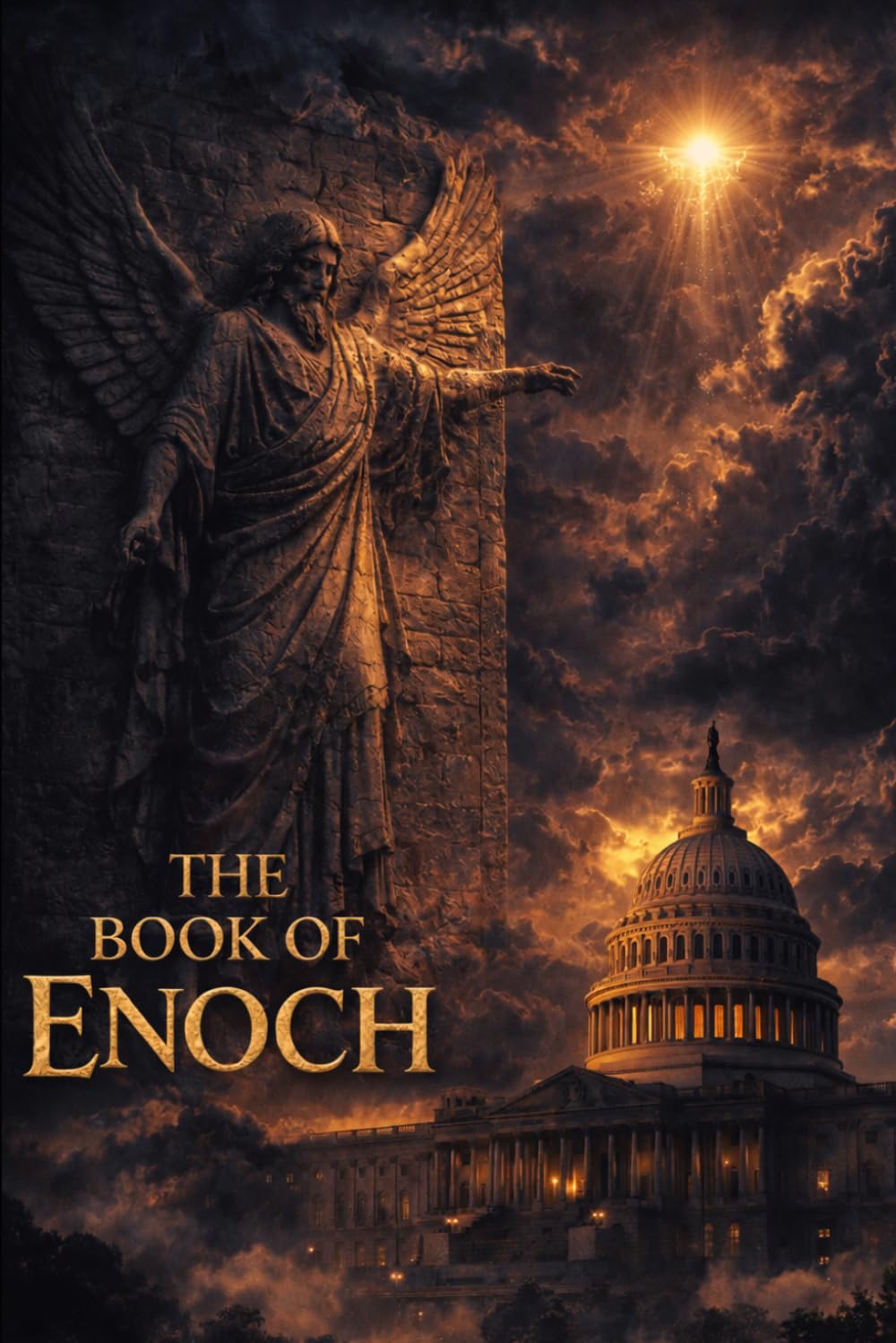
The Congressional Edition is the complete, scholarly edition of the Book of Enoch — providing the full text of the Enochic corpus with the academic apparatus needed for serious study. For the reader who wants to go beyond the Watchers and Nephilim sections into the full cosmological and eschatological framework of the book, this is the edition to own.
The patristic tradition Fr. Rose draws on in Orthodoxy and the Religion of the Future did not develop in isolation from the Enochic tradition — it developed partly out of it. Understanding the full scope of Enoch’s cosmology of the aerial realms, the astronomy of the fallen angels, and the eschatology of the Watchers’ final judgment gives the reader a much richer context for Fr. Rose’s argument. An excellent companion volume for those who want to go deep on the subject.
What the Book Covers
What Orthodoxy and the Religion of the Future Actually Says: A Chapter-by-Chapter Breakdown
Fr. Seraphim Rose did not set out to write a book about UFOs or yoga or the charismatic movement. He set out to describe something larger: the emergence, in the late 20th century, of a new global pseudo-religion assembling itself from the ruins of Christianity, the fragments of Eastern spirituality, and the hunger for transcendence in a secular culture that had abolished its traditional sources of the sacred. He called it the religion of the future — and he argued, from the patristic tradition, that its source was demonic and its destination was the religion of the Antichrist. The individual topics — yoga, UFOs, tongues-speaking, New Age channeling — were not the subject. They were the symptoms. The subject was the spiritual crisis of Western civilization, analyzed by a man who had both lived in it and found his way out of it into the oldest and most complete tradition of Christian discernment available.
Introduction: What Is the Religion of the Future?
Fr. Rose opens by identifying the phenomenon: a new spiritual hunger, post-Christian but deeply religious in its intensity, assembling itself from multiple sources and converging on a set of shared assumptions — that humanity is evolving spiritually, that the old religions are incomplete, that genuine spiritual experience is available through techniques and encounters that bypass the Church’s sacramental life, and that the next great spiritual development for humanity may come from beyond the earth. He situates this within the eschatological framework of the Church Fathers, who consistently identified the final apostasy as a false spirituality that would be more convincing, more experientially powerful, and harder to resist than any previous deception.
Chapter: Eastern Meditation, Yoga, and the Hesychast Counterfeit
Rose’s analysis of Eastern meditation and yoga is among the most sophisticated in Christian literature. He does not dismiss these practices as harmless relaxation techniques or cultural curiosities. He traces their theological foundations with precision and identifies the specific ways in which they mimic, and invert, the authentic Christian interior life of the hesychast tradition. The goal of Hindu and Buddhist meditation — emptying the self, dissolving the boundary between individual consciousness and the divine All — is a precise inversion of the Orthodox understanding of prayer, in which the self is not dissolved but purified, and the encounter with God preserves and elevates the human person rather than absorbing it into an impersonal divine substrate. He documents the spiritual damage that these practices cause when pursued seriously — not the placebo relaxation of Western secular adaptation, but the full Eastern tradition — and identifies that damage as a form of prelest: spiritual deception that presents itself as illumination.
Chapter: The Charismatic Movement and False Signs
This is the chapter that will be most challenging for Protestant readers, and it is the chapter that requires the most careful and fair-minded reading. Fr. Rose is not dismissing the reality of the Holy Spirit’s activity in the Church or denying that genuine spiritual gifts exist. He is applying the patristic test of discernment: what are the fruits? What is the spiritual trajectory of those who receive these experiences? What does the patristic tradition, which documented genuine gifts of the Spirit across centuries of verified sanctity, say about how to distinguish the genuine from the counterfeit? His answer, argued with detailed patristic citation, is that the charismatic experiences being widely reported in the 1970s — the tongues, the healings, the prophecies, the overwhelming sense of divine presence — do not exhibit the fruits the Fathers identified with genuine divine action: humility, repentance, grief for sin, deepening sobriety. They exhibit instead the markers of prelest: spiritual excitement, a sense of elevation, diminished attention to repentance, and a focus on the experience itself rather than on the God the experience is supposedly of. This is a serious argument that deserves serious engagement, not dismissal.
Chapter: “Signs from Heaven” — UFOs
This is the chapter that has brought the book to the attention of a new generation of readers — and with good reason. We review it in full in the next section.
Chapter: The Emerging World Religion and Ecumenism
Fr. Rose traces the convergence of the various threads — Eastern spirituality, charismatic ecstasy, UFO contact, New Age channeling — toward a common destination: a global pseudo-religious framework that will provide the spiritual atmosphere for the final apostasy described in the New Testament. He is not arguing conspiracy theory. He is doing ecclesiology: identifying the theological trajectory of visible trends and following them where they logically lead. His conclusion — that the ecumenical movement, in its most radical form, is preparing not the unity of the Church but the unity of a false religion — is one that many Orthodox, Catholic, and Protestant thinkers have since echoed, though rarely with his patristic depth or his prophetic precision.
The UFO Chapter
“Signs from Heaven” — The UFO Chapter That Anticipated Everything
The chapter titled “Signs from Heaven: An Orthodox Christian Understanding of Unidentified Flying Objects” is the most important piece of Christian writing on the UFO phenomenon ever produced, and it is not close. Fr. Rose wrote it in 1975, before the major wave of abduction narratives, before Whitley Strieber’s Communion, before Jacques Vallee’s most influential work, before any government acknowledgment of the phenomenon’s reality, and before the Senate hearings of 2023 in which decorated military officers testified under oath about non-human intelligence. Everything he predicted has come true. Everything he warned against has happened. Everything he prescribed as protection has proven, in retrospect, to be exactly right.
His argument in this chapter is structured in three parts. First, he establishes that the UFO phenomenon is real — not a mass hallucination, not misidentified aircraft, not a hoax. He takes the encounter testimony seriously and treats it with the same rigor he would apply to any other category of spiritual experience documented by human observers. Second, he applies the patristic taxonomy of demonic activity to the documented characteristics of UFO encounters and shows that the match is precise and comprehensive. The shape-shifting, the psychological manipulation, the transmission of spiritually subversive messages, the sense of being chosen for a cosmic mission, the mimicry of divine experience, the lasting spiritual damage to recipients — all of these are documented characteristics of demonic encounter in the patristic literature, and all of them are also documented characteristics of UFO encounters in the secular research literature. Third, he draws the pastoral conclusion: the UFO phenomenon is a sign to Orthodox Christians, and to all Christians, to “walk all the more cautiously and soberly on the path to salvation.”
What makes the chapter remarkable is not its conclusions — though the conclusions are correct — but its method. Fr. Rose does not bring a pre-existing hostility to the material. He reads the secular UFO research with the same careful attention he brings to the Fathers. He quotes Jacques Vallee. He quotes John Keel. He quotes the direct testimony of contactees. He takes all of it seriously. And then he shows, methodically, why none of it can be explained by the extraterrestrial hypothesis, and why all of it is explained with complete precision by the patristic account of the aerial spirits.
John Keel, whose research Fr. Rose cites directly, wrote that “dabbling with UFOs can be as dangerous as dabbling with black magic.” He arrived at this conclusion through empirical research, with no theological framework to explain it. Fr. Rose quotes this as confirmation of what the Fathers had documented in the 4th century: these encounters are spiritually dangerous. The person who approaches them with curiosity and no spiritual armor is in genuine danger. The tradition that developed that armor — the Jesus Prayer, the sacraments, the guidance of a confessor, the practice of humility and sobriety — is the only real protection.
“The UFO phenomenon is a sign to Orthodox Christians to walk all the more cautiously and soberly on the path to salvation, knowing that we can be tempted and seduced not merely by false religions, but even by seemingly physical objects which catch the eye.”— Fr. Seraphim Rose, Orthodoxy and the Religion of the Future, 1975
For Catholic Readers
What Catholics Need to Know About This Book
Orthodoxy and the Religion of the Future is not an anti-Catholic book. It does not engage in sectarian polemic. Fr. Seraphim Rose was deeply formed by the patristic tradition that is the common heritage of both Orthodox and Catholic Christianity, and the analytical framework he applies to modern spiritual phenomena is one that any Catholic theologian formed in the same tradition can recognize and use.
The phenomena Fr. Rose analyzes — the infiltration of Eastern meditation and yoga into Christian practice, the rise of the charismatic movement, the spread of New Age spirituality, the UFO phenomenon — are as present in Catholic culture as in any other. The Vatican’s 2003 document Jesus Christ, the Bearer of the Water of Life addressed the New Age’s infiltration of Catholic life and identified many of the same phenomena Fr. Rose analyzed in 1975. The same patristic discernment tradition that Fr. Rose draws on — the writings of St. John Chrysostom, St. Basil the Great, St. John Cassian, St. Gregory the Great — is the common inheritance of both traditions.
Catholic readers will find in this book the most rigorous available application of patristic discernment principles to the specific spiritual crises of the modern era. The theology of prelest — spiritual deception — has its Catholic equivalents in the discernment tradition of St. John of the Cross and the Carmelite school, and the parallels are close enough that Catholic readers will recognize the concern even if the terminology is unfamiliar. The book’s treatment of UFOs, in particular, is directly applicable to the pastoral challenge facing any Catholic priest whose parishioners are being drawn into alien contact spirituality — a challenge that is not hypothetical in 2025.
One caveat: Fr. Rose’s treatment of certain Marian apparitions will be challenging for some Catholic readers. He applies the same patristic discernment criteria to all reported supernatural phenomena, including some Catholic apparitions, and his conclusions will not always align with official Catholic positions. This section should be read as a contribution to the discernment conversation, not as a definitive judgment. The core argument of the book — that the modern world is under assault by a sophisticated demonic deception and that the patristic tradition is the most complete available tool for identifying and resisting it — is one that any serious Catholic can engage with on its merits.
For Protestant Readers
What Protestants and Evangelicals Need to Know About This Book
If you are a Protestant or Evangelical Christian who is serious about spiritual warfare, biblical discernment, and the defense of orthodox Christianity against its current assailants, this book belongs on your shelf. You will not agree with everything in it. You will find some of its ecclesiological assumptions challenging. But the analytical framework Fr. Rose brings — and the specific application of that framework to the phenomena that are currently destabilizing Christian faith across all denominations — is irreplaceable.
The biblical foundation of Fr. Rose’s argument is entirely accessible to any Protestant who takes scripture seriously. His central proof text is Ephesians 6 — St. Paul’s warning about the “prince of the power of the air” and the “spiritual forces of evil in the heavenly places.” His cosmological framework for understanding UFOs as the activity of these aerial spirits is directly continuous with what Paul is describing. The Book of Enoch, which Fr. Rose draws on implicitly through the patristic tradition, is explicitly cited in Jude and 2 Peter — books in the Protestant canon. This is not exotic Eastern theology. It is the biblical worldview, taken seriously and applied to the present.
The chapter on the charismatic movement will require the most careful and patient reading from Protestant readers who come from charismatic traditions. Fr. Rose is not denying the Holy Spirit or the legitimacy of spiritual gifts. He is applying the patristic test that James articulated: “wisdom from above is first pure, then peaceable, gentle, open to reason, full of mercy and good fruits, impartial and sincere” (James 3:17). His argument is that the charismatic experiences he is analyzing — specifically in their late-20th-century mass-movement form — do not consistently produce these fruits, and that the patristic tradition has a detailed explanation for why spiritually powerful experiences can fail the fruit test. This is worth engaging seriously, not dismissing.
For Evangelicals researching the Nephilim, the Watchers, and the biblical background of UFO phenomena — a topic of significant interest in Evangelical eschatological circles — this book, combined with the Book of Enoch, provides the most historically and theologically grounded analysis available. Fr. Rose builds the same case that many Evangelical researchers have independently built, but from within a patristic tradition seventeen centuries deep rather than from the 19th-century dispensationalist framework most Evangelical end-times literature draws on. The conclusions are strikingly similar. The historical depth is orders of magnitude greater.
Key Quotes
Key Quotes from Orthodoxy and the Religion of the Future
“The new 'spiritual' experiences being increasingly reported in our times — 'out-of-body' travel, contact with 'beings of light,' apparitions of the dead, 'spiritual healings,' and the like — are perfectly in accord with the patristic understanding of the activity of fallen spirits, who are able to produce just such experiences in those who are open to them.”— Fr. Seraphim Rose, Orthodoxy and the Religion of the Future
“The demons, who are fallen angels and therefore possess an intelligence above the human, are quite capable of producing seemingly miraculous effects which are indistinguishable from true miracles, to the person who has no experience in discerning spiritual phenomena.”— Fr. Seraphim Rose, Orthodoxy and the Religion of the Future
“In our own times, the devil is not only 'walking about as a roaring lion seeking whom he may devour' (I Peter 5:8) — he is also presenting himself as an angel of light (II Cor. 11:14) in the many deceptive forms of the contemporary 'charismatic' and occult revival, which are but the latest flowering of the timeless desire of fallen spirits to be worshipped as gods.”— Fr. Seraphim Rose, Orthodoxy and the Religion of the Future
“Let us be sober and attentive, O brethren; let us see what a trial awaits us. The times demand that we know clearly what is from God and what is from the devil.”— Fr. Seraphim Rose, Orthodoxy and the Religion of the Future, citing St. Paisios Velichkovsky
Who Should Read This
Who Should Read This Book — and Who Cannot Afford Not To
Every person reading this review who is watching the UFO disclosure process unfold and asking what it means needs this book. Every person who has a family member drawn into alien contact spirituality, channeling, or New Age practice needs this book. Every priest, pastor, or minister who counsels people on spiritual experience and spiritual discernment needs this book. Every parent raising children in a culture saturated with alien content — from Communion to Skinwalker Ranch to congressional testimony — needs this book. Every person who has ever wondered whether the spiritual experiences being reported in mass quantities by their neighbors are what they appear to be needs this book.
The book is demanding. It assumes a level of theological seriousness that is not common in popular Christian publishing. Fr. Rose does not write for people who want to be reassured. He writes for people who want to know the truth and are willing to follow the argument wherever it leads. The patristic citations are real, the theological analysis is deep, and the pastoral conclusions are practical and specific. This is a book you read with a pen in your hand, not a book you skim.
The reader who comes to it fresh, without the Orthodox background Fr. Rose assumes, will benefit enormously from reading the Book of Enoch first — as outlined above — and from having a good study Bible at hand to follow the scriptural citations. The reader who brings the book a basic familiarity with the Gospels, the Pauline epistles, and a willingness to take the patristic tradition seriously will find it one of the most clarifying and practically useful books they have ever read on the subject of spiritual discernment.
For the first-person testimony of canonized Orthodox saints on UFOs and alien encounters — including St. Gabriel Urgebadze, St. Paisios, and St. Porphyrios — see our companion article: What the Saints Said About Aliens and UFOs →
The most prophetically accurate Christian book of the last century. Written in 1975. Confirmed by fifty years of subsequent history. The book that explains what the Senate cannot. Read the Book of Enoch first. Then read this. Keep both books.
Frequently Asked Questions
Orthodoxy and the Religion of the Future — Questions Answered
The Recommended Reading Order
Read the Book of Enoch first — Watchers and Nephilim Edition. Let the ancient account of the Watchers sink in. Then read Orthodoxy and the Religion of the Future. By the time Fr. Rose describes the aerial spirits and their activity in the modern world, you will already know who he is talking about. These two books, taken together, are the most complete available analysis of what the U.S. Senate is now calling “non-human intelligence” — and the most practical guide to what every Christian should do about it.
Book of Enoch: Watchers Edition → Book of Enoch: Congressional Edition → Orthodoxy & Religion of the Future →