Padre Pio and Aliens: What He Actually Said
Catholic Saints • Discernment • A Quote Everyone Repeats and Almost Nobody Sources
Padre Pio and Aliens: What He Actually Said
A single sentence about "other beings" on "other planets" has circulated online for decades, attributed to one of the most extraordinary mystics of the twentieth century. Almost nobody sharing it knows where it actually comes from, or what it would mean if it is genuine. Here is the real source, the real man behind it, and why his own life is a far better answer to the alien question than the quote itself.
Padre Pio and the Aliens Quote: At a Glance
- Who He Was
- Francesco Forgione (1887–1968) • Capuchin Franciscan friar • Canonized 2002
- Best Known For
- Visible stigmata for 50 years • Bilocation • Reading souls in confession
- The Quote
- "On other planets other beings exist who did not sin and fall as we did"
- Source of the Quote
- Posthumous memoir by Don Nello Castello, published 1974, six years after his death
- Textual Reliability
- Uncertain • No contemporary recorded source; treat as plausible attribution, not settled fact
- What the Quote Is NOT About
- UFOs, spacecraft, or visitors to Earth • It concerns unfallen rational creatures elsewhere in creation
- His Lifelong Combat
- Extensively documented physical demonic attacks, witnessed by fellow friars
- Church Scrutiny
- Investigated repeatedly by Vatican authorities during his lifetime before canonization
The Question People Keep Typing Into Google
People keep searching for this specific combination of words: Padre Pio and aliens. Did Padre Pio believe in aliens. What did Padre Pio say about aliens. The pattern shows up again and again, which tells you something worth pausing on before diving into the answer itself. A saint who died in 1968, decades before "UFO disclosure" became a mainstream phrase, has become one of the most frequently cited Catholic voices in a conversation he never had any way of anticipating in the terms we now use.
The reason is a single sentence, repeated across thousands of websites, forum posts, and social media captions, almost always presented with total confidence and almost never with a source attached. This article exists to actually supply that source, examine it honestly, including its real weaknesses, and then do something most of the pages repeating the quote never bother to do: look at the extraordinary, extensively documented life of the man himself, because Padre Pio's biography turns out to be a far more useful guide to this whole subject than one contested sentence ever could be.
Part II
Who Was Padre Pio?
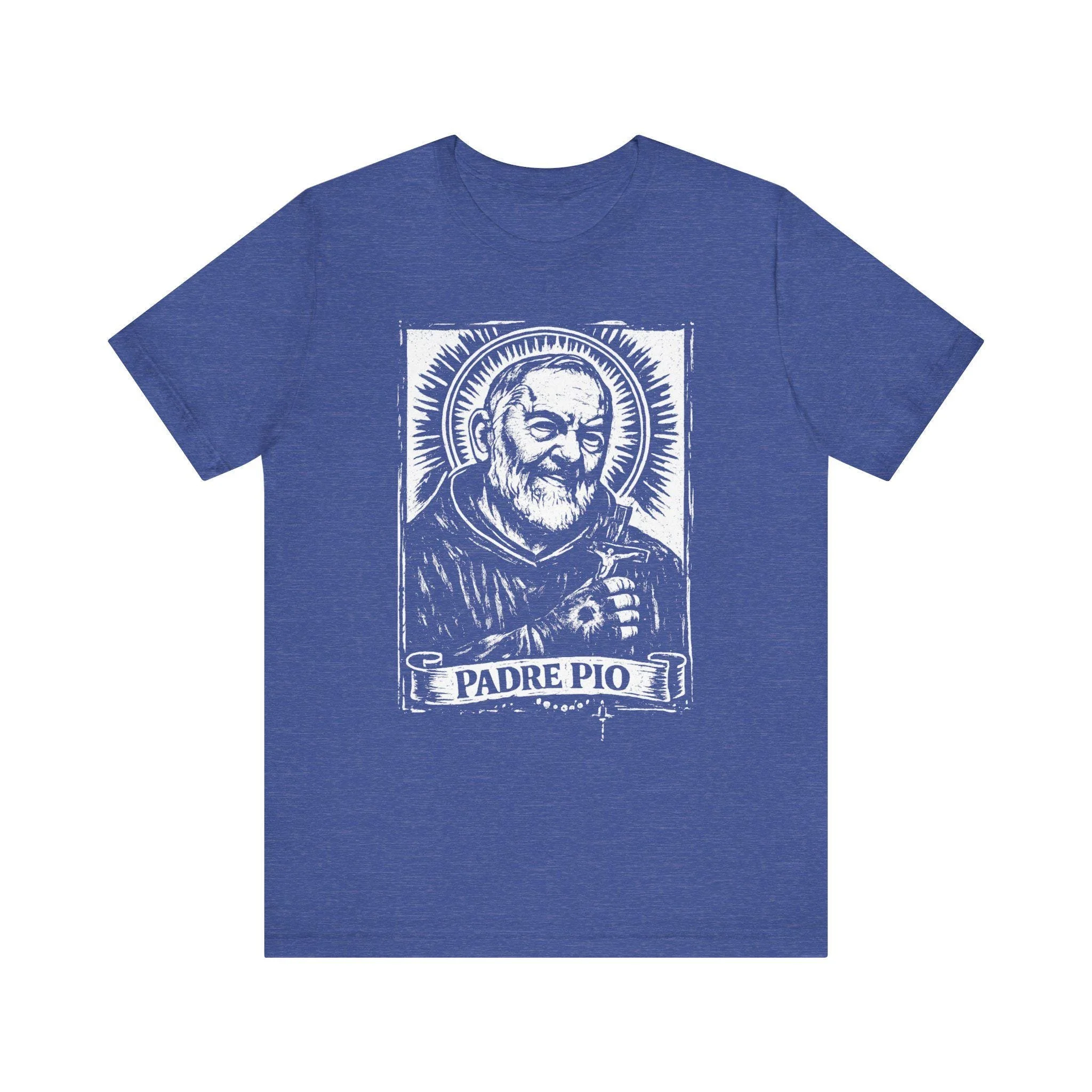
Francesco Forgione was born in 1887 in the small southern Italian town of Pietrelcina, entered the Capuchin Franciscan order as a young man, and was ordained a priest in 1910, taking the religious name Pio. In 1918, while praying before a crucifix, he received the stigmata, the visible wounds of Christ's crucifixion appearing spontaneously on his own body, and would bear them, bleeding and painful, for the remaining fifty years of his life, longer than any other confirmed stigmatist in the history of the Church. Doctors examined the wounds repeatedly across those decades and were unable to offer a natural medical explanation for their persistence.
He spent virtually his entire priesthood at the monastery of San Giovanni Rotondo in the mountains of southern Italy, where he became one of the most sought-after confessors of the twentieth century, drawing pilgrims from around the world who would wait, sometimes for days, for the chance to confess to him. He died in 1968 at the age of eighty-one, and his cause for canonization moved forward with unusual speed given the scale of documented testimony surrounding his life. Pope John Paul II canonized him a saint in 2002, before an estimated crowd of hundreds of thousands in Saint Peter's Square, one of the largest canonization gatherings the modern Church has seen.
Part III
The Two Gifts That Made Him a Living Test Case
Two phenomena associated with Padre Pio place him at the very center of any serious conversation about discerning the extraordinary, because both were witnessed repeatedly, by multiple independent parties, across decades, rather than resting on a single contested report. The first is bilocation: credible, multiply attested accounts describe Padre Pio appearing to people in locations far from San Giovanni Rotondo while witnesses at the monastery simultaneously placed him in choir or in his cell. Some of the more striking accounts involve soldiers and airmen during the Second World War who described encountering a bearded friar at moments of danger, later identifying him from photographs, despite Padre Pio never having left Italy.
The second is his widely reported gift of reading souls in the confessional. Countless penitents, across a priesthood that spanned five decades, described arriving to confess and finding that Padre Pio already seemed to know the specific sins they had come to disclose, at times refusing absolution outright until the person admitted something they had deliberately, and often shamefully, left unspoken. This was not a gentle parlor trick offered to comfort visitors. By numerous accounts it was often uncomfortable, even severe, precisely because it left no room for a penitent to manage or soften what they were confessing.
Both gifts made Padre Pio one of the most closely watched, most formally investigated mystics of the modern era. Vatican authorities subjected him to repeated periods of scrutiny and restriction during his own lifetime, including years in which his public priestly ministry was significantly curtailed pending investigation. That level of sustained institutional scrutiny, freely submitted to over decades without his phenomena ever being definitively debunked, is itself a data point worth remembering when this article turns, later on, to the question of how genuine holiness responds to being tested.
Part IV
The Nightly War: His Documented Combat With the Devil
Less discussed than the stigmata, but arguably just as significant for this article's purposes, is the extensive testimony surrounding Padre Pio's direct combat with demonic forces. Fellow friars at San Giovanni Rotondo repeatedly reported hearing sounds of violent struggle coming from his cell late at night, crashes, shouting, the noise of a physical fight, and would later find him bruised, exhausted, and visibly injured, with no natural explanation available for the marks left on his body. Padre Pio himself spoke of these encounters as an ordinary, if severe, feature of a life devoted seriously to prayer, describing being physically assaulted by what he understood without hesitation to be demonic attack, provoked, he believed, precisely by the effectiveness of his priesthood against the powers he was fighting.
This detail matters enormously for how his life should actually be read in relation to the modern UFO conversation. A man this deeply, this physically, this repeatedly engaged in direct spiritual warfare against demonic forces is not a naive or credulous witness on the subject of what deceiving spirits are capable of. He is, if anything, one of the most qualified witnesses the modern Church has produced, someone who did not theorize about demonic activity from a safe academic distance but who bled from it, regularly, for years, in full view of the community around him.

Part V
What He Actually Said About Life on Other Planets
Here, finally, is the quote itself, in its most complete circulating form. Asked whether beings on other worlds might exist, Padre Pio is reported to have answered: what else, do you think there are no other beings, the Lord certainly did not limit His glory to this small earth, and on other planets other beings exist who did not sin and fall as we did.
On other planets other beings exist who did not sin and fall as we did.Attributed to Padre Pio, Don Nello Castello memoir, 1974
Honesty about sourcing matters here, and this site would rather tell you the uncomfortable part than let the quote do more work than it has actually earned. The statement does not come from a homily, a written letter, or an interview conducted and recorded during Padre Pio's own lifetime. It comes from a memoir published in 1974 by Don Nello Castello, six years after Padre Pio's death, recounting a private conversation from memory. That does not make the quote false. Padre Pio was, by every account, an informal and direct conversationalist who said a great many memorable things in private that were later recorded by those who knew him. But it does mean the quote sits at a real distance from a contemporary, independently verifiable source, and any honest treatment of it has to say so plainly rather than repeating it with the false confidence so much of the internet gives it.
Part VI
What the Quote Actually Means, If Genuine
Even granting the quote its most charitable reading, it is worth being precise about what it actually claims, because popular repetition has frequently stretched it well past its own words. Padre Pio is not reported to have said anything about spacecraft, sightings, visitations, or contact of any kind. The statement, if genuine, is a claim about the scope of creation itself: that God's glory was not exhausted by a single small planet, and that other rational creatures may exist elsewhere in the universe who never underwent a fall comparable to Adam and Eve's, beings who, in other words, may still dwell in the kind of original righteousness humanity lost in Eden.
That is a theologically serious and, within Catholic tradition, entirely permissible speculation. It has nothing whatsoever to do with the question this site's other coverage has focused on: whether the specific phenomenon of reported UFO sightings and alien contact experiences represents benevolent visitors, misidentified natural phenomena, or, as Fr. Seraphim Rose and others have argued at length, a demonic deception dressed in technological costume. Treating Padre Pio's quote as an endorsement of that latter, entirely different question is a conflation the quote itself does not support, however often it gets deployed that way online.
Part VII
Applying the Test to Padre Pio Himself
This site has already laid out, in detail, the five-question test the Church has used for centuries to evaluate anything extraordinary that asks to be trusted: whether it confesses Christ fully, whether it produces humility or pride, whether it leads toward the Church or away into isolation, whether its message holds steady over time, and whether it welcomes outside scrutiny or resists it. It is worth actually running Padre Pio's own extraordinary life through that same test, rather than simply asserting his holiness, because the exercise shows exactly what a genuine case looks like next to the pattern this site has documented in modern contact narratives.
- Did He Confess Christ, Fully and Without Evasion?Unambiguously. His entire priesthood centered on the sacraments, the Mass, and the confessional, with Christ, not himself, as the constant object of attention.
- Did His Gifts Produce Humility, or a Sense of Being Chosen?By every account, humility. Padre Pio was famously uncomfortable with the attention his stigmata and other phenomena drew, and repeatedly redirected visitors away from himself and toward confession and the sacraments.
- Did He Lead People Toward the Church, or Toward Isolation?Toward the Church, decisively. Pilgrims came to San Giovanni Rotondo and were sent back to confession, the Mass, and ordinary parish life, not into a private following built around Padre Pio personally.
- Did His Life and Witness Hold Steady Under Decades of Testing?For over fifty years, under repeated formal Vatican investigation, without his core phenomena ever being discredited.
- Did He Welcome Scrutiny, or Resist It?He submitted to extensive, sometimes restrictive, Church oversight throughout his life without rebellion, precisely the opposite of the secrecy and resistance to outside testing this site has documented in modern contact experiences.
Padre Pio passes this test as decisively as any modern figure in Church history, which is exactly why his canonization followed the extraordinary documentation of his life rather than in spite of it. That is the real lesson his story offers this conversation, not a single contested sentence about other planets, but a complete, well-tested example of what genuine holiness looks like when it is subjected to exactly the kind of scrutiny this site has argued every extraordinary claim deserves.
FAQ
Frequently Asked Questions
A Sentence Everyone Repeats. A Life Almost Nobody Reads.
Padre Pio's attributed words about unfallen worlds will keep circulating, sourced or not, because a good quote travels faster than a careful footnote. But the man's actual life, tested for decades under direct Church scrutiny, marked by fifty years of the stigmata, and scarred by open combat with the enemy this entire subject keeps circling back to, offers something far more useful than a single contested sentence: a complete, verified example of what genuine holiness looks like when the extraordinary is finally, patiently, put to the test.
Aliens and Demons: Discerning the Great Deception puts the same test to the phenomenon our own century cannot stop discussing.
Get Aliens and Demons on Amazon →