Saint Paisios and Aliens: What the Athonite Elder Said
Orthodox Saints • Mount Athos • Discernment • A Direct Answer From a Trusted Elder
St. Paisios of Mount Athos and Aliens: What He Actually Said
Long before congressional hearings, before "disclosure" was a household word, a barefoot monk on a mountain in Greece was already being asked whether UFOs were real. His answer was not vague, not diplomatic, and not hedged for a modern audience. It was one of the most direct statements any canonized saint has made on the subject, and it came from a man whose gift for seeing clearly into difficult questions was tested for decades before the Church ever raised him to the altars.
St. Paisios and the UFO Question: At a Glance
- Who He Was
- Arsenios Eznepidis (1924–1994) • Greek Orthodox monk, Mount Athos • Canonized 2015
- His Direct Statement
- "You should know that these are all demonic things, which take various forms. There is no life on another planet!"
- Independent Confirmation
- Elder Porphyrios of Kavsokalyvia gave a nearly identical answer, separately
- Best Known For
- Clairvoyance • Direct spiritual counsel • Decades of guidance to pilgrims from around the world
- Canonized By
- The Ecumenical Patriarchate of Constantinople, 2015
- His Broader Teaching
- Watchfulness, unceasing prayer, and trust in God rather than fear of the unknown
- Examined at Length In
- Aliens and Demons: Discerning the Great Deception
The Question Everyone Asks About This Elder
Few figures in modern Orthodox Christianity are searched, quoted, and asked about as often as St. Paisios of Mount Athos, and in recent years one of the most common questions attached to his name has nothing to do with fasting, prayer ropes, or the Jesus Prayer. It is simply this: what did Paisios say about aliens. The question gets asked constantly, in forums, in comment sections, in casual conversation among people who have never read a word he actually wrote, because the rumor of a direct answer from a canonized Orthodox saint is compelling enough to travel on its own.
Unlike some of the quotes that circulate in this general subject area, this one is not textually shaky. St. Paisios's answer on UFOs is well documented, consistent across multiple independent accounts of his spiritual counsel, and corroborated by a nearly identical answer given separately by another widely venerated Athonite elder of the same generation. This article gives you that answer in full, the man behind it, and why his particular combination of spiritual authority and blunt honesty makes this one of the most important single statements in the entire modern Christian conversation about UFOs.
Part II
Who Was St. Paisios of Mount Athos?
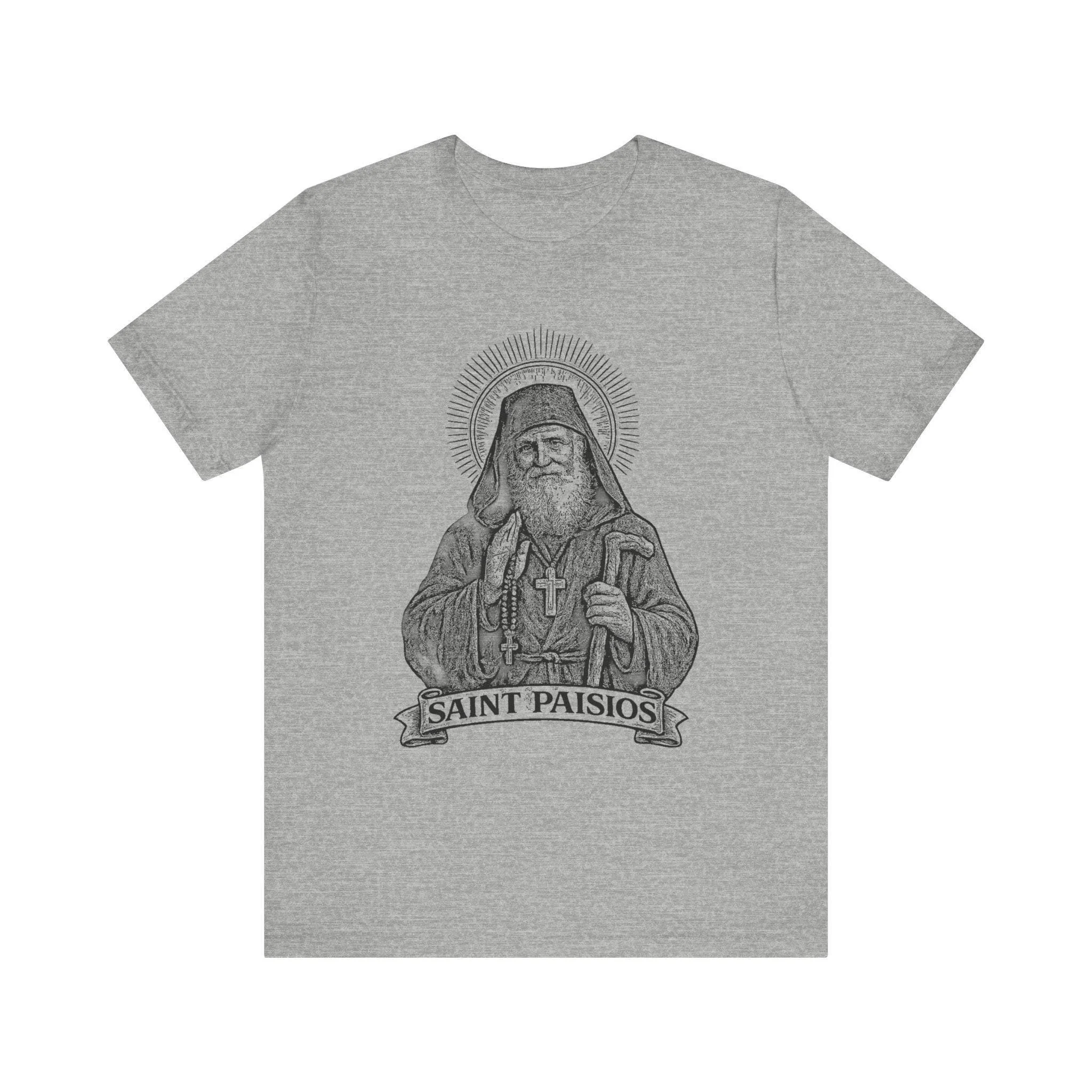
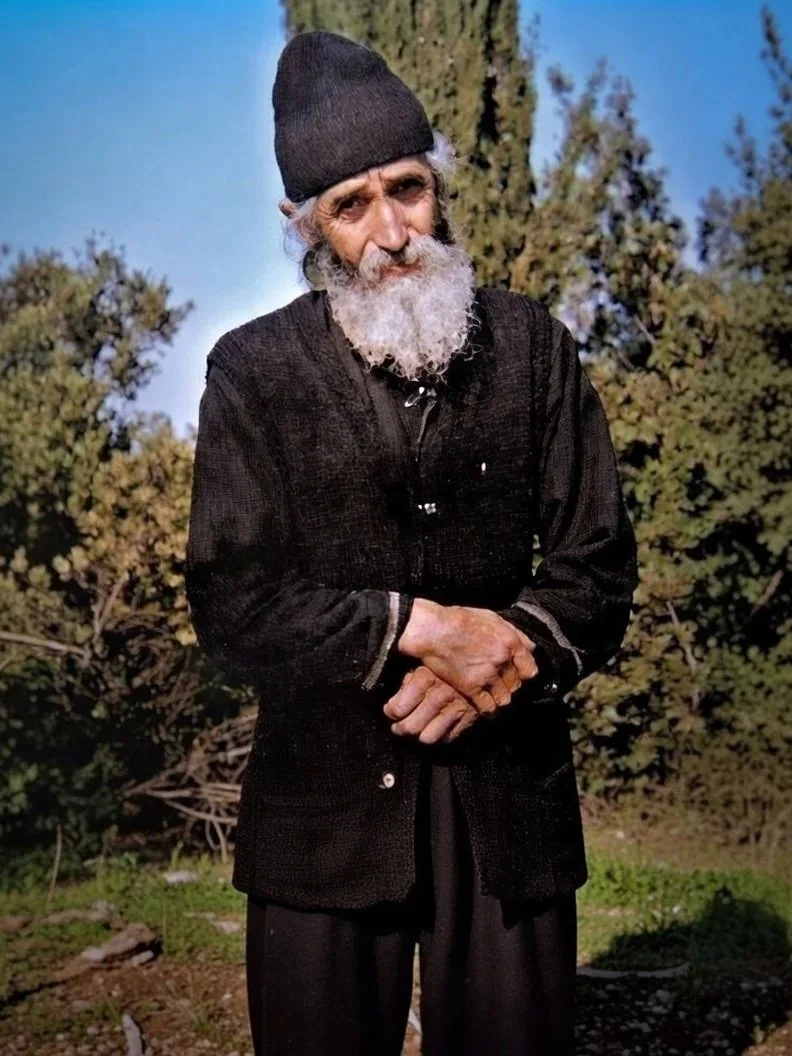
Arsenios Eznepidis was born in 1924 in the village of Farasa in Cappadocia, in what is now central Turkey, into a Greek Orthodox community that would, within months of his birth, be forcibly relocated to Greece as part of the large-scale population exchange between Greece and Turkey following the Greco-Turkish War. He was baptized, as an infant, by St. Arsenios of Cappadocia himself, a detail his family and later biographers treated as a quiet foreshadowing of the life he would eventually live. He grew up in Konitsa in northwestern Greece, served as an army radio operator during the Greek Civil War, and entered monastic life on Mount Athos shortly afterward, drawn from a young age toward a level of ascetic seriousness that startled even the monks who received him.
He spent the following decades moving between several of the Holy Mountain's most demanding ascetic environments, including a period at the monastery of Stomion in Konitsa and extended stretches of solitary struggle at Mount Sinai and on Athos itself, before finally settling at the small hermitage of Panagouda, near the Monastery of Koutloumousiou, where he would spend the last and most widely documented years of his life. Word of his spiritual gifts spread steadily, and by the final decades of the twentieth century a constant stream of pilgrims, ordinary Greek families, monastics, academics, and the simply curious, made the difficult journey to his hermitage seeking counsel, prayer, and, very often, answers to questions no one else seemed able or willing to address directly.
He endured serious chronic illness for much of his adult life and died in 1994, several years after undergoing surgery for cancer, having spent his final energy, by every account, still receiving visitors and offering guidance for as long as his body allowed. The Ecumenical Patriarchate of Constantinople formally canonized him a saint in January 2015, a canonization that arrived within living memory for the vast majority of people who now venerate him, which is itself part of why his teaching feels so immediate and so directly applicable to contemporary questions like this one.
Part III
The Gift That Made Him One of the Most Trusted Elders of the Century
What set St. Paisios apart, and what gives his statement on UFOs real theological weight rather than mere celebrity, was a widely attested gift of clairvoyance, the ability to perceive facts about visitors, their circumstances, and their inner struggles that he had no natural way of knowing. Pilgrims traveled to his remote hermitage and repeatedly reported that he addressed the actual, often unspoken, reason for their visit before they had said more than a few words, at times answering a question that had not yet been asked. This was not treated by those who knew him as entertainment or spectacle. It was treated as a sober, sometimes uncomfortable gift, precisely the kind of gift that also made him acutely aware of the difference between genuine spiritual perception and the many counterfeit forms of "insight" the tradition has always warned against, mediums, psychics, and the various demonic imitations of true discernment.
That last distinction mattered enormously to Paisios himself. He spoke often and carefully about the difference between the clairvoyance given to a genuine elder through a life of prayer, fasting, and obedience, and the superficially similar phenomena produced by occult practice or demonic influence, a distinction covered at length in recorded talks and personal accounts from those who sought his guidance. A man this precise about distinguishing real spiritual gifts from counterfeit ones is exactly the kind of witness whose judgment on a question like UFOs deserves to be taken seriously rather than dismissed as folk superstition.
Part IV
What He Actually Said About UFOs and Aliens
The account is recorded in multiple sources documenting encounters with St. Paisios, and its substance has never seriously varied across retellings. Asked directly whether UFOs and aliens exist, whether the strange lights and craft reported in the media represented visitors from other worlds, St. Paisios did not equivocate, did not ask for time to consider the question, and did not offer the kind of hedged, both-sides answer so common in modern religious commentary on contested subjects.
You should know that these are all demonic things, which take various forms. There is no life on another planet!St. Paisios of Mount Athos, recorded spiritual counsel
Two separate claims are packed into that single answer, and it is worth pulling them apart rather than treating the quote as a single undifferentiated soundbite. The first claim is a denial: there is no biological life on other planets, full stop, no qualification about probability or possibility left open for further scientific discovery. The second claim is a positive identification: whatever people are actually encountering, witnessing, and reporting under the label of UFOs and aliens is real in its effects, but demonic in its source, taking various forms precisely because deception has always adapted its costume to whatever a given era finds most credible. Paisios was not describing hallucination or mass delusion. He was describing a real phenomenon and naming what he believed was actually behind it.

Part V
He Wasn't Alone: Elder Porphyrios Gave the Same Answer
What elevates Paisios's statement from a single elder's private opinion to something closer to a documented pattern is that he was not alone in reaching this conclusion. Elder Porphyrios of Kavsokalyvia, a contemporary Athonite elder likewise widely venerated and later canonized, was asked a nearly identical question by a man troubled after his catechism students came to him asking whether extraterrestrials were real, following media coverage of a reported UFO sighting. Unprompted, before the man had even finished framing his question, Porphyrios raised the subject himself, asking pointedly what the man thought about "these things that fly" and "disperse," reportedly appearing from another planet.
The man's account describes Porphyrios's answer in terms that echo Paisios's almost exactly: all these, you know, are imaginary, demonic things, there is no life on another planet. Two elders, at different hermitages, addressing different visitors, at different points in their ministries, arrived at the identical theological conclusion without any indication of having coordinated their answers. In a subject as prone to speculation and contradictory claims as this one, that kind of independent convergence between two of the most respected spiritual authorities of twentieth-century Orthodoxy is unusually strong evidence that this represents a real, consistent thread within the tradition rather than an isolated opinion.
Part VI
Why "There Is No Life on Another Planet" Is a Bigger Claim Than It Sounds
It would be easy to read Paisios's denial of extraterrestrial life as a simple, almost throwaway dismissal, but it reflects a coherent and carefully held position within a strand of Orthodox theological thought. On this view, the human race occupies a genuinely unique place within the created order, the beings uniquely made in the image of God and given the command to fill the earth, and the universe beyond earth is populated not by parallel biological civilizations but by non-material spiritual beings: angels who serve God, and demons who rebelled against Him. Elder Thaddeus of Vitovnica, another twentieth-century Orthodox elder, gave a strikingly similar answer when asked directly about extraterrestrial life, describing what exists beyond earth not as biological creatures but as a kind of non-material "energy of thoughts," explicitly distinguishing it from material life as humans experience it.
Fr. Seraphim Rose, writing independently of all three of these elders from his own monastery in California, arrived at a closely related formulation in his own analysis, describing the universe as populated by what he called artificial intelligences of two distinct kinds, those who serve God and those who do not, and arguing that the wise course for a Christian is to strive to live in a way that draws him toward contact with the first kind and away from the second. Read together, these independent voices, an Athonite hermit, a Serbian elder, and an American monk, describe not a scattered set of folk opinions but a coherent theological position: what people are encountering under the modern label of alien contact is real, spiritual, and non-human, but it is not extraterrestrial in the biological sense the popular imagination assumes.
Part VII
Applying the Discernment Test to Paisios Himself
This site has laid out, in detail elsewhere, the five-question test the Church has used for centuries to evaluate anyone or anything extraordinary that asks to be trusted. It is worth briefly running Paisios's own life through that same test, rather than simply asking readers to take his authority on faith. Did his gifts confess Christ without evasion. Unambiguously; his entire life and counsel were oriented toward the sacraments, prayer, and obedience to the Church, never toward himself. Did his gifts produce humility or a sense of special status. By every account, humility; Paisios was famously self-deprecating about his own gifts and consistently redirected the credit for any insight toward God and the Church's own tradition. Did he lead people toward the Church or into isolation. Decisively toward the Church; pilgrims left his hermitage with instructions to return to confession, the sacraments, and their local parish, never to a private devotion centered on Paisios himself. Did his teaching hold steady over decades. Yes, consistently, across the entire span of his recorded ministry. Did he welcome scrutiny or resist it. He welcomed it; Paisios was famously accessible, direct, and unguarded with visitors of every background, including skeptics and academics who came specifically to test him.
A figure who passes every element of that test this cleanly is exactly the kind of witness whose judgment on a difficult and unresolved subject like UFOs deserves serious weight rather than casual dismissal.
Part VIII
Living the Answer: What Paisios Actually Taught Instead
What makes Paisios's UFO statement genuinely pastoral, rather than merely provocative, is what he consistently paired it with in his broader teaching: not fear, but watchfulness, and not speculation, but prayer. He was emphatic, across the whole of his recorded counsel, that the correct Christian response to any encounter with the unexplained was never anxious fascination or obsessive research, but a return to the ordinary disciplines that have always protected believers from deception, the Jesus Prayer, regular confession, fasting, and simple trust in God's providence over fear of what might be lurking beyond human understanding. His famous teaching that the devil hunts hardest after those who are already close to God, using self-assurance, over-thinking, and constant criticism as his tools, applies with particular force to a subject this prone to speculation and rabbit-hole research.
That is the real, practical takeaway his life offers anyone troubled by this subject. Not a list of theories to master, but a discipline to return to. The same unceasing prayer that steadied desert monks against far stranger visions than a light in the night sky is, in Paisios's own consistent teaching, still the answer today.

FAQ
Frequently Asked Questions
He Did Not Hedge. Neither Should the Answer.
A man who spent decades being tested by pilgrims, skeptics, and his own Church before ever being raised to the altars gave one of the most direct answers on record to a question the rest of the world is only now starting to take seriously. St. Paisios did not need a congressional hearing to reach his conclusion. He needed only the same discernment tradition monks have carried for sixteen centuries, applied honestly to whatever was put in front of him.
Aliens and Demons: Discerning the Great Deception traces that same tradition through Paisios, Porphyrios, Gabriel Urgebadze, Fr. Seraphim Rose, Scripture, and the headlines of this year.
Get Aliens and Demons on Amazon →