Saint Basil of Ostrog: Serbian Orthodox Bishop of Herzegovina and Wonderworker of Ostrog Monastery in Montenegro
A seventeenth century bishop whose shrine in the cliffs of Montenegro draws pilgrims of many faiths
At a Glance
- Born
- Traditionally December 28, 1610, Mrkonjici, Herzegovina; year questioned
- Died
- 1671, Ostrog, Montenegro (April 29 on the Julian calendar)
- Office
- Bishop of Zahumlje and Herzegovina
- Feast
- April 29 Julian, May 12 on the civil calendar
- Relics
- Upper Monastery of Ostrog, Montenegro
- Title
- Holy Hierarch, Wonderworker of Ostrog
- Who Was Saint Basil of Ostrog?
- Early Life and Family
- Monk, Priest and Bishop
- Ostrog Monastery
- Pressures of His Age
- Death and the Opening of His Grave
- Wonderworker of Ostrog
- What Is Documented and What Is Devotion
- Prayer and Pilgrimage Today
- Why He Matters to the Eastern Churches
- Frequently Asked Questions
Who Was Saint Basil of Ostrog?
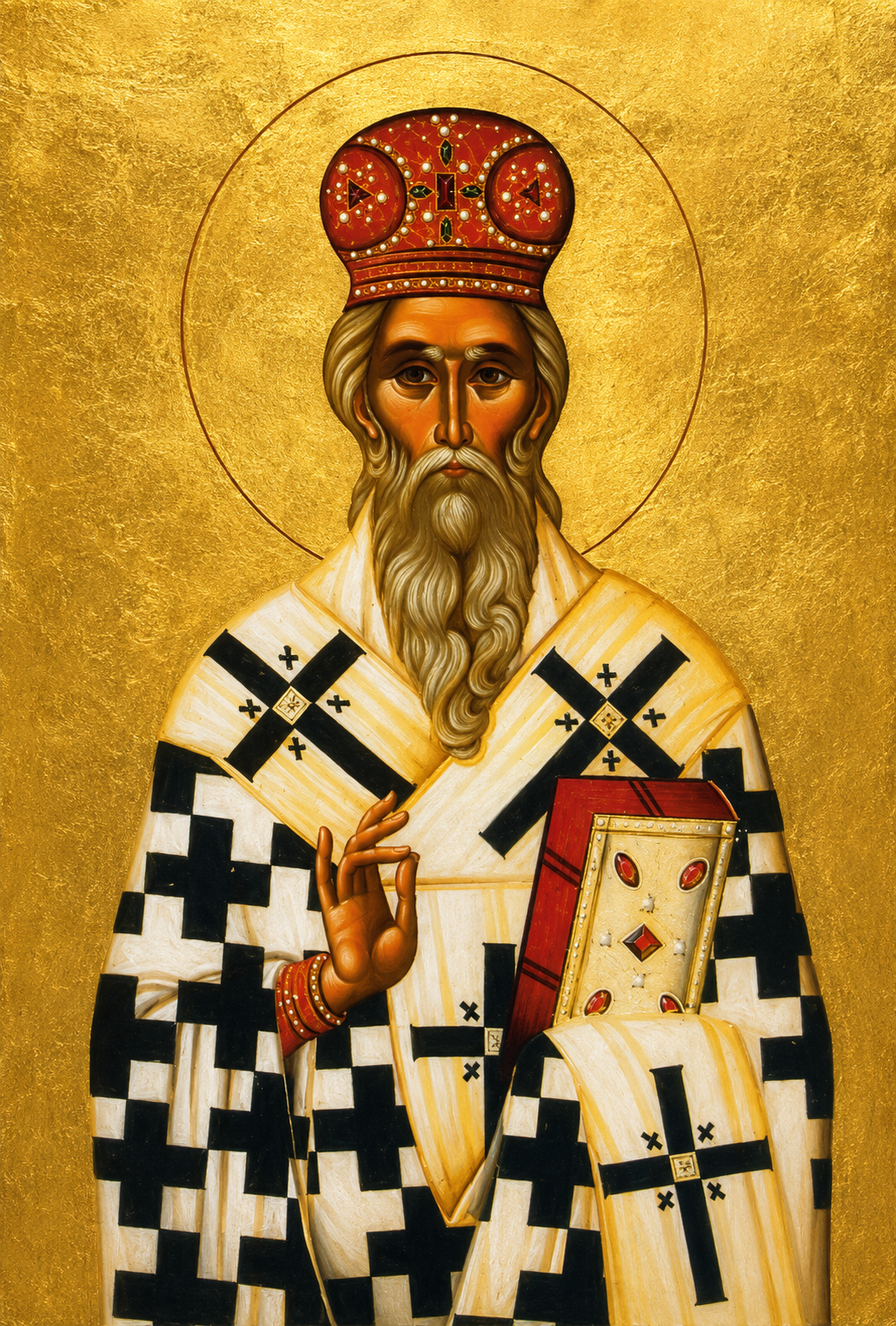
Saint Basil of Ostrog is one of the most loved saints of the Serbian Orthodox Church. Born Stojan Jovanovic, he became a monk, a priest and later a bishop in Herzegovina during the time of Ottoman rule. He spent his last years at Ostrog, a monastery built into a high cliff above the plain of Bjelopavlici in Montenegro, and his relics rest there today.
Much of his life is known from later devotional biographies, so this article marks stories that cannot be checked as TRADITION and unsettled facts as UNCERTAIN. A few documents from his own time survive, including a testament of 1666, and they show a bishop who handled land, gifts and church property as well as prayer.
His shrine draws pilgrims in great numbers, and not only Orthodox Christians. Visitors have long included Catholics and Muslims, which tells how far his fame as a helper in suffering has travelled.
Early Life and Family
Basil was born in the village of Mrkonjici in Popovo Polje, near Trebinje in Herzegovina, then under Ottoman administration. Tradition gives the date as December 28, 1610. UNCERTAIN: some researchers doubt the exact birth year. His parents are traditionally named Petar Jovanovic and Ana, also called Anastasija, and his baptismal name was Stojan.
The traditional story says the family was poor and lived by farming, with a life of prayer, fasting and church attendance. TRADITION: the boy was generous to other shepherd children and shared his food. These accounts show how the Church remembers his character, and they are not documented childhood events.
Accounts say his parents sent him to Zavala Monastery, where his uncle Serafim was abbot, and the usual reason given is fear of the Ottoman child levy known as the devshirme. He is said to have gone at about twelve. UNCERTAIN: neither the age nor the motive is confirmed by a document of the time.
Monk, Priest and Bishop
Basil was raised Orthodox and did not change faith. His turning point was a vocation to the monastic life and then to the episcopate. Tradition says he was tonsured at Tvrdos Monastery near Trebinje, took the name Basil, and was ordained a priest. He became known for fasting, prayer and discipline.
UNCERTAIN: later accounts say he visited the Patriarchate of Pec and Mount Athos, and some add Wallachia and Russia. The dates, order and reach of these journeys have not been settled from records of the time.
He became a bishop of Zahumlje and Herzegovina, also called Zahumlje and Skenderija in some sources. Some accounts give 1638 for his consecration and others 1639. UNCERTAIN: the date is disputed and should not be harmonized without the patriarchal documents. As bishop he cared for Orthodox people under Ottoman rule, defended church property and gave spiritual leadership.
Ostrog Monastery
Basil's best known work is Ostrog. Devotional biographies often call him its founder, but the historical record shows that religious life and church buildings existed at the site before he came. His role is better described as that of a builder and benefactor who gave the place a lasting form.
A testament dated 1666 survives and is cited by the Serbian Orthodox Metropolitanate of Montenegro and the Littoral. It shows that Basil gave land to Ostrog and arranged its endowment and protection, and that he bought property from local people. A patriarchal letter linked with Patriarch Gavrilo and dated 1651 is also used by historians. These documents show a bishop with practical duties, and not only a hermit living in a cave.
No collection of theological books or sermons by Basil has been verified. Apart from his letters and the testament, his legacy is not literary. It is pastoral, institutional and devotional.
Pressures of His Age
Basil lived in a land shaped by Ottoman rule, local rivalry and competing church interests. Orthodox communities faced demands, insecurity and sometimes interference from the authorities, and his work as a bishop was carried on in those conditions.
Serbian Orthodox tradition portrays him as resisting Latin and Uniate efforts to bring Orthodox communities into union with Rome. UNCERTAIN: specific charges against Catholics in later polemical biographies are not confirmed without letters or archive records. Devotional texts that speak harshly of Catholics are not neutral history, and readers of both traditions should keep that in mind.
Some popular biographies contain mistakes of date. A version of the Prologue from Ohrid says that Basil left Tvrdos after Ottoman forces destroyed it, but the major destruction of Tvrdos was in 1694, after he died. Some English calendar notices also set him in the sixteenth century, which conflicts with the seventeenth century dates. Older devotional texts need checking against other sources.
Death and the Opening of His Grave
Basil died at Ostrog in 1671. The customary date is April 29 in the Julian reckoning. He was buried in the monastic setting where he had spent his last years, and the grave became a place of prayer.
TRADITION: seven years later, conventionally dated 1678, he appeared in dreams to Abbot Rafailo of the Monastery of Saint Luke near Niksic. After repeated visions, the monks went to Ostrog, fasted, prayed and opened the grave. They are said to have found the body incorrupt, and it was moved to a reliquary in the Upper Monastery. This account is preserved in Orthodox devotional literature and cannot be checked by historical method.
His relics are venerated in the Church of the Presentation of the Mother of God in Upper Ostrog. Accounts say they were moved for safety during times of war, in 1714, 1852 and 1876, and returned. UNCERTAIN: these dates need support from archives. The condition of the relics has not been shown by modern scientific study. No separate decree of canonization has been found, and the year 1678 is tied to the account of the relics and not to a synodal decision.
Wonderworker of Ostrog
Basil is called the Wonderworker of Ostrog because of the many healings reported at his shrine. Pilgrims pray before his relics for illness, family trouble and long suffering. TRADITION: a strange light is said to have appeared when he died, but no eyewitness record of the time is known.
TRADITION: stories of healing through his prayers have been told for centuries. Historians know that testimonies of this kind were collected and printed. Studies of Montenegrin newspapers from 1835 to 1918 find miracle accounts in print, which shows that the stories were circulating. This proves that the devotion is old and living, but it does not by itself prove each cure.
Ostrog is a place where people of different faiths come. Catholic and Muslim visitors have gone there, as well as Orthodox pilgrims. This shared pilgrimage does not mean agreement on doctrine. It shows how deeply the shrine is rooted in the life of the region.
What Is Documented and What Is Devotion
The firmest evidence for Basil comes from the church and monastery records of his own century: the testament of 1666, the patriarchal letter linked with 1651 and the long record of pilgrimage to Ostrog. These show a real bishop who lived and worked in Herzegovina and who left a lasting mark on one monastery.
The weaker points are his exact birth year, the date of his consecration, the details of his travels and the full list of movements of his relics. The stories of the light at his death and of the dreams that led to the opening of his grave belong to devotion and tradition. They tell us how believers understood his holiness, and not what an observer in 1671 would have recorded.
A careful reader can honor the saint and still see these lines clearly. The Church has never needed a perfect biography in order to ask for the prayers of its saints, and honesty about the sources helps the faithful trust what the Church does say.
Prayer and Pilgrimage Today
Ostrog is among the most visited holy places of the Balkans. The monastery clings to a cliff, and pilgrims climb to the Upper Monastery to venerate the relics. Many come on foot, some sleep on the open ground, and large crowds gather around the feast on May 12.
Pilgrims often bring a quiet request: for health, for a child, for work or for peace in the home. Orthodox teaching holds that the saint prays to God for the one who asks, and that the glory belongs to God.
Visitors should remember that Ostrog is a place of prayer first. Its history is documented in part, and its meaning rests on faith and on long tradition.
Lord Jesus Christ, You gave Your servant Saint Basil a heart for prayer and care for Your people. Through his prayers, comfort the sick, protect families and strangers on the road, and give us patience in suffering and trust in Your mercy. Amen.
This is a short original prayer written for this article. It is not an official liturgical text. The Orthodox Church in America publishes the official troparion for his feast.
Why He Matters to the Eastern Churches
For Orthodox Christians, Basil joins monastic discipline with pastoral service. He is a bishop who kept to silence, fasting and prayer while caring for the Church. For Serbian Orthodox believers he is among the main saints of Herzegovina and Montenegro, and Ostrog ties these lands to the wider Orthodox world.
For Eastern Catholics, his life invites study of the shared Byzantine inheritance of asceticism, pilgrimage and reverence for holy people. His relation to Catholicism is not simple. He lived after the break between East and West and is a Serbian Orthodox saint, and traditional lives describe his resistance to union with Rome.
No evidence shows that the Catholic Church has canonized him or placed him on a universal calendar. Catholic visits to Ostrog should be distinguished from official Catholic recognition. His shrine remains a rare place where believers of different traditions meet in prayer and need.
Frequently Asked Questions
Ask His Prayers
Saint Basil is asked for help by the sick, by travellers and by families in trouble. You may wish to keep a prayer card of Saint Basil near you as a reminder to pray for those who suffer and for peace between neighbors.
View Prayer Card