Saint Sava of Serbia: Prince Turned Monk, First Archbishop of the Serbian Church and Enlightener of the Serbs
A prince who became a monk on Mount Athos and then gave the Serbian people their own Church, laws and monasteries
At a Glance
- Born
- About 1175, probably at Ras, Serbia; other dates such as 1169 or 1176 are UNCERTAIN
- Died
- January 1236, Tarnovo, Bulgaria; the exact day is disputed
- Office
- First archbishop of the autocephalous Serbian Church, traditionally from 1219
- Feast
- January 14 Julian, which is January 27 on the civil calendar; relics translation May 6 Julian
- Veneration
- Orthodox saint; no formal canonization date is known
- Patronage
- The Serbian people, schools, teachers and students
- Who Was Saint Sava of Serbia?
- Early Life and Family
- Leaving the Court for Mount Athos
- Hilandar, Studenica and the Rules of Monastic Life
- The First Archbishop of the Serbs
- The Nomocanon and His Writings
- Diplomacy, Rivalries and a Divided World
- Death at Tarnovo and the Burning of His Relics
- Miracles, Folk Tradition and Devotion
- Why He Matters to the Eastern Churches
- Frequently Asked Questions
Who Was Saint Sava of Serbia?
Saint Sava of Serbia, whose birth name was Rastko Nemanjic, was a prince, a monk, a diplomat, a lawgiver and the first archbishop of the autocephalous Serbian Church. Autocephalous means self-governing, and it describes a Church that elects and consecrates its own head. He is one of the most important figures in Serbian history, and he is honored in the Orthodox Church as a holy hierarch and as the Enlightener of the Serbs.
He was born into the Nemanjic dynasty, the ruling family that built medieval Serbia. His father was Stefan Nemanja, the grand prince, and his mother was Ana, who later became a nun. Rastko was the youngest of the sons. He gave up the life of a prince while still young and went to Mount Athos, the monastic peninsula in northern Greece.
On Athos he and his father founded Hilandar Monastery, which became the great Serbian monastery on the Holy Mountain. Later he returned to Serbia, wrote monastic rules and church law, and secured recognition of a Serbian archbishopric from the Church in Nicaea. This article marks what is documented, what is uncertain, and what belongs to tradition, because the sources for his life are medieval and some dates are still debated.
Early Life and Family
Rastko was born around 1175, probably at Ras, the old center of Serbian rule. UNCERTAIN: some sources give 1169 and others 1176, and no contemporary birth record survives. He grew up in a society shaped by Byzantine Christianity, Slavic religious customs and rivalry between the Eastern and Western Churches.
His brothers included Vukan and Stefan. Stefan later became known as Stefan the First-Crowned, the first Serbian king. As a young prince, Rastko was given authority over the region of Hum in the west of the Serbian lands. UNCERTAIN: the details and the length of his rule there are poorly documented, and the account was brief.
Later biographies describe him as a child drawn to prayer and to quiet. Those accounts belong mainly to the hagiographical tradition, meaning the writing of saints' lives, and they follow standard medieval patterns. They show how later generations remembered him, but they are not firm evidence for his childhood.
Leaving the Court for Mount Athos
Sava did not convert from another religion, because he was raised a Christian. His turning point was the decision to give up a princely future and become a monk. TRADITION: the early biographies say that Rastko met a monk from Athos and secretly left for the Holy Mountain. His father sent men after him, but Rastko received the monastic tonsure before they could bring him home, and he sent his princely clothing and cut hair back to his parents as a sign of his choice.
The year of his departure is UNCERTAIN. The Orthodox Church in America gives 1186, while other chronologies place it in the early 1190s. He lived first near the Russian monastery of Saint Panteleimon and then at Vatopedi, one of the great monasteries of Athos, where he took the name Sava.
His father, Stefan Nemanja, later gave up his rule and became a monk under the name Simeon. Father and son were reunited on Athos in 1197. Together they received permission in 1198 to restore the abandoned monastery of Hilandar, which they made a home for Serbian monks.
Hilandar, Studenica and the Rules of Monastic Life
After Simeon died, around 1199 or 1200, Sava continued his life of prayer and writing. The exact year is UNCERTAIN, and sources differ by a year. He wrote the Life of Saint Simeon about his father, and the monastic rules known as the Hilandar Typikon and the Karyes Typikon. A typikon is a set of rules for worship and daily life in a monastery.
Around 1206 to 1207 he brought his father's relics back to Serbia, where they were placed at Studenica Monastery. Serbia had been divided by conflict between his brothers Vukan and Stefan, and Sava helped bring peace within the family. The reconciliation is historical. The miraculous details later added to the story belong to tradition.
At Studenica he is linked with the Studenica Typikon, which adapted Athonite monastic practice to Serbian conditions. UNCERTAIN: scholars debate how much of it was written in his early period on Athos and how much was shaped after he returned to Serbia, and some place its main draft around 1209 to 1210.
The First Archbishop of the Serbs
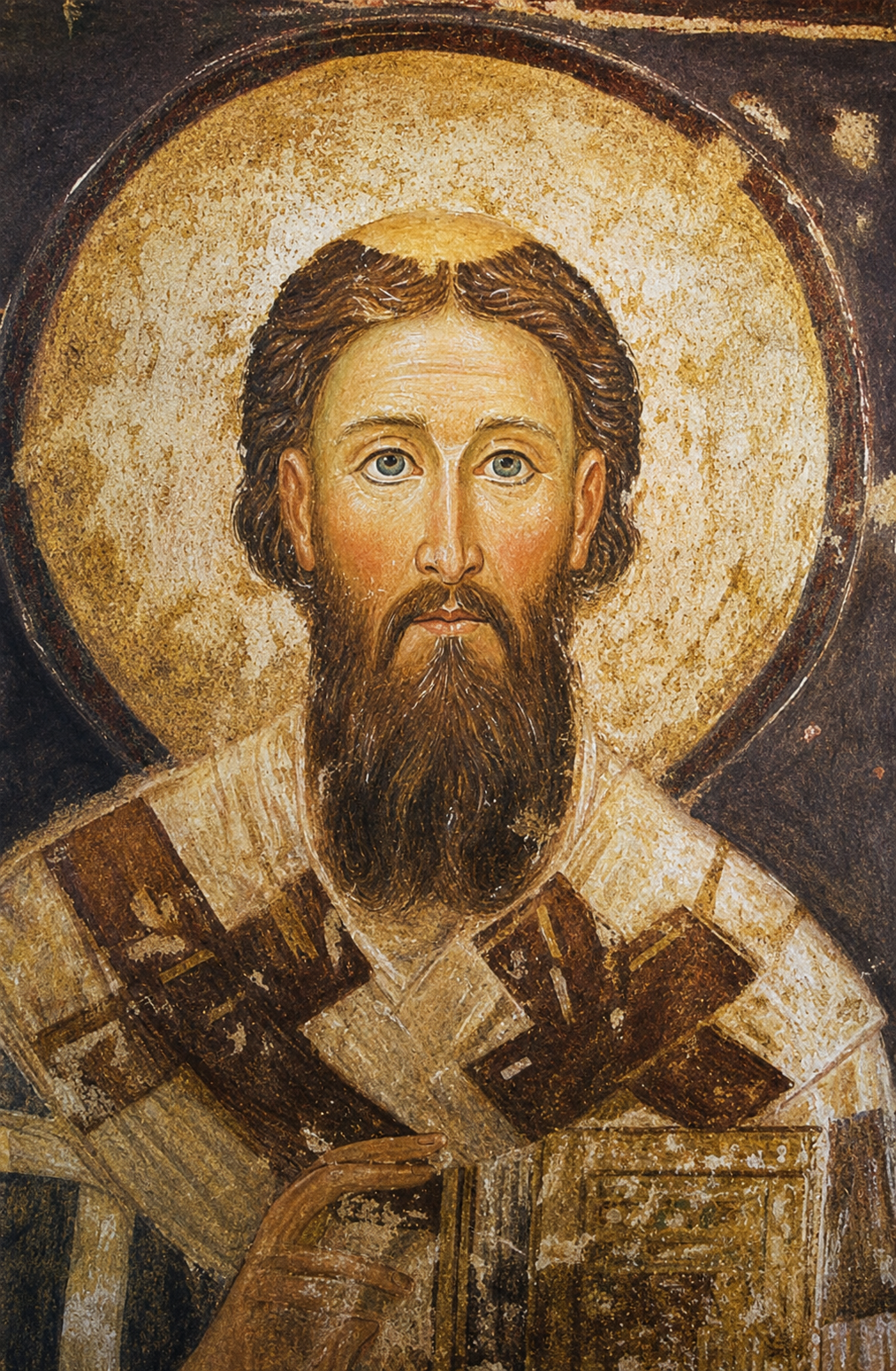
After the Fourth Crusade captured Constantinople in 1204, the Byzantine emperor and patriarch lived in exile at Nicaea. According to the traditional account, Sava traveled there and was consecrated the first archbishop of the Serbs in 1219, with the support of Emperor Theodore Laskaris and Patriarch Manuel. This gave Serbia its own bishops and a head chosen from among them.
UNCERTAIN: 1219 is the conventional date, but recent scholarship has asked whether the journey and consecration took place in 1218. The day is also disputed, and church biographies mention dates such as August 15 and December 6. The archbishop's seat was set at the monastery of Zica, and Sava organized dioceses and appointed bishops.
TRADITION: some Orthodox accounts say that Sava crowned his brother Stefan king in 1219. Historians treat the exact sequence of events with care, since Stefan had already received a royal crown through contact with the papacy in 1217. The historical museum in Belgrade warns against one-sided Orthodox or Catholic readings of these events.
The Nomocanon and His Writings
One of his most lasting works is the Nomocanon, called the Zakonopravilo in Serbian. A nomocanon combines church canons with Byzantine civil laws that bear on church life. It gave the new Serbian Church a framework for governing itself and for dealing with the state.
The Nomocanon was not an original law code written from nothing. Its value lies in what Sava selected, translated, arranged and passed on from earlier Byzantine sources. The same care applies to his other works. Authorship has to be separated from translation, editing and supervision, and no autograph of the whole traditional body of his writings can be confidently identified.
Works connected to him include the Life of Saint Simeon, the Hilandar, Karyes and Studenica Typika, a service for Saint Simeon, and a letter to Abbot Spiridon. Together they show a man who built institutions by writing the rules that kept them alive. That is a large part of why Serbs call him an enlightener.
Diplomacy, Rivalries and a Divided World
Sava lived in an unstable age. The Latin conquest of Constantinople, the rise of Nicaea and the pressure of neighboring powers all shaped the choices open to Serbia. Before his time, Serbian lands had belonged to the Church jurisdiction of Ohrid, so creating a separate archbishopric touched existing claims.
He also served as a go-between in disputes involving his brothers and neighboring rulers. UNCERTAIN: stories about his dealings with King Andrew II of Hungary and with the Bulgarian noble Strez contain much that is literary embellishment, and they cannot be taken at face value.
Serbia's king had contact with Rome while its archbishop sought an Orthodox structure through Nicaea. That contrast matters. Political contact with the pope did not make the Serbian archbishopric Roman Catholic, and Sava is rightly described as an Orthodox archbishop. Medieval ideas of identity and loyalty also differed from modern national and denominational categories.
Death at Tarnovo and the Burning of His Relics
In his last years he made further pilgrimages to the Christian East, including the Holy Land. On the way home he passed through Bulgaria, fell ill and died at Tarnovo in January 1236. The Historical Museum of Serbia gives January 13 on the Julian calendar, while the later feast is kept on January 14, so the exact day is UNCERTAIN. Modern scholarship favors 1236, although some reference works still give 1237.
He was buried at the Church of the Forty Martyrs in Tarnovo. His nephew, King Vladislav, had his body moved to Mileševa Monastery in Serbia. The year is UNCERTAIN. It is commonly given as 1237, one recent study proposes 1238, and the usual commemoration of the translation is May 6 on the Julian calendar.
Serbian tradition says the Ottoman authorities took his relics from Mileševa and burned them in Belgrade on Vracar hill in 1594, though some sources give 1595. This memory later inspired the building of the great Church of Saint Sava in Belgrade, begun in the twentieth century. UNCERTAIN: historians dispute the year, the circumstances and how much was destroyed, and some evidence suggests part of the relics may have survived.
Miracles, Folk Tradition and Devotion
His early biographers, Domentijan around 1253 to 1254 and Teodosije in the later thirteenth century, wrote about him as a healer and wonderworker. Their accounts are valuable for the history of his cult, but they follow the conventions of saints' lives. TRADITION: they describe miracles during his last visit to Bulgaria, including one linked to the celebration of Theophany.
TRADITION: pilgrims came to his tomb at Mileseva to seek healing, and they continued to do so for centuries. The shrine and the devotion are historical, but individual claims of healing cannot be independently verified. His cult grew through services, hymns and biographies, and no separate canonization ceremony has been documented.
Today Serbs keep his feast on January 14 on the Julian calendar, which is January 27 on the civil calendar, as a school day, because he is the patron of education. Later folklore shows him traveling among villagers and protecting communities, and scholars note that some of these tales absorbed older pre-Christian motifs. They tell us about popular devotion, not about events in his real life.
Lord Jesus Christ, You gave Your servant Saint Sava a love for prayer and a care for Your people. Through his prayers, bless our schools and teachers, guide the young in wisdom, and bring peace to families and nations. Help us to learn, to serve and to trust in Your mercy. Amen.
This is a short original prayer written for this article. It is not an official liturgical text. The Orthodox Church in America and the Greek Orthodox Archdiocese of America publish the official troparion for his feast.
Why He Matters to the Eastern Churches
For Orthodox Christians, Saint Sava's place is clear and well documented. He gave the Serbian Church its independent structure and handed on Byzantine monastic, liturgical and canonical life in a form the Serbian people could use. He is a central saint of the Serbian Orthodox Church.
For Eastern Catholic readers, his life offers a window into the shared Byzantine inheritance: typika, monastic life on Athos, bishops and canon law, and the veneration of saints and relics. There was contact between Serbian rulers and Rome in his time, but that contact does not prove that Sava was in communion with Rome.
This article does not claim a Catholic canonization or a Catholic liturgical feast for him, because none could be verified. Eastern Catholic readers who wish to know whether a particular Church commemorates him should check that Church's own calendar. He is shared here with respect as an Orthodox holy hierarch whose work shaped the Christian East.
Frequently Asked Questions
Ask His Prayers
Saint Sava is asked in prayer by Serbian Orthodox Christians for wisdom, for teachers and students, and for peace among the people. If you would like a prayer card of Saint Sava for your icon corner or your classroom, you can find one below. His life reminds us that learning, prayer and service to a nation can all be offered to God.
View Prayer Card